
Gaurav Chattree
76 posts
Gaurav Chattree
@GChattree
Instructor - Stanford Neurology Movement Disorders Division
Stanford, CA Katılım Mart 2009
997 Takip Edilen566 Takipçiler
Super cool work!
Gaurav Chattree@GChattree
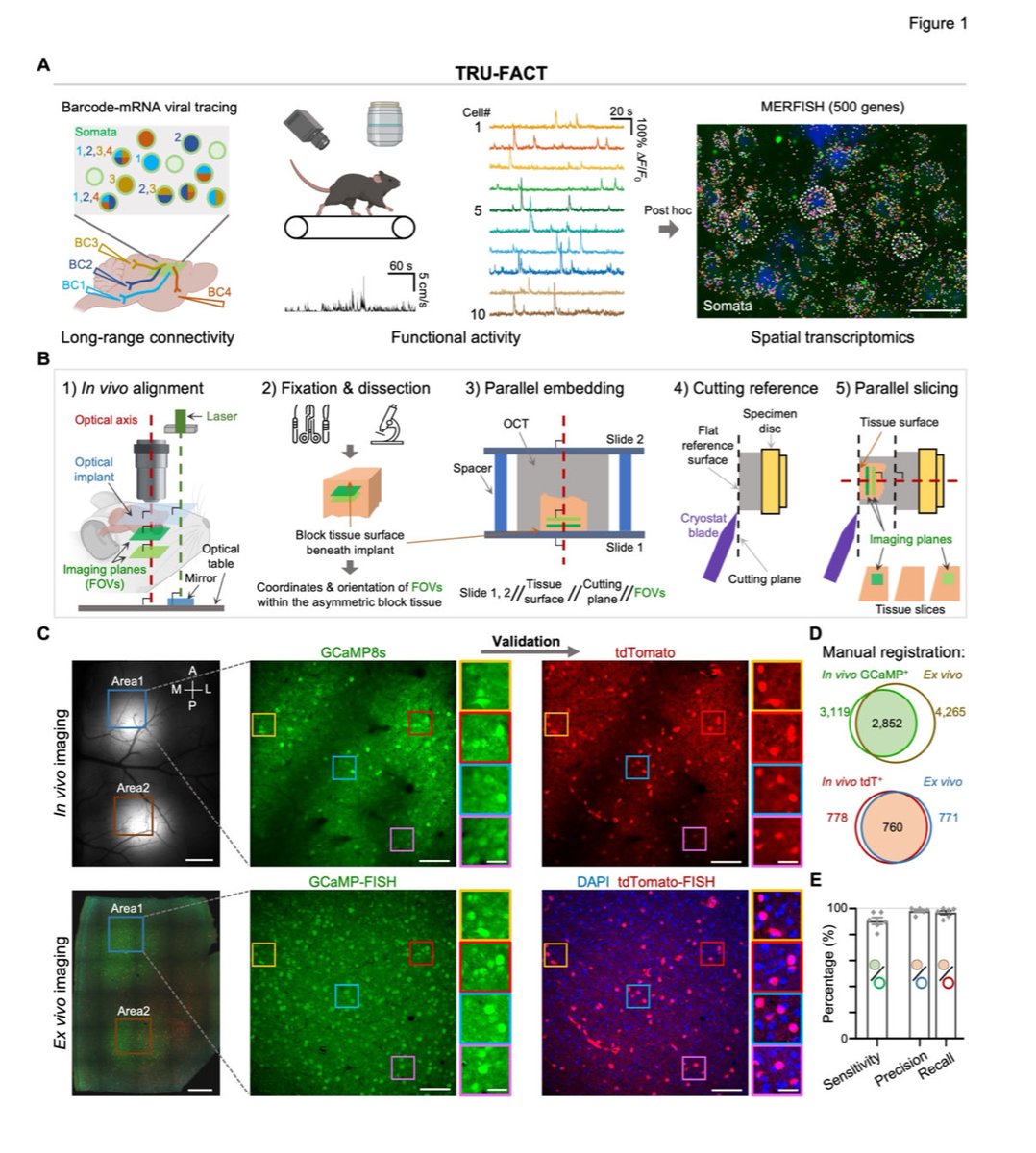
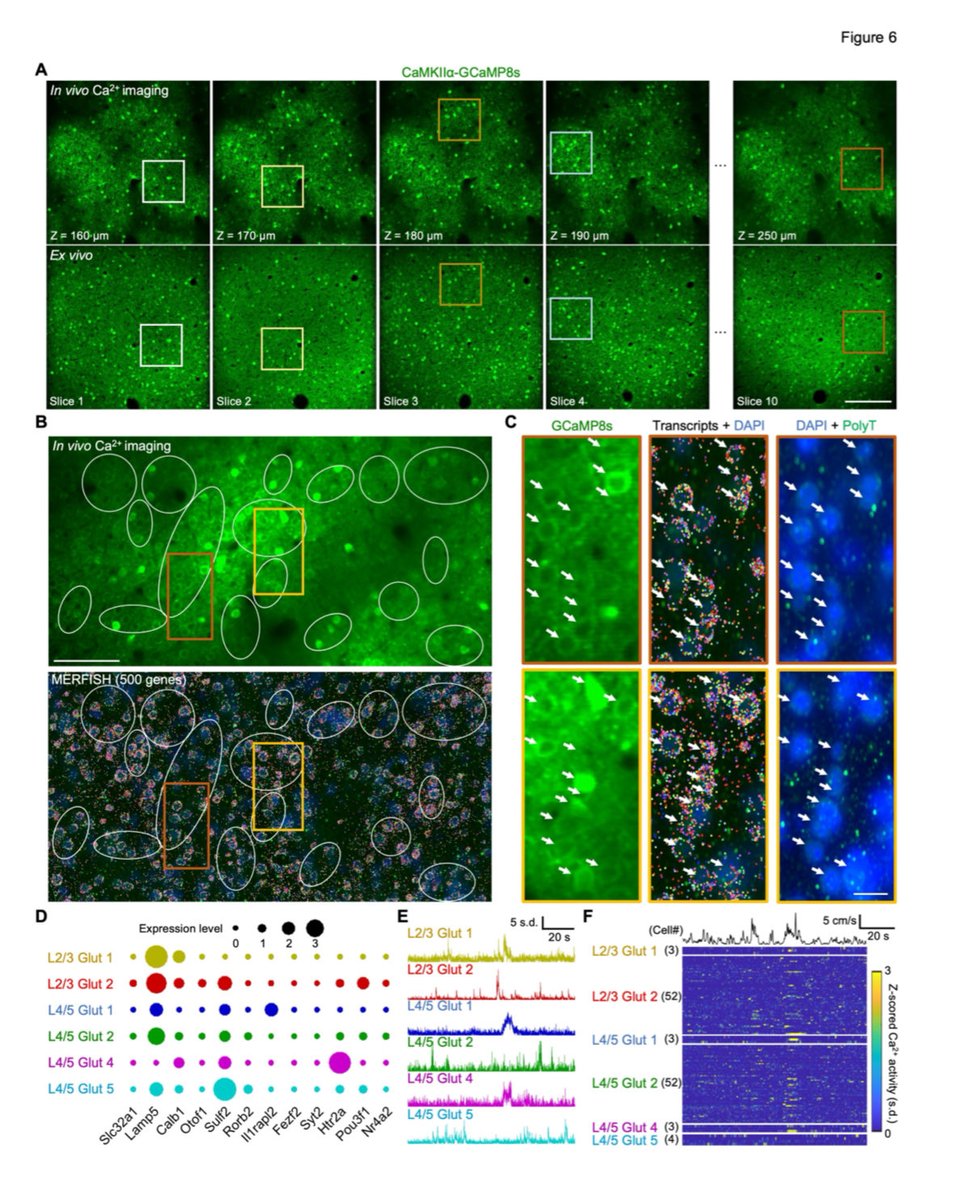
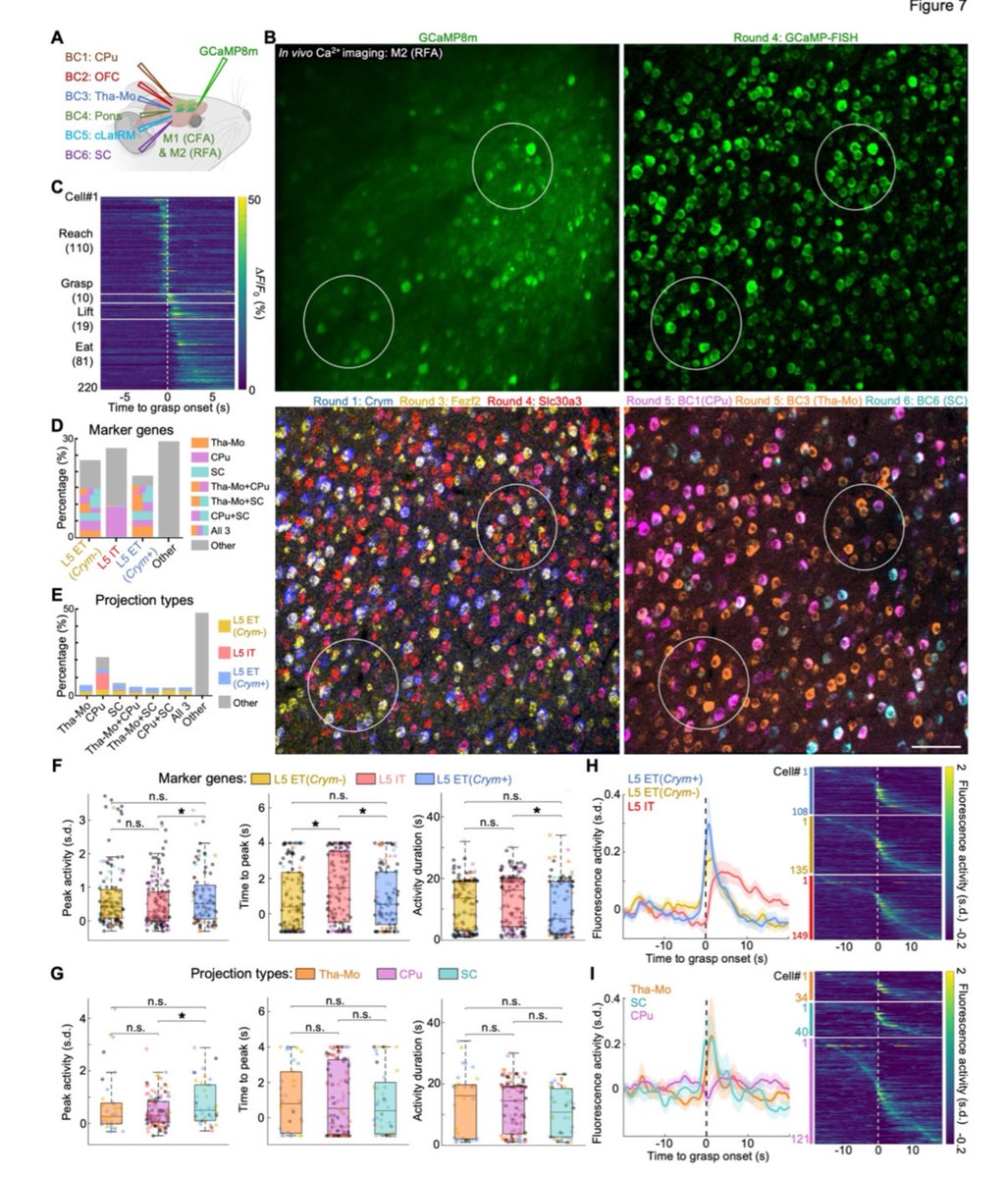
Excited that our TRU-FACT preprint is now live! TRU-FACT links what individual neurons do in vivo, with who they are molecularly, and who they connect to. As a neurologist, I’m excited by its potential for understanding and treating circuit disorders. bit.ly/42kictR
English
Long-term, this could help move us toward cell-type-specific therapeutics for neurologic and psychiatric disease; from enriched receptor targets to cell-type-specific viral strategies.
I’m excited to apply this to parkinsonian and other neurodegenerative models. Stay tuned!
English
By aligning large-scale neuronal activity with spatial molecular biology, we can ask which cell types are affeced in disease, what molecular programs become altered, and which targets might allow selective intervention.
English
Excited that our TRU-FACT preprint is now live!
TRU-FACT links what individual neurons do in vivo, with who they are molecularly, and who they connect to.
As a neurologist, I’m excited by its potential for understanding and treating circuit disorders.
bit.ly/42kictR
English
Gaurav Chattree retweetledi

Check our TRU-FACT videos!
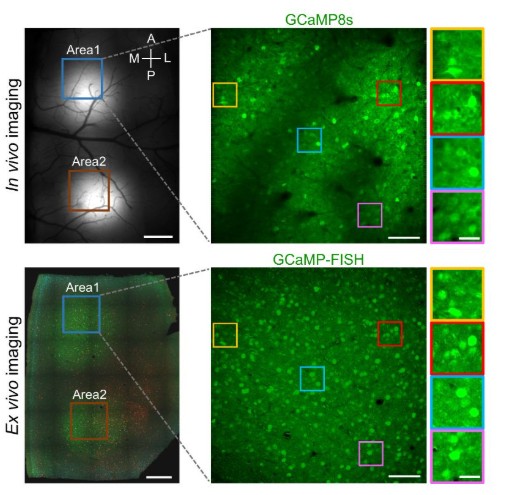
Now you can reliably match hundreds to thousands of neurons from in vivo to ex vivo, and perform spatial transcriptomics on the exact same cells throughout its journey!
BioRxiv: biorxiv.org/content/10.648…
English
Gaurav Chattree retweetledi
You record beautiful in vivo data…
then spend weeks trying to find the same cells again in tissue.
It’s tedious, fragile, and often unreliable.
We built TRU-FACT to fix this — a scalable way to align cells from in vivo to ex vivo, linking activity with identity.
From tens to hundreds–thousands of cells, with minimal operator dependency.
Now on bioRxiv: doi.org/10.64898/2026.…
English
Gaurav Chattree retweetledi

TRU-FACT is finally out on bioRxiv! Aligning in vivo imaging and spatial biology data at cellular resolution has long felt like a “wish list” capacity, so it’s exciting to see it come together. 🧠
biorxiv.org/content/10.648…
English
Gaurav Chattree retweetledi

Such an amazing technique developed by my friends @LunWangm, @Xiaochen_Sun_ , @GChattree, and others from the Schnitzer lab! I watched the struggle to optimize this over the years and am genuinely so impressed with the results.
English
Gaurav Chattree retweetledi

Excited to share my co-first-authored work on registering in vivo Ca2+ imaging data to ex vivo transcriptomic and projection datasets, enabling the mapping of each cell’s functional coding to its genetic cell type: biorxiv.org/content/10.648….
English
Gaurav Chattree retweetledi
For decades, two revolutions in neuroscience ran in parallel:
- 🧠 In vivo imaging — watch neurons fire in living animals
- 🧬 Spatial transcriptomics — read cell's molecular identity
Meet TRU-FACT - a graph-based method that matches cells between these datasets at scale 🧵
GIF
English
Gaurav Chattree retweetledi

Breakthrough in multimodal neuroscience from Mark Schnitzer's team! By bridging in vivo dynamics and molecular profiles, TRU-FACT sets a new bar for cellular resolution. Our TRANSVISTA SN100 was proud to facilitate the free-behavioral recordings in this study. Congrats to Lun!
Lun Wang@LunWangm
(1/2)Here is our TRU-FACT preprint: Multimodal alignments of in vivo imaging and spatial biology datasets at cellular resolution. biorxiv.org/content/10.648… Please let us know your comments and send email to trufact.info@gmail.com for workshop trainings. Let's make science easier!
English
Excited to talk at @foresightinst Vision Weekend!
Foresight Institute@foresightinst
Molecular self-assembly. Private AI. Brain-computer interfaces. AGI safety. Hacking aging biology. Dyson spheres. Funding models for long-horizon science. We can’t wait for the talks at our upcoming Vision Weekend. June 5-7 in London. Full speaker lineup: • Greg Wayne (Google DeepMind) on universal AI assistants • William Shih (Harvard University) on self-assembly and the coming age of molecular machines • @moxie (Confer) on private AI • @leecronin (University of Glasgow) • @irinarish (Mila) on beyond scaling: toward continual and adaptive intelligence • @eboyden3 (MIT) on incentives in science • @anderssandberg (Institute for Future Studies) on Dyson 2070: how fast can we build a Dyson sphere and how stable are they? • João Pedro de Magalhães @jpsenescence (University of Birmingham) on hacking aging biology • @dorothychou (Google DeepMind) on capital for the long game: financing durable innovation in an age of hype • @SergeyStavisky (UC Davis) on high-bandwidth BCIs for motor and communication recovery in people with paralysis • Žiga Avsec @Avsecz (Google DeepMind) on advancing regulatory variant effect prediction with AlphaGenome • Christopher Rozell @crozSciTech (Georgia Tech) on closed-loop neuroengineering • @JerzySzablowski (Rice University) on precision neuromodulation through molecular engineering and focused ultrasound • Christine Peterson @lifeext (Foresight Institute) on Foresight, 40 years later • @MariusHobbhahn (Apollo Research) on the case for AGI safety products • @WeinbaumJonah (Institute for Progress) on the 'launch sequence': towards a concrete agenda for defensive acceleration • Peter Gehle (Tübingen AI Institute) • @joemeyerowitz (Field Foundry) • @jncstrd (SPRIND) on challenges as a tool for breakthrough innovation • @RonitKanwar (Renaissance Philanthropy) on fuelling scientific renaissances • Lynne Cox @OxAgeN_oxford (University of Oxford) • Adam Shai @adamimos on the neural basis of intelligent behavior • Zoë Brammer (Google DeepMind) on AI for science 2030 • Darja Isaksson (Vinnova) • Thane Campbell @Thane_ac (Deep Science Ventures) • Ankur Vora (Google DeepMind) on AI for science 2030 • Leah Morris @leahelizmorris on AI for science • @KirillEves (e184) • Kathleen Fisher (ARIA) • Mehmet Fisek (Meridial) • @JacquesCarolan (ARIA) moderator • Barbara Diehl @barbaradiehl13 (SPRIND) moderator • Eric Gilliam @eric_is_weird (Renaissance Philanthropy) moderator • @allisondman (Foresight Institute) moderator Powered by: @apolloaievals @ARIA_research @e184media @CUHPartners @RenPhilanthropy @SPRIND :
English
@ASSFNeurosurg I’m having trouble with the link, do you have another way to register?
English
Last call! 🚨 Join our panel of experts for an in-depth session on epilepsy surgery. Don’t wait to register! Secure your spot now to engage with these leaders in functional neurosurgery.
🔗 Register: bit.ly/4SVPBAS
#Neurosurgery #EpilepsySurgery #Neuroscience
GIF
English
@manorlaboratory This is horrible. I hope there is some way this can be reversed.
English
English

The world is in chaos, but we still need to rally with our people. Janetzko-Bell lab and friends happy hour to celebrate some grant submissions, new additions and accomplishments 🎉
@CU_BMG @CUCardiology @CUDeptMedicine

English

A true honor to work with Karl and our entire @Stanford human neural circuitry program team. Extremely excited to share our initial work published today in Science, discovering conserved neural mechanisms of transforming sensation to emotion across species @ScienceMagazine
Karl Deisseroth@KarlDeisseroth
Congratulations to our Human Neural Circuitry team; bit.ly/4dEyX7Z publishes today in Science! This was the hardest challenge of my career, but one of the most rewarding, after years of rebuilding– & for myself, expanding my inpatient neuropsychiatry work to the service of basic discovery: med.stanford.edu/news/all-news/… I’m grateful for the opportunity to work with the amazing lead authors Isaac Kauvar @ikauvar, Ethan Richman, and Tony Liu @liutony66, and with equally brilliant faculty colleagues in our HNC program: Carolyn Rodriguez @CRodriguezMDPhD, Paul Nuyujukian, and Vivek Buch @VivekBuchMD, along with many other key collaborators spanning hospital and laboratory. x.com/KarlDeisseroth…
English
@MichaelOkun @foltynie @DavidStandaert @nytimes @ginakolata @TheLancet So disappointing. But glad they ran such a rigorous trial.
English
The randomized trial results are in for the GLP-1 drug Exenatide for Parkinson's disease. Spoiler: NO symptomatic or disease modifying effect. Tom @foltynie @DavidStandaert and I interviewed in the @nytimes @ginakolata on the latest paper just published in @TheLancet by Tom and his colleagues.
Key Points:
- 'Rigorous' study randomly assigned Parkinson’s folks to take exenatide (a relative of Ozempic).
- 194 folks enrolled in the UK.
- "No benefit or slowing of the course of Parkinson's after 96 weeks."
- "No effect on patient symptoms, no effect on brain scans, no subgroup that showed any benefit. No matter how the researchers sliced the data the results were the same."
My take: “This is a sobering moment. This is a really well done study, and it came up empty-handed.” Animal studies and small human studies previously suggested benefit. Another recent smaller study of a similar drug, lixisenatide, in the @NEJM was positive. “Researchers started digging into claims databases...and asked if patients who had taken GLP-1s might be less likely to get Parkinson’s or, if they had it, would have a disease that progressed more slowly...the results were promising." "They looked at epidemiological studies. They found that people with diabetes who took GLP-1s were less likely to have Parkinson’s." When the first study came out Gina quoted me as saying we were “nibbling at the edges of disease modification.” We were however all humbled and this reminds us how important it is to do the science, and not to rush to market or judgement. Dave commented that “he wouldn’t do another study like this unless you learn what is the target...what is the biochemistry you are trying to change in the brain? How do these drugs work, anyway?” Good science means replication. Good science protects the public and in the case of GLP-1s, there can be associated weight loss and loss of muscle mass, and that is something we probably want to avoid in Parkinson's. Ab uno disce omnes – from this one example we learn (all the rest). Let's stay humble, but keep learning and advancing the science for the benefit of those w/ Parkinson's and beyond.
thelancet.com/journals/lance…
NYTimes article:
nytimes.com/2025/02/04/hea… #Parkinsons #GLP1 #ozempic #diabetes

English

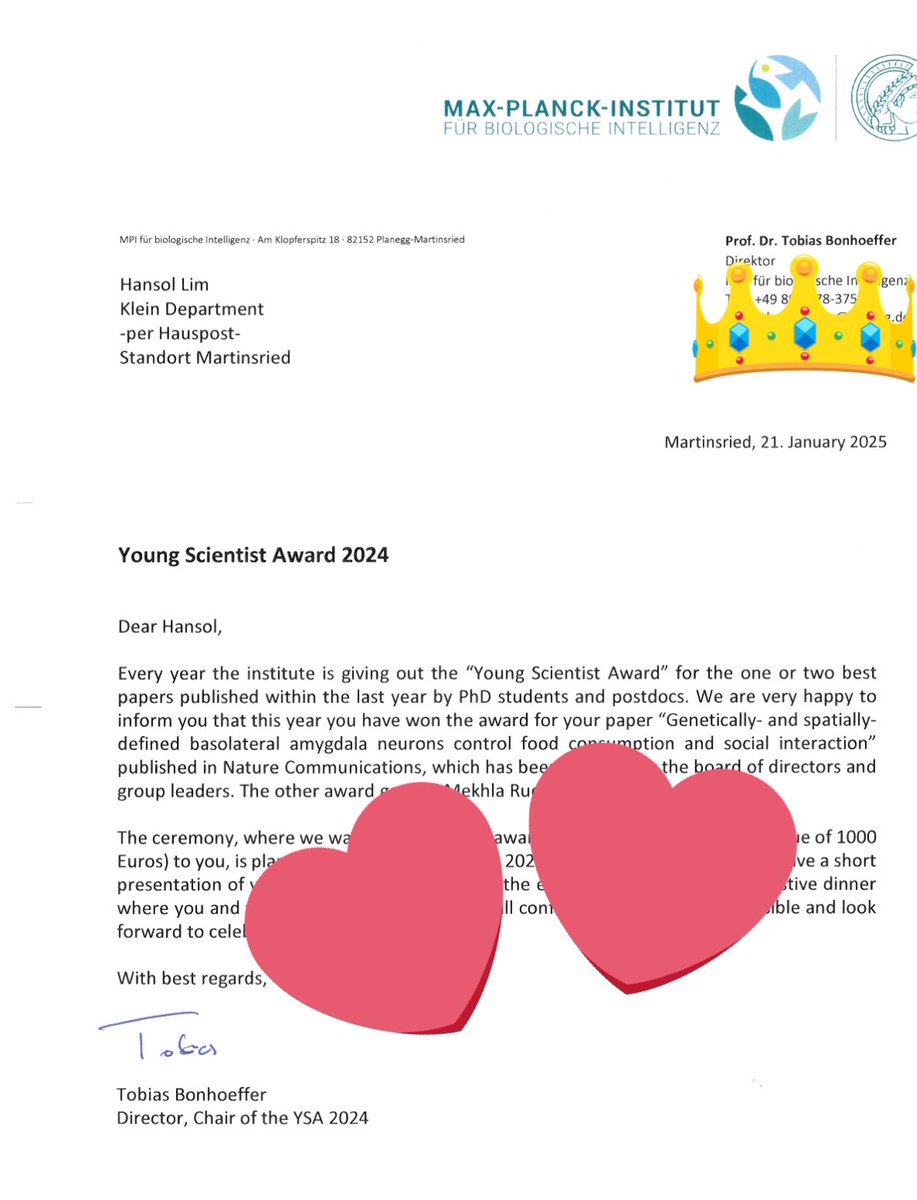
I’m thrilled to share that I’ve been chosen as the Young Scientist Award 2025 from my alma mater,@MPIforBI !This is a huge honor and I’m incredibly grateful and can’t wait to go back there
English