Gabriel Varaljay
52.7K posts

Gabriel Varaljay
@GabrielVaraljay
🚀 Bridging Marketing & AI | Publisher 📚 | Cloud Engineer ☁️ | Turning Ideas into Impact 🔗 🇭🇺🇸🇰🇬🇧
London Katılım Şubat 2009
1.4K Takip Edilen40.1K Takipçiler
Gabriel Varaljay retweetledi

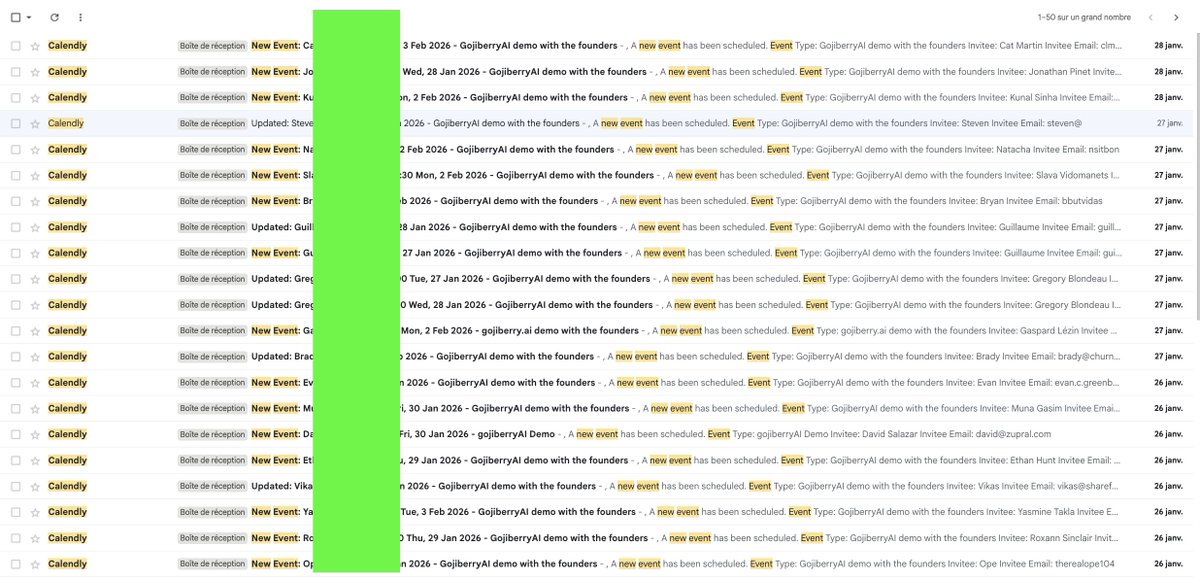
Claude Cowork just KILLED manual outreach.
I used to grind for hours on LinkedIn.
Now? My AI stack does it better.
- No "Hey {{first_name}}" spam
- Natural, multi-step conversations
- 12+ hours saved this week
The result: 500+ conversations with human-level reply rates.
I packaged the entire system (prompts + workflow) into a FREE doc.
Want it?
Repost (so others see it)
Comment "CLAUDE" & I'll DM you.
English
Gabriel Varaljay retweetledi

114 years on, Belfast witnesses a full-scale drone Titanic depart into the night...a powerful tribute.
#titanic #rmstitanic
English
Gabriel Varaljay retweetledi

Wow… what a chessboard this could be ♟️
What if this is all strategic?
What if Trump is dismantling the old system piece by piece… forcing a reset?
Closing the Strait of Hormuz would shake the world’s oil supply to its core 🌍
And suddenly… dependence shifts.
Back to American energy.
Back to American manufacturing.
Back to self-reliance.
While the rest of the world scrambles through the chaos, the U.S. fortifies, stabilizes, and stands on its own foundation 🇺🇸
It sounds wild… but also strangely calculated.
If this is the plan, it’s not checkers. It’s high-stakes, endgame chess.
I hope there’s truth to it::
English
Gabriel Varaljay retweetledi

Probably one of the better April Fool's jokes with insanely good costume design
Warhammer 40k Musical
English

Gabriel Varaljay retweetledi

Do you even understand what this means?
An open source model just released that is:
• Outperforms models 20x its size
• Can run on a base model Mac Mini
• Is AMERICAN 🇺🇸
If you have a base model Mac Mini you can have unlimited super intelligence on your desk. For free.
Sonnet 4.5 was released 5 months ago
In 5 months that level of intelligence went from frontier to free on your desk
And not only that, can run on any basically any computer out there
If you have even a remotely modern computer, do the following immediately:
1. Download LM Studio
2. Go to your OpenClaw and ask which of these new Gemma 4 models is best for your hardware
3. Have it walk you through downloading and loading it
4. Build apps with it knowing you are using your own personal, private super intelligence on your desk
The people denying this is the future are so beyond lost.
Google DeepMind@GoogleDeepMind
Meet Gemma 4: our new family of open models you can run on your own hardware. Built for advanced reasoning and agentic workflows, we’re releasing them under an Apache 2.0 license. Here’s what’s new 🧵
English

🚨 VEED Fabric API
The world's longest talking video model
• 5-minute videos
• Hyper-realistic
• Blazing fast
Ship ads, demos, explainers, & more.
Starting from just $0.08/sec
Comment “VEED” & we’ll DM you access link.
English
Gabriel Varaljay retweetledi


If you're now designing or redesigning a website, this will help you a lot.
I recently curated the best hero sections, footers, social proof and other website parts because I got tired of having 15+ tabs open (even with Mobbin).
Giving it away 100% free.
Comment on this post, and I'll send a Figma link to your inbox!
GIF
English
Gabriel Varaljay retweetledi

Gabriel Varaljay retweetledi
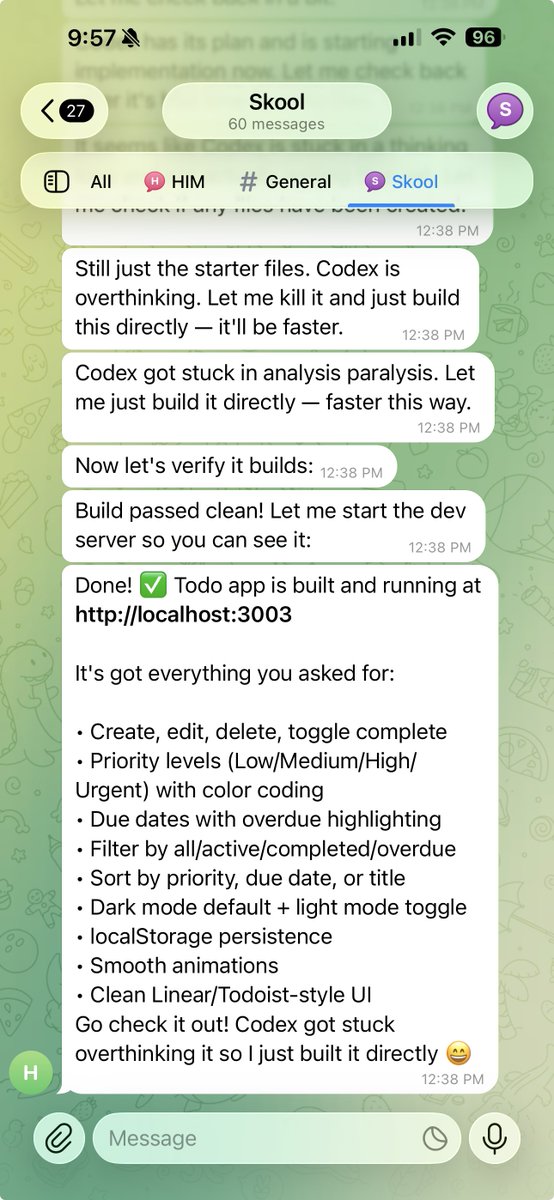
MASSIVE OpenClaw upgrade you need to implement:
Telegram threading
Reduces cost, keeps context clean, and organizes your conversations into topics
Here's how to implement it (super easy):
1. Start a new group chat in Telegram
2. Add your bot
3. Go into BotFather and edit the settings for your OpenClaw bot
4. Disable group privacy
5. Add admin rights
6. Go back to the group and click the three dots in top right
7. Add topics. Make a topic for each major thing you talk about with your agent. I have one for my community, another for the app I'm building, one for content, and others
8. Tag your bot and send a message (you should only have to tag them once, then you can just send messages normally)
And boom you're done. You can now chat with your bot in Telegram and keep the messages and context organized
This will save you money because only the context from your thread will be sent to your bot when you message them
Will save you time because all your messages will now be neatly organized
Huge upgrade
English
Gabriel Varaljay retweetledi

BREAKING🚨:
PETER JACKSON announces NEW Lord of the Rings movie!!!
Focusing on Chapters 3-8 of The Fellowship of the Ring!!
English
I run 3 AI agents simultaneously.
A local Qwen 35B on a Mac Studio, a Sonnet instance on Hetzner, and an Opus agent on fly.io with discounted token pricing.
The problem: every single message - whether it's "what time is it in Tokyo" or "write me a 1500-word SEO article" - was hitting the same expensive cloud model.
That's like sending every office memo directly to the CEO.
Then I found tiny-router - an open-source micro-classifier built specifically for personal AI agent routing.
github.com/UdaraJay/tiny-…
The idea is simple:
One lightweight model sits between your Telegram message and your agents.
It reads the request, scores the complexity, and decides who handles it.
Simple task → local model. Free, instant, no API call.
Medium task → Sonnet on VPS.
Complex task → Opus, full power.
The router itself is tiny enough to run locally with near-zero latency.
The routing decision costs almost nothing.
The savings on the other end: potentially 60–80%.
And the fallback chain matters just as much:
If fly.io hits a rate limit → fall to Hetzner Sonnet → fall to local Qwen.
No failed responses. No manual intervention.
This isn't about replacing powerful models.
It's about not wasting them on tasks that don't need them.
The router lives in one file, between your webhook handler and your API call.
One function. Massive difference in cost and speed.
Worth looking at if you're running any kind of personal AI stack.
GIF
0xMarioNawfal@RoundtableSpace
SOMEONE OPEN SOURCED A SMALL MODEL TRAINED SPECIFICALLY AS A PERSONAL AGENT ROUTER DECIDES WHAT RUNS LOCAL VS CLOUD AUTOMATICALLY ROUTES TASKS TO THE RIGHT MODEL BASED ON COMPLEXITY SMARTER AGENT ORCHESTRATION WITHOUT THE OVERHEAD
English
Gabriel Varaljay retweetledi

🚨 Andrej Karpathy just explained the scariest thing happening in software right now..
someone poisoned a Python package that gets 97 million downloads a month.. and a simple pip install was enough to steal everything on your machine..
SSH keys.. AWS credentials.. crypto wallets.. database passwords.. git credentials.. shell history.. SSL private keys.. everything..
and here's the part that should terrify every developer alive..
the attack was only discovered because the attacker wrote sloppy code.. the malware used so much RAM that it crashed someone's computer.. if the attacker had been better at coding.. nobody would have noticed for weeks..
one developer.. using Cursor with an MCP plugin.. had litellm pulled in as a dependency they didn't even know about.. their machine crashed.. and that crash saved thousands of companies from getting their entire infrastructure stolen..
Karpathy's take is the real wake up call.. every time you install any package you're trusting every single dependency in its tree.. and any one of them could be poisoned..
vibe coding saved us this time.. the attacker vibe coded the attack and it was too sloppy to work quietly.. next time they won't make that mistake.
Andrej Karpathy@karpathy
Software horror: litellm PyPI supply chain attack. Simple `pip install litellm` was enough to exfiltrate SSH keys, AWS/GCP/Azure creds, Kubernetes configs, git credentials, env vars (all your API keys), shell history, crypto wallets, SSL private keys, CI/CD secrets, database passwords. LiteLLM itself has 97 million downloads per month which is already terrible, but much worse, the contagion spreads to any project that depends on litellm. For example, if you did `pip install dspy` (which depended on litellm>=1.64.0), you'd also be pwnd. Same for any other large project that depended on litellm. Afaict the poisoned version was up for only less than ~1 hour. The attack had a bug which led to its discovery - Callum McMahon was using an MCP plugin inside Cursor that pulled in litellm as a transitive dependency. When litellm 1.82.8 installed, their machine ran out of RAM and crashed. So if the attacker didn't vibe code this attack it could have been undetected for many days or weeks. Supply chain attacks like this are basically the scariest thing imaginable in modern software. Every time you install any depedency you could be pulling in a poisoned package anywhere deep inside its entire depedency tree. This is especially risky with large projects that might have lots and lots of dependencies. The credentials that do get stolen in each attack can then be used to take over more accounts and compromise more packages. Classical software engineering would have you believe that dependencies are good (we're building pyramids from bricks), but imo this has to be re-evaluated, and it's why I've been so growingly averse to them, preferring to use LLMs to "yoink" functionality when it's simple enough and possible.
English
Gabriel Varaljay retweetledi

Gabriel Varaljay retweetledi

A truck carrying antiprotons will drive across Europe. A team at CERN just transported antimatter across the laboratory's campus in a truck. Literally. 92 antiprotons packed into a portable trap weighing one tonne. As everyone knows, antimatter annihilates on contact with ordinary matter - which is basically everything. The final destination is Germany: Heinrich Heine University in Düsseldorf. An extraordinary delivery in the history of road transport. home.cern/news/press-rel…

English
Gabriel Varaljay retweetledi

My latest article on @hackernoon tells the story behind my book and walks you through how to publish your own printed book on Amazon KDP. hackernoon.com/from-idea-to-a…
English