Gamma Prime | Uncorrelated Investing Hub

1.3K posts

Gamma Prime | Uncorrelated Investing Hub banner
Gamma Prime | Uncorrelated Investing Hub

Gamma Prime | Uncorrelated Investing Hub

@GammaPrime_Com

• Access private alternative funds once limited to billionaires & endowments • 108 funds with billions in AUM • Audited, regulated, independently administered

Zurich, Switzerland Katılım Haziran 2022
157 Takip Edilen3.6K Takipçiler
Sabitlenmiş Tweet
Gamma Prime | Uncorrelated Investing Hub
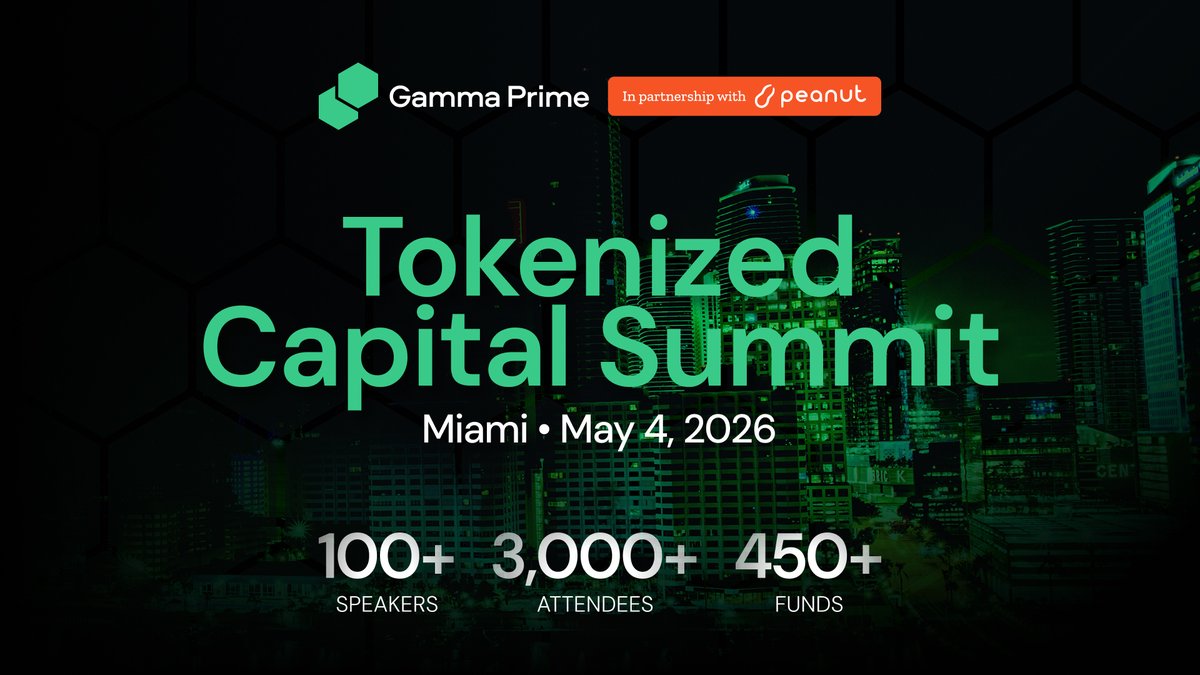
We're bringing the future of finance to Miami 🌊🇺🇸 @TokenizedSummit 2026 takes place on May 4 3,000+ attendees - institutions, funds, VCs, and builders actively turning tokenization into real capital - all under one roof. 🧵Here’s what to expect
Gamma Prime | Uncorrelated Investing Hub tweet media
English
1
1
3
442
Gamma Prime | Uncorrelated Investing Hub retweetledi
P2P.org
P2P.org@P2Pvalidator·
Tokenization is moving from concept to implementation. @P2Pvalidator and @GammaPrime_Com are co-sponsoring the Tokenized Capital Summit on May 4th during Consensus Miami, joining leaders across private markets, asset management, and financial infrastructure. The question on the table: how real-world assets are structured, distributed, and managed on-chain at scale. RSVP 👇 luma.com/tokenizedcapit…
P2P.org tweet media
English
0
1
1
485
Gamma Prime | Uncorrelated Investing Hub
4/ That’s Not All We’re curating the premier community calendar for Consensus Miami 2026 side events - bringing together the broader ecosystem around the main event. 🗓️ Explore the full calendar here: 🔗luma.com/miamisideevents Exclusive dinners, workshops, and private networking sessions are happening throughout the week
English
1
0
0
90
Gamma Prime | Uncorrelated Investing Hub
We're bringing the future of finance to Miami 🌊🇺🇸 @TokenizedSummit 2026 takes place on May 4 3,000+ attendees - institutions, funds, VCs, and builders actively turning tokenization into real capital - all under one roof. 🧵Here’s what to expect
Gamma Prime | Uncorrelated Investing Hub tweet media
English
1
1
3
442
Nate Hagens
Nate Hagens@NJHagens·
Today, I welcome back astrophysicist Tom Murphy and eco-interventionist DJ White, two longtime friends with deep roots in both space science and ecological reality, to examine the surging cultural fascination with space mining and off-world colonization. thegreatsimplification.com/episode/realit…
English
3
4
28
1.2K
Barry Rosen
Barry Rosen@brosen1501·
On June 11, THE Hill published an opinion piece of mine where I called the Trump administration's attempted termination of Temporary Protection Status (TPS) for 10,000 Afghans an "abomination." For those Afghan refugees who have made the U.S. home after fleeing a growing humanitarian crisis under Taliban rule, the future is no longer even temporarily secure. Those Afghans in the U.S. are no longer protected from deportation after a federal appeals court refused to postpone the Trump administration’s decision to end their legal status. The "abomination" is now a reality.
English
6
14
107
38.7K
Shanaka Anslem Perera ⚡
Shanaka Anslem Perera ⚡@shanaka86·
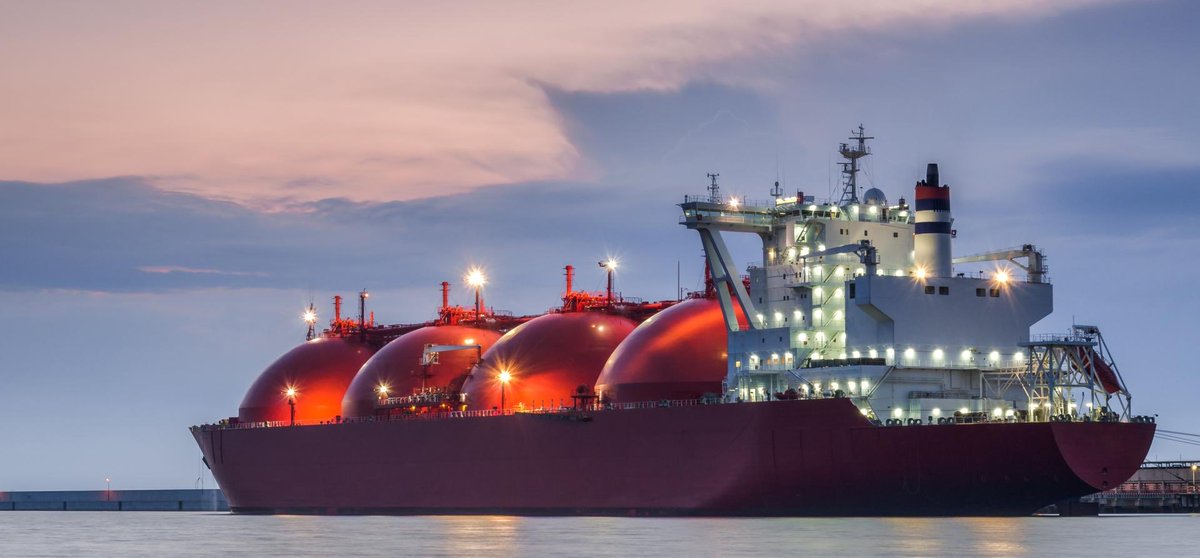
The entire global LNG map rewired in 30 days. The flows did not collapse. They rerouted straight to American exporters. And nobody has mapped what this means. In February, Qatar shipped 8.4 billion cubic meters of LNG to Europe. In March, after Iranian retaliation strikes destroyed two liquefaction trains and the gas-to-liquids facility at Ras Laffan, that number fell to 0.4. Qatar, the world’s largest LNG exporter supplying 20 percent of global volume, essentially vanished from the market overnight. QatarEnergy declared force majeure. Repairs: three to five years. Revenue loss: $20 billion annually. Twelve point eight million tonnes per year of capacity removed from the earth’s energy system by drone and missile strikes on a gas plant in the desert. In the same 30 days, US LNG exports to Europe surged from 13.1 billion cubic meters to 15.7. Total US exports hit 11.7 million metric tons in March, the highest single month in American history. Sixty-four percent went to Europe. Exports to Asia doubled from 0.97 million tonnes to 1.99. Europe’s total LNG imports held steady at 11.9 billion cubic meters. The supply shock was absorbed. Not by luck. By American molecules replacing Qatari ones at record pace through infrastructure that was already built, already permitted, and already connected. Read the chain of causation. The United States launched Operation Epic Fury on February 28. Iran retaliated with strikes on Qatar’s Ras Laffan in early March. Those strikes removed 17 percent of Qatar’s LNG capacity for years. The market that opened was filled by American exporters at record volumes and premium prices. The country that launched the war is the country whose energy industry captured the windfall the war created. Cheniere is fielding calls from every Asian buyer that lost a Qatari contract. Venture Global is running at nameplate. Every US terminal is at maximum utilization. Meanwhile Russia positioned as the alternative. Lavrov told Beijing on April 15 that Russia can “compensate for the shortfall.” Russian LNG to Europe rose 17 percent in Q1, with 97 percent of Yamal cargoes going to the EU. But Russia’s entire Q1 output of 8.6 million tonnes is less than what the US exported in March alone. Power of Siberia is maxed. Arctic LNG 2 contributed 0.8 million tonnes under sanctions. Russia is opportunistic, not structural. The scale difference is civilizational. The downstream consequences cascade through every economy that depended on Qatari gas. Pakistan receives 99 percent of imported LNG from Qatar and load-shedding has surged. India sources 46 percent from Qatar. Europe’s gas storage entered injection season at 29 percent, the lowest in five years. ACER warned of a 16 billion cubic meter shortfall. Qatar will remain offline because the damage is physical, not political. This is the largest forced restructuring of global energy trade since the 1973 oil embargo. But in 1973, the restructuring was deliberate. In 2026, it is structural consequence. Operation Epic Fury was designed to disarm Iran’s nuclear program and degrade its military capacity. It was not designed to make the United States the dominant LNG supplier to three continents simultaneously. That happened anyway. And it will not reverse, because the infrastructure that was destroyed takes years to rebuild while the infrastructure that replaced it was already running. The new LNG map is American. It was drawn by Iranian missiles on a Qatari gas plant. open.substack.com/pub/shanakaans…
Shanaka Anslem Perera ⚡ tweet media
Shanaka Anslem Perera ⚡@shanaka86

JUST IN: The entire petrochemical arc of the Persian Gulf is on fire, offline, or suspended. Count the countries. Iran: 85 percent of petrochemical production destroyed by Israeli strikes on Asaluyeh and Mahshahr. Qatar: two LNG trains and 17 percent of export capacity offline for three to five years after Iranian missiles hit Ras Laffan. UAE: Borouge polyolefin plant suspended, Habshan gas complex shut with 80 percent of domestic gas supply offline, Asab degassing station burning since March 29th, Bu Hasa oil field hit. Saudi Arabia: fires at Jubail Industrial City after Iranian missiles struck the SABIC petrochemical hub, one of the largest integrated chemical complexes on earth. Kuwait: airport fuel tanks ablaze, two power and desalination units offline, Oil Ministry facilities hit, 15 American servicemembers injured at Ali Al Salem air base. Bahrain: GPIC petrochemical units attacked, BAPCO storage tank fire. Six countries. One war. Every major energy producer on the Persian Gulf has taken damage. The global numbers are now quantifiable. C&EN reports 12 percent of global ethylene capacity is offline. The Dow CEO told Fortune that approximately 20 percent of global petrochemical capacity is blocked by the Hormuz closure and strikes combined. The Middle East operates 193 petrochemical complexes supplying 22 percent of global output. The GCC alone accounts for 12 percent, or 150 million tonnes per year. Asia’s naphtha feedstock supply has been throttled by 7 to 8 million tonnes. S&P Global estimates 10 to 11 million tonnes of paraxylene production lost. These are not projections. They are current measurements of capacity that is not producing. The war did not discriminate. Israel struck Iran’s plants to deny IRGC revenue and missile chemistry. Iran struck Gulf plants to impose symmetric pain on the countries hosting American forces and benefiting from the scarcity premium. The UAE’s damage came from the debris of its own successful interceptions falling onto the facilities the interceptors were protecting. Kuwait’s power and desalination plants were hit by Iranian drones while 15 American troops at Ali Al Salem took shrapnel from another. Saudi Arabia’s Jubail, which produces methanol, ethylene glycol, and fertiliser feedstocks for global markets, burned overnight. The fires in Bahrain’s BAPCO storage were extinguished. The fires in Jubail had not been when this was written. The molecule does not care about the flag over the facility. Polyethylene from Borouge and polyethylene from Asaluyeh and polyethylene from Jubail all serve the same Asian markets. All three sources are now offline or suspended. The syringe wrapper in Dhaka, the water pipe in Jakarta, the food container in Manila, the fertiliser pellet in Lahore, all of them originate in the Persian Gulf’s petrochemical arc, and the arc is dark from Asaluyeh to Jubail to Ras Laffan to Ruwais to Shuaiba. Hegseth said the most recent overnight strikes on Iran are the largest since day one. Tomorrow will be bigger. Iran’s response has been to hit every Gulf nation hosting American assets or profiting from the war. The reciprocal destruction is not collateral. It is doctrine. Israel degrades Iran’s chemistry. Iran degrades the Gulf’s processing. Both sides lose capacity. Asia loses supply. And the 12 to 20 percent of global petrochemical output that is now offline will not return until the war ends, the mines are cleared, the heat exchangers are manufactured, and the utilities are rebuilt. That timeline is not weeks. It is years. And Tuesday is today. Europe markets might open in to a bloodbath. open.substack.com/pub/shanakaans…

English
17
103
236
36.9K
Adam Butler
Adam Butler@GestaltU·
The highest signal observation pushing p(Doom) right now is the inability to determine if Anthropic’s new Mythos model safety messaging is designed to genuinely sound an alarm, or to hype their valuation in advance of IPO. The ambiguity says all there is to say about this moment.
English
3
2
21
1.8K
Gamma Prime | Uncorrelated Investing Hub
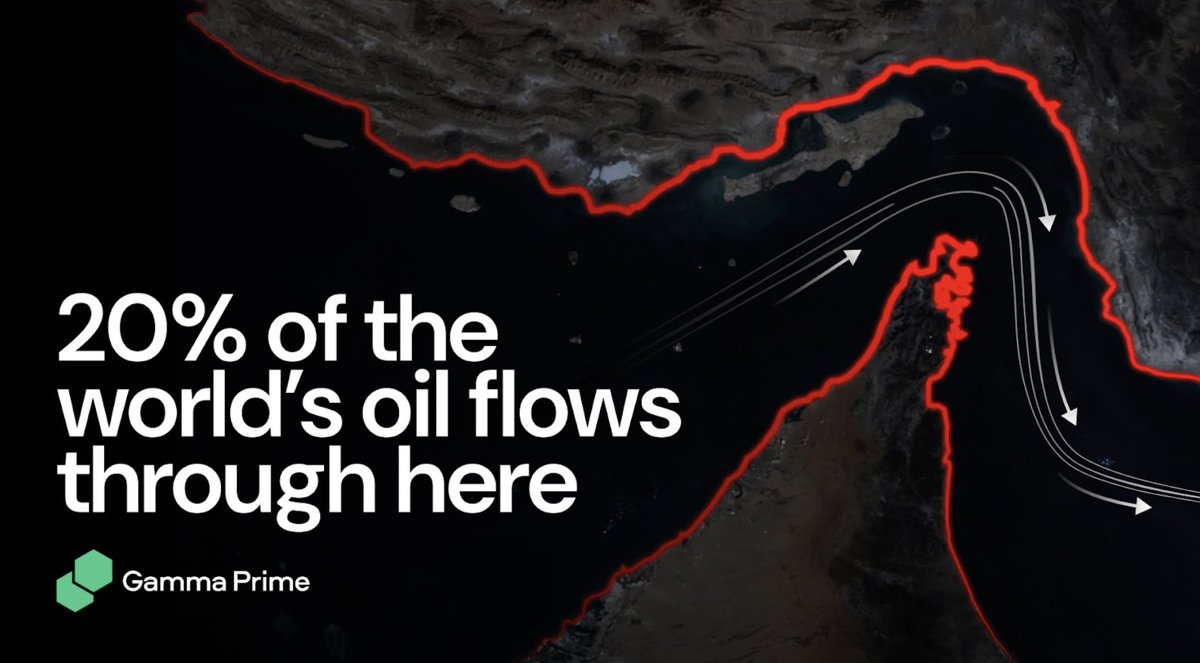
6/ So here's the real lesson from all of this. The global economy had one critical vulnerability hiding in plain sight. A 33-mile channel that nobody thought would ever close. In 6 weeks it triggered the biggest oil shock in history, a food supply crisis, a shipping reroute, stagflation fears, and a near-civilizational ultimatum. The ceasefire is real but the structural fragility is still there. We just became more aware of how much we depend on it.
English
0
0
0
120
Gamma Prime | Uncorrelated Investing Hub
5/ The next 14 days will be crucial. Negotiations begin today in Islamabad. Iran charges $2M per ship for Strait passage - a new permanent cost layer. The ceasefire doesn't cover Lebanon. 1,500 ships backlogged means weeks before supply chains normalise. And if talks collapse, we're back to $150 oil faster than markets expect.
English
1
0
1
178
Gamma Prime | Uncorrelated Investing Hub
20% of the world's oil passes through a 33-mile chokepoint. It's been closed for 6 weeks and caused global chaos. US and Iran agreed to a 2-week ceasefire. Oil dropped 16% in minutes. 🧵Here's what it means for your money
Gamma Prime | Uncorrelated Investing Hub tweet media
English
1
1
6
399