Gaurav Srivastava

445 posts

Gaurav Srivastava banner
Gaurav Srivastava

Gaurav Srivastava

@Gaurav_bsip

Understanding the vegetation-climate relationship in deep time.

Lucknow, India Katılım Nisan 2019
305 Takip Edilen163 Takipçiler
Gaurav Srivastava retweetledi
🔴All India Weather
🔴All India Weather@allindiaweather·
The monsoon is just waiting on the doorstep of the Indian subcontinent. Let's welcome it by commenting "welcome". 🤗
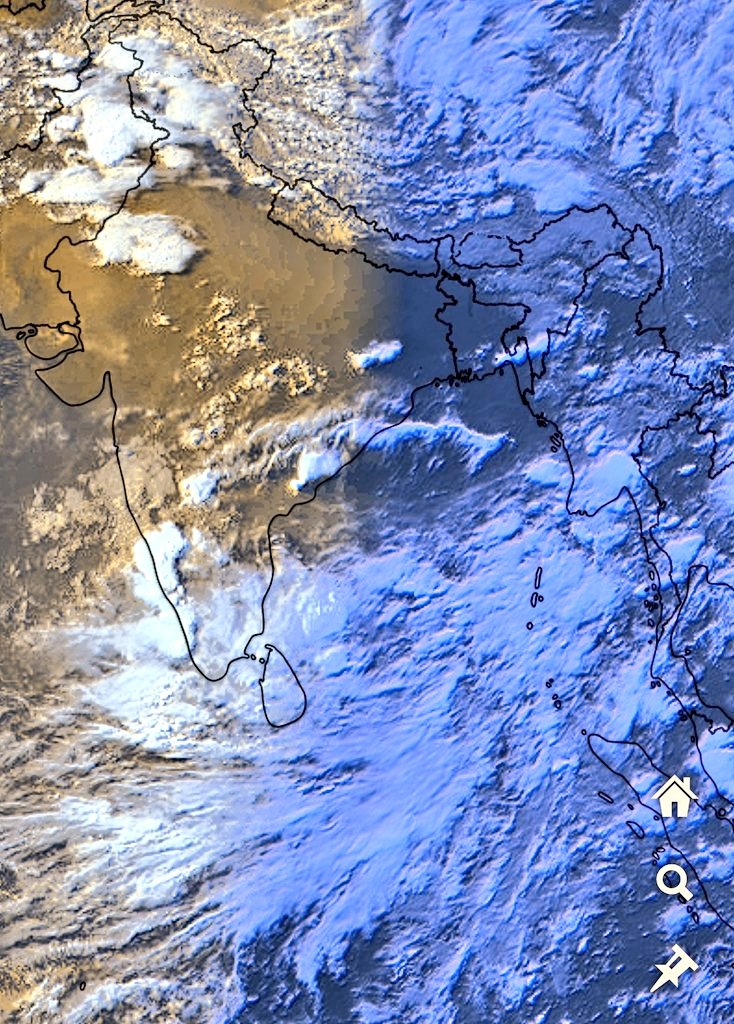
🔴All India Weather tweet media
English
118
177
2.4K
73.1K
Gaurav Srivastava retweetledi
Gaurav Srivastava
Gaurav Srivastava@Gaurav_bsip·
The air quality index on 10.03.2026.
Gaurav Srivastava tweet media
English
0
0
0
16
Gaurav Srivastava retweetledi
Shubham Mishra
Shubham Mishra@brahma_4u·
The Untold Story of Ashoke Sen Born in Kolkata in 1956, Ashoke Sen grew up in a modest academic environment where curiosity mattered more than recognition. He studied physics at Presidency College and later completed his PhD at Stony Brook University in the U.S. But unlike many who stay abroad for comfort and resources, he chose to return to India, a decision that defined his character. At the Harish-Chandra Research Institute in Allahabad, he worked quietly, away from the global spotlight, focusing deeply on one of the hardest areas of modern science: string theory. Then came his breakthrough. In the 1990s, his work on duality in string theory reshaped the field and influenced physicists worldwide. His ideas helped trigger what scientists called the “Second Superstring Revolution.” He went on to become one of the most cited theoretical physicists in the world. Yet, despite global recognition, including the Dirac Medal, Fundamental Physics Prize, and Padma Bhushan his lifestyle remained unchanged. The humility that defines him Comes to the institute on a simple bicycle Works from a plain office Avoids publicity and media attention Focuses only on research, teaching, and thinking Lives a quiet, disciplined life dedicated to science No social media presence. No self-promotion. No chase for fame. Just depth. Curiosity. And truth. The real lesson from his life Greatness is not loud. It does not demand attention. It is built in silence, over decades, through discipline and clarity of thought.
Shubham Mishra tweet media
English
52
425
1.9K
126.7K
Gaurav Srivastava retweetledi
Jugeshinder Robbie Singh
Jugeshinder Robbie Singh@jugeshinder·
When you remember how great your civilization was... you stop accepting mediocrity INSV Kaundinya just pulled off something epic. No engine. No metal fasteners. Just ancient Indian stitching tech from 5th-century Ajanta Caves paintings. 16 crew. 18 days: Wind power across the Arabian Sea. Left Porbandar Dec 29, 2025 → arrived Muscat Jan 14, 2026 with a massive water salute welcome. This isn't nostalgia. It's proof India had world-class seafaring tech 1,500+ years ago—long before anyone else claimed it. Every successful voyage like this wakes up the nation: We built empires on innovation, craftsmanship & bold exploration. This is the spark for India's renaissance by 2047. Ancient genius + modern ambition = unstoppable. Kaundinya just reminded 1.4B people: We were once the greatest maritime power on Earth. Time to become it again. @sanjeevsanyal @ARanganathan72
Jugeshinder Robbie Singh tweet media
English
101
2.4K
10.5K
245.1K
Gaurav Srivastava retweetledi
Anand Ranganathan
Anand Ranganathan@ARanganathan72·
We credit Swami Vivekananda for India's spiritual renaissance but forget his contribution to our scientific renaissance. It was he who first proposed setting up of IISc and other science centres. May the man who inspired Nikola Tesla and SN Bose continue to inspire scientists.
Anand Ranganathan tweet media
English
231
4.1K
18.5K
181.1K
Gaurav Srivastava
Gaurav Srivastava@Gaurav_bsip·
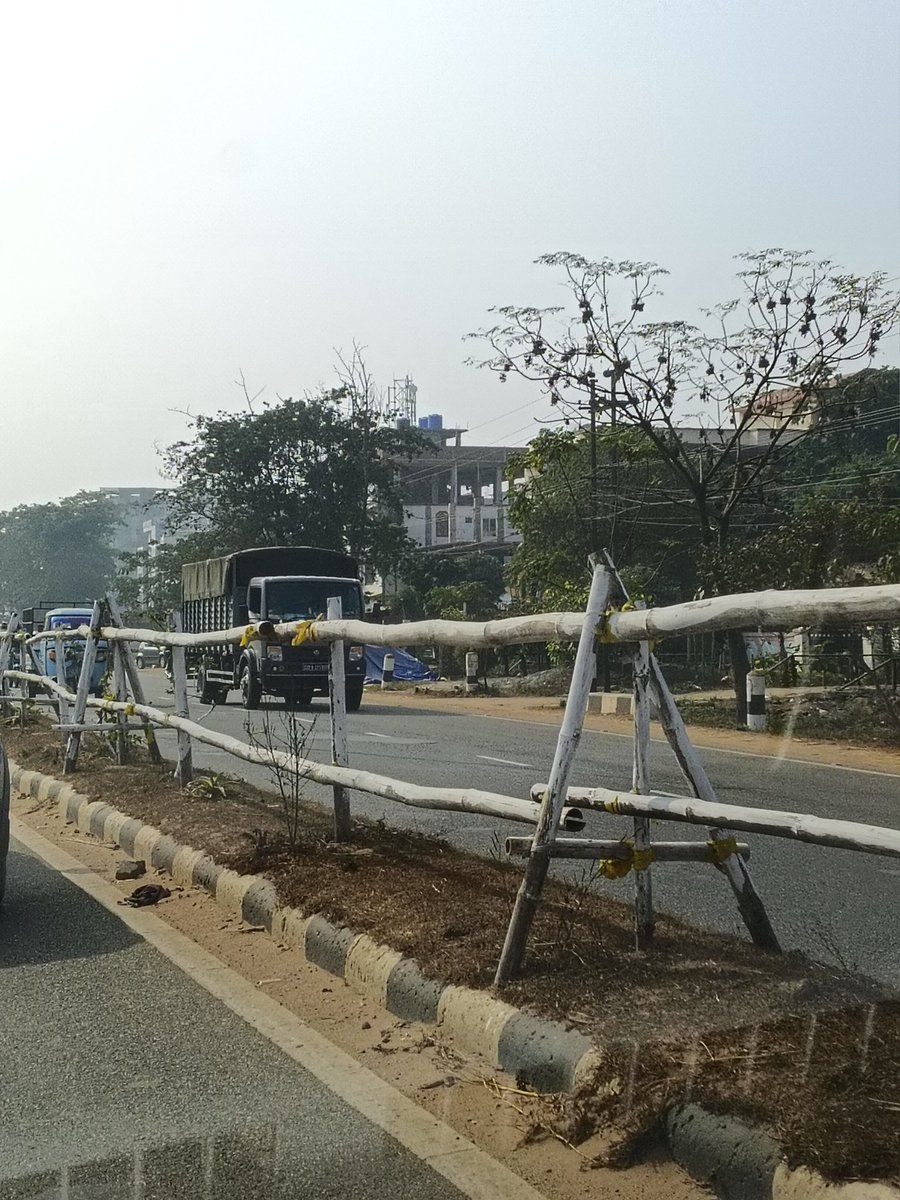
Assam can lead in sustainable infrastructure by using bamboo as road dividers. Locally available, renewable, low-carbon, and aesthetically pleasing, engineered bamboo dividers can support rural economies while promoting eco-friendly road safety solutions.
Gaurav Srivastava tweet media
English
0
0
0
39
Gaurav Srivastava retweetledi
Narendra Modi
Narendra Modi@narendramodi·
देशवासियों के हृदय में बसे पूर्व प्रधानमंत्री भारत रत्न अटल बिहारी वाजपेयी जी को उनकी जयंती पर सादर नमन। उन्होंने अपना संपूर्ण जीवन सुशासन और राष्ट्र निर्माण को समर्पित कर दिया। वे एक प्रखर वक्ता के साथ-साथ ओजस्वी कवि के रूप में भी सदैव स्मरणीय रहेंगे। उनका व्यक्तित्व, कृतित्व और नेतृत्व देश के चहुंमुखी विकास के लिए पथ-प्रदर्शक बना रहेगा।
हिन्दी
1.9K
11.2K
51.5K
827.9K
Gaurav Srivastava retweetledi
ISRO InSight
ISRO InSight@ISROSight·
BlueBird Block-2 satellite separated successfully and injected into their intended orbit! 🚀 Mission successfully accomplished! 🎉
English
70
1.1K
6.7K
89.8K
Gaurav Srivastava retweetledi
ISRO Spaceflight
ISRO Spaceflight@ISROSpaceflight·
🚨 Liftoff of LVM3-M6 at 8:55 AM IST from ISRO's Second Launch Pad at SHAR 🚀 #ISRO #LVM3M6
English
45
462
2.8K
73K
Gaurav Srivastava retweetledi
Binita Phartiyal
Binita Phartiyal@BinitaPhartiyal·
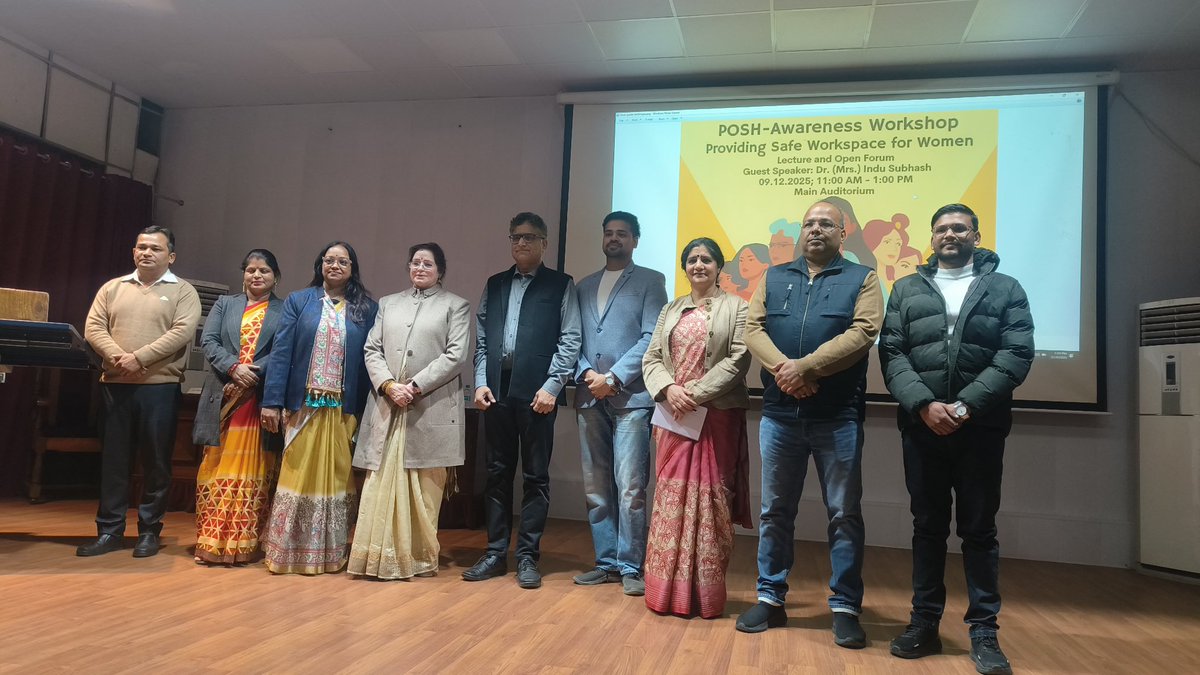
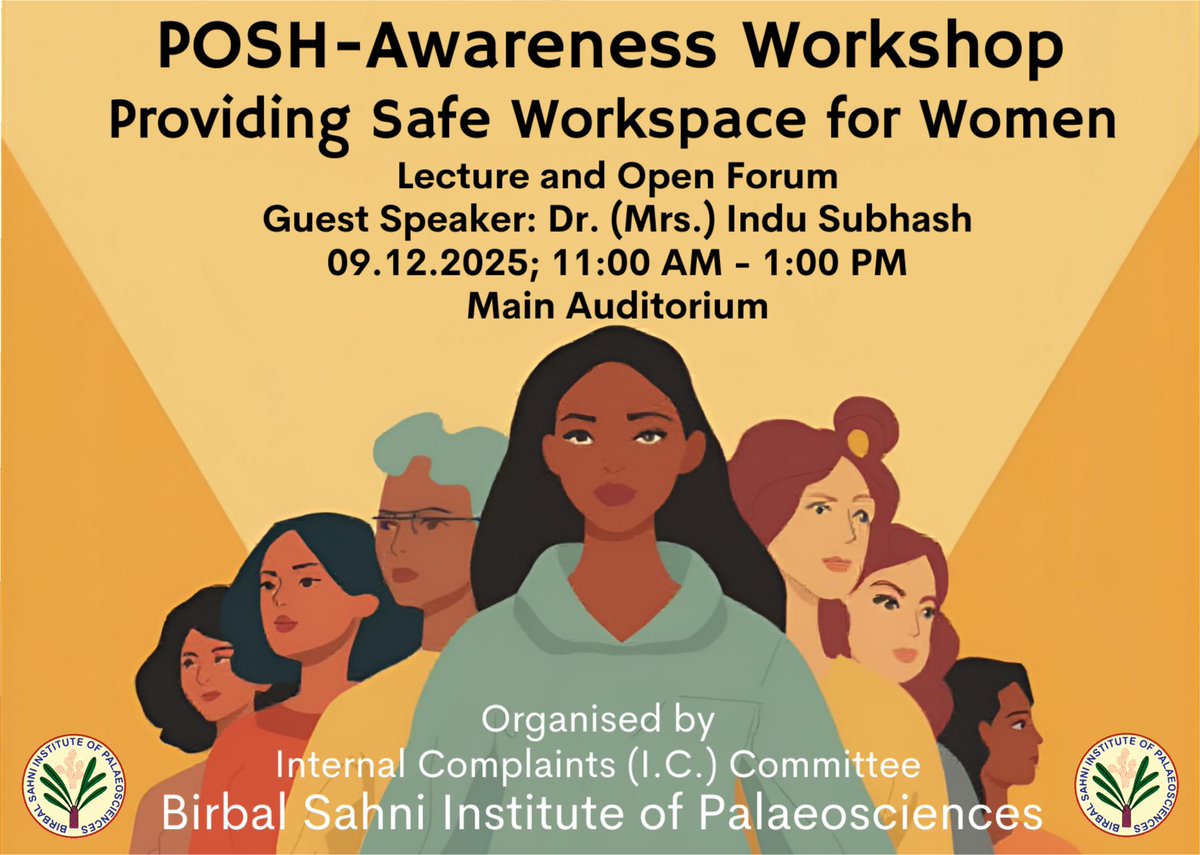
9 Dec-enforcement of Act for safety of women (Sexual Harassment of Women at Workplace (Prevention, Prohibition, Redressal) Act 2013)-a landmark legislation that played a transformative role in ensuring a safe, respectful, equitable work environment for women across the country.
Binita Phartiyal tweet mediaBinita Phartiyal tweet mediaBinita Phartiyal tweet mediaBinita Phartiyal tweet media
English
0
1
4
104
Gaurav Srivastava retweetledi
PIB India
PIB India@PIB_India·
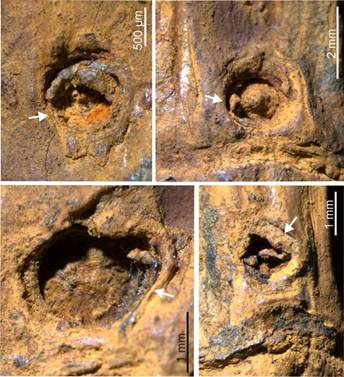
37,000-year-old bamboo from Manipur reveals Asia’s ice age secret Scientists from Birbal Sahni institution of Palaeosciences (BSIP), an autonomous institute of the Department of Science and Technology (DST) during field surveys in the silt-rich deposits of the Chirang River in Manipur’s Imphal Valley, chanced upon a bamboo stem with unusual markings. Their detailed analysis identified these as thorn scars, prompting further investigation into its identity and significance. Through study of its morphology—nodes, buds, and thorn scars in the laboratory, as they assigned it to the genus Chimonobambusa. Comparisons with living thorny bamboos such as Bambusa bambos and Chimonobambusa callosa helped reconstruct its defensive traits and ecological role. This is the first fossil evidence that thorniness in bamboo—a defense against herbivores—was already present in Asia during the Ice Age. Its preservation is particularly significant because it comes from a period of colder and drier global climates, when bamboo was wiped out in many other regions, including Europe. The fossil shows that while harsh Ice Age conditions restricted bamboo’s global distribution, Northeast India provided a safe refuge where the plant could continue to thrive. Read here: pib.gov.in/PressReleasePa…
PIB India tweet mediaPIB India tweet media
English
20
858
4K
157.4K
Gaurav Srivastava retweetledi
Shining Science
Shining Science@ShiningScience·
Imagine never needing to recharge your devices again. That future just came closer with China’s latest breakthrough in nuclear battery technology. Researchers have developed a miniature power source, no larger than a coin, that can run continuously for up to 100 years without a single recharge. Unlike traditional batteries that wear out through chemical reactions, these nuclear batteries generate electricity from the natural decay of isotopes, making them incredibly long-lasting and stable. The BV100, created by Chinese startup Betavolt, uses Nickel-63 and can already power devices for 50 years. Building on this, researchers at Northwest Normal University unveiled a Carbon-14 version with a potential lifespan of a full century. To support large-scale use, China is setting up dedicated facilities for isotope production, securing the entire supply chain much like it did with solar energy manufacturing. Other countries are racing to catch up. In the US, tritium-powered designs are being tested, while the UK is experimenting with radioactive waste batteries. South Korea and EU research groups are also pushing alternative models. The possible applications are game-changing: pacemakers lasting a lifetime, space probes sending back data for decades, and industrial sensors running indefinitely in remote areas. With safety measures advancing and production scaling up, this innovation could eventually reach consumer electronics, reshaping how we think about energy. The end of disposable and rechargeable batteries might be closer than ever.
Shining Science tweet media
English
31
221
742
22.7K
Gaurav Srivastava retweetledi
All day Astronomy
All day Astronomy@forallcurious·
BREAKING 🚨: 🧬 This find indicates that Earth was seeded with life’s ingredients from beyond. A 2-billion-year-old asteroid sample is reviving one of the most provocative ideas in science: that life on Earth may have come from space. Source: NASA "NASA’s Bennu Samples Reveal Complex Origins, Dramatic Transformation" 2025
All day Astronomy tweet media
English
68
250
1.5K
68.6K
Gaurav Srivastava retweetledi
Shining Science
Shining Science@ShiningScience·
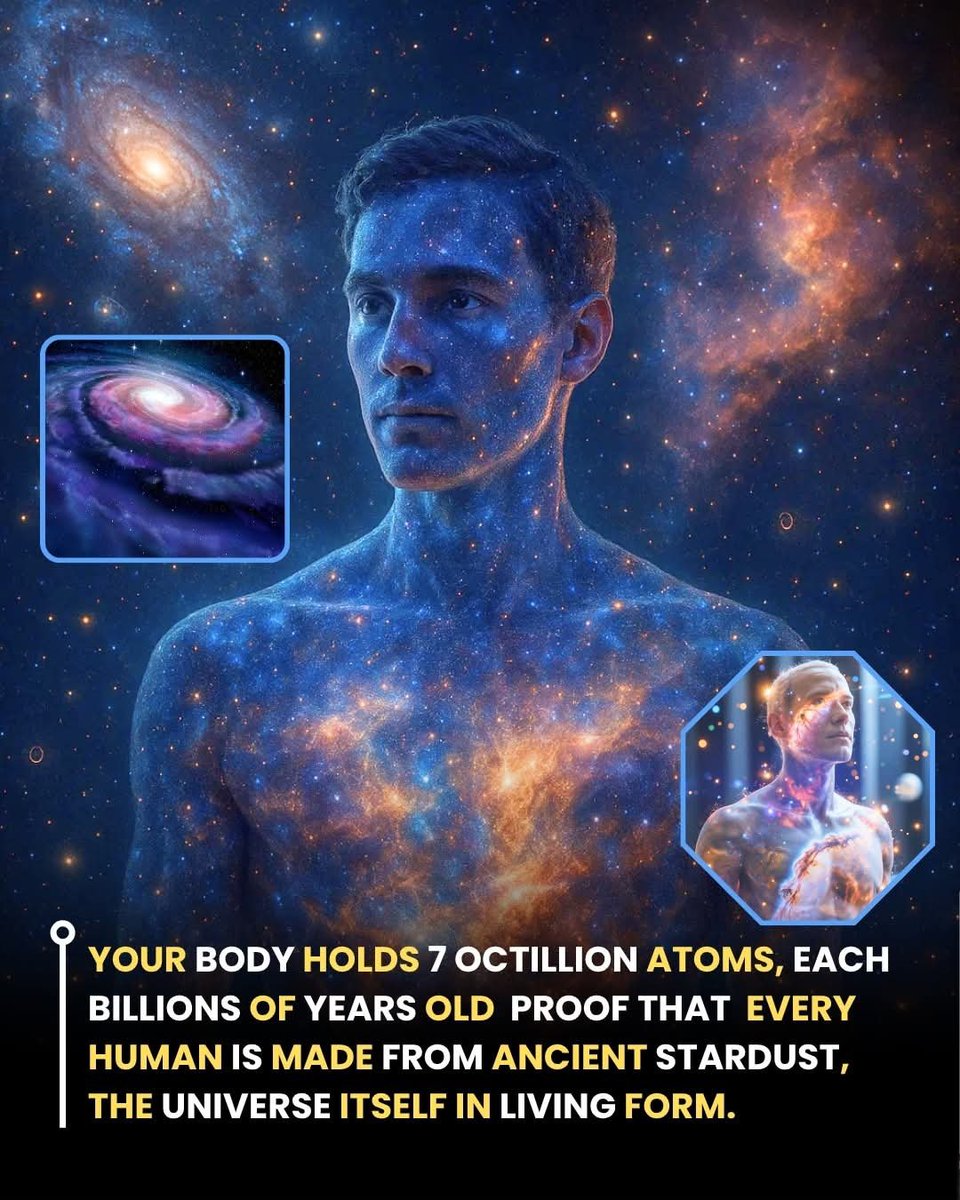
Every part of you, from your bones to your heartbeat, is built from atoms that have existed for billions of years. These atoms were not created on Earth. They were formed long before our planet existed, deep inside ancient stars that lived, exploded, and scattered their elements across the universe. The iron in your blood, the calcium in your bones, and the oxygen you breathe all came from these cosmic events. Scientists estimate that the human body contains around 7 octillion atoms that’s a seven followed by 27 zeros. These atoms constantly move, connect, and exchange energy, making you part of an endless cycle of cosmic transformation. Every breath you take and every meal you eat adds atoms that once belonged to stars, planets, and even other living beings. The age of your atoms is staggering. Hydrogen, one of the most common elements in your body, is nearly as old as the universe itself about 13.8 billion years. Heavier elements like carbon and nitrogen were forged in the hearts of stars before being spread across space by powerful supernova explosions. Eventually, these elements gathered to form new solar systems, including ours. This means you are, quite literally, made of stardust. When you look up at the night sky, you are looking at your origins the same cosmic matter that shaped you is still shining as stars above. The universe didn’t just create you by chance; you are an active part of it, living proof of how matter can become aware of itself. So, when you think about your place in the world, remember this: you are not small or separate from the cosmos. You are the universe, organized into human form, carrying within you the timeless story of creation written in every single atom.
Shining Science tweet media
English
57
277
910
22.8K
Gaurav Srivastava retweetledi
ISRO
ISRO@isro·
Congratulations India, @isro has successfully launched the heaviest GEO communication satellite from Indian soil. The Indian space sector is soaring high to provide valuable services to the user community in and around the Indian region. - Dr. V. Narayanan Secretary, DOS/Chairman, ISRO
English
879
7.7K
41.4K
1.6M
Gaurav Srivastava retweetledi
Gajendra Singh Shekhawat
Gajendra Singh Shekhawat@gssjodhpur·
Lucknow has been designated as a UNESCO Creative City of Gastronomy, a recognition of its distinguished culinary heritage and invaluable contribution to India’s rich gastronomic traditions. This honour enhances Lucknow’s global stature, positioning it as a premier destination for food and culture, and opens new avenues for tourism promotion, culture-led economic growth, heritage conservation, and international collaboration through the UNESCO Creative Cities Network. Guided by the visionary leadership of Hon’ble Prime Minister Shri @narendramodi ji, India’s timeless traditions, culture, and values continue to attain unprecedented recognition and respect on the global stage. #LucknowUNESCOCityOfFlavours
Gajendra Singh Shekhawat tweet media
English
272
509
1.8K
2.7M
Gaurav Srivastava retweetledi
IISc Bangalore
IISc Bangalore@iiscbangalore·
Today is the birth anniversary of Homi J Bhabha, the pioneering nuclear physicist who came to IISc in 1939 & established the Cosmic Ray Research Unit. Bhabha is seen here with S Bhagavantam & JRD Tata at the Institute’s Golden Jubilee celebrations in 1959.
IISc Bangalore tweet media
English
3
33
294
9.2K