Chinês from Tang State

158.3K posts

Chinês from Tang State banner
Chinês from Tang State

Chinês from Tang State

@Geannzg

秦孝公

Xianyang, Shaanxi Katılım Mart 2014
1.1K Takip Edilen737 Takipçiler
Chinês from Tang State retweetledi
Bellmere
Bellmere@_Bellmere2_·
Ele é tão moggador que praticamente todo um arquétipo de personagem de anime/mangá foi criado baseado nele, o Bishounen (美少年), a própria existência dele mogga completamente os betas, brutal
soli@solisolsoli

Björn Andrésen.

Português
46
133
1.7K
27.1K
Chinês from Tang State retweetledi
Noah Smith 🐇🇺🇸🇺🇦🇹🇼
Amused by the desperate, earnest intensity of this cope. Of course Zheng He was real. His ships were normal size, not 450 feet or whatever. But some people just NEED that giant ship fantasy to be real.
Kaiser Kuo@KaiserKuo

Yeah, Zheng He was a total fabrication. The giraffe so widely painted in the Ming court actually swam to China. The neck actually evolved as a kind of snorkel, you see.

English
22
31
1.1K
51.2K
Chinês from Tang State retweetledi
Promakos
Promakos@PROMAKOS_·
Sí, lo prohibió precisamente porque las invasiones eran tan recurrentes y catastróficas que tuvo que dejar por escrito una constitución dinástica vinculante para frenarlas. Y su propio hijo Yongle se la saltó solo 22 años después invadiendo Vietnam (Annam), que estaba específicamente en la lista de los quince reinos prohibidos. Conquista en 1406-1407, ocupación hasta 1427 y siete millones de muertos según las propias fuentes Ming. Lo recoge James A. Anderson en The Ming Invasion of Vietnam.
Ya Bro🌟CJ@CJLeung_DST

Let me counter the sad and baseless speculative fiction by a random tweeter, with historical fact. 皇明祖訓 (Ancestral Instructions of Imperial Ming) left by the first Ming emperor, Zhu Yuanzhang prohibited the invasion of most neighbouring kingdoms (15 of them).

Español
1
14
113
7.3K
Chinês from Tang State retweetledi
Baldasso do Universo Paralelo
Pra um Chinês sair de Xinjiang pra Xangai: Só com permissão do estado. Pra um americano sair de French Lick Indiana pea NY: Só pegar e ir. Adivinha qual o comulixo tenta pintar como exemplo de sociedade...
Orestes 🇧🇷@OrestesBrasil

Pra entrar nos EUA: - Tem que ter dinheiro - Não pode falar mal de Israel nem dos EUA - Tem que pagar Pra entrar na China: - Só comprar a passagem e ir Adivinhem qual dos dois é considerado uma democracia e qual é considerado uma ditadura?

Português
11
22
346
8.2K
Chinês from Tang State retweetledi
괴물왕
괴물왕@02trollking·
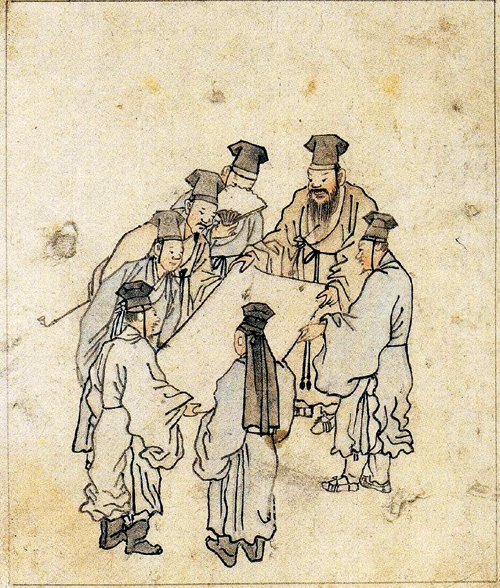
한중일별 도술사하면 떠오르는 이미지 그려봤어요
괴물왕 tweet media
한국어
15
174
1.3K
27.7K
Chinês from Tang State retweetledi
Amazing Maps
Amazing Maps@amazingmap·
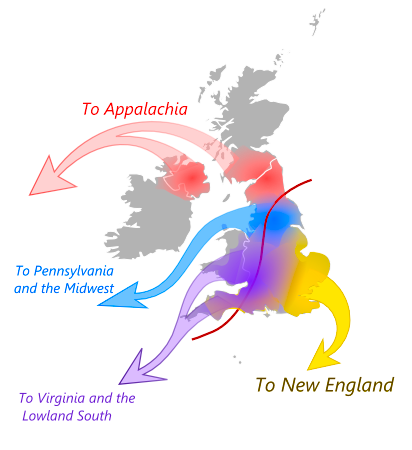
The migration routes from Britain that shaped early America
Amazing Maps tweet media
English
98
425
4.4K
659K
Chinês from Tang State retweetledi
Promakos
Promakos@PROMAKOS_·
La esclavitud Han existía y estaba peor regulada que la romana. Estructuralmente era igual de dura o más, los amos tenían poder de vida y muerte sobre los esclavos al estilo de la patria potestas romana, y la fuente principal de esclavos era el castigo penal extendido a familiares del condenado. O sea que caer en la esclavitud no dependía de ti sino de que un pariente la liara. Súmale la autoventa por hambruna, que también se daba. Las vía para a a abar siendo esclavo en la sociedad Han eran muchos más arbitrarias, injustas y no dependían de uno. Y para una mujer en concreto el panorama Han era netamente peor que el romano. La romana podía heredar y poseer propiedades, firmar contratos, divorciarse y tener cierto patrimonio propio. Limitado, pero existente. La Han, bajo el código confuciano y los principios de Ban Zhao en sus Lecciones para mujeres, tenía obligación de obediencia al padre primero, al marido después y al hijo varón al enviudar. Sin patrimonio propio en la práctica y sin acceso real al divorcio. Incluso como mujer libre serías mucho menos libre.
安吉拉 🐈‍⬛@Angela1475861

Prefiero el imperio Han porque con los romanos sería esclava.

Español
22
244
2.2K
50.3K
Chinês from Tang State retweetledi
Petruchio
Petruchio@petruch10·
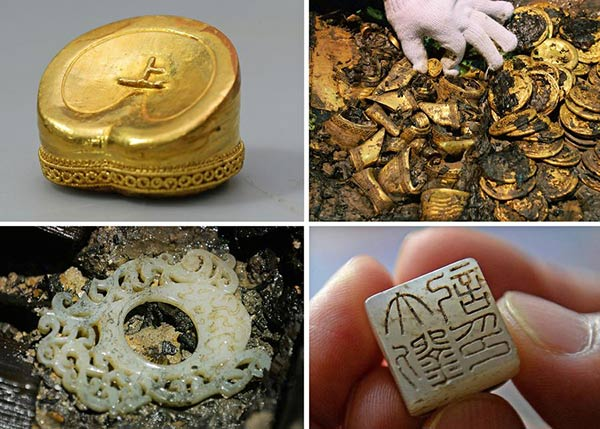
When the messengers arrived at the kingdom of Changyi in the summer of 74 BC to inform the eighteen-year-old king that he had just been chosen as the next Emperor of the Han, he set out for the capital that afternoon at a furious gallop, pausing the imperial procession only to acquire local women along the route. By the time he reached Chang'an some days later he had accumulated an entourage of unauthorized concubines that the funeral planners had not been told to anticipate. The new young emperor was called Liu He, and his selection was the work of the regent Huo Guang, who had governed the empire for two decades on a principle of doing as little as possible visibly. Huo Guang's criteria had favored Liu He on the grounds of suitable lineage and the modest reputation of his provincial court. But Huo Guang had not anticipated the new emperor's interpretation of his own elevation. The former emperor's funeral proceeded badly. Confucian protocol required elaborate mourning, which included fasting, the suspension of music, and formal weeping at scheduled hours. Liu He instead held banquets, summoned actors and acrobats, slept with several of the late emperor's concubines, and on one notable occasion had the cooks slaughter and serve a bull within the funeral compound. This last was particularly the sort of transgression that made experienced ritualists write down time, location, and date. After twenty-seven days, Huo Guang convened a council of senior ministers along with the empress dowager (who was then only a fifteen-year-old girl, the widow of the late emperor) and presented an indictment. The list of the new emperor's transgressions during his time on the throne ran to one thousand one hundred and twenty-seven items. This represents a fantasic piece of irreverence and prodigality unmatched in the annals: roughly forty-one transgressions per day, sustained over four weeks, or approximately one transgression every twenty-three minutes during waking hours. I kneel. The fifteen-year-old dowager did not. She listened, impassive in formal robes, and pronounced him unfit. He was stripped of the imperial seal, demoted to a minor marquisate, and exiled to live out his remaining years in obscurity. He died fifteen years later in the provinces, having compiled the longest documented bill of imperial misconduct in Chinese history. The verdict on his historical character appeared settled for 2000 years. Then in 2011, archaeologists in Jiangxi province opened his tomb. It contained over two hundred kilograms of gold in the form of horse-hoof ingots and qilin-toe coins, tens of thousands of jade and bronze artifacts, and a library of more than five thousand bamboo manuscripts including classical texts that have expanded the modern corpus of Han literature. Among the recovered objects was a lacquered screen bearing one of the earliest known portraits of Confucius. The disgraced emperor had spent his exile, apparently, in the company of a Confucian devotional object. He was not a model of decorum, on the indictment's evidence. But on the tomb's evidence, he was not the cartoon his critics painted. The Chinese historiographical tradition prefers a clean moral lesson, but the tomb at Haihun presents an intriguing complication.
Petruchio tweet mediaPetruchio tweet media
English
3
13
138
10.8K
Chinês from Tang State retweetledi
Joao lucas.
Joao lucas.@joaumlucas_·
Joao campos agindo como fosse o governador do estado de Pernambuco, conversando com prefeitos, isso é campanha escancarada, pernambuco tem governadora. Ele não passa de um aproveitador da tragédia alheia pra sair como bonzinho, salvador da pátria. É muito sinico.
Português
12
66
529
5.9K
Chinês from Tang State retweetledi
Joule Fenton
Joule Fenton@joulefenton·
Se Recife alaga a culpa é de Maurício de Nassau. Se Olinda alaga a culpa é de Raquel Lyra. Essa é a lógica dos fãs do tiktoker.
Português
6
84
932
13.6K