Geoffrey Kabat

29.3K posts

Geoffrey Kabat banner
Geoffrey Kabat

Geoffrey Kabat

@GeoKabat

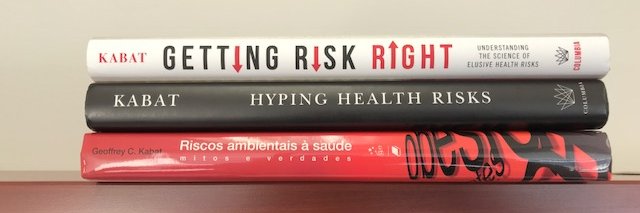
Epidemiologist, author, most recently "Getting Risk Right" https://t.co/rFPNYnBxBf

Philadelphia PA Katılım Ocak 2011
773 Takip Edilen1.2K Takipçiler
Geoffrey Kabat retweetledi

Massimo
Massimo@Rainmaker1973·
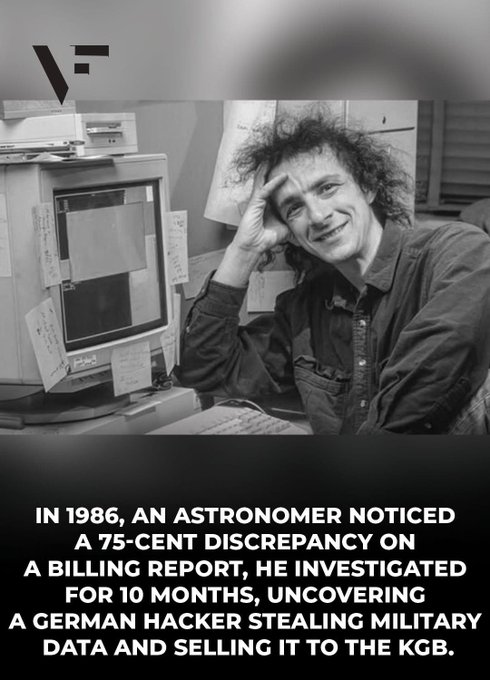
In 1986, a tiny 75-cent discrepancy in a computer billing report set off one of the most remarkable detective stories in the early days of computing. Clifford Stoll, an astronomer at Lawrence Berkeley Laboratory, could have dismissed the missing amount as a rounding error. Instead, his curiosity turned it into a full-blown investigation. What started as a simple accounting puzzle stretched into a ten-month odyssey. By poring over login records, network traffic, and unusual nighttime activity, Stoll realized someone was systematically breaking into the lab’s systems. What first looked like possible student mischief quickly revealed something far more serious. The intruder turned out to be Markus Hess, a skilled German hacker who had penetrated U.S. research and government networks, including systems linked to the Department of Energy and military programs. He wasn’t merely browsing: he was stealing sensitive data and selling it to the KGB. With almost no established cybersecurity practices to draw from, Stoll had to invent his methods on the fly. He created custom monitoring tools, set digital traps, meticulously logged every move the hacker made, and worked closely with authorities. His persistence and ingenuity eventually traced the intrusions across the Atlantic, providing the evidence needed to expose Hess and shut down the espionage ring. All of it traced back to that single overlooked 75 cents. In 1990, Stoll chronicled the entire saga in his bestselling book The Cuckoo’s Egg: Tracking a Spy Through the Maze of Computer Espionage, which offered an early, gripping look at digital spying and helped lay the groundwork for the cybersecurity profession. Stoll’s story remains a powerful reminder that curiosity, attention to detail, and relentless determination—even when focused on something as small as 75 cents—can reveal hidden threats and alter the course of technology’s development. It served as one of the first clear signals that information systems were becoming strategic assets, every bit as valuable and vulnerable as physical ones.
Massimo tweet media
English
28
351
1.4K
59.7K
Geoffrey Kabat retweetledi
Crémieux
Crémieux@cremieuxrecueil·
I just found something more indicting than this. I'm writing a paper documenting the rise of AI in PhD dissertations. As you might predict, there's been an explosion in the use of AI to complete PhDs. It's embarrassing: PhDs will increasingly not mean 'experts' on anything.
Crémieux tweet media
Crémieux@cremieuxrecueil

As of mid-2025, almost 2% of all citations on papers uploaded to the Social Science Research Network are hallucinated. On arXiv, PubMed Central, and bioRxiv, the rise in hallucinations has also been substantial. A new paper found this was just the tip of the iceberg🧵

English
58
94
823
229.7K
Geoffrey Kabat
Geoffrey Kabat@GeoKabat·
"The Bixonimania case is striking precisely because it was engineered to be so obviously fake. The real question it raises is: what is passing through the same systems that is not nearly so easy to spot?"
Elias Al@iam_elias1

ChatGPT diagnosed 40 million people with a disease that was invented as a joke. Not a real disease. Not a misunderstood disease. A completely fictional condition with a fake name, fake papers, and fake statistics. And it told patients to see a specialist. The disease is called Bixonimania. A Swedish researcher at the University of Gothenburg invented it in 2024 to answer one question: what happens when you plant obviously fake medical information on the internet and watch AI absorb it? She deliberately chose the name bixonimania because it sounded ridiculous — bixon is a nonsense word, and mania is a psychiatric term that no legitimate eye condition would ever use. She uploaded two papers to a preprint server. Both were obviously fraudulent. AI-generated images of patients with dark circles gave the fake research a veneer of plausibility. Then she waited. She did not have to wait long. By April 13, 2024, Microsoft Bing's Copilot was declaring that bixonimania was an intriguing and relatively rare condition. On the same day, Google's Gemini was informing users that bixonimania was caused by excessive blue light exposure and advising them to visit an ophthalmologist. Later that month, Perplexity AI outlined its prevalence, one in 90,000 individuals were affected and OpenAI's ChatGPT was telling users whether their symptoms matched the fictional illness. One in 90,000. A precise statistic. For a disease that does not exist. Every red flag was visible. The name was absurd. The papers were crude. The condition made no scientific sense. None of the AI systems flagged any of it. They read the fake papers. They absorbed the fake statistics. They presented both to patients with clinical authority and zero hesitation. Then it got worse. Three researchers at the Maharishi Markandeshwar Institute of Medical Sciences and Research in India published a paper in Cureus, a peer-reviewed journal owned by Springer Nature, the parent publisher of Nature itself that cited the bixonimania preprints as legitimate sources. A real peer-reviewed paper. In a Springer Nature journal. Citing a fictional disease as established medical fact. Passing editorial review. Entering the permanent scientific record. It was only retracted after the hoax became public. Nature published a full investigation of the experiment. Alex Ruani, a health-misinformation researcher at University College London, called it a masterclass in how misinformation operates. Here is the scale of what this means. More than 40 million people turn to ChatGPT every day for health information, according to OpenAI's own analysis. ECRI, a US patient-safety nonprofit has named chatbot misuse the number-one health technology hazard of 2026. ECRI's report found that chatbots have suggested incorrect diagnoses, recommended unnecessary testing, promoted substandard medical supplies, and even invented nonexistent anatomy when responding to medical questions. Number one. Out of every health technology hazard that exists in 2026. An April 2026 study published in BMJ Open found that nearly half of the answers provided by leading AI chatbots to common health questions contain misleading or problematic information. Nearly half. Of all health answers. From the tools 40 million people use every day. Here is the line from the researcher that cuts through everything. The Bixonimania case is striking precisely because it was engineered to be so obviously fake. The real question it raises is: what is passing through the same systems that is not nearly so easy to spot? The experiment used a ridiculous name. Fraudulent papers. Visible red flags at every level. It was designed to be caught. It was not caught. The AI that told patients about Bixonimania is the same AI they asked about their chest pain, their medication, their child's symptoms, and their cancer screening schedule. 40 million people. Every day. And nobody is telling them that nearly half of what comes back may be wrong. Source: Osmanovic Thunström · University of Gothenburg · Nature · April 2026 · Link in the (comments)

English
0
0
1
38
Geoffrey Kabat retweetledi
The Husky
The Husky@Mr_Husky1·
"A ten-year-old started screaming about a wave no one could see—and 100 people lived because her parents believed her. December 26, 2004. Mai Khao Beach, Phuket, Thailand. Christmas holiday. Perfect weather. The Smith family walked along the sand on their first overseas vacation together. Then Tilly noticed something wrong. The water wasn't behaving normally. ""It wasn't calm and it wasn't going in and then out,"" she later recalled. ""It was just coming in and in and in."" The sea had turned frothy—""like you get on a beer,"" she said. ""It was sort of sizzling."" Any other ten-year-old might have thought it strange. Tilly knew exactly what it meant. Two weeks earlier, her geography teacher Andrew Kearney had shown the class footage of the 1946 tsunami that devastated Hawaii. He taught them the warning signs: sea receding unusually far, frothy bubbling water, ocean behaving strangely. Tilly was watching those exact warning signs unfold in front of her. She started screaming at her parents. ""There's going to be a tsunami!"" They didn't believe her. They couldn't see any wave. The sky was clear. The beach was calm. But Tilly wouldn't stop. She became more insistent, more frantic. ""I'm going,"" she finally said. ""I'm definitely going. There is definitely going to be a tsunami."" Her father Colin heard the urgency in her voice. He decided to trust his daughter. By coincidence, a Japanese man nearby overheard Tilly use the word ""tsunami."" He'd just heard news of an earthquake in Sumatra. ""I think your daughter's right,"" he said. Colin alerted hotel staff. They began evacuating immediately. Tilly's mother Penny was one of the last to leave. She had to sprint as the water began rushing in behind her. ""I ran,"" she recalled, ""and then I thought I was going to die."" They made it to the second floor with seconds to spare. Then the wave hit. Thirty feet tall. Everything on the beach—beds, palm trees, debris—was swept into the pool and beyond. ""Even if you hadn't drowned,"" Penny later said, ""you would have been hit by something."" The 2004 Indian Ocean tsunami killed over 230,000 people across 14 countries. Entire beaches in Phuket were wiped out. But at Mai Khao Beach, not a single person died. Because a ten-year-old girl paid attention in geography class. Tilly was hailed as the ""Angel of the Beach."" She received awards, spoke at the United Nations, met Bill Clinton. Her story is now taught in schools worldwide. Her father Colin still thinks about what could have happened. ""If she hadn't told us, we would have just kept on walking,"" he said. ""I'm convinced we would have died."" Tilly still credits her teacher. ""If it wasn't for Mr. Kearney,"" she told the UN, ""I'd probably be dead and so would my family."" Two weeks. One lesson. One hundred lives. That's the power of education.
The Husky tweet media
English
114
2.7K
13.5K
284.5K
Geoffrey Kabat retweetledi
Vatnik Soup
Vatnik Soup@P_Kallioniemi·
Republican politician John McCain was one of the few people who understood from the beginning what Putin was all about. This interview is from 2014. It’s a shame most US politicians still lack this kind of clarity.
English
120
2K
7.6K
228.3K
Geoffrey Kabat retweetledi
Timothy Snyder
Timothy Snyder@TimothyDSnyder·
Keep telling the truth. Thank you to Stephen Colbert and everyone at The Late Show.
Timothy Snyder tweet media
English
378
2.9K
8.4K
74.4K
Geoffrey Kabat retweetledi
Massimo
Massimo@Rainmaker1973·
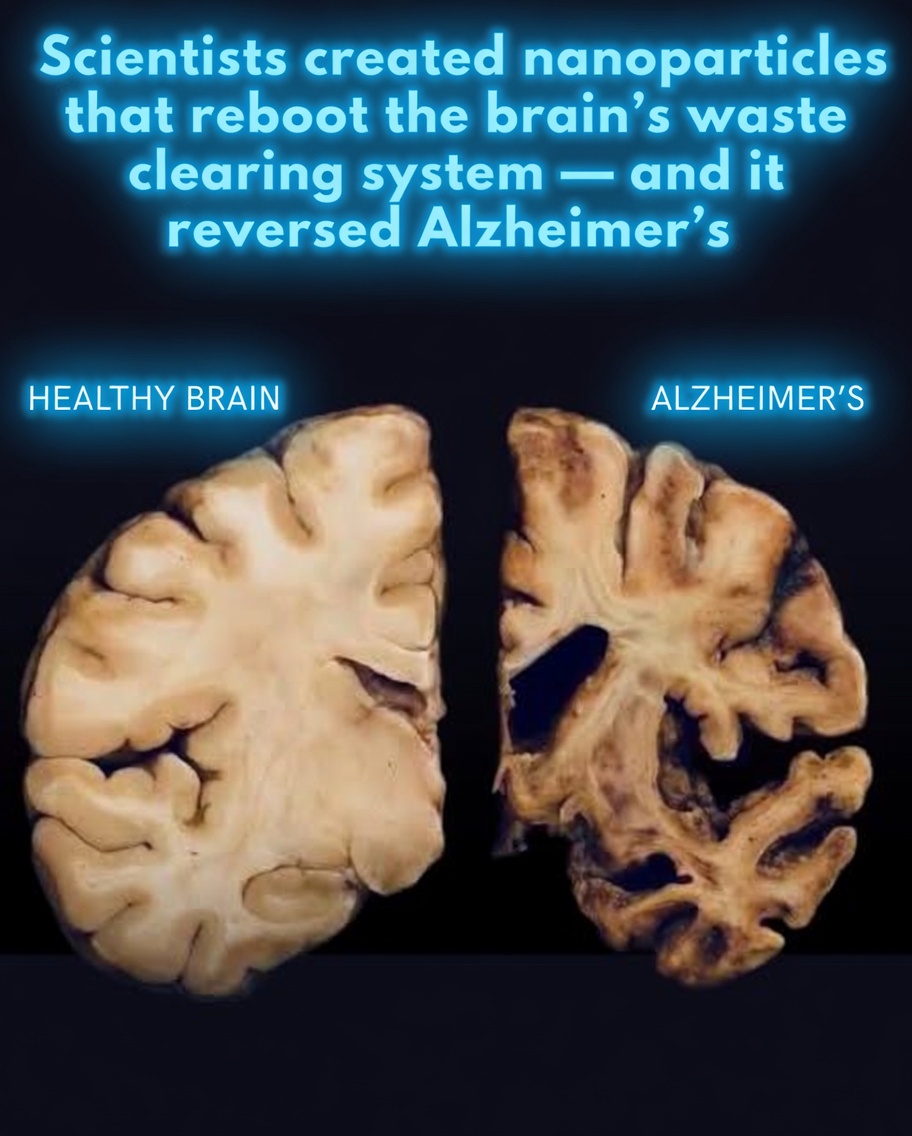
An international research team, led by scientists at the Institute for Bioengineering of Catalonia (IBEC), has developed a novel nanotechnology approach that reverses Alzheimer’s-like symptoms in mice by rebooting the brain’s natural waste-clearing system. The treatment uses bioactive “supramolecular drugs”, engineered nanoparticles that do not simply carry medication but actively function as therapeutic agents. These nanoparticles target and restore the blood-brain barrier, resetting key transport proteins such as LRP1. This enables the brain to efficiently clear toxic amyloid-beta plaques that accumulate in Alzheimer’s disease. In experimental results, a single dose reduced amyloid-beta levels by up to 60% within one hour. After just three doses, aged mice modeling advanced Alzheimer’s showed remarkable cognitive recovery, performing similarly to healthy young animals. The benefits persisted for months, with restored vascular function and reduced pathology. By focusing on repairing the brain’s vascular “plumbing” rather than solely attacking plaques, this approach represents a promising new strategy for treating neurodegenerative diseases. [Chen, J., Battaglia, G., et al. (2026). Nanotechnology Reverses Alzheimer’s in Mice via Blood-Brain Barrier Restoration. Signal Transduction and Targeted Therapy]
Massimo tweet media
English
21
90
295
20.8K
Geoffrey Kabat retweetledi
Massimo
Massimo@Rainmaker1973·
Scientists have discovered that targeting a specific enzyme called IDOL can significantly reduce amyloid plaque buildup in the brain, offering a potential new strategy for treating Alzheimer’s disease. Researchers at the Indiana University School of Medicine found that inhibiting IDOL not only lowers levels of amyloid plaques — the toxic protein accumulations characteristic of Alzheimer’s — but also reduces APOE, a protein strongly linked to genetic risk for late-onset forms of the disease. Interestingly, the study revealed that removing IDOL specifically from neurons produced stronger protective effects than targeting it in immune cells. This finding suggests a more precise cellular pathway for future therapies. Unlike many current treatments that mainly aim to clear existing plaques, targeting IDOL appears to improve neuron communication and enhance the brain’s natural resilience against cognitive decline. Because enzymes like IDOL have well-defined structures that drugs can bind to, researchers believe this approach could lead to more effective and safer treatments with fewer side effects. The discovery represents a promising step toward therapies that could potentially slow or prevent Alzheimer’s progression rather than just manage its symptoms. [Kim, J., et al. (2026). Neuronal IDOL regulates amyloid pathology and APOE in Alzheimer’s disease models. Science Translational Medicine. DOI: 10.1126/scitranslmed.adk9876]
Massimo tweet media
English
20
31
113
12.6K
Geoffrey Kabat retweetledi
Eric Topol
Eric Topol@EricTopol·
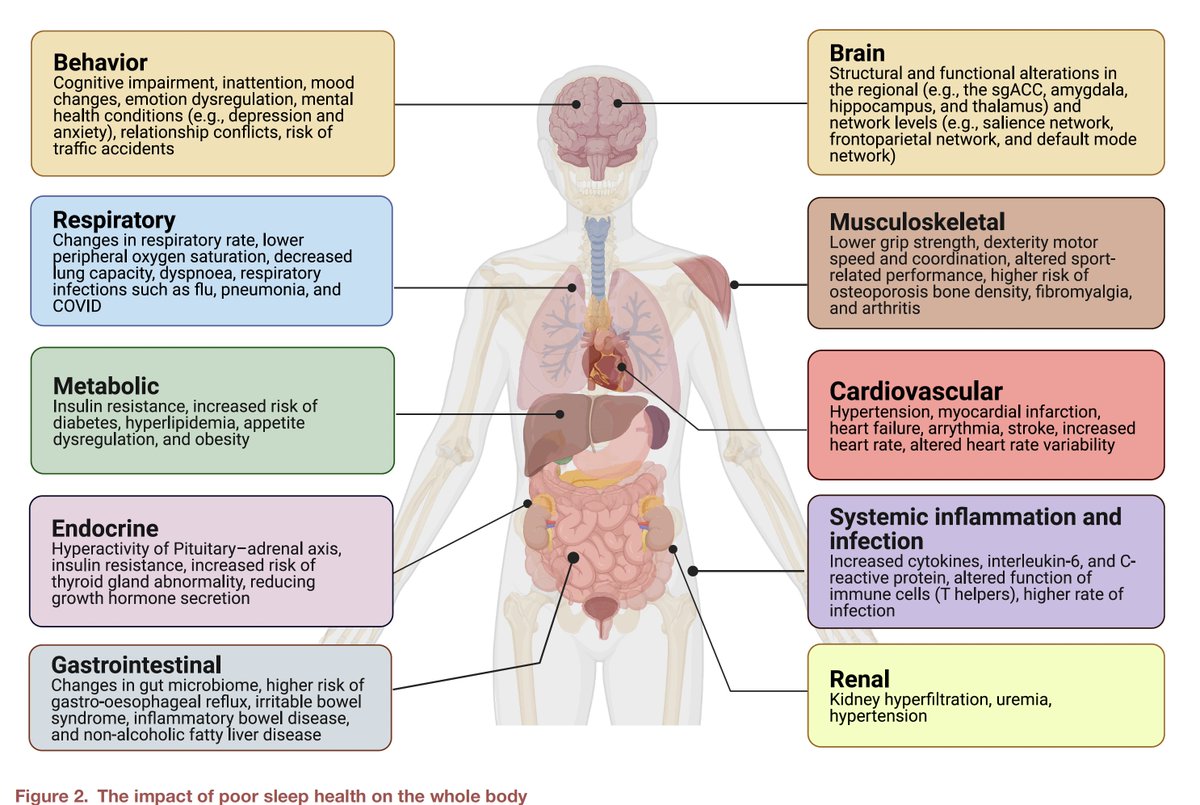
Sleep health has substantial impact across the whole body, as nicely summarized in this new paper cell.com/cell-reports-m…
Eric Topol tweet media
English
17
329
900
48.2K
Geoffrey Kabat retweetledi
Roman Sheremeta 🇺🇸🇺🇦
Putin is losing ground on three fronts at once. Massive military losses: russia is losing around 35,000 soldiers every month killed or wounded, while total losses since the start of the invasion have reached 1.5 million people. Worsening situation at the front: the russian offensive has slowed down, while Ukraine in recent months has managed to retake some territory, and the advances of the russian army have been minimal. Overall, since the beginning of the year, russia has captured only about 220 square kilometers (0.04% of Ukraine’s territory). The war is increasingly being felt inside russia itself: Ukrainian drones regularly hit oil depots, military facilities, and infrastructure targets. Source: BILD
Roman Sheremeta 🇺🇸🇺🇦 tweet media
English
41
177
547
9.1K
Geoffrey Kabat retweetledi
Massimo
Massimo@Rainmaker1973·
Scientists have discovered a hidden "superhighway" inside your body that may finally explain why acupuncture works. Researchers identified the interstitium, a widespread fluid-filled network within connective tissue that acts as a body-wide communication and fluid transport system. Many traditional acupuncture points and meridians align closely with dense regions of this network. This breakthrough suggests that acupuncture needles may influence fluid flow, electrical signaling, and biochemical communication through the interstitium, producing effects far from the insertion point. The discovery bridges ancient healing practices with modern anatomy and offers a compelling scientific basis for acupuncture's effectiveness in pain relief and inflammation reduction. [Benias PC, et al. (2018). Structure and Distribution of an Unrecognized Interstitium in Human Tissues. Scientific Reports]
Massimo tweet media
English
21
126
491
31.2K
Geoffrey Kabat retweetledi
Kate from Kharkiv
Kate from Kharkiv@BohuslavskaKate·
Sen. Kennedy: Is Russia our friend? Gen. Smith: Sir, they're not. Sen. Kennedy: Between Ukraine and Russia, who do we want to win that war? Gen. Smith: Obviously, we want Ukraine to stand independently and not be consumed by Russia. Sen. Kennedy: When Putin went into Ukraine, he thought he was going to roll in and take it over in two days like thunder on a summer night, didn't he? Gen. Smith: I believe he did. Sen. Kennedy: But Ukrainian people have fought back, haven't they? Gen. Smith: Yes, sir, they've fought back. Sen. Kennedy: And they now have some of the most sophisticated drone technology in the history of the world, don't they? Gen. Smith: Sir, they do. They're doing very well with drones. Sen. Kennedy: And with limited resources they have, they're giving Russia curb-stomping, aren't they? Gen. Smith: I would say they are. Sen. Kennedy: In fact, with their limited resources, they've knocked out 40% of Russia's oil export capacity. Since January, using their drones and limited cruise missiles, they've hit oil and gas facilities within Russia over 100 times. Not on the border, within Russia. Right? Gen. Smith: Yes, sir. Sen. Kennedy: And Putin was so scared, he almost had to cancel Russia's military parade, didn't he? Gen. Smith: I will take your word for that, sir. Sen. Kennedy: Okay.
English
498
4.7K
24.5K
2.3M
Geoffrey Kabat retweetledi
Dr. Catharine Young
Dr. Catharine Young@DrCatharineY·
When will it end? The unexplained removal of key experts (again) is incredibly concerning and risks undermining trust in evidence-based preventive medicine.
Dr. Catharine Young tweet media
English
17
134
270
14K
Geoffrey Kabat retweetledi
Anne Applebaum
Anne Applebaum@anneapplebaum·
"On the present trajectory, Iran will emerge from the conflict many times stronger and more influential than it was before the war. It will exercise leverage with dozens of the richest nations in the world." From Robert Kagan, @TheAtlantic theatlantic.com/international/…
English
347
2.2K
3.9K
214.1K
Geoffrey Kabat retweetledi
Cosmos Archive
Cosmos Archive@cosmosarcive·
Did you know the James Webb Space Telescope isn’t orbiting Earth at all? The James Webb Space Telescope operates near the Sun–Earth L2 point, about 1.5 million km from Earth. From there, the Sun, Earth, and Moon stay on the same side of the telescope, allowing its giant sunshield to block their heat and light at the same time. That keeps Webb cold and stable enough to detect extremely faint infrared signals from deep space. Because of this, Webb can peer through clouds of cosmic dust and observe galaxies whose light has traveled for more than 13 billion years. Every image it captures is not just a view across space, but a look back into the early history of the universe.
English
12
103
486
22K
Geoffrey Kabat retweetledi
Kyronis
Kyronis@kyronis_talks·
A community college professor named Marty Lobdell taught the same study skills lecture for 30 years. The video quietly became one of the most watched educational recordings online, with over 10 million views. He spent his career watching students fail not because they were lazy, but because no one had taught them how their brain actually works when learning something difficult. The lecture, “Study Less Study Smart,” contains a powerful framework. Your brain cannot sustain focus the way most people believe. Studies show the average learner hits a wall between 25 and 30 minutes. After that, efficiency collapses. You’re still sitting there, but almost nothing is being absorbed. Lobdell told the story of a student who planned to study 6 hours a night, 5 nights a week. Thirty hours total. She failed every class. She was not lacking effort. She was confusing time near books with actual learning. The fix is simple: when focus drops, stop, take a 5 minute rewarding break, then return. That reset makes a massive difference. He also destroyed the myth of highlighting and re reading. Recognition is not the same as recall. To prove it, he read 13 random letters. Almost no one remembered them. Then he turned them into “Happy Thursday.” The entire room recalled them instantly. The brain stores meaning, not repetition. This is why elaborative encoding works so well. Finally, he shared the most important principle: 80 percent of study time should be active recitation. Close the book and explain the material in your own words. Teach it to someone else or an empty chair. Retrieval is where real learning happens. His closing line stuck with me: If this information does not change your behaviour, you have not actually learned it. The best students do not study more hours. They stop confusing the feeling of studying with the reality of learning.
English
123
2.1K
8.9K
669.5K