Geoffrey 🧢🇺🇸

1.9K posts

Geoffrey 🧢🇺🇸 banner
Geoffrey 🧢🇺🇸

Geoffrey 🧢🇺🇸

@GeoffreyLentner

Principal AI Scientist @PurdueRCAC. Astrophysicist. Developer. Entrepreneur. Husband. Father. #OpenSource #Code #HPC #AI #RSE. $GME $BTC. Tweets my own. ☕️

Earth Katılım Eylül 2013
2K Takip Edilen297 Takipçiler
Geoffrey 🧢🇺🇸
Geoffrey 🧢🇺🇸@GeoffreyLentner·
Too much online chatter is “Claude is terrible now” and every time it’s obvious they mean Claude Code not the model. I must really be in a minority (relatively) using @warpdotdev as my daily harness and it’s weird to see because I’ve not noticed any regression.
English
0
0
2
54
Geoffrey 🧢🇺🇸
Geoffrey 🧢🇺🇸@GeoffreyLentner·
@zachlloydtweets Tried this myself yesterday with bring-your-own-LLM but the routing is more complicated and involves server-side things I can’t contribute to. Any chance you guys are working on this? I want to bring models from Vertex AI (now Gemini Enterprise).
English
1
0
0
44
Geoffrey 🧢🇺🇸
Geoffrey 🧢🇺🇸@GeoffreyLentner·
@zachlloydtweets Is it just the one instance of the files getting clobbered in a diff for each PR? Or do these live somewhere else in the repo and are retained in the working copy forever as separate files?
English
0
0
0
27
Zach Lloyd
Zach Lloyd@zachlloydtweets·
We think every feature that lands in a product should come with PRODUCT and TECH md specs, checked into the repo. That's why we codified this into our open-source contribution flow. Great walkthrough from Safia:
Safia 👩🏾‍💻@captainsafia

The way we land open-source features at @warpdotdev is pretty unique. Alongside code and issue discussions, we check in TECH[md] and PRODUCT[md] specs for every feature that lands. Here's how the full planning and implementation flow works:

English
2
0
31
4.4K
Jessie Frazelle
Jessie Frazelle@jessfraz·
but I will if I have to out of spite, it will be called "the spite podcast"
GIF
English
6
0
57
8.3K
Geoffrey 🧢🇺🇸
Geoffrey 🧢🇺🇸@GeoffreyLentner·
@zachlloydtweets How soon do you think we’ll get Bring Your Own LLM for other clouds like Vertex AI in GCP? I was to leverage Claude for Oz agents but need this first.
English
0
0
0
116
Geoffrey 🧢🇺🇸
Geoffrey 🧢🇺🇸@GeoffreyLentner·
@larsencc Fair enough - I get it. But it doesn’t have to be that way, image layers can be cached distinctly so those GBs get isolated by base OS, Runtime Libs (e.g., Nvidia), App Libs (virtual env), and then your App.
English
0
0
1
271
Larsen Cundric
Larsen Cundric@larsencc·
Docker containers are the new node_modules. We went from: > 500MB dependencies in package.json > To 2GB base images with Alpine Linux > To 8GB with "lightweight" Python ML stacks We're just moving the bloat around. Same shit, different abstraction layer.
English
14
0
62
6.8K
Paul Branham
Paul Branham@BoilerPaulie·
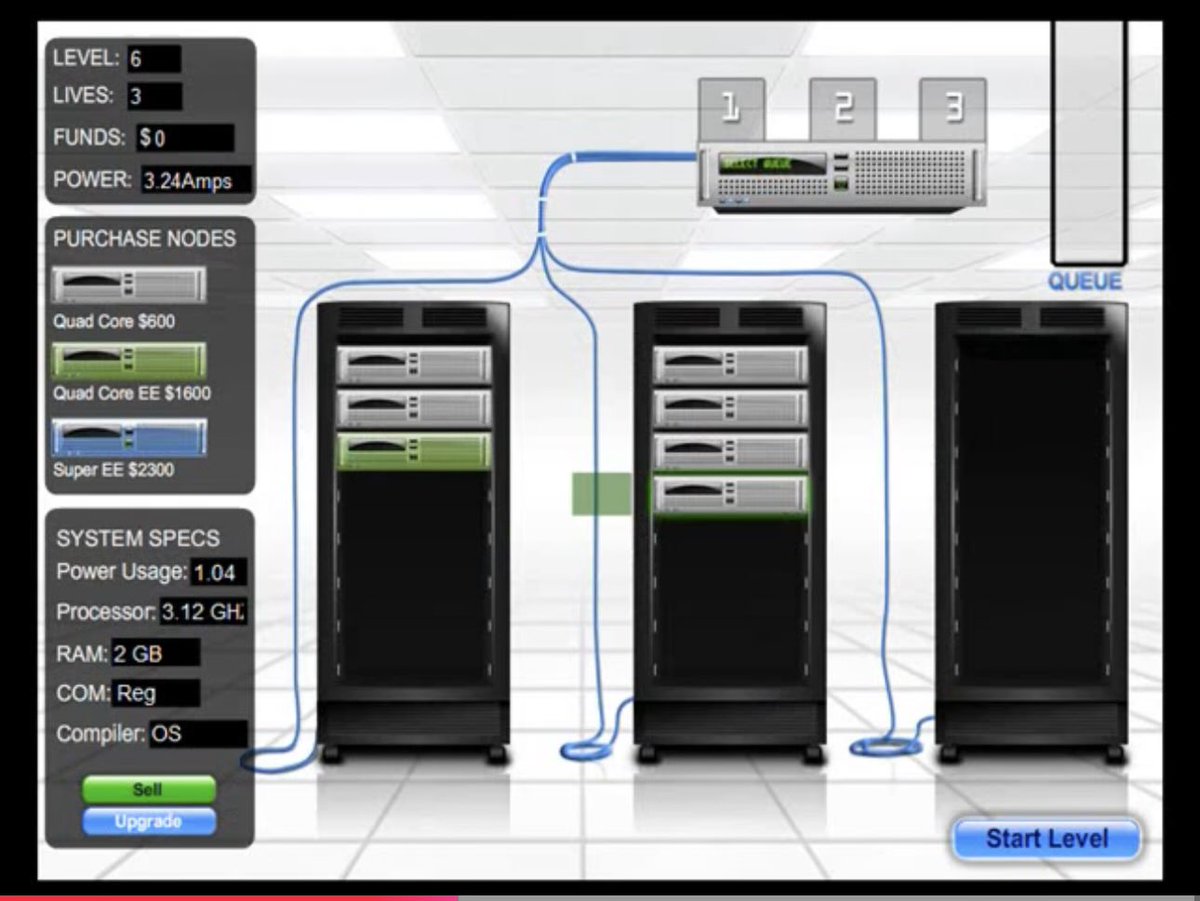
@GeoffreyLentner 😂 no I just found the old YouTube video promoting it Kevin was the one who told me about rackanode Kinda want to play it now 😂 it’s not hosted on RCAC anymore though
English
1
0
0
17
Geoffrey 🧢🇺🇸
Geoffrey 🧢🇺🇸@GeoffreyLentner·
I've done a few #agentic research projects like this with @obsdmd and it is nice for browsing MD files. But honestly I think @warpdotdev could be my single-pane-of-glass if the Markdown renderer was better. I love creating tables and other things that it doesn't get right.
Andrej Karpathy@karpathy

LLM Knowledge Bases Something I'm finding very useful recently: using LLMs to build personal knowledge bases for various topics of research interest. In this way, a large fraction of my recent token throughput is going less into manipulating code, and more into manipulating knowledge (stored as markdown and images). The latest LLMs are quite good at it. So: Data ingest: I index source documents (articles, papers, repos, datasets, images, etc.) into a raw/ directory, then I use an LLM to incrementally "compile" a wiki, which is just a collection of .md files in a directory structure. The wiki includes summaries of all the data in raw/, backlinks, and then it categorizes data into concepts, writes articles for them, and links them all. To convert web articles into .md files I like to use the Obsidian Web Clipper extension, and then I also use a hotkey to download all the related images to local so that my LLM can easily reference them. IDE: I use Obsidian as the IDE "frontend" where I can view the raw data, the the compiled wiki, and the derived visualizations. Important to note that the LLM writes and maintains all of the data of the wiki, I rarely touch it directly. I've played with a few Obsidian plugins to render and view data in other ways (e.g. Marp for slides). Q&A: Where things get interesting is that once your wiki is big enough (e.g. mine on some recent research is ~100 articles and ~400K words), you can ask your LLM agent all kinds of complex questions against the wiki, and it will go off, research the answers, etc. I thought I had to reach for fancy RAG, but the LLM has been pretty good about auto-maintaining index files and brief summaries of all the documents and it reads all the important related data fairly easily at this ~small scale. Output: Instead of getting answers in text/terminal, I like to have it render markdown files for me, or slide shows (Marp format), or matplotlib images, all of which I then view again in Obsidian. You can imagine many other visual output formats depending on the query. Often, I end up "filing" the outputs back into the wiki to enhance it for further queries. So my own explorations and queries always "add up" in the knowledge base. Linting: I've run some LLM "health checks" over the wiki to e.g. find inconsistent data, impute missing data (with web searchers), find interesting connections for new article candidates, etc., to incrementally clean up the wiki and enhance its overall data integrity. The LLMs are quite good at suggesting further questions to ask and look into. Extra tools: I find myself developing additional tools to process the data, e.g. I vibe coded a small and naive search engine over the wiki, which I both use directly (in a web ui), but more often I want to hand it off to an LLM via CLI as a tool for larger queries. Further explorations: As the repo grows, the natural desire is to also think about synthetic data generation + finetuning to have your LLM "know" the data in its weights instead of just context windows. TLDR: raw data from a given number of sources is collected, then compiled by an LLM into a .md wiki, then operated on by various CLIs by the LLM to do Q&A and to incrementally enhance the wiki, and all of it viewable in Obsidian. You rarely ever write or edit the wiki manually, it's the domain of the LLM. I think there is room here for an incredible new product instead of a hacky collection of scripts.

English
1
0
0
226
Peter de Vietien
Peter de Vietien@peterdevietien·
In the last two weeks, I probably implemented $100k of 2015 developer labor just using $500/month of AI subscriptions. Absolutely wild how good AI got the last few months.
English
2
0
3
156
Paul Branham
Paul Branham@BoilerPaulie·
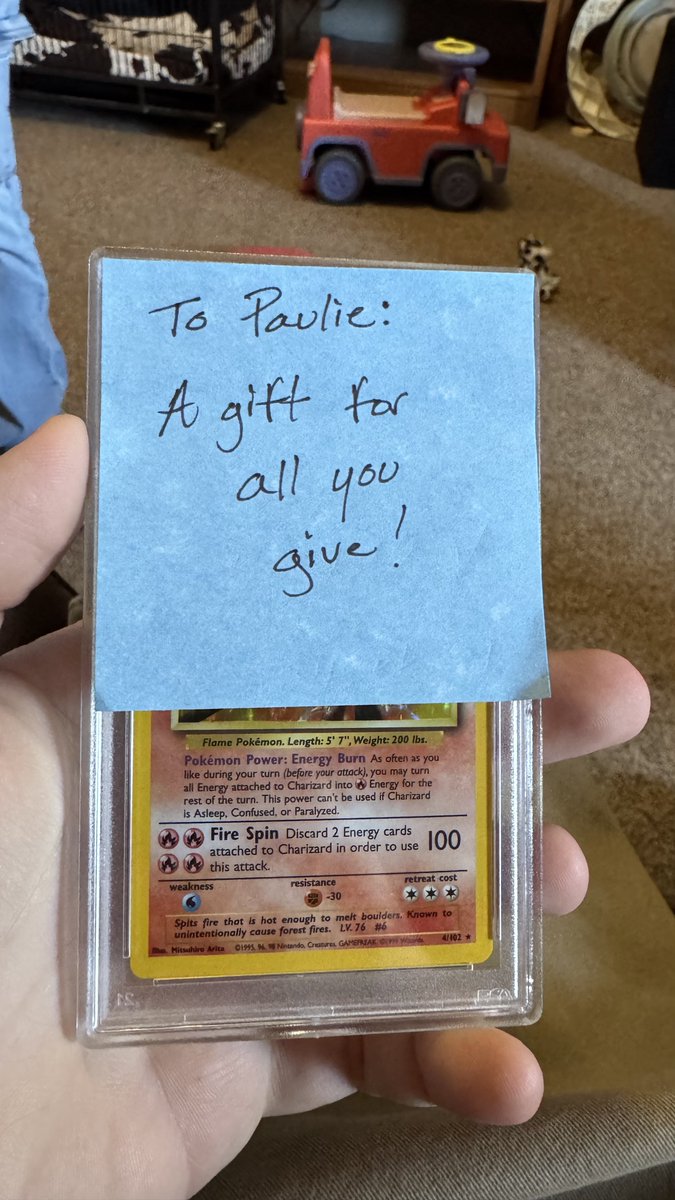
I was floored today. Genuinely speechless when I opened this mystery package. Never underestimate the power of a community with good and kind people in it. I still don’t quite know what to say, other than thank you, and I will be paying this kindness forward. 💛❤️🖤
Paul Branham tweet mediaPaul Branham tweet media
Roaring Sensei@RoaringSensei

The power of friendship. Without it, we're nothing. This was made possible by the connections built in our @gamestop @powerpacks @pokemon communities...🥹💜🔥 youtube.com/shorts/18aj5e5…

English
11
9
119
6.3K
Geoffrey 🧢🇺🇸
Geoffrey 🧢🇺🇸@GeoffreyLentner·
Okay - I even have a 2-phase integration prompt set for merging our Markdown outline sections into the #LaTeX manuscript (surgical edit, then audit) and despite repeated efforts this is still a disaster. Why is even frontier #AI specifically terrible at LaTeX?
Geoffrey 🧢🇺🇸@GeoffreyLentner

We’re using @warpdotdev as our preferred #agentic scientific research harness. I’m putting the finishing touches on our manuscript about the journey. “Hello Computer: HPC in the Agentic Era”

English
0
0
0
156