
Georgin Jacob retweetledi
Georgin Jacob
236 posts


Georgin Jacob retweetledi

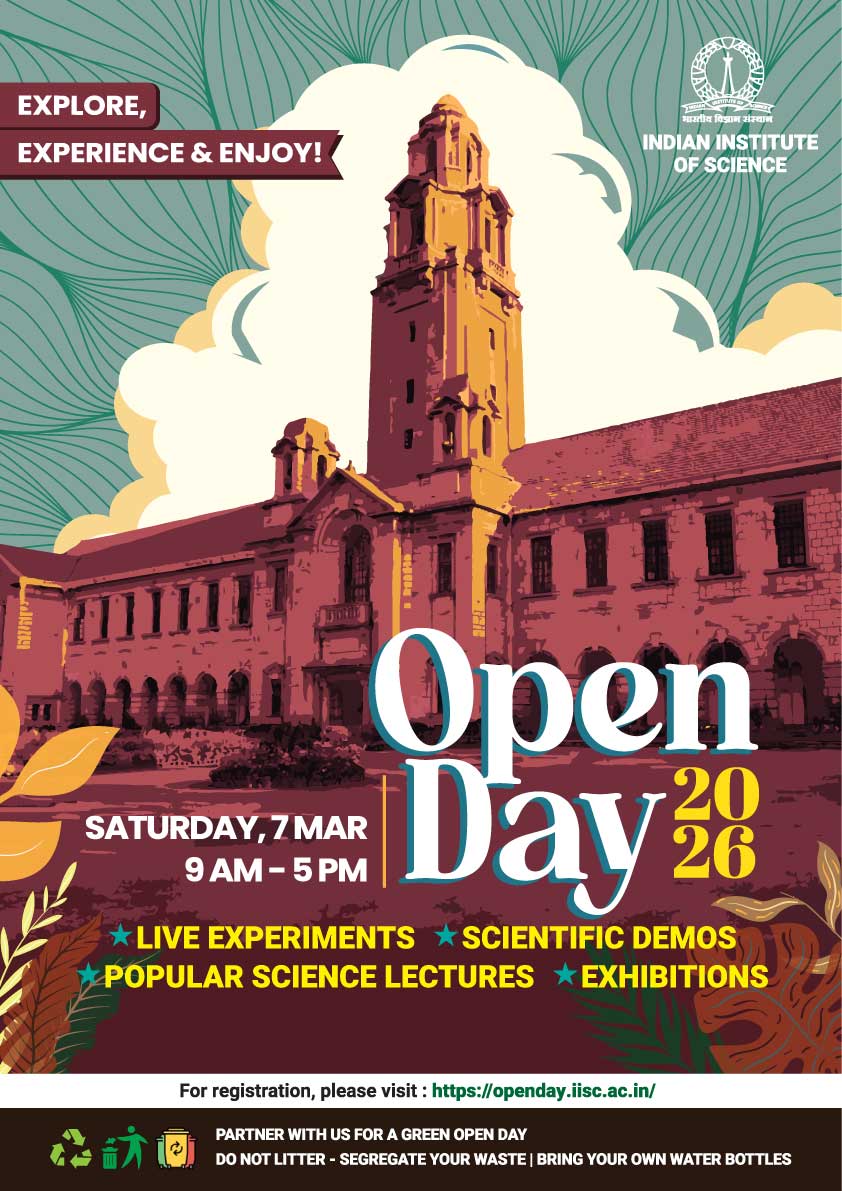
We are excited to announce Open Day 2026! 📷
Visit our campus on March 7th between 9 am and 5 pm. Explore the exciting research demos, displays, exhibits and experiments!
Use the hashtag #IIScOpenDay2026 to share what you see!
Details: openday.iisc.ac.in


English
Georgin Jacob retweetledi

🚨 𝗣𝗵𝗗 𝗣𝗼𝘀𝗶𝘁𝗶𝗼𝗻(s) 𝗢𝗽𝗲𝗻 𝗮𝘁 𝘁𝗵𝗲 𝗩𝗶𝗧𝗔 𝗟𝗮𝗯 (𝗬𝗼𝗿𝗸 𝗨𝗻𝗶𝘃𝗲𝗿𝘀𝗶𝘁𝘆, 𝗧𝗼𝗿𝗼𝗻𝘁𝗼)
𝘋𝘔 𝘮𝘦 𝘧𝘰𝘳 𝘪𝘯𝘲𝘶𝘪𝘳𝘪𝘦𝘴.
A͟p͟p͟l͟i͟c͟a͟t͟i͟o͟n͟s͟ ͟n͟o͟w͟ ͟o͟p͟e͟n͟:͟ (yorku.ca/science/biolog…)
If you want to work across 𝗵𝘂𝗺𝗮𝗻 (behavior, fMRI) and 𝗻𝗼𝗻-𝗵𝘂𝗺𝗮𝗻 𝗽𝗿𝗶𝗺𝗮𝘁𝗲 𝘀𝘆𝘀𝘁𝗲𝗺𝘀 (home-cage behavior, large-scale electrophysiology, chemogenetics), and use these data to build next-generation computational models of primate visual intelligence— please consider applying for a PhD in our lab.
We focus on two core questions:
🔹 What computational models approximate our robust primate visual system?
🔹 How can we build brain-aligned models that explain neural function and translate into clinical impact (with a focus on autism)?
Our work spans systems neuroscience, AI, and translational research, combining primate neurophysiology, human behavior, and deep learning.
𝗪𝗵𝗼 𝘀𝗵𝗼𝘂𝗹𝗱 𝗮𝗽𝗽𝗹𝘆?
We welcome applicants from: Neuroscience, Psychology, Computer Science, Engineering, or related fields.
Ideal candidates have:
✔ Curiosity about the human brain surpasses that for AI/ML (𝗿𝗲𝗾𝘂𝗶𝗿𝗲𝗱)
✔ Python experience (𝗿𝗲𝗾𝘂𝗶𝗿𝗲𝗱)
✔ Strong quantitative skills
✔ Background in deep learning or electrophysiology (helpful but not required)
𝗘𝘅𝗮𝗺𝗽𝗹𝗲𝘀 𝗼𝗳 𝗼𝘂𝗿 𝗿𝗲𝗰𝗲𝗻𝘁 𝘄𝗼𝗿𝗸 (see: vital-kolab.org/publications/)
🧠 Facial emotion recognition
🎥 Motion processing in the ventral stream
🧩 ANN evaluation frameworks: Reverse Predictivity, MAPS
⚙️ Improving ANN–brain alignment: multi-goal optimization, direct neural fitting
🔬 Probing excitatory/inhibitory neuronal roles
🧩 Applying ANN-based vision models to autism research
If working at this interface of brains, minds, and machines excites you, we’d love to hear from you!
English
Georgin Jacob retweetledi
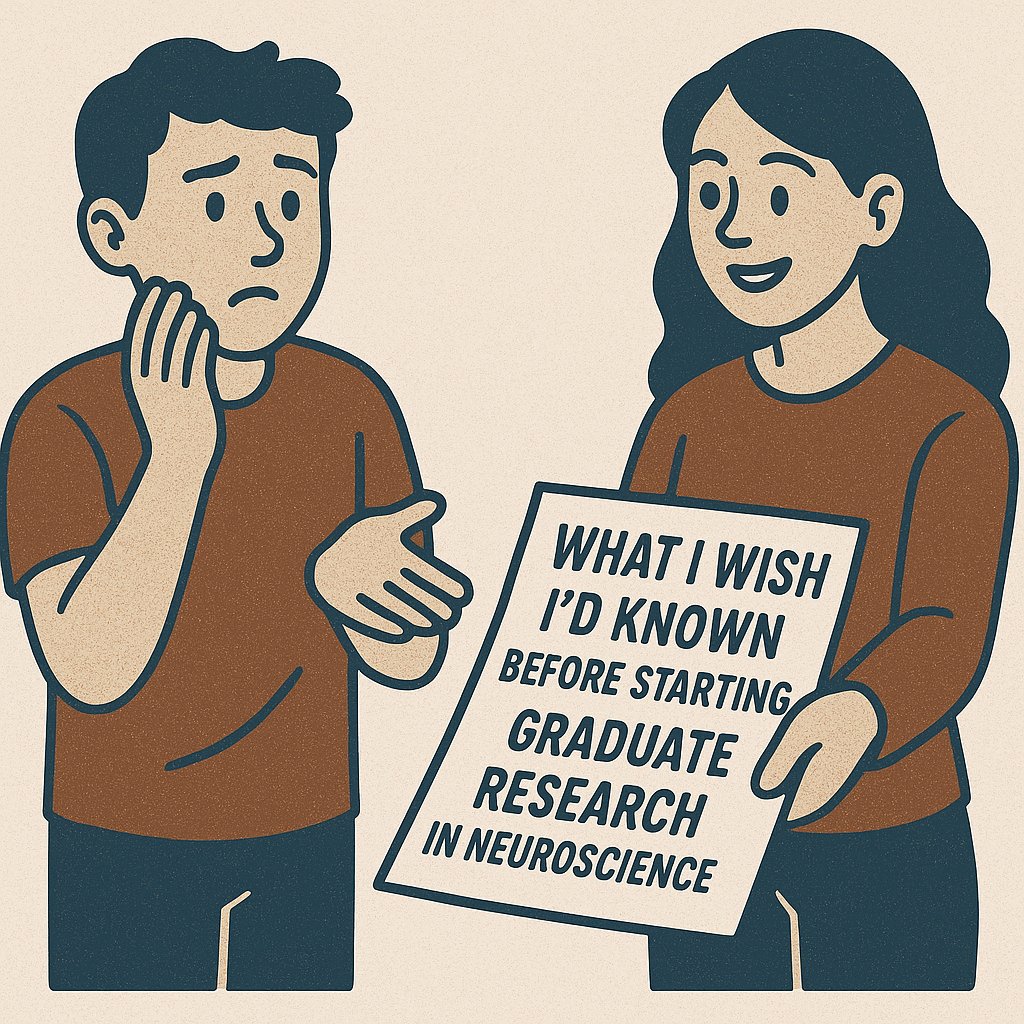
During departmental open houses or similar venues, new students often ask me: “When did you decide to become a faculty member?”, “What keeps you in academia instead of going to industry?”. I certainly don’t have all the answers. But I do have lessons learned through experience and trial and error. I’ve distilled them into a "short" piece for anyone beginning, or recalibrating their journey in neuroscience. medium.com/p/what-i-wish-…
English
Georgin Jacob retweetledi

Our awesome poster trilogy happening Tuesday morning! Don't miss it.
SP Arun@sparuniisc
Come check out our lab at SFN this week!
English
Georgin Jacob retweetledi

Today in Nature Machine Intelligence, Kazuki Irie and I discuss 4 classic challenges for neural nets — systematic generalization, catastrophic forgetting, few-shot learning, and reasoning. We argue there is a unifying fix: the right incentives & practice. rdcu.be/eLRmg

English
Georgin Jacob retweetledi

Our new study in @NatComputSci, led by Haibao Wang, presents a neural code converter aligning brain activity across individuals & scanners without shared stimuli by minimizing content loss, paving the way for scalable decoding and cross-site data analysis. nature.com/articles/s4358…
English
Georgin Jacob retweetledi
Exciting new preprint from the lab: “Adopting a human developmental visual diet yields robust, shape-based AI vision”. A most wonderful case where brain inspiration massively improved AI solutions.
Work with @lu_zejin @martisamuser and Radoslaw Cichy
arxiv.org/abs/2507.03168
English
Georgin Jacob retweetledi

Attention! The American Heart Association has dropped their 2025 update on alcohol and the heart. This is intense. Here is what you need to know in plain language summary!
1/13

English
Such a great experience working on this study with @sparuniisc and @PramodRT9! Learned a lot—so glad to see it out in the world.
SP Arun@sparuniisc
In a study now out in @eLife, @GeorginJacob @PramodRT9 and I have some exciting results: a novel computation that helps the brain solve disparate visual tasks, a novel brain region that performs this computation....what's not to like?! Read on.... 1/n elifesciences.org/articles/93033
English
Georgin Jacob retweetledi
Some people today are discouraging others from learning programming on the grounds AI will automate it. This advice will be seen as some of the worst career advice ever given. I disagree with the Turing Award and Nobel prize winner who wrote, “It is far more likely that the programming occupation will become extinct [...] than that it will become all-powerful. More and more, computers will program themselves.” Statements discouraging people from learning to code are harmful!
In the 1960s, when programming moved from punchcards (where a programmer had to laboriously make holes in physical cards to write code character by character) to keyboards with terminals, programming became easier. And that made it a better time than before to begin programming. Yet it was in this era that Nobel laureate Herb Simon wrote the words quoted in the first paragraph. Today’s arguments not to learn to code continue to echo his comment.
As coding becomes easier, more people should code, not fewer!
Over the past few decades, as programming has moved from assembly language to higher-level languages like C, from desktop to cloud, from raw text editors to IDEs to AI assisted coding where sometimes one barely even looks at the generated code (which some coders recently started to call vibe coding), it is getting easier with each step.
I wrote previously that I see tech-savvy people coordinating AI tools to move toward being 10x professionals — individuals who have 10 times the impact of the average person in their field. I am increasingly convinced that the best way for many people to accomplish this is not to be just consumers of AI applications, but to learn enough coding to use AI-assisted coding tools effectively.
One question I’m asked most often is what someone should do who is worried about job displacement by AI. My answer is: Learn about AI and take control of it, because one of the most important skills in the future will be the ability to tell a computer exactly what you want, so it can do that for you. Coding (or getting AI to code for you) is a great way to do that.
When I was working on the course Generative AI for Everyone and needed to generate AI artwork for the background images, I worked with a collaborator who had studied art history and knew the language of art. He prompted Midjourney with terminology based on the historical style, palette, artist inspiration and so on — using the language of art — to get the result he wanted. I didn’t know this language, and my paltry attempts at prompting could not deliver as effective a result.
Similarly, scientists, analysts, marketers, recruiters, and people of a wide range of professions who understand the language of software through their knowledge of coding can tell an LLM or an AI-enabled IDE what they want much more precisely, and get much better results. As these tools are continuing to make coding easier, this is the best time yet to learn to code, to learn the language of software, and learn to make computers do exactly what you want them to do.
[Original text: deeplearning.ai/the-batch/issu… ]
English
Georgin Jacob retweetledi

The goal of the PhD programme in Brain, Computation, and Data Science is to train students such that they are able to address significant research questions in brain, computation, and machine intelligence.
Interested students can apply at admissions.iisc.ac.in

English
Georgin Jacob retweetledi
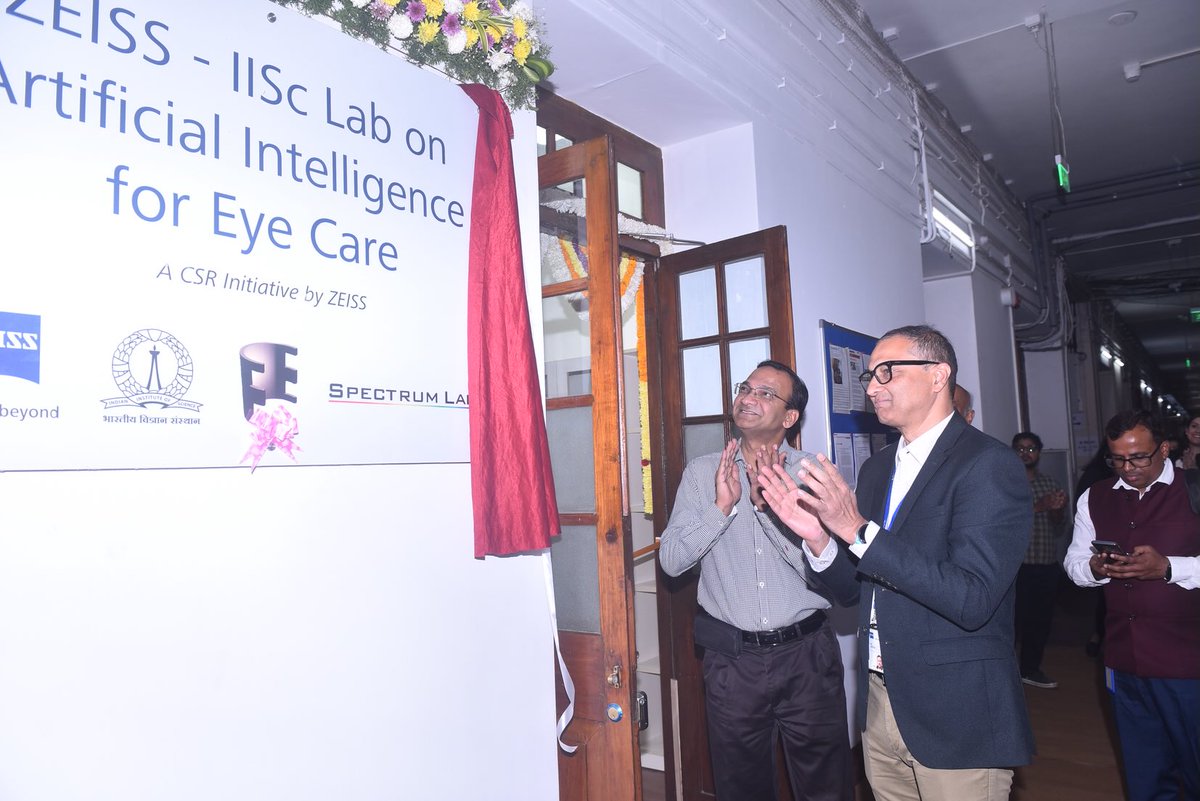
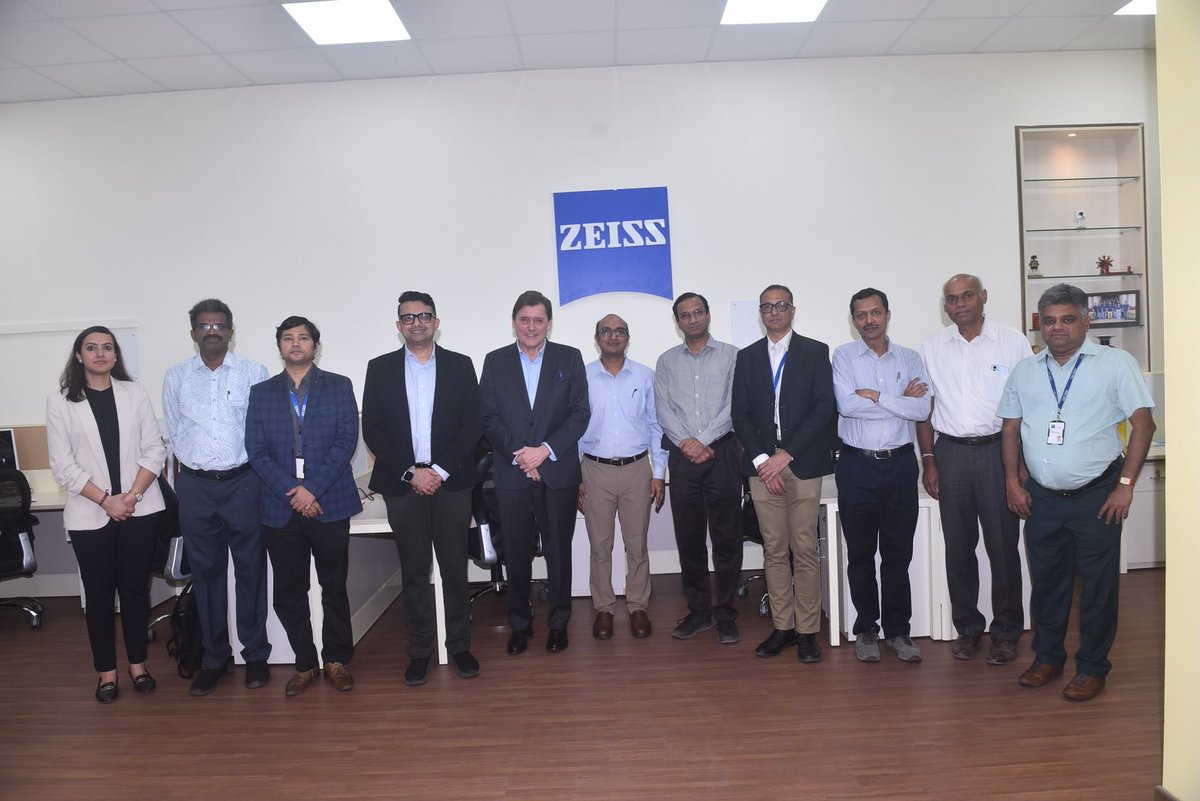
Inauguration of the Zeiss-IISc lab focused on AI for Eye Care.


English
Georgin Jacob retweetledi

Runners, pick a number to find out who will join you on your holiday adventure!🎁🎄❄️
Which number will you choose?✨
Comment below 👇
#Holidayfun #templerun

English
Georgin Jacob retweetledi
"The Illusion Illusion"
vision language models recognize images of illusions... but they also say non-illusions are illusions too


English
Georgin Jacob retweetledi

Announcing the first annual Visual Neuroscience summer course, Woods Hole, MA, Aug 1-16, 2025. Come for an eye-opening, hands-on experience with inspiring faculty and students from around the world. Please help spread the word!

English
Georgin Jacob retweetledi
In a new study, out now in Attention Perception & Psychophysics, Thomas Cherian (@copy2thomas) and I have some exciting insights into what we see when an object is occluded. Like all good things, the origin of this study was simple curiosity. Consider the picture below: 1/25

English
Georgin Jacob retweetledi

Neuroscience needs research engineers, but orgs are not ready for this. I agree wholeheartedly with Gaelle and Olivier.
1. RSEs should be inside of a ladder/org where they can learn from each other. A lone RSE in a lab is a recipe for isolation, skill atrophy, low mobility. 1/
The Transmitter@_TheTransmitter
With neuroscience datasets and scientific collaborations growing in size, Gaelle Chapuis and Olivier Winter explain why neuroscience needs to create a career path for software engineers. thetransmitter.org/craft-and-care…
English
Georgin Jacob retweetledi

Nature
Temporal multiplexing of perception and memory codes in IT cortex
nature.com/articles/s4158…
English