We refreshed our website, and it is now live!
We made our value proposition clearer and removed excessive text
Do you like it? Share your feedback with us!
gerosense.ai
English
GeroSense
99 posts

@GeroSense
Digital biomarker for biological age and resilience to assess lifestyle, nutraceutical, and therapeutic interventions Part of https://t.co/T7cGS8lFEe


@DeSciBelgrade is exciting, but how exciting is DeSci really? We asked DeSci enthusiasts from @GeroSense @Ethernity_cloud, @DeSciBelgrade and @DeSciWorld about their thoughts. Add up to the excitement by sharing your thoughts on how desci is changing the industry. $NOBL #ICP #DeSci
@statto at @longevityweek “As of today biological age clocks are only useful in population-level application” We at @GeroSense totally agree with Andrew. That’s why we’ve recently launched GeroSense studies, to get more insights into aging at population level. This is the easiest and totally free way to contribute to aging research with data already collected by your phones. Further details: studies.gerosense.ai
🧵 Do you agree that life is good and death is bad? Do you want to contribute to aging research? If yes, help us spread this message. Today, we are starting a new non-profit initiative called GeroSense Studies, which you can join to help accelerate aging science. Details ⬇️
🧵 Do you agree that life is good and death is bad? Do you want to contribute to aging research? If yes, help us spread this message. Today, we are starting a new non-profit initiative called GeroSense Studies, which you can join to help accelerate aging science. Details ⬇️
Something is in the works... Your guess?
8 pm. We are cooking something special...
(1/5) Made a quick comparison of the popularity of anti-diabetic drugs like Ozempic and Metformin, which are often used off-label (including for longevity purposes). Ozempic is by far the #1. The rest of the insights are in the thread 🧵
Revealed preference for an extremely long (infinite?) life. Unless you are not in the longevity industry, you would be surprised to learn that when you poll people asking them the question, “Given the technology to stop/reverse aging is developed, how long do you want to live?” by far the most likely answer would be “80–90 years”, with some answering “100–120 years”, and a select few — “150 years — infinity”. I was thinking a lot about why this might be the case, and the best answer I came up with is: They lie. Why? The more correct way to say would be — they choose the “socially acceptable” answer. Let’s dive into the possible reasons. 1) They misunderstand the question and are still attached to the numbers — i.e., 90 calendar age could not ever mean a young-looking person beaming with health, right? 2) Cultural stigma against ‘cure for aging’ and immortality. Those seeking it are predominantly portrayed as antiheroes in movies, books, and other media, paving a strong message that something is frowned upon and should not be pursued nor desired. 3) Death acceptance propaganda (By the way, I really love this term — read it from @kaimicahmills). It is an umbrella term for the variety of mechanisms that people have been using to protect their sanity when they realize that they are mortal. From religion to graceful aging, it has been really beneficial throughout the history of humanity, but today, when we finally are starting to understand that aging is malleable and ultimately solvable, that set of beliefs becomes detrimental to progress. But how do I know that people lie? The answer is Revealed Preference. It is an economic theory that asserts individuals’ preferences can be deduced from their purchasing behavior and choices rather than what they claim to prefer. And it is very relevant to longevity. Why? 1) People always have a choice of suicide. But very few people actually do choose suicide. From the polls, one might predict that a lot of people should choose suicide, as they have reached 80–90-year lifespan claimed to be desired by many pollsters. But the data does not support it — the suicide rate does not choose suicide (the ones that do typically have a terminal illness). So we have a first revealed preference to live longer. 2) People spend enormous amounts of money on treatments that would add 3–6 months to their lifespan or the lifespan of their loved ones. So, there is another revealed preference for a longer life. They are just one intellectual step away from actually paying for lifespan increase in advance — by targeting aging. So we see that people claim that they don’t want extreme longevity but behave as they do. We just need to change the narrative. Do you think there are any revealed preferences that I missed?
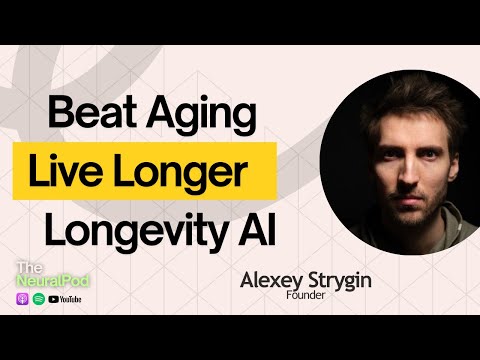
New podcast with me! 🎧 Discussed career transitions into longevity with AI recruiter Chris Coyne. Learn about longevity biotech, @hacking_aging, @GeroSense, and get 80/20 longevity tips. 👉 YouTube: youtu.be/8L_R7UFe4UQ 👉 Spotify: open.spotify.com/show/69YSzCuZm…