Giancarlo Niccolai

1.6K posts

Giancarlo Niccolai

Giancarlo Niccolai

@Giancoder

Coder for life. Author of the Falcon Programming Language. My opinions are not representing past, present, future employers. Follows and RT are not endorsement.

Katılım Kasım 2021
514 Takip Edilen420 Takipçiler
Sabitlenmiş Tweet
Giancarlo Niccolai
Giancarlo Niccolai@Giancoder·
A service announcement is in order. I don't service trolls. Their argument may or may not have merit. They may or may not be right (usually they aren't, except for sophisms or marginal details that don't cover the core of the topic). The moment someone is using derogatory language they are blocked. Also, me blocking them is not acknowledgement of anything, but of their inability to keep the discourse to a level of politeness acceptable between peers. I treat everyone with basic courtesy and I expect the same in any interaction, IRL or online.
English
0
0
1
53
dialetheic bias
dialetheic bias@biasbreakdown·
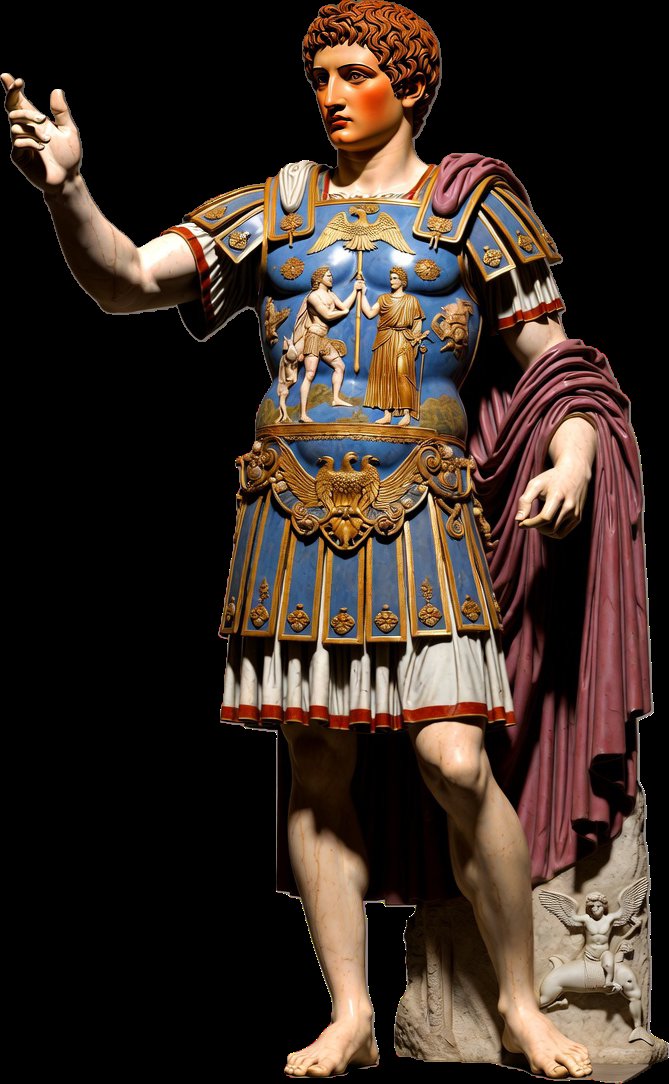
This is how grok colored it using the following prompt: "the famous statue of Augustus of Prima Porta, one of the most recognizable depictions of the first Roman emperor, Augustus. Draw it colorized using only the artistic and painting technologies available at the time it was made."
dialetheic bias tweet media
English
1
2
33
1.5K
Devon Eriksen
Devon Eriksen@Devon_Eriksen_·
This is important for understanding the world around us. Sometimes scientists, working on their fields of expertise, stumble upon something outside of it. If they don't understand that "PhD" means "niche subject expert" rather than "designated smart person", they try to figure that something out themselves rather than hand it off to the correct expert. Hand off to a fine artist whose medium is paint, and he'll tell you all about how layers of different colors are used to create subtle, realistic effects to the eye. Don't, and you'll eventually get an evolutionary biologist trying to figure out if software in conscious.
detty@0ddette

Polychromy is archaeologists finding traces of the underpainting layer and then pretending finely crafted sculptures were handed to pre-schoolers to paint by number. They even get frustrated by how much “red hair” they find- red is used in underpainting to build warmth for brown.

English
13
110
1.4K
38.1K
Giancarlo Niccolai
Giancarlo Niccolai@Giancoder·
@learning_yohei それは、レジオンによってべつべつです。北部分で、待ち合わせの時間の5分前に、南へいくと1時間ぐらい後になります。
日本語
0
0
0
22
Yohei from Japan🇯🇵
Yohei from Japan🇯🇵@learning_yohei·
日本からこんにちは🇯🇵😄 イタリア人に質問があります🇮🇹🙋‍♀️ イタリア人っていつも待ち合わせの時間に遅れるって本当ですか?😅
Yohei from Japan🇯🇵 tweet media
日本語
1.4K
50
1.7K
173.3K
Giancarlo Niccolai
Giancarlo Niccolai@Giancoder·
You can't "look" at an electron (or any other elementary particle) in the double slit experiment, or in any experiment at all. You can add an interacting field that will destroy the particle, and emit another one as the hit perturbs the field (or modify it to the point that you can consider it as a new, different one). Electrons, and other elementary particles, are self-propagating wave configurations, which can be treated as "particles" (specs of solid matter) only in the math describing them, and only in specific conditions and with some caveats. The "things become real when you look at them" is pure nonsense -- or better, a mystification of early physicists that were amazed about how lazy computation (google it) worked well to solve that kind of problems.
English
0
1
0
250
TheNewPhysics
TheNewPhysics@CharlesMullins2·
🚨 An electron isn’t in one place. It’s not even moving the way we imagine. In the double slit experiment… it behaves like it goes through both paths at once. Until you look. Then it becomes “real.” But here’s the twist: Maybe it was never a particle traveling through space… Maybe it’s a pattern resolving in time. What you see isn’t motion it’s the final stable state. Reality doesn’t unfold. It locks in. Follow if you want to understand what you’re actually looking at.
English
32
76
623
45.3K
Giancarlo Niccolai
Giancarlo Niccolai@Giancoder·
@Devon_Eriksen_ I respectfully disagree. It was beaten by "L'amor che muove il sole e l'altre stelle" -- the love that moves the sun and the other stars. Love is the first mover and the ultimate goal. Any deviation is just temporary, unstable, failing.
English
0
0
1
214
Devon Eriksen
Devon Eriksen@Devon_Eriksen_·
Christianity didn't defeat "new atheism". It failed to win the war. It failed to win a single battle. "New atheism" was defeated by the most powerful force in politics, which has dominated human history since before we learned to bang the rocks together, and which will dominate human history while we explore the Lesser Magellanic Cloud. New atheism was defeated by horny. The sex drive of the young human male is the supreme force of civilization. It invented the technologies, it fought every war, it founded every nation, it built every empire. It drove new atheism to great heights, up until the moment new atheism declared war on it. Then it smashed the new atheism without mercy. Young men declared allegiance to atheism because they chafed at the restrictions of religious law which made it harder for them to get sex. And they would continue that allegiance so long as they believed that a world with Christianity overthrown would be a world where they could get laid. Rebecca Watson singlehandedly triggered the cascade that ended all that. When she summoned an internet lynch mob to punish a generic standard young male atheist for daring to make a pass at her in an elevator, this was an attack on two fronts. First of all, it aligned atheism, publicly, with the idea that a man pursuing sex is committing an offense, that even a verbal advance is, or at least often can be, a predatory, "problematic" act. Secondly, everyone knew that Generic Standard Young Male Atheist would not have been subjected to this treatment had she found him attractive. The first prong of this attack informed all the Generic Standard Young Male Atheists that their efforts to get laid would be scrutinized, not just for gross offenses against a woman's personal autonomy, but for anything and everything that accidentally gave her the ick. If he failed to read her accurately, the fault would be entirely his, and the punishment unlimited. The second prong of the attack created the widespread stereotype of the Generic Standard Young Male Atheist as an unattractive, stinky, socially awkward neckbeard. Now, the Christians had been trying to do this for some time, but without any real success. Young men did not care if boomer preachers with suspiciously expensive homes, or married church Karens, called them neckbeards. They were not trying to be attractive to either of these groups. They were trying to be attractive to young atheist women. The moment the young atheist women began to publicly feed the stereotype, it might as well have been carved on the cornerstone of the universe in flaming letters eleven light years tall. Now, most Generic Standard Young Male Atheists were not stinky neckbeards. They were just ordinary tribeless young men who didn't quite fit in. So long as they had the dream that a world dominated by secular atheist liberty of conscience would provide them with girls who were sometimes willing to have sex with them, they would support the movement. But now, in one stroke, Rebecca Watson revealed that atheist women did not desire them, and were perfectly willing to throw them under the bus for social status or google ad clickthroughs. Suddenly, saying "I am an atheist" at parties went from meaning "I am an independent sort of person who's not very religious" to meaning "I am socially awkward, unattractive, and cannot even groom myself properly". It didn't matter if all of these things were visibly untrue. Women are very susceptible to group suggestion in what they find attractive. So all the young men left the movement. They didn't suddenly start believing in god, or want to join a church, but they stopped pulling the chariot, drifted away, and began describing themselves as "not really religious" at those same parties. Which meant the same thing in terms of their personal beliefs, but meant something very different about who they would show up and fight for. You cannot go to war with horny. You can go to war with degenerate. You can go to war with promiscuous. You can go to war with perverted. You can even go to war with hedonistic. But you cannot go to war with horny. You will lose. Your movement, whatever it is, will fail if you do not offer young men a clear, understandable, viable path to women they actually want. The details don't matter. You can offer them inexpensive prostitutes, a hedonistic society full of sluts, or one adoring virgin bride. But you have to offer them something other than shame, celibacy, and the longhouse. Or they will spurn you as you would spurn a rabid dog. This post is not about the atheist movement.
Matt Forney@mattforney

Wrong. This woman killed New Atheism. If you're not familiar with Rebecca Watson, she's a tenth-tier atheist blogger who kicked up a stink back in 2011 when she went to an atheist conference in Dublin and some dude hit on her in the elevator. She ranted endlessly about how "creepy" he was and how "unsafe" being asked out on a date made her feel and the incident was dubbed "Elevatorgate." Richard Dawkins waded into the fracas and suggested that being hit on in an elevator wasn't the end of the world. He asked you out, Becky, you weren't interested, end of. This caused everyone to FREAK OUT at Dawkins' "misogyny" and about the supposed problem with "misogyny" in atheism in general, leading large numbers of prominent atheists such as PZ Myers and Jen McCreight to split off into Atheism Plus. Atheism Plus was atheism with a rape whistle, its adherents more focused on fighting da patriarchy then with stuff that...actually has to do with atheism. That's why atheism collapsed in on itself as a sociopolitical force. The left, per usual, ate themselves alive.

English
105
173
1.4K
102.7K
Giancarlo Niccolai retweetledi
exQUIZitely 🕹️
exQUIZitely 🕹️@exQUIZitely·
I often think about the technical limitations that game designers of the 80s had to work with - both in terms of software and hardware. The game that stands at the very top is Elite. Think about this for a second: The core game code on the BBC Micro version occupied roughly 22 KB of memory. Now think about what Braben and Bell turned that into: a universe with eight galaxies, each containing 256 star systems (for a total of 2,048 planets/systems). Each system featured unique details: government type, economy, technology level, population, commodity prices, and even descriptive text (e.g., a planet known for "carnivorous arts graduates" or similar quirky combinations). If you still need a bit more help to contextualize that, try this: Elite was smaller than many modern text files or desktop icons, yet it contained (and let you freely explore) a multi-galaxy-spanning universe that felt vast and limitless. Oh, and by the way, the game also rendered 3D wireframe ships, stations, and planets in real time on a 2 MHz 6502 processor. This is no slight on today’s game designers. They work with what they have, and that's okay. But when you think about the worlds that some programmers created with the tools they were given, it sometimes breaks my brain trying to understand how they did it. Elite is a true masterpiece on so many levels. I played the C64 version back in the day, and even 40+ years later it still feels like one of the most incredible programming wonders ever.
English
317
367
3.4K
148.1K
Giancarlo Niccolai
Giancarlo Niccolai@Giancoder·
Kanji are one of the most beautiful aspect of Japanese, both in its written and (surprisingly) in its spoken form. For brevity, Amongst the various reasons to use them in will cite only the ateji, in two forms: in the first, you can write an ideogram and apply another word when you read it; you may find songs/poetry that read 愛 (Ai, love) as "inochi" (life), to create a third, intermediate or cumulated meaning. In the second, you can borrow the sound of Kanji to represent a different word, but expressing it as more than the word would normally mean; for example, Souseki writes the word "mise" (shop) as 見世(see-world) to express the idea that particular shop meant everything (all the world they see) to the owner. And this is just one of the ways Kanjis contribute to the richness of the language.
English
0
0
1
268
IndicFacts
IndicFacts@IndicMist·
@Bega092205 Objectively incorrect Logograms bring no real benefits to the language Japan is a very conservative country who believes in maintaining tradition, that is the only reason Kanji is surviving Even in Japan people have tried to reform the language like Koreans
English
13
0
5
4.7K
Giancarlo Niccolai
Giancarlo Niccolai@Giancoder·
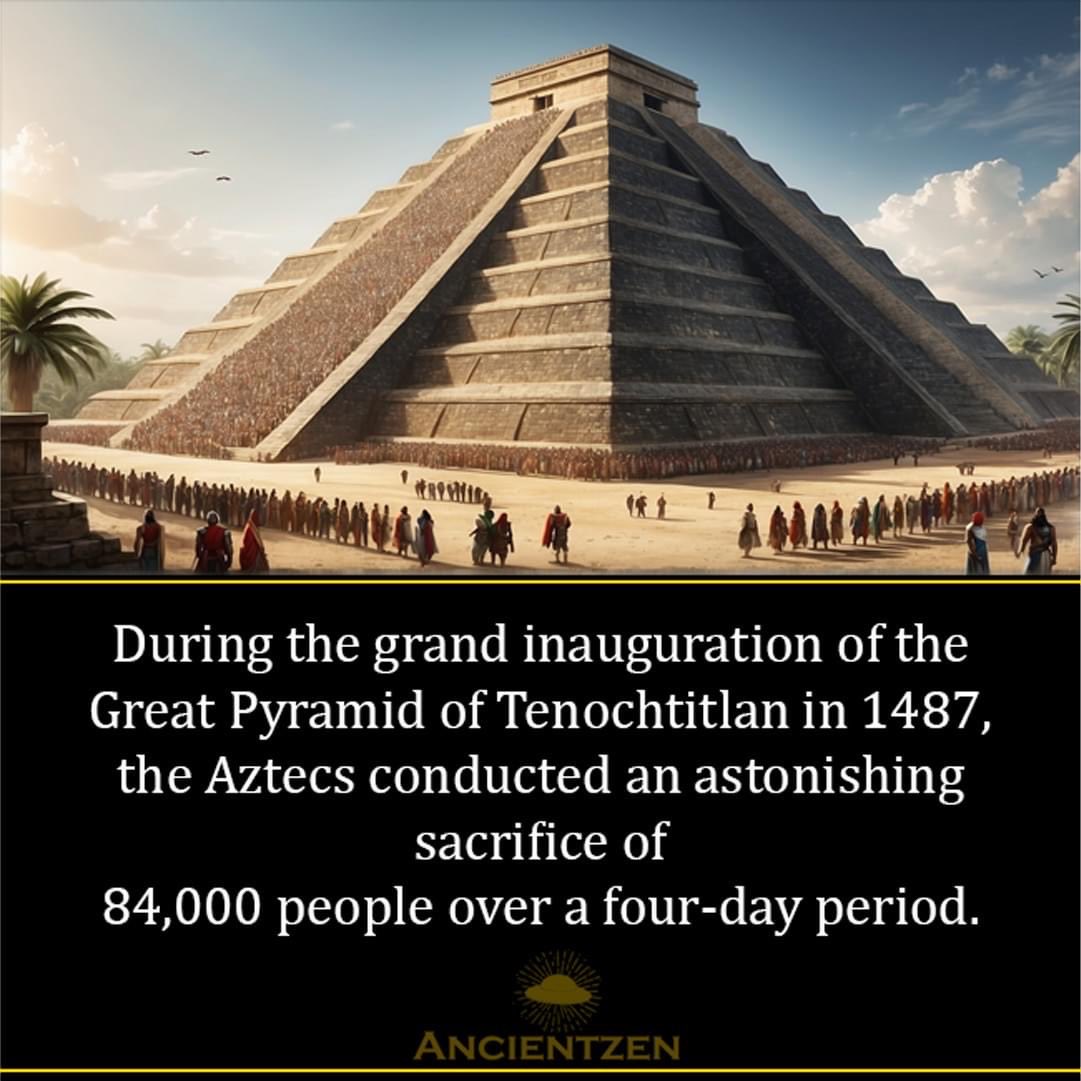
@Courage69861986 @MattWalshBlog "The rest" were probably in the order of 200k, against a defending force of 50k, which held only for the strategic position of the capital. They REALLY got tired of being sacrificed.
English
0
0
3
815
ThePatrioticDog
ThePatrioticDog@ThePatrioticDog·
@MattWalshBlog The majority of the Indian tribes were complete savages. Hernán Cortés took down the mighty Aztec empire with a few hundred Spaniards. The rest were unified tribes who were tired of being sacrificed. They didn’t teach us that in school though.
ThePatrioticDog tweet media
English
38
9
117
37.9K
Matt Walsh
Matt Walsh@MattWalshBlog·
Christopher Columbus is the ultimate IQ test. You immediately know that someone is a retarded halfwit if they start screeching some nonsense about how Columbus was a genocidal maniac or whatever. Intelligent students of history understand that he is one of the great men of western civilization. This is an awesome move by the White House.
New York Post@nypost

White House installs Christopher Columbus statue made from remains of toppled sculpture trib.al/iGX7loN

English
1.5K
2.4K
29.1K
5.5M
NWO Dissident 1776.
NWO Dissident 1776.@An89390Anglo·
@eaiwck @JimmyRu52630895 @Rainmaker1973 Sorry, but it all goes against my instincts & common sense. And it all sounds like the theory for gravity, & it is only a theory & not actually proven, was manufactured to explain what still can't be explained in full, as no one really knows what gravity actually is.
English
5
0
1
485
Massimo
Massimo@Rainmaker1973·
Small objects can show that gravity is real. The Cavendish experiment proved that even tiny masses pull on each other, showing gravity works everywhere, not just between planets.
English
116
441
4.4K
547.3K
Oliver Jia (オリバー・ジア)
There's currently a debate on Japanese social media around if all UI elements should be translated from English. Most Japanese gamers know enough English to navigate through menus. Some also argue that "You are dead" looks and sounds better than あなたは死亡しました.
⚡Game*Spark⚡@gamespark

「日本人にとって、UIに簡単な英単語が入ってるほうがより日本的で素敵だと、欧米人は理解してくれない」ゲーム内に含まれる英語は全部訳せばいいというものではない…SNSを中心に盛り上がる議論 gamespark.jp/article/2026/0…

日本語
83
196
2.2K
1.2M
R. Wade H. Marr
R. Wade H. Marr@HunterWade·
Most people were taught that light “travels” — moving through space at ~299,792,458 m/s. That framing feels obvious. It is also misleading. Stable datum: What we call “light” is not a thing moving through space. It is the electromagnetic field updating phase. ° Return to James Clerk Maxwell’s original formulation. Electric and magnetic fields are not separate objects. They are coupled expressions of a single field. A change in one necessitates a change in the other. ° So what is “propagation”? It is not something traveling from point A to point B. It is a sequential updating of phase relations across the field. Each local region updates based on its neighboring relations. That updating appears to us as motion. ° A useful way to feel this is through resonance. When a string vibrates, nothing travels from one end carrying “sound” as an object. The system enters a pattern of coordinated oscillation. Energy redistributes. Phase aligns. What we hear as tone is a stable resonance pattern. ° Light behaves the same way. Not as a thing moving through space. As a self-consistent resonance of the electromagnetic field. What appears as a wave “moving” is the phase relationship updating across the field. Each region does not receive a thing. It reconfigures in relation to its neighbors. ° Nothing is traveling. What we are seeing is coherence updating. ° The “speed of light” is not the speed of a thing. It is the rate at which phase coherence can update through the electromagnetic field. ° The field itself is not a container something moves through. It is the projection of these phase relations. What we call “space” and “field” are how this coherence becomes addressable. ° Now the continuity becomes visible: Plasma → freely differentiating field Light → propagating phase relation Matter → phase-locked standing configuration Same field. Different closure. ° This is not new physics. It is a return to what has already been formalized. A shift from object-thinking to field coherence. ° How does our understanding of light, space, and motion change when what appears to “travel” is recognized as phase updating across a continuous field, rather than a thing moving through empty space? The recursion holds. 🌀
R. Wade H. Marr tweet media
English
86
213
909
36.3K
Giancarlo Niccolai
Giancarlo Niccolai@Giancoder·
Nope. First of all, the nihinshoki is written in 820, and the importance of female leadership (Uji clan leaders first, Yamatai queens later, tennou after the taika reform) was directly understated. Just read the chapter of Yamato to tohi momoso hime on that purpose. Then, Genmei was so powerful she got herself assassinated; she would have been hardly a problem if she was just a token placeholder. Last but not least, Tennou is not just a political position: it's more a religious position if anything (tennous rarely controlled power directly; excluding cases like Genmei, that is). Tennous are the link between the Kamis and the living. That CANNOT be a token position; for what concerns the political power, maybe, but the Tennou must carry the rite cleansing the Kuni and renewing the connection with the world of the Kami, and that must be done personally, by the living kami ascended as Tennou. The fact that the rite can be officied by a woman sais it all. Oh and I forgot. The person who bestow the title of Tennou is and will always be the person who can perform a kuchiyose (mouth-lending) with Amaterasu, and that power is granted only to the great priestess of the Ise shrine. In other words, the Japanese king maker (at least in theory and in formality) is and will always be a woman.
English
13
0
0
66
James D. Kim 🇺🇸🇮🇱🇰🇷
@Giancoder @mrjeffu They assumed the throne as a temporary measure until their younger brothers or sons grew up. Japan's Bansei Ikkei has been passed down exclusively through the paternal line for over a thousand years.
English
2
0
1
55
Jeffrey J. Hall 🇯🇵🇺🇸
Japanese polls have shown that over 60% of the country support allowing the current Emperor's daughter to inherit the throne. Prime Minister Takaichi stated today that she is against female succession because the Emperor's younger brother has a son.
English
272
794
11.9K
1.6M
Giancarlo Niccolai
Giancarlo Niccolai@Giancoder·
Tell that to Amaterasu, Himiko and all the female Tennou. Here is the standard list: Suiko Tennō (推古天皇) – 33rd Tennō Reigned: 592–628 First historically verified female Tennō; aunt of Prince Shōtoku. Kōgyoku Tennō (皇極天皇) – 35th Tennō Reigned: 642–645 (Later re-ascended as #3 below) Saimei Tennō (斉明天皇) – 37th Tennō Reigned: 655–661 Same person as Kōgyoku (second reign / 重祚) Jitō Tennō (持統天皇) – 41st Tennō Reigned: 690–697 Grandmother of Emperor Monmu; played a major role in consolidating imperial power. Genmei Tennō (元明天皇) – 43rd Tennō Reigned: 707–715 Mother of Emperor Monmu; oversaw the move to Nara (Heijō-kyō) and compilation of early histories. Genshō Tennō (元正天皇) – 44th Tennō Reigned: 715–724 Daughter of Genmei; continued Nara capital projects. Kōken Tennō (孝謙天皇) – 46th Tennō Reigned: 749–758 (Later re-ascended as #8 below) Shōtoku Tennō (称徳天皇) – 48th Tennō Reigned: 764–770 Same person as Kōken (second reign / 重祚); last female Tennō until the early modern period. Meishō Tennō (明正天皇) – 109th Tennō Reigned: 1629–1643 Daughter of Emperor Go-Mizunoo; early Edo period. Go-Sakuramachi Tennō (後桜町天皇) – 117th Tennō Reigned: 1762–1770 It is known that in the pre-historic japan (circa 525 onwards), pre-Taika reform clans were mostly led by matriarchs. The so called "yamato hime" was relegated to a minor figure in the re-edited chronicles, but there are traces of that particular leader of the Yamato clan to have been the one actually starting the empire by conquering Uda and probably also Izumo. That would probably the sorceress called Beihimu/Himiko in the Chinese Chronicles. According with the legends in the Kojiki and the Nihonshoki (which, btw, are also the source of most of the actually historical information we have), Amaterasu gave Kusanagi (the sword caressing grass) to the first emperor, Jinmu (and notice the name: "Divine Weapon") so that he would rule the lands in her name. It doesn't get much more matriarchal then that. Then, the Buddhist came, and their influence started to be quite strong after Shoutoku - - which is why she was the last empress for a long time. Then the samurai came: initially, a band of w and their warlords families/clans, cast out from the empire in the wilderness, they DID develop a fully patriarchal culture. Nevertheless, the ancient instinct of the Japanese for a matriarchal society was never completely excised out of the noble class (not the samurai) and the commoners. You can see it playing out today very clearly, for example when Masako Mori, MP from Fukushima, was literally scolding the government as a mother and they were taking it as disobedient children.
Română
0
1
1
128
Giancarlo Niccolai
Giancarlo Niccolai@Giancoder·
I have an unorthodox theory on why Cesar was killed so easily; consider that food for thought. Cesar never craved power; he craved glory, and possibly, glory as a warrior. Dying of old age wasn't all that glamorous at the time: passing as your body rots away isn't exactly all that fun. Cesar didn't want to die in his bed; he wanted to die on the battlefield, but at the same time he didn't want to lose: he would have craved to die in a battle he ultimately won, but the occasion never presented. When he was told of the conspiracy against him, he didn't dismiss it or underestimate the problem: he never underestimated an enemy or a threat, and he was perfectly aware that raising to power would have attracted powerful enemies in the end. He was under no illusion that everyone just adored him, he certainly wasn't that naive. I think he saw the conspiracy as a blessing. The glorious way out he was waiting for. When he went to the senate that morning, disarmed and without guards, he knew he wasn't coming back, and he was thrilled about it: the blaze of glory that escaped him up that moment was finally within reach: he would truly become immortal now, and that thanks to those who thought they were his enemies. They were giving him the greatest of the gifts he ever desired. Even the famous sentence: "tu quoqe, Brutus?" Confirms it. He wasn't surprised at all of the attack, he was just surprised to see Brutus within the conspirators. And he was right. He died a hero, the only way you don't fade in memory or become a villain, and the conspirators really gave him the only kind of immortality he cared about: eternal glory. Or, that's how I like to think it.
English
1
2
5
620
James Lucas
James Lucas@JamesLucasIT·
This is Rome's most famous crime scene Today, March 15, marks the day sixty men stabbed the most powerful person on earth and accidentally destroyed the very thing they were trying to save. The lesson he died for is one the world still hasn't learned... In 44 BC, Julius Caesar was proclaimed dictator for life. He had ended a civil war, conquered Gaul, and remade Rome in his image. The poor loved him. The soldiers would die for him. But 60 senators called themselves the Liberators and plotted to kill him. At their center stood Marcus Junius Brutus, descended from the very man who had founded the Republic. Yet it was Caesar’s mercy that helped restore Brutus’s political career. Caesar had spared his life after the civil war and allowed him to return to public office... Brutus took the blade he sharpened on Caesar's generosity and drove it into his chest. But before the blood, there was a warning. According to Plutarch, a seer had told Caesar his life would be in danger on the Ides of March. On his way to the Senate that morning, Caesar spotted the man and said to him that the Ides had arrived. The seer's reply was: "Aye, they are come, but they are not gone." Caesar was stabbed twenty-three times. He fell at the base of a statue of Pompey the Great — his oldest rival. When he saw Brutus among the assassins, he stopped fighting and sank to the ground... Brutus had prepared a speech celebrating the restoration of the Republic. He was shocked to find outrage instead of praise. Caesar's death triggered civil wars. His heir Octavian crushed the conspirators at Philippi — Brutus and Cassius both died by their own swords — then became Emperor Augustus, terminating the Republic forever. The Liberators had liberated no one. They had a plan for the assassination and none for the morning after — certain of their own righteousness, blind to everything else. Every revolution led by people drunk on their own virtue ends the same way: not in the freedom they promised, but in the chaos they swore to prevent. Power does not fall into a vacuum. It falls to whoever is most prepared to catch it. The men who killed Caesar set out to stop a dictator. They created an emperor instead. That is the oldest political truth there is, and the one we keep forgetting: removing a man changes nothing if you haven't changed the conditions that made him necessary in the first place.
English
132
1.7K
8.2K
678.7K
Giancarlo Niccolai
Giancarlo Niccolai@Giancoder·
The ring real power is "word of command" (Frodo uses it on Gollum inadvertently). Even a mortal could beat Sauron with that, and easily; the problem was simply that's a power too difficult to control by itself, let alone through the ways the ring can twist the mind of the bearers. With such a power, chances are that whoever casts a word of command causes a disaster worse than Sauron himself, and the lesser the mind, the higher the risk. -- For "difficult to control", imagine the practicality of the motto "careful what you desire, it may become true".
English
0
0
0
79
Devon Eriksen
Devon Eriksen@Devon_Eriksen_·
The more dogmatic the writing advice, the less seriously I recommend taking it. Why? Because every successful writer eventually figures out one important thing: No one can tell you how to write. He can only tell you how he writes. Writing fiction is the process of extracting a story from your head, and putting it on paper for transfer to someone else's head. There are as many variations of this process as there are heads. And if there is a piece, any piece, of writing how-to that is so general, so universal, that it works for all heads... well, I haven't seen such a thing yet, and I doubt I ever will. Dogmatic writing advice, advice the giver thinks is iron law, tends to come from an unpolished writer who has discovered a truth about his process, and thinks it is a law of the process. Thus, dogmatism is a sign of sophomoric writing advice. If you were to ask an author whose mastery is indisputable, say @orsonscottcard or @monsterhunter45, he would have a lot of recommendations, but they would probably all be laced through with liberal doses of "if that works for you". Does that mean that writing advice is valueless? No. Far from it. Because you have to discover your own process, wandering in the wilderness rather than following a beaten path, the guidance of others is even more important. But it has to be guidance from others whose heads are similar to yours. You'll know who those are because their advice makes sense, and works for you. Not because it's the answer, but because it's part of your answer. So, should you use a professional editor? Yes, if that works for you. Some writers rely heavily on them, some just use them for a little sentence tuning, some don't need one at all. Personally, I find that beta readers are far more important to me than editors. I am not writing for writing professionals. I am writing for people who like novels. The unpaid, non-professional beta reader therefore gives me a far better picture of the reader experience than a professional editor does. Of course, since beta readers are non-professionals, what he gives you is raw impressions, not polished advice, and interpretation is up to you. He knows if a chapter is boring, if a character is unlikable. You're still on the hook for the why. But if you're good at interpreting that kind of feedback, beta readers might be a more important part of your process. If you choose to hire a professional editor, buyer beware. There are a lot of people out there who have discovered that it's a lot easier to make a buck off an aspiring writer than off a reader. You can't throw a stone on "Reedsy", or some other cash-grab site, without hitting six of them. I had an "editor" tell me she had "worked with" Brandon Sanderson, and then charge me a couple K for a pile of gibberish feedback that could have been generated by any midwit teenager with a copy of "Save the Cat." Turned out later she had worked as his secretary. I consider the money to have been spent on a valuable life lesson. Anyone who tells you they can make your novel into a bestseller, or teach you how to write a bestseller, is lying. If they could, they'd be far too busy writing bestsellers, or working for people who already do, to be angling for a check from the likes of you. I use a professional editor who was recommended to me by @TerryMaggert, who fucking knows how to make a dollar selling a book. But I rely far more on beta readers. Would I advise new authors to get feedback from one of the two? Yes. But I'd also advise them to discard my advice if it turns out to be unhelpful. And to avoid any advice from anyone who acts like he has all the answers.
Skryvener@sarahs_sky

I'm not going to be as nice as this lady. If you don't have an editor, please don't publish. I don't care if you're paying that editor or not, but they need to be someone who *can* edit professionally. Technically, yes, you have a choice of whether or not to get outside help with your book, but I have yet to find the unicorn miracle that is good without any outside professional help. Opting to "not" is a great way to produce trash. However, a good edit is going to run $3-5k. The £880 quoted as an average here for an 80k manuscript is only around 13 hours of work at $60/hr (which is a good editor's rate). That's not really realistic. I expect the quoted average, then, is not really a dev or line editor's average, but is a blend including copy, which is a lot cheaper. I recommend, if you can't afford this, to work on your own editing skills (check out our videos--we discuss a lot of developmental editing topics in the context of actual books) and then *swap* work with other people. Basically, use your time as currency instead to get others to help you edit. But do not publish without outside editing advice.

English
22
18
223
12.9K