
Dark 巨匠

1.6K posts

Dark 巨匠 banner
Dark 巨匠

Dark 巨匠

@Gost6562

Crypto | Web3 Yapping | Daily Quests Earning XP while the world sleeps

Katılım Ocak 2025
1K Takip Edilen797 Takipçiler
Sabitlenmiş Tweet
Dark 巨匠
Dark 巨匠@Gost6562·
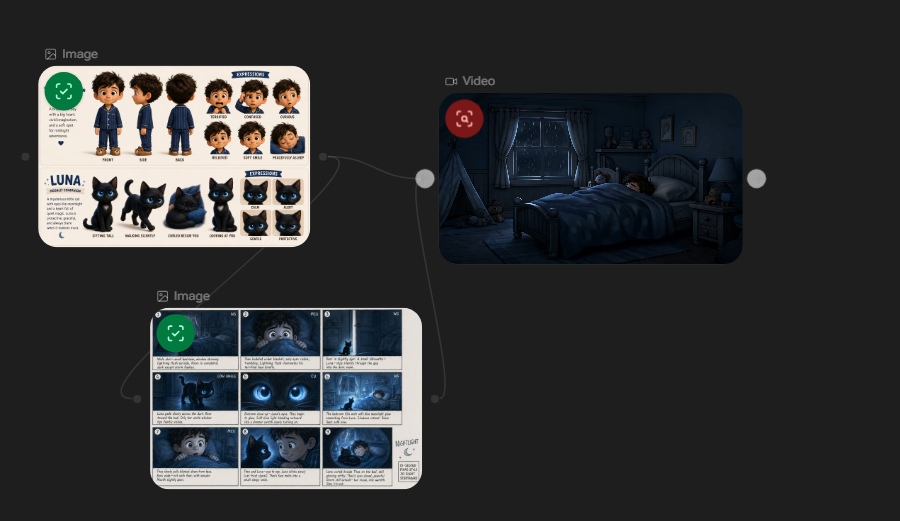
Just made a 15-sec Pixar-style short with Renoise Canvas and the glowing cat eyes shot alone was worth the entire build. Story: a little boy alone in a blackout storm, hiding under his blanket. His cat walks in. Her eyes slowly glow blue — and the whole room transforms. No dialogue. Just light, fear, and one slow blink. Here's exactly how I built it 👇 STEP 1 CONCEPT Started with one question: what's the smallest thing that can kill fear? Answer: something familiar that becomes magical exactly when you need it. Built the whole story around Luna's glowing eyes as the turning point. STEP 2 — CHARACTER DESIGN Opened Renoise Canvas and built character reference sheets first. → Theo: navy striped pajamas, messy dark hair, hazel eyes, freckles → Luna: sleek black cat, white chest patch, bioluminescent blue eyes Ran the character prompt multiple times until expressions felt right. Luna's fur needed 4 iterations to get the iridescent quality. STEP 3 — STORYBOARD 9 panels. Mapped every beat before touching the video prompt. → Panel 1-2: establish fear (dark room, storm, hiding boy) → Panel 3-4: Luna enters silently → Panel 5: HERO SHOT eyes glow → Panel 6-7: room transforms, Theo's wonder → Panel 8-9: slow blink, smile, peace Having the storyboard locked made the video prompts 10x easier. STEP 4 — VIDEO GENERATION Shot-by-shot prompts with exact timestamps (0:00 to 0:15). Hardest shot: Luna's eyes lighting up at 0:08. Iterated 5 times on that one shot alone. The bioluminescent glow spreading outward — that took the most work. Worth it. That shot carries the entire emotional payoff. STEP 5 — FINAL TOUCHES Added Renoise watermark. Color palette throughout: deep navy + storm gray + soft blue glow. Warm skin tones on Theo vs cool room light = natural contrast. FINAL RESULT 15 seconds. One storm. One cat. Zero dialogue. Sometimes the scariest dark just needs the right kind of light. @renoiseai #RenoiseChallenge #PixarStyle #AIVideo #RenoiseCanvas

Dark 巨匠 tweet mediaDark 巨匠 tweet media
English
1
0
0
27
Dark 巨匠
Dark 巨匠@Gost6562·
@_CrownDEX What if the windy hill represented the turbulence of life, and their repair work symbolized resilience.
English
0
0
0
4
🌱 𝗖𝗿𝗼𝘄𝗻𝗗𝗘𝗫
MILO & BUTTON: THE STAR KITE ✨ A tiny 15-second story about repair, hope, and friendship. Milo and his little squirrel friend Button find a broken star kite on a windy hill. Instead of leaving it behind, they fix it together and watch it fly again under the evening sky “A little care can lift a broken dream.” Made with RenoiseAI Canvas . Don't forget to try yours too @renoiseai #RenoiseAI #RenoiseCanvas
🌱 𝗖𝗿𝗼𝘄𝗻𝗗𝗘𝗫 tweet media
English
28
37
202
469
Dark 巨匠
Dark 巨匠@Gost6562·
Here is the full Promt for making the video with renoise canvas 15-second Pixar-style 3D animated short film. Cozy small bedroom at night during a heavy rainstorm. Rain streaks slide down the window glass, distant thunder rolls, and lightning briefly illuminates the room every few seconds. The bedroom begins in near-total darkness. Warm bedding, scattered toys across the floor, and glow-in-the-dark ceiling stars remain unlit. Mood starts tense and lonely, then transforms into magical comfort. [0:00–0:02] Wide establishing shot — low camera angle facing the bedroom. Heavy rain outside. Curtains move slightly from wind. The room is almost entirely dark. A sudden lightning flash briefly reveals the whole space for an instant. [0:02–0:04] Medium close-up — Theo, a 6-year-old boy wearing navy striped pajamas, hides beneath his blanket. Only his frightened hazel eyes peek over the edge. Another lightning flash. He flinches and pulls the blanket higher. Tiny body trembles. [0:04–0:06] Wide shot — the bedroom door slowly creaks open. Luna, a sleek black cat with a small white chest patch, quietly slips into the room. Nearly invisible in the darkness except for whiskers catching brief storm light. [0:06–0:08] Low-angle tracking shot — camera follows Luna's paws moving across the floor toward Theo's bed. Movements are slow, gentle, and certain. Rain-lit window softly blurred in the background. [0:08–0:10] Hero signature shot — extreme close-up of Luna's eyes. A soft bioluminescent blue glow slowly awakens from deep within them, like two tiny moons turning on. The glow gently expands outward, pushing darkness away in a slow circular wave. Hold for emotional impact. [0:10–0:11] Wide magical transformation shot — Luna's glow fills the room with soft blue ambient light. Ceiling stars begin glowing in response. Shadows become soft and friendly. The room transforms from frightening to magical. [0:11–0:13] Medium close-up — Theo slowly lowers the blanket. Fear melts into wonder. Eyes wide, mouth slightly open. Luna's blue glow reflects softly in his eyes. [0:13–0:14] Intimate eye-level close-up — Theo and Luna look at each other. Luna gives a slow gentle blink. Theo's face relaxes into a tiny sleepy smile. Hold a quiet emotional moment. [0:14–0:15] Final beauty shot — Luna curled beside Theo on the bed, softly glowing. Theo sleeps peacefully. Rain and lightning continue outside the window, but inside only calm blue warmth exists. Camera slowly pulls backward. Soft iris-out to black. Renoise watermark fades in. Style: Pixar-quality cinematic 3D rendering, detailed fur simulation, subsurface skin shading on Theo, subtle iridescent fur properties on Luna that absorb and emit light naturally. Color palette: deep navy, storm gray, soft bioluminescent blue, warm skin tones. No dialogue. Emotion carried entirely through facial expression, lighting, movement, and Luna's slow blink.
Dark 巨匠 tweet media
English
0
0
0
29
Dark 巨匠
Dark 巨匠@Gost6562·
Just made a 15-sec Pixar-style short with Renoise Canvas and the glowing cat eyes shot alone was worth the entire build. Story: a little boy alone in a blackout storm, hiding under his blanket. His cat walks in. Her eyes slowly glow blue — and the whole room transforms. No dialogue. Just light, fear, and one slow blink. Here's exactly how I built it 👇 STEP 1 CONCEPT Started with one question: what's the smallest thing that can kill fear? Answer: something familiar that becomes magical exactly when you need it. Built the whole story around Luna's glowing eyes as the turning point. STEP 2 — CHARACTER DESIGN Opened Renoise Canvas and built character reference sheets first. → Theo: navy striped pajamas, messy dark hair, hazel eyes, freckles → Luna: sleek black cat, white chest patch, bioluminescent blue eyes Ran the character prompt multiple times until expressions felt right. Luna's fur needed 4 iterations to get the iridescent quality. STEP 3 — STORYBOARD 9 panels. Mapped every beat before touching the video prompt. → Panel 1-2: establish fear (dark room, storm, hiding boy) → Panel 3-4: Luna enters silently → Panel 5: HERO SHOT eyes glow → Panel 6-7: room transforms, Theo's wonder → Panel 8-9: slow blink, smile, peace Having the storyboard locked made the video prompts 10x easier. STEP 4 — VIDEO GENERATION Shot-by-shot prompts with exact timestamps (0:00 to 0:15). Hardest shot: Luna's eyes lighting up at 0:08. Iterated 5 times on that one shot alone. The bioluminescent glow spreading outward — that took the most work. Worth it. That shot carries the entire emotional payoff. STEP 5 — FINAL TOUCHES Added Renoise watermark. Color palette throughout: deep navy + storm gray + soft blue glow. Warm skin tones on Theo vs cool room light = natural contrast. FINAL RESULT 15 seconds. One storm. One cat. Zero dialogue. Sometimes the scariest dark just needs the right kind of light. @renoiseai #RenoiseChallenge #PixarStyle #AIVideo #RenoiseCanvas
Dark 巨匠 tweet mediaDark 巨匠 tweet media
English
1
0
0
27
Dark 巨匠
Dark 巨匠@Gost6562·
Spent years manually backtesting strategies in spreadsheets. Then I found @SuperiorTrade_ Terminal. Here's what changed 👇 📊 The market observation: SOL has been showing a repeating pattern — sharp pump on high volume, followed by 3-4 red candles, then continuation. Classic bull flag with volume confirmation. 🤖 What Superior Terminal's Backtesting Agent did: → I described the pattern in plain text — no code, no formulas → Agent converted it into a structured strategy with defined rules → Backtested 4 months of SOL/USDT data automatically → First run: 55% win rate, 1.6R avg → Agent flagged that volume threshold was too low — catching false setups → Adjusted filter → 61% win rate, 2.3R avg in the next iteration What used to take me days now takes under 10 minutes. The real value isn't just speed — it's that the agent actively helps you improve the strategy, not just execute it. This is what operating like an AI-powered quant desk actually feels like. 🔗 Try it yourself: terminal.superior.trade/?ref=6WT57KNE #SOL #Solana #AlgoTrading #TradingAI #SuperiorTrade
Dark 巨匠 tweet mediaDark 巨匠 tweet mediaDark 巨匠 tweet media
English
52
1
104
1.5K
Dark 巨匠 retweetledi
ALLIN DOGE | Trading & Research
ALLIN DOGE | Trading & Research@ALLINDOGE_Alpha·
We never explained what we're building. While others chased hype, we shipped code. From late 2024 to today, no drums, no spotlights. But you stayed. Today's pump is the best answer we could give to those who stayed. → Join us: solana:HyDKNdnhZNVYQMruBevbNsUWruA9STmAQrS4srXApump
ALLIN DOGE | Trading & Research tweet media
English
111
908
612
13.3K
Dark 巨匠 retweetledi
MagVerse
MagVerse@MagVerse_AI·
Most brand deals on X are paying for bots. The merchant has no idea. The platform doesn't care. The creator who gamed it gets paid anyway. We built Magverse to fix this. 🧵
MagVerse tweet media
English
295
3K
2.1K
47.5K
Dark 巨匠 retweetledi
mitte.ai
mitte.ai@mitte_ai·
new mitte preset: argue before apocalypse place yourself and your partner in an argument scene, right before a meteor hits the earth. x.com/javiii_ortega/…
English
5
1
22
1.4K
Dark 巨匠 retweetledi
mitte.ai
mitte.ai@mitte_ai·
search your videos and images on mitte. find by what's inside them. view as grid or list. you choose.
English
11
4
41
3.2K
Dark 巨匠
Dark 巨匠@Gost6562·
Verifying my wallet for @RallyOnChain: fabcaa1c599bb1f762a5ea8ced81e680ddbd4359e6110bc8a61f7ade343edf08
English
0
0
0
9
Dark 巨匠
Dark 巨匠@Gost6562·
Selective disclosure giving regulators verification without full ledger access is stronger than current examination practice in one specific way — the institution cannot substitute different data for what was actually settled. The proof structure prevents post-hoc alteration even with partial disclosure.
English
0
0
0
10
ZeroX_Senshi
ZeroX_Senshi@ZeroX_Senshi·
In institutional finance, privacy is not a preference. It is a legal obligation with enforcement consequences. This distinction matters because most blockchain privacy discussions frame privacy as something banks want for competitive or strategic reasons. That framing misses the actual constraint. Banks operate under confidentiality regimes that are legally mandated, not optionally adopted. The identity of counterparties, the size of positions, the structure of transactions, and the relationships between clients are all subject to legal frameworks that require protection. A bank that settles on a public blockchain where this information is permanently visible has not made a bold technical choice. It has potentially created regulatory exposure, breached client confidentiality agreements, and violated legal requirements that existed long before distributed ledger technology was conceived. This is the real reason public blockchain adoption in institutional finance has been minimal despite a decade of investment and interest. The barrier is not technical sophistication or risk appetite. It is legal incompatibility between public ledger transparency and mandatory confidentiality obligations. Permissioned chains addressed this partially but introduced a different problem. Regulators still need to verify. Auditors still need to confirm. Counterparties still need assurance of settlement finality. The standard solution has been a trusted intermediary who sees the full picture and vouches for parties who cannot disclose. That intermediary adds cost, latency, counterparty dependency, and concentration risk. It solves confidentiality by creating a new form of institutional dependency. Zero-knowledge proofs are the first technology to resolve this tension at the cryptographic level without introducing a new intermediary. @zksync's Prividium is built on this foundation. Transaction execution and data remain entirely within institution-controlled environments. Mathematical proofs of that execution are generated and posted to Ethereum, providing settlement finality that any counterparty can verify independently. Regulators receive selective disclosure calibrated to their verification requirements. Auditors confirm compliance without accessing the full ledger. No trusted operator sits between the settlement and the verification. The cryptographic proof satisfies the verification requirement that intermediaries have historically been paid to fulfill. This is not a privacy feature layered onto a blockchain. It is a compliance architecture designed around the specific legal requirements that have kept regulated institutions off public ledgers. The institutions that have chosen this architecture are not doing so on a technical thesis alone. Eugene Ludwig served as the 27th U.S. Comptroller of the Currency. His career was spent understanding exactly where banking regulation creates infrastructure requirements. He founded Cari Network on ZKsync with five U.S. regional banks representing over $600B in combined deposits. Deutsche Bank built a live ZK Chain on ZK Stack. BitGo integrated institutional custody directly with Prividium. ADI Chain went live with First Abu Dhabi Bank. More than 35 institutions are in active evaluation. These institutions employ legal and compliance teams whose job is to evaluate precisely the regulatory adequacy of infrastructure decisions. Their independent convergence on ZK-based infrastructure is a compliance judgment. It reflects a professional assessment that this architecture satisfies the legal requirements that public chains cannot. Settlement corridors compound from here. 10 institutions create 45 possible connections. 100 create nearly 5,000. Every new institution creates settlement corridors with every existing one, corridors between counterparties that can now settle while simultaneously satisfying both parties' confidentiality and compliance requirements. $ZK is the only native asset of this network. Fixed supply of 21 billion. No inflation. As governance token, $ZK holders control protocol upgrades, fee structures, and economic parameters through the Token Assembly, Security Council, and Guardians. $ZK is also the native gas for ZKsync Gateway, the settlement layer that bundles transactions across all ZKsync chains and Prividium zones before posting to Ethereum L1. The stem-cell design means economic function develops through governance as the network scales. The privacy problem institutional finance has carried for the past decade was never about wanting secrecy. It was about satisfying legally mandated confidentiality obligations while remaining verifiable to regulators, auditors, and counterparties who require verification. Those two requirements have historically required a trusted intermediary to satisfy simultaneously. Zero-knowledge proofs satisfy both without one. The institutions arriving at ZKsync are the ones who recognized that distinction and acted on it.
ZeroX_Senshi tweet media
English
16
2
85
6.2K
Dark 巨匠
Dark 巨匠@Gost6562·
@ZeroX_Senshi Pre-funding restructures at the root when verification becomes cryptographic. But which regulator has confirmed ZK finality satisfies the guarantee requirement that currently justifies holding that $27T?
English
0
0
0
10
ZeroX_Senshi
ZeroX_Senshi@ZeroX_Senshi·
Most analyses of onchain finance focus on transaction cost reduction and settlement speed. Those benefits are real and measurable. But they describe the surface of the opportunity rather than its actual depth, and the depth is where the numbers become genuinely significant. Efficiency gains in financial infrastructure don't operate linearly when the infrastructure becomes programmable. They compound across three separate dimensions simultaneously, and each dimension interacts with the others in ways that make the combined effect substantially larger than any single component suggests. The first dimension is capital. Correspondent banking currently immobilizes $27 trillion in pre-funded nostro and vostro accounts. This capital exists for one reason: institutions cannot verify each other's positions in real time, so they maintain collateral buffers at every node in the settlement chain to guarantee completion before verification is possible. This is not a rounding error in global finance. It is a structural tax on liquidity that has been normalized because the alternative, rebuilding the verification infrastructure, was not technically feasible at institutional scale until recently. When settlement infrastructure can verify counterparty state cryptographically at the point of transaction, the pre-funding requirement doesn't decrease incrementally. It restructures at the root. Capital held as collateral against verification uncertainty becomes deployable the moment the uncertainty is resolved by mathematics rather than time and trust. The second dimension is coordination. Global deposits exceed $100 trillion, managed across thousands of institutions operating on incompatible systems that require manual reconciliation, intermediary translation, and bilateral agreement maintenance at every connection point. The direct transaction cost is one component of this friction. The operational overhead of maintaining connectivity across a system that was never designed for interoperability is another, and it compounds with scale. Every new counterparty relationship requires its own pre-funding arrangement, its own legal framework, and its own reconciliation workflow. Programmable infrastructure with a shared settlement layer replaces bilateral complexity with a common verification standard. The number of settlement corridors that become available to a new network participant grows with every existing participant already there, rather than requiring separate infrastructure build-out for each new connection. This is the coordination economy that @zksync 's Prividium architecture enables. Each institution that joins adds corridors across the entire existing network simultaneously. The third dimension is transaction structure. Annual financial transaction volume crosses $3.7 quadrillion. The significant majority of this runs on rails where settlement confirmation is delayed, error rates generate correction cycles, and the per-transaction cost includes intermediary processing layers that contribute overhead without contributing verification value. The cost floor of current settlement infrastructure makes certain transaction structures, certain settlement frequencies, and certain market structures economically unviable. Programmable settlement with cryptographic finality doesn't just process existing volume more cheaply. It changes what transaction structures are economically possible, which means the $3.7 quadrillion figure describes current volume under current infrastructure constraints, not the volume that becomes viable when those constraints are removed. Prividium addresses each of these dimensions with a specific architectural answer. Private execution environments for institutional compliance and data control. ZK proofs settling to Ethereum for mathematical verification of state without data exposure. Selective disclosure for regulatory requirements. Connected settlement across the network without bilateral pre-funding for each new relationship. The institutions already building on this infrastructure understood the compound argument before making the commitment. Cari Network organizes five U.S. regional banks with over $600B in combined deposits. ADI Chain is live with First Abu Dhabi Bank. Deutsche Bank has a Memento ZK Chain deployed. BitGo has institutional custody integrated. Over 35 institutions are in active evaluation across different jurisdictions and financial system segments. These institutions evaluated the transition cost against the capital, coordination, and structural efficiency gains across their specific operations. The fact that they are building rather than evaluating indefinitely reflects a conclusion about that calculation. The numbers involved make the direction of that conclusion unsurprising.
ZeroX_Senshi tweet media
English
16
1
111
8.2K
Dark 巨匠 retweetledi
Latte
Latte@0xbisc·
Agent Escort Mission made with GPT Image 2 + Seedance 2 on @openart_ai AI video can already do product placement in a fun way. Just replace the object and make the whole scene revolve around it. Prompt below ↓
English
13
40
342
16.8K
Dark 巨匠
Dark 巨匠@Gost6562·
@IsthiaqOG Legal and compliance are the final decision-makers here. But their clearance at Deutsche Bank doesn't bind BaFin. Has Prividium received explicit regulator sign-off, or just internal compliance approval?
English
0
0
0
19
𝗜𝗦𝗧𝗛𝗜𝗔𝗤
Regulated financial institutions have seen the efficiency argument for blockchain infrastructure many times. They understand it. Most of their treasury and technology functions find it credible. The problem is that treasury and technology are not the final decision-makers on infrastructure that affects how client data is handled, how execution environments are governed, or how the institution demonstrates compliance to its regulators. Legal is. Compliance is. Risk is. And those functions do not evaluate infrastructure through performance benchmarks or cost comparisons. They evaluate it through a single primary question: what does the institution control directly, and what does it delegate to external parties it cannot govern, audit, or hold contractually accountable. In traditional banking infrastructure, this boundary is precisely defined. The institution owns its execution environment. Its transaction data stays within a perimeter it controls and can legally defend. Regulators can audit the systems. The compliance function can draw a clear line between what the institution is responsible for and what it is not. Most blockchain architectures make this impossible. Execution moves to shared infrastructure governed by a protocol, not by the institution. Transaction data becomes visible across a network of participants the institution did not select and cannot control. Verification depends on validators or node operators that exist outside any contractual or regulatory relationship the compliance function can work with. At this point, the evaluation ends. The institution is being asked to give up operational control it is legally required to maintain. The compliance team does not need to assess the efficiency gains. The architecture failed before that conversation began. This is why institutional adoption of blockchain infrastructure has been slower than the technology's maturity would suggest. The barrier is not technical unfamiliarity or ideological resistance. It is a consistent, rational compliance assessment that most architectures produce the same outcome on. Prividium from @zksync is the architecture designed around that assessment rather than in spite of it. Transaction execution and data remain inside environments the institution controls directly. There is no shared execution layer, no external participant with visibility into the institution's transaction activity, no operator the compliance function needs to extend trust to. Zero-knowledge proofs verify every state transition externally without requiring the underlying data to leave the institution's controlled environment. Settlement finalizes on Ethereum through a cryptographic mechanism that requires no trusted party to function correctly. Role-based permissioning and identity integration handle regulatory workflows at the infrastructure layer rather than as an external policy overlay applied on top of a system that was not built for compliance. The result is an architecture where the compliance team can draw a clean, legally defensible operational perimeter. Everything inside it is under direct institutional control. Everything outside it is governed by cryptographic proof rather than by trusting a third party. The institution does not need to extend its compliance boundary beyond what it can defend to its regulators. That distinction changes the nature of the case for onchain settlement entirely. Efficiency arguments explain why programmable settlement infrastructure is preferable to correspondent banking. The compliance architecture argument explains why onchain settlement is now structurally compatible with how regulated financial institutions are required to operate. The efficiency argument was always available. The compliance compatibility argument is what the industry was missing. Eugene Ludwig spent his career inside the regulatory framework governing American banking. As the 27th U.S. Comptroller of the Currency, he supervised national banks, federal savings associations, and federal branches of foreign banks operating in the United States. He now leads Cari Network, connecting five U.S. regional banks carrying over $600 billion in combined deposits, building on ZKsync. That commitment is a professional judgment about compliance architecture fitness from someone whose entire background is defined by understanding what regulated American financial institutions are and are not permitted to do. Deutsche Bank is building a Memento ZK Chain. ADI Chain is live with First Abu Dhabi Bank. BitGo has integrated institutional custody with Prividium. Over 35 institutions are in active evaluation. Institutions operating at this level employ legal and compliance functions that exist specifically to identify when proposed infrastructure does not meet regulatory requirements. Operational commitments from organizations like these are not made before those functions are satisfied. Their presence on ZKsync is the most credible available signal that Prividium answered the control question in a way that compliance teams at serious regulated institutions could accept.
𝗜𝗦𝗧𝗛𝗜𝗔𝗤 tweet media
English
62
1
141
4.3K
Dark 巨匠
Dark 巨匠@Gost6562·
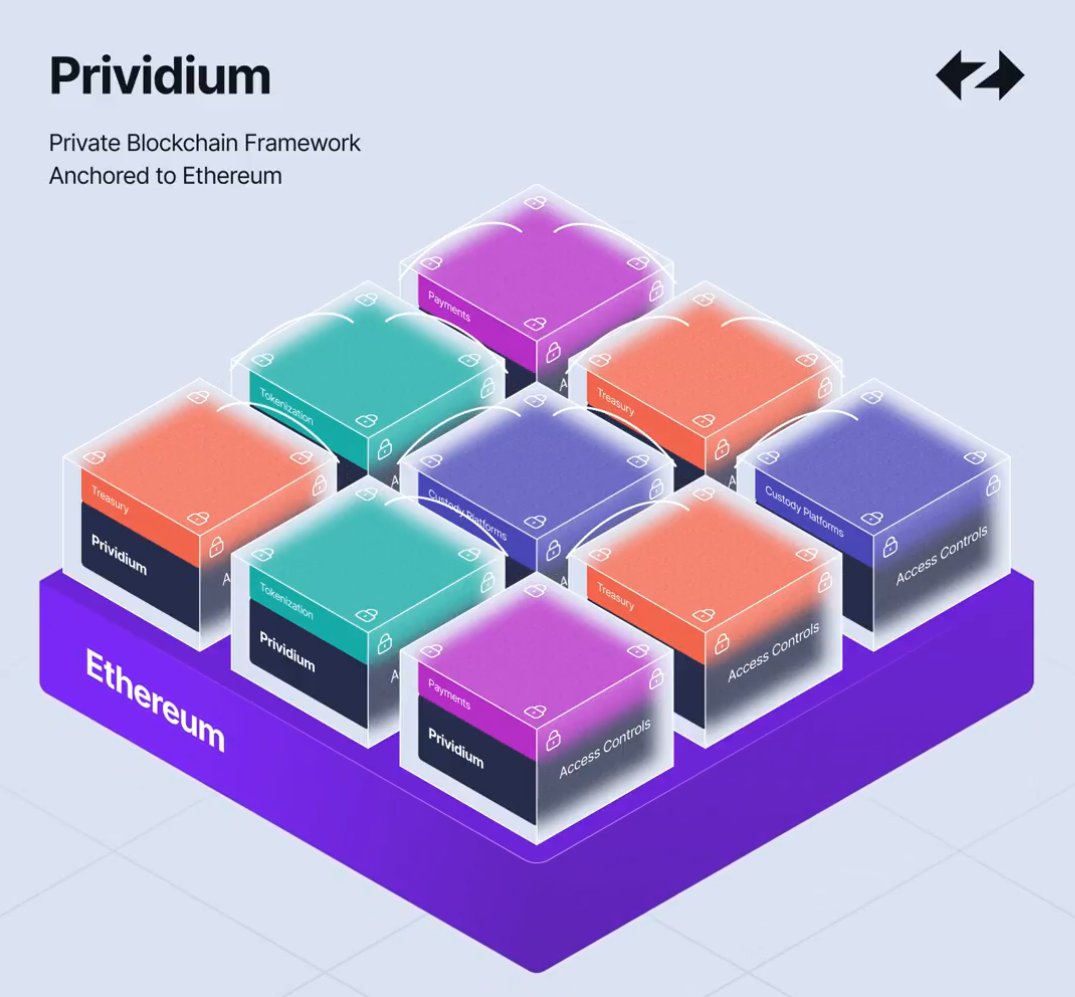
Every successful financial network in history faced the same foundational problem before it became infrastructure. A settlement network with one participant is worthless. A messaging system that reaches three banks is not a messaging system anyone depends on. A payment rail that connects a handful of institutions is a pilot program, not infrastructure. The value of a network is a function of who else is on it, which means the network has no value until it already has participants, which means participants have no reason to join until it already has value. This is the cold start problem. It is not a technology challenge. It is an adoption challenge, and it has ended more financial infrastructure projects than technical failure ever has. The network needs participants to be valuable. Participants need value to join. Something has to break the loop. The approaches that have worked historically share a common pattern. An anchor participant of sufficient credibility and institutional weight joins early, and their presence alone changes the calculus for every institution that evaluates afterward. When the anchor is credible enough, the signal value of their participation exceeds the direct value of their volume. Other institutions are not just joining a network. They are joining a network that someone they trust has already vetted. This is how ZKsync broke the cold start problem. Not through incentive programs or marketing. Through the quality and credibility of the institutions that committed first. Eugene Ludwig is the 27th U.S. Comptroller of the Currency. That office supervises national banks, federal savings associations, and federal branches of foreign banks operating across the United States. It sits at the center of the regulatory architecture that governs American banking. Ludwig spent his career inside that framework. He now leads Cari Network, connecting five U.S. regional banks carrying over $600 billion in combined deposits, building on @zksync . The direct contribution is significant. Five regional banks with $600 billion in deposits represent real capital, real counterparty relationships, and real settlement volume entering the network. But the signal contribution may be larger. Every regulated U.S. financial institution evaluating ZKsync now knows that someone whose professional background is defined by understanding what American banks require has already concluded the infrastructure meets that bar. That changes the risk assessment for every institution that evaluates afterward. Deutsche Bank brings a parallel signal to European institutional finance. It sits at the center of European corporate banking, capital markets, and trade finance. Its decision to build a Memento ZK Chain tells European institutional counterparties what Ludwig's decision tells American ones. ADI Chain live with First Abu Dhabi Bank, the largest bank in the UAE by assets, anchors Gulf sovereign-adjacent financial infrastructure to the network. BitGo, a primary institutional custody provider, has integrated directly with Prividium, connecting the institutional digital asset custody layer to the ZKsync ecosystem. Over 35 institutions are in active evaluation. The geographic and sectoral spread compounds the effect. These participants are not from the same institutional network. U.S. regional banking, European corporate and investment banking, Gulf financial infrastructure, and institutional custody each carry their own counterparty webs. When any of them commits to ZKsync, it brings its existing relationships into the ecosystem as potential future connections. The network reaches further with each participant not just because of that participant's direct volume but because of the counterparties that participant is already connected to. Ten institutions on shared settlement infrastructure create 45 direct settlement corridors. Fifty create 1,225. One hundred create nearly 5,000. The number of possible connections between participants grows faster than the number of participants, which means the value available to each existing member increases with every institution that joins. SWIFT grew from 239 founding member banks in 1973 to over 11,000 financial institutions today through this exact mechanism. The technology that carried the messages mattered less than the density of the network it enabled. Once enough counterparties were reachable through a single SWIFT connection, the cost of not being on it exceeded the cost of joining. ZKsync is building the settlement network where this compounding happens at the institutional onchain layer. $ZK is its only native asset. Supply is fixed at 21 billion. No inflation mechanism exists. $ZK functions as a governance token with direct authority over the decisions that determine how the network operates and develops: protocol upgrades, fee structures, and economic parameters. Governance runs through a three-body structure designed so no single party controls network direction unilaterally. The Token Assembly gives holders direct voting power over network-level decisions. The Security Council handles technical review of proposed protocol changes before they are implemented. The Guardians operate as an emergency safeguard against unilateral action. $ZK is also the native gas token for ZKsync Gateway, the settlement layer that bundles transactions across all ZKsync chains and Prividium zones before posting to Ethereum L1. Every institution moving activity through the network, whether from the United States, Germany, or the UAE, settles through this layer. The institutional activity being built on ZKsync runs through the infrastructure where $ZK functions as gas. The ZKnomics framework currently under community review will define the broader economic parameters around $ZK. Governance has not finalized those parameters and this post does not speculate about them. What is structurally in place today is one network, one native asset with fixed supply, a three-body governance architecture with genuine authority over network direction, and a settlement layer already processing activity from institutions that cleared serious compliance review before committing. The cold start problem is the reason most attempts to build new financial infrastructure fail before the technology is ever seriously evaluated. The participant profile ZKsync has assembled is the evidence that this network is past that stage. $ZK sits at the center of how it governs and settles as it compounds from here.
Dark 巨匠 tweet media
English
13
2
43
3.9K
Dark 巨匠
Dark 巨匠@Gost6562·
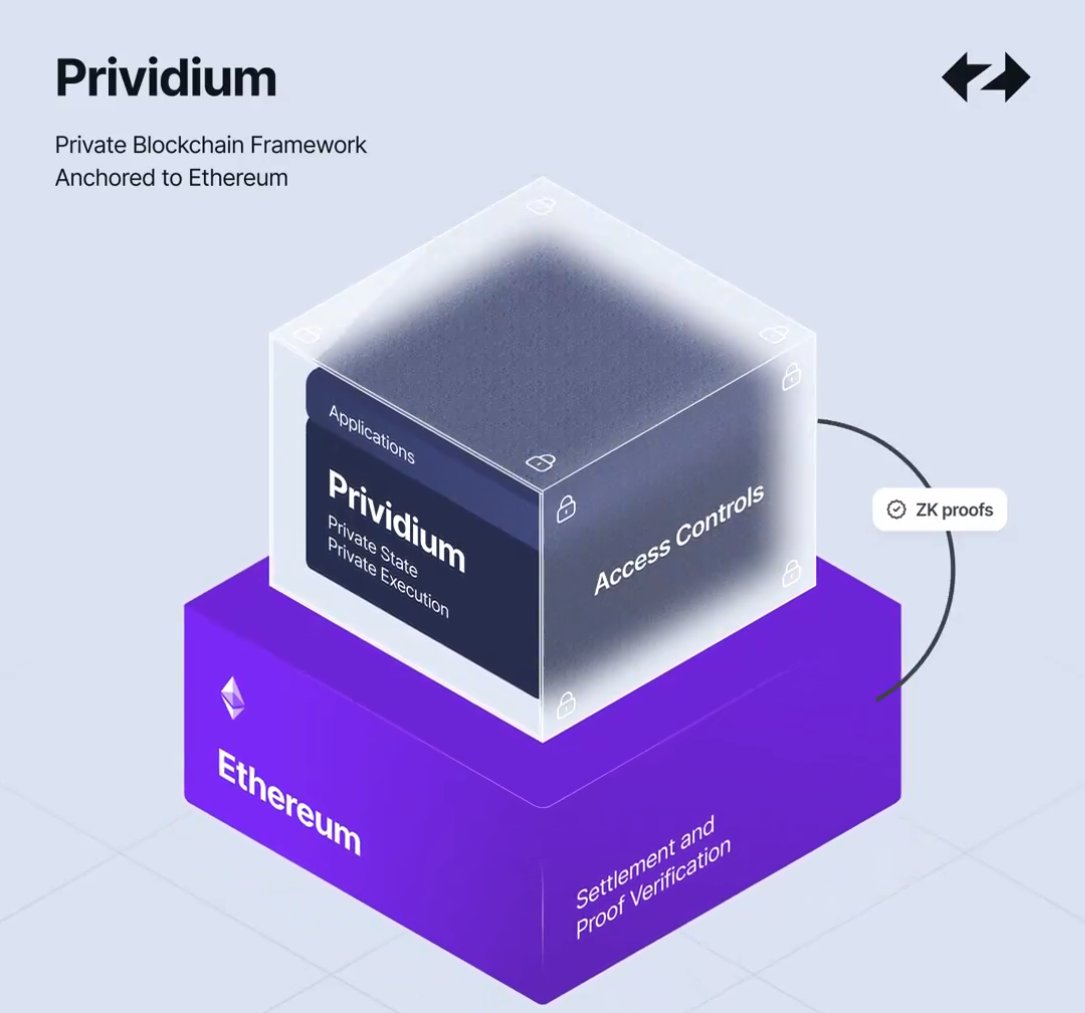
Settlement finality is the problem traditional finance actually solved. Not cheaply. Not elegantly. But with genuine reliability at global scale. When a cross-border transaction completes through the correspondent banking system, every counterparty involved has certainty that the settlement is real, the capital moved, and the obligation is discharged. For an industry managing over $100 trillion in global deposits and $3.7 quadrillion in annual transaction volume, that certainty is not optional. It is the foundation everything else is built on. The architecture that delivers this certainty is also the source of its costs. Correspondent banks pre-fund reserves at every node in the settlement chain because finality cannot be guaranteed in advance without collateral posted at each point of potential failure. $27 trillion sits in these accounts at any given moment, not invested, not productive, held specifically to underwrite the reliability of a settlement system that cannot provide mathematical guarantees without it. Reconciliation windows exist because transaction records need time to propagate and synchronize across systems that were built independently and were never designed to interoperate in real time. Intermediary chains exist because the alternative, direct bilateral settlement infrastructure between every institution that needs to transact with every other institution globally, would require a number of relationships that scales beyond what any institution can practically maintain. Every layer of this architecture was a rational engineering decision given the constraints that existed when it was built. The collective result is a system that treats as structurally necessary costs that are actually artifacts of a specific infrastructure generation. Programmable settlement changes what is structurally necessary. Mathematical verification by cryptographic proof removes the need for trusted intermediaries at settlement nodes. Real-time cryptographic finality removes the need for reconciliation windows. Programmable direct settlement corridors become viable between institutions without bilateral infrastructure overhead. The capital locked in correspondent pre-funding can be freed because the guarantee mechanism no longer requires it. These are not marginal improvements. They address the load-bearing costs of the current architecture directly. Institutions evaluating this shift are not asking whether programmable settlement is more efficient. That case is understood. The question is whether they can actually deploy it given the operating requirements their legal, compliance, and risk functions enforce. A compliance team cannot approve infrastructure it cannot draw a legally defensible operational boundary around. A risk function cannot accept verification that depends on trusting external operators it has no contractual authority over. A legal department cannot clear an execution environment the institution does not directly control. And no treasury function will migrate real activity to infrastructure that lacks connectivity to the counterparties and liquidity pools it already depends on. Most blockchain architectures cannot satisfy these requirements simultaneously. Public execution environments fail the data privacy requirement immediately. Decentralized governance fails the institutional control requirement. External operator dependency fails the trustless verification requirement. Narrow ecosystem connectivity fails the practical utility requirement. The compliance team's assessment is complete before efficiency arguments are considered. Prividium from @zksync is the architecture that treats these requirements as a design brief rather than as constraints to navigate around. Each institution operates its own private execution environment under its direct control. Transaction data does not leave that environment. Zero-knowledge proofs verify every state transition externally, providing trustless confirmation without requiring data to cross the institution's operational boundary. Settlement finalizes on Ethereum through a cryptographic mechanism that requires no trusted operator to function correctly. Role-based permissioning and identity integration handle compliance workflows at the infrastructure layer rather than as a policy overlay applied on top. The compliance team draws a clean boundary. Inside it, everything is under institutional control. Outside it, everything is governed by mathematical proof. No trusted third party sits in the middle requiring the institution to extend its compliance perimeter beyond what it can legally and operationally defend. The institutions that have already committed reflect what this makes possible. Eugene Ludwig, the 27th U.S. Comptroller of the Currency, founded Cari Network on ZKsync, connecting five U.S. regional banks with over $600 billion in combined deposits. His professional background is the regulation that governs exactly these institutions. His decision to build here is a judgment that Prividium meets the bar those institutions operate under. Deutsche Bank is building a Memento ZK Chain. ADI Chain is live with First Abu Dhabi Bank. BitGo has integrated institutional custody with Prividium. Over 35 institutions are in active evaluation through @zksync. These organizations maintain legal and compliance functions that exist specifically to reject infrastructure that does not meet their operating requirements. Operational commitments at this level are not made before those functions are satisfied. The costs that correspondent banking treats as structurally necessary are not. They are the price of running global finance on infrastructure that was built before programmable settlement with cryptographic finality was technically possible. Prividium is the architecture that changes what is possible for the institutions that have to move real capital under real regulatory constraints.
Dark 巨匠 tweet media
English
13
1
99
4.7K
𝐑𝐞𝐲𝐳𝐚
𝐑𝐞𝐲𝐳𝐚@reyzaaXso·
Anne Hathaway really said aging? never heard of it. 2005 2026
𝐑𝐞𝐲𝐳𝐚 tweet media𝐑𝐞𝐲𝐳𝐚 tweet media𝐑𝐞𝐲𝐳𝐚 tweet media𝐑𝐞𝐲𝐳𝐚 tweet media
English
21
202
827
147.2K