
𝗜𝗦𝗧𝗛𝗜𝗔𝗤
1.4K posts


𝗜𝗦𝗧𝗛𝗜𝗔𝗤
@IsthiaqOG
Exploring the intersection of AI and Blockchain.
Chittagong, Bangladesh Katılım Kasım 2024
1.3K Takip Edilen873 Takipçiler

Just built a 15-sec Pixar-style short in Renoise Canvas and this one hits different.
An old grandfather. A little girl. A kite. And one trembling hand that changed everything.
Full breakdown below 🧵👇
1/ The Idea
One question: what's the smallest gesture that says "I see you" without a single word?
A child placing her hand over her grandfather's trembling one.
That's the whole story.
2/ Step 1: Character Generation in Renoise Canvas
First node: character reference sheet.
DADU: 75 years old, beige kurta, round glasses, one hand visibly trembling. Front, side, back plus 6 expressions.
MIRA: 7-year-old girl, orange floral kurta, curly pigtails, gap-toothed smile.
KITE: red-yellow diamond kite, worn edges.
One prompt. Full character sheet. Done.
3/ Step 2: Storyboard
Connected the character node straight into the storyboard node.
Canvas automatically used the characters as reference so no drift between panels. 9 panels, golden hour park, every beat locked before touching video.
That connection alone saved hours.
4/ Step 3: Video
Storyboard node connected into video node. Same pipeline, same canvas, no switching tools.
Shot-by-shot prompts, exact timestamps 0:00 to 0:15. The video shots actually matched the storyboard panels because Canvas used them as reference automatically.
Iterated Dadu's hand tremor 4 times to get it right. That detail carries the whole emotional arc.
5/ The Canvas Workflow
Everything in one screen. Character feeds storyboard, storyboard feeds video. You can see the full pipeline visually.
No copy-pasting between tools. No losing context. Just nodes connecting and the story building itself step by step.
First time using it. Learning curve was zero.
6/ Final Result
15 seconds. Zero dialogue. One trembling hand. One small gesture.
Let Gosubmitted. ✅
@renoiseai
Submitted at join.renoise.ai
#RenoiseChallenge #PixarStyle #AIAnimation #RenoiseCanvas
English
𝗜𝗦𝗧𝗛𝗜𝗔𝗤 retweetledi



@Rukon__Kholifa @SuperiorTrade_ being able to iterate trading ideas in seconds without coding completely changes the process
English
I've been using @SuperiorTrade_ Terminal to turn raw market ideas into actual backtested strategies — no code needed.
Here's what the workflow looks like 👇
💡 The idea:
ETH has been printing lower highs on 4H while funding rates stay negative. Classic setup for a mean-reversion long after a liquidity sweep.
⚙️ What I did in Superior Terminal:
→ Fed the idea into the Backtesting Strategy Agent in plain English
→ Agent broke it into entry logic, risk rules, and exit conditions automatically
→ Ran backtest on ETH/USDT — 58% win rate, 1.8R avg over 90 days
→ Tweaked the sweep confirmation filter — win rate jumped to 64% in 2 iterations
The agent also flagged that my original take-profit was too tight — causing early exits on trending moves. Fixed that in seconds.
This is what proper trade infrastructure looks like.
Not signals. Not hype. Just intelligence → workflow → execution.
If you're still building strategies manually, you're leaving edge on the table.
🔗 Try Superior Terminal here:
terminal.superior.trade/?ref=FC7J8EUV
#ETH #AlgoTrading #TradingAI #SuperiorTrade #Crypto


English
𝗜𝗦𝗧𝗛𝗜𝗔𝗤 retweetledi

We never explained what we're building.
While others chased hype, we shipped code.
From late 2024 to today, no drums, no spotlights.
But you stayed.
Today's pump is the best answer we could give to those who stayed.
→ Join us: solana:HyDKNdnhZNVYQMruBevbNsUWruA9STmAQrS4srXApump

English
𝗜𝗦𝗧𝗛𝗜𝗔𝗤 retweetledi


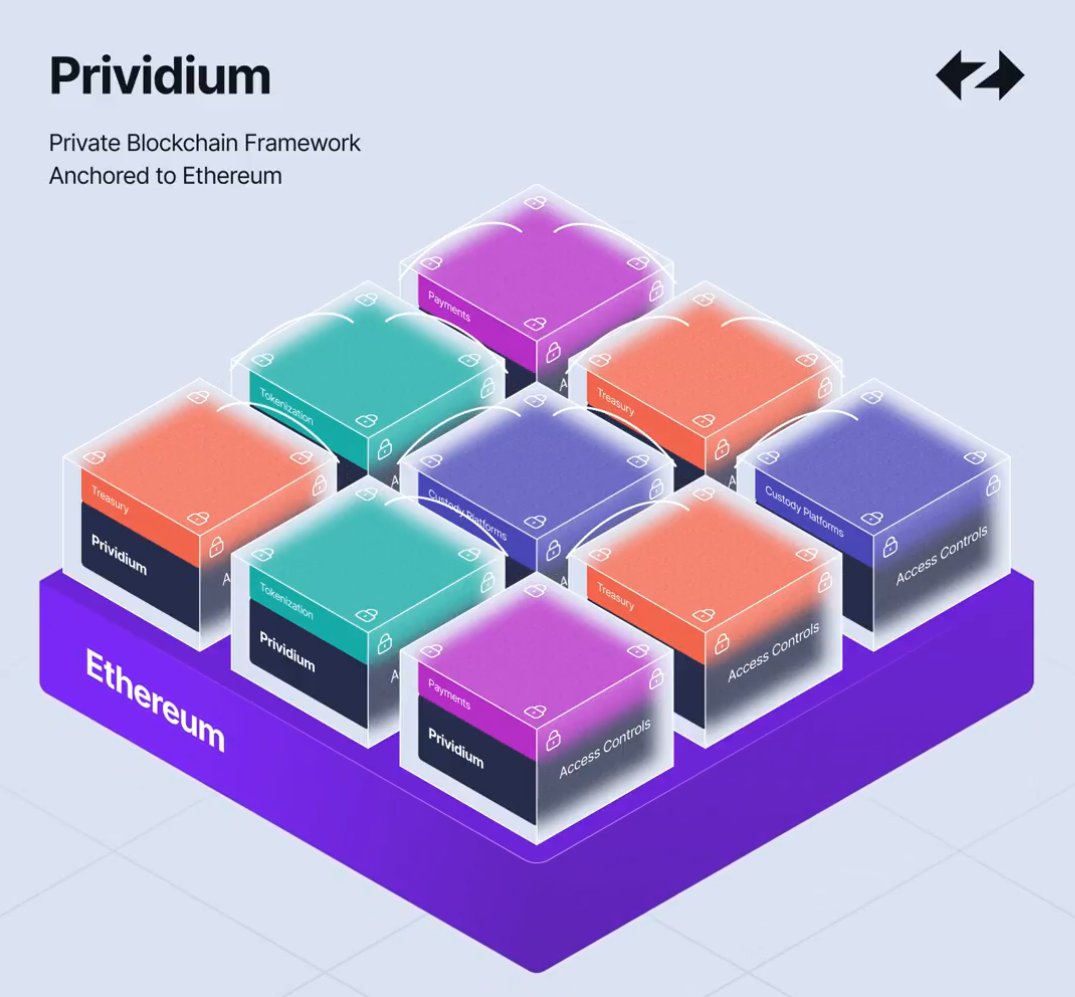
Execution and data remaining inside institution-controlled environments is the compliance boundary requirement that most architectures dissolve. Prividium preserves it by design. That's not a privacy feature — it's the condition for compliance teams engaging with the architecture at all.
English

In institutional finance, privacy is not a preference. It is a legal obligation with enforcement consequences.
This distinction matters because most blockchain privacy discussions frame privacy as something banks want for competitive or strategic reasons. That framing misses the actual constraint. Banks operate under confidentiality regimes that are legally mandated, not optionally adopted. The identity of counterparties, the size of positions, the structure of transactions, and the relationships between clients are all subject to legal frameworks that require protection. A bank that settles on a public blockchain where this information is permanently visible has not made a bold technical choice. It has potentially created regulatory exposure, breached client confidentiality agreements, and violated legal requirements that existed long before distributed ledger technology was conceived.
This is the real reason public blockchain adoption in institutional finance has been minimal despite a decade of investment and interest. The barrier is not technical sophistication or risk appetite. It is legal incompatibility between public ledger transparency and mandatory confidentiality obligations.
Permissioned chains addressed this partially but introduced a different problem. Regulators still need to verify. Auditors still need to confirm. Counterparties still need assurance of settlement finality. The standard solution has been a trusted intermediary who sees the full picture and vouches for parties who cannot disclose. That intermediary adds cost, latency, counterparty dependency, and concentration risk. It solves confidentiality by creating a new form of institutional dependency.
Zero-knowledge proofs are the first technology to resolve this tension at the cryptographic level without introducing a new intermediary.
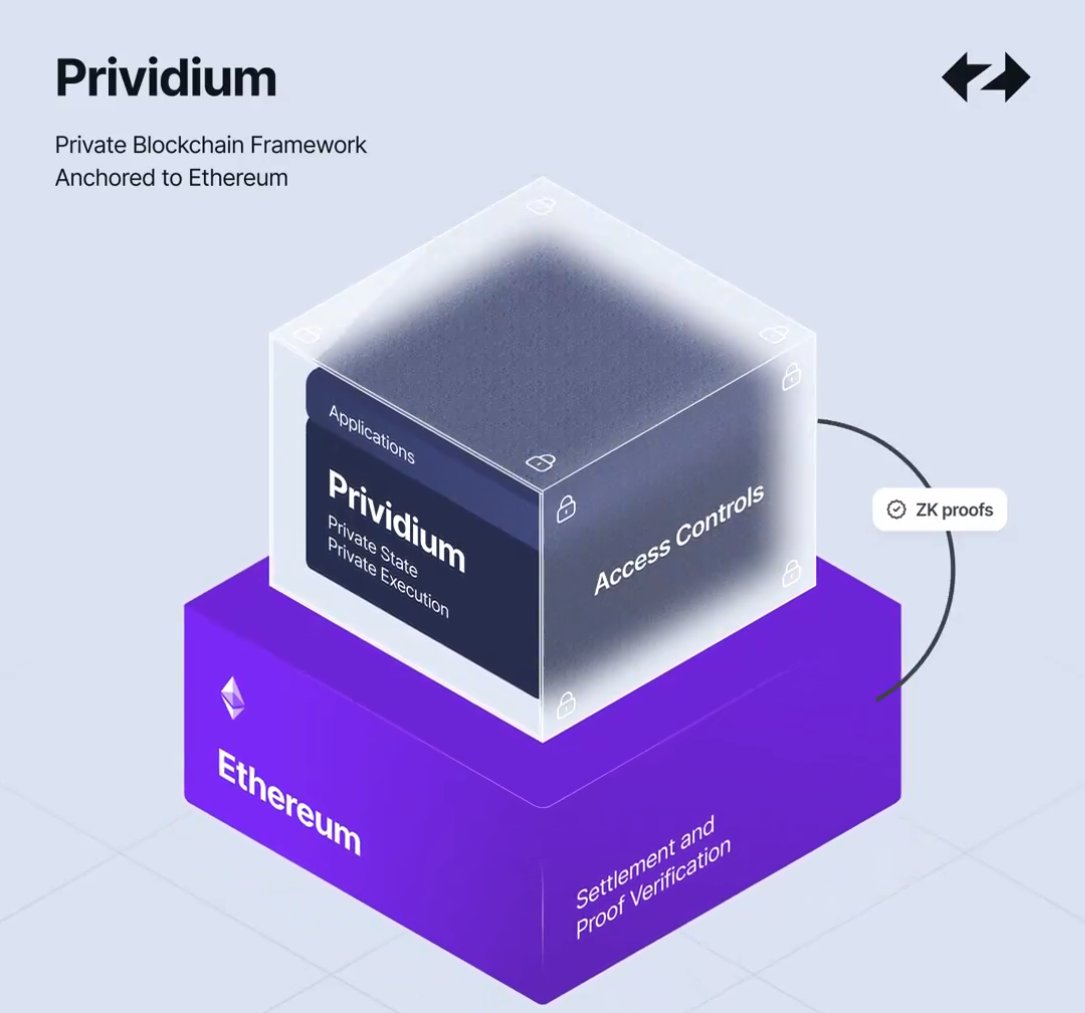
@zksync's Prividium is built on this foundation. Transaction execution and data remain entirely within institution-controlled environments. Mathematical proofs of that execution are generated and posted to Ethereum, providing settlement finality that any counterparty can verify independently. Regulators receive selective disclosure calibrated to their verification requirements. Auditors confirm compliance without accessing the full ledger. No trusted operator sits between the settlement and the verification. The cryptographic proof satisfies the verification requirement that intermediaries have historically been paid to fulfill.
This is not a privacy feature layered onto a blockchain. It is a compliance architecture designed around the specific legal requirements that have kept regulated institutions off public ledgers.
The institutions that have chosen this architecture are not doing so on a technical thesis alone. Eugene Ludwig served as the 27th U.S. Comptroller of the Currency. His career was spent understanding exactly where banking regulation creates infrastructure requirements. He founded Cari Network on ZKsync with five U.S. regional banks representing over $600B in combined deposits. Deutsche Bank built a live ZK Chain on ZK Stack. BitGo integrated institutional custody directly with Prividium. ADI Chain went live with First Abu Dhabi Bank. More than 35 institutions are in active evaluation.
These institutions employ legal and compliance teams whose job is to evaluate precisely the regulatory adequacy of infrastructure decisions. Their independent convergence on ZK-based infrastructure is a compliance judgment. It reflects a professional assessment that this architecture satisfies the legal requirements that public chains cannot.
Settlement corridors compound from here. 10 institutions create 45 possible connections. 100 create nearly 5,000. Every new institution creates settlement corridors with every existing one, corridors between counterparties that can now settle while simultaneously satisfying both parties' confidentiality and compliance requirements.
$ZK is the only native asset of this network. Fixed supply of 21 billion. No inflation. As governance token, $ZK holders control protocol upgrades, fee structures, and economic parameters through the Token Assembly, Security Council, and Guardians. $ZK is also the native gas for ZKsync Gateway, the settlement layer that bundles transactions across all ZKsync chains and Prividium zones before posting to Ethereum L1. The stem-cell design means economic function develops through governance as the network scales.
The privacy problem institutional finance has carried for the past decade was never about wanting secrecy. It was about satisfying legally mandated confidentiality obligations while remaining verifiable to regulators, auditors, and counterparties who require verification. Those two requirements have historically required a trusted intermediary to satisfy simultaneously. Zero-knowledge proofs satisfy both without one. The institutions arriving at ZKsync are the ones who recognized that distinction and acted on it.

English
Each institution joining adding corridors across the entire existing network simultaneously is the coordination economy argument made concrete. Unlike bilateral infrastructure where each new connection requires separate build-out, shared rails make every existing participant accessible to every new one automatically.
English
Most analyses of onchain finance focus on transaction cost reduction and settlement speed. Those benefits are real and measurable. But they describe the surface of the opportunity rather than its actual depth, and the depth is where the numbers become genuinely significant.
Efficiency gains in financial infrastructure don't operate linearly when the infrastructure becomes programmable. They compound across three separate dimensions simultaneously, and each dimension interacts with the others in ways that make the combined effect substantially larger than any single component suggests.
The first dimension is capital.
Correspondent banking currently immobilizes $27 trillion in pre-funded nostro and vostro accounts. This capital exists for one reason: institutions cannot verify each other's positions in real time, so they maintain collateral buffers at every node in the settlement chain to guarantee completion before verification is possible. This is not a rounding error in global finance. It is a structural tax on liquidity that has been normalized because the alternative, rebuilding the verification infrastructure, was not technically feasible at institutional scale until recently.
When settlement infrastructure can verify counterparty state cryptographically at the point of transaction, the pre-funding requirement doesn't decrease incrementally. It restructures at the root. Capital held as collateral against verification uncertainty becomes deployable the moment the uncertainty is resolved by mathematics rather than time and trust.
The second dimension is coordination.
Global deposits exceed $100 trillion, managed across thousands of institutions operating on incompatible systems that require manual reconciliation, intermediary translation, and bilateral agreement maintenance at every connection point. The direct transaction cost is one component of this friction. The operational overhead of maintaining connectivity across a system that was never designed for interoperability is another, and it compounds with scale. Every new counterparty relationship requires its own pre-funding arrangement, its own legal framework, and its own reconciliation workflow.
Programmable infrastructure with a shared settlement layer replaces bilateral complexity with a common verification standard. The number of settlement corridors that become available to a new network participant grows with every existing participant already there, rather than requiring separate infrastructure build-out for each new connection. This is the coordination economy that @zksync 's Prividium architecture enables. Each institution that joins adds corridors across the entire existing network simultaneously.
The third dimension is transaction structure.
Annual financial transaction volume crosses $3.7 quadrillion. The significant majority of this runs on rails where settlement confirmation is delayed, error rates generate correction cycles, and the per-transaction cost includes intermediary processing layers that contribute overhead without contributing verification value. The cost floor of current settlement infrastructure makes certain transaction structures, certain settlement frequencies, and certain market structures economically unviable. Programmable settlement with cryptographic finality doesn't just process existing volume more cheaply. It changes what transaction structures are economically possible, which means the $3.7 quadrillion figure describes current volume under current infrastructure constraints, not the volume that becomes viable when those constraints are removed.
Prividium addresses each of these dimensions with a specific architectural answer. Private execution environments for institutional compliance and data control. ZK proofs settling to Ethereum for mathematical verification of state without data exposure. Selective disclosure for regulatory requirements. Connected settlement across the network without bilateral pre-funding for each new relationship.
The institutions already building on this infrastructure understood the compound argument before making the commitment. Cari Network organizes five U.S. regional banks with over $600B in combined deposits. ADI Chain is live with First Abu Dhabi Bank. Deutsche Bank has a Memento ZK Chain deployed. BitGo has institutional custody integrated. Over 35 institutions are in active evaluation across different jurisdictions and financial system segments.
These institutions evaluated the transition cost against the capital, coordination, and structural efficiency gains across their specific operations. The fact that they are building rather than evaluating indefinitely reflects a conclusion about that calculation.
The numbers involved make the direction of that conclusion unsurprising.

English
𝗜𝗦𝗧𝗛𝗜𝗔𝗤 retweetledi

Every successful financial network in history faced the same foundational problem before it became infrastructure.
A settlement network with one participant is worthless. A messaging system that reaches three banks is not a messaging system anyone depends on. A payment rail that connects a handful of institutions is a pilot program, not infrastructure. The value of a network is a function of who else is on it, which means the network has no value until it already has participants, which means participants have no reason to join until it already has value.
This is the cold start problem. It is not a technology challenge. It is an adoption challenge, and it has ended more financial infrastructure projects than technical failure ever has. The network needs participants to be valuable. Participants need value to join. Something has to break the loop.
The approaches that have worked historically share a common pattern. An anchor participant of sufficient credibility and institutional weight joins early, and their presence alone changes the calculus for every institution that evaluates afterward. When the anchor is credible enough, the signal value of their participation exceeds the direct value of their volume. Other institutions are not just joining a network. They are joining a network that someone they trust has already vetted.
This is how ZKsync broke the cold start problem. Not through incentive programs or marketing. Through the quality and credibility of the institutions that committed first.
Eugene Ludwig is the 27th U.S. Comptroller of the Currency. That office supervises national banks, federal savings associations, and federal branches of foreign banks operating across the United States. It sits at the center of the regulatory architecture that governs American banking. Ludwig spent his career inside that framework. He now leads Cari Network, connecting five U.S. regional banks carrying over $600 billion in combined deposits, building on @zksync .
The direct contribution is significant. Five regional banks with $600 billion in deposits represent real capital, real counterparty relationships, and real settlement volume entering the network. But the signal contribution may be larger. Every regulated U.S. financial institution evaluating ZKsync now knows that someone whose professional background is defined by understanding what American banks require has already concluded the infrastructure meets that bar. That changes the risk assessment for every institution that evaluates afterward.
Deutsche Bank brings a parallel signal to European institutional finance. It sits at the center of European corporate banking, capital markets, and trade finance. Its decision to build a Memento ZK Chain tells European institutional counterparties what Ludwig's decision tells American ones. ADI Chain live with First Abu Dhabi Bank, the largest bank in the UAE by assets, anchors Gulf sovereign-adjacent financial infrastructure to the network. BitGo, a primary institutional custody provider, has integrated directly with Prividium, connecting the institutional digital asset custody layer to the ZKsync ecosystem. Over 35 institutions are in active evaluation.
The geographic and sectoral spread compounds the effect. These participants are not from the same institutional network. U.S. regional banking, European corporate and investment banking, Gulf financial infrastructure, and institutional custody each carry their own counterparty webs. When any of them commits to ZKsync, it brings its existing relationships into the ecosystem as potential future connections. The network reaches further with each participant not just because of that participant's direct volume but because of the counterparties that participant is already connected to.
Ten institutions on shared settlement infrastructure create 45 direct settlement corridors. Fifty create 1,225. One hundred create nearly 5,000. The number of possible connections between participants grows faster than the number of participants, which means the value available to each existing member increases with every institution that joins. SWIFT grew from 239 founding member banks in 1973 to over 11,000 financial institutions today through this exact mechanism. The technology that carried the messages mattered less than the density of the network it enabled. Once enough counterparties were reachable through a single SWIFT connection, the cost of not being on it exceeded the cost of joining.
ZKsync is building the settlement network where this compounding happens at the institutional onchain layer. $ZK is its only native asset.
Supply is fixed at 21 billion. No inflation mechanism exists. $ZK functions as a governance token with direct authority over the decisions that determine how the network operates and develops: protocol upgrades, fee structures, and economic parameters. Governance runs through a three-body structure designed so no single party controls network direction unilaterally. The Token Assembly gives holders direct voting power over network-level decisions. The Security Council handles technical review of proposed protocol changes before they are implemented. The Guardians operate as an emergency safeguard against unilateral action.
$ZK is also the native gas token for ZKsync Gateway, the settlement layer that bundles transactions across all ZKsync chains and Prividium zones before posting to Ethereum L1. Every institution moving activity through the network, whether from the United States, Germany, or the UAE, settles through this layer. The institutional activity being built on ZKsync runs through the infrastructure where $ZK functions as gas.
The ZKnomics framework currently under community review will define the broader economic parameters around $ZK. Governance has not finalized those parameters and this post does not speculate about them. What is structurally in place today is one network, one native asset with fixed supply, a three-body governance architecture with genuine authority over network direction, and a settlement layer already processing activity from institutions that cleared serious compliance review before committing.
The cold start problem is the reason most attempts to build new financial infrastructure fail before the technology is ever seriously evaluated. The participant profile ZKsync has assembled is the evidence that this network is past that stage.
$ZK sits at the center of how it governs and settles as it compounds from here.
English
Settlement finality is the problem traditional finance actually solved.
Not cheaply. Not elegantly. But with genuine reliability at global scale. When a cross-border transaction completes through the correspondent banking system, every counterparty involved has certainty that the settlement is real, the capital moved, and the obligation is discharged. For an industry managing over $100 trillion in global deposits and $3.7 quadrillion in annual transaction volume, that certainty is not optional. It is the foundation everything else is built on.
The architecture that delivers this certainty is also the source of its costs.
Correspondent banks pre-fund reserves at every node in the settlement chain because finality cannot be guaranteed in advance without collateral posted at each point of potential failure. $27 trillion sits in these accounts at any given moment, not invested, not productive, held specifically to underwrite the reliability of a settlement system that cannot provide mathematical guarantees without it. Reconciliation windows exist because transaction records need time to propagate and synchronize across systems that were built independently and were never designed to interoperate in real time. Intermediary chains exist because the alternative, direct bilateral settlement infrastructure between every institution that needs to transact with every other institution globally, would require a number of relationships that scales beyond what any institution can practically maintain.
Every layer of this architecture was a rational engineering decision given the constraints that existed when it was built. The collective result is a system that treats as structurally necessary costs that are actually artifacts of a specific infrastructure generation.
Programmable settlement changes what is structurally necessary. Mathematical verification by cryptographic proof removes the need for trusted intermediaries at settlement nodes. Real-time cryptographic finality removes the need for reconciliation windows. Programmable direct settlement corridors become viable between institutions without bilateral infrastructure overhead. The capital locked in correspondent pre-funding can be freed because the guarantee mechanism no longer requires it.
These are not marginal improvements. They address the load-bearing costs of the current architecture directly.
Institutions evaluating this shift are not asking whether programmable settlement is more efficient. That case is understood. The question is whether they can actually deploy it given the operating requirements their legal, compliance, and risk functions enforce.
A compliance team cannot approve infrastructure it cannot draw a legally defensible operational boundary around. A risk function cannot accept verification that depends on trusting external operators it has no contractual authority over. A legal department cannot clear an execution environment the institution does not directly control. And no treasury function will migrate real activity to infrastructure that lacks connectivity to the counterparties and liquidity pools it already depends on.
Most blockchain architectures cannot satisfy these requirements simultaneously. Public execution environments fail the data privacy requirement immediately. Decentralized governance fails the institutional control requirement. External operator dependency fails the trustless verification requirement. Narrow ecosystem connectivity fails the practical utility requirement. The compliance team's assessment is complete before efficiency arguments are considered.
Prividium from @zksync is the architecture that treats these requirements as a design brief rather than as constraints to navigate around.
Each institution operates its own private execution environment under its direct control. Transaction data does not leave that environment. Zero-knowledge proofs verify every state transition externally, providing trustless confirmation without requiring data to cross the institution's operational boundary. Settlement finalizes on Ethereum through a cryptographic mechanism that requires no trusted operator to function correctly. Role-based permissioning and identity integration handle compliance workflows at the infrastructure layer rather than as a policy overlay applied on top.
The compliance team draws a clean boundary. Inside it, everything is under institutional control. Outside it, everything is governed by mathematical proof. No trusted third party sits in the middle requiring the institution to extend its compliance perimeter beyond what it can legally and operationally defend.
The institutions that have already committed reflect what this makes possible. Eugene Ludwig, the 27th U.S. Comptroller of the Currency, founded Cari Network on ZKsync, connecting five U.S. regional banks with over $600 billion in combined deposits. His professional background is the regulation that governs exactly these institutions. His decision to build here is a judgment that Prividium meets the bar those institutions operate under. Deutsche Bank is building a Memento ZK Chain. ADI Chain is live with First Abu Dhabi Bank. BitGo has integrated institutional custody with Prividium. Over 35 institutions are in active evaluation through @zksync.
These organizations maintain legal and compliance functions that exist specifically to reject infrastructure that does not meet their operating requirements. Operational commitments at this level are not made before those functions are satisfied.
The costs that correspondent banking treats as structurally necessary are not. They are the price of running global finance on infrastructure that was built before programmable settlement with cryptographic finality was technically possible. Prividium is the architecture that changes what is possible for the institutions that have to move real capital under real regulatory constraints.
English
Regulated financial institutions have seen the efficiency argument for blockchain infrastructure many times. They understand it. Most of their treasury and technology functions find it credible.
The problem is that treasury and technology are not the final decision-makers on infrastructure that affects how client data is handled, how execution environments are governed, or how the institution demonstrates compliance to its regulators.
Legal is. Compliance is. Risk is.
And those functions do not evaluate infrastructure through performance benchmarks or cost comparisons. They evaluate it through a single primary question: what does the institution control directly, and what does it delegate to external parties it cannot govern, audit, or hold contractually accountable.
In traditional banking infrastructure, this boundary is precisely defined. The institution owns its execution environment. Its transaction data stays within a perimeter it controls and can legally defend. Regulators can audit the systems. The compliance function can draw a clear line between what the institution is responsible for and what it is not.
Most blockchain architectures make this impossible. Execution moves to shared infrastructure governed by a protocol, not by the institution. Transaction data becomes visible across a network of participants the institution did not select and cannot control. Verification depends on validators or node operators that exist outside any contractual or regulatory relationship the compliance function can work with.
At this point, the evaluation ends. The institution is being asked to give up operational control it is legally required to maintain. The compliance team does not need to assess the efficiency gains. The architecture failed before that conversation began.
This is why institutional adoption of blockchain infrastructure has been slower than the technology's maturity would suggest. The barrier is not technical unfamiliarity or ideological resistance. It is a consistent, rational compliance assessment that most architectures produce the same outcome on.
Prividium from @zksync is the architecture designed around that assessment rather than in spite of it.
Transaction execution and data remain inside environments the institution controls directly. There is no shared execution layer, no external participant with visibility into the institution's transaction activity, no operator the compliance function needs to extend trust to. Zero-knowledge proofs verify every state transition externally without requiring the underlying data to leave the institution's controlled environment. Settlement finalizes on Ethereum through a cryptographic mechanism that requires no trusted party to function correctly. Role-based permissioning and identity integration handle regulatory workflows at the infrastructure layer rather than as an external policy overlay applied on top of a system that was not built for compliance.
The result is an architecture where the compliance team can draw a clean, legally defensible operational perimeter. Everything inside it is under direct institutional control. Everything outside it is governed by cryptographic proof rather than by trusting a third party. The institution does not need to extend its compliance boundary beyond what it can defend to its regulators.
That distinction changes the nature of the case for onchain settlement entirely. Efficiency arguments explain why programmable settlement infrastructure is preferable to correspondent banking. The compliance architecture argument explains why onchain settlement is now structurally compatible with how regulated financial institutions are required to operate. The efficiency argument was always available. The compliance compatibility argument is what the industry was missing.
Eugene Ludwig spent his career inside the regulatory framework governing American banking. As the 27th U.S. Comptroller of the Currency, he supervised national banks, federal savings associations, and federal branches of foreign banks operating in the United States. He now leads Cari Network, connecting five U.S. regional banks carrying over $600 billion in combined deposits, building on ZKsync. That commitment is a professional judgment about compliance architecture fitness from someone whose entire background is defined by understanding what regulated American financial institutions are and are not permitted to do.
Deutsche Bank is building a Memento ZK Chain. ADI Chain is live with First Abu Dhabi Bank. BitGo has integrated institutional custody with Prividium. Over 35 institutions are in active evaluation.
Institutions operating at this level employ legal and compliance functions that exist specifically to identify when proposed infrastructure does not meet regulatory requirements. Operational commitments from organizations like these are not made before those functions are satisfied.
Their presence on ZKsync is the most credible available signal that Prividium answered the control question in a way that compliance teams at serious regulated institutions could accept.

English
@_BlockBelle The comparison with Nostro balances is important because idle capital exists partly to compensate for trust fragmentation If ZK settlement reduces verification uncertainty does it also materially reduce liquidity reserve requirements
English

There is a reason bank executives get uncomfortable when settlement infrastructure discussions turn toward transparency as a feature.
Transparency is genuinely valuable in some contexts. Public markets benefit from price discovery. Regulators benefit from audit visibility. Clients benefit from confirmation that their instructions were executed. These are real and legitimate transparency requirements that any serious settlement infrastructure needs to satisfy.
But transparency in the wrong direction toward counterparties, toward competitors, toward any observer with access to a public ledger is not a neutral property. For an institution whose competitive positioning depends on what it knows about client flows, market activity, and aggregate order behavior, an infrastructure layer that broadcasts that information is not just a compliance problem. It is a strategic one.
Consider what a major bank's transaction activity actually reveals over time. Corporate clients drawing down credit facilities before announcing acquisitions. Institutional clients increasing FX hedge ratios before earnings. Sovereign wealth flows shifting allocation ahead of policy changes.
None of this information is tradeable in the legal sense when it arrives through normal banking relationships. But aggregated, it represents a reading of market positioning that is genuinely valuable to the institution processing it and genuinely dangerous if it becomes visible to external parties before the relevant activity completes.
A public settlement ledger makes this visible by design. That is not a bug in the system that better privacy settings can fix. It is an architectural property of how public blockchain infrastructure works and it is why every institutional evaluation that has reached the compliance and risk management layer has stalled there.
The permissioned chain approach of the previous cycle addressed this specific problem by restricting ledger visibility to consortium members. What it could not address was the consequence of that restriction: a settlement network whose utility was bounded by its membership.
Institutions inside the consortium could settle with each other. Institutions outside could not participate. Liquidity and counterparty reach stayed trapped within the group. The information was protected. The network was commercially limited.
The underlying tension is real: open networks expose information and closed networks limit reach. Resolving it requires a mechanism that can produce verifiable settlement outcomes without requiring those outcomes to carry the transaction detail that makes them sensitive.
Zero-knowledge proofs are that mechanism. An institution using $ZK-based settlement infrastructure can prove to any party that a transaction executed correctly - that the right amount moved between the right accounts under the right conditions without disclosing the amount, the accounts, or the conditions to any party not authorized to see them. The proof is the settlement evidence. The transaction content remains inside the institution's controlled environment.
@zksync Prividium is built on this separation. Independent execution environments under complete institutional governance. Transaction data structurally offchain within those environments.
Zero-knowledge proofs publishing settlement validity to Ethereum carrying finality without carrying exposure. Selective disclosure mechanisms that give regulators and auditors the access they require within authorization frameworks the institution defines. Counterparty connectivity through the @zksync network that extends reach beyond any closed consortium.
Cari Network brings five U.S. regional banks with over $600 billion in combined deposits into this infrastructure, built by the former U.S. Comptroller of the Currency. Deutsche Bank constructed its own $ZK Chain. First Abu Dhabi Bank is live through ADI Chain. BitGo institutional custody is integrated. More than 35 institutions are actively evaluating.
These are organizations that understand the information dimension of settlement infrastructure at an operational level. They process the flows. They manage the relationships. They know exactly what external visibility of their transaction activity would cost them competitively.
Their decision to build on Prividium is a judgment that this architecture protects what needs protecting while delivering what shared settlement infrastructure needs to deliver.
That combination not faster processing, not cheaper transactions, but genuinely compatible privacy and verifiability is what makes the current moment in institutional blockchain adoption different from every previous attempt.

English
@_BlockBelle The strongest part here may actually be integration with existing banking rails because institutions rarely replace liquidity infrastructure before replacement pathways are fully proven
English
The gap between expressed institutional interest in blockchain infrastructure and actual live deployment has defined the last several years of this conversation in finance.
Plenty of institutions have explored. Far fewer have deployed. The difference between those two categories is the full weight of the scrutiny process that sits in between.
That process exists because the cost profile of an infrastructure failure at institutional scale is asymmetric in the extreme.
Regulatory sanctions. Operational disruption to downstream counterparties. Reputational consequences that compound across years. The teams running compliance, legal, and technology risk review at institutions of this size aren't obstacles to adoption.
They're the function that ensures adoption doesn't become a liability.
Which makes the live deployment count on @zksync the number that actually carries analytical weight.
ADI Chain is live with First Abu Dhabi Bank.
That deployment cleared the full review stack at an institution with sovereign backing operating under Gulf Cooperation Council regulatory frameworks. Cari Network is live - five U.S. regional banks with deposits exceeding $600 billion, built and led by Eugene Ludwig. Ludwig's role as the 27th U.S.
Comptroller of the Currency placed him at the federal supervisory apex of America's national banking system.
The judgment about infrastructure that role develops is not abstract. It is the product of years spent determining whether banks are operating on foundations that hold. That judgment produced a live deployment here. BitGo's institutional custody operation the function most immediately exposed to infrastructure failure is connected into Prividium at production scale. Deutsche Bank built the Memento $ZK Chain on this stack.
Thirty-five additional institutions remain in active evaluation. Evaluation matters. The live deployments matter more.
The reason those live deployments happened traces back to what Prividium actually resolves at the technical level.
The incompatibility between public blockchain infrastructure and regulated finance isn't a perception problem or a regulatory attitude problem. It's a structural problem with four specific dimensions.
Transaction visibility on shared ledgers creates competitive exposure that institutions with sensitive workflows cannot accept as an operating condition. Common execution environments require ceding control over a function that internal governance and external regulatory frameworks require institutions to maintain.
Consensus-based verification introduces reliance on operator behavior that risk management processes are built to avoid. Settlement pathways that don't connect to established financial counterparties and liquidity sources aren't operationally useful for institutions whose activity depends on both.
Prividium was engineered as a direct response to that constraint set rather than as a general-purpose blockchain architecture that later adapted to it. It operates as a permissioned Validium. Each institution gets a fully isolated environment with no shared surface area with any other participant on the network. Execution and transaction data stay entirely within that environment nothing leaves it.
The only output that reaches Ethereum is a zero-knowledge proof confirming that the state transition was valid and a state commitment establishing the new state. That combination provides cryptographic finality verifiable by anyone without revealing anything about the activity that produced it.
Regulatory and audit visibility is handled through selective disclosure each institution configures independently. The verification is mathematical. The proof removes the need for operator trust entirely.
Four structural incompatibilities. Four direct resolutions. One architecture. No tradeoff between them written into the design.
What develops behind this foundation as the network grows has a specific structural character that financial infrastructure history illustrates clearly.
Settlement networks don't accumulate value primarily through the activity any single participant generates. They accumulate it through the direct connections between participants the corridors through which one institution can settle with another without routing through an intermediary. When a new institution joins, the increment isn't one additional participant's flow. It's a direct pathway to every institution already present.
The total number of those pathways grows as the square of the membership. Forty institutions create 780 corridors between them. Seventy create 2,415. One hundred create nearly 5,000. The connectivity grows faster than the membership at every stage and by a widening margin as the scale increases.
SWIFT's growth from 239 founding members to over 11,000 institutions across more than 200 countries ran through exactly this structural property. The messaging standard was the enabling condition.
The network effect was the mechanism by which a useful tool became unavoidable infrastructure. Visa's transformation from a California bank card arrangement into the layer beneath global retail payments followed the same logic.
The founding commitments from credible institutions created a network whose utility compounded with every subsequent commitment. The value of membership increased precisely because of who was already there.
That structural condition now has a documented and operational foundation on @zksync
$ZK is the only native asset of the @zksync network. Its supply is permanently fixed at 21 billion the protocol contains no inflationary mechanism.
As a governance token, $ZK holders direct the decisions through which the network's fundamental parameters are determined and revised: protocol upgrades, fee structures, and economic design.
Three bodies distribute that governance authority the Token Assembly managing holder-level voting, the Security Council evaluating technical proposals before they advance, and the Guardians maintaining emergency oversight capacity over the system.
$ZK also functions as the native gas token for @zksync Gateway, the settlement layer that consolidates and processes transactions across ZKsync chains and Prividium zones before final posting to Ethereum L1.
The economic architecture carries deliberate capacity for development governance holds authority over how $ZK's function expands as network participation and activity scale. The ZKnomics framework that outlines this structure is currently under active community review.
Several institutions whose internal scrutiny processes exist specifically to surface infrastructure that hasn't solved the real problems have now cleared this architecture and moved to production. The distance between evaluation and live deployment in regulated finance is not a formality.
What's live here passed the full test.

English

There is a framing that clarifies why institutional blockchain adoption took this long and why the current moment is structurally different from previous attempts.
Traditional finance is not a trustless system. It is a trust-layered system, and almost every institution, intermediary, and instrument within it exists to solve a specific trust problem at a specific point in the settlement chain.
Correspondent banks exist because two institutions without a direct relationship cannot verify each other's position in real time, so a trusted intermediary stands between them. Clearinghouses exist because bilateral settlement at scale would require every market participant to maintain bilateral relationships with every counterparty, which is operationally impossible, so a central trusted party nets and guarantees positions. Pre-funded nostro accounts exist because even trusted correspondents require collateral to guarantee settlement before the chain resolves. Reconciliation cycles exist because the trust-based system confirms what happened after the fact rather than verifying state at the point of transaction.
Every element of this infrastructure is a rational response to the same underlying constraint: parties cannot verify each other's state directly, so they build elaborate trust structures to compensate for that limitation.
The $27 trillion locked in correspondent banking pre-funding is not a symptom of poor design. It is the cost of running global settlement on delegated trust at scale. Global deposits exceeding $100 trillion and annual transaction volume crossing $3.7 quadrillion pass through this trust infrastructure at a friction cost that has become normalized because there was no credible alternative.
Zero-knowledge proofs are a credible alternative at the foundational level.
A ZK proof allows a party to demonstrate that a statement is mathematically true without revealing the data that makes it true. Applied to financial settlement, this means an institution can prove its transaction is valid, its position is correct, its execution followed the agreed rules, without exposing any of the underlying information to the counterparty or to a public network. The verification is cryptographic. It does not depend on anyone vouching for anything. It does not require collateral as a substitute for certainty. It does not need a reconciliation cycle to confirm what happened because the state is verified at the point of settlement.
This is the primitive @zksync built Prividium around, and it is why Prividium is architecturally different from every institutional blockchain product that preceded it.
Private execution environments give institutions control over their data and their compliance workflow. ZK proofs carry verification to Ethereum without carrying the data. Counterparties receive mathematical confirmation of settlement state without receiving any information beyond what the proof demonstrates. Regulators receive selective disclosure targeted to their specific oversight scope. The entire system functions without any party occupying the trusted intermediary role that currently extracts cost from every layer of the settlement chain.
The institutional participants now on this infrastructure are not making theoretical commitments. Cari Network brings five U.S. regional banks with over $600B in combined deposits, organized by the former U.S. Comptroller of the Currency. ADI Chain is live with First Abu Dhabi Bank. Deutsche Bank has a Memento ZK Chain in deployment. BitGo has custody integrated at the infrastructure level. Over 35 institutions are in active evaluation.
Every one of those institutions has internal compliance teams, legal departments, and risk frameworks that exist precisely to evaluate whether infrastructure like this meets their requirements. Prividium clearing those reviews is the most meaningful external validation the architecture could receive, because it means the people whose professional function is to identify where trust assumptions are inadequate concluded that mathematical verification is adequate.
The transition from delegated trust to cryptographic verification is not a product upgrade. It is a change in how financial settlement is structured at its foundation. The infrastructure enabling that change is built. The institutions with the most to gain from it are beginning to use it.
English
Financial infrastructure doesn't win on features. It wins on network position. And network position is won early or not at all.
SWIFT was founded in 1973 with 239 member banks across 15 countries. It was not the only interbank messaging system at the time. It was not universally considered superior in every dimension. What it had was a founding architecture that fit what banks actually needed and a critical mass of early participants whose presence made membership valuable to the next institution considering it. By the time SWIFT reached 1,000 members, the question for any serious financial institution was no longer whether to join. It was how quickly they could complete integration.
Visa followed an identical logic. Merchants needed to accept the cards their customers carried. Customers carried the cards their merchants accepted. Each new participant on either side made the network more valuable to every participant already present. The network did not grow linearly. It compounded.
This is how financial infrastructure has always achieved dominance. Not through technical superiority in isolation but through the combination of architectural fit and early network density that creates self-reinforcing adoption.
@zksync is at the early section of that curve right now, and the nodes forming on this network are not small.
Eugene Ludwig served as the 27th U.S. Comptroller of the Currency. He founded Cari Network on ZKsync and brought five U.S. regional banks with over $600B in combined deposits. Deutsche Bank built a live ZK Chain on ZK Stack. BitGo integrated institutional custody directly with Prividium. ADI Chain went live with First Abu Dhabi Bank. More than 35 institutions are in active evaluation across the network.
Each of these is a node. And the mathematics of what nodes create is not linear. 10 institutions create 45 possible settlement corridors. 100 institutions create nearly 5,000. The value of the network to each existing participant grows with every new participant that joins, which makes the decision to join easier for every institution still in evaluation. This is the compounding that built SWIFT to 11,000 members and Visa to global infrastructure. It does not require central coordination once it begins. It requires architectural fit that sustains it.
Prividium provides that architectural fit. Private execution through zero-knowledge proofs. Institution-controlled environments with role-based permissioning. Cryptographic state verification settled to Ethereum. Native connectivity across the ZKsync ecosystem. Each instance operates independently while every instance settles to the same network. Institutions connect to each other without sharing execution environments, without exposing counterparty activity to public ledgers, and without depending on a trusted operator for verification.
The architecture satisfies every requirement that has historically blocked institutional blockchain adoption. The early network is forming around institutions that have run exhaustive due diligence and arrived independently at the same infrastructure.
$ZK is the only native asset of this network. Fixed supply of 21 billion. No inflation. As governance token, $ZK holders control protocol upgrades, fee structures, and network-level economic parameters through a three-body model: the Token Assembly for holder voting, the Security Council for technical review, and the Guardians as emergency safeguard. $ZK is also the native gas for ZKsync Gateway, the settlement layer that bundles transactions across all ZKsync chains and Prividium zones before posting to Ethereum L1. The stem-cell design means economic function develops through governance as the network scales.
SWIFT looked like one option among many in 1973. It looked inevitable by 1983. Critical financial infrastructure rarely announces its dominance at the inflection point. The institutions arriving at ZKsync now are not making speculative infrastructure bets. They are making the same kind of early network position decision that has defined how financial infrastructure compounds across decades.
The architecture fits. The network is forming. Those two things together have a specific historical pattern.

English
@Oralyth @renoiseai The texture on that snakeskin is unreal! Renoise AI is leading the way.
English

High fashion, higher standards.✨
Pushing the boundaries of digital textures with @renoiseai
The detail on the snakeskin and the flow of the silk background is just impeccable.
AI isn't just a tool
It’s the new runway
#FashionAI #RenoiseAI #Zara #DigitalFashion #Web3Design
English
The network value argument is arithmetic. Each new institution doesn't add one participant — it adds settlement corridors to every existing participant simultaneously. That compounding is why infrastructure networks consolidate around dominant standards rather than fragmenting indefinitely.
English

When the 27th U.S. Comptroller of the Currency founds a company building on a blockchain network, it is worth paying attention to what that signal means.
Eugene Ludwig spent his career at the center of the regulatory architecture governing American banking. The Comptroller's office supervises national banks, federal savings associations, and federal branches of foreign banks. It is one of the most consequential positions in U.S. financial regulation. Ludwig now leads Cari Network, which connects five U.S. regional banks carrying over $600 billion in combined deposits, and it is building on ZKsync.
That decision reflects a specific judgment: that ZKsync's infrastructure meets the operating requirements of regulated financial institutions in a way that alternatives do not. Ludwig is not a speculative participant. He is someone whose professional background is defined by understanding exactly what banks need to operate inside a compliance framework.
He is not alone. Deutsche Bank is building a Memento ZK Chain. ADI Chain is live with First Abu Dhabi Bank. BitGo has integrated institutional custody with Prividium. Over 35 institutions are in active evaluation. These commitments come from organizations that have internal legal teams, regulatory obligations, and governance processes specifically designed to slow down technology adoption until the risk profile is understood.
The fact that they are moving means the infrastructure passed that review.
What makes this more than a list of partnerships is the compounding structure underneath it. Settlement networks do not grow linearly. Ten institutions on shared infrastructure create 45 possible settlement corridors between them. One hundred institutions create nearly 5,000. The value each participant captures from the network increases as more participants join, because every addition opens new direct connections that previously required intermediaries.
SWIFT scaled from 239 founding member banks to over 11,000 through this exact dynamic. Visa expanded from a regional card program into global infrastructure the same way. The network became more useful to each existing member every time a new member joined, which accelerated adoption, which increased utility further.
ZKsync is building the settlement network where institutional onchain activity compounds. $ZK is the only native asset of that network.
Its supply is fixed at 21 billion with no inflation. It functions as a governance token with real authority: holders vote on protocol upgrades, fee structures, and economic parameters through the Token Assembly. The Security Council handles technical review of upgrades. The Guardians operate as an emergency safeguard. No single body controls the network unilaterally, and no changes to core parameters happen outside this structure.
$ZK is also the native gas token for ZKsync Gateway, the settlement layer that bundles transactions across all ZKsync chains and Prividium zones before they post to Ethereum L1. Every institution settling through the network, whether from the U.S., Europe, or the Middle East, moves through the same layer where $ZK functions as gas.
The ZKnomics proposals currently in community review will define the broader economic framework around $ZK. That process is ongoing and governance has not finalized those parameters. What is already established is the structural role: one network, one native asset, governance authority over how the network develops, and a settlement layer already handling institutional activity.
@zksync is not in the phase of building toward adoption. The institutions are here. The infrastructure is live. The network is compounding, and $ZK sits at the center of how it operates and governs itself.

English
@x_shado_w They receive proof that disclosed transactions match committed state stronger integrity than current document production where institutions control what gets produced without cryptographic completeness guarantees.
English
$27 trillion is sitting idle in correspondent banking accounts right now.
That figure represents pre-funded capital held across a global network of intermediary banks, not because the banks are poorly managed, but because the settlement infrastructure they depend on structurally requires it. To guarantee that a cross-border transaction completes, capital must be pre-positioned at every node along the chain. It sits there, unproductive, as the cost of making the system function.
Scale this up. Global deposits exceed $100 trillion. Annual financial transaction volume crosses $3.7 quadrillion. These numbers are moving through infrastructure that was not designed for programmability, direct settlement, or real-time coordination. The system works at scale because it has been refined over decades. But the friction it generates, locked capital, intermediary chains, reconciliation delays, fragmented liquidity, is enormous and largely invisible until you try to measure it directly.
The case for onchain finance is not ideological. It is a straightforward efficiency argument. When transactions are verified mathematically rather than through chains of intermediaries, reconciliation delays disappear. When settlement is direct, pre-funding requirements shrink. When coordination is programmable, counterparties can interact without duplicating infrastructure on both sides.
But institutions cannot simply adopt existing blockchains and capture these gains. The public ledger model exposes transaction data that banks are legally and commercially obligated to protect. Decentralized execution environments cannot satisfy compliance requirements that demand institutional control. And most chains lack the connectivity to counterparties and liquidity that make onchain settlement useful in practice rather than just theoretically cleaner.
This is the problem Prividium from @zksync is designed to solve. It is a permissioned ZK Chain where execution and data remain inside environments the institution controls. Zero-knowledge proofs verify state transitions without making underlying activity visible. Settlement posts to Ethereum, so each institution's sovereign environment inherits cryptographic finality from a network with genuine security depth.
Privacy and verifiability are not traded off against each other here. They are achieved simultaneously through the proof system, which is precisely the property that makes Prividium viable for regulated institutions rather than just technically interesting.
The four requirements that most blockchain architectures fail to meet together: private execution, institutional control, trustless verifiability, and ecosystem connectivity, are the four things Prividium delivers by design.
The size of traditional finance is not the debate. The debate has always been whether blockchain infrastructure could be built to meet institutional requirements without compromising the properties that make it worth using. Prividium is a direct answer to that question.

English