For thousands of years, babies slept with their mothers. When they cried, they were attended to. Then two men came along: Dr. Holt and John B. Watson. They said babies should be trained. That babies had to fit the assembly line schedules of their parents. "Newborns must cry to expand their lungs," they claimed. "Simply let them cry it out." And that's how the "cry it out" sleep training method was born. Watson treated babies like experiments. "Never hug or kiss your child," he wrote. "Shake hands with them in the morning." After all, mothers needed rest, to attend to their husbands and households. Watson had four children. Three attempted suicide. One succeeded. And we still follow it today. Because once you convince a mother to ignore her baby's cries, you've broken something primal.
@GotGus@Kansteo@soigomaa I agree. I practiced attachment parenting and also stayed at home for a decade with them. That worked for me. Definitely wouldn’t work for everyone. Thanks Zak.
We didn’t begin this until after his first birthday, once night feeds were no longer developmentally or nutritionally needed. By that point he was eating well during the day on a consistent schedule, gaining appropriately, and our pediatrician was comfortable that hunger was not driving the night waking.
Like all humans, he still briefly wakes between sleep cycles. That’s normal. What changed over a short, intentional period was that we didn’t intervene at every brief wake after making sure all his needs were met beforehand. If at any point we believed he needed comfort, we would have gone in. Over a few nights, he learned to resettle on his own.
The result has been a child who sleeps through the night, wakes joyful, seeks connection freely during the day, and is more rested and regulated overall. For our family, this has been a very positive and healthy outcome.
@GotGus@cryptostanley1@cupcakesNar15s@soigomaa Nothing else is really conclusive though: ‘parents who sleep-trained their babies thought their babies were waking less. But, according to the objective sleep measure, the infants were waking just as often – they just weren't waking up their parents.’ bbc.co.uk/future/article…
@GotGus@DeChristianLife This clip is from "The Diary of a CEO" podcast by Steven Bartlett, in the episode with Dr. Daniel Amen titled "The No.1 Brain Doctor: This Parenting Mistake Ruins Your Kids Brain!" (released Feb 10, 2025). They discuss consistent discipline for tantrums.
We didn’t ignore fear or loneliness. We made sure he was calm, cared for, and secure before bedtime, and we stayed attentive throughout. For a short, intentional window over a few nights, we responded differently to help him learn to sleep. This decision was made after a lot of research, conversations with our pediatrician, and prayer. If his distress had escalated or we believed he needed comfort, we would have gone in. What followed was better sleep, happier mornings, and a more regulated, joyful child during the day. That’s why I’m engaging here respectfully... because I truly believe everyone in this thread loves their child deeply, and the original post didn’t reflect what we’ve actually experienced or what’s helping many families today.
His communication wasn’t ignored. It was understood and responded to in context. For a short, defined period at bedtime, we responded differently while still meeting every need before and after. Since then, he sleeps through the night, wakes happy, seeks connection freely, and is more rested and regulated during the day. For our family, that’s been a positive and healthy outcome.
We didn’t do this with a newborn. We waited until he was developmentally ready, well-fed, healthy, and already securely attached. And even then, we stayed responsive and adjusted as needed. I understand the skepticism, and I respect that different families draw that line differently. This approach has been right for our child and our family.
@Thecatgotthecr1@Kansteo@soigomaa It’s certainly not for everyone, and that’s ok. Every child and family is different. I genuinely hope every parent feels supported in choosing what helps their child thrive and feel loved. I believe most replies here come from parents who care deeply about their kids.
I'll copy my reply that I sent to your other comment about this because I do believe it's sincere and deserves acknowledging:
I actually appreciate the questions. They’re fair, and they deserve clarity.
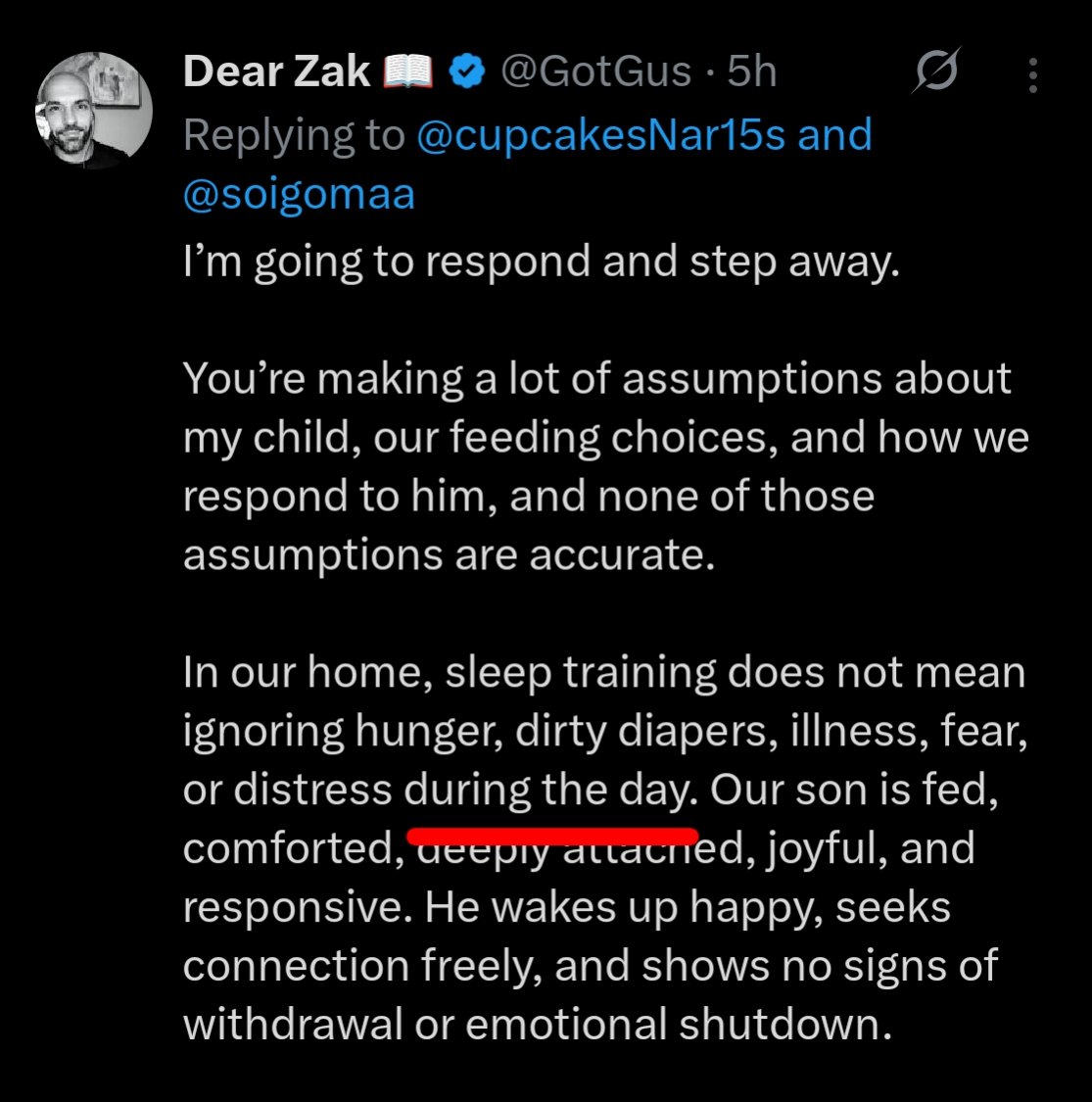
To be clear, no, we do not ignore hunger, illness, dirty diapers, or distress, at night or during the day. Our son sleeps 11-12 hours because he is well fed, well napped, well loved, and surrounded by a strong village of people who know him and care for him deeply.
On the few occasions he’s been sick in his first year, any form of sleep training goes completely out the window. Those nights are about comfort, closeness, and responding, full stop. Love always takes precedence over any method.
I think where these conversations often go sideways is when context gets lost and everything gets collapsed into a single narrative. A brief, supported bedtime protest in an otherwise responsive, attuned home is not the same thing as neglect, and treating them as identical doesn’t help parents or children.
We’re confident in how we’re caring for our son, and we’re grateful for the fruit we’re seeing in him every day. Thanks for asking the question thoughtfully.
@Kansteo@cupcakesNar15s@GotGus@soigomaa Genuine question, as I know nothing about CIO... His response to this reply (screenshot below), suggests that diaper changes, hunger and illness are ignored during the night? Is that correct under CIO method?
Watson’s approach wasn’t about sleep. It was about near-constant emotional distance. He openly advised against hugging, kissing, or comforting children at all.
That’s fundamentally different from a responsive, affectionate home where a child experiences brief, supported sleep learning at night and abundant connection the rest of the time.
Collapsing those two things into the same category isn’t accurate, and it’s where this conversation goes off the rails.
It’s reasonable for parents to disagree on sleep approaches. It’s not reasonable to equate them with neglect or long-term harm without evidence.
I agree that biology matters. Connection, touch, responsiveness, and bonding are foundational to a child’s nervous system development. We fully believe that, and we live it daily.
Where I think this gets misapplied is when those truths are used to imply that a brief, supported period of nighttime protest somehow negates an otherwise highly connected, responsive relationship. It doesn’t. Biology isn’t fragile in that way, and attachment is built over thousands of moments, not undone by a few minutes in a crib.
Our son gets constant proximity, affection, eye contact, play, comfort, and attunement throughout his days and nights. Sleep training for us was not distance from our child, it was teaching him a skill within a deeply bonded relationship.
Distance without relationship is harmful.
Space within a secure attachment is not.
That distinction matters.
@GotGus@soigomaa “analysed” by the mother’s body and milk adjusted accordingly and mother produces different milk for boys than girls.
Distance from parents makes a difference.
I didn’t ask it for sleeping tips. I asked it to analyze the claims being made and the research being cited, then I decided how to respond and what we were comfortable doing as parents.
Tools don’t parent children. People do. We used ours thoughtfully, stayed responsive to our son, and adjusted anytime his needs changed.
Different families make different choices. This one has worked well for us.
I actually appreciate the questions. They’re fair, and they deserve clarity.
To be clear, no, we do not ignore hunger, illness, dirty diapers, or distress, at night or during the day. Our son sleeps 11-12 hours because he is well fed, well napped, well loved, and surrounded by a strong village of people who know him and care for him deeply.
On the few occasions he’s been sick in his first year, any form of sleep training goes completely out the window. Those nights are about comfort, closeness, and responding, full stop. Love always takes precedence over any method.
I think where these conversations often go sideways is when context gets lost and everything gets collapsed into a single narrative. A brief, supported bedtime protest in an otherwise responsive, attuned home is not the same thing as neglect, and treating them as identical doesn’t help parents or children.
We’re confident in how we’re caring for our son, and we’re grateful for the fruit we’re seeing in him every day. Thanks for asking the question thoughtfully.
@GotGus@cupcakesNar15s@soigomaa The 2nd paragraph of your response is a little scary to read I must admit. Are you saying you ignore hunger, dirty diapers, illness etc during the night??