Gottardi Lab

445 posts

Gottardi Lab banner
Gottardi Lab

Gottardi Lab

@GottardiLab

We study the multiple functions of catenins in cell-cell adhesion, cytoskeleton/nuclear signaling and lung repair after injury

Chicago, Illinois USA Katılım Ekim 2009
660 Takip Edilen666 Takipçiler
Gottardi Lab retweetledi

NM Pulmonary and Thoracic Surgery
We’re proud to share that Luisa Morales‑Nebreda, MD, has been named a 2026 Young Physician‑Scientist Awardee by the American Society for Clinical Investigation. This national honor recognizes her outstanding research achievements and commitment to advancing biomedical science. 🔗 See more: breakthroughsforphysicians.nm.org/pulmonary-news…
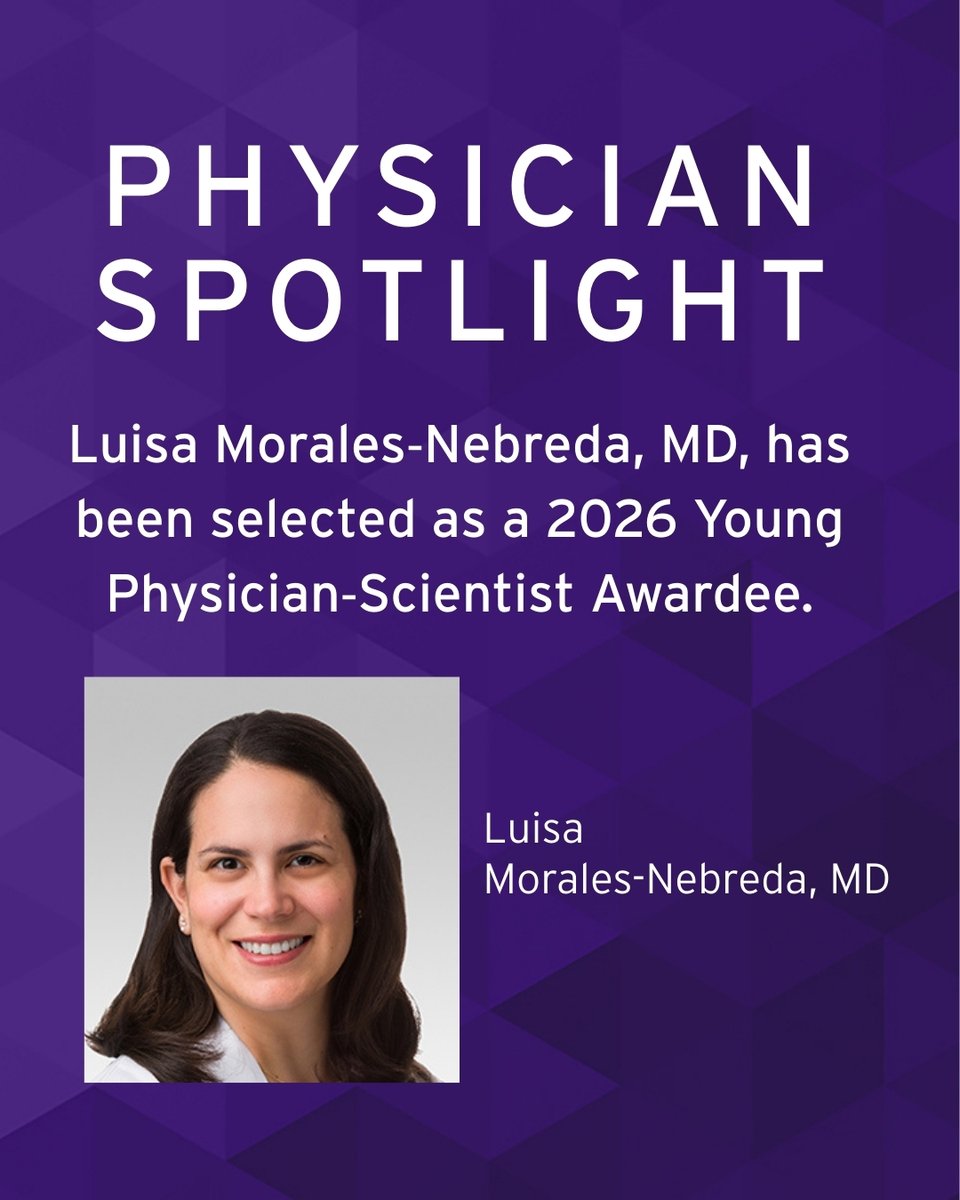
NM Pulmonary and Thoracic Surgery tweet media
English
0
1
3
123
Gottardi Lab retweetledi
Journal of Cell Biology
Journal of Cell Biology@JCellBiol·
🌈 Download JCB's CELLULAR DIVERSITY poster! 📩 Sign up to receive our future special collections and download this beautiful artwork by Bianca Dunn to display at home or in the lab 👉 hubs.la/Q03_C0Jq0
Journal of Cell Biology tweet media
English
0
3
7
699
Gottardi Lab retweetledi
Che-Fan Jeffrey Huang
Che-Fan Jeffrey Huang@JFhorner·
I will be presenting at Consortium for Top-Down Proteomics’s Proteoform Thursday Webinar Series. The catenin phospho-code work laid the foundation for my future research group. Free register link below!
Consortium for Top-Down Proteomics@TopDownProteome

Join us March 26 for Proteoform Thursday: Jeffrey Huang presents - "A Catenin Phospho-Code for Adherens Junction Organization" us06web.zoom.us/meeting/regist… #proteomics #massspec

English
0
1
1
141
Gottardi Lab retweetledi
Journal of Cell Biology
Journal of Cell Biology@JCellBiol·
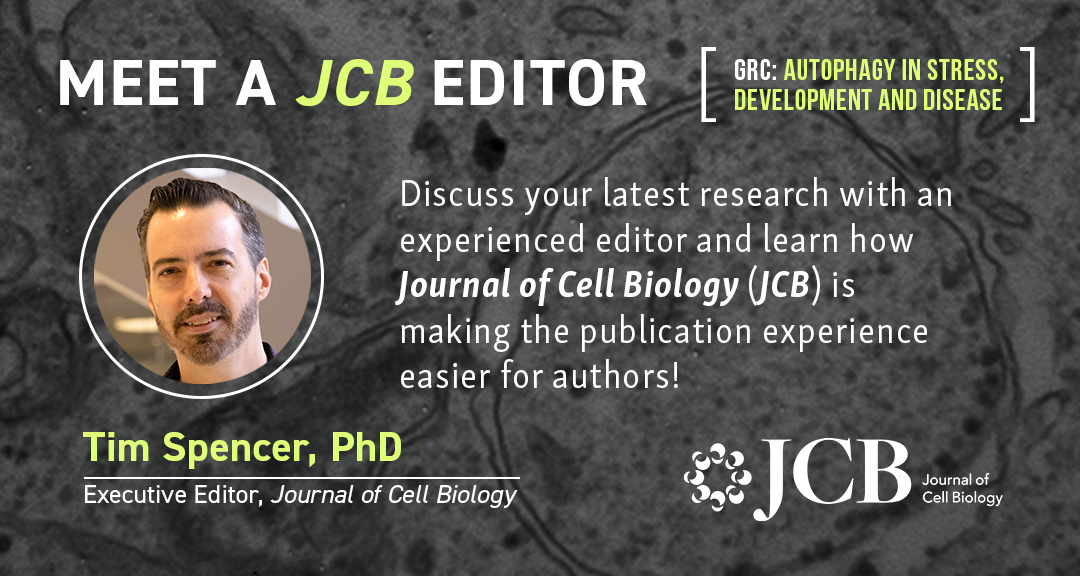
Are you headed to @GordonConf #GRC #Autophagy in Stress, Development and Disease next week, and interested in speaking with a JCB Editor about publishing your work? Get in touch with our Executive Editor, Tim Spencer, who will be there! ✉️ Email Tim: hubs.la/Q046glnp0
Journal of Cell Biology tweet media
English
0
4
7
1.3K
Gottardi Lab retweetledi
Fusion Conferences
Fusion Conferences@Fusion_Conf·
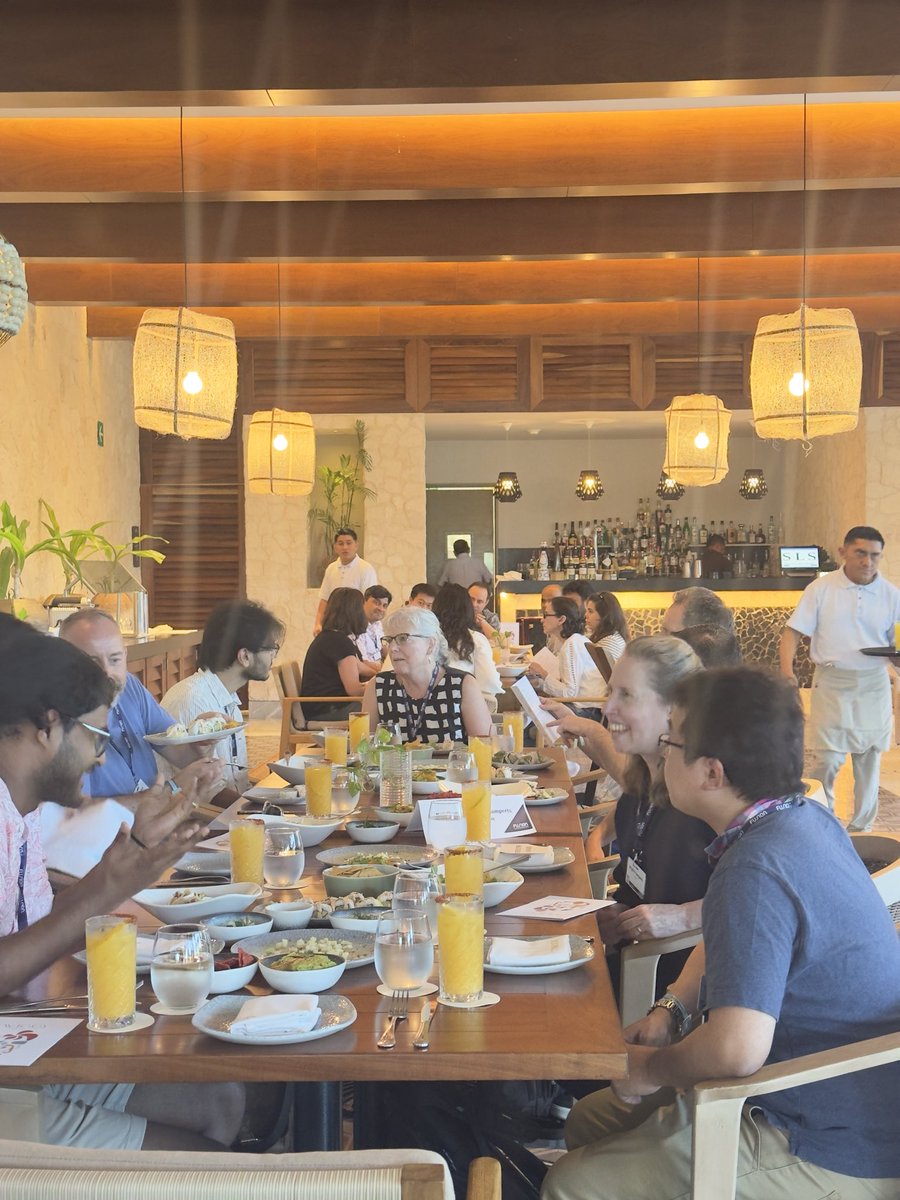
#FusionLung26 ECR Networking Lunch. Great to see students and postdocs connecting with leaders in the field over our ECR networking lunch today. So many great conversations surrounding research and career paths with some of our industry and academic speakers! Exactly what networking should look like 🍹🥗🔬
Fusion Conferences tweet mediaFusion Conferences tweet media
English
0
1
2
471
Gottardi Lab retweetledi
Matt DeJong
Matt DeJong@DejongMatt·
So much of life is mechanical: T-cell activation, antibody maturation, pathogenesis, development, homeostasis, and more. They all rely on molecular force sensing. Expanding throughput is the first step for unlocking the potential of engineered molecular force responses. 11/13
English
1
2
4
419
Gottardi Lab retweetledi
Jennifer Landino
Jennifer Landino@jenelandino·
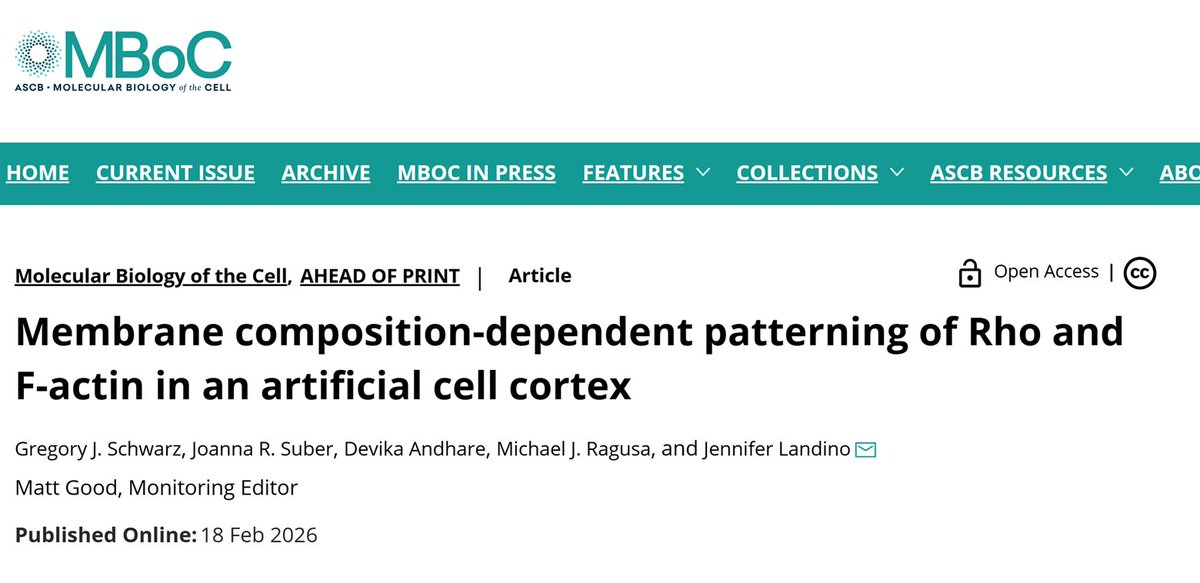
📣 Paper alert! The Landino Lab's first peer-reveiwed research article is officially online! We are happy this work found a home in MBoC. Congratulations to Greg, and thank you to the many people who helped get us here! Check it out here: molbiolcell.org/doi/abs/10.109…
Jennifer Landino tweet media
English
0
4
9
872
Gottardi Lab retweetledi
Niko McCarty.
Niko McCarty.@NikoMcCarty·
We need more investment in broad-spectrum antivirals, or medicines that defend people against many viruses simultaneously. Unfortunately, it’s hard to do this! There are more than 60 types of adenovirus alone, for example, each carrying unique proteins. Designing an antiviral that blocks all of these is very difficult. Instead of designing drugs, then, what if we harnessed physics? After all, every virus enters a human cell by “pressing” or “pushing” on it. If the cell can sense these physical forces, and somehow use them to trigger resistance, then perhaps we could develop more universal antivirals. A new paper hints at this possibility, and it stems from a weird discovery that came before. A few years ago, scientists grew human cells at low densities and infected them with viruses. When they did this, each cell produced large amounts of the virus; they were easily infected. When this experiment was repeated with cells grown at a high density, though, each cell (on average) produced much less virus. Something with this “crowding” was blocking viral replication. These scientists speculated that a protein, called Piezo1, might be involved. Piezo1 is a mechanically-sensitive calcium channel. Upon activation (with vibrations, touch, or small molecules) it opens, allowing calcium to pour into the cell. This calcium influx then causes the cell membrane to stiffen, though the mechanism for this is not clear. For this new paper, then, Chinese scientists grew human cells at low or high densities, infected them with many different viruses, and studied Piezo1’s involvement. When they grew cells at high density, but knocked out Piezo1, each cell produced more viruses. Similarly, when cells were grown at a low density and infected with viruses, while being shaken on a plate, they became more resistant to infection. This effect disappeared when Piezo1 was deleted. Similarly, when the authors overexpressed Piezo1 in HEK293T cells, it suppressed viral replication (by about 10-fold). This effect was not observed with Piezo2, another mechanosensitive ion channel. The researchers next used Piezo1 agonists to simulate this effect. A small molecule, called Yoda1, binds and activates Piezo1. Treating cells with Yoda1 reduced viral titers in human cells by 10-100 fold. The researchers also infected mice with lethal doses of various viruses (enteroviruses, coxsackievirus, influenza A), treated the animals with Yoda1 (or controls), and found that treated mice were more likely to survive. This work is interesting, but also flawed. For one, the molecular mechanism linking Piezo1 —> viral resistance is not described. They think it has something to do with membrane stiffening, but nobody actually knows *how* Piezo1 activation causes this. Another issue is the methods. For one experiment, the researchers infected mice with viruses and then shook them on little platforms. This, apparently, increased their resistance. But the scientists never actually explain the method, or what the platforms look like, or what the device settings were. It’s all a bit vague and difficult to believe. Still, searching for “universal” or physical mechanisms to build broad-spectrum therapies is exciting. Rather than make small molecules that target one pathogen, we ought to think about unifying, biophysical principles that can be used to exert control more widely.
Niko McCarty. tweet media
English
5
46
213
12.4K
Gottardi Lab retweetledi
Prof. Nikolai Slavov
Prof. Nikolai Slavov@slavov_n·
There is a special kind of joy in research that doesn’t come from publishing a research article or scaling a dataset to millions of points. It comes from understanding. From the moment when a pattern is no longer just a correlation, but a mechanism. When a result is not just statistically significant, but conceptually illuminating. When what you learned in one system suddenly generalizes to many. We live in an era of ever larger datasets and increasingly powerful models. Scale is intoxicating. But scale alone is not insight. More data does not automatically mean deeper understanding. The joy of science is not just in predicting outcomes. It is in discovering why they arise, and when they must hold across systems. It is in building explanations that are robust, falsifiable, and transferable. If we short-circuit that process -- if we optimize only for size, speed, and output -- we risk losing something essential. The next generation deserves more than technical proficiency. They deserve to experience the exhilaration of figuring something out, of seeing nature yield a principle that was always there, waiting to be understood. And this joy is not reserved for scientists. It is one of the most meaningful ways humans engage with the world. Understanding is not a luxury. It is one of the deepest forms of appreciation.
Prof. Nikolai Slavov tweet media
English
3
11
50
2.4K
Gottardi Lab retweetledi
Kenny Workman
Kenny Workman@kenbwork·
Simple result in Nature shows flow doesn't just destroy spatial context but tosses out important biology. Activated T cells are usually physically stuck to tumor cells and gating pipelines toss them out. Up to 91% of T-cell/tumor clusters gone. A huge fraction of clinical IO papers that used single-cell flow on dissociated tumors have systematically deleted the most tumor-reactive cells and then drawn conclusions from what was left
Kenny Workman tweet mediaKenny Workman tweet media
English
6
32
248
36.2K
Gottardi Lab retweetledi
Cell Reports
Cell Reports@CellReports·
CDH3-AS1 antisense RNA enhances P-cadherin translation and acts as a tumor suppressor in melanoma dlvr.it/TNRwLQ
English
1
3
22
3K
Gottardi Lab retweetledi
Prof. Nikolai Slavov
Prof. Nikolai Slavov@slavov_n·
Can we understand biology from "infinite" amounts of perturbation data ? - Only if we measure the relevant molecules. Perturbations and data scale 𝐜𝐚𝐧𝐧𝐨𝐭 compensate for missing the relevant molecules. 🧵
Prof. Nikolai Slavov tweet media
English
7
35
153
26.8K