A-R-I

7.1K posts

A-R-I banner
A-R-I

A-R-I

@GrandChat65

Reader, Thinker, Jokester, Highly trained ex-elite athlete

Katılım Temmuz 2009
668 Takip Edilen161 Takipçiler
A-R-I
A-R-I@GrandChat65·
@drmikehart Or.... maybe saying Canada is broken for years and playing to the Twitter crowd isn't great election plan? Change the leader and watch the poll numbers change
English
0
0
0
14
Mike Hart, M.D
Mike Hart, M.D@drmikehart·
Would Pierre Poilievre win an election today? Probably not. Doesn't make him a bad leader. It means many Canadians are still influenced by government-funded media such as the CBC.
English
474
89
1.6K
34.9K
A-R-I
A-R-I@GrandChat65·
@AmbJohnBolton I wonder what your take would be if you were Sir John Bolton of the UK🤔
English
0
0
0
18
John Bolton
John Bolton@AmbJohnBolton·
Never vote against the United States' military. European NATO members should reconsider their disinterest in supplying ships to defend the Strait of Hormuz. youtu.be/pbcQ-ZbmOTM?si…
YouTube video
YouTube
English
361
61
262
59.2K
Elon Musk
Elon Musk@elonmusk·
I would like to offer to pay the salaries of TSA personnel during this funding impasse that is negatively affecting the lives of so many Americans at airports throughout the country
English
33.6K
64.1K
467.5K
75.7M
A-R-I
A-R-I@GrandChat65·
@mattgurney It's all about launching his next career now
English
0
0
0
97
Matt Gurney
Matt Gurney@mattgurney·
Poilievre is relentlessly and rapidly executing the full playbook of things that might have mattered a year and a half ago.
English
121
87
1.4K
53.6K
A-R-I
A-R-I@GrandChat65·
@TheJoeySwoll Well done. Gotta bring back some effing decency... Also dudes should cancel their OF subscriptions buy some etfs or something Better than paying OF girls
English
0
0
1
688
Joey Swoll
Joey Swoll@TheJoeySwoll·
Can you imagine if a man did this?! Keep the OF content at home and OUT of the gym! 👊🏼
English
132
153
4.4K
255K
A-R-I
A-R-I@GrandChat65·
@globepolitics Gotta secure the next gig....and it won't be Prime Minister
English
0
0
0
199
A-R-I
A-R-I@GrandChat65·
@IvisonJ Fair... The Bots and hard partisans won't agree. You can just check the global reception and YouTube reviews on it.
English
0
0
0
20
John Ivison
John Ivison@IvisonJ·
Carney's speech at Davos has resonated more than anything any Canadian prime minister has said on the international stage since Brian Mulroney's speech on apartheid to the UN General Assembly in 1985. Fair? nationalpost.com/opinion/john-i…
English
300
49
245
27.1K
A-R-I
A-R-I@GrandChat65·
@DNIGabbard It took 2 weeks to produce this post? Jesus.
English
0
0
0
6
DNI Tulsi Gabbard
DNI Tulsi Gabbard@DNIGabbard·
Donald Trump was overwhelmingly elected by the American people to be our President and Commander in Chief. As our Commander in Chief, he is responsible for determining what is and is not an imminent threat, and whether or not to take action he deems necessary to protect the safety and security of our troops, the American people and our country.  The Office of the Director of National Intelligence is responsible for helping coordinate and integrate all intelligence to provide the President and Commander in Chief with the best information available to inform his decisions.  After carefully reviewing all the information before him, President Trump concluded that the terrorist Islamist regime in Iran posed an imminent threat and he took action based on that conclusion.
English
27.5K
15.1K
82.6K
9.8M
Pierre Poilievre
Pierre Poilievre@PierrePoilievre·
My St. Patrick’s Day beer with Mark Carney. We need less foam and more beer!
English
1.4K
1.2K
7.7K
1.2M
A-R-I
A-R-I@GrandChat65·
@ianbremmer "She didn't dump me I broke up with her."...kinda energy
English
0
0
0
83
ian bremmer
ian bremmer@ianbremmer·
false alarm: us request for allies’ support no longer necessary.
ian bremmer tweet media
English
110
173
1.3K
59.1K
ian bremmer
ian bremmer@ianbremmer·
“nobody expected that." - president trump, on his surprise that iran hit bahrain, kuwait, qatar and the united arab emirates
English
55
103
804
53.5K
A-R-I retweetledi
Ilan Goldenberg
Ilan Goldenberg@ilangoldenberg·
Three weeks into the war with Iran, a number of observations as someone who spent years war-gaming this scenario. 1. The U.S. and Israel may have produced regime transition in the worst possible way. Ali Khamenei was 86 and had survived multiple bouts of prostate cancer. His death in the coming years would likely have triggered a real internal reckoning in Iran, potentially opening the door to somewhat more pragmatic leadership, especially after the protests and crackdown last month. Instead, the regime made its most consequential decision under existential external threat giving the hardliners a clear upperhand. Now we appear to have a successor who is 30 years younger, deeply tied to the IRGC, and radicalized by the war itself – including the killing of family members. Disastrous. 2. About seven years ago at CNAS, I helped convene a group of security, energy, and economic experts to walk through scenarios for a U.S.--Iran war and the implications for global oil prices. What we’re seeing now was considered one of the least likely but worst outcomes. The modeling assumed the Strait of Hormuz could close for 4–10 weeks, with 1–3 years required to restore oil production once you factored in infrastructure damage. Prices could spike from around $65 to $175–$200 per barrel, before eventually settling in the $80–$100 range a year later in a new normal. 3. One surprising development: Iran is still moving oil through the Strait of Hormuz while disrupting everyone else. In most war games I participated in, we assumed Iran couldn’t close the Strait and still use it themselves. That would have made the move extremely self-defeating. But Iran appears capable of harassing global shipping while still pushing some of its own exports through. That changes the calculus. 4. The U.S. now finds itself in the naval and air equivalent of the dynamic we faced in Iraq and Afghanistan. It’s a recipe for a quagmire where we win every battle and lose the war. We have overwhelming military dominance and are exacting a tremendous cost. But Iran doesn’t need to win battles. They just need occasional successes. A small boat hitting a tanker. A drone slipping through defenses in the Gulf. A strike on a hotel or oil facility. Each incident creates insecurity and drives costs up while remind everyone that the regime is surviving and fighting. 5. The deeper problem is that U.S. objectives were set far too high. Once “regime change” becomes the implicit or explicit goal, the bar for American success becomes enormous. Iran’s bar is simple: survive and keep causing disruption. 6. The options for ending this war now are all bad. You can try to secure the entire Gulf and Middle East indefinitely – extremely expensive and maybe impossible. You can invade Iran and replace the regime, but nobody is seriously going to do that. Costs are astronomical. You can try to destabilize the regime by supporting separatist groups. It probably won’t work and if it does you’ll most likely spark a civil war producing years of bloody chaos the U.S. will get blamed for. None of these are good outcomes. 7. The other escalatory options being discussed are taking the nuclear material out of Esfahan or taking Kargh Island. Esfahan is not really workable. Huge risk. You’d have been on the ground for a LONG time to safely dig in and get the nuclear material out in the middle of the country giving Iran time to reinforce from all over and over run the American position. 8. Kharg Island can be appealing to Trump. He’d love to take Iran’s ability to export oil off the map and try to coerce them to end the war. It’s much easier because it’s not in the middle of IRan. But it’s still a potentially costly ground operation. And again. Again, the Iranian government only has to survive to win and they can probably do that even without Kargh. 9. The least bad option is the classic diplomatic off-ramp. The U.S. declares that Iran’s military capabilities have been significantly degraded, which is how the Pentagon always saw the purpose of the war. Iran declares victory for surviving and demonstrating it can still threaten regional actors. It would feel unsatisfying. But this is the inevitable outcome anyway. Better to stop now than after five or ten more years of escalating costs. Remember in Afghanistan we turned down a deal very early in the war with the Taliban that looked amazing 20 years later. Don’t need to repeat that kind of mistake. 10. The U.S. and Israel are not perfectly aligned here. Trump just needs a limited win and would see long-term instability as a negative whereas for Netanyahu a weak unstable Iran that bogs the U.S. down in the MIddle East is a fine outcome. If President Trump decided he wanted Israel to stop, he likely has the leverage to push it in that direction just as he pressured Netanyahu to take a deal last fall on Gaza. 11. When this is over, the Gulf states will have to rethink their entire security strategy. They are stuck in the absolute worst place. They didn’t start this war and didn’t want it and now they are taking with some of the worst consequences. Neither doubling down with the U.S. and Israel nor placating the Iranians seems overwhelmingly appealing. 12. One clear geopolitical winner so far: Russia. Oil prices are rising. Sanctions are coming off. Western attention and military resources are shifting away from Ukraine. From Moscow’s perspective, this war is a win win win. 13. At some point China may have a role to play here. It is the world’s largest oil importer, and much of that supply comes from the Middle East. Yes they are still getting oil from Iran. But they also buy from the rest of the Middle East, and a prolonged disruption in the Gulf hits Beijing hard. That gives China a real incentive to help push toward an end to the conflict.
English
454
2.3K
7.4K
2M
A-R-I
A-R-I@GrandChat65·
@MarcLevesqueEco @JasminLaine_ I get the limit. People need to start differentiating between A qualified pundit A journalist An influencer An infotainer A bot.... That would help a lot and this platform needs work
English
0
0
2
71
Marc Lévesque
Marc Lévesque@MarcLevesqueEco·
@JasminLaine_ What base???? I limit replies to people I follow because, otherwise, I get flooded with insults from people with fake identities. It's either that or leave this platform. I have no time for this, nor do I particularly appreciate your "vulnerable and insecure" comment.
English
20
4
73
1.8K
Jasmin Laine
Jasmin Laine@JasminLaine_·
Maybe this isn’t fair… but if you turn off your comments, I instantly assume you lack confidence to back up your statements and are never acting in good faith. I also assume you are vulnerable and insecure—because you don’t believe what you’re saying. You’re just saying it for your base.
Marc Lévesque@MarcLevesqueEco

He just can’t change the channel. He spent two years blaming the consumer carbon tax for rising food prices. « Axe the Tax » was the solution. When it was « axed », the impact on food prices didn’t even register. So, now, it’s so-called « hidden taxes ». Astounding. 🤦‍♂️

English
55
72
682
18.5K
A-R-I
A-R-I@GrandChat65·
@shanaka86 Man. Too bad Trump doesn't have a DNI or top level intelligence....oh wait
English
0
0
1
162
Shanaka Anslem Perera ⚡
JUST IN: Trump asked the world to send warships to Hormuz. Japan said no. Australia said no. South Korea said it would think about it. And 26 Chinese aircraft circled Taiwan the same day. The refusals are not about Iran. They are about China. Japan’s Prime Minister Takaichi and ruling LDP policy chief Kobayashi stated there are “extremely high hurdles” and “no plan currently” to dispatch naval forces to the Middle East. Australia’s Transport Minister Catherine King was explicit: “We won’t be sending a ship. That is not something we’re contributing to.” South Korea’s Foreign Ministry issued the diplomatic equivalent of a held breath: “Takes note. Will closely coordinate and carefully review.” Three Pacific allies. Three refusals. One reason: their navies are needed at home. On 15 March, the same day Trump’s coalition call circulated, Taiwan’s Ministry of National Defence detected the largest Chinese military surge since the war began: 26 aircraft, 16 entering the air defence identification zone, and 7 naval vessels, after a 16-day lull that began the day before Operation Epic Fury launched. South Korea is simultaneously relocating THAAD missile defence components to the Middle East to replenish American stocks depleted by the Iran war. North Korea fired ballistic missiles into the Sea of Japan on 14 March. The Pacific is not quiet. It is testing whether the allies who guard it will leave. Japan’s refusal is the most consequential. Takaichi is scheduled to announce Golden Dome missile defence participation in Washington on 19 March. Japan will co-produce the interceptors America is burning through in the Gulf. But co-producing interceptors for a future shield is not the same as sailing destroyers into a present war. Japan’s constitutional constraints are real, its pacifist public opinion is real, and its geographic exposure to China is 1,100 kilometres from Hokkaido to Chinese coastal launch sites. Every Japanese destroyer sent to Hormuz is a destroyer not patrolling the East China Sea while 26 Chinese aircraft test the vacancy. Australia’s refusal carries the weight of AUKUS. Canberra is building nuclear submarines to deter China in the Indo-Pacific. Sending surface combatants to the Persian Gulf while the submarine programme exists to counter Chinese expansion in the same ocean those combatants would leave is a strategic contradiction that Minister King resolved in one sentence. South Korea’s “careful review” is the most precarious. Seoul depends on Gulf oil imports for energy security but faces a nuclear-armed North Korea that fired missiles the same week Trump made the request. The Cheonghae Unit, South Korea’s anti-piracy force in the Gulf of Aden, could theoretically expand its mandate. But expanding a Gulf mission while THAAD components are being shipped out of the Korean Peninsula to replenish American losses in Iran creates a defence posture that faces two directions and covers neither. The pattern is structural. America’s Pacific allies are telling Washington what Washington’s own deployment decisions already demonstrate: the Iran war is consuming the strategic reserves of Pacific deterrence. Marines sailing east. THAAD moving west. Interceptors fired at Iranian missiles rather than reserved for Chinese ones. And now the allies who anchor the first island chain are refusing to compound the depletion by sending their own navies to a theatre 8,000 kilometres from the one that determines the century. Trump asked for a coalition. The Pacific answered with a question the coalition call cannot resolve: who guards the Strait that matters if everyone sails to the one that burns? open.substack.com/pub/shanakaans…
Shanaka Anslem Perera ⚡ tweet media
Shanaka Anslem Perera ⚡@shanaka86

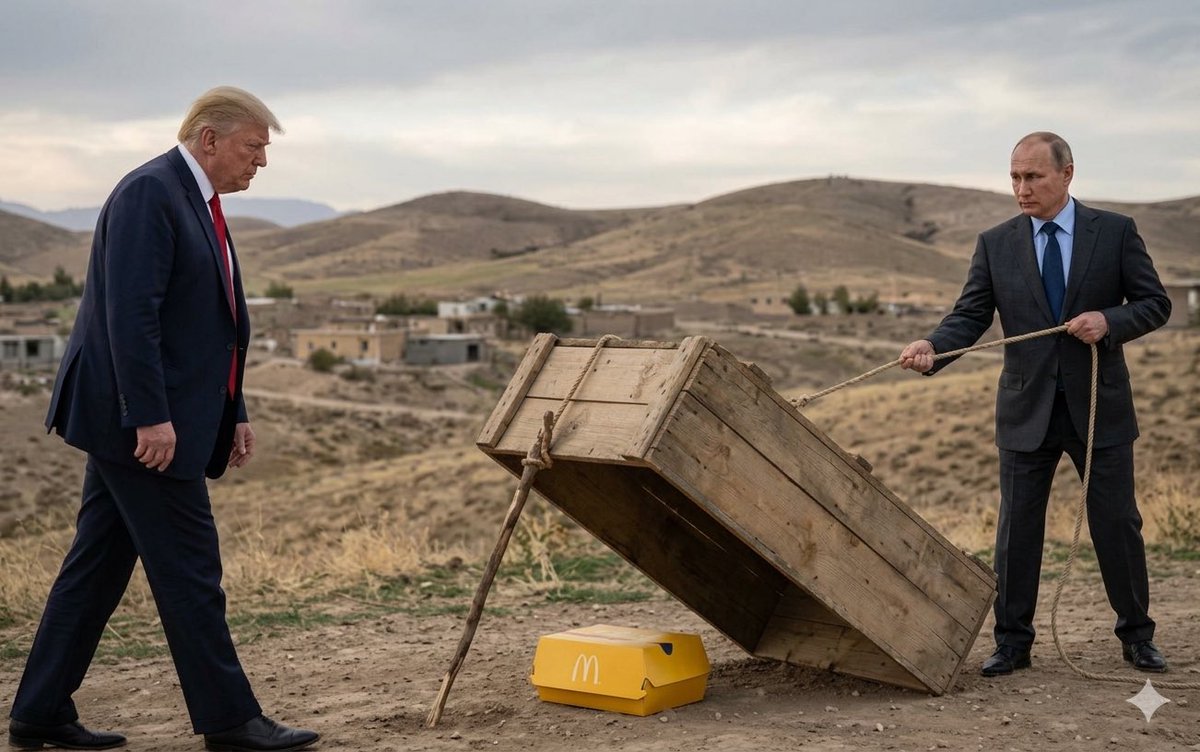
BREAKING: China went silent the day America bombed Iran. It came back the day America sent the Marines. Taiwan’s Ministry of National Defence reported 26 Chinese military aircraft, 16 entering the air defence identification zone, and 7 naval vessels operating around the island on 15th March. This was the largest single-day surge in weeks. It came after a 16-day lull of near-zero Chinese military activity around Taiwan that began on 27 February, the day before Operation Epic Fury launched. The lull was not restraint. It was reconnaissance. China watched America commit. On 13th March, the Pentagon announced USS Tripoli sailing from Japan with 2,500 Marines for the Gulf. On 14th March, Trump called for multinational warships from China, France, Japan, South Korea, and the UK to police Hormuz. On the same day, South Korea confirmed it had begun relocating THAAD missile defence components to the Middle East to replenish stocks depleted by the Iran war. American Marines moving east. Korean air defence moving west. And on 15 March, Chinese aircraft returned to Taiwanese airspace in numbers not seen since the war began. Taiwan’s parliament authorised stalled US arms packages worth approximately $9 billion on 13th March. The packages include 82 HIMARS systems with a hard production-queue expiration on 26th March. Taipei has thirteen days to lock delivery slots before the queue rolls to other buyers. The arms scramble is not peacetime procurement. It is a government watching its primary security guarantor deploy assets 8,000 kilometres in the wrong direction and calculating that the weapons it did not buy last year must be bought this week or not at all. The 16-day pattern is the thesis. China paused gray-zone operations the day America struck Iran because any Chinese provocation during a decapitation operation would have risked American strategic focus pivoting to two fronts simultaneously, a scenario Beijing avoids. China resumed gray-zone operations the day American ground forces shipped out because the asset diversion that followed the initial strikes confirmed what Beijing needed to know: the Middle East is consuming American attention, munitions, and forward-deployed forces at a rate that creates a Pacific vacuum. The lull measured the commitment. The surge tested the vacancy. TSMC produces approximately 90% of the world’s advanced semiconductors. Bloomberg and Insurance Journal models project that a full Taiwan disruption scenario would trigger S&P 500 declines of 30 to 50% through global chip supply collapse. Every Nvidia GPU training an AI model, every Apple processor in a phone, every AMD chip in a data centre runs on TSMC silicon fabricated on an island that 26 Chinese aircraft circled on the same day the USS Tripoli sailed for Iran. Xi Jinping does not need to invade Taiwan. He needs to demonstrate that the island’s security guarantee weakens every time America fights a war elsewhere. The surge is the demonstration. Every Marine deployed to the Gulf is a Marine not deployed to the Pacific. Every THAAD battery relocated to Saudi Arabia is a battery not covering South Korea. Every SM-3 fired at an Iranian ballistic missile over Incirlik is an interceptor not available for a Chinese cruise missile over the Taiwan Strait. The Iran war is not consuming oil. It is consuming the strategic reserves of American military capacity in the one theatre that matters more than any other. Trump’s Hormuz coalition call, inviting China to send warships, is the counter-move: end the Iran war fast, free Pacific assets, and force Beijing to choose between exploiting the distraction and participating in its resolution. The invitation is the trap. But the 16-day pattern already delivered its message. China knows the price of American distraction. It measured it in the lull. And it tested it with 26 aircraft on the day the Marines sailed east. Full analysis - open.substack.com/pub/shanakaans…

English
75
285
824
419.8K
A-R-I
A-R-I@GrandChat65·
Most of the banter/ skits where trash this award show. #oscar
English
0
0
0
60