Guangyi P

303 posts

Guangyi P banner
Guangyi P

Guangyi P

@GuangyiPan

PhD in IR, Lecturer in IPS at @UNSW, Neoclassical realism, Cold War, Chinese intellectual history 人是一粟太仓中

Canberra Katılım Mart 2020
514 Takip Edilen112 Takipçiler
Guangyi P
Guangyi P@GuangyiPan·
Deterrence through captivity: China’s use of detention to dissuade threats to regime security | European Journal of International Security | Cambridge Core - bit.ly/40fQflH
English
2
0
0
37
Guangyi P
Guangyi P@GuangyiPan·
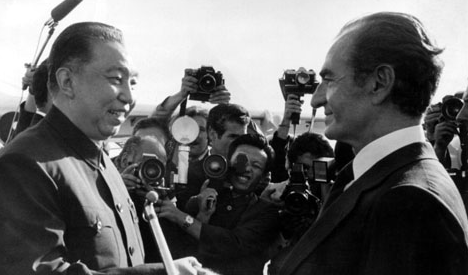
令人唏嘘
Guangyi P tweet media
日本語
0
0
0
6
Guangyi P
Guangyi P@GuangyiPan·
斥鷃每闻欺大鸟,昆鸡长笑老鹰非。xxxxxxx,国有疑难可问谁?
K. Tristan Tang@KTristanTang

Recent PLA Daily reporting on Zhang Youxia’s purge has prompted me to revisit the issue in a follow-up analysis just published in @ChinaBriefJT Notes at @JamestownTweets. These materials largely align with my observations and inferences from my January 26 analysis, linking Zhang Youxia’s removal to preparations for the PLA’s 2027 centenary goal—an important political agenda for Xi Jinping. Such defiance by Zhang is framed by Chinese official discourse as undermining political awareness and as trampling the CMC Chairperson Responsibility System. Many thanks again to @Arranjnh for the timely, spot-on edits. Executive Summary: (1) Recent PLA Daily articles include additional details on Zhang Youxia’s purge and reveal differences between Zhang Youxia and Xi Jinping over the pace of force building, especially in relation to the 2027 PLA centenary goal, a key political priority of Xi. (2) The PLA Daily explicitly links the push to achieve the centenary goal to Zhang Youxia’s purge and reiterates that Zhang and Liu had negative effects on the PLA’s combat capability development. (3) The PLA Daily stresses that the entire force must recognize strategic design, pathways, and target tasks as an established consensus that no one may question, and it underscores that all military planning must submit to political leadership. (4) Past Chinese official information shows that joint operations capability is emphasized in the 2027 goal, but joint training under Zhang Youxia’s leadership lagged behind expectations and carried political implications of defying Xi Jinping’s orders. Follow-up analysis (February 3): jamestown.org/more-informati… Initial analysis (January 26): jamestown.org/zhang-youxias-…

中文
0
0
0
32
Guangyi P retweetledi
Lyle Morris
Lyle Morris@LyleJMorris·
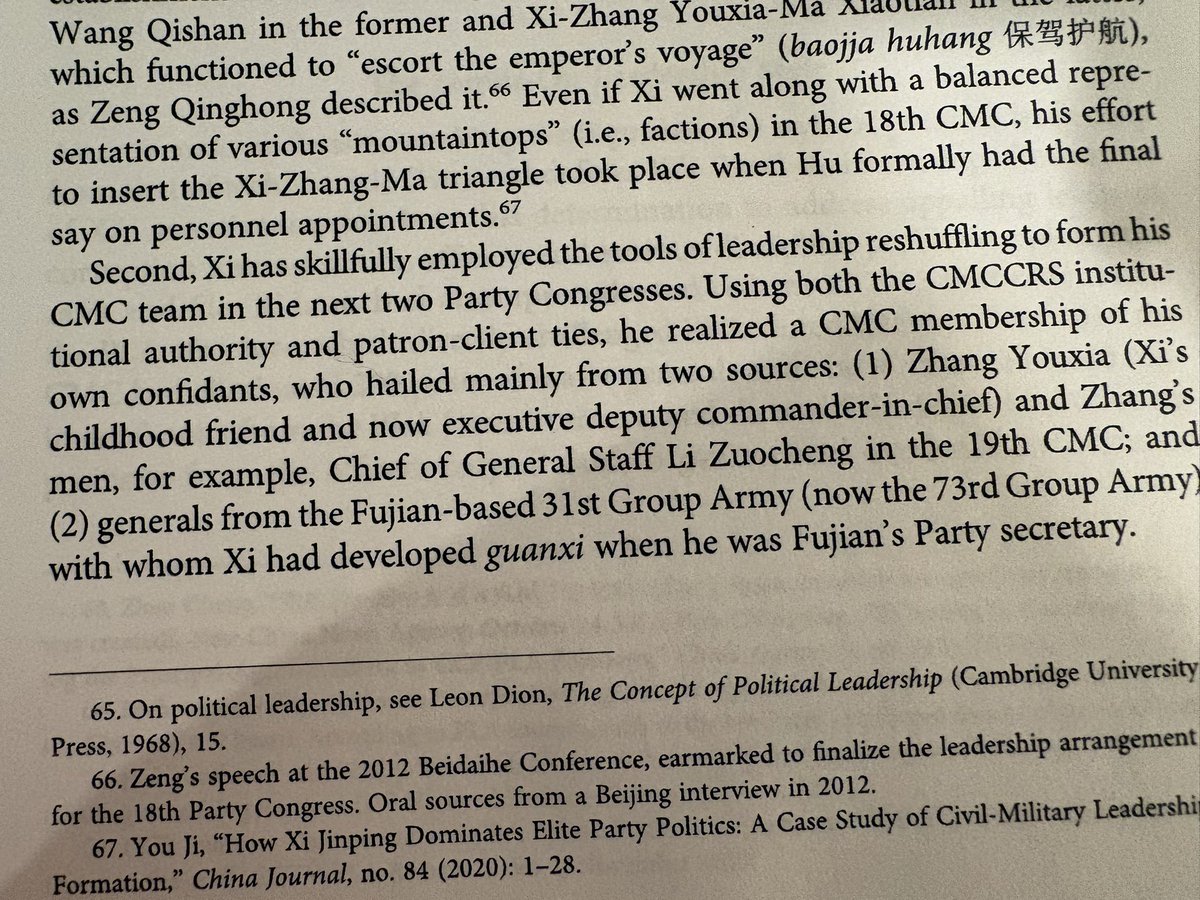
If you want to understand the context for the Zhang/Liu purges, I recommend starting here.
Lyle Morris tweet media
English
20
111
828
48.3K
Guangyi P retweetledi
Foreign Affairs
Foreign Affairs@ForeignAffairs·
“Leaders in Beijing and Washington agree that a concert of power (active coordination between China and the United States), not just a balance of power between the two countries, is necessary in today’s world,” writes Wu Xinbo. foreignaffairs.com/united-states/…
English
11
15
77
52K
Guangyi P
Guangyi P@GuangyiPan·
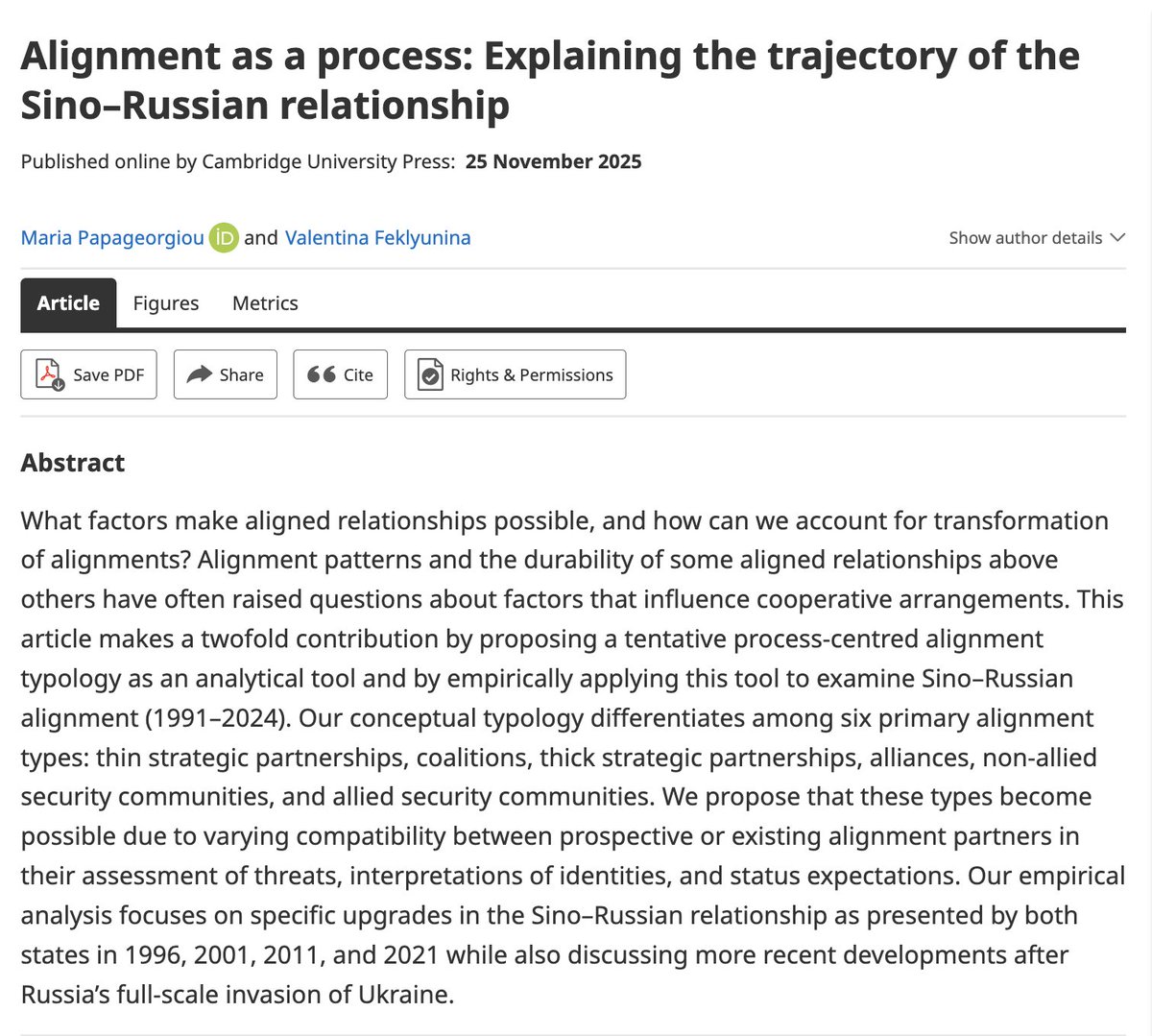
rejection but two minor R&R comments is really disappointing
Guangyi P tweet media
English
0
0
1
127
Guangyi P retweetledi
IISS News
IISS News@IISS_org·
The People’s Liberation Army has steadily expanded its participation in joint bilateral and multilateral military exercises with partner militaries over the past decade, using them to deepen its defence ties abroad, strengthen its capabilities and demonstrate its modernised force. @R_Schulenburg and @Erik_Green8 explore the diplomatic, political and military objectives that have driven this growth. go.iiss.org/4qLWVEg
IISS News tweet media
English
1
20
48
6.3K
Guangyi P retweetledi
柳嘉宛Orianna
柳嘉宛Orianna@liuchiawan·
Joseph Fewsmith去世了。他这本China since Tiananmen非常好,我经常跟人推荐。想要熟悉、把握90年代中国政治和思想的脉络以及转型过程,这本是最好的入门读物。
柳嘉宛Orianna tweet media
中文
15
93
638
90.5K
Guangyi P retweetledi
李其 Lizzi
李其 Lizzi@wstv_lizzi·
Sharing my @ForeignPolicy piece with the fantastic @shuizaiping2 on the People’s Daily series by Zhong Caiwen, which has received surprisingly little English media attention. foreignpolicy.com/2025/10/14/chi… First, it’s important to understand the entity behind the pseudonym “Zhong Caiwen.” First appearing in People’s Daily in 2024, the name itself is a homophonous construct: “Zhong”钟/中 refers to “central,” “Cai”才/财 refers to finance and economics, and “Wen”文 means “article” or “commentary.” It likely represents the collective voice of the Central Commission for Financial and Economic Affairs (CCFEA), the CCP’s top economic policymaking body. (Similarly, unnamed sources, used in parallel with pseudonyms and featured as interviewees in official outlets also play a signaling role. In 2015 PD published an interview with an unnamed “authoritative person,” widely understood to be then CCFEA head Liu He. That piece advocated “supply-side structural reform” and signaled a policy shift toward deleveraging and efficiency for years to come...) The use of such roundabout methods is part of the long-standing culture of ambiguity of the CCP’s propaganda work. It allows official messaging to carry institutional authority while softening its tone for the general public. Many observers have dismissed the Zhong Caiwen series as just political pageantry meant to set a positive tone ahead of major political events (the plenum + the 15th FYP.) That’s not wrong, but it’s incomplete. Read together, they offer one of the clearest explanations yet of how China’s leadership views its economic transition: a reordering / recalibration of priorities for an era of slower growth and geopolitical constraints. More here: foreignpolicy.com/2025/10/14/chi… cc @AsiaPolicy
English
8
47
132
163.1K
Guangyi P retweetledi
Ryan Hass
Ryan Hass@ryanl_hass·
1/ I think this thread by @fengchucheng captures the logic and motive for Beijing's approach to the latest spike in US-China trade war escalation. Both sides are playing a high-stakes game. It's not entirely clear that both sides are playing the same game, though. (short 🧵)
Chucheng Feng@fengchucheng

The latest round of trade escalation between the US and China is the result of serious miscalculation by the US—Beijing takes BIS’s 29 September rule expansion as a unilateral provocation. 1. The Geneva, London, and Stockholm talks were primarily about testing boundaries and guardrails between the US and China. By July, a fragile equilibrium had formed: China continued supplying REEs on the existing level; the US froze tariffs at the current level. 2. That equilibrium was solidified during the Madrid talks in September, when negotiators quickly agreed on a framework for the potential sale of TikTok US. While TikTok US was never central to the trade negotiations, approving its sale under agreed conditions was a major concession from Beijing to deliver a high-visibility win that Trump desires, signaling willingness to move on secondary issues in exchange for stability ahead of a leadership-level summit. 3. By the end of Madrid, both sides appeared aligned in avoiding new unilateral measures ahead of the proposed late October Xi-Trump meeting. The assumption was that only a leader-to-leader session could unlock a broader settlement, given especially Trump’s preference for personalistic diplomacy over technocratic negotiation tracks. This implicit understanding was made explicit in China’s readout of the 19 September Xi-Trump phone call, where Xi warned against unilateral moves that could undermine “the results of multiple rounds of talks.” From Beijing’s perspective, BIS’s 29 September rule expansion was a direct violation of that warning—a unilateral escalation just 10 days after Xi framed stability as a condition for a summit. 4. Beyond BIS’s September rule, Beijing is also likely treating the USTR decision imposing port-entry charges on Chinese-built or Chinese-operated vessels—scheduled to take effect on 14 October—as another pending unilateral measure that should have been suspended after the 19 September Xi-Trump call. The fact that Washington is pressing ahead this Tuesday will reinforce Beijing’s perception that the US is acting in bad faith. 5. From Beijing’s perspective, these actions are not only substantive escalations but further confirmation of low credibility of the Trump administration. Beijing is effectively reactivating its April playbook—escalating first to force a negotiation reset, rather than waiting passively for the next talks. 6. Beijing’s underlying logic is straightforward: The US is more vulnerable to a rare earth supply shock than China is to incremental export controls on semiconductors. In recent weeks, Chinese policymakers have sent increasingly clear signals that they are prepared to accelerate domestic semiconductor supply chain development at all cost, even if it means absorbing short-term inefficiencies. This gives Beijing confidence that rare earth leverage is more decisive than chip export pressure. In a negotiation setting, it will likely seek a deep tariff cut in exchange for stable REE flows.

English
2
17
87
29.8K
Guangyi P
Guangyi P@GuangyiPan·
和无政府主义者合作真他妈折磨
Guangyi P tweet media
中文
0
0
2
67
Guangyi P retweetledi
Sergey Radchenko
Sergey Radchenko@DrRadchenko·
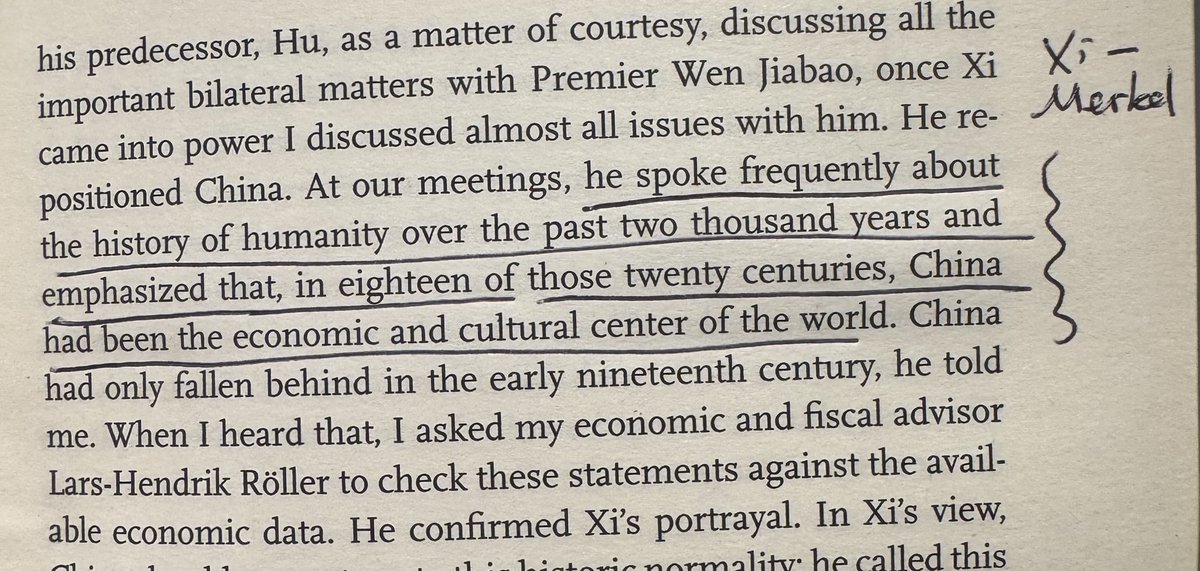
Merkel recounts her meetings with Xi.
Sergey Radchenko tweet media
English
97
222
1.7K
2M
Guangyi P
Guangyi P@GuangyiPan·
China flexes military might with new weapons of war rolling down Beijing streets 为中国威胁论添砖加瓦,坏了abc.net.au/news/2025-09-0…
中文
0
0
1
85
Guangyi P retweetledi
Edward Chan 陳星宇
Edward Chan 陳星宇@edwardsychan·
Call for participants: If you identify yourself as a Chinese Australian and would like to contribute to raising awareness of Indigenous policies, we invite you to participate in an online focus group. We are desperately looking for participants! @minranliu @anu_china
Edward Chan 陳星宇 tweet media
English
0
5
7
969
Guangyi P
Guangyi P@GuangyiPan·
真tm下头
中文
0
0
0
25
Guangyi P
Guangyi P@GuangyiPan·
md 三轮R&R后被拒真是下头
Guangyi P tweet media
中文
1
0
0
44