Rafael R. Guthmann

10.2K posts

Rafael R. Guthmann banner
Rafael R. Guthmann

Rafael R. Guthmann

@GuthmannR

Economist

Katılım Mart 2019
967 Takip Edilen7.5K Takipçiler
Sabitlenmiş Tweet
Rafael R. Guthmann
Rafael R. Guthmann@GuthmannR·
Major update of a working paper: This project was motivated by my desire to understand the puzzle of intellectual property. As it is not a standard type of property, but a monopoly granted by the government on a specific market. Very glad to have arrived at this paper.
Rafael R. Guthmann tweet media
English
5
11
83
44.5K
Rafael R. Guthmann
Rafael R. Guthmann@GuthmannR·
@hide4way Yes, my point is that large regional powers, which are industrialized countries of at least around 100 million people, now have a stronger degree of military hegemony over their local region. Not that small poor countries, like Venezuela, can fight back their local big power.
English
0
0
5
128
Прокрустова Лажа
@GuthmannR Yes and no. With the exception of a few large countries, all the others today are extremely dependent on the import of a huge number of things. If the big invader wants to play for a long, he can organize a blockade even easier than it was before.
English
2
0
5
220
Rafael R. Guthmann
Rafael R. Guthmann@GuthmannR·
Looks like we are watching the 21st-century military revolution in real time. It looks similar in scale to the 20th century military revolution. When WW1 broke out, it began with cavalry charges and ended with aircraft, tanks, and trench warfare. Now, these 20th-century ideas of warfare, such as invading using tank columns, projecting power with aircraft carriers, and using aircraft for deep strikes, are being made obsolete. Modern sensors, drones, and missiles make navies, aircraft, and tanks easy targets. The warfare of the 21st century will be country A underground missile bases against country B underground missile bases, with some trench warfare seasoned with drones in the case that A and B share a border. A major implication is that conventional power projection outside one's own continent becomes extremely reduced. This means that the world will become even more "multipolar," as each local power will have greatly increased advantages in its own region vis-à-vis prospective invaders.
Geopoliticabrass@Geopoliticabra2

Um caça F-35A/B Lightning II dos EUA sendo atingido por um míssil terra-ar nos céus do Irã Vídeo surge após relatos de que um F-35 foi danificado e forçado a realizar um pouso de emergência em uma base aérea no Oriente Médio devido a fogo inimigo sobre o Irã

English
6
13
58
4.7K
Rafael R. Guthmann
Rafael R. Guthmann@GuthmannR·
@namosilnio31361 I guess the inverse is more likely: drones are much cheaper to make and easier to operate, therefore more democratic, than tanks and jets.
English
1
0
5
127
Namosilnio
Namosilnio@namosilnio31361·
@GuthmannR This might even change the dynamics of national political. For example Saudi's who doesn't trust their own army could instead maintain small number of drone operators to have the monopoly of violence. Weapon's tech might end mass democracy without need for large standing armies.
English
1
0
2
140
Rafael R. Guthmann
Rafael R. Guthmann@GuthmannR·
@policytensor @MacaesBruno But, Iran prepared a lot over the past 8 months. They mobilized their industry, multiplied their missile output several times and began preparations for the outbreak of a major war. Thats why they are performing much better now than last year. Both in attack and defense.
English
1
0
10
252
Policy Tensor
Policy Tensor@policytensor·
Certainly breakout would have. But a rush to achieve breakout would’ve invited a US attack. So it wasn’t an easy decision. Imagine on the other hand if they had shut Hormuz when they were attacked by Israel and then the US. They’d have forced the issue that they are forcing now after taking 100X the punishment.
English
2
0
6
795
Rafael R. Guthmann
Rafael R. Guthmann@GuthmannR·
@jasonfurman Should adjust by the trade weighted dollar index as well. Since a stronger dollar means the same nominal price is higher for the world economy.
English
0
1
15
11K
Jason Furman
Jason Furman@jasonfurman·
Remember when oil topped $150/barrel in the wake of the 2011 Libya strikes? And stayed above that price for most of the next 2 yrs? OK, you may not remember because you probably weren't thinking about oil in 2026 prices back then. But if you were that's what you would have seen.
Jason Furman tweet media
English
29
78
522
88.2K
Rafael R. Guthmann
Rafael R. Guthmann@GuthmannR·
@policytensor US warmaking potential might increase with the collapse of the petrodollar and therefore the weakening of the dollar's reserve currency status, since that will force the US economy to re-industrialize (in the future the US will need to export merchandise to import).
English
2
0
8
688
Rafael R. Guthmann
Rafael R. Guthmann@GuthmannR·
I don't think the "industrial revolution" is a label for a universal phenomenon, but a specific historical event in Britain from the late 18th century to the early 19th century, just as Napoleon's wars are. I do agree that fast economic growth, like the growth of Western European countries and their colonies since the early 19th century, however, requires political polycentrism. Civilizations centered on large empires tend to be stagnant in terms of technology, science, and arts, and they tend to converge away from relatively inclusive political institutions (which appear necessary for fast growth to occur), see The Imperial Order by R. Wesson (1967). Also, see Escape from Rome by W. Scheidel (2019) for an extensive survey of the evidence that shows the unusual degree of polycentrism of Europe compared to other major regions of the pre-modern old world (and how the Roman Empire was such an anomaly for Europe). It does appear to me that dynamic and inclusive societies can only emerge in polycentric civilizations. The reason is that an imperial civilization, centered on a single power, is a society with an underlying institutional monopoly, which has no incentive to innovate but to just keep "the system" as it was when it was formed. I think that polycentric societies that emerged before modernity were also very dynamic and therefore more like our modern society compared to other pre-modern imperial civilizations. These include the ancient Greek democracies (very fragmented across a thousand tiny city-states), and the Warring States period China, a period which featured quite "modern" territorial states in terms of state capacity (which is related to the development of inclusive institutions).
Anup Malani@anup_malani

China had gunpowder, the compass, movable type, and the blast furnace — centuries before Europe. So why did the Industrial Revolution happen in Britain, not Beijing? Mokyr's answer: Europe's greatest advantage was political disunity.

English
4
5
17
2.2K
Rafael R. Guthmann
Rafael R. Guthmann@GuthmannR·
@pfnery Dados os juros reais de 11% acompanhados da criacao quase louca de novos impostos, acho que é bem obvio que esse governo esta sendo um fracasso gigantesco na area economica. Isso é um nivel de irresponsabilidade e populismo fiscal extremo.
Português
1
0
2
1.1K
Soda
Soda@fredsoda·
@GuthmannR sure, totally feasible, but TACO option usually implies a return to the status quo im arguing that even if the US retreats, pre-assassination status quo never returns, hence TACO not being even possible here
English
2
3
106
2.3K
Rafael R. Guthmann
Rafael R. Guthmann@GuthmannR·
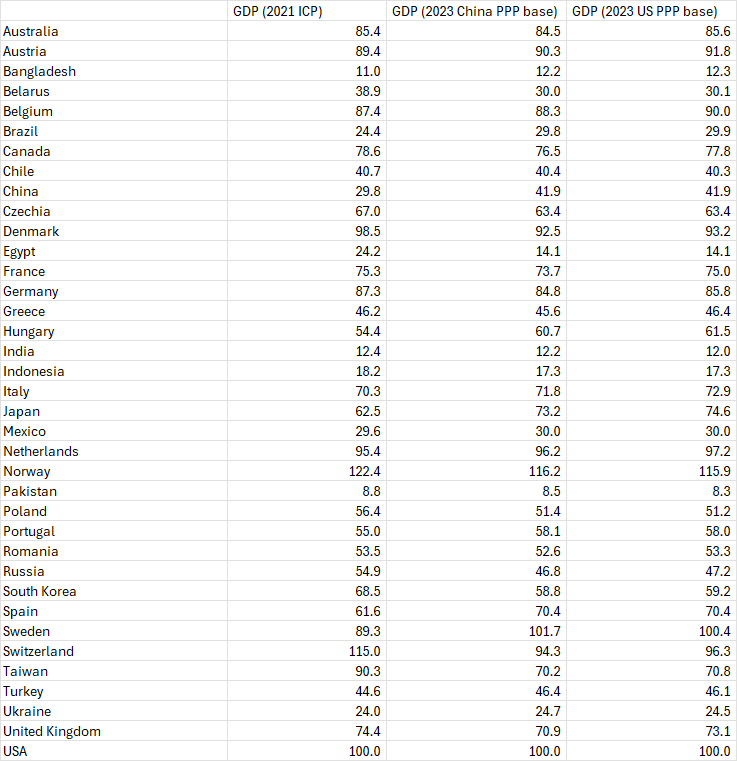
Se ajustarmos o crescimento do PIB por comparacoes de PIB em PPC com os EUA, o crescimento desde os anos 90 é muito maior: o crescimento de 1993-2023 aumenta de 33% para 89%.
Rafael R. Guthmann tweet media
Português
1
0
3
564
Rafael R. Guthmann
Rafael R. Guthmann@GuthmannR·
@policytensor Well, Brazil is a neutral country and a large net oil exporter, yet Brazilian equity prices are down 6%. If the long term impact is that world equity prices are down 6% thats basically 30-35 trillion USD in expected nominal costs to the world economy from the war.
English
0
0
0
217
Rafael R. Guthmann
Rafael R. Guthmann@GuthmannR·
On the Iranian side, I suspect their strategy is more well defined, and it is as follows. First, Iranians were prepared to go to war this time, with the expectation of obtaining an strategic advantage. Iran does not have nuclear weapons as they believe they do not need nuclear weapons. That is because they believe in the strength of their conventional warmaking potential and resilience to sustained attacks. In addition, Khamenei's martyr was apparently planned as demonstrated by his decision to not evacuate to a bomb shelter. That was so to galvanize support for the war across Iran's 90 million people. Second, after being tricked twice in negotiations (the second time was already expected, hence their preparations for war), Iranians now have the expectation that they should engage in a punishment strategy to inflict high costs on the US/Israel coalition in order to stablish deterrence and (perhaps) allow future negotiations with substantial bargaining power. To do that, they first launched a missile/drone blitzkrieg across US bases in the Middle East, which already lead to their evacuation, ultimately leaving the Persian Gulf region under Iranian strategic control. In addition, by blocking Middle Eastern oil exports, using the strait of Hormuz and missile/drone attacks on ports and refineries, they want to impose heavy economic costs on the US and its allies (which are already being felt in oil importing economies like South Korea). Then, they plan to pin the US in the Middle East by constantly bombing Israel with low intensity missile barrages for a long time. By forcing the US to "stay in the ring" they hope to maximize the costs of their punishment strategy. Overall, it looks like the Iranians plan covers the two possible contingencies: (1) Given their lost trust after being cheated twice, they might never be able to negotiate with the US again in good faith. In this case they plan to close Hormuz for an indeterminate time, and just allow the Middle East to trade oil and gas with allies like China and Russia. That is, since US sanctioned them, now is the time for reverse, long-term sanctions. (2) Be able to negotiate with the US from a position where it showed relative strength if the US is able to recover some trust. In this case Hormuz is opened to the "west."
Rafael R. Guthmann@GuthmannR

It is looking like Trump planned to use the carriers and the other forces assembled near Iran to increase his bargaining power for the nuclear negotiation. However, the Israeli leadership, knowing Israel is too small to defeat Iran alone, baited Trump into the attack by being extremely unreasonable in negotiations, ordering their attack, and then dragging the US along into war since US promised to assist Israel if they attacked first. They did so because they think that in a long war of attrition with Iran, the combined Israeli and American resources should be enough to ultimately prevail. Their final objective is to destroy Iran and turn it into a dysfunctional anarchic region like Syria and Lybia. That way they imagine they can secure Israeli security by preventing the emergence of other strong Middle Eastern states.

English
12
60
408
56.9K