Güven Aslan
790 posts

Güven Aslan
@GuvenAslan2
Üroloji Profesörü/İzmir. Dokuz Eylül Üniversitesi, Üroloji AD.


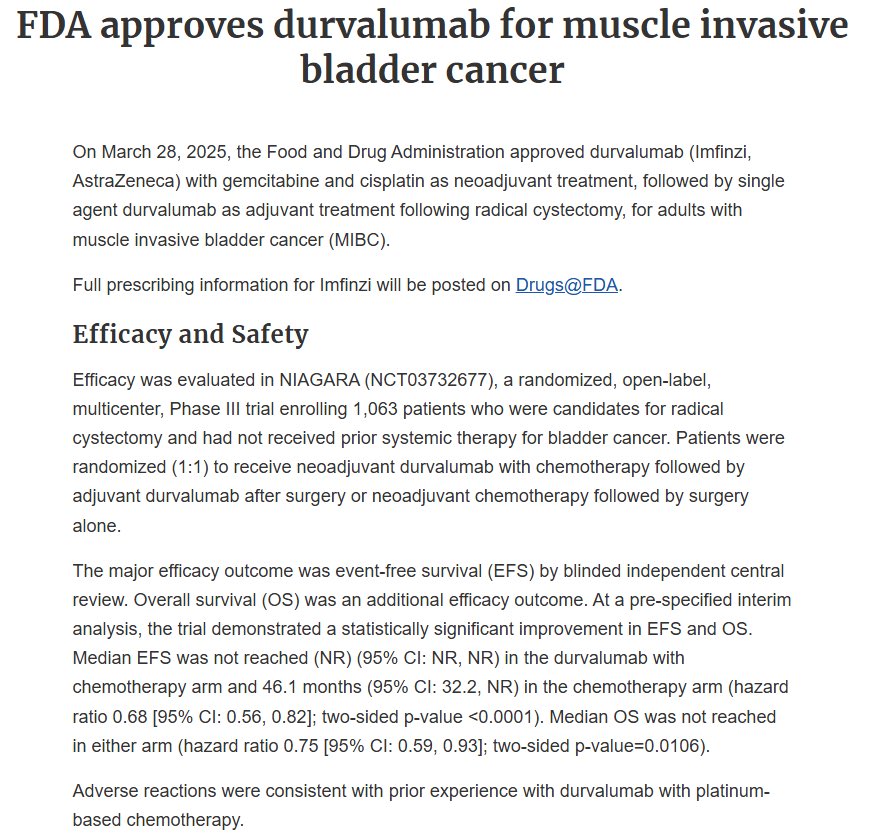
The approval answers one question, but leaves another unanswered: which patients truly derive enough benefit to justify escalation beyond optimized BCG? The FDA approval of durvalumab plus BCG in high-risk NMIBC was driven by a meaningful improvement in disease-free survival (HR 0.68), mainly recurrence free survival. Checkpoint inhibitors are not benign therapies, carrying ~ 15% risk of serious treatment-related adverse events. At the same time, this trial also demonstrated that patients with BCG-naïve high-risk NMIBC have low rates of progression and bladder cancer mortality, when treated with BCG appropriately. For many patients, the balance between reducing recurrence and exposing them to potentially significant toxicity is not straightforward. That raises a practical question: who should actually receive treatment intensification?


New in @UrolOncol Our review on “Etiology of Testosterone Deficiency After RP” highlights an underrecognized consequence of RP: • ~1 in 3 men develop testosterone deficiency • Likely due to venous disruption & ischemia • Most recover within 12 months ➡️ Takeaway: Not all post-RP low libido, or delayed recovery is “expected”—testosterone matters @faysal_a_yafi @Mo_Moukhtar #prostatecancer #MensHealth sciencedirect.com/science/articl…