Max Kates

1.8K posts

Max Kates banner
Max Kates

Max Kates

@MaxKates

Associate Professor of Urology and Oncology Director, Division of Urologic Oncology @bradyurology

Katılım Mayıs 2014
425 Takip Edilen2.1K Takipçiler
Max Kates
Max Kates@MaxKates·
At an FDA symposium in May, I was asked to discuss the BCG shortage which continues unabated unlike in Canada or Europe. In this editorial, we outline the paradox of approving non-tice BCG combinations while not allowing alternative strains in the market auajournals.org/doi/abs/10.109…
English
1
5
22
1.9K
Max Kates
Max Kates@MaxKates·
@NitinYerram @CanesDavid @daviesbj ]1) I am ok with SUO Fellowship contracting a bit and staying 2 years with research year 2) Specialization comes w/ a duty to improve/innovate and we need to teach skills to make hypotheses. 3) Like high school AP class, research yr during residency should allow one to opt out
English
0
0
3
181
Nitin Yerram M.D.
Nitin Yerram M.D.@NitinYerram·
@MaxKates @CanesDavid @daviesbj While I don’t argue research yr has benefits, we have to face reality that applicants dnt want to do a 2 year fellwship . SUO needs to adapt and create a 1yr option that can focus on multi-d care, complex Surg, and research. Even if we don’t want to, we have to get w/the trend.
English
1
0
3
148
Benjamin J. Davies MD, MBA
I realize I started a fun/informative discussion on the future of urologic oncology fellowships. I did a deep dive into the economics (which seemed to drive a lot of the responses). Depending on how you model this...the opportunity cost lost is minimal over a lifetime...with many caveats
Benjamin J. Davies MD, MBA tweet media
English
17
2
37
10.7K
Max Kates retweetledi
The Johns Hopkins Brady Urological Institute
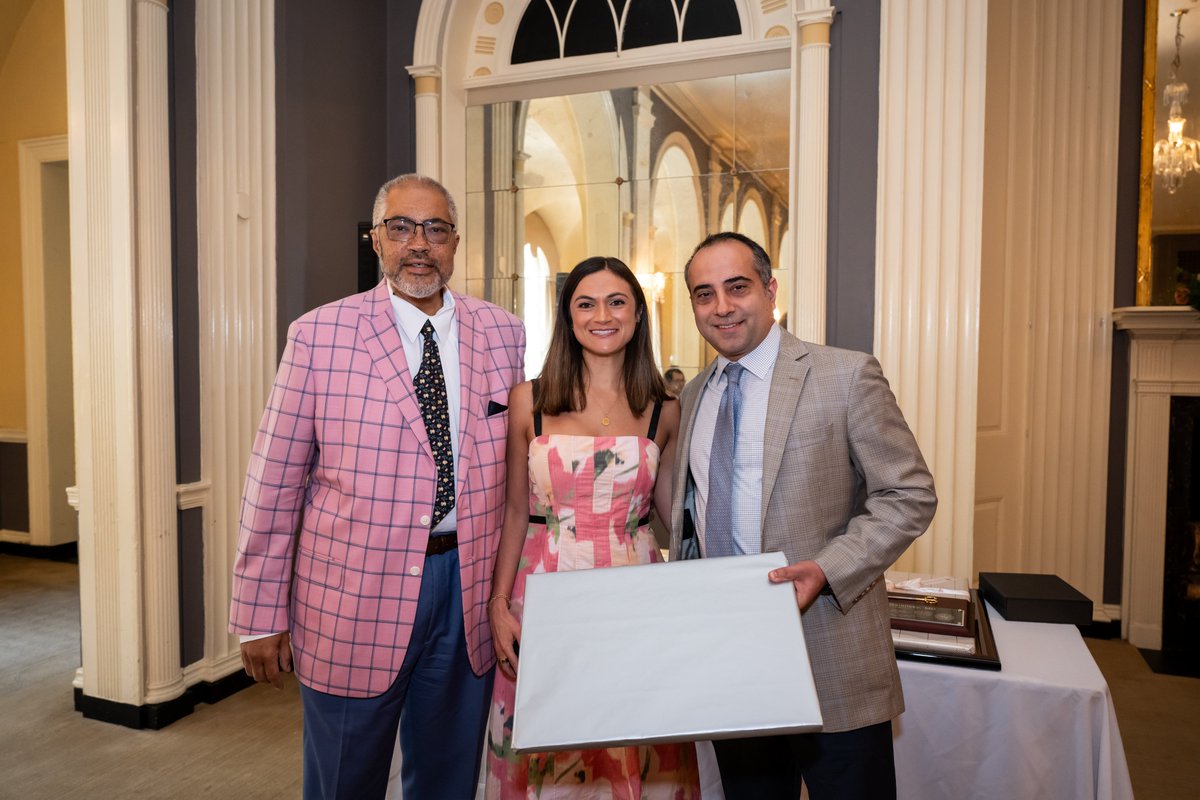
We're proud to celebrate four exceptional physicians completing their fellowship training at the Brady Urological Institute! Your advanced expertise and unwavering dedication to urological care will transform countless lives. We're honored to have been part of your journey!
The Johns Hopkins Brady Urological Institute tweet mediaThe Johns Hopkins Brady Urological Institute tweet mediaThe Johns Hopkins Brady Urological Institute tweet mediaThe Johns Hopkins Brady Urological Institute tweet media
English
1
2
21
2.8K
Max Kates
Max Kates@MaxKates·
@CanesDavid @daviesbj I strongly believe that residents who do a year of research in their residency training should not need to do a 2-year fellowship that also includes a research year. We need to be holistic about these types of applicants. A full year of research exposure is important imo
English
4
0
8
459
𝙳𝚊𝚟𝚒𝚍 𝙲𝚊𝚗𝚎𝚜
@MaxKates @daviesbj I think a valid comparator is GURS. GURS fellowships have seemingly managed to get excellent technical training as well as robust research, and still fit it all in 1 year. Do you think SUO will stick with 2 years? Perhaps that's the issue?
English
2
0
5
634
Max Kates retweetledi
The Johns Hopkins Brady Urological Institute
Congratulations to our graduating Chief Residents! We're incredibly proud to celebrate three outstanding physicians who have completed their residency at the Brady Urological Institute: Zhuo (Tony) Su, M.D. Logan Galansky, M.D. Lamont Wilkins, M.D.
The Johns Hopkins Brady Urological Institute tweet mediaThe Johns Hopkins Brady Urological Institute tweet mediaThe Johns Hopkins Brady Urological Institute tweet mediaThe Johns Hopkins Brady Urological Institute tweet media
English
2
4
27
2.9K
Max Kates
Max Kates@MaxKates·
@apkenigsberg I personally think that for residency programs w/ a research yr, doing another research yr in an SUO fellowship is too much unless interested in running a lab, etc. My personal feeling is that integrated programs are the future. 50/50 sounds good on paper but is tough in reality.
English
0
0
1
230
Alexander Kenigsberg
Alexander Kenigsberg@apkenigsberg·
@MaxKates Good points. I’ve often thought two 50/50 years preferable to separate clinical and research years (clinical practice informing research questions, time for longer-term projects and regulatory hurdles). Do you think a more sustainable model, or is # of years still an issue?
English
1
0
0
140
Max Kates
Max Kates@MaxKates·
Incredible Commitment to Cancer Research by @davidjtrone. Trone Family Division of Urologic Oncology will be a place to accelerate innovation and progress for cancer patients everywhere. giving.jhu.edu/story/brady-ur…. @brady_urology
Mohamad Allaf@allaf_mo

🎉 Big news at @brady_urology! Deeply grateful for a transformational gift to establish the Trone Family Division of Urologic Oncology under leadership of @MaxKates! Honored & Inspired by @davidjtrone to "move the needle towards better cancer outcomes" giving.jhu.edu/story/brady-ur…

English
1
4
38
3.4K
Max Kates retweetledi
Eugene Pietzak
Eugene Pietzak@eugene_pietzak·
This effort lead by @DrAndrewKatims , former @UrologyMSK @SUO_YUO fellow now at @nymedcollege , first looked at 610 NMIBC patients treated with radical cystectomy without any intervening treatment after their pre-RC TURBT; across multiple NMIBC subsets (BCG-Naïve, BCG unresponsive, use of Narrow Band Imaging, etc) we found that ~20% of patients with CIS on pre-RC TURBT had no residual CIS within their cystectomy specimen & equally important was that ~50% without CIS on pre-RC TURBT had occult CIS within their cystectomy specimen. We then partnered with @MaxKates & @Sadra_Sepehri to look at a NMIBC cohort who had blue light TURBT before cystectomy without intervening treatment @HopkinsGBCI @brady_urology and found nearly identical results; ~20% eradication of CIS by TURBT alone & ~50% occult CIS on cystectomy n/3
Eugene Pietzak tweet media
English
1
2
7
901
Max Kates retweetledi
The Johns Hopkins Brady Urological Institute
(1/) A transformational $10 million gift from the Robert & Lynda Carter Altman Family Foundation, championed by actress, philanthropist, & devoted advocate Lynda Carter, has made possible the naming & advancement of the Robert Altman Division (RAD) of Minimally Invasive Surgery.
The Johns Hopkins Brady Urological Institute tweet mediaThe Johns Hopkins Brady Urological Institute tweet mediaThe Johns Hopkins Brady Urological Institute tweet mediaThe Johns Hopkins Brady Urological Institute tweet media
English
4
19
125
9.1K
Max Kates
Max Kates@MaxKates·
Interesting thought experiment. If you take the 5% absolute difference in RFS, and instead give BCG +IO as reinduction after the 10% of all patients recur at 3mo, would you get same benefit of IO and limit toxicity/over treatment? @WesKassouf @UroDocAsh
Wes Kassouf@WesKassouf

Agree. The other question is does combo therapy for all outperforms sequential therapy for only some ( ie bcg for hr-nmibc then IO upon HG recurrence). I have not yet seen convincing data to suggest outcomes would be different between the two approaches

English
3
0
8
2.9K
Max Kates retweetledi
Max Kates
Max Kates@MaxKates·
6. Finally, we need to better understand why Alban was negative, CREST was marginally positive but company pulled FDa registration for now (unclear exactly why) & POTOMAC approved based on marginal improvements 7. Multiple trials in same space force us to interpret collectively
English
0
0
4
308
Max Kates
Max Kates@MaxKates·
4. Any NMIBC patient I am considering for early cystectomy i think reasonable to consider BCG +IO if patient wants bladder preservation 5. Trials didn't address who is highest risk, but we know multifocal HGT1 w/CIS is the bad actor so these folks who may benefit. Time will tell
English
1
0
3
468
Max Kates
Max Kates@MaxKates·
1) Approval based on marginal improvements in efficacy (without improvement to CSS/OS) 2) Toxicity that isn't G5 (death) doesn't seem to impact approval. 10-15% serious autoimmune AEs in NMIBC is deemed ok 3) little weight given to efficacy vs toxicity balance of a drug
FDA Oncology@FDAOncology

#FDA approves a treatment for high-risk non-muscle invasive bladder cancer. fda.gov/drugs/resource…

English
3
7
14
3.7K