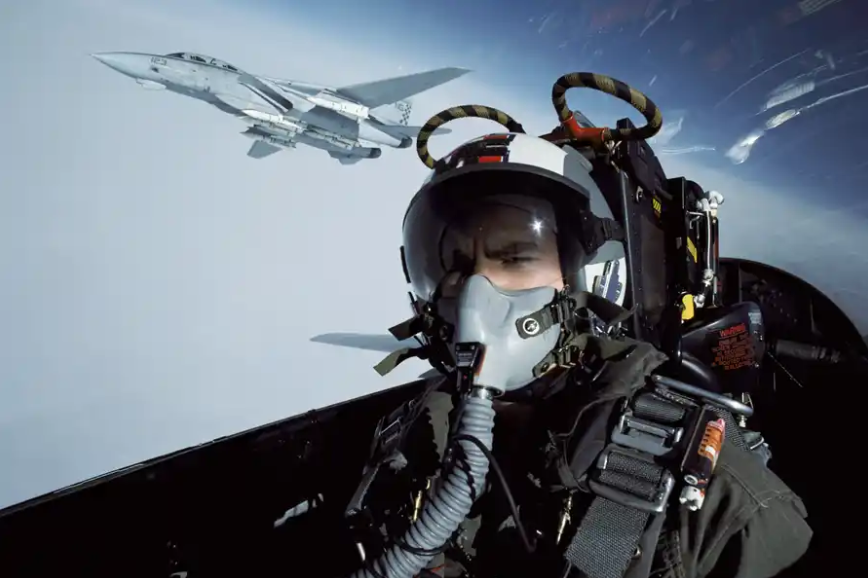
@TomcatJunkie @refueled Hey, can you pick up some take out from this great place right outside the Nellis gates? Really appreciate it!!
English
Bob Dillon
1.6K posts

@HAG624
I'm a a self-proclaimed hugonaught, what ever that means...


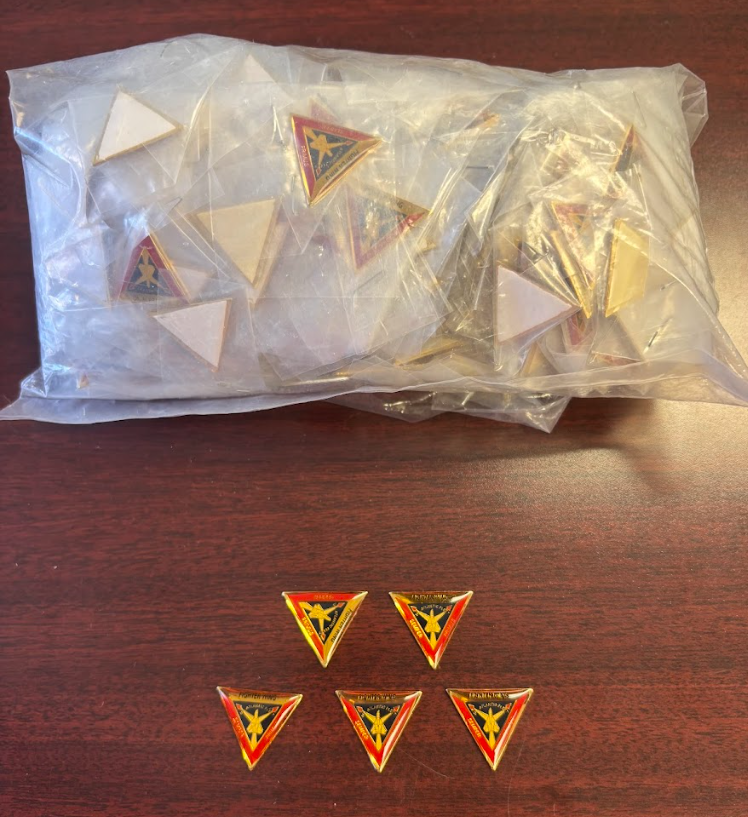






#TomcatTails Number 60 #TomcatTuesday “A Little Low On Gas; What Could Possibly Go Wrong?” The image with this post references what we call “Blue Water Ops” where the carrier is so far from any land that she’s the only game in town if you want to land and stay dry. This is where the rubber meets the road on landing on the ship; land and get some food or eject and get wet. Typically, it’s in the back of your mind for the couple weeks the carrier is in Blue Water Ops as it crosses the Pacific but doesn’t dominate your thoughts…..until it does. Night, bad weather, pitching deck, system degrades can all conspire to let that little thought creep into your head, but Naval Aviators become highly adept at compartmentalizing. You must be able to back-burner any distracting thoughts while flying around the boat. Family problems, late mortgage payment, ill spouse or child, Red Sox beating the Yankees, and the old Blue Water demon can pull you away from the task at hand. And that’s when you’re going to have huge problems handling the task you’re supposed to focus on. You may or may not be surprised to learn that a squadron will have a “Human Factors Board” meeting once a month to assess the mental state of Pilots and RIOs. It’s made up of the CO, XO, and a trusted Department Head or two and they’d have a private meeting to “talk behind your back” as we joked. But this was deadly serious stuff. We simply had to assess the personal and professional lives of the younger Aviators in particular to look for signs of too much stress or problems that could impact safety. It was generally benign but on occasion would create some “one on one training” or a couple days to “take a break.” It turns out that my first moment of that Blue Water Demon creeping into my head came during the day. A beautiful blue-sky day that Carrier Aviators pray for. Deep navy-blue calm seas stretching to the horizon and beyond, the beautiful bright blue sky looking like it was made for you personally. Some of the best flying days available. So what could possibly go wrong on a day like this? Beautiful day, meet Corky, a VERY new Nugget that is pretty good behind the boat but just learning about fuel, fuel ladders, Blue Water, and the most important thing between Pilot and RIO; trust. We’d launched on a day just like that in the middle of the Pacific on a 2 v 2 ACM flight. Does it get any better than that? Frankly no. A quick brief, some training rules, and BANG we’re off the deck of the USS Nimitz joining up and heading to our working radial and DME (bearing and range from the ship). We get to the right spot and run a few intercepts to engagement. Pretty standard stuff. Naturally, as you’re doing this you’re monitoring your fuel to ensure you don’t run out of gas. I discussed the “Fuel Ladder” a few #TomcatTails ago so will paste a synopsis here: A Fuel Ladder is a pretty simple two column tool to make sure you had enough gas to get back aboard the boat. Bottom left is fuel desired on deck (2K lbs daytime), bottom right is landing time. Add 1,000 pounds going up on the left (4,000 pounds per hour at maximum endurance, so 1,000 pounds every 15 minutes), and subtract 15 minutes going up on the right. Here’s a short sample: Fuel Time 5000 0915 4000 0930 3000 0945 2000 1000 Simply put, when you hit one of the fuel gates (like 4K lbs of gas at 0930 below), you’re “on ladder” and throttle back to maximum endurance fuel flow (4K pounds per hour) and hang out until landing time. Bear in mind too that the wingman (me in this case) burns a bit more fuel than lead because he’d jockeying the throttles a bit more so burning a bit more gas, like maybe 5% or so. Fuel looked OK enough to me and we’re close to ladder as the last fight knocks off. As we cruise back to the boat, I finally hit it and call “ladder” right as we enter into holding overhead the boat preparing to land. My RIO “Rac” and I were settled in and just chatting when fuel state begins to be a topic of discussion. Rac is a Marine turned Navy Aviator and an all-around good dude. Also, he’s a Lieutenant Commander Department Head. They’re often tasked to fly with us Nuggets, especially Blue Water. Right, @TexSandlin??? The launch underneath us is going well, looking on time and I’m at about 3,4000 pounds of gas. There’s a little parallax on the gauge, so if I bend down and squint it looks more like 3,800 pounds (every Pilot laughing now). “We should be good”, I say. “Appears so”, Rac says. With perfect timing, we descend to break the deck and are just about at the boat when a late jet pulls out on the flight deck and the Boss say’s “In the break, spin it.” This means take the 2-plane formation around the 3-mile circle one more time and re-enter the break. Uh…..OK. Fortunately, lead knows I’m a bit skoshie on go-juice so he throttles back some during the spin. This works out well and we arrive back at the stern to start the break. Rac asks for fuel state and I glance down and tell him “looks like about 2.8” (2,800 pounds). Now that was MOSTLY the truth but my JO brain was rounding up a bit to avoid getting yelled at. The jet’s “feed windows” showing the remaining fuel in the entire jet were at 1,200 and 1,300 pounds, so really about 2.5. Rac just has a single fuel gauge back there called a totalizer that is notoriously unreliable so this info from me is important. But it looks good so I’m sure we’ll be on deck in a couple minutes and we can talk about it. Break, speed brakes, wings, gear, flaps, and hit the abeam position. We started the approach turn on this beautiful blue sky day and it felt like a great pass rolling into the groove. But. Murphy always gets a vote. And in this case, Murphy voted for a hook-skip bolter. Dammit, throttle up and now we’re flying again and we just bolstered our way into a possible emergency. Rac asks for fuel state and I read exactly what I’m looking at: “1.8”. And those feed windows? They’re “unreliable below 1,200 pounds”. But we’re sticking with 1.8K pounds of gas and going to get this thing on the deck. We were alone in the pattern so able to turn downwind immediately off the bolter. Rac says “you got this?” I replied “Yup, just a damn hook skip.” It was kind of a verbal firm handshake signaling “let’s do this and get on deck.” We came around into the groove on and on and maintained that all the way to the ramp and then settled slightly do a deuce (2-wire). Didn’t want to pass up any good ones, obviously. And that was it; landed and lived to fight another day. Obviously, the real lessons here had nothing to do with fuel systems, carrier procedures, or flying the ball. It was all about trust, particularly between two comrades engaged in some really dangerous stuff. In particular for a RIO that puts his life in his Pilot’s hands every day. Naval Aviation makes you grow up really fast sometimes. I remember this flight very well as it was a cheaply learned lesson about trust, about recognizing that you’re in the big leagues now, about being a consummate professional every waking moment of your life, airborne or not. So much could have gone wrong. Another hook-skip. A foul-deck wave-off. Unreliable feeds and the airborne tanker not close enough to get to in time. I shudder think of all the badness I avoided. We debriefed the 2 v 2 engagements then Rac and I went to get a bite to eat. He was such a solid RIO and a good instructor, we sat and talked and ate for about an hour sharing stories. Not strangely, his stories were mostly about crew coordination and crew concept, things like that. He didn’t ream me a new one or even mention the details of what had (almost) happened. He knew that I knew.