

Helena Knapton
867 posts
Helena Knapton
@HKnapton
Faculty Learning and Teaching Development Lead @EHU_FOE
Katılım Kasım 2012
676 Takip Edilen525 Takipçiler

X had been really strange all day , my post doesn’t show up anymore and people probably can’t see what I post.
By the slim chance you see this make sure you interact with it and maybe tell me what is your all time favorite flower !

English
@ian_cushing Congratulations. Looking forward to seeing how you use this.
English

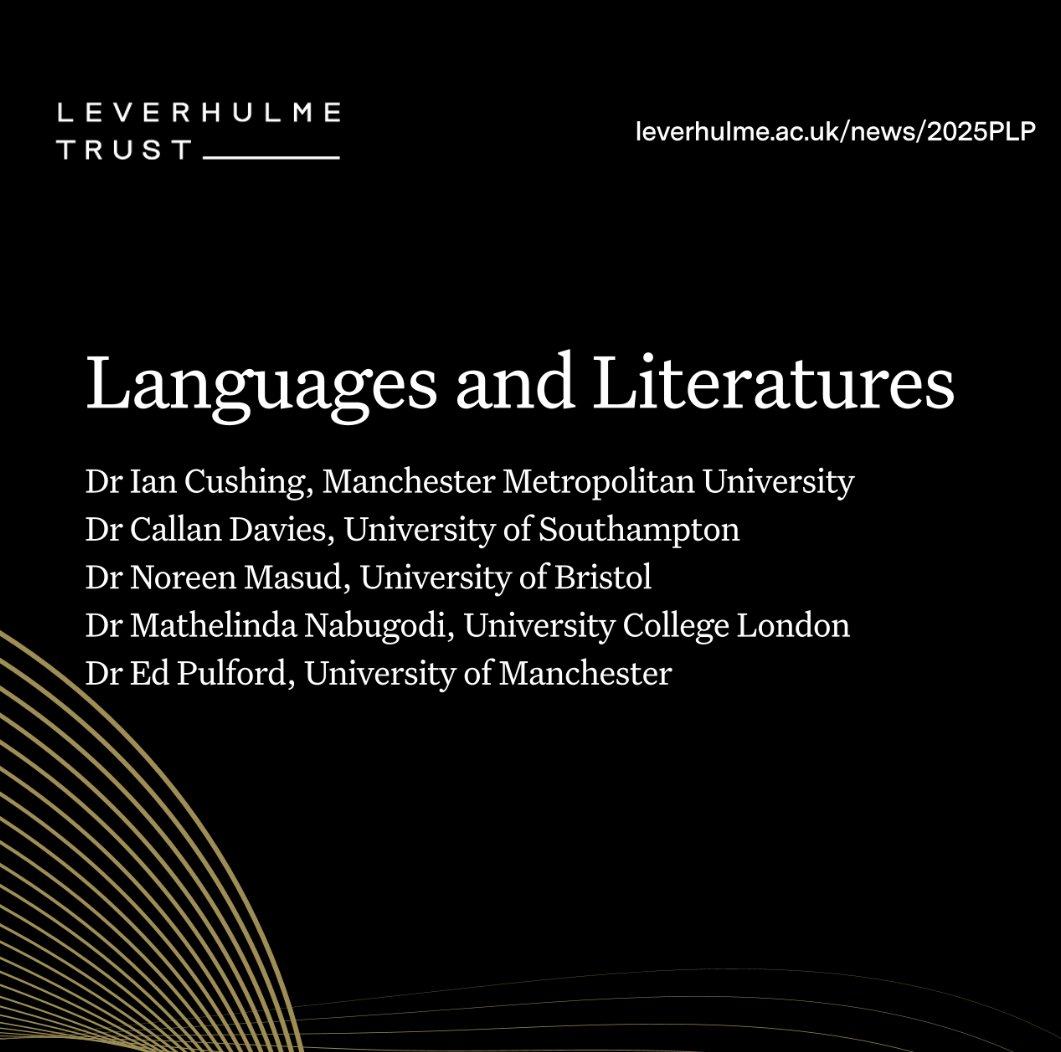
i am still in shock but I have won a Philip Leverhulme Prize. starting in autumn 2026 for 3 years, i’ll be looking at linguistic justice in schools, particularly in how children and teachers engage in radical, grassroots activism for structural change. 🌸 leverhulme.ac.uk/news/2025PLP
English
Helena Knapton retweetledi

Interesting read by @CarlessDavid (2025) Feedback Literacy Concepts and Practices: Toward Academic Feedback Literacy, Change: The Magazine of Higher Learning, 57:5, 5-11, DOI:
10.1080/00091383.2025.2539038


English
Helena Knapton retweetledi

🚨 Today, we’ve published findings from an independent evaluation of a teaching assistant-led maths programme for Year Two pupils.
Developed by Every Child Counts at @edgehill, the programme is designed to improve maths skills for children who require further support.
1/4

English
Helena Knapton retweetledi

That's a wrap!
If you enjoyed this thread:
1. Follow me @manishkhosiya for more of these
2. RT the tweet below to share this thread with your audience
Manish Kumar@manishkhosiya
Harvard University just released free online courses. No payment required. Here are 10 courses you don't want to miss in 2025:
English
Helena Knapton retweetledi

An important reminder that if you are finding things tough and need someone to talk to; you are not alone. @samaritans are here over the Easter weekend ☎️
English
Helena Knapton retweetledi

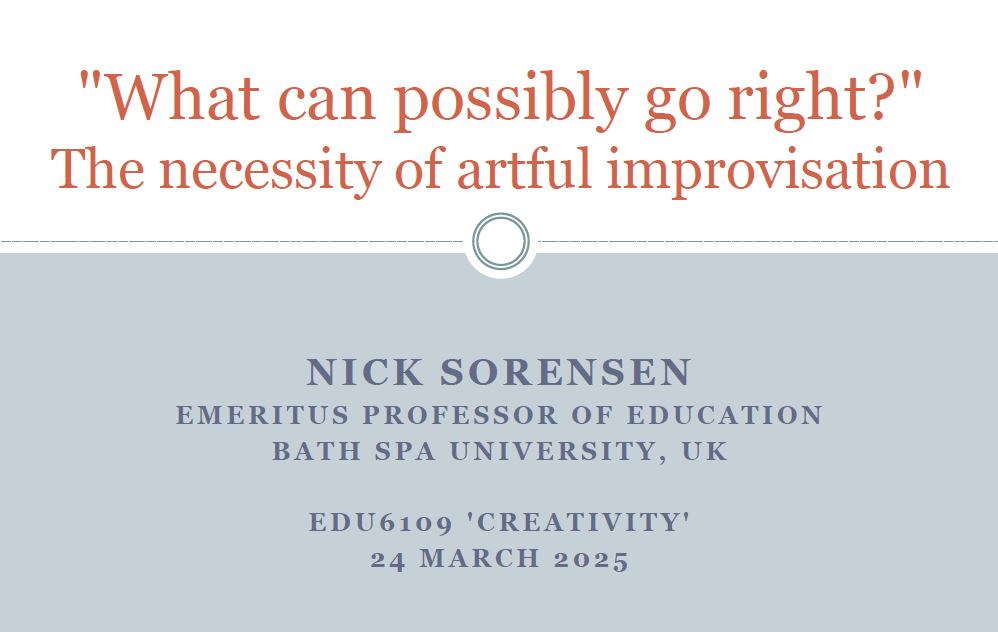
What an absolute joy having Professor Nick Sorensen in as guest lecturer for my Creativity, Society & Culture students. Nick spoke about his model for improv in education: #noticing #adapting #dialoguing #connecting
#artful #improvisation #education @BathSpaUni


English
Helena Knapton retweetledi

Man with slick hair, "I find it quite disgusting how we're talking about human beings who are genuinely.. And it's not illegal to claim asylum in a foreign country"
"Saying they're illegal immigrants.. They're asylum seekers and refugees" #BBCQT
"Illegal immigrants tend to be people who come here legally and overstay a visa, or an application. That's the majority of illegal immigrants"
"We know other countries take on a lot more refugees than we ever do"
"Calling these people: the invaders"
"Or dehumanising them so we can point a finger at them saying: you're the reason we have a housing shortage.. But we've only built 250,000 council houses since Thatcher came into power.. Before that we built 5 million"
"Why do people claim that immigrants are the problem when it's recent governments that are the problem"
English
Helena Knapton retweetledi

New for 2025! We're delighted to be extending our current PGCE portfolio with two courses designed for aspiring teachers who want to become specialist SEN leads or mental health & wellbeing specialists in primary education settings.
Discover the courses bit.ly/41ZgGO

English
Helena Knapton retweetledi
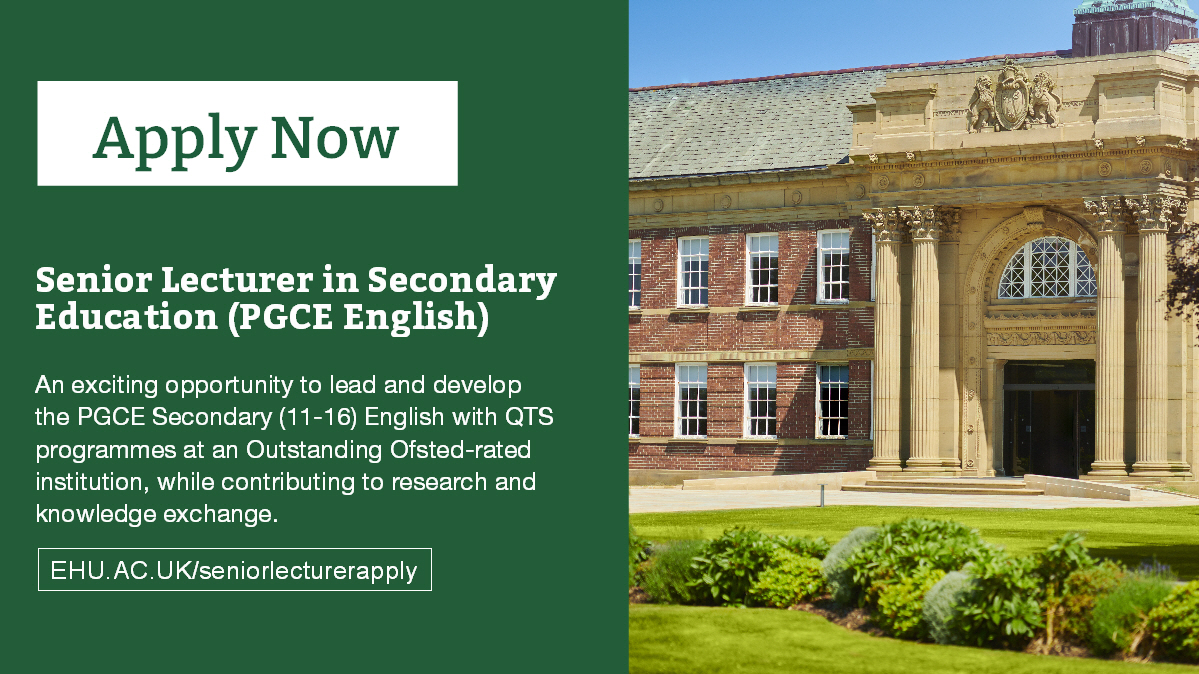
‼️Deadline 6 January. Looking for a new challenge? Join @edgehill as Senior Lecturer in Secondary Education (PGCE English) Play a key role in module delivery and contribute to impactful research. For details and to apply: ehu.ac.uk/seniorlecturer……
English
Helena Knapton retweetledi
Helena Knapton retweetledi
We're hiring! Join @edgehill Faculty of Education as the Every Child Counts @ecc_ehu Project Development Manager. Lead the national & international growth of impactful programmes, drive strategic partnerships & make a real difference in education
Apply now ehu.ac.uk/eccapply

English
Helena Knapton retweetledi
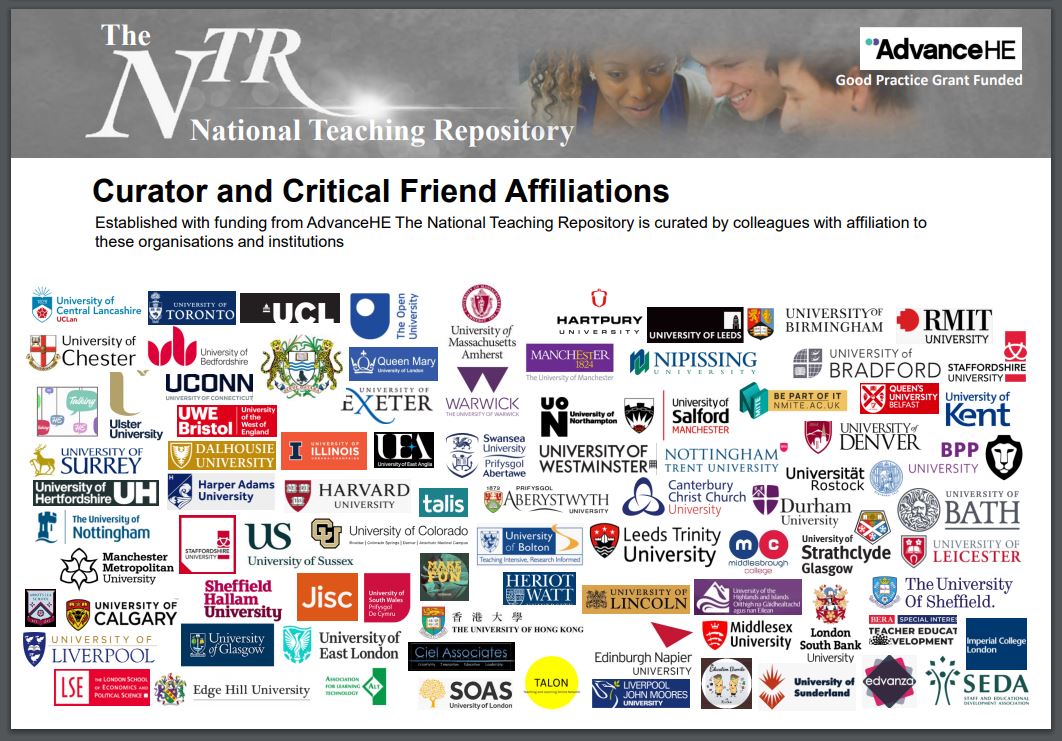
Did you know the @NTRepository isn't just just about sharing resources from the UK? It is Global, anyone, anywhere can share. It is safe & easy to secure recognition for your practice with a DOI and citation. Upload here: figshare.edgehill.ac.uk/submit
English
Helena Knapton retweetledi


Helena Knapton retweetledi
I was talking to a grandmother last week about schooling. ‘I can see the difference’ she said. ‘When my children were young, primary school was relaxed. If the weather was good, they went outside and ran around. If they were sick, they stayed at home. Now with my grandchildren they are seated in desks for more of the day and if they are ill, they are worried that they’ll lose their 100% attendance for the term. The pressure is on to pass their phonics test when they are six and then to learn their times tables at speed by the time they are nine. They feel it and their parents feel it too’.
There’s lots of talk about SEND (special educational needs and disabilities) at the moment, and how increasing numbers of children are being identified as SEND. It’s less common to ask questions about what SEND really means, and whether the education system creates more children ‘with SEND’ as it becomes more pressured and rigid.
For what SEND really means is that a child cannot learn in the way which mainstream education expects. They cannot keep up with expectations, either for academic work or for behaviour. SEND is something which happens in the interaction between a child and the education system. In a system where no 6-year-old is expected to sit still and learn to write their name, then a 6-year-old who just wants to run around outside isn't a problem. In a system where everyone is meant to be able to read by age 6, then they are.
We know from research that if a child is young in their year, they are more likely to be identified as ‘having SEND’. We know that summer born boys are far more likely to be identified as ‘having SEND’ than autumn born girls. We know that the impact of this immaturity resonates through the years, with the youngest in the year doing less well at GCSE. We know that the number of children ‘with SEND’ is going up year on year.
It's not really plausible that more children each year have difficulties in learning, nor that being born in August makes you more likely to have learning problems than if you are born a few weeks later in September.
It’s far more likely that in the push to ‘drive up standards’ the education system is becomes less, not more, suited to how children develop and learn. It’s more likely that the system is penalising immaturity – and children are inherently immature. That isn’t a lack or a defect, it’s a defining part of childhood.
As the education system becomes more rigid and pressured, we’d expect more children not to be able to manage without adaptations. This is exactly what we see. Those children are holding up the flag for all the others, saying that this system is not child-friendly and doesn’t take account of developmental needs and differences.
What if, instead of having higher expectations of the children, we had higher expectations of the education system? What if those expectations were of flexibility, reducing pressure and prioritising lifelong learning and wellbeing instead of short-term testing?
What if we saw the increasing number of children ‘with SEND’ as a sign that the system isn’t working for the many ways in which children develop, rather than a sign that more and more children have learning difficulties? We’ll never sort the ‘SEND crisis’ until we start looking at SEND as an interaction between children and the education system. The more rigid the system is, the more children it will fail.
Illustration by @_MissingTheMark from the book A Different Way to Learn.

English
Helena Knapton retweetledi

Our next open day is right around the corner. If you’re planning to attend, hear Rachel's top five tips to help you make the most out of your day. If you haven’t booked yet, what are you waiting for? Book now for Saturday 2 November: orlo.uk/RZR1s
English
Helena Knapton retweetledi
What a fantastic celebration of children’s and young people’s art—such an inspiring showcase of creativity and talent! 🎨🌟👏 @dotartschools @livepool_ONE
dot-art Schools@dotartschools
Exciting new outdoor exhibition - dot-art Schools Winning Artists 2024, showcases the incredible talent of young artists in Liverpool City Region. Thanks to a partnership @Liverpool_ONE. Check out the fantastic new display in School Lane, round the corner from Schuh.
English
Helena Knapton retweetledi
Calling all #teachers! @ecc_ehu updated maths intervention programmes start this November. Help pupils struggling with numeracy reach age-related expectations.
🌟 1stClass@Number 2: Y3+
🌟 Success@Arithmetic: Y5+ including secondary
Visit ehu.ac.uk/ecc for more info

English
Helena Knapton retweetledi
Congratulations to Dr Jo Albin-Clark from #EarlyYears and colleague Dr Nathan Archer who have been awarded funding from the @FroebelTrust to research how educators enable children's right to play.
froebel.org.uk/research-libra…
@KarenMBoardman @MJFulford
#EHUResearch @EHU_Research

English
Helena Knapton retweetledi

