HUSAM

703 posts

HUSAM banner
HUSAM

HUSAM

@HU_SAM007

Applied AI at https://t.co/EiEqLKZBOV

Katılım Ekim 2021
408 Takip Edilen75 Takipçiler
HUSAM retweetledi
Y Combinator
Y Combinator@ycombinator·
We’ve decided to open-source a multi-agent harness we use internally at YC. We call it “QM” and it’s meant to be easy to customize, like Hermes or OpenClaw, but useful for a whole company. We use it across accounting, legal, events, and engineering (including building QM itself!). The whole project is under an MIT license. It is cloud-first and has Slack and web UI natively.
Y Combinator tweet media
English
398
1.3K
11.6K
2.3M
HUSAM
HUSAM@HU_SAM007·
Luck influences life. Success and opportunity has a huge luck component, and distribution is a luck magnet.
English
0
0
1
20
HUSAM
HUSAM@HU_SAM007·
Ontologies will be the driving concept behind company brains that AI agents can leverage. Here's an insightful video: Why Agentic Systems Need Ontologies — Frank Coyle, UC Berkeley: youtu.be/Sir59K8ZDPU?si…
YouTube video
YouTube
English
0
0
2
92
HUSAM retweetledi
Naval
Naval@naval·
When software was expensive - thin, horizontal, best-of-breed software stacks extracted rents across every business. Now that software is cheap - value moves to vertically integrated businesses that deliver opinionated end-to-end experiences.
English
435
958
13K
814.4K
HUSAM
HUSAM@HU_SAM007·
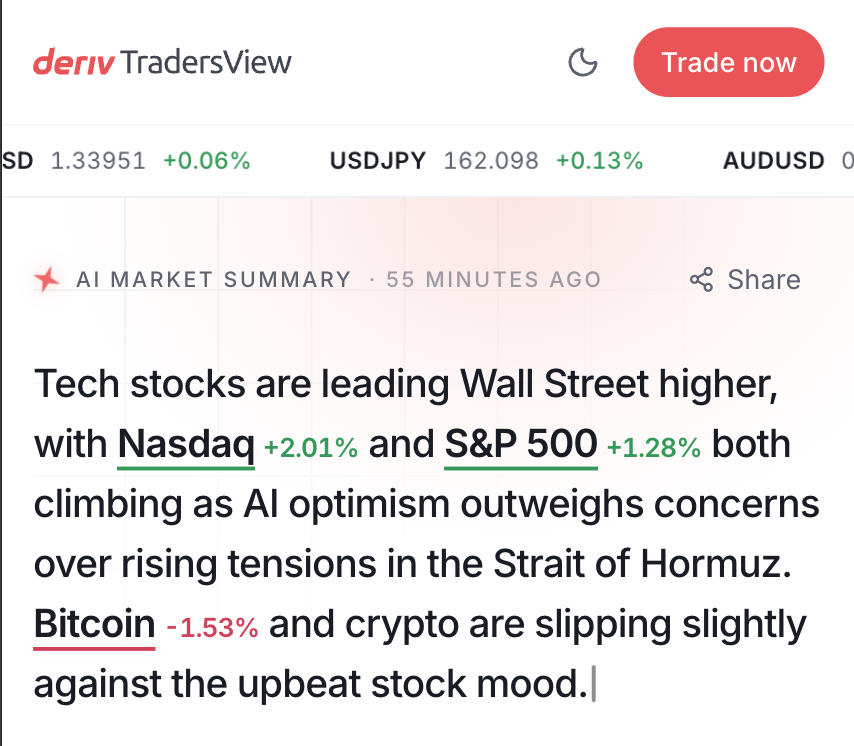
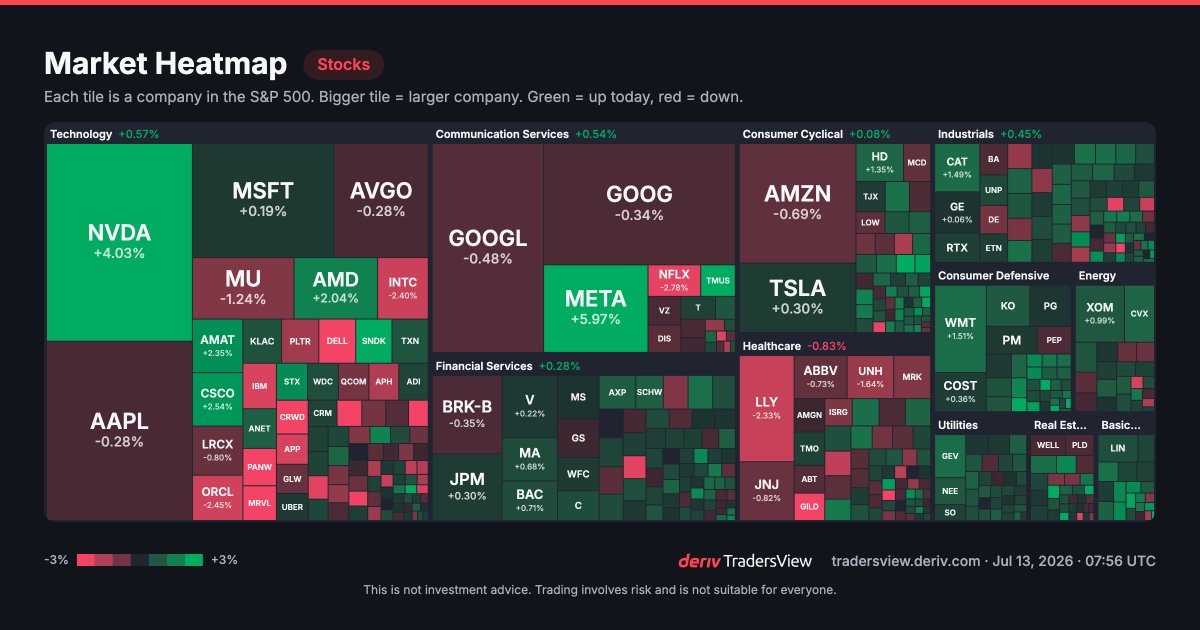
We have 2 new sections to help the audience understand where the market is at! - A simple to understand, 2 line commentary on where the market is at the moment, and what's influencing the markets! - A heatmap to visualize the market share for various markets! And! We're trying to help you guys w/ a bold concept, a new feature that helps you visualize what macro events have influenced the pricing charts for an instrument. More on this soon!
HUSAM tweet mediaHUSAM tweet media
English
1
2
3
74
Deriv People
Deriv People@DerivPeople·
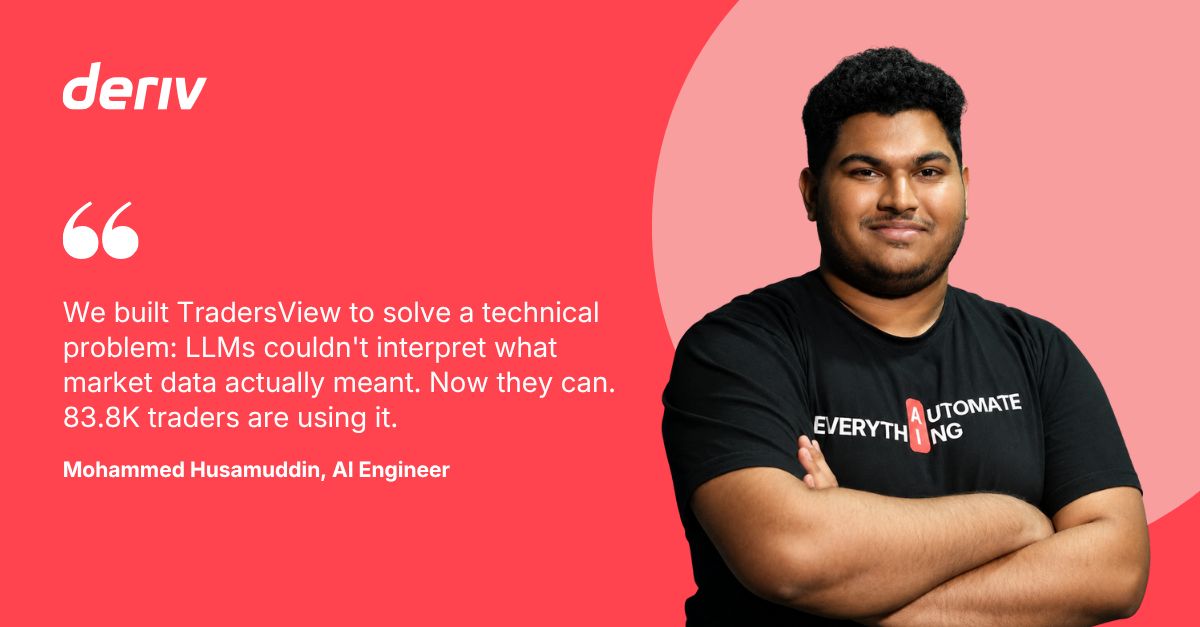
TradersView is growing fast. We just hit 𝟮𝟰𝟯.𝟴𝗞 𝘁𝗼𝘁𝗮𝗹 𝘃𝗶𝘀𝗶𝘁𝘀 and 𝟭𝟯𝟵.𝟲𝗞 𝘂𝘀𝗲𝗿𝘀 with 𝟭𝟭.𝟮% of you coming back regularly. Our team taught an LLM to actually think like a trader so you don't have to decode messy market data anymore. We're shipping improvements by the day. @HU_SAM007 What's the latest update dropped this week? 🛠️
Deriv People tweet media
English
2
1
3
112
HUSAM
HUSAM@HU_SAM007·
AI capability is compounding faster than our ability to measure its consequences. The industry is optimizing what models can do. The next advantage belongs to those who can prove when they should not.
English
0
0
3
41
HUSAM
HUSAM@HU_SAM007·
Yep. The hard part isn't catching broken code...agents do that well now. It's the output that works perfectly and still isn't right for the person using it. We're a broker, so 'right' means three things: correct, suitable, compliant. AI models nail getting things "correct". The other two come from experience...someone who knows what helps our traders/clients, and what quietly works against them. So I don't ask "does this work?" I ask "who's worse off if we ship it and it works perfectly?" And when it's off, I fix what the agent understood...the brief, a guardrail, an example...not just the one output. Otherwise you fix the same thing forever.
English
0
0
2
25
Deriv People
Deriv People@DerivPeople·
@bigchrissyg Yep, delegation is only useful if you know what 'wrong' looks like. @HU_SAM007, how do you recognise when an AI tool's output is technically right but wrong for our product, and how do you course-correct it?
English
1
0
0
27
Deriv People
Deriv People@DerivPeople·
We’ve officially entered the era of using AI agents to build AI agents. With tools like Claude Code, Cursor, and Grok Build accelerating workflows, the baseline for engineering velocity has completely shifted. @bigchrissyg, as Deriv's VP of Engineering, how do you evaluate or interview a product-minded software engineer when the job is rapidly shifting from writing syntax to orchestrating multi-agent systems?
English
4
0
3
202
HUSAM retweetledi
Deriv People
Deriv People@DerivPeople·
Midnight builds. Cold coffee. Polite arguments with an AI. Our AI engineer @HU_SAM007 has some stories about building 𝗧𝗿𝗮𝗱𝗲𝗿𝘀𝗩𝗶𝗲𝘄. Full story in the comments 👇
Deriv People tweet media
English
1
1
1
99
Deriv People
Deriv People@DerivPeople·
Shoutout to our AI Engineer @HU_SAM007 for building this. One week since TradersView went live, already 37,000+ traders are using it for live market intelligence across crypto, forex, and commodities. @HU_SAM007, what was your biggest lesson from getting this AI model into production?
FX News Group@FXNewsGroup1

Deriv launches TradersView AI-based market intelligence platform fxnewsgroup.com/forex-news/ret… @Derivdotcom #forex #cfds #cfdtrading #broker #ai #tradingtools #tradingsignals

English
1
1
2
323
HUSAM
HUSAM@HU_SAM007·
I think the most important bit that we focused on, is ensuring the AI engine to consistently reproduce the AI analysis at a level that will be of value for the users. The biggest lesson: don't let the AI do the maths. The numbers have to be deterministic and reproducible, or traders won't trust them. So we compute the hard values programmatically, and let AI do what it's genuinely good at, which is explaining what those values actually mean.
English
0
0
2
40
HUSAM retweetledi
Andrej Karpathy
Andrej Karpathy@karpathy·
Personal update: I've joined Anthropic. I think the next few years at the frontier of LLMs will be especially formative. I am very excited to join the team here and get back to R&D. I remain deeply passionate about education and plan to resume my work on it in time.
English
7.9K
11K
149.9K
27.8M
HUSAM retweetledi
Ihtesham Ali
Ihtesham Ali@ihteshamali·
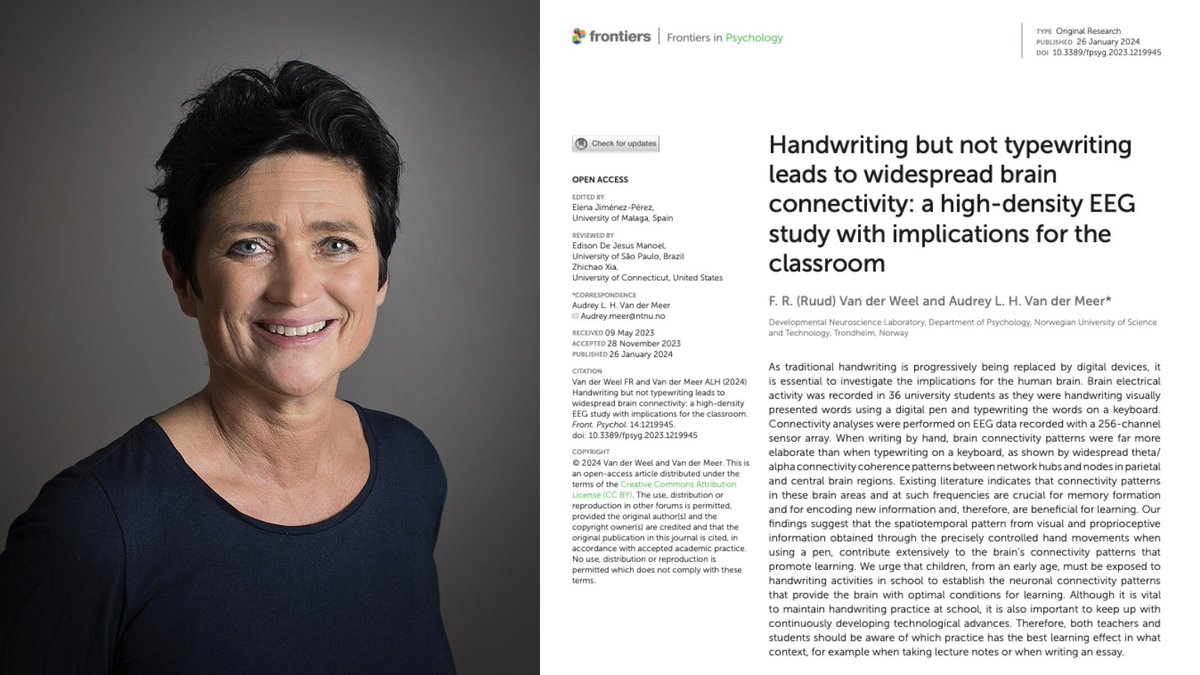
A Norwegian neuroscientist spent 20 years proving that the act of writing by hand changes the human brain in ways typing physically cannot, and almost nobody outside her field has read the paper. Her name is Audrey van der Meer. She runs a brain research lab in Trondheim, and the paper that closed the argument was published in 2024 in a journal called Frontiers in Psychology. The finding is brutal enough that it should have changed every classroom on Earth. The experiment was simple. She recruited 36 university students and put each one in a cap with 256 sensors pressed against their scalp to record brain activity. Words flashed on a screen one at a time. Sometimes the students wrote the word by hand on a touchscreen using a digital pen, and sometimes they typed the same word on a keyboard. Every neural response was recorded for the full five seconds the word stayed on screen. Then her team looked at the part of the data most researchers had ignored for years, which is how different parts of the brain were communicating with each other during the task. When the students wrote by hand, the brain lit up everywhere at once. The regions responsible for memory, sensory integration, and the encoding of new information were all firing together in a coordinated pattern that spread across the entire cortex. The whole network was awake and connected. When the same students typed the same word, that pattern collapsed almost completely. Most of the brain went quiet, and the connections between regions that had been alive seconds earlier were nowhere to be found on the EEG. Same word, same brain, same person, and two completely different neurological events. The reason turned out to be something nobody had really paid attention to before her work. Writing by hand is not one motion but a sequence of thousands of tiny micro-movements coordinated with your eyes in real time, where each letter is a different shape that requires the brain to solve a slightly different spatial problem. Your fingers, wrist, vision, and the parts of your brain that track position in space are all working together to produce one letter, then the next, then the next. Typing throws all of that away. Every key on a keyboard requires the exact same finger motion regardless of which letter you are pressing, which means the brain has almost nothing to integrate and almost no problem to solve. Van der Meer said it plainly in her interviews. Pressing the same key with the same finger over and over does not stimulate the brain in any meaningful way, and she pointed out something that should scare every parent who handed their kid an iPad. Children who learn to read and write on tablets often cannot tell letters like b and d apart, because they have never physically felt with their bodies what it takes to actually produce those letters on a page. A decade before her, two researchers at Princeton ran the same fight using a completely different method and ended up at the same answer. Pam Mueller and Daniel Oppenheimer tested 327 students across three experiments, where half took notes on laptops with the internet disabled and half took notes by hand, before testing everyone on what they actually understood from the lectures they had watched. The handwriting group won by a wide margin on every question that required real understanding rather than surface recall. The reason was hiding in the transcripts of what the two groups had actually written down. The laptop students typed almost word for word, capturing more total content but processing almost none of it as they went, while the handwriting students physically could not write fast enough to transcribe a lecture in real time, which forced them to listen carefully, decide what actually mattered, and put it in their own words on the page. That single act of choosing what to keep was the learning itself, and the keyboard had quietly skipped the choosing and skipped the learning along with it. Two studies. Two countries. Same answer. Handwriting makes the brain work. Typing lets it coast. Every note you have ever typed instead of written went into your brain through a thinner pipe. Every meeting, every book highlight, every idea you captured on your phone instead of on paper was processed at half depth. You did not forget those things because your memory is bad. You forgot them because typing never woke the part of the brain that would have made them stick. The fix is the thing your grandmother already knew. Pick up a pen. Write the thing down. The slower road is the faster one.
Ihtesham Ali tweet media
English
2.5K
44.1K
120K
10.5M
HUSAM
HUSAM@HU_SAM007·
@adxtyahq Can't make sense of the economics here, any idea?
English
1
0
0
768
aditya
aditya@adxtyahq·
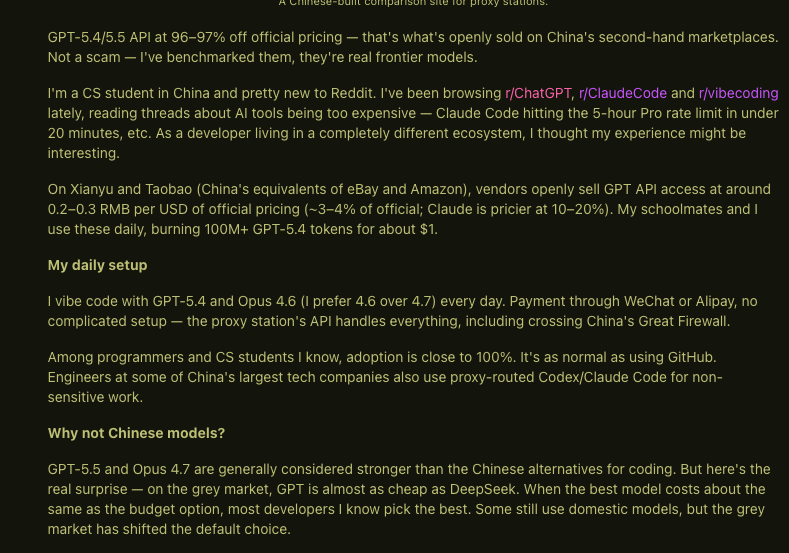
Chinese students are buying GPT-5.4/5.5 and Claude API access from Xianyu/Taobao proxy sellers for almost 96-97% cheaper People are apparently burning 100M+ tokens a day for like $1 and vibecoding nonstop.
aditya tweet media
English
407
847
15.7K
1.7M
HUSAM
HUSAM@HU_SAM007·
SubQ shipped a commercial LLM that isn't a transformer. Sparse subquadratic attention, native 12M-token context, claims ~1/5 the cost of frontier on long-context jobs. First time anyone has put non-transformer attention behind a paid API and shipped a coding agent on top.
HUSAM tweet media
English
0
0
1
151