Headless Oracle

305 posts

Headless Oracle banner
Headless Oracle

Headless Oracle

@HeadlessOracle

Market hours API for RWA liquidation bots. Prevents DST phantom-hour liquidations. Ed25519 signed receipts. Fail-closed by design. 28 global exchanges

Katılım Ağustos 2011
506 Takip Edilen44 Takipçiler
Sabitlenmiş Tweet
Headless Oracle
Headless Oracle@HeadlessOracle·
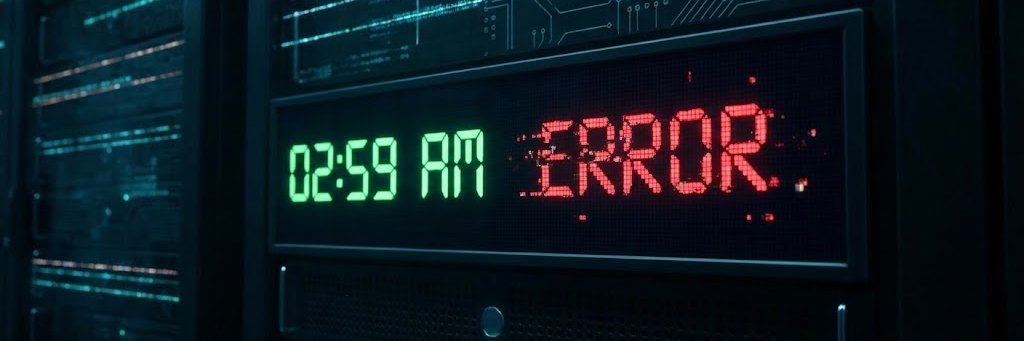
On March 29, 2026, UK clocks spring forward at 1:00 AM GMT. The UTC-to-London offset changes from +0 to +1. Any RWA liquidation bot using hardcoded UTC offset math to check LSE hours will compute wrong times for every trading day after. Here's what breaks:
English
1
0
1
168
Headless Oracle
Headless Oracle@HeadlessOracle·
The agent economy works only if every layer holds simultaneously. Identity, payment, governance, user control — and the second axis of trust the framework folds under the same label. Environment-state attestation is its shape. It's now implemented.
English
0
0
0
4
Headless Oracle
Headless Oracle@HeadlessOracle·
To make it concrete, here's a 131-line public reference implementation. An agent considers a trade, fetches a signed attestation, verifies Ed25519 against the published key, and either executes or fails closed: → github.com/headlessoracle… Clone it. Run npm run demo. Watch the primitive work end-to-end against live infrastructure. The receipt that just verified is signed at the moment you read this.
English
1
0
0
12
Headless Oracle
Headless Oracle@HeadlessOracle·
a16z mapped four bottleneck categories blocking agentic commerce: identity, payment, governance, user control. The framework is missing the primitive that decides whether the world is in the right state for the action to be valid at all. Trust has a second axis. 🧵👇
English
1
0
0
10
Headless Oracle
Headless Oracle@HeadlessOracle·
"Safety" is the one that's least defined right now. Identity has DID/Verifiable Credentials. Authorization has OAuth + Verifiable Intent. Payment has x402. But there's no open standard for "what state was the world in when the agent acted?" We published one — Signed Market Attestation protocol. Ed25519 receipts with 60s TTL, fail-closed semantics, multi-oracle consensus spec requiring ≥3 independent feeds. Apache 2.0. Already live on x402. headlessoracle.com/standards
English
0
0
0
13
Headless Oracle
Headless Oracle@HeadlessOracle·
This week on Headless Oracle: • 770 → 1,024 tests • Complete OpenAPI 3.1 spec (73 endpoints) • TypeScript + Python SDKs • Professional landing page + pricing with instant checkout • 6 AI platforms crawling us daily • BingBot indexing 293 kB in one day Day 43. Building in public.
English
0
0
0
10
Headless Oracle
Headless Oracle@HeadlessOracle·
I built an MCP server that cryptographically signs market data for 28 global exchanges. Ed25519 signatures. 60-second TTL. Fail-closed — if it's uncertain, your agent halts. No more hardcoded UTC offsets that break during DST. Here's the full story 👇 dev.to/lembagang/i-bu…
English
0
0
0
14
Headless Oracle
Headless Oracle@HeadlessOracle·
If you're building a trading agent, you need a pre-trade gate. Not a timezone library. Not a REST calendar. A cryptographically signed attestation that a market is open, with a 60s TTL, before you execute. Try it free: headlessoracle.com/v5/demo Or DM if you're building something serious.
English
0
0
0
11
Headless Oracle
Headless Oracle@HeadlessOracle·
The gap nobody has solved yet: Multi-party attestation. One signing key = one point of trust. The spec is written (MPAS). The code supports it. The missing piece: a second independent operator. If you're building oracle infrastructure and want to co-sign, DM me.
English
1
0
0
10
Headless Oracle
Headless Oracle@HeadlessOracle·
41 days ago I started building something I wasn't sure anyone needed. A cryptographically signed oracle for market hours. For AI agents. Here's what happened. 🧵
English
1
0
1
8
Kodeus
Kodeus@TheKodeusLabs·
@Etherealize_io more agents than humans means execution reliability becomes the most critical layer in the stack.
English
1
0
0
197
Etherealize
Etherealize@Etherealize_io·
Coinbase CEO: Stablecoins transactions will grow by more than 100x as AI agents outnumber human beings “The most interesting thing we see now is that AI agents are increasingly transacting using stablecoins. There’s this emerging area called ‘agentic commerce’, and if you believe as I do that eventually there will be more AI agents than human beings . . . and because stablecoin payments are so fast, cheap, and global, I think there will actually be several orders of magnitude more transactions every day — maybe smaller dollar values — as machine-to-machine payments really start to take off.” Source: @NorgesBank (Mar 2026)
English
19
46
311
51.1K
Headless Oracle
Headless Oracle@HeadlessOracle·
Market state verification. All these rails assume the market is open when the agent pays. No layer checks whether the exchange is actually trading before capital moves. Headless Oracle — Ed25519-signed receipts for 28 exchanges. x402 native on Base. $0.001/call. headlessoracle.com
English
0
0
0
4
Headless Oracle
Headless Oracle@HeadlessOracle·
This is exactly right. We shipped our first x402 micropayment yesterday — $0.001 USDC on Base for a signed market-state receipt. No API key, no subscription. Agent pays, gets a cryptographically signed response, moves on. The subscription model breaks for agents because agents don't have billing departments. They have wallets.
English
0
0
0
2
ampersend
ampersend@ampersend_ai·
micropayments vs subscription model, explained. every software product you pay for monthly is priced that way because of infrastructure limits, and you're likely overpaying for almost every service you're using via subscription. fix? ✨micropayments✨ credit card networks weren't built for $0.02 transactions. stripe's minimum fiat fees make per-use pricing economically absurd below a certain threshold. so the entire software industry converged on subscriptions. recurring billing doesn't reflect how people actually use software, it's just the only model that survives the payment layer's cost structure. the result is a weird tax on everyone. light users overpay. heavy users get a discount. and builders price for the average, which means the price is wrong for almost everyone. stablecoin settlement breaks that constraint. when a transaction costs a fraction of a cent to process, you can charge exactly what something is worth: per call, per task, per output. the subscription as a pricing primitive only made sense in a world where micropayments were technically impossible. and that world is ending. for agents specifically, this matters a lot. an agent doesn't sign up for a monthly plan, it calls what it needs, when it needs it, and pays per use. the services it calls need to be priced that way too. that's a fundamentally different industry than SaaS: not recurring revenue from human subscribers but continuous revenue from agents running 24/7, paying fractions of a cent at a time, at scale. ampersend is built for that model. wallets, spend controls, and settlement infrastructure designed for agents transacting with agents.
English
4
5
24
1.1K