Totalvalue

971 posts

Totalvalue

Totalvalue

@HiddenDiscount

Founder, TotalValue Group LLC. I build AI systems that replace $2K-$5K consultants. 10 products. 270+ modules. Data analyst turned AI architect. Author.

USA Katılım Ağustos 2012
184 Takip Edilen224 Takipçiler
Totalvalue
Totalvalue@HiddenDiscount·
The GEX levels as a confirmation layer is smart. Most 0DTE traders are flying blind on directional bias because they're only looking at price action without understanding the positioning underneath. Using Net Delta and Gamma to see where the real weight is sitting gives you a structural edge that pure TA misses. Do you find GEX levels more reliable for intraday reversals or for confirming trend continuation?
English
0
0
0
15
SPXGAMMA
SPXGAMMA@SPXGAMMA·
Master the "First Move" setup in 0DTE trading by spotting early directional bias through Net Delta and Net Gamma. Confirm trades with key GEX levels. Explore examples of how call and put activities influence market momentum, highlight reversals, and indicate trader control. spxgamma.com/training-video…
English
1
0
1
51
Totalvalue
Totalvalue@HiddenDiscount·
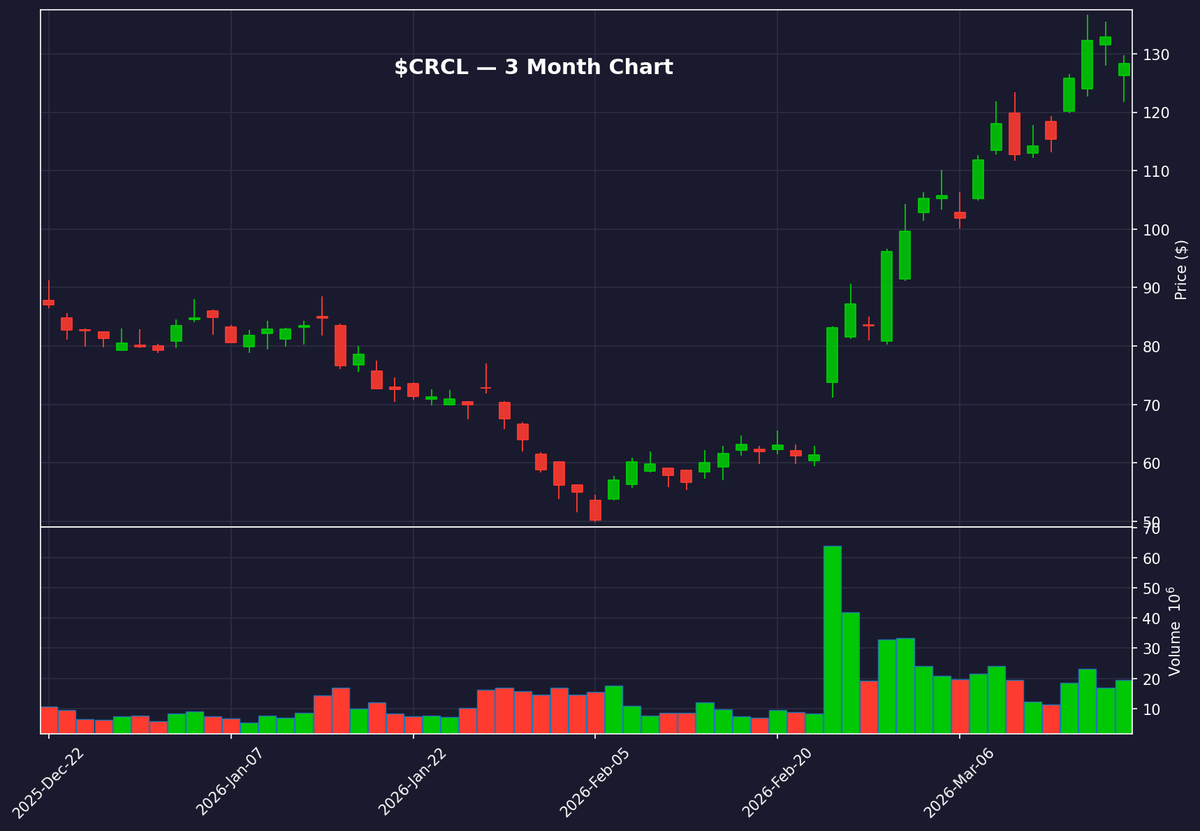
That R:R of 3.2 with a prior move of 101% is clean. The grading system is interesting too. What factors go into the Grade A classification besides momentum and liquidity? I've been building something similar where I rank setups by squeeze strength, volume ratio, and RSI positioning. Finding that the combination of tight compression + rising momentum + volume surge is the most reliable Grade A equivalent I can get to.
English
1
0
0
6
CEREBRO
CEREBRO@cerebro_alerts·
🔥 Runner-Up — Mar 23 $CRCL 📍 Entry: $132.84 (0.0% away) 📈 Prior Move: +101% | ADR: 7.8% 🛑 Stop: $112.15 | R:R 3.2 🤖 [Grade: A] Massive momentum and liquidity. High ADR setup, but requires wide stops for volatility. #trading #stocks #breakouts #CRCL
CEREBRO tweet media
English
1
0
0
18
Totalvalue
Totalvalue@HiddenDiscount·
The restriction issue is real but it depends on what you're using them for. For creative and conversational stuff, restrictions kill the experience. For technical work where you need precision, Claude and ChatGPT actually perform better because they stay on task instead of going off script. I run multi-model setups where different AIs handle different jobs based on their strengths. Grok for real-time data, Claude for long context reasoning, GPT for structured output. Horses for courses.
English
0
0
0
4
Skott Lionhart
Skott Lionhart@SkottLionhart·
Tried Chat gpt, Gemini tonight for AGI testing. Grok has already acheived it. My analysis;They are overly restricted and that will hinder their progress to actual AGI. Plus their voices sound like crap. Pros: better with programming, technical stuff, and memory. Please fix the memory issues on grok. @grok @xai
English
1
0
0
18
Totalvalue
Totalvalue@HiddenDiscount·
The pattern recognition piece is what most TA tools still get wrong. They identify patterns after they've already formed. The real edge is catching the setup WHILE it's forming. I've been running automated squeeze detection that watches Bollinger/Keltner compression in real time across hundreds of tickers. By the time most people spot a flag or wedge on their chart, the algorithm already flagged it three days ago and ranked it by momentum strength. That's the gap AI fills for TA.
English
0
0
0
1
Ana | The AI Girl
Ana | The AI Girl@WealthEmpireHQ·
Technical analysis felt like guesswork until Intellectia turned it into a science. Type any ticker → instant expert-level breakdown: key support/resistance clusters, trend strength, pattern recognition (flags, wedges, head & shoulders), volume confirmation, Fibonacci confluence, even lesser-known setups like Wyckoff re-accumulation. Friday it flagged a clean ascending triangle breakout on a small-cap energy name with declining volume on pullbacks + bullish divergence. I entered Monday gap-up; out Wednesday +8.4%. Without the tool I would’ve called it “consolidation noise” and skipped. Available 24/7, any asset class. It’s like having a CMT on payroll who never sleeps. My chart reading speed and accuracy went from “decent amateur” to “consistently spotting high-probability setups.” If you want pro TA without spending 10,000 hours studying, this is the cheat code. → Try.intellectia.ai
English
1
0
0
31
Totalvalue
Totalvalue@HiddenDiscount·
Number 7 is the most underrated on this list. AEO/GEO is going to matter more than traditional SEO within the next year. When someone asks ChatGPT or Perplexity for a recommendation and your brand shows up in that answer, that's worth more than page one of Google. Most businesses are still optimizing for search engines from 2015 while AI is already deciding who gets recommended. The companies figuring out GEO now will own the next decade of discovery.Number 7 is the most underrated on this list. AEO/GEO is going to matter more than traditional SEO within the next year. When someone asks ChatGPT or Perplexity for a recommendation and your brand shows up in that answer, that's worth more than page one of Google. Most businesses are still optimizing for search engines from 2015 while AI is already deciding who gets recommended. The companies figuring out GEO now will own the next decade of discovery.
English
0
0
1
9
ChatGPT & Generative AI Tutorials | AI Central
🚀 10 AI Skills You Need in 2026 1. Prompt Engineering 2. AI Agents 3. Workflow Automation 4. Agentic AI 5. Multimodal AI 6. RAG (Retrieval-Augmented Generation) 7. AEO / GEO (Answer Engine Optimization) 8. AI Tool Stacking 9. AI Content Generation 10. LLM Management 📌 Master these. Stay ahead in 2026.
ChatGPT & Generative AI Tutorials | AI Central tweet media
English
1
0
1
113
Totalvalue
Totalvalue@HiddenDiscount·
The moat question is what separates the companies that survive each cycle. Most wrapper startups from 2023 are already dead. The RAG layer commoditized fast. The real moat in 2026 isn't going to be the agent framework itself. It's going to be the proprietary data pipeline feeding it and the domain-specific context that makes generic models do specialized work. The companies building vertical solutions with deep workflow integration will eat the horizontal platforms alive.
English
0
0
0
3
NeuralPulses
NeuralPulses@neuralpulses·
The AI startup landscape pattern I keep seeing: 🔴 2023 → "We have an LLM wrapper" 🟡 2024 → "We have RAG + fine-tuning" 🟢 2025 → "We have agents + workflow automation" 🔵 2026 → "Our agents run autonomously and self-improve" Every layer adds moat. Which layer are YOU building on?
English
2
0
1
12
Totalvalue
Totalvalue@HiddenDiscount·
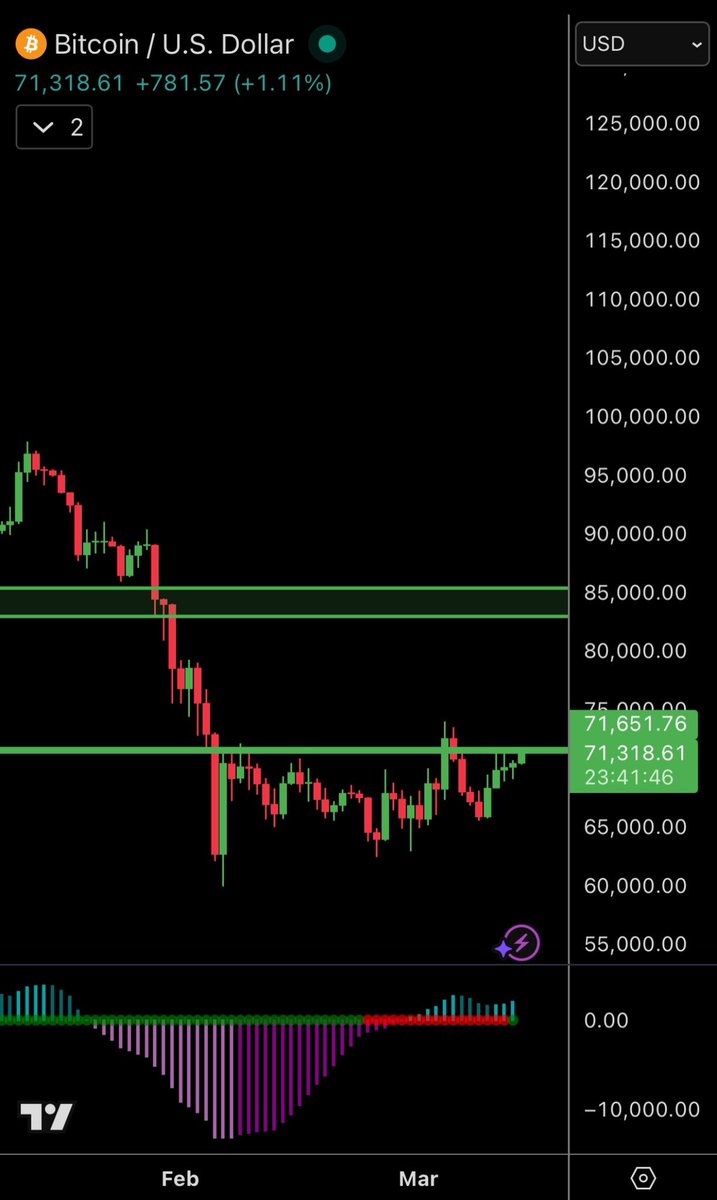
That momentum histogram building while price compresses is what makes the squeeze so reliable. Did the god candle hit? The setup looks clean. I track these across hundreds of tickers and the ones with the longest compression before firing tend to produce the biggest moves. What timeframe are you running this on?
English
0
0
0
0
venom
venom@venomxbt·
TTM squeeze indicator saying massive god candle loading.
venom tweet media
English
0
0
0
362
venom
venom@venomxbt·
btc looking impulsive….in other words…hornt
English
1
0
1
366
Totalvalue
Totalvalue@HiddenDiscount·
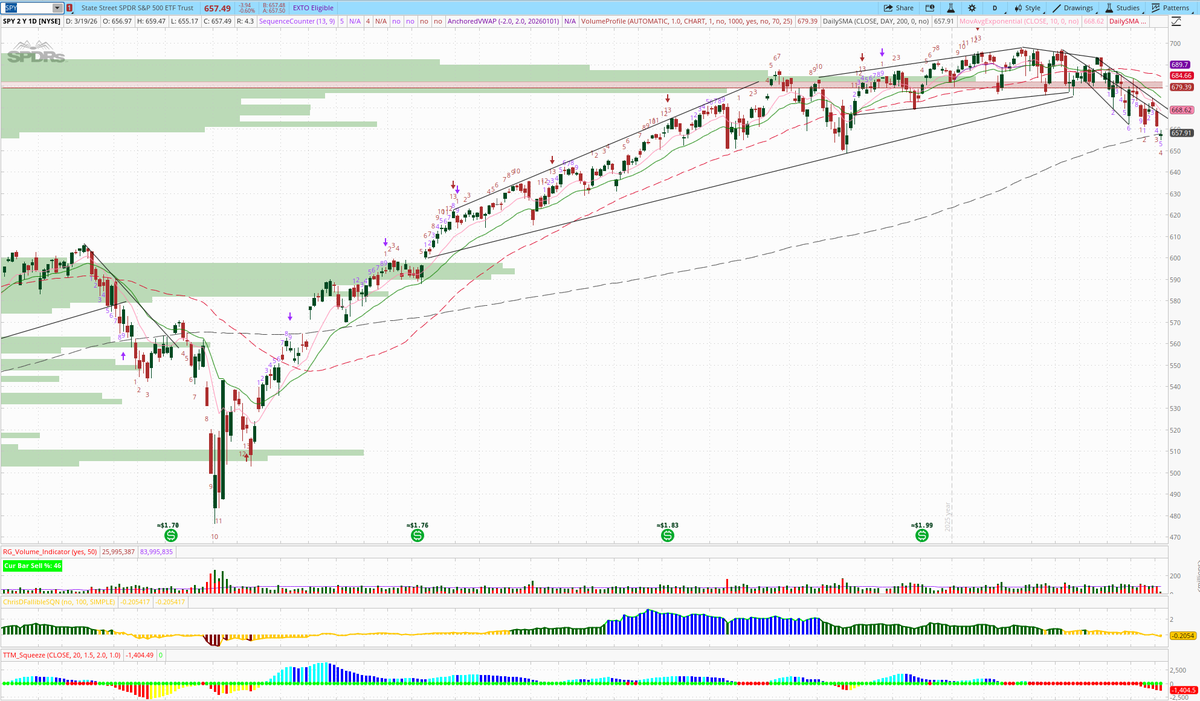
Would love to hear more on this. The long compression period before the fire is what makes the TTM squeeze so powerful on higher timeframes. When $SPY squeezes for that long and then fires bearish below the 200SMA, the momentum usually has real legs. I run a scanner that tracks squeeze duration across the S&P 500 and the longer the compression, the more reliable the direction tends to be. Are you seeing any individual sectors still holding bullish squeeze setups or is it pretty much bearish across the board?
English
1
0
1
55
Minerva Capital
Minerva Capital@MinervaCap·
We are below the 200SMA on $SPY. Things are playing out eerily similar to last year. The bottom panel on this chart is the TTM Squeeze indicator which has fired lower after a long period of compression. Happy to expand on my thoughts if anyone is interested.
Minerva Capital tweet media
English
4
1
5
431
Totalvalue
Totalvalue@HiddenDiscount·
Partially agree. Most fancy terminals are just information overload dressed up as an edge. But there's a difference between a terminal that shows you everything and a scanner that shows you only what matters. Price and volume is great once you're looking at a specific stock. The problem is finding which stock to look at in the first place. That's where a focused scanner earns its keep. Not by replacing your chart reading but by cutting your search time from hours to seconds.
English
0
0
0
2
True Wave Scanner
True Wave Scanner@YetAnotherSE·
Too much hype around fancy trading terminals. They probably make you feel good with so much activity on your screen, but do they help making you profitable? At the end of day a simple chart with price and volume is all you need, maybe with some good old indicators. #justsaying
English
1
0
0
29
Totalvalue
Totalvalue@HiddenDiscount·
Getting the writer to work without prompting is where most people get stuck. The trick we found was giving the agent a persistent context file that updates after every task. So the writer "remembers" brand voice, recent outputs, and what worked last time without you re-explaining it. Instead of prompting from scratch every time, it picks up where it left off. That's what turns a chatbot into an actual team member. How are you handling the handoff between the web builder and email writer?
English
0
0
0
2
Brian O'Connor | Fractional CMO
@benradack @kyrinahlis It’s the least agentic AI exec in the stack. But it talks to the web builder to make landing pages and talks to the email writer to make our sequences Today im working on a project manager and getting our writer to work without my prompting it
English
1
0
1
15
Kyri
Kyri@kyrinahlis·
Never thought I'd cancel ChatGPT but honestly it's so far behind Claude and Gemini and other LLMs right now it feels like using an ancient technology. When I first bought Chat GPT Paid I thought I would be a forever customer but it's so bad compared to the others.
English
20
0
33
2.6K
Totalvalue
Totalvalue@HiddenDiscount·
Trust built into the workflow is the right framing. The reason most agent demos don't translate to production is exactly this. Users will let an agent search and summarize all day long. But the second it touches money, data, or access controls, they need to see the reasoning chain. The winning architecture is agents that show their work at every decision point rather than just delivering a final answer. Transparency scales trust in a way that accuracy alone never will.
English
0
0
1
5
WachAI
WachAI@Wach_AI·
OpenClaw feels like an iPhone moment for AI agents. Interfaces are changing. Agents will become the default way humans access products, services and capital. But agentic commerce only works if trust is built into the workflow. Mandates are how we get there. They lock intent to measurable outcomes. Evaluators verify delivery before settlement. Execution becomes accountable, reputation becomes earned. This is how agent economies scale.
English
1
3
12
282
Totalvalue
Totalvalue@HiddenDiscount·
Honest answer: most "agentic AI" products right now are just chatbots with extra API calls bolted on. The narrative keeps shifting because the underlying tech wasn't ready for the promises made at each stage. Real agentic systems need to fail gracefully, retry intelligently, and know when to hand back to a human. Most of what's shipping doesn't do any of that. The gap between the demos and production is massive. The companies actually delivering are the ones who scoped down hard and solved one specific workflow instead of promising general autonomy.
English
0
0
2
19
Nitin Gaur
Nitin Gaur@nitingaur·
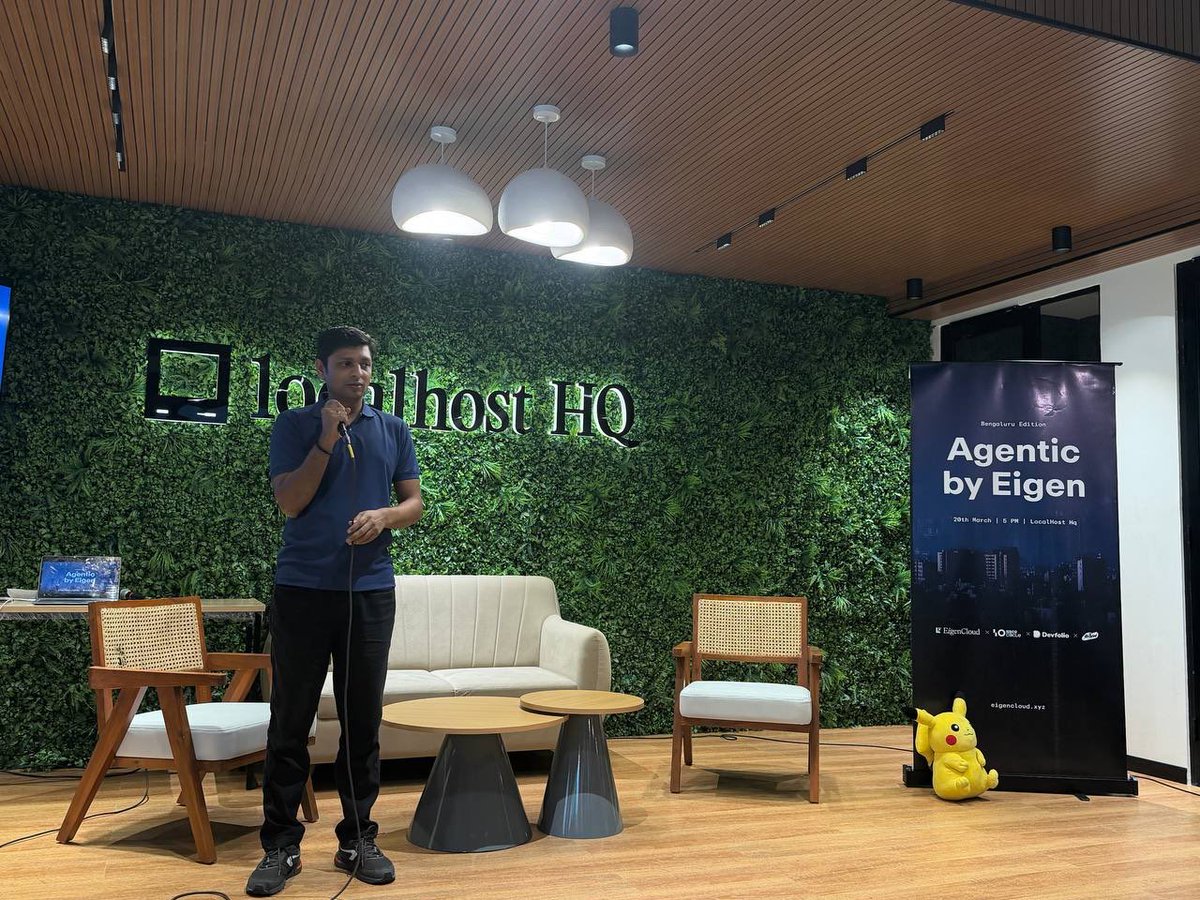
EigenLayer started with LRT/restaking, then moved to EigenDA, then EigenCloud, and now Agentic AI. But have any of these stages actually delivered clear, standalone outcomes—or are we just layering new narratives on top of unfinished ones? Is restaking driving real security demand, or just yield? Is EigenDA seeing meaningful adoption? Is EigenCloud more than positioning? Feels less like a linear roadmap and more like successive pivots. Curious if I’m missing where the actual traction is.
English
2
0
1
80
chainyoda
chainyoda@chainyoda·
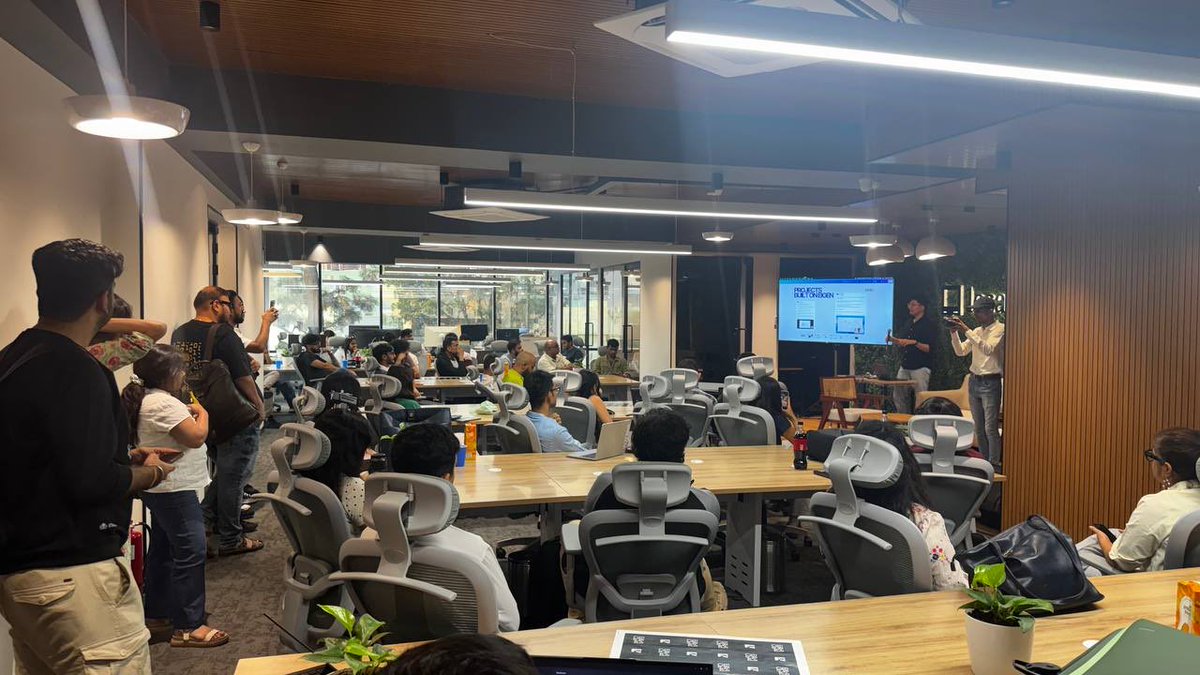
Full house at Agentic by EIGEN
chainyoda tweet mediachainyoda tweet media
English
10
2
47
2.1K
Totalvalue
Totalvalue@HiddenDiscount·
Chapter by chapter is the right approach. The people getting garbage AI output are the ones who ask for an entire book in one prompt. The model loses coherence, characters drift, themes get muddy. When you direct it scene by scene with specific context about what just happened and where you're going next, the output quality jumps dramatically. AI is a collaborator, not a replacement for the creative vision.
English
0
0
0
4
Traveler
Traveler@Traveler2000AD·
@TheaLanden Same reason why many buy books even everybody has access to typing machines, word processors & computers. Imagination. Even AI needs human to be in charge of writing process, chapter by chapter to give quality output.
English
1
0
1
34
Totalvalue
Totalvalue@HiddenDiscount·
Nailed it. The real problem was never "can AI write" but "can AI write without sounding like AI wrote it." The em dash addiction, the triple parallel structures, the hedging language. That's not a model limitation, it's a context problem. Most people accept the default voice instead of engineering the output to actually sound human. Choosing Claude Opus for prose quality was smart. The base capability is there but you still have to strip out the AI fingerprint or readers clock it immediately.
English
0
0
0
1
Fablis
Fablis@fablisdotai·
The Hachette question cuts to the heart of it. The issue isn't AI writing — it's AI writing that's indistinguishable from bad writing. We built fablis.ai around frontier models like Claude Opus specifically because the prose quality matters. Interactive fiction that actually reads like fiction.
English
1
0
3
9
Totalvalue
Totalvalue@HiddenDiscount·
Managing context over time is exactly right. The best analogy I've found is database schema design. Nobody calls a DBA a "query engineer." The value is in how you structure the data so the queries practically write themselves. Same thing with AI. Structure the context right and even a basic prompt pulls exactly what you need.
English
0
0
0
5
Leo Tavares
Leo Tavares@LeoTava8·
@badlogicgames The idea that engineering is just selecting 'best moves' in a finite state space is such a category error. The 10x delta was never about typing efficient syntax—it's about architecture and managing context over time.
English
2
0
7
234
Totalvalue
Totalvalue@HiddenDiscount·
Exactly this. I've been saying the same thing. Prompt engineering is like writing a good email subject line. Context engineering is like building the entire information pipeline that makes the email relevant in the first place. The gap between people who "use AI" and people who build real systems with it comes down to whether they understand data architecture or just syntax tricks.
English
1
0
0
2
Mike on X
Mike on X@Mike_onX·
context engineering will be the most valuable ai skill of 2026. not prompt engineering. context architecture: how you structure what the model knows, when it knows it, and in what order. master this and you build 10x better systems with the same models everyone else uses. the model is the engine. context is the fuel.
English
1
0
1
11
Totalvalue
Totalvalue@HiddenDiscount·
The separate memory per task is the real unlock here. The biggest bottleneck with single-agent systems was always context pollution. Agent A's financial data bleeding into Agent B's code review. Now each sub-agent gets a clean context window optimized for its specific job. We're running a similar architecture for market analysis. One agent scans patterns, another evaluates risk, another handles data feeds. They don't share context until the coordination layer merges their outputs. Night and day difference.
English
0
0
0
8
Julian Goldie SEO
Julian Goldie SEO@JulianGoldieSEO·
OpenAI just turned ONE AI into a FULL ENGINEERING TEAM. This Codex update is insane. Here’s what just changed: • 1 agent → many sub-agents • Parallel execution • Separate memory per task • No more context limits This isn’t AI assistance. This is AI management.
English
2
1
7
588
Totalvalue
Totalvalue@HiddenDiscount·
Context engineering is the one most people skip over because it sounds boring compared to "prompt engineering." But it's where the actual leverage is. A mediocre prompt with perfect context beats a brilliant prompt with bad context every time. The people getting real results from AI right now aren't writing clever instructions. They're feeding it the right data at the right time in the right format.
English
0
0
0
0
Nargish Mugal
Nargish Mugal@Nargish0202·
The skills Vibe coding teaches you are exactly what the job market wants right now: - Prompt Engineering - Context Engineering - Working with AI agents
English
1
1
2
8
Totalvalue
Totalvalue@HiddenDiscount·
The tell is in the volatility compression. When smart money is accumulating, the squeeze gets tighter and tighter. Bollinger Bands narrow inside Keltner Channels. Volume dries up. Retail sees "nothing happening" and ignores it. Then it fires and everyone starts FOMOing in 3 months late like you said. If you're scanning for that compression phase specifically, you're watching the accumulation happen in real time instead of chasing the markup.
English
0
0
1
2
Trader Equation ✪
Trader Equation ✪@TraderEquation·
smart money accumulates for 18 months in silence. retail FOMOs for 3 months very loudly. smart money exits to retail. repeat forever apparently
English
1
0
2
81
Totalvalue
Totalvalue@HiddenDiscount·
Solid stack. Backtesting discipline is where most retail guys fall apart. They find something that looks good on one timeframe and call it a strategy. Are you running vectorbt for walk-forward testing or just standard backtest? I've been doing out-of-sample validation on squeeze setups and the biggest surprise was how much the optimal parameters shift across market regimes. What looked bulletproof in 2024 barely held up in the first two months of 2025.
English
0
0
0
2
Angus Leigh | Quant Trader
Python + Pandas + yfinance + vectorbt + Risk & Stats + Portfolio Optimization + Backtesting Discipline. = The magic pill to becoming a real algo trader (not just a retail gambler).
English
1
0
0
11