
Sabitlenmiş Tweet
ひっきー
75 posts

ひっきー
@HikkeyAi
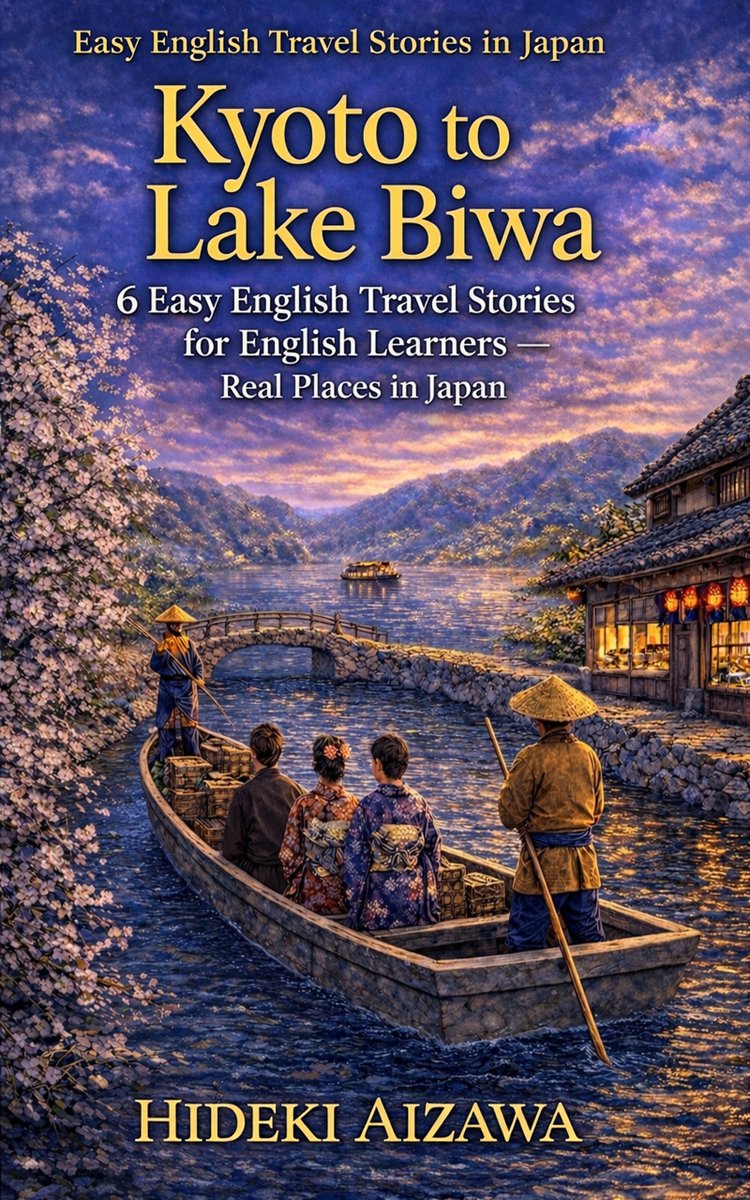
Introducing overseas readers to a quieter side of Japan beyond Kyoto — Lake Biwa, hidden canals, forgotten routes, and places most tourists never see. .
Katılım Nisan 2011
0 Takip Edilen0 Takipçiler

@RoudanskAlamir Interesting — are there any older Japanese works you especially enjoy?
English

@HikkeyAi Definitely, old works in general are what I tend to gravitate towards.
English
From what I've been gathering from the discourse I've been exposed to, Japanese literature/books and Japanese VNs seem to be on opposite ends of their western image in terms of what the anglo world is exposed to.
English
@fzdraco21 @reedi310 @BarryPierce That’s interesting.
Since Akutagawa Prize-style fiction seems visible abroad — would you also be interested in reading works by the writer who helped establish the prize?
English

@reedi310 @BarryPierce Lol yeah mystery novels and Akutagawa winners-style literary fictions is what I mostly think of Japanese literature instead of whatev western market think of Japanese literature. But again in SEA it's those mystery or Akutagawa literary novels that got translated and popular
English
are these kind of books actually popular in Japan or are they just massive here because publishers have carefully manufactured the idea that this is what Japanese fiction is
alba@albaorllan
cuántas novelas japonesas sobre cafeterías o librerías puede soportar el panorama literario actual
English
@RoudanskAlamir That’s interesting to hear.
One reason I became interested in older Japanese literature was finding stories that seem to remain almost invisible outside Japan despite still feeling surprisingly alive today.
I recently put together an English literary travel book.
English
@DiP11s @tintougenryuu Since you seem interested in Japanese literature — would you be interested in trying lesser-known older Japanese stories if they were available in English?
English

@tintougenryuu You are asking the important question. Yes, we do get translated literature, but do we give much space to Japan on that shelf? No.
For my next Japanese novel (come to think of it) I am reading it only because someone recommended it so highly
Kawabata: The Sound of the Mountain

English

英語圏に出るまでもなく日本語の小説市場が十分に巨大と言える
英語でわざわざ書かなきゃいけない必要性が低い
Matt 🇺🇲@DiP11s
@RaraSensei Maybe the problem in our perception is that we have renowned English language authors who are originally Chinese, Vietnamese, or Indian. But we have only one great one from Japan. Also, I believe the only anime that was popular here which was based on a novel was "12 Kingdoms"
日本語
@fzdraco21 @reedi310 @BarryPierce Since you seem interested in Japanese literature — would you ever try lesser-known older Japanese stories if they were available in English?
English

@BarryPierce Since you seem interested in Japanese literature — would you ever try lesser-known older Japanese stories if they were available in English?
English
@penguinukbook Since you seem interested in Japanese literature — would you ever try lesser-known older Japanese stories if they were available in English?
English

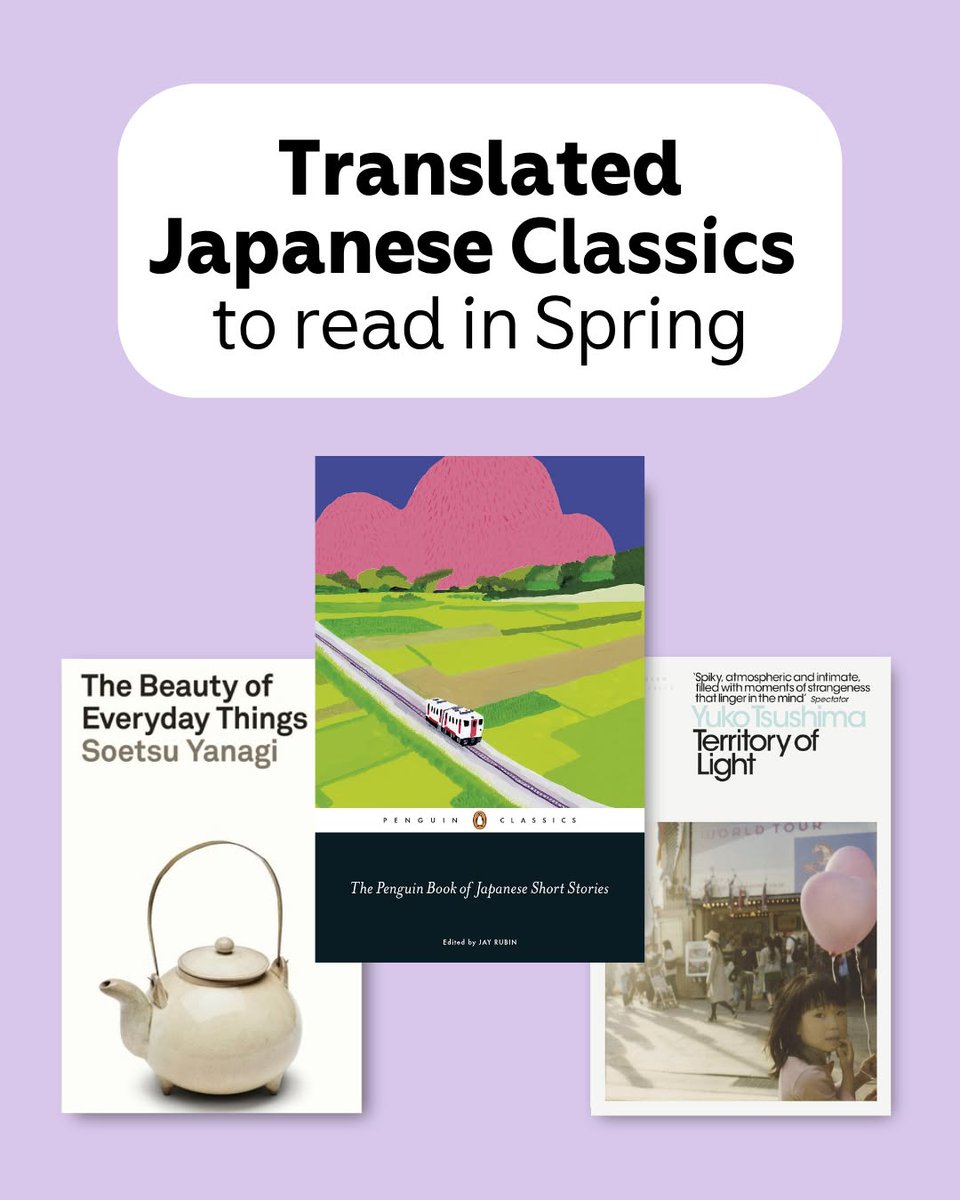
Spring has officially sprung and it's a long bank holiday weekend 💐
We're recommending some Translated Japanese Classics to read in the April sun!
For more info on these incredible titles, check our link in bio 🔗
English
@DamianFlanagan Since you seem interested in Japanese literature — would you ever try lesser-known older Japanese stories if they were available in English?
English

The novel “Kokoro” (1914) by Natsume Soseki is the most widely read, beloved and influential novel in the whole of modern Japanese literature. It is also the most misunderstood.
For many years, the Japanese tended to treat Soseki as a “national treasure” who could only fully be appreciated by the Japanese. Yet ironically the opposite is more true - Soseki was Japan’s top expert in English literature and steeped in British traditions of irony that are often not easily grasped.
The set up in nearly all Soseki’s novels is intense irony, bordering on satire. Yet Soseki then invariably invested this set up with a profoundly realistic and empathetic portrayal, making the irony quite easy to miss, particularly for readers who tend to think that “sincerity” is the keynote of Soseki’s works.
In “Kokoro”, the central character is referred to only as “Sensei”, but there is no reason whatsoever why this character should be called “Sensei”. He has never written a book, doesn’t work and does nothing to help anyone else. When the narrator’s parents hear their son has a friend called “Sensei” they mistakenly think he will make all kinds of useful introductions for their son, but in fact he has not the slightest intention of doing anything like that. This is classic Sosekian irony. Yet Soseki invests such realism into the narrator’s account that readers are carried along with the “Sensei” description.
In one of his earlier works, Soseki had written that: “Everyone knows that the word “sensei” can mean “fool” (“baka”)”…Words can be used ironically. Soseki, a hugely independent and iconoclastic thinker, often looked askance at people set up as “sensei” and asked us to use our own wits as to determine who is “baka” and who is “sensei”.
But this ironical connection between “sensei” and “baka” runs much deeper in “Kokoro” than a crude kind of satirical counterpoint. (Spoiler alert: Key parts of the plot are about to be revealed…)
It turns out that “Sensei” is haunted by events in the past concerning his university friend “K”, an earnest young man who declares that “those who lack a desire for spiritual self-improvement are fools (baka)”. Later, K and “Sensei” fall for the same young woman and Sensei is desperate to defeat his love rival. Seeing K writhe in pangs of desire for the girl, he turns K’s line back on him to devastating effect: “those who lack a desire for spiritual self-improvement are fools (baka)”. Faced with his own inability to master his youthful emotions, K kills himself leaving the way open for “sensei” to marry the girl.
Notice the significance of the word “baka” (“fool”) in this context. It is the unleashing of this word by the character “Sensei” that triggers “K”’s death. Soseki has moved from seeing “sensei” and “baka” as a kind of satirical inversion of one another to perceiving them as being in deadly league with one another.
You can read a hundred tiresome books in Japanese that will tell you that “Kokoro” is a novel about “egoism” in the modern age and reinforce the notion that the character “Sensei” has a kind of sincere, self-reflective wisdom. These books - some of which have become bestsellers - are complete baloney.
“Kokoro” is in fact a devastatingly satirical novel that hinges on two key, inter-connected words: “sensei” and “baka”. Our susceptibility to believing the prescriptions of others when it comes to these two words has enormous consequences in terms of the way we shape our value systems and live our lives.
What Soseki is really asking you to do - and what generations have often failed to do - is use your own judgement in life, not someone else’s description, to determine who in life is a true “sensei” and who is “baka”.

English
@TuttleBooks Since you seem interested in Japanese literature — would you ever try lesser-known older Japanese stories if they were available in English?
English

Let's get back to the classics 📚
This AAPI Month we're diving into some of our beautifully translated Japanese paperback classics from timeless favorites to hidden gems we can’t stop recommending!

English

@pferdefedern @UnseenJapanSite Since you seem interested in Japanese literature — would you ever try lesser-known older Japanese stories if they were available in English?
English

@UnseenJapanSite English speaking markets are hostile to all translations (3-5% of the market) - not just to Japanese.
UK is just a bit better than US on this regard (coincidentally with Japanese literary fiction, cozy reads and thrillers having a moment in the spotlight there)
English
@deadhardware @Tomoejp1236 Since you seem interested in Japanese literature — would you ever try lesser-known older Japanese stories if they were available in English?
English

At the same time, the people that guy wants don't exist.
Translating fiction across a terrible linguistic pair like JP-EN is a process of creative synthesis because nothing lines up.
The translator has to be very well read and a very strong English writer to have the appropriate tools in his literary toolbox. Very few Japanese natives will have developed those skills because it takes years of full time work to develop them to that level.
The best bet would be expats who have been living in Japan long term.
It's not like the romance languages or euroslop where translators can translate 1:1.
English

日本と欧米で話が嚙み合わない点の一つは、日本人がwoke-ismが、これほど酷いものだと知ったのはつい最近なんですよ。 私自身もアサシンズクリードの騒ぎが無ければ、情報として知っていても、体感的に理解はできなかった。 日本の反撃が始まるのは、これからですし、攻撃する時の日本人の苛烈さは、歴史が証明しています。
Paddy's Aiding Bar@paddysaidingbar
@Tomoejp1236 If KADOKAWA wants to expand into foreign markets (e.g. North America), it must never hire any localisation agencies, which are filled with polical activist. KADOKawa needs an inhouse translation team. The following needs to be taken to heart. (2/2)
日本語


buying books 🗿 my english translated modern japanese literature collection is better than some university libraries now
rozee 🩷✨🍉@zeebadeebap
buying your oshi's merch is one thing, but buying something that reminds you of your oshi is a whole new level of oshikatsu to me
English
@yoyuuha That’s an impressive collection.I became interested in some older Japanese stories that seem much less visible in English — especially when connected to real places around Kyoto and Lake Biwa.I’d be curious whether this kind of literary travel project fits your collection.
English
@DiP11s @tintougenryuu That’s an interesting point.I sometimes wonder whether older Japanese works become easier to enter when they are connected to real places rather than appearing only as books on a translated shelf.
English