Hillary Lin, MD

851 posts

Hillary Lin, MD banner
Hillary Lin, MD

Hillary Lin, MD

@HillaryLinMD

Stanford MD. Longevity medicine without miracle language: labs, meds, supplements, risk, and what the science actually proves. Founder @goCareCore.

Manhattan, NY Katılım Temmuz 2009
809 Takip Edilen1.3K Takipçiler
Sabitlenmiş Tweet
Hillary Lin, MD
Hillary Lin, MD@HillaryLinMD·
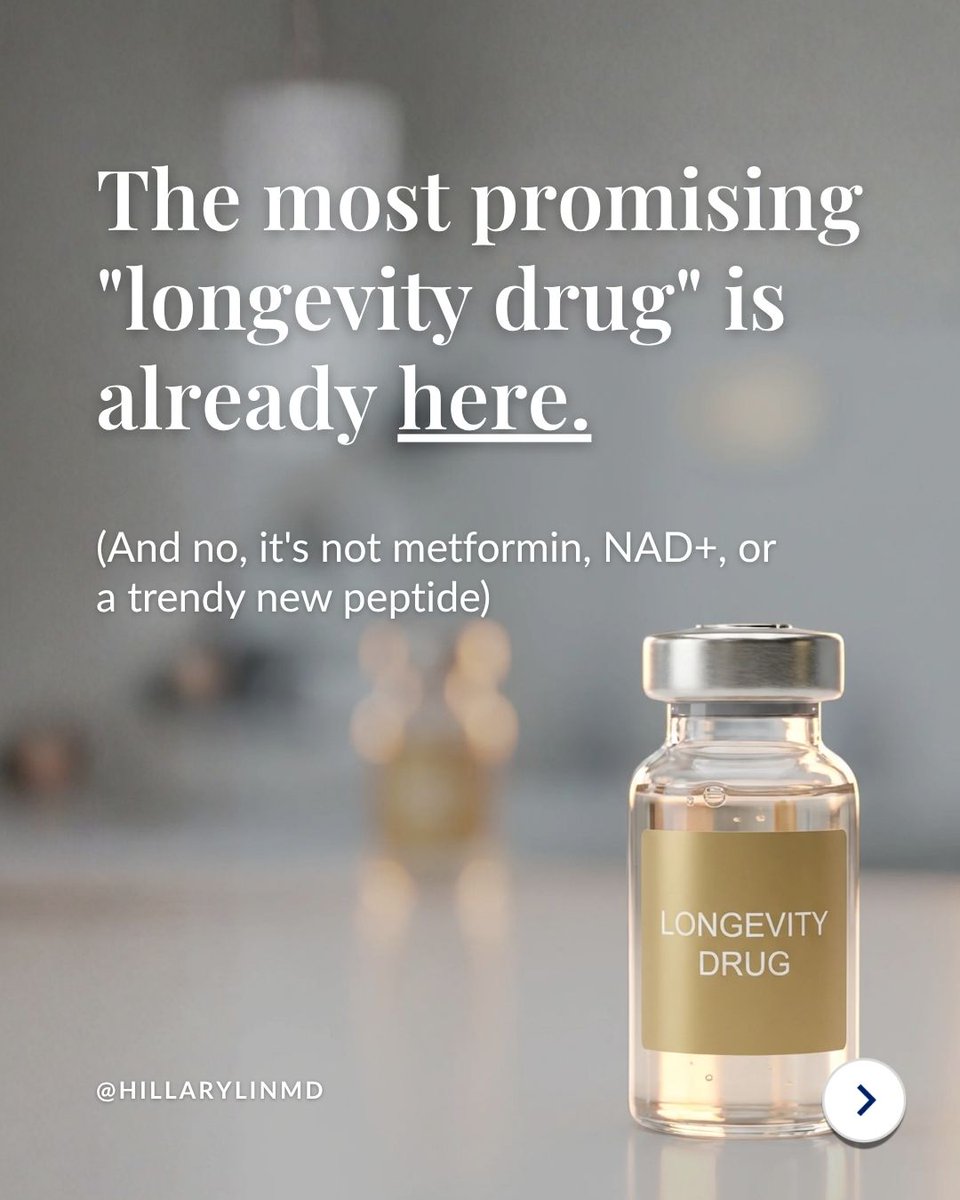
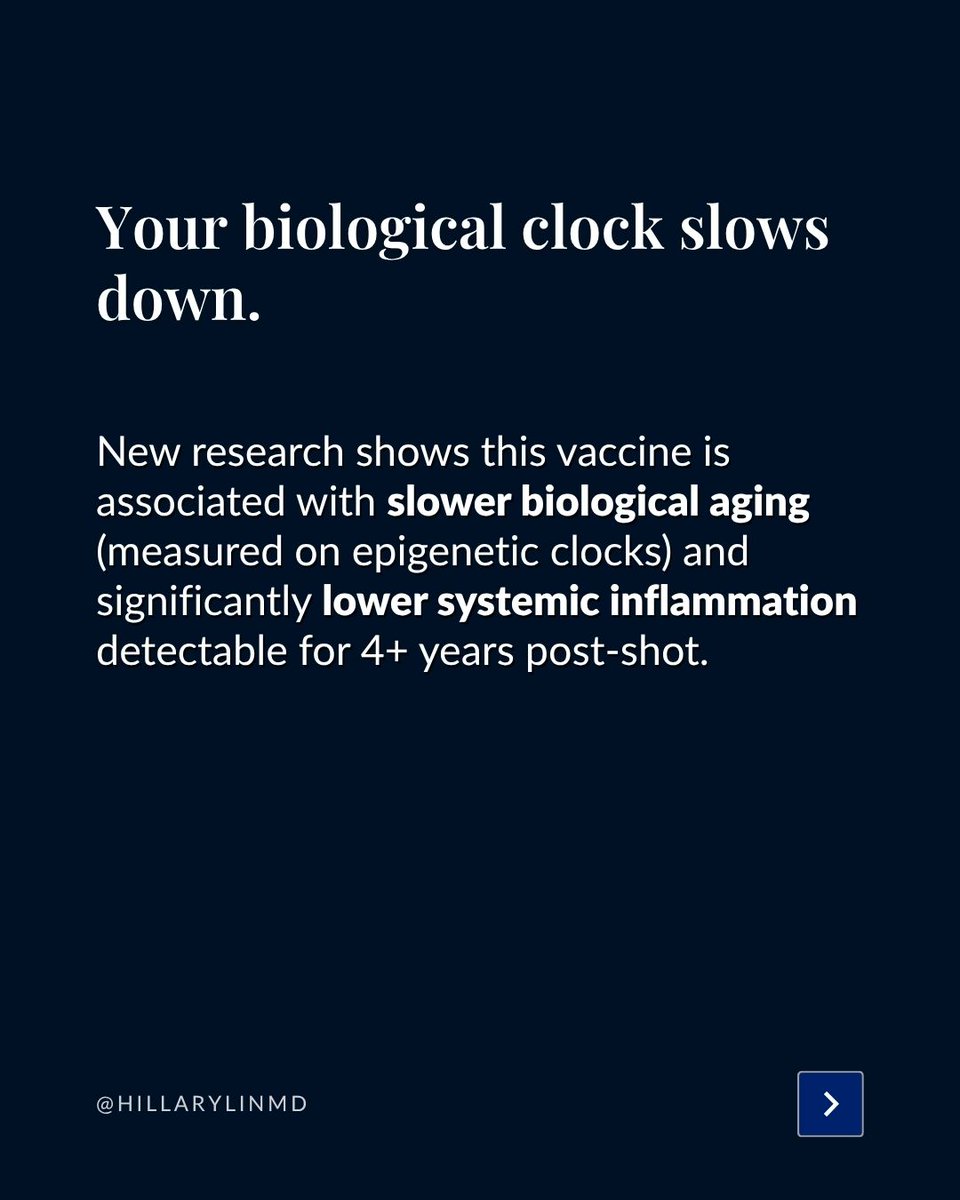
The most promising longevity drug isn't a peptide or metformin. It's the Shingles vaccine. New data shows it slows biological aging and lowers systemic inflammation for 4+ years post-shot. We are seeing a 20% reduction in new dementia diagnoses and a 25% lower risk of stroke. Stop waiting for a magic pill. One is already on the shelf.
Hillary Lin, MD tweet mediaHillary Lin, MD tweet mediaHillary Lin, MD tweet mediaHillary Lin, MD tweet media
New York, USA 🇺🇸 English
220
909
4.1K
306.4K
Hillary Lin, MD
Hillary Lin, MD@HillaryLinMD·
This may be the biggest gamechanger for longevity medicine since GLP-1s. Heart disease has shaped my family. My dad survived a massive heart attack and eventually needed a heart transplant. My grandfather spent the last six years of his life bed-bound after a stroke. Then my own LDL came back at 192. A PCSK9 injection changed my trajectory. Every other week is manageable. Most people would rather take a pill. The FDA just approved Lipfendra, the first oral PCSK9 inhibitor. LDL fell 56–59% vs placebo. ApoB fell about 50%. Injectable-class potency in a once-daily tablet. The biology is not new. What feels new is the possibility that far more people may actually use it. The safety signal so far is reassuring. It is not a perfect pill. You take it in the morning on an empty stomach, then wait 30 minutes. Product-specific cardiovascular outcomes are still pending. If the outcomes data are good and people can actually get it, this could change the trajectory for a lot of families. Mine included. merck.com/product/usa/pi…
Hillary Lin, MD tweet media
English
2
4
12
648
Hillary Lin, MD
Hillary Lin, MD@HillaryLinMD·
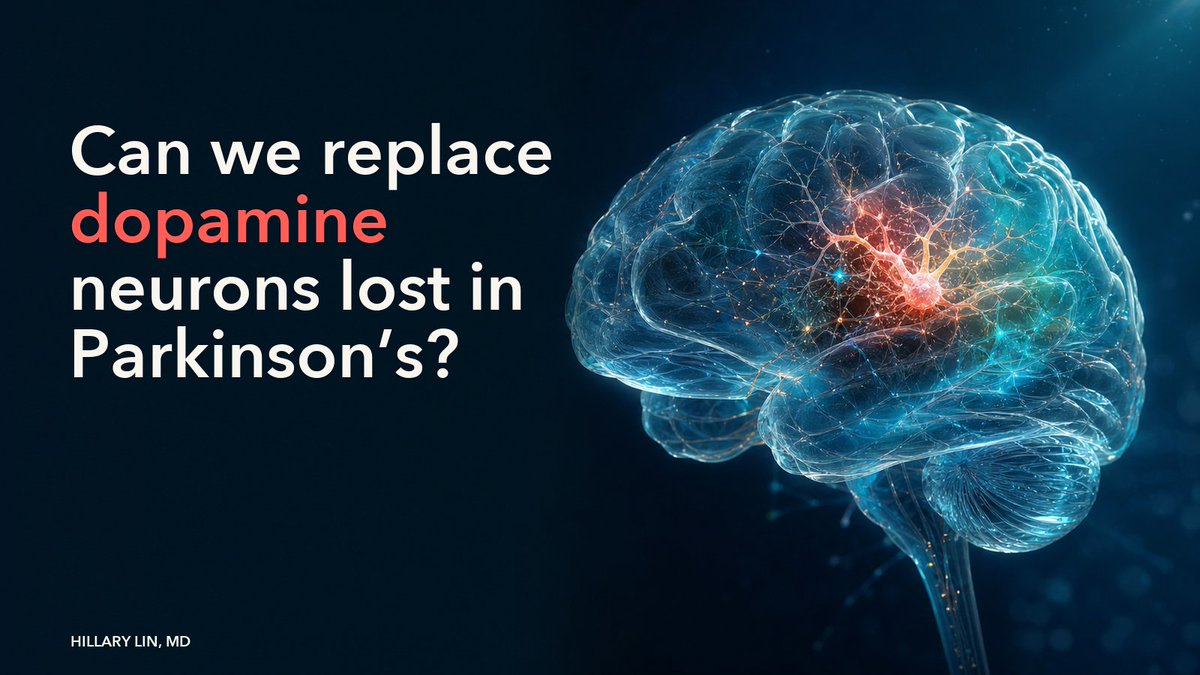
Parkinson’s destroys the neurons that make dopamine. Our drugs replace or mimic the signal. Researchers are now trying to replace the source. Levodopa can work remarkably well, but it replaces dopamine dose by dose. It does not replace the cells that make it. STEM-PD at 12 months: 8 patients transplanted, 7 followed. PET was consistent with graft survival and dopamine activity. No tumors were seen through one year. This small, uncontrolled trial did not prove clinical benefit. Motor results were mixed, nobody came off medication, and one participant died of disseminated aspergillosis while taking the required immunosuppression. This is no longer an isolated result: 4 modern programs, 39 patients. Independent teams keep seeing the same basic thing: these cells can be made, implanted, and later show signs of survival. One product received conditional approval in Japan. Another is already in a 102-person, sham-surgery-controlled Phase 3 trial. This is why regenerative medicine belongs in the longevity conversation. Longevity should not end at slowing decline. It should include restoring biological capacity after it has been lost. This is not a root-cause cure. The graft does not stop Parkinson’s elsewhere in the brain. But it moves closer to the source of the missing signal: the cells that make dopamine. Most Parkinson’s treatments compensate for what has been lost. This one tries to put some of it back. nature.com/articles/s4159…
Hillary Lin, MD tweet media
English
0
1
2
130
Hillary Lin, MD
Hillary Lin, MD@HillaryLinMD·
@CurtisHelms @DrAlexTatem @bstarrreports A testosterone level is a lousy proxy for military readiness. If someone has symptoms plus repeatedly low morning levels, evaluate that person. But mass-screening troops and chasing a number risks overdiagnosis. Fitness, sleep, injuries and actual performance tell you far more.
English
0
0
1
24
Hillary Lin, MD
Hillary Lin, MD@HillaryLinMD·
Environmental health has become a shopping category. Better filter. Better pan. Better floss. Better makeup. I recommend some of these swaps. But “shop better” becomes a pretty ridiculous public-health strategy once an aquifer is contaminated. That’s why New York’s new lawsuit against 3M and DuPont-related companies matters. The state is going after PFAS sold for use in ordinary products: carpets, stain treatments, food wrappers, cosmetics, and treated textiles. New York alleges those chemicals kept moving after the sale. Carpet wore into dust. Textiles went through the wash. Packaging went to landfills. PFAS entered household dust, wastewater, biosolids, soil, and water through normal use and disposal. The product did its job. The chemistry kept going after we were done with it. For the PFAS it reviewed, the National Academies found sufficient evidence of association with decreased antibody response, dyslipidemia, decreased infant and fetal growth, and increased kidney cancer risk. This is still a lawsuit, not a verdict. But the question is fair: Why did cleanup become the public’s problem when persistence was part of the product design? New York complaint, filed July 9, 2026: ag.ny.gov/sites/default/… Check your water. Use the right filter. Make the easy swaps. Just don’t confuse lowering your own exposure with solving industrial contamination. You cannot shop your way out of a contaminated aquifer.
Hillary Lin, MD tweet media
English
1
1
3
239
Hillary Lin, MD
Hillary Lin, MD@HillaryLinMD·
I went to a dry-eye conference to talk about longevity medicine. I left thinking longevity medicine has a lot to learn from dry eye. Until this weekend, I had no idea how large or inventive this field was. DESA packed optometrists, ophthalmologists, researchers, device makers, and clinic builders from around the world into a few very full rooms. Dry eye is not simply “not enough tears.” The same symptom can come from glands, inflammation, hormones, medications, autoimmune disease, metabolic health, environment, or nerve signaling. So these clinicians can’t reach for one protocol and call it done. They identify the drivers, layer treatments, reassess, and stay with patients over time. That’s the medicine I want longevity medicine to become. Then I met the people. Albert O. Edwards is building AI into an Oregon ophthalmology practice. Ashok and Shruti Sharma are using tear-fluid proteomics and machine learning to find molecular subtypes. Grayson Keller is doing real AI work as a University of Memphis undergraduate. I genuinely assumed he was a PhD student. Jennifer Shaba has built a holistic dry-eye practice. Laura Livesey and Rod Solar (@LiveseySolar) have spent almost 30 years helping eye clinics grow. This room had more clinical curiosity, business savvy, and willingness to try new tools than I expected. Medicine has a way of training those instincts out of people. DESA has not. Thank you, Rolando Toyos, for inviting a longevity doctor into the room—and to speakers including @LisaNijmMDJD and @EyeClinicLondon for the crash course. I came to share a perspective. I left with a field to learn from. Dry-eye people: what did I miss?
Hillary Lin, MD tweet media
English
1
4
10
721
Hillary Lin, MD
Hillary Lin, MD@HillaryLinMD·
@ilanayurkiewicz Loved this conversation so much, Ilana!! You ask exactly the questions I wish more people asked about longevity medicine. There is a real version of it, but honestly it looks a lot like excellent primary care with more time, earlier prevention, and actual follow-through.
English
0
0
1
31
Ilana Yurkiewicz, MD
Ilana Yurkiewicz, MD@ilanayurkiewicz·
What parts of longevity medicine are real? How is it different from good primary care? What lifestyle changes work? @HillaryLinMD and I discuss.
Hillary Lin, MD@HillaryLinMD

Do you cringe when you hear "longevity medicine"? The field has earned some of that. Too often it means a concierge menu of tests, supplements, scans, and very expensive certainty. But there is a real version inside the hype. It is not glamorous. It is good medicine with a longer runway. A patient whose father had a heart attack at 48 should not need a bad 10-year risk score before anyone cares about ApoB or Lp(a). A rising fasting insulin should not have to hit "pre-diabetic" before it counts. Losing muscle and bone should not have to become osteoporosis before we treat perimenopause. Sleep apnea should not have to cause hypertension before we go after the cause. That is what I mean by aggressive. Not reckless. Earlier. Less passive. Less willing to let disease declare itself first. The trap is that the same instinct turns into nonsense fast. More testing can feel like solving the problem without changing anything. A drawer of supplements can feel legitimate to someone avoiding "medications." So the standard has to stay principled: What is the root cause? What action follows? Who owns the next step? That is where longevity medicine either becomes real medicine or an anxious luxury. @ilanayurkiewicz and I talked about this on Hard Medicine: what is real in longevity medicine, what is mostly performance, and why "early" only matters if it leads to better decisions. Full conversation: ilanayurkiewiczmd.substack.com/p/what-parts-o… If this is the kind of medicine you want to see built, follow @gocarecore.

Palo Alto, CA 🇺🇸 English
1
0
1
374
Hillary Lin, MD
Hillary Lin, MD@HillaryLinMD·
@KrisRChase I don't disagree - I graded them more granularly in the earlier peptide post: x.com/HillaryLinMD/s…
Hillary Lin, MD@HillaryLinMD

Are peptides back? Next month, FDA’s Pharmacy Compounding Advisory Committee is discussing seven peptide-related bulk substances that already have a life of their own online: BPC-157, KPV, TB-500, MOTs-C, Emideltide / DSIP, Semax, and Epitalon. Important correction: this is a 503A compounding discussion. It can affect what compounding pharmacies can use. It is not FDA approval. It is not an evidence upgrade. But it’s also not true that there is “no evidence”. There is evidence here. The problem is that the evidence often does not match the claim being sold. Some rough grades: • BPC-157: D+ for injury/gut-repair • KPV: D for gut/skin inflammation • TB-500: D- for injury-recovery • MOTs-C: D+ for metabolic-signal claims; D for weight-loss • Emideltide / DSIP: D+ for sleep/withdrawal/pain • Semax: D+ for nootropic/focus claims; C- for stroke/cerebrovascular evidence • Epitalon: D for circadian/longevity biology; F for insomnia The problem isn’t that the evidence is all nonsense. It is evidence transposition: animal data becomes human claims, a cousin molecule becomes this molecule, a mechanism becomes a protocol, one indication becomes a totally different use. So before “peptides are back” becomes the headline, ask: What exact molecule? What route? Human, animal, or adjacent evidence? Same endpoint as the claim? Who is checking quality, sterility, impurities, and safety? When it comes to health, we need to be more precise.

English
0
0
0
38
Kris Chase
Kris Chase@KrisRChase·
@HillaryLinMD "no on all seven" also flattens very different evidence tiers. bpc-157 and tb-500 at least have animal + mechanistic work behind them. kpv, mots-c, dsip, epitalon are closer to zero human data. lumping them makes the regulatory call look cleaner than the science actually is.
English
1
0
0
87
Hillary Lin, MD
Hillary Lin, MD@HillaryLinMD·
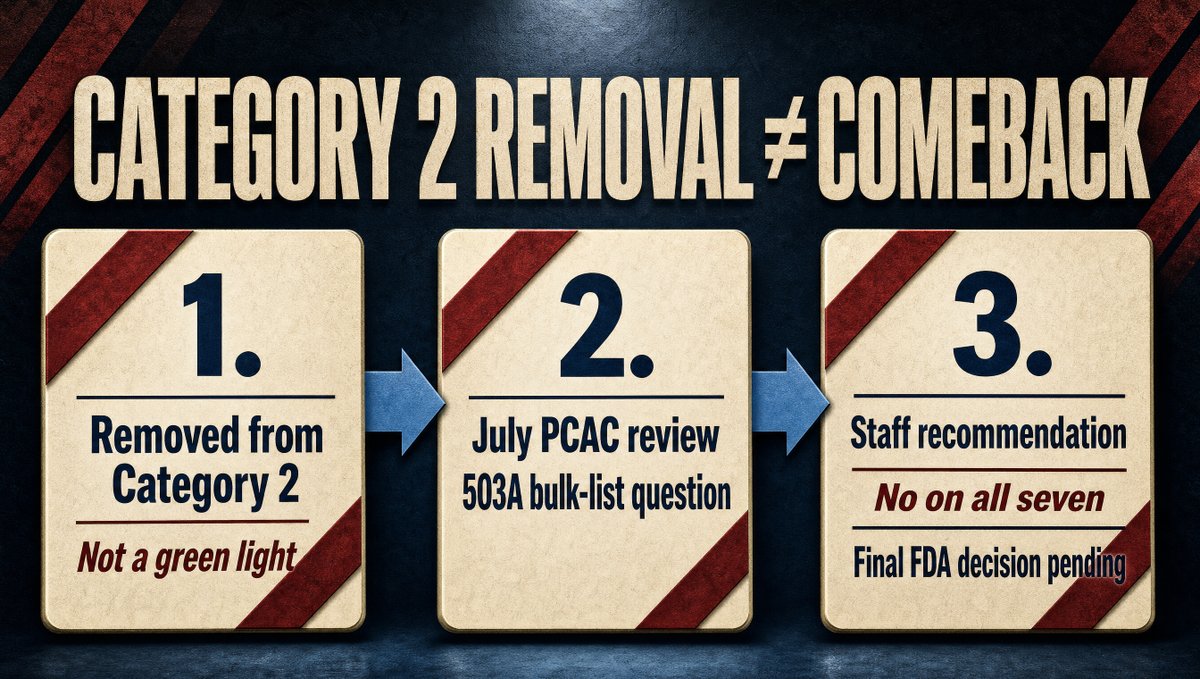
The peptide comeback narrative has a problem. FDA staff said no to all seven. Earlier this year, some peptides came off FDA’s Category 2 list, the bucket for bulk drug substances FDA had flagged as significant safety risks in compounding. A lot of people read that as a green light. It was not. Coming off Category 2 does not mean FDA approval. It does not mean the evidence changed. It does not mean 503A pharmacies can clearly compound it. It means one prior regulatory barrier changed. The next question is July 23–24: Should these peptide-related bulk drug substances be added to the 503A Bulks List? The seven up for review: BPC-157, KPV, TB-500, MOTS-c, Emideltide/DSIP, Semax, Epitalon. FDA staff recommends against adding all seven. Not final. PCAC can disagree. FDA still decides. But if you are asking what is likely, the briefing docs are the strongest signal we have. Compounding access is not an evidence upgrade. My read: unless PCAC meaningfully pushes back, this meeting is more likely to narrow the peptide-compounding path than reopen it.
Hillary Lin, MD tweet media
English
3
0
3
281
Hillary Lin, MD
Hillary Lin, MD@HillaryLinMD·
@vedichi_ Not from what I've seen, no. I don't run testing myself, but the independent analyses out there are rough. Concentration off label, sterility questions, big batch to batch swings. That variability alone is why I won't hang clinical decisions on gray-market sourcing.
English
1
0
1
39
Steady State
Steady State@vedichi_·
@HillaryLinMD you're on the clinical side of this. does the gray-market stuff test out anywhere near label when it lands in front of you?
English
2
0
0
13
Steady State
Steady State@vedichi_·
my take on the fda peptide call: the evidence on most of those 7 is genuinely thin. but blocking compounding doesn't make people stop, it pushes them to an untested grey market. that's less safety, not more.
English
1
0
0
78
Hillary Lin, MD
Hillary Lin, MD@HillaryLinMD·
@BigPeptideGuy Yeah, this bugs me too. Coming off Category 2 just means it's off that list. It didn't suddenly clear some bar for clinical use. A lot of people read the delisting as an endorsement, and it isn't one.
English
0
0
1
7
Ben
Ben@BigPeptideGuy·
@HillaryLinMD Category 2 removal got treated like a green light way too fast
English
1
0
0
42
Hillary Lin, MD
Hillary Lin, MD@HillaryLinMD·
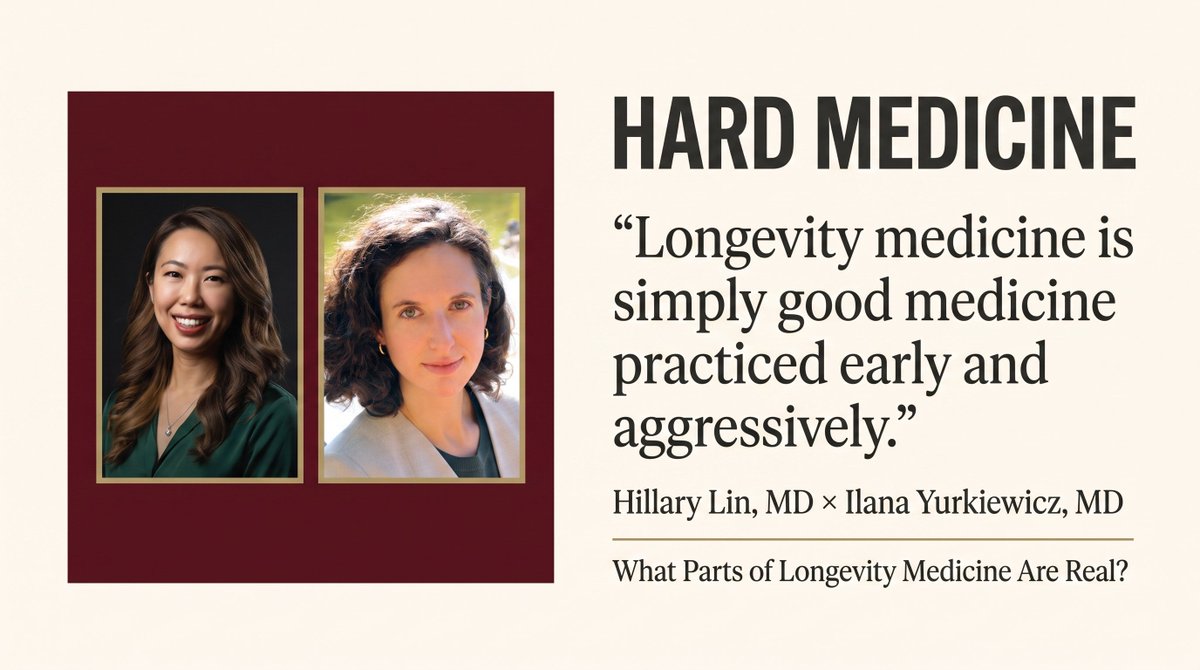
Do you cringe when you hear "longevity medicine"? The field has earned some of that. Too often it means a concierge menu of tests, supplements, scans, and very expensive certainty. But there is a real version inside the hype. It is not glamorous. It is good medicine with a longer runway. A patient whose father had a heart attack at 48 should not need a bad 10-year risk score before anyone cares about ApoB or Lp(a). A rising fasting insulin should not have to hit "pre-diabetic" before it counts. Losing muscle and bone should not have to become osteoporosis before we treat perimenopause. Sleep apnea should not have to cause hypertension before we go after the cause. That is what I mean by aggressive. Not reckless. Earlier. Less passive. Less willing to let disease declare itself first. The trap is that the same instinct turns into nonsense fast. More testing can feel like solving the problem without changing anything. A drawer of supplements can feel legitimate to someone avoiding "medications." So the standard has to stay principled: What is the root cause? What action follows? Who owns the next step? That is where longevity medicine either becomes real medicine or an anxious luxury. @ilanayurkiewicz and I talked about this on Hard Medicine: what is real in longevity medicine, what is mostly performance, and why "early" only matters if it leads to better decisions. Full conversation: ilanayurkiewiczmd.substack.com/p/what-parts-o… If this is the kind of medicine you want to see built, follow @gocarecore.
Hillary Lin, MD tweet media
English
0
0
4
508
Hillary Lin, MD
Hillary Lin, MD@HillaryLinMD·
@vedichi_ there is far more hype than substance *for sure* - beyond the GLP1-type peptides, it's completely gray not just the supply chain but also dosing, frequency, etc.
English
1
0
1
57
Hillary Lin, MD
Hillary Lin, MD@HillaryLinMD·
So Supergirl was basically John Wick x Mad Max 🤔
English
1
0
3
91
Hillary Lin, MD
Hillary Lin, MD@HillaryLinMD·
Are peptides back? Next month, FDA’s Pharmacy Compounding Advisory Committee is discussing seven peptide-related bulk substances that already have a life of their own online: BPC-157, KPV, TB-500, MOTs-C, Emideltide / DSIP, Semax, and Epitalon. Important correction: this is a 503A compounding discussion. It can affect what compounding pharmacies can use. It is not FDA approval. It is not an evidence upgrade. But it’s also not true that there is “no evidence”. There is evidence here. The problem is that the evidence often does not match the claim being sold. Some rough grades: • BPC-157: D+ for injury/gut-repair • KPV: D for gut/skin inflammation • TB-500: D- for injury-recovery • MOTs-C: D+ for metabolic-signal claims; D for weight-loss • Emideltide / DSIP: D+ for sleep/withdrawal/pain • Semax: D+ for nootropic/focus claims; C- for stroke/cerebrovascular evidence • Epitalon: D for circadian/longevity biology; F for insomnia The problem isn’t that the evidence is all nonsense. It is evidence transposition: animal data becomes human claims, a cousin molecule becomes this molecule, a mechanism becomes a protocol, one indication becomes a totally different use. So before “peptides are back” becomes the headline, ask: What exact molecule? What route? Human, animal, or adjacent evidence? Same endpoint as the claim? Who is checking quality, sterility, impurities, and safety? When it comes to health, we need to be more precise.

Hillary Lin, MD tweet media
English
1
0
2
354
Hillary Lin, MD
Hillary Lin, MD@HillaryLinMD·
What do entrepreneurs actually want? Is it fame? Fortune? No. I think, intrinsically, entrepreneurs want to change the world. [Insert Silicon Valley meme here.] But what does "change the world" really mean? It does not have to mean changing the entire planet. It means having agency over the world around you. Seeing something that should be different, developing an idea, and taking the bull by the horns until reality starts to align with that idea. Agency starts early. As babies, something changes when we realize we can affect the world around us. We throw something on the floor, someone picks it up. We make a sound, someone responds. We act, and the world changes. (btw I felt so validated when I heard Fei Fei Li make this exact point in a recent interview - so not claiming to be the only one with this thought by far!) That is why I became an entrepreneur, even though very few doctors traditionally do this. Medicine trains caution, hierarchy, standards, and consensus. A lot of that is good. I am not interested in throwing standards out the window. But I do think more clinicians need to remember that we are allowed to build. Entrepreneurship is not really about making money, building a Delaware C-corp, or becoming a startup person. Those may be part of the machinery, but they are not the point. The point is seeing something that could be better, deciding your idea matters enough to act on it, and doing the hard work of changing the world around you. Agency is not something you are granted. It is something you practice.
New York, USA 🇺🇸 English
0
1
3
245
Hillary Lin, MD
Hillary Lin, MD@HillaryLinMD·
The better rule: eat the fruit most of the time. Treat juice as an occasional drink, not a fruit serving or a health shortcut.
Hillary Lin, MD tweet mediaHillary Lin, MD tweet mediaHillary Lin, MD tweet media
New York, USA 🇺🇸 English
0
0
1
34
Hillary Lin, MD
Hillary Lin, MD@HillaryLinMD·
That matters most for people thinking about blood pressure, insulin resistance, appetite, or “healthy” drinks that behave more like sweet drinks than food.
Hillary Lin, MD tweet mediaHillary Lin, MD tweet media
New York, USA 🇺🇸 English
1
0
1
40
Hillary Lin, MD
Hillary Lin, MD@HillaryLinMD·
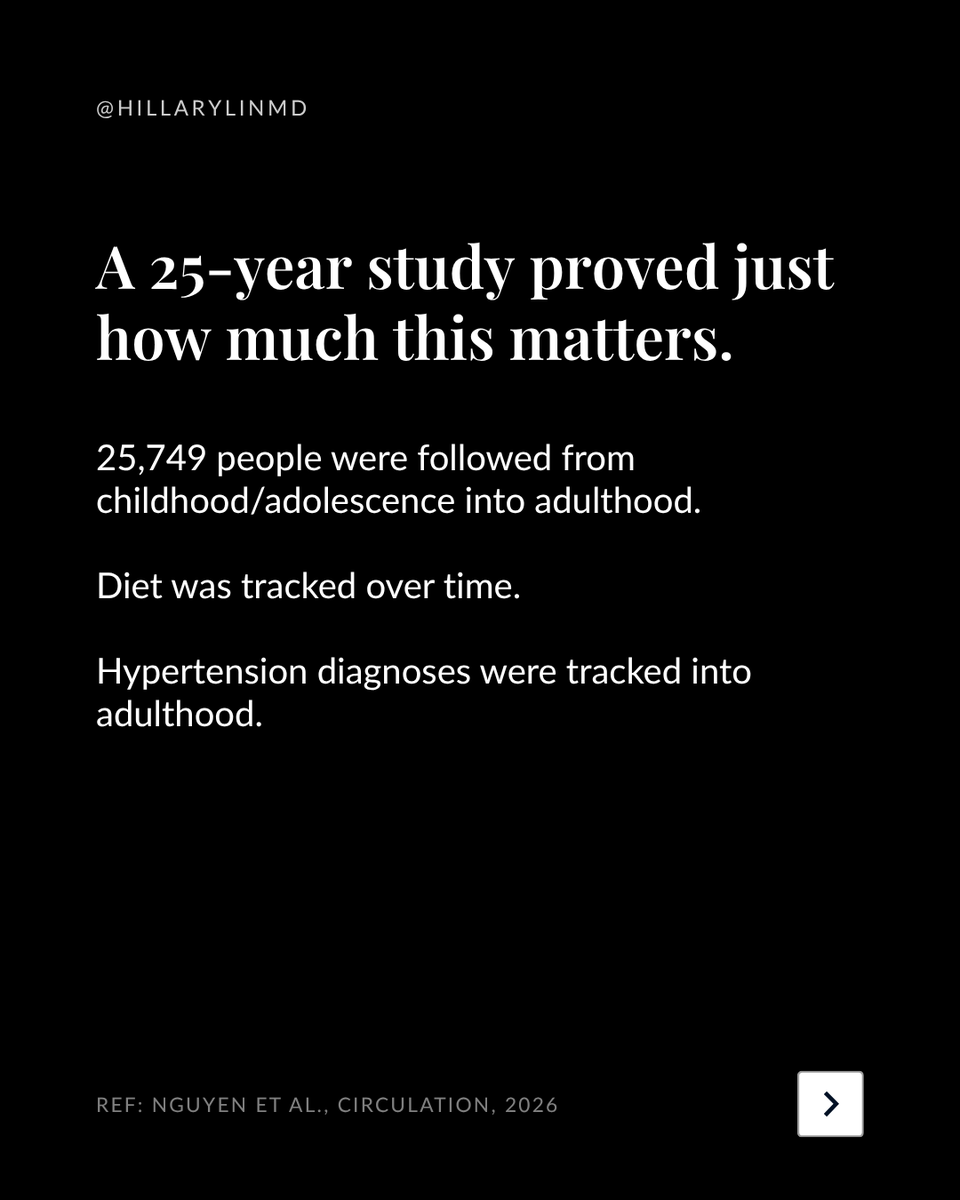
Sugar is not the enemy. Naked sugar is. Whole fruit arrives with fiber, structure, chewing, water, and satiety. Juice strips much of that away and makes it easy to drink a lot of sugar fast. 🧵
Hillary Lin, MD tweet mediaHillary Lin, MD tweet media
New York, USA 🇺🇸 English
1
1
5
185