Michael Pawlowski

26.6K posts

Michael Pawlowski banner
Michael Pawlowski

Michael Pawlowski

@HistoryAlive1

History Lover. Tell the Rest of the Story. Author of 10 published novels. Devoted to allowing the Holy Spirit to be Alive in the heart & soul of every person.

Hamilton, Ontario Katılım Mayıs 2012
337 Takip Edilen725 Takipçiler
Michael Pawlowski retweetledi
The Prince and Princess of Wales
A special portrait taken ahead of yesterday evening's Nigeria State Banquet 🇳🇬🇬🇧 📸 Christianah Ebenezer
The Prince and Princess of Wales tweet media
English
624
1.5K
20.1K
315.6K
Michael Pawlowski retweetledi
Friar Mario Conte
Friar Mario Conte@FriarMario·
On the Feast Day of St Joseph, I prayed for you, your personal intentions, and world peace at St Anthony’s Tomb. I will remember you again this afternoon during the Holy Mass I will celebrate in the Basilica. May St Joseph intercede for you and obtain for you many blessings. 🤗
English
96
105
1.3K
5.6K
Michael Pawlowski retweetledi
Marietta
Marietta@nesci1811·
March 19 - Happy Feast Day St. Joseph St. Joseph never preached. He never wrote. He never performed miracles. He simply obeyed. And that quiet obedience changed the history of the world.
Marietta tweet media
English
40
653
4.1K
35.3K
Michael Pawlowski
Michael Pawlowski@HistoryAlive1·
@MarieePhilomena What happened to 1st Sunday of Passion, Palm Sunday (St. Matthew Passion) Monday (Raising of Lazarus) Tuesday (St. Mark Passion), Wednesday AM (St Luke Passion) Spy Wednesday in Evening, Thursday Chrism Mass, Thursday 5pm Low Mass, Last Supper 8pm, Adoration till 6am Friday.
Michael Pawlowski tweet media
English
0
0
0
7
Marie Philomena
Marie Philomena@MarieePhilomena·
Lent has felt different this year. If I’m being honest, it’s been heavy… and not at all what I expected. Maybe you feel that too—like you’ve fallen off, or you’ve just been trying to get through the day. But the beauty of Lent is that it was never about doing it perfectly. It’s about bringing whatever we have… even our grief, our exhaustion, our mess… and placing it at the foot of the Cross. And it’s not too late to do that. We still have time. I’m going to be doing an online retreat March 26–28 to slow down, pray, and refocus my heart before Holy Week. If your Lent hasn’t gone how you hoped, you’re not alone—and I would truly love for you to join me. Let’s come back to Him, together. *link below*
Marie Philomena tweet media
English
5
5
39
836
Michael Pawlowski retweetledi
Edward Reid
Edward Reid@ReidEdwardII·
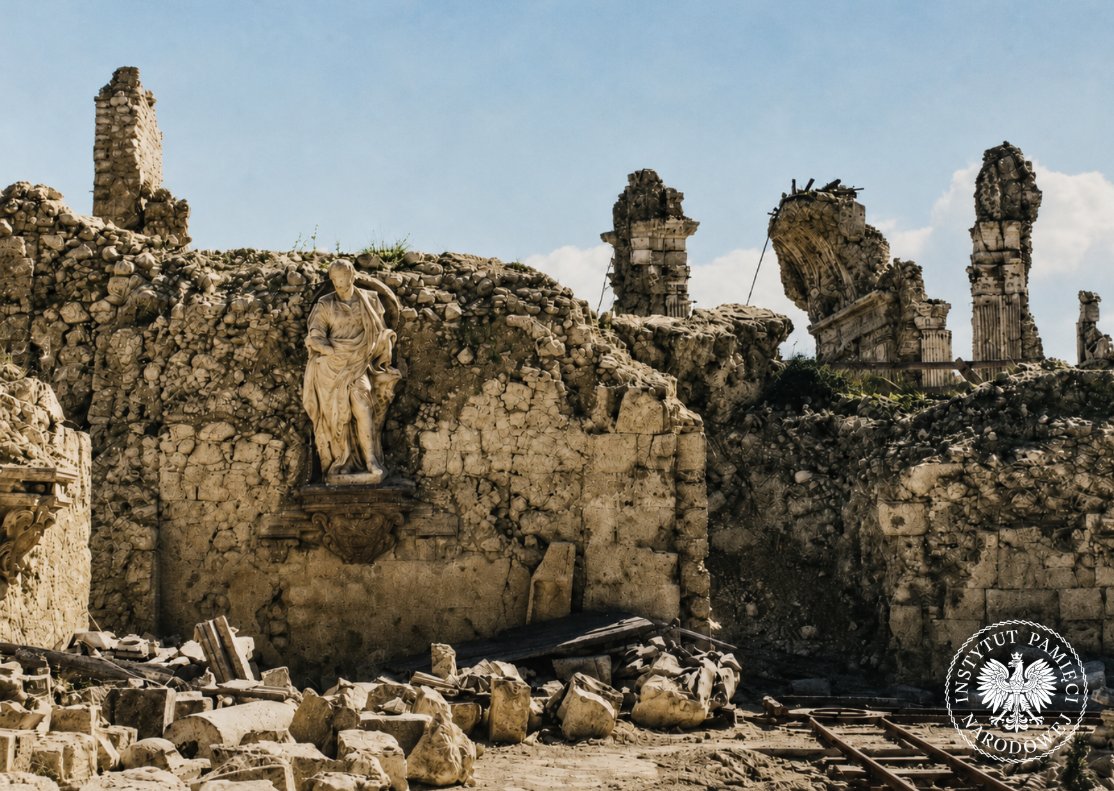
There are battles that belong to strategy, and there are battles that belong to memory. Monte Cassino belongs to both, but to the Poles above all it became something deeper, almost sacred. It was not simply a military objective perched atop a shattered Italian mountain. It was a reckoning. By the spring of 1944, the Allies had already hurled wave after wave of men against the German defensive line anchored on the heights of Monte Cassino, and each assault had failed. The terrain itself seemed to resist conquest, steep, broken, exposed, a landscape of stone and fire where every approach was observed and every advance punished. The ruins of the ancient abbey loomed above it all, reduced to rubble yet still dominating the battlefield like a tomb that refused to close. Into this crucible came the Polish II Corps under General Władysław Anders. These were not ordinary soldiers, but men who had survived Soviet prisons, deportations, starvation, and exile, men for whom the road to Monte Cassino had begun in the frozen wastes of Siberia. They were told to take the mountain, a task that bordered on the impossible, as German paratroopers held fortified positions carved into rock and every path upward was covered by machine gun fire, artillery, and mortars. The Poles attacked in May 1944, advancing at night through minefields and shattered stone, carrying ammunition and wounded alike up slopes that seemed to reject human presence. Progress was measured in meters and paid for in blood. One soldier later recalled, “We went forward because there was nothing else left for us to do. Behind us was not safety, but memory,” while another wrote, “The mountain was not earth. It was fire and iron. You did not fight on it, you endured it.” The first assaults were repulsed with heavy losses, entire units cut down trying to seize key ridges, yet they did not break. They regrouped and went forward again, driven by something greater than orders. Anders understood the cost, but also the meaning, that for a nation occupied and erased, this battle was a declaration that Poland still fought. “We knew the price,” he is remembered to have said, “but we also knew that there are moments in history when a nation must prove it still exists.” The final assault came through relentless pressure, Polish units clawing their way up the slopes, taking one position after another in brutal close combat until the Germans, worn down and facing encirclement, began to withdraw. On May 18, 1944, Polish troops reached the summit and raised their flag over the ruins of the abbey as a bugler played the Hejnał Mariacki, its notes carrying across a battlefield that had consumed thousands. It was victory, but also mourning. Over 900 Polish soldiers were killed and thousands more wounded, the slopes left marked by graves as much as by craters. The cemetery below bears the inscription, “For our freedom and yours, we Polish soldiers gave our souls to God, our bodies to the soil of Italy, and our hearts to Poland.” Monte Cassino opened the road to Rome, yet for the Poles the triumph carried a bitter weight, their homeland still under Soviet control and their sacrifice largely unreflected in the postwar order. Still, the meaning of Monte Cassino endures. It stands as a testament not only to military perseverance, but to a refusal to disappear, a determination to be counted among the living nations of the world even when history seemed determined to erase them. In the end, the conquest of Monte Cassino was not only a victory over terrain and enemy, but a victory over oblivion.
Edward Reid tweet media
English
21
272
966
12.6K
Michael Pawlowski retweetledi
Catholic Quotes
Catholic Quotes@CatholicQuote12·
Christ please deliver me!
Catholic Quotes tweet media
English
11
51
1.1K
7.7K
Michael Pawlowski retweetledi
Mark Lambert
Mark Lambert@sitsio·
Sunday High Mass at Our Lady of Clear Creek Abbey in Oklahoma, a remote Benedictine monastery tucked into the hills. Founded in 1999 by monks from the historic Abbey of Fontgombault in France, the community follows the Rule of St. Benedict and celebrates the sacred liturgy in Latin with Gregorian chant according to the traditional rites of the Church.
Mark Lambert tweet mediaMark Lambert tweet mediaMark Lambert tweet media
English
27
144
1.1K
34.6K
Michael Pawlowski
Michael Pawlowski@HistoryAlive1·
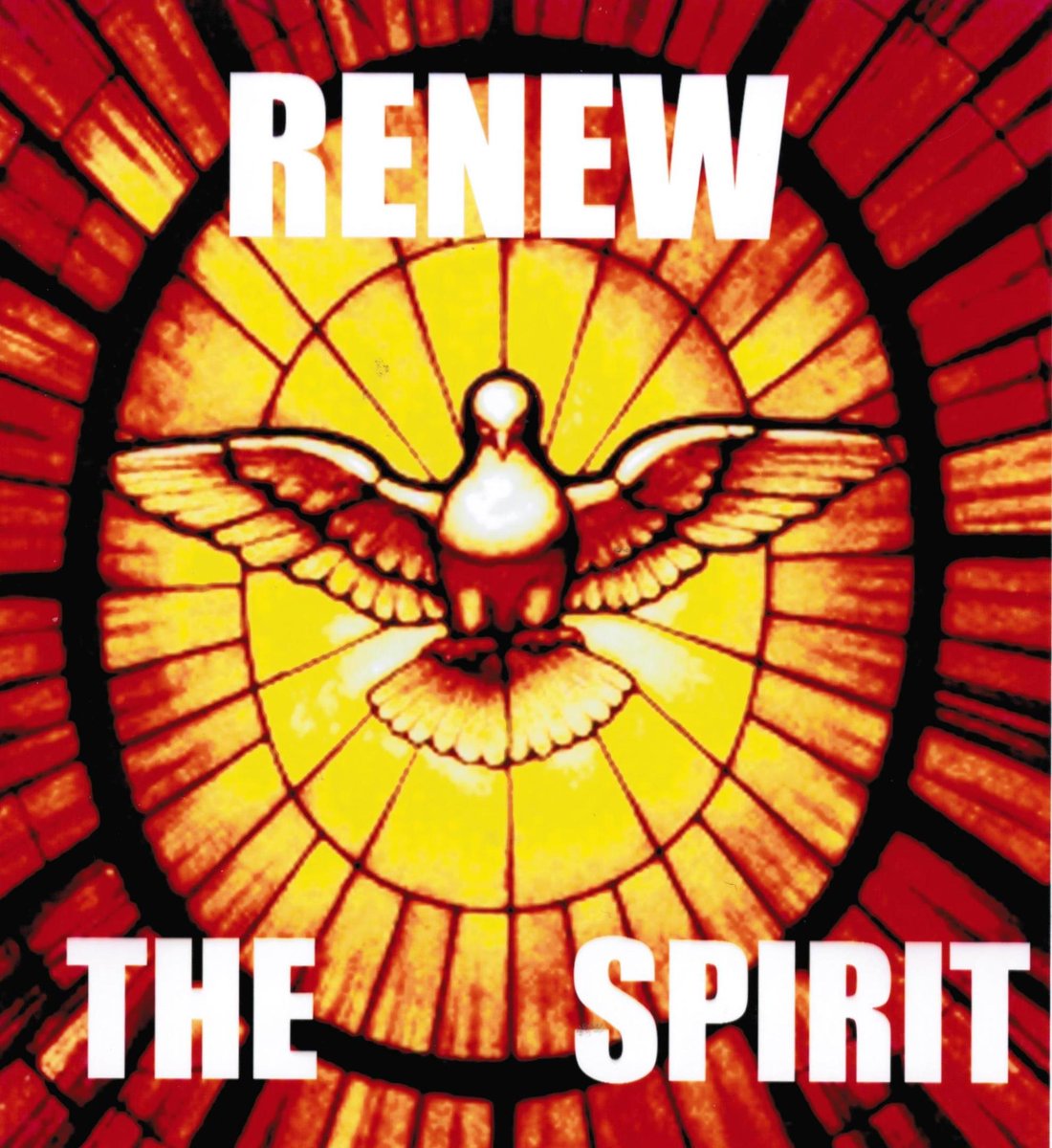
@SkyVirginSon I cherish the Love, Guidance and Inspiration of the Holy Spirit in allowing me to compose this meditation reflection.
Michael Pawlowski tweet media
English
0
0
0
4
RosarySon
RosarySon@SkyVirginSon·
If you believe in the Holy Trinity, Father, Son, and Holy Spirit, type Amen. 🙏
RosarySon tweet media
English
1.6K
708
6.9K
62.1K
Michael Pawlowski retweetledi
Mark Lambert
Mark Lambert@sitsio·
St. Josemaría Escrivá, a Spanish priest, founded Opus Dei in 1928 and spent his life reminding ordinary Catholics that holiness is not reserved for monks or cloistered nuns, but is meant to be lived in the middle of daily life, through discipline, focus, and the quiet resilience that comes from loving God in small, consistent ways. He was known for speaking very plainly, and one of his most striking observations about the Mass cuts right to the heart of the matter. “𝐘𝐨𝐮 𝐬𝐚𝐲 𝐭𝐡𝐞 𝐌𝐚𝐬𝐬 𝐢𝐬 𝐥𝐨𝐧𝐠, 𝐚𝐧𝐝 𝐈 𝐫𝐞𝐬𝐩𝐨𝐧𝐝, ‘𝐛𝐞𝐜𝐚𝐮𝐬𝐞 𝐲𝐨𝐮𝐫 𝐥𝐨𝐯𝐞 𝐢𝐬 𝐬𝐡𝐨𝐫𝐭.’ 𝐘𝐨𝐮 𝐥𝐨𝐨𝐤 𝐚𝐭 𝐲𝐨𝐮𝐫 𝐰𝐚𝐭𝐜𝐡 𝐚𝐧𝐝 𝐭𝐡𝐢𝐧𝐤 𝐢𝐭 𝐫𝐮𝐧𝐬 𝐭𝐨𝐨 𝐥𝐨𝐧𝐠, 𝐛𝐞𝐜𝐚𝐮𝐬𝐞 𝐲𝐨𝐮𝐫 𝐡𝐞𝐚𝐫𝐭 𝐡𝐚𝐬 𝐧𝐨𝐭 𝐥𝐞𝐚𝐫𝐧𝐞𝐝 𝐭𝐨 𝐥𝐢𝐧𝐠𝐞𝐫 𝐛𝐞𝐟𝐨𝐫𝐞 𝐭𝐡𝐞 𝐦𝐲𝐬𝐭𝐞𝐫𝐲 𝐨𝐟 𝐆𝐨𝐝.” — 𝐒𝐭. 𝐉𝐨𝐬𝐞𝐦𝐚𝐫í𝐚 𝐄𝐬𝐜𝐫𝐢𝐯á It is a hard line, but an honest one. The problem is rarely the length of the Mass. The problem is that modern people have trained their attention to linger everywhere except before God. We can sit through hours of entertainment, scroll endlessly through our phones, and binge entire seasons of shows, yet many people grow restless after a short time in church. St. Josemaría’s point is that love changes how we experience time. When you truly love someone, you do not count the minutes you spend with them. The Mass is the closest we come on earth to heaven. It is where heaven and earth meet, where Christ becomes present on the altar, and where our souls are drawn into the mystery of God’s love. So, the question is: is the Mass too long or have our love grown COLD?
Mark Lambert tweet media
English
13
61
204
3.6K
Michael Pawlowski retweetledi
The Royal Family
The Royal Family@RoyalFamily·
A message from His Majesty The King congratulating ParalympicsGB and teams across the Commonwealth on their successes at the Paralympic Winter Games in Milano Cortina: “As the Winter Paralympic Games come to a conclusion in Italy, my wife and I send our most heartfelt congratulations to all the medal-winners from ParalympicsGB, Canada, Australia and New Zealand. Your collective achievements bear a powerful testimony to your extraordinary determination and commitment, and to the tireless dedication of your support teams. We rejoice in your successes while saluting and celebrating all those from across the Commonwealth who have participated, often in the face of great personal adversity, as we thank once more the Italian people for the warmth of their hospitality over these wonderful past weeks of Winter sport.” Charles R
The Royal Family tweet mediaThe Royal Family tweet mediaThe Royal Family tweet mediaThe Royal Family tweet media
English
171
232
2.2K
54.8K
Michael Pawlowski
Michael Pawlowski@HistoryAlive1·
@ReidEdwardII Even the US Post Office considered Poland to be an 'Over-run Nation' in June 1943 ... not an Independent Nation.
Michael Pawlowski tweet media
English
1
0
2
235
Edward Reid
Edward Reid@ReidEdwardII·
Why Poland Was Erased from the Victory Narrative of World War II: One of the paradoxes of the Second World War is that the country whose destruction began the conflict was largely absent from the story of victory that followed it. Poland was the first nation to resist Nazi Germany. When Germany invaded on September 1, 1939, Polish forces fought despite overwhelming odds. Just over two weeks later the Soviet Union invaded from the east under the secret terms of the Molotov–Ribbentrop Pact. Poland was crushed between two totalitarian powers, yet the Polish state did not surrender. The government continued the war in exile, and Polish forces fought alongside the Allies on nearly every front. Polish pilots defended Britain during the Battle of Britain. Polish soldiers fought in North Africa and Italy, where the Polish II Corps captured Monte Cassino after months of failed Allied assaults. Polish troops helped liberate parts of France, Belgium, and the Netherlands. Polish intelligence had earlier played a crucial role in breaking the German Enigma code. Inside occupied Poland, one of the largest underground resistance movements in Europe operated in secret. The Polish Underground State maintained courts, schools, and an army that carried out sabotage and intelligence operations against the German occupation. Yet when the war ended, Poland was not fully present in the story of victory that the world came to remember. One reason was geopolitics. By 1945 the Soviet Union controlled Poland. At the Yalta Conference the Western Allies accepted that Poland would fall within the Soviet sphere of influence. The Polish government-in-exile that had fought alongside the Allies was gradually pushed aside, and a communist government backed by Moscow took power. Emphasizing Poland’s wartime struggle risked drawing attention to the uncomfortable truth that the country had not regained genuine independence. Soviet propaganda also shaped the historical narrative. The Red Army was portrayed as Poland’s liberator, while earlier Soviet actions such as the 1939 invasion, mass deportations, and the Katyn massacre were suppressed for decades. There was another factor as well. Global memory of the war increasingly centered on the Shoah, the systematic murder of six million Jews by Nazi Germany. This focus was justified, but it sometimes narrowed the broader story of suffering in Eastern Europe. Poland lost both its Jewish population, which had been one of the largest in the world, and millions of non-Jewish citizens who died under German and Soviet rule. These overlapping tragedies created a complicated memory landscape. Different communities emphasized different aspects of the war, and at times this produced what some call “competitive victimhood,” where recognition of suffering becomes contested. Poland’s wartime experience does not fit easily into a simple narrative of liberation. The country endured the destruction of its Jewish communities, the loss of millions of its citizens, and decades of communist rule after the defeat of Germany. Remembering Poland’s story does restore part of a historical picture of a nation that fought from the first days of the war but whose victory was overshadowed by politics and competing and minimizing memories of the conflict.
Edward Reid tweet media
English
54
549
1.7K
33.3K