Hodler without borders
2.7K posts

Hodler without borders
@HodlerWB
Read my book "The Bitcoin Alchemist" https://t.co/M5fnkFYcmz #Bitcoin is my chosen path to Sovereignty.
Katılım Eylül 2008
4.5K Takip Edilen1.7K Takipçiler
Sabitlenmiş Tweet

Watch this succinct video summary of my book "The Bitcoin Alchemist"
amazon.com/dp/B0FRX5TWF1
English

@London_W4 Sorry about your ordeal. Glad you came back to tell the story. Money can always be recovered. A nice story ending abruptly would have been much worse.. cheers to life and second chances.
English

I know you like to keep abreast of my adventures so today I have excelled myself. I’ve come to Woodbridge in Suffolk to spend a few days on my sailing boat that I bought a few weeks ago. Packed loads of stuff. Bought a secondhand dinghy from the local boat sales place here, rowed out to my boat and the dinghy started sinking. Slowly at first and then boom, it was gone and me and all of my stuff were in the water. I had my very heavy backpack on. The duvet managed to wrap itself around my left arm and body and was pulling me down. At this point I thought I was going to drown. I managed to somehow free myself from it and swim to my sailing boat and reach up and cling on. Anyone who knows boats however, knows that you cannot pull yourself up out of the water. So there I was clinging on to my boat, backpack still on and wondering how long it would be before my arms gave way and things got even worse. Well, the world’s most wonderful bloke in a rib saw me and sped over. He got my backpack off and I got into his boat. He saved my life. Back on dry land and I assessed the damage. My Fujifilm xpro3 is deceased. Totally filled with water. Various other electronic items are destroyed. That involuntary swim has cost me thousands of pounds and no, there is no insurance I can claim from. I’ve lost it. The dinghy should never have been sold. If I’d had more experience I’d probably have realised that before getting in it. At least he’s refunded me the purchase price! So I’m sat in soaking wet clothes in the sunshine outside a pub now. I’ve booked a hotel and I’m going to have a glass of wine. Or two. Or three and reflect on an exciting Thursday. Just not exciting in the way I’d hoped. P.s. I’m sure there are those who will wonder whether I made parts of this story up. Well I didn’t. It’s exactly as I’ve told it. It was actually worse than I’ve told it. So I’m poorer and somewhat fed up about that. Anyway, cheers 🥂

English
Hodler without borders retweetledi

British regional foods that almost nobody under forty has eaten:
Lancashire hotpot with mutton and kidney. Welsh cawl with mutton and leek. Devonshire clotted cream with the crust on it. Yorkshire curd tart with sheep's-milk curd. Cornish pasty made with skirt steak and swede. Bath chap from a pig's cheek. Stargazy pie from Mousehole. Cumberland sausage from a single coiled link.
British regional foods that have appeared in the last twenty years:
A Pret a Manger in every town. A Greggs vegan sausage roll. A Costa flat white. A McDonald's McPlant.
The first list is the regional identity of an island.
The second list is the same five chains repeated in every postcode.
A country without distinctive food is a country without a distinctive culture.
Britain has both, on paper. In practice, the high streets all sell the same six items.
Eat a Cornish pasty made by a man in Cornwall. The food that built the country is still findable, but you have to look.

English
Hodler without borders retweetledi

I have quite an odd origin story for being an Anglophile, which is that I first fell in love with British cooking. I had heard so often the stereotype of it being terrible, so I went to an English pub and actually tried the stuff. I found it phenomenal and fitting to my palette.
It really is quite great. Bangers and mash, beef Wellington, shepherds pie, meat pies, yes even things like beans on toast are all great, hearty food that is honestly my favorite cuisine. My favorite breakfast of all is a full English, with black pudding and all, alongside a cup of English breakfast tea with a splash of milk.
I am actually of the belief that this particular stereotype was actually crafted specifically to facilitate mass replacement migration, to build false pretenses that the native ethnic foods and culture of European peoples were simply inferior to nons, when that could not be further from the truth.

English
Hodler without borders retweetledi

I finally watched the COFFEEZILLA vs. JEFF WALTON debate.
First of all, what an incredible performance by @PunterJeff. 👏🏻
Second, you find the full transcript of the debate below, if you want to reference certain parts of it.
Here are my key takeaways:
Coffeezilla's main objection was about language, not legality. He argued that "digital credit" misleads retail because preferred equity has no principal repayment, yet the product is constantly compared to bonds, money market funds, and bank accounts. His position throughout was that if risks are properly disclosed it's fine, but the marketing is where the trouble starts.
In my opinion these are mainly semantics, and @coffeebreak_YT focused way too much on it. All risks are properly disclosed in the SEC filings. Nothing is hidden.
Coffeezilla doesn't believe that Bitcoin will grow by 30% annually over the next 5-10 years, or 13% for 20-30 years. That's fine of course. Everyone can disagree. But it's just an opinion, and not really revelant for this discussion.
Coffeezilla is worried that the flywheel might reverse one day if Bitcoin was in a prolonged bear market or stopped growing >13% per year. Again, this risk is real, and everyone who is purchasing $SATA or $STRC has to underwrite this risk.
Coffeezilla's closing argument was counterintuitive. His expectation is that digital credit will succeed wildly. But he's worried that more issuance means a growing overhang of perpetual obligations all dependent on continued high CAGR Bitcoin appreciation, which he doesn't believe in.
So to summarize:
- Coffee doesn't believe in a Bitcoin CAGR >13%
- Coffee believes that digital credit will be wildly successful (!)
- Coffee believes that the flywheel will reverse one day and the whole thing will unwind
- Coffee doesn't understand the insurance business, or more broadly, companies that have a balance sheet and underwrite risk (like Bitcoin Treasury or structured finance companies)
Let's put these points into perspective:
1. At 13% yield, you get your full principle back after 7.69 years, and at 11.5% yield, you get your full principle back after 8.70 years. So that's the duration you are effectively underwriting.
2. Both Strive and Strategy have 1.5 years of dividend coverage in USD. Which means that your effective duration at risk is shortened by this time.
3. You can buy SATA/STRC for $100 (or below) and set a stop loss at $95 or $90. Which would mean that you'd be break-even after 5 or 10 months, and can't lose money after that.
4. Or, you can buy a $90 long put to hedge your exposure, so that your max loss is $10 if you buy at $100.
I love Coffeezilla, but here he clearly doesn't know what he is talking about.
Here's how I see it:
The more people talk about these products, the faster they will grow.
So thank you, Coffeezilla, for helping to promote Digital Credit. 🙌🏼
@saylor @phongle @ColeMacro @Werkman @Trollstein @IIICapital
Ragnar@RoaringRagnar
English
Hodler without borders retweetledi

Hodler without borders retweetledi

@ihtesham2005 This brings home the importance of collecting pieces of wisdom from as many fields as possible to create what Charlie Munger calls a 'lattice-work of mental models".
English

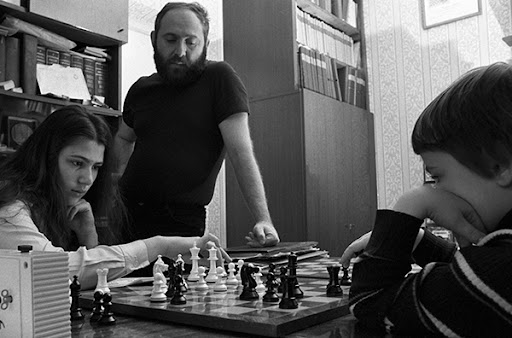
A Hungarian psychologist raised three daughters to prove that any child could become a chess grandmaster through early specialization. He succeeded. Two of them became grandmasters. One became the greatest female chess player who ever lived.
Then a sports scientist looked at the data and found something nobody wanted to hear.
His name is David Epstein. The book is called "Range."
The Polgar experiment is one of the most famous case studies in the history of deliberate practice. Laszlo Polgar wrote a book before his daughters were even born arguing that geniuses are made, not born. He homeschooled all three girls in chess from age four. By their teens, Susan, Sofia, and Judit were dominating tournaments against grown men. Judit became the youngest grandmaster in history at the time, breaking Bobby Fischer's record. The story became the gospel of early specialization. Pick a domain young, drill it hard, and you can manufacture excellence.
Epstein opens his book by telling that story honestly and then quietly demolishing the conclusion most people drew from it.
Chess works that way. Most things do not.
Here is the distinction that took him four years of research to articulate, and that almost nobody who quotes the 10,000 hour rule has ever read.
There are two kinds of environments in which humans develop expertise. Psychologists call them kind and wicked. A kind environment has clear rules, immediate feedback, and patterns that repeat reliably. Chess is the cleanest example. Every game ends with a winner and a loser. Every move is recorded. The board never changes shape. The pieces never invent new ways to move. A child who plays ten thousand games will see most of the patterns that exist in the game, and pattern recognition is exactly what chess mastery is built on.
A wicked environment is the opposite. Feedback is delayed or misleading. Rules shift. The patterns that worked yesterday may be exactly the wrong patterns to apply tomorrow. Most of the real world looks like this. Medicine is wicked. Investing is wicked. Building a company is wicked. Scientific research is wicked. Almost every job that involves a complex changing system with humans in it is wicked.
The Polgar sisters trained in the kindest environment any human can train in. Their success was real and the method was correct. The mistake was generalizing the method to fields where the underlying structure of the environment is completely different.
Epstein's research is what made the implication impossible to ignore.
He looked at the careers of elite athletes outside of chess and golf and found that the pattern was almost the inverse of what people assumed. The athletes who reached the very top of their sports were overwhelmingly people who had played multiple sports as children, specialized late, and often switched disciplines well into their teens. Roger Federer played squash, badminton, basketball, handball, tennis, table tennis, and soccer before tennis became his focus. The kids who specialized in tennis at age six and trained year-round for a decade mostly burned out, got injured, or topped out at lower levels of the sport.
The same pattern showed up everywhere he looked outside of kind environments. Inventors with the most patents had worked in multiple unrelated fields before their breakthrough work. Comic book creators with the longest careers had drawn for the most different genres before settling. Scientists who won Nobel Prizes were dramatically more likely than their peers to be serious amateur musicians, painters, sculptors, or writers.
The skill that mattered in wicked environments was not depth in one pattern. It was the ability to recognize when a pattern from one domain applied unexpectedly in another. That kind of thinking cannot be built by drilling a single subject. It can only be built by accumulating mental models from many subjects and learning to move between them.
The deeper finding is the one that should change how you think about your own career.
Specialists in wicked environments often get worse with experience, not better. Epstein cites studies of doctors, financial analysts, intelligence officers, and forecasters showing that years of experience in a narrow domain frequently produce more confident judgments without producing more accurate ones. The expert builds elaborate mental models that feel comprehensive and turn out to be increasingly disconnected from the actual structure of the problem. They stop noticing what does not fit their framework. They mistake fluency for understanding.
Generalists do better in wicked domains for a reason that sounds almost mystical until you understand the mechanism. They have less invested in any single mental model, so they abandon broken models faster. They are used to being a beginner, so they are not threatened by the discomfort of not knowing. They have seen enough different domains that they can usually find an analogy from one field that unlocks a problem in another. The technical name for this is analogical thinking, and the research on it is one of the most underrated bodies of work in cognitive science.
The single most useful sentence in the entire book is the one Epstein puts almost as a throwaway.
Match quality matters more than head start.
A person who tries six different fields in their twenties and finds the one that genuinely fits them will outperform a person who picked one field at fourteen and stuck to it on willpower alone. The lost years were not lost. They were the search process that produced the match. Every field they walked away from taught them something they later imported into the field they finally chose.
The reason this is so hard to accept is cultural, not empirical. We tell children to pick a path early. We reward the prodigy who knew at six. We treat the late bloomer as someone who failed to launch on time, when the data suggests they were running an entirely different and often more effective optimization process underneath.
The Polgar sisters were not wrong. The conclusion the world drew from them was.
If your environment is genuinely kind, specialize early and drill hard. If it is wicked, and almost every interesting human problem is, then the people who win are the ones who refused to specialize until they had seen enough to know what was actually worth specializing in.
You are not behind. You were running the right experiment all along.

English

@SamaHoole Somewhere along the lines. Sama's writing becomes poetry. He didn't plan it. It just is.
English

"There's no such thing as plant toxins, plants are food."
Quick exercise. Put on a coat. Walk to your nearest patch of woodland. Take a basket. Bring an open mind.
Now, without using your phone, without consulting a forager's guide, without phoning a friend, without a single bit of accumulated human knowledge about which plants will quietly shut down your liver between Tuesday and Thursday, gather your dinner.
Start with the foxglove. Lovely flower. Contains digitalis. Used to stop hearts in cardiology departments and, in larger doses, just stops hearts.
Move on to the hemlock. Tall, parsley-looking, abundant in damp ditches. Killed Socrates. Will kill you. Will not be talked round.
Try a few yew berries. The flesh is fine. The seed is one of the most reliably lethal plant compounds in Europe. Best of luck telling them apart in low light.
Have a chew on a deadly nightshade. The name is doing a lot of the work there.
Lords-and-ladies. Pretty. Burns the inside of your mouth so badly you cannot swallow.
Cuckoo pint. Same family. Same outcome. Different colour.
Bracken. Carcinogenic. Common as muck. Sheep know to avoid it. You did not.
Report back, if you can.
Plants spent four hundred million years evolving chemical weapons because they cannot run away. The cow can run away. The cow does not need to poison you. The cow simply walks slightly faster than you and hopes for the best.
Eat the cow.

English
Hodler without borders retweetledi

Shoutout to @coffeebreak_YT for hosting the discussion.
These are my final thoughts:
What coffee and speculators don’t seem to understand is that dying capital is coming through the door and it is getting transformed into pristine digital capital. The best form of capital in the world, Bitcoin.
So no.
More dying capital (fiat) going into $STRC or $SATA is not a bad thing for the business model, it actually propels it because it’s instantly converted into the best form of capital in the world.
The digital capital outperforms the cost of their capital (digital credit yield), they collect the difference, and they pay their investors.
It is that simple.
I cannot believe we are still this early.
@Strategy @strive $STRC $SATA
Jeff Walton@PunterJeff
Sat down with @coffeebreak_YT today on Bitcoin and Digital Credit. His edit will drop soon. Posting the full raw hour for anyone who wants the unfiltered version. Enjoy
English
Hodler without borders retweetledi

The British middle class is a man named Dave, 52, who has £100k in his pension pot, a 2019 Kia Sportage with 95,000 miles, a daughter at the University of Birmingham studying “media studies,” a wife on sertraline, a Weber barbecue he dusts off four times a year when it’s not raining, and the creeping suspicion — which he’ll never voice at the Rotary Club — that the whole setup is a house of cards and one bad quarter at the regional sales office has him and the missus in his brother-in-law’s spare room by Christmas.
Dave needs 0.4 BTC and a vicar.
English

The American middle class is a man named Greg, 52, who has $190,000 in a 401k, a 2019 Tahoe with 94,000 miles, a daughter at Ohio State studying “communications,” a wife on Wellbutrin, a Trager grill he uses four times a year, and the creeping suspicion - which he will never voice at the Rotary Club - that the entire arrangement is a Potemkin village and that one bad quarter at the regional sales office puts him in his brother-in-law’s finished basement by Christmas.
Think Greg needs a financial advisor?
Greg needs 0.4 BTC and a priest.
English
Hodler without borders retweetledi

I listened to this entire interview. Jeff explains why Saylor selling BTC doesn’t matter, why digital credit is accelerating and why Bitcoin could easily be worth $36 million in 50 years.
You will learn a lot from Jeff in this “debate”. The other guy, not so much.
Jeff Walton@PunterJeff
Sat down with @coffeebreak_YT today on Bitcoin and Digital Credit. His edit will drop soon. Posting the full raw hour for anyone who wants the unfiltered version. Enjoy

English
Hodler without borders retweetledi

This debate can easily be summarized as such:
Professional YouTuber argues about finance with a finance professional.
How did you expect this to turn out?
youtu.be/pvZnpppwkoM?si…

YouTube
English
Hodler without borders retweetledi

There was a debate about whether $STRC is a scam.
Before you engage with that framing:
ask yourself two questions:
1.) Do you actually think Morgan Stanley would run the IPO of a scam?
2.) Do you think BlackRock would be one of its largest shareholders?
Those aren’t rhetorical. They’re the answer.
@PunterJeff is exceptional for a specific reason. He spent his career in risk, underwriting it, pricing it, living inside it. Reinsurance. The people who don’t just talk about tail risk: they get paid to be right about it or go out of business.
Combine that with a deep, studied understanding of Bitcoin and the Saylor playbook, the kind many of us have been following and building since 2020, and you have someone uniquely qualified to evaluate a product like STRC. Not just theoretically. Structurally.
Some of us have dedicated our careers to this “magic internet money”
I left a Wall Street Bank. Jeff left his insurance job. Etc
Jeff finds the right words. Stays calm. Listens patiently / even when the other side says things like:
“Bitcoin is definitely NOT going up 13% or more on average over the next 8–10 years. That’s insane to think.”
That single sentence tells you everything. That is not someone who has spent serious time studying this asset.
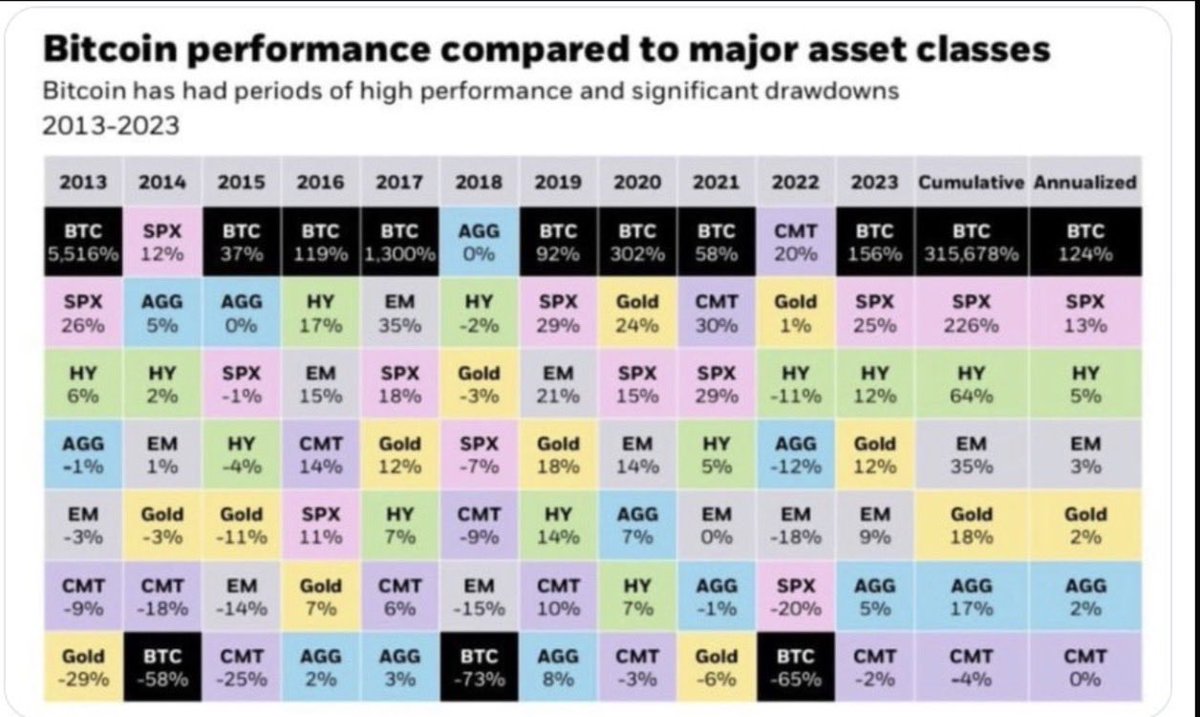
The best performing asset in human history. 80% 10-year ARR. Following the power law with 97% accuracy.
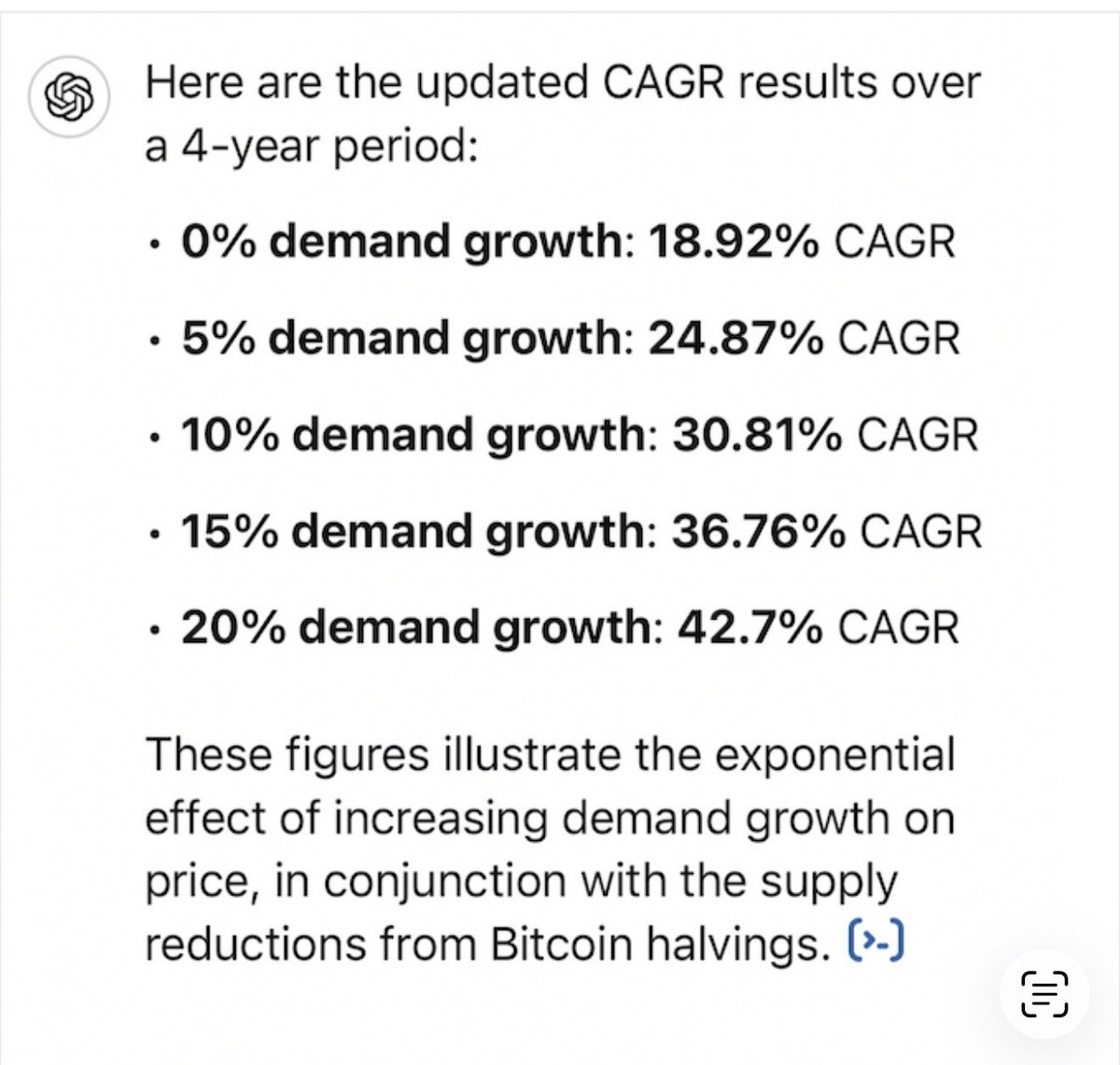
Go ask an AI: all else being equal, what should Bitcoin’s 4-year CAGR be given a fixed supply halving schedule?
It doesn’t guess. It does math. High school economics: demand stays completely flat for four years — zero growth — and we still print a 20% CAGR from supply compression alone.
Will we slow from 40% to 30% over time? Yes. Healthy. Normal.
Will we ever see a decade below 18% CAGR in our lifetimes? Almost zero probability. Bitcoin is 0.15% of $900 trillion in global wealth and that number is growing. When Bitcoin catches gold, a moving target, we’re likely at $2M+ per coin and still compounding at 25%+.
I don’t mind people saying they don’t understand Bitcoin, MSTR, or STRC.
99.9% of the world doesn’t yet. That’s the opportunity. And it’s ok to be skeptical and ask questions.
But to claim expertise, get basic facts wrong, and publicly bash something that honest people are genuinely trying to learn, well that causes real harm.
Jeff doesn’t do that. He does the opposite. And that’s exactly why he deserves the defense.
Rule #21 spread Bitcoin with Love 🧡


Jeff Walton@PunterJeff
Sat down with @coffeebreak_YT today on Bitcoin and Digital Credit. His edit will drop soon. Posting the full raw hour for anyone who wants the unfiltered version. Enjoy

English
Hodler without borders retweetledi

@SamaHoole @SamaHoole you deserve a booker prize for your literary skills and a knighthood for trying to restore us to what was good about our past culinary habits.
English

Liver and onions was on the kitchen table of roughly every British household in the country, at least once a fortnight, from approximately 1850 to approximately 1985.
A Tuesday meal. Whatever day the butcher had lamb's liver in, or pig's liver if you were further down the week, or ox liver if the household was stretching the budget.
Your mother bought it that afternoon. Still warm, or nearly. Deep burgundy, slick and glossy on the butcher's paper. Half a pound. Tuppence. Change from a shilling.
She sliced it quarter of an inch thick, dusted it in seasoned flour, and laid it in a pan where a pound of onions had been going soft in bacon fat for twenty minutes. Two minutes one side. Two minutes the other. The middle still faintly pink. Overcooked liver was a mortal sin in a British kitchen, spoken of by grandmothers with genuine sadness, the way a priest might discuss a lapsed parishioner.
Pan juices deglazed with water and Worcestershire, poured over. Mashed potato. A pile of cabbage. A rasher of bacon laid across the top if it was a good week.
The whole thing cost, in 1962, approximately 8p per serving. It delivered, in a single plate, the highest concentration of bioavailable vitamin A in any food on earth, more B12 than any supplement will ever contain, haem iron at absorption rates a plant source cannot match, copper, zinc, choline, folate, and selenium.
Nobody called it a superfood. Nobody called anything a superfood. It was called Tuesday.
Then, between 1985 and 2005, liver quietly disappeared. Mothers stopped buying it. The butcher stopped ordering it. The supermarket stopped stocking it. By 2010, most British adults under thirty had never knowingly eaten it.
The word now carries a faint cultural embarrassment. A food your nan ate. Something to move past.
Meanwhile, 20% of British women of childbearing age are anaemic. The NHS prescribes them ferrous sulphate tablets that cause nausea and take six months to address a deficiency one plate of liver a fortnight would correct in weeks.
The women taking the tablets are, in many cases, the granddaughters of the women who ate the liver.
The deficiency is cultural amnesia with a prescription attached.
Your butcher still has lamb's liver in the counter. Ask him. He will be delighted. He might throw in the kidneys.
Flour. Bacon fat. Onions. Four minutes total. Worcestershire. Mashed potato underneath.
The grandmother is gone, but the dish remembers her, and so do you, whether you knew her or not.
Eat it. Pass it on.

English