
Sabitlenmiş Tweet

我們的吉祥物Leopard cat醒來了,說他夢到鏈上很熱鬧。那就來辦點事吧!Hyperliquid Taiwan 正式上線!We’re live. Taiwan, let’s build something unstoppable. Follow us for drops, alpha, and everything onchain.
#Hyperliquid #HyperliquidTaiwan #Onchain
中文
Hyperliquid Taiwan
65 posts


🤡 The Central Circus @TroveMarkets - Devs Showing Signs of SCAM 🔷 Built on Hyperliquid but Launching Token on Solana? - They started with a testnet on HyperEVM and successfully drew in the community for the ICO, but then the Trove devs made this super confusing move: constantly delaying refunds and deciding to launch the token on SOLANA instead. - If that's not hilarious enough, check out how the devs are using the money raised from the ICO. 🔷 ZachXBT Exposes Dev Team Using ICO Funds to Deposit into Casino Sites - And the KOL Booking Scheme Comes Out - After the announcement, ZachXBT asked the team why they were sending ICO money to casino platforms, and the team claimed it was probably @_TJRTrades - a KOL who's into gambling. - Notably, this account had previously posted a super obvious shill for buying $TROVE. => So there's proof the team booked KOLs with huge amounts of cash. - After checking the addresses, a bunch of KOLs got exposed, like @waleswoosh - a KOL who's often at the top on Kaito, who got $8k to blatantly shill the TROVE ICO. => What's really messed up is that this KOL didn't even add an ad tag or warn users. => They're treating their followers like products to sell for profit. - KOLs who put the TROVE logo in their names got up to $5k a month, plus the perk of buying $TROVE at just 50% of the community price. => Taking ads isn't wrong, but if you don't disclose it, it's easy to overhype and cause the community to lose money. Especially investing in projects like TROVE. 🔷 The Game's Over - $HYPE Getting Dumped - The TROVE team bought 500k $HYPE to build community trust and prove they'd use HIP-3 (which requires staking 500k $HYPE). - But right after the ICO sold out, the team started gradually selling off those $HYPE tokens, raising suspicions that the project is a slow rug. You can check it here: #spot" target="_blank" rel="nofollow noopener">hypurrscan.io/address/0xebe0…
🔷 Personal Experience - Lessons Learned - When I see KOLs blatantly shilling an ICO deal like this, I usually stay away. - Deals that are super easy to buy into and win often aren't worth it. - Don't trust KOLs on X, especially anonymous accounts. They don't care if you lose money; they only care about how much your follow is worth to them. Source: @5phutcrypto_🤡 The Central Circus @TroveMarkets - Devs Showing Signs of SCAM 🔷 Built on Hyperliquid but Launching Token on Solana? - They started with a testnet on HyperEVM and successfully drew in the community for the ICO, but then the Trove devs made this super confusing move: constantly delaying refunds and deciding to launch the token on SOLANA instead. - If that's not hilarious enough, check out how the devs are using the money raised from the ICO. 🔷 ZachXBT Exposes Dev Team Using ICO Funds to Deposit into Casino Sites - And the KOL Booking Scheme Comes Out - After the announcement, ZachXBT asked the team why they were sending ICO money to casino platforms, and the team claimed it was probably @_TJRTrades - a KOL who's into gambling. - Notably, this account had previously posted a super obvious shill for buying $TROVE. => So there's proof the team booked KOLs with huge amounts of cash. - After checking the addresses, a bunch of KOLs got exposed, like @waleswoosh - a KOL who's often at the top on Kaito, who got $8k to blatantly shill the TROVE ICO. => What's really messed up is that this KOL didn't even add an ad tag or warn users. => They're treating their followers like products to sell for profit. - KOLs who put the TROVE logo in their names got up to $5k a month, plus the perk of buying $TROVE at just 50% of the community price. => Taking ads isn't wrong, but if you don't disclose it, it's easy to overhype and cause the community to lose money. Especially investing in projects like TROVE. 🔷 The Game's Over - $HYPE Getting Dumped - The TROVE team bought 500k $HYPE to build community trust and prove they'd use HIP-3 (which requires staking 500k $HYPE). - But right after the ICO sold out, the team started gradually selling off those $HYPE tokens, raising suspicions that the project is a slow rug. You can check it here: #spot" target="_blank" rel="nofollow noopener">hypurrscan.io/address/0xebe0…
🔷 Personal Experience - Lessons Learned - When I see KOLs blatantly shilling an ICO deal like this, I usually stay away. - Deals that are super easy to buy into and win often aren't worth it. - Don't trust KOLs on X, especially anonymous accounts. They don't care if you lose money; they only care about how much your follow is worth to them. Source: @5phutcrypto_Good morning builders! If you're based in France/EU, make sure to join the @HyperliquidFR community event. It's not to be missed! Details: Date: 19 Jan Time: 1930-2100PM Location: Paris (more info to be shared with attendees) Sign up here: luma.com/yb7c5xsa See you there!
Hello, Malaysia! Let's kick off 2026 by meeting fellow Hyperliquid believers or soon-to-be believers! Date: 30th Jan Time: 7:30PM - 10PM Location: Symphony Square, PJ Luma link below! 🧵


Lighter's TGE is live—now it's time for all the stats to settle back to their real levels. Let's wait and see if Lighter can actually compete with Hyperliquid, or if it's just a quick pump-and-dump that comes and goes.
We messed up by announcing an extension, and we’re correcting it. Over the past few days we spoke with a lot of early supporters and larger allocators. Many of them wanted us to onboard additional participants they believed would be strong long-term community members. In the moment, we listened and we optimized around a small set of voices instead of the signal that matters most: the broader community, and the commitments already made under the original terms. We want to address the recent ICO update clearly and directly. We messed up by announcing an extension. After taking a step back, reviewing everything, and listening to the feedback, we’re correcting it. There will be no extension. The Trove ICO is now concluded at $11.5M+ raised. We’re sticking to the original timeline and moving forward exactly as planned. Our intent was to protect distribution quality, but changing timelines mid-stream created uncertainty and confusion. That’s on us, and we’re fixing it by keeping things simple and honoring the original plan. Preferential allocation status will be reflected on the frontend, and our focus now is on executing the launch and delivering the product. Thank you for the support and for holding us to a high standard. Now we build so here’s the decision: No extension. The ICO is concluded at $11.5M raised. We’re sticking to the original timeline and moving forward with delivery. If we want to improve distribution quality and filter sybils/mercenary flow, we’ll do it the right way after the sale, with transparent processes. Appreciate the support. Now we build.
@FabianoSolana Marketing is great, but it needs to be backed up by real product (that people use). Focus on real builders.
Hyperliquid is built on a foundation of onchain transparency. A recent article made several claims that are factually incorrect: + Solvency: Every dollar is accounted for; the author failed to count native HyperEVM USDC. + Integrity: Testnet functions are exactly that - testnet only for testing. They cannot be executed on mainnet. + Transparency: Hyperliquid is more transparent and decentralized than all other major venues for perps trading. The entire state is independently maintained by a permissionless validator set and verified through BFT proof-of-stake consensus by each node. Every order, trade, and liquidation is available in real time during execution. Anyone can run a node and index the chain’s state and transitions. No major perps platform comes close to this guarantee for users. See our response to the writer’s individual points below. Claim: The system is undercollateralized by $362M False: The Hyperliquid blockchain state is fully and verifiably solvent. The author excluded the HyperEVM USDC (a publicly announced and much anticipated integration), which exists in parallel to the Arbitrum bridge. Every USDC in circulation on HyperCore is accounted for transparently, by summing up the balances of arbiscan.io/address/0x2df1… and hyperevmscan.io/address/0x6b9e…. At the time of writing, this amounts to 3.989B + 362M = 4.351B USDC on HyperCore. USDC on the HyperEVM can be computed by subtracting 362M from the 421M on the HyperEVM USDC contract (hyperevmscan.io/token/0xb88339…), totaling another 59M USDC on HyperEVM. The sum of the Arbitrum bridge and native USDC balances can be compared against the sum of user balances on HyperCore. As highlighted in the introduction, this exercise of verifying complete system solvency against user balances is uniquely possible on Hyperliquid compared to competitors. The current Arbitrum bridge was an important stepping stone in bootstrapping the Hyperliquid network and will be deprecated as the migration to native USDC is complete, bringing Hyperliquid to parity with other major L1s. Claim: There is retroactive volume manipulation via TestnetSetYesterdayUserVlm False: This is a testnet-only function to allow for comprehensive testing. The author states that “the function’s presence is the problem…capability alone violates the trust model.” Testnet-only features that enable more rigorous testing of edge cases do not undermine the chain’s integrity. The fee schedule on Hyperliquid interacts in a complex way with inputs: user volume, aligned quote token status, maker vs taker, HIP-3, etc. It’s important to test these interactions on testnet, and therefore the testnet chain has a set of admin testing functions that do not exist on mainnet. The related TestnetAddMainnetUser action is to mark a testnet user as having corresponding mainnet state, to avoid DDOS and other attacks that are “free” on testnet. None of these functions are callable on the mainnet state. While the execution source is not available, anyone can verify every trade onchain by running a node, and sum up the values to confirm that volume numbers are reflected accurately in onchain state. Similar to onchain solvency verification against the sum of all user account values, this is possible on Hyperliquid but not on most competitive platforms. Given that this code path is entirely unreachable on mainnet, future development work will entirely compile out this testnet-only logic on mainnet nodes to avoid any possible misunderstanding or misinterpretation. Claim: Some users have special privileges such as fee exemptions or retroactive volume manipulation used to influence the airdrop False: Like system solvency, user balances, and individual trades, the fees paid by any address is available onchain. Each trade along with its fees paid or rebates received are transparently indexed by nodes, API servers, and third party analytics providers. There are no such mechanisms to distort fees, and no such mechanisms could have influenced the HYPE airdrop. Furthermore, the genesis distribution of HYPE is fully available onchain, and users can verify the historical behavior of every such address. Claim: “CoreWriter” godmode can mint tokens, move user funds without signatures, crash random validators and basically do whatever it wants False: The CoreWriter spec is fully documented here hyperliquid.gitbook.io/hyperliquid-do… and replicable in the open source HyperEVM execution. CoreWriter is a way for smart contracts on HyperEVM to send HyperCore actions as part of HyperEVM block execution. It supports various actions that are normally sent by EOAs such as staking and placing orders, but has no such features to “mint tokens, move user funds without signatures, crash random validators and basically do whatever it wants.” This is a fundamental misunderstanding of how HyperCore interacts with the HyperEVM. Claim: Chain can freeze via governance, and no undo function exists Misinterpreted: The chain freezes during network upgrades. There is no undo function because the validators adopt a new binary at that height. This is analogous to how other networks perform hard forks at future heights determined by social consensus. Suspicious activity on POPCAT in Nov 2025 did not cause the L1 to freeze, nor were any user funds frozen. The L1 was entirely operational, and any observer can see the blocks that were produced during this time. The Arbitrum bridge was automatically locked after the incident due to abnormal variation in account balances. As explained above, the Arbitrum bridge is not as secure as natively minted USDC, and therefore requires several conservative automated locking mechanisms as safeguards. The Arbitrum bridge’s locking mechanism is audited and open sourced, and the bridge is being deprecated with the transition to native USDC. Claim: A single private key can set any oracle price instantly: no timelock, no limits Misinterpreted: The author is likely mistaking the HIP-3 oracle updater logic with the validator-operated perps. HIP-3 oracle updates are indeed set by a single address, but this is up to the deployer to configure. The updater address need not be an EOA. For example, current HIP-3 deployers use a combination of MPC and CoreWriter architecture. For validator-operated perps, multiple validators can submit oracle price updates. The final prices are a robust weighted median across major centralized exchanges. There is no timelock and no limits explicitly because these limits make the system less, not more, safe. The events of 10/10 show the danger to solvency if ADL is not accurately triggered in a timely manner during high volatility. Hyperliquid was one of the only venues without performance degradation or a network outage during this time. If Mango Markets or a similar protocol with oracle rate limits were active during 10/10, they would have likely accrued bad debt. Further decentralization will involve other validators actively running independent and open-sourced oracle update binaries. Claim: 8 undisclosed addresses control all transaction submission False: Some transactions are already sent directly from the validators. Some such as orders are not, in order to minimize MEV, but a future upgrade will incorporate this logic for all transactions in a mechanism that is both MEV- and censorship-resistant. The careful consideration of MEV is in response to trader and researcher feedback based on predatory behavior observed on other chains. There is almost unanimous agreement that toxic transaction ordering degrades the end user experience. Ultimately, the validator set is permissionless, and there is no guarantee that validators in the mainnet set are always fully aligned with the ecosystem. A major milestone in decentralization will be solving this problem, including a multiple-proposer block building setup. Claim: There is a liquidation cartel with unfair advantages Misinterpreted: Only HLP may backstop liquidate users, and HLP subvaults are the only addresses in this set. However, depositing into HLP is permissionless, so HLP is a community-owned liquidity vault supporting the protocol. The fact that HLP has privileges is no different from other protocol liquidity vaults. Relatedly, all liquidations are first attempted against the order book, which handles the vast majority of liquidated positions without backstop liquidation. This allows users to keep any remaining collateral, and allows all other users to compete in providing the best price to the liquidation flow, benefitting the liquidated user. Claim: There is a hidden lending protocol with $1M+ supplied and no documentation False: Portfolio margin, borrow lend, and the HLP supplied value were all publicly announced and are currently in pre-alpha rollout. The current documentation can be found at hyperliquid.gitbook.io/hyperliquid-do… and has been progressively fleshed out over the past several weeks. Claim: ModifyNonCirculatingSupply allows changes to token supply False: The full supply of HIP-1 tokens on HyperCore is fixed at deployment. The non-circulating supply is a purely informational number that can optionally mark addresses as “non-circulating” for display purposes. Whether an address is marked as “non-circulating” does not affect execution. This is an example of onchain information that might make more sense offchain, but is not a vulnerability. Thank you to the author for spending the time to verify the execution of Hyperliquid. The fact that this investigation could be done at all proves the transparency and decentralization that Hyperliquid has already achieved. Concretely, Hyperliquid is the only major perps venue where the entire state and every input diff is transparently available to anyone running a node. A similar analysis on any of the other top perp DEXs is impossible. For example, Lighter uses a single centralized sequencer whose execution logic and ZK circuits are unavailable. Aster uses centralized matching and even offers dark pool trading, which is only possible with a single centralized sequencer without verifiable execution. Other protocols with some open source contracts do not have a verifiable sequencer. On Binance, Lighter, Aster, or similar exchanges, it is impossible for anyone other than the sequencer to see a full snapshot of onchain state including order books, positions, and other user information. The centralized sequencer can also upgrade its software without any constraints. On Hyperliquid, the entire state is onchain, which means there are 24 validators executing the same state machine under BFT consensus rules. There is plenty left to do on the journey towards greater decentralization, but it’s important to highlight just how far Hyperliquid and its ecosystem have come compared to competitors. Decentralization is progressive, and Hyperliquid will ultimately be fully open sourced. Hyperliquid is the most transparent of all major venues, even though this leaks advantages to competitors (all of whom are closed source), who can copy Hyperliquid’s innovations more easily. We think this is the correct tradeoff to balance value accrual to the community, speed of innovation, and upholding the values of defi. The HyperEVM execution is open source, and Sprites, an independent community member, maintains a full archival node that powers many important integrations. HyperCore will follow the same path as soon as it reaches feature completion.
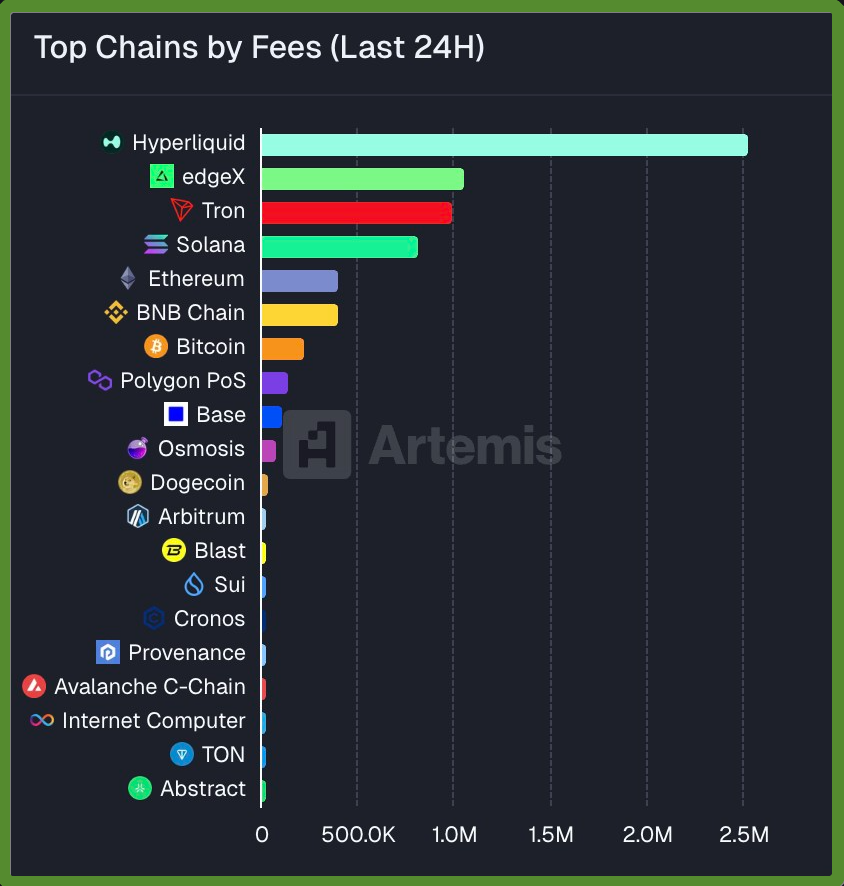
Is HyperEVM dead? Far from it—time to wake up! The Hyperliquid ecosystem is charging full steam into 2026 with robust momentum: @FlareNetworks: Launched the first native XRP spot trading pair (fXRP/USDC) on Hyperliquid's orderbook, enabling deeper liquidity and seamless bridging back to XRPL for DeFi utility. This expands XRP's onchain role significantly. @markets_xyz (by Kinetiq): Announced full launch on Jan 12, building on HIP-3 for permissionless perps. @tradexyz: Launched Crude Oil (CL) perps with 20x leverage and 24/7 trading. @ventuals: Deployed SEMIS (semiconductors index) perp with 15x leverage. @HypertradeX: Went live as a new spot/perp trading venue. @alturax: Rolled out the USDT0 main vault offering 20% base APY from institutional-grade strategies. @felixprotocol: Lending market active; wstHYPE holders can borrow USDH against collateral. @HybraFinance: Integrated AI auto-voting for ve(3,3) governance; routing V4 LP yields to veHYBR voters starting Jan 8. @HypurrFi: Announced exclusive partnership with Euler Finance to bring lending to Hyperliquid. @hyperlendx: Teased HPL genesis launch with points-driven, user-first model. @ultrasolid_hl: Shipped one-click LP rebalancing with auto-compounded fees. @TroveMarkets: Announced $TROVE token sale (Jan 8–11) for onchain access to illiquid markets.
Start 2026 building at the Hyperliquid London Community Hackathon. Three days at Encode Hub, London connecting with builders and protocol teams through workshops, bounties, and IRL hacking. @ryskfinance @ValantisLabs @pear_protocol @SaltSovereignty @silhouette_ex @hl_hackathon
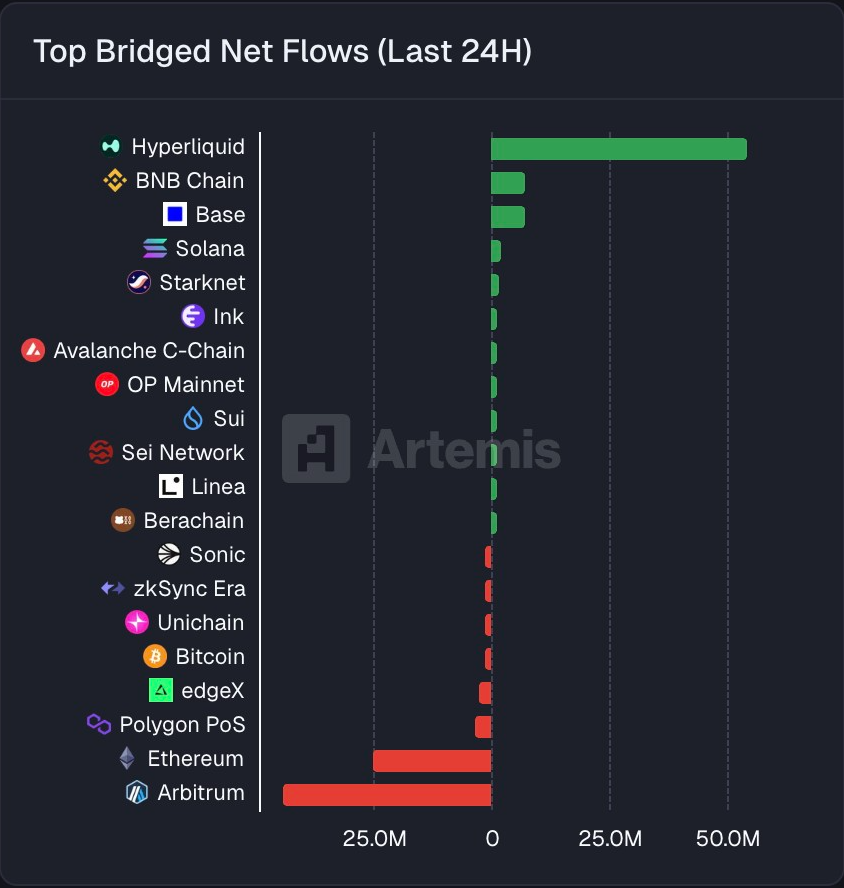
Hyperliquid today looks very different from Hyperliquid a year ago. This time last year, the HyperEVM hadn’t even launched, and there were only a handful of early believers building exclusively on Hyperliquid. Now, there are hundreds of teams building, dozens of regional communities with local events, and trillions more in volume traded. This was achieved without any external funding and giving all protocol fees to the community. Hyperliquid was built with a strong belief in returning to the core ethos of crypto - changing entrenched and predatory practices to be fair and permissionless. This art piece is meant to celebrate Hyperliquid’s growing ecosystem and commemorate how far we’ve come as a community in building the house of all finance. You’ll find many of your favorite apps and teams interwoven in the piece if you zoom in. A special thank you to @Degen_Alfie for bringing the community to life. Many great teams didn’t make it due to limited space and time, but your contributions have not gone unnoticed! Notable product and tech releases in 2025 included: + HyperEVM launch with HyperCore composability via precompiles and CoreWriter + Spot assets bridged by Unit + Fully permissionless validator set + Native utility to staking, with fee discounts for traders and permissionless HyperCore deployment capabilities for builders + Permissionless spot quote assets + Hypurr NFTs + USDH governance vote and launch by Native Markets + HIP-3 permissionless perp deployment + Native USDC integration + Portfolio margin pre-alpha launch + Assistance Fund HYPE officially burned Compared to 2024, ATHs in 2025 reached: + $32B in 24h volume from $15B in 2024 + $16B in open interest from $4B + $6B in TVL from $2B + $20M in 24h protocol revenue from $3.5M + 1.4M users from 300k Excited to see what the ecosystem looks like another year from now. Thank you to all the builders, users, and supporters who have come together to push forward Hyperliquid’s vision.

Hyperliquid leads with true on-chain transparency: every order, trade, liquidation, and balance is fully verifiable in real-time by anyone. Binance ❌ Aster ❌ Lighter ❌ Hyperliquid ✅
Hyperliquid is built on a foundation of onchain transparency. A recent article made several claims that are factually incorrect: + Solvency: Every dollar is accounted for; the author failed to count native HyperEVM USDC. + Integrity: Testnet functions are exactly that - testnet only for testing. They cannot be executed on mainnet. + Transparency: Hyperliquid is more transparent and decentralized than all other major venues for perps trading. The entire state is independently maintained by a permissionless validator set and verified through BFT proof-of-stake consensus by each node. Every order, trade, and liquidation is available in real time during execution. Anyone can run a node and index the chain’s state and transitions. No major perps platform comes close to this guarantee for users. See our response to the writer’s individual points below. Claim: The system is undercollateralized by $362M False: The Hyperliquid blockchain state is fully and verifiably solvent. The author excluded the HyperEVM USDC (a publicly announced and much anticipated integration), which exists in parallel to the Arbitrum bridge. Every USDC in circulation on HyperCore is accounted for transparently, by summing up the balances of arbiscan.io/address/0x2df1… and hyperevmscan.io/address/0x6b9e…. At the time of writing, this amounts to 3.989B + 362M = 4.351B USDC on HyperCore. USDC on the HyperEVM can be computed by subtracting 362M from the 421M on the HyperEVM USDC contract (hyperevmscan.io/token/0xb88339…), totaling another 59M USDC on HyperEVM. The sum of the Arbitrum bridge and native USDC balances can be compared against the sum of user balances on HyperCore. As highlighted in the introduction, this exercise of verifying complete system solvency against user balances is uniquely possible on Hyperliquid compared to competitors. The current Arbitrum bridge was an important stepping stone in bootstrapping the Hyperliquid network and will be deprecated as the migration to native USDC is complete, bringing Hyperliquid to parity with other major L1s. Claim: There is retroactive volume manipulation via TestnetSetYesterdayUserVlm False: This is a testnet-only function to allow for comprehensive testing. The author states that “the function’s presence is the problem…capability alone violates the trust model.” Testnet-only features that enable more rigorous testing of edge cases do not undermine the chain’s integrity. The fee schedule on Hyperliquid interacts in a complex way with inputs: user volume, aligned quote token status, maker vs taker, HIP-3, etc. It’s important to test these interactions on testnet, and therefore the testnet chain has a set of admin testing functions that do not exist on mainnet. The related TestnetAddMainnetUser action is to mark a testnet user as having corresponding mainnet state, to avoid DDOS and other attacks that are “free” on testnet. None of these functions are callable on the mainnet state. While the execution source is not available, anyone can verify every trade onchain by running a node, and sum up the values to confirm that volume numbers are reflected accurately in onchain state. Similar to onchain solvency verification against the sum of all user account values, this is possible on Hyperliquid but not on most competitive platforms. Given that this code path is entirely unreachable on mainnet, future development work will entirely compile out this testnet-only logic on mainnet nodes to avoid any possible misunderstanding or misinterpretation. Claim: Some users have special privileges such as fee exemptions or retroactive volume manipulation used to influence the airdrop False: Like system solvency, user balances, and individual trades, the fees paid by any address is available onchain. Each trade along with its fees paid or rebates received are transparently indexed by nodes, API servers, and third party analytics providers. There are no such mechanisms to distort fees, and no such mechanisms could have influenced the HYPE airdrop. Furthermore, the genesis distribution of HYPE is fully available onchain, and users can verify the historical behavior of every such address. Claim: “CoreWriter” godmode can mint tokens, move user funds without signatures, crash random validators and basically do whatever it wants False: The CoreWriter spec is fully documented here hyperliquid.gitbook.io/hyperliquid-do… and replicable in the open source HyperEVM execution. CoreWriter is a way for smart contracts on HyperEVM to send HyperCore actions as part of HyperEVM block execution. It supports various actions that are normally sent by EOAs such as staking and placing orders, but has no such features to “mint tokens, move user funds without signatures, crash random validators and basically do whatever it wants.” This is a fundamental misunderstanding of how HyperCore interacts with the HyperEVM. Claim: Chain can freeze via governance, and no undo function exists Misinterpreted: The chain freezes during network upgrades. There is no undo function because the validators adopt a new binary at that height. This is analogous to how other networks perform hard forks at future heights determined by social consensus. Suspicious activity on POPCAT in Nov 2025 did not cause the L1 to freeze, nor were any user funds frozen. The L1 was entirely operational, and any observer can see the blocks that were produced during this time. The Arbitrum bridge was automatically locked after the incident due to abnormal variation in account balances. As explained above, the Arbitrum bridge is not as secure as natively minted USDC, and therefore requires several conservative automated locking mechanisms as safeguards. The Arbitrum bridge’s locking mechanism is audited and open sourced, and the bridge is being deprecated with the transition to native USDC. Claim: A single private key can set any oracle price instantly: no timelock, no limits Misinterpreted: The author is likely mistaking the HIP-3 oracle updater logic with the validator-operated perps. HIP-3 oracle updates are indeed set by a single address, but this is up to the deployer to configure. The updater address need not be an EOA. For example, current HIP-3 deployers use a combination of MPC and CoreWriter architecture. For validator-operated perps, multiple validators can submit oracle price updates. The final prices are a robust weighted median across major centralized exchanges. There is no timelock and no limits explicitly because these limits make the system less, not more, safe. The events of 10/10 show the danger to solvency if ADL is not accurately triggered in a timely manner during high volatility. Hyperliquid was one of the only venues without performance degradation or a network outage during this time. If Mango Markets or a similar protocol with oracle rate limits were active during 10/10, they would have likely accrued bad debt. Further decentralization will involve other validators actively running independent and open-sourced oracle update binaries. Claim: 8 undisclosed addresses control all transaction submission False: Some transactions are already sent directly from the validators. Some such as orders are not, in order to minimize MEV, but a future upgrade will incorporate this logic for all transactions in a mechanism that is both MEV- and censorship-resistant. The careful consideration of MEV is in response to trader and researcher feedback based on predatory behavior observed on other chains. There is almost unanimous agreement that toxic transaction ordering degrades the end user experience. Ultimately, the validator set is permissionless, and there is no guarantee that validators in the mainnet set are always fully aligned with the ecosystem. A major milestone in decentralization will be solving this problem, including a multiple-proposer block building setup. Claim: There is a liquidation cartel with unfair advantages Misinterpreted: Only HLP may backstop liquidate users, and HLP subvaults are the only addresses in this set. However, depositing into HLP is permissionless, so HLP is a community-owned liquidity vault supporting the protocol. The fact that HLP has privileges is no different from other protocol liquidity vaults. Relatedly, all liquidations are first attempted against the order book, which handles the vast majority of liquidated positions without backstop liquidation. This allows users to keep any remaining collateral, and allows all other users to compete in providing the best price to the liquidation flow, benefitting the liquidated user. Claim: There is a hidden lending protocol with $1M+ supplied and no documentation False: Portfolio margin, borrow lend, and the HLP supplied value were all publicly announced and are currently in pre-alpha rollout. The current documentation can be found at hyperliquid.gitbook.io/hyperliquid-do… and has been progressively fleshed out over the past several weeks. Claim: ModifyNonCirculatingSupply allows changes to token supply False: The full supply of HIP-1 tokens on HyperCore is fixed at deployment. The non-circulating supply is a purely informational number that can optionally mark addresses as “non-circulating” for display purposes. Whether an address is marked as “non-circulating” does not affect execution. This is an example of onchain information that might make more sense offchain, but is not a vulnerability. Thank you to the author for spending the time to verify the execution of Hyperliquid. The fact that this investigation could be done at all proves the transparency and decentralization that Hyperliquid has already achieved. Concretely, Hyperliquid is the only major perps venue where the entire state and every input diff is transparently available to anyone running a node. A similar analysis on any of the other top perp DEXs is impossible. For example, Lighter uses a single centralized sequencer whose execution logic and ZK circuits are unavailable. Aster uses centralized matching and even offers dark pool trading, which is only possible with a single centralized sequencer without verifiable execution. Other protocols with some open source contracts do not have a verifiable sequencer. On Binance, Lighter, Aster, or similar exchanges, it is impossible for anyone other than the sequencer to see a full snapshot of onchain state including order books, positions, and other user information. The centralized sequencer can also upgrade its software without any constraints. On Hyperliquid, the entire state is onchain, which means there are 24 validators executing the same state machine under BFT consensus rules. There is plenty left to do on the journey towards greater decentralization, but it’s important to highlight just how far Hyperliquid and its ecosystem have come compared to competitors. Decentralization is progressive, and Hyperliquid will ultimately be fully open sourced. Hyperliquid is the most transparent of all major venues, even though this leaks advantages to competitors (all of whom are closed source), who can copy Hyperliquid’s innovations more easily. We think this is the correct tradeoff to balance value accrual to the community, speed of innovation, and upholding the values of defi. The HyperEVM execution is open source, and Sprites, an independent community member, maintains a full archival node that powers many important integrations. HyperCore will follow the same path as soon as it reaches feature completion.
USDC is now linked between HyperCore and HyperEVM. This is a major milestone in allowing secure, natively minted cross chain USDC deposits directly to HyperCore. In the final state, the Arbitrum bridge will be deprecated and all USDC will be natively minted. There are many details still to build out, and the priority is to roll out features in a safe way while giving users and builders ample time to migrate. Thank you to the Circle team’s hard work on building this integration. For users and builders, there is no immediate breaking change. Users can deposit and withdraw from both the Arbitrum bridge and HyperEVM. HyperCore now supports one-click deposits from CCTP-enabled chains, abstracting away the minting on HyperEVM. The CCTP route from Arbitrum has been deployed by Circle, with others to follow.


