Intelligence & Cognitive Abilities

49 posts

Intelligence & Cognitive Abilities banner
Intelligence & Cognitive Abilities

Intelligence & Cognitive Abilities

@ICAJournal

A journal for intelligence researchers, by intelligence researchers Editor in Chief, Thomas Coyle (@ThomasRCoyle)

Katılım Aralık 2024
26 Takip Edilen744 Takipçiler
Intelligence & Cognitive Abilities retweetledi
Sergio Escorial
Sergio Escorial@SergioEscorial·
The work being done at @ICAJournal is truly admirable. Reaching these numbers in such a short time is a testament to their hard work and commitment to open science. Congrats on the new issue!
Richard Haier@rjhaier

The 1st issue in our 2nd year of publishing scientific research on human intelligence is now complete with 8 papers--all Open Access: icajournal.scholasticahq.com/issue/14105-vo… In less than a year, we have over 21k unique visitors, and 1.6k downloads. If you do human intelligence research, please consider submitting your work.

English
0
2
5
315
Intelligence & Cognitive Abilities retweetledi
Richard Haier
Richard Haier@rjhaier·
The 1st issue in our 2nd year of publishing scientific research on human intelligence is now complete with 8 papers--all Open Access: icajournal.scholasticahq.com/issue/14105-vo… In less than a year, we have over 21k unique visitors, and 1.6k downloads. If you do human intelligence research, please consider submitting your work.
English

0
11
37
5.1K
Intelligence & Cognitive Abilities retweetledi
Richard Haier
Richard Haier@rjhaier·
Just published, new paper on using polygenic intelligence scores from adults to chart cognitive development in children: icajournal.scholasticahq.com
English
1
10
37
8.5K
Intelligence & Cognitive Abilities retweetledi
Riot IQ Test
Riot IQ Test@RiotIQ·
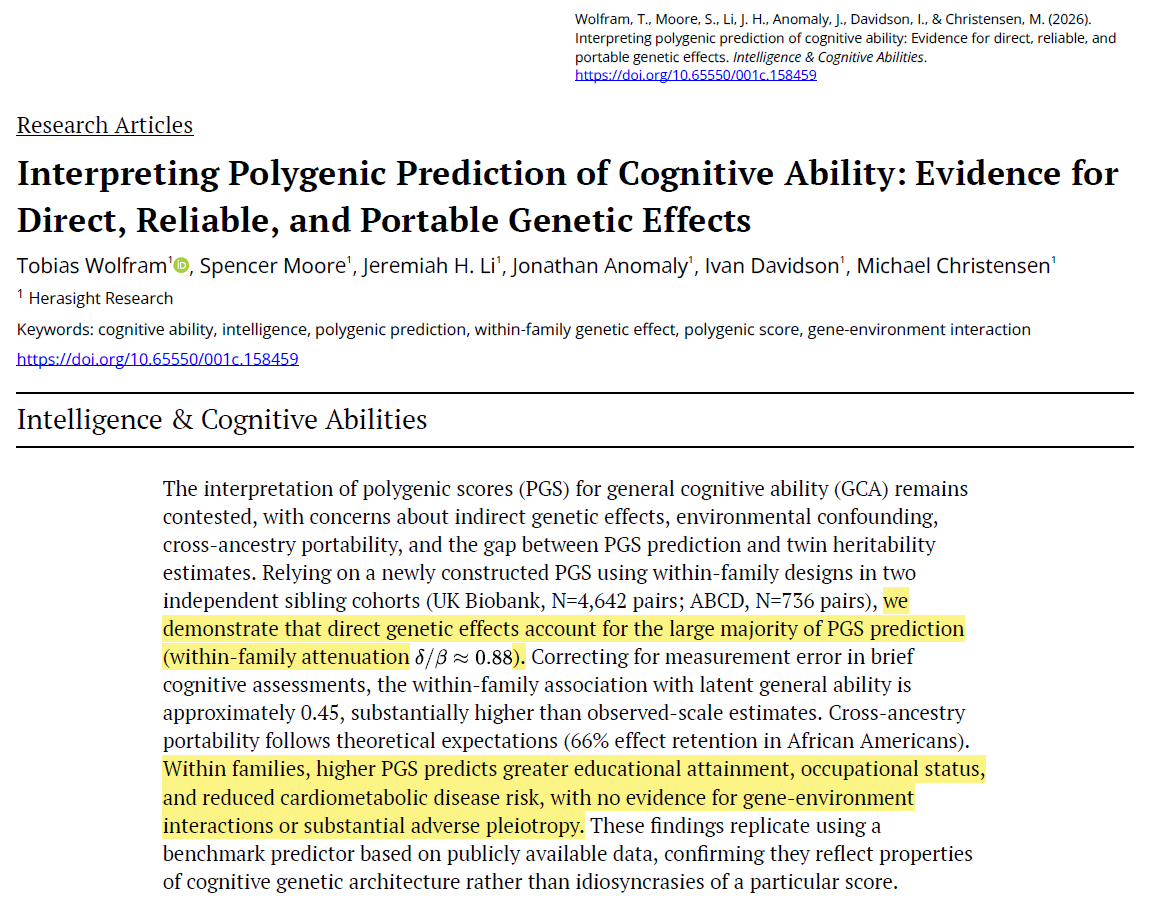
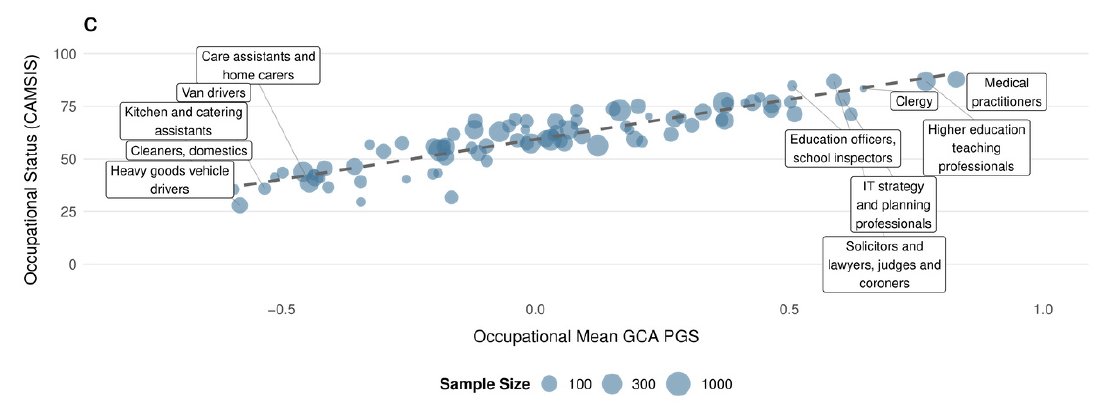
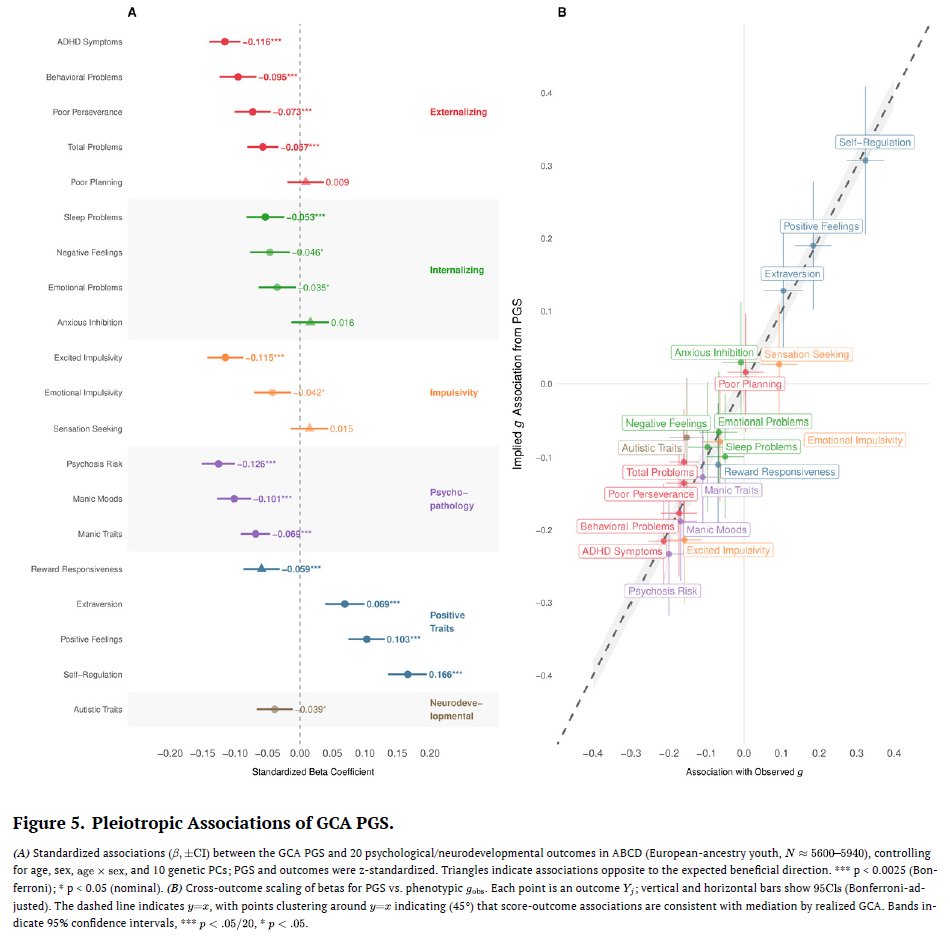
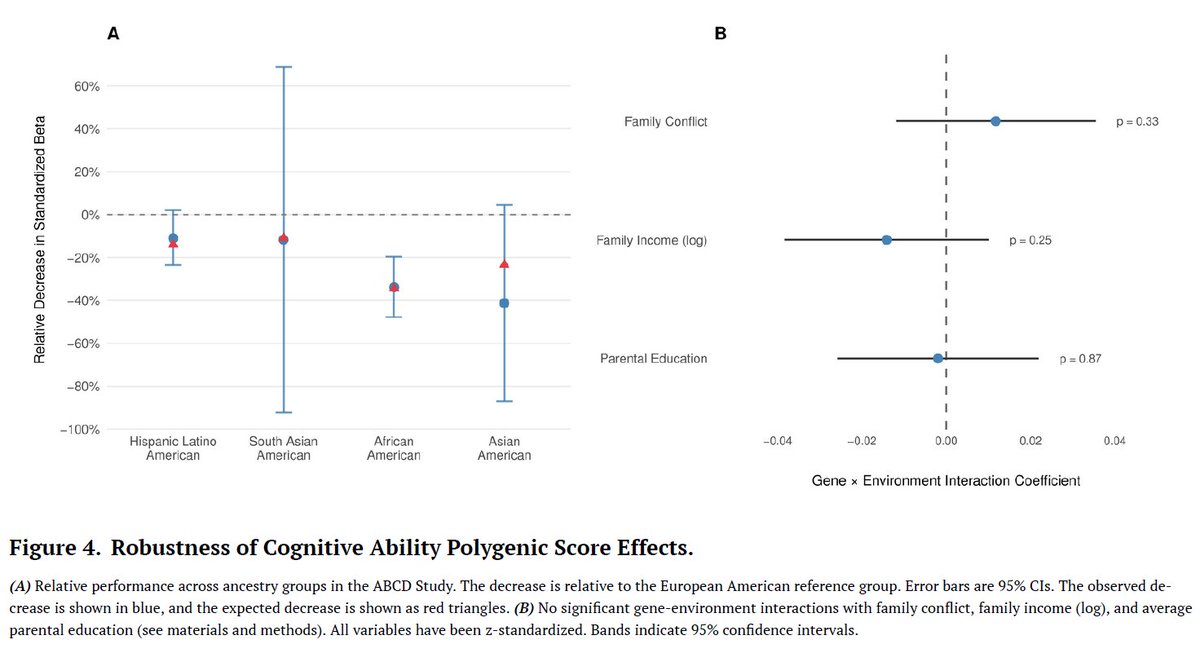
This week, @ICAJournal published a major article by @Herasight scientists (@_twolfram et al.) on using "polygenic scores" (scores based on a person's DNA, abbreviated PGS) to predict intelligence, health diagnoses, and life outcomes. Here's a quick summary of their findings: ✅The PGS predicted intelligence pretty well: r = .45. (To put this in perspective, socioeconomic status usually predicts IQ at r ≈ .20 to .30). ✅Higher PGSs for IQ also predicted better higher occupational prestige (2nd image) and better mental health outcomes (3rd image). ✅The PGSs were less predictive for people with non-European ancestry (especially African Americans), which is expected. ✅The PGSs were equally predictive across the range of socioeconomic statuses (4th image), which is evidence against the Scarr-Rowe effect that predicts that genes will have a weaker influence in low-SES individuals than middle- and upper-class individuals. These findings have major practical and theoretical implications. From a practical perspective, Herasight is an embryo selection company. This study means that when their customers select the smartest embryo during in vitro fertilization, they are also generally picking a future child that has better mental health and a more prestigious occupation as an adult. It sounds like sci-fi, but it is reality today. From a theoretical perspective, this study reveals a lot about the genetic architecture of the psychological traits: generally, the same genes that make a brain smarter also make it less susceptible to mental health diagnoses. Read the full article (with no paywall) here: icajournal.scholasticahq.com/article/158459…
Riot IQ Test tweet mediaRiot IQ Test tweet mediaRiot IQ Test tweet mediaRiot IQ Test tweet media
English
2
16
75
4.9K
Intelligence & Cognitive Abilities retweetledi
Richard Haier
Richard Haier@rjhaier·
New paper explaining our optimism about a molecular biology of human intelligence: icajournal.scholasticahq.com
English
0
8
26
2.2K
Intelligence & Cognitive Abilities retweetledi
Richard Haier
Richard Haier@rjhaier·
Two commentaries on our paper about a molecular biology of intelligence highlighted the complexities of polygenicity and GxE interactions. In our new paper we respond with optimism noting that complexity does not negate that there is a biology to discover. Rather it is a challenge that drives progress as new methods are created: icajournal.scholasticahq.com
English
0
4
22
2.4K
Intelligence & Cognitive Abilities retweetledi
i/o research
i/o research@iointelresearch·
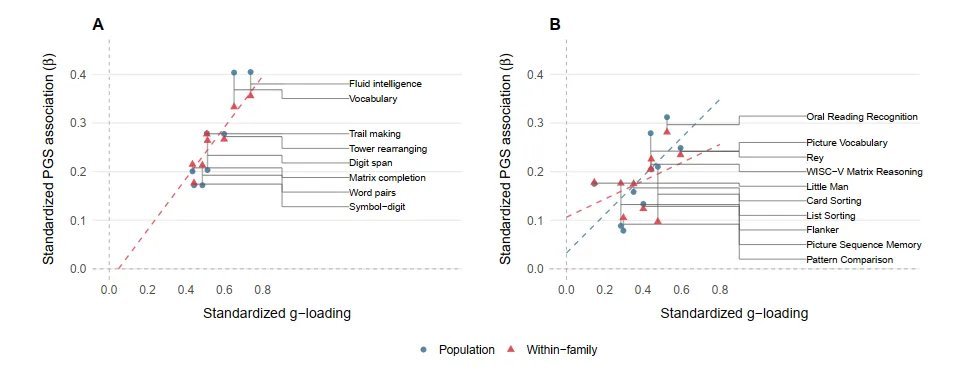
"Relying on a newly constructed PGS using within-family designs... we demonstrate that direct genetic effects account for the large majority of PGS prediction... the within-family association with latent general ability is approximately 0.45." icajournal.scholasticahq.com/article/158459…
English
1
7
27
2.9K
Intelligence & Cognitive Abilities retweetledi
Crémieux
Crémieux@cremieuxrecueil·
This is an awesome piece of work. Pretty cool findings: - Genetic predictors of IQ work within families and do so strongly - Spearman's hypothesis replicates with polygenic scores - The Scarr-Rowe hypothesis doesn't replicate with polygenic scores
Crémieux tweet media
Tobias Wolfram@_twolfram

Today the worlds most powerful genetic predictor of IQ, CogPGT, has been published in the peer reviewed journal Intelligence and Cognitive Abilities. When used for embryo screening, it can substantially boost expected IQ of future offspring. Read on for the scientific details!

English
7
65
615
48K
Intelligence & Cognitive Abilities retweetledi
Alex Strudwick Young
Alex Strudwick Young@AlexTISYoung·
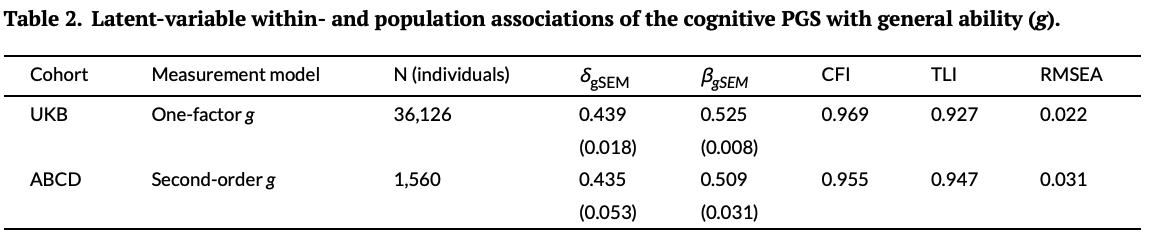
Herasight's polygenic predictor of IQ, CogPGT, is published in Intelligence and Cognitive Abilities. Full latent variable modeling of g shows within family correlations of 0.439 in UKB and 0.435 in ABCD. Powerful within family prediction translates to substantial gains in IVF.
Alex Strudwick Young tweet media
Tobias Wolfram@_twolfram

Today the worlds most powerful genetic predictor of IQ, CogPGT, has been published in the peer reviewed journal Intelligence and Cognitive Abilities. When used for embryo screening, it can substantially boost expected IQ of future offspring. Read on for the scientific details!

English
5
20
136
16.2K
Intelligence & Cognitive Abilities retweetledi
Tobias Wolfram
Tobias Wolfram@_twolfram·
One concern raised about the initial preprint was that CogPGT’s estimated correlation with g diverged more than expected between cohorts (β = 0.521 in UKB vs. 0.425 in ABCD). As several people suggested, moving from classical test theory corrections to full latent variable modeling helped address this discrepancy.
English
1
5
36
5.3K
Intelligence & Cognitive Abilities retweetledi
Tobias Wolfram
Tobias Wolfram@_twolfram·
We compared CogPGT against a score built from the best published GWAS. All qualitative conclusions replicate, but CogPGT explains up to ~3x more within-family variance in g, with the difference most pronounced in the independent ABCD cohort.
English
1
4
32
5.4K
Intelligence & Cognitive Abilities retweetledi
Tobias Wolfram
Tobias Wolfram@_twolfram·
CogPGT achieves substantially greater prediction ability than previous polygenic scores (PGS) for IQ through Innovative psychometrically informed phenotyping, functionally informed statistical genomics and extensive data curation.
English
1
5
36
6.3K
Intelligence & Cognitive Abilities retweetledi
Tobias Wolfram
Tobias Wolfram@_twolfram·
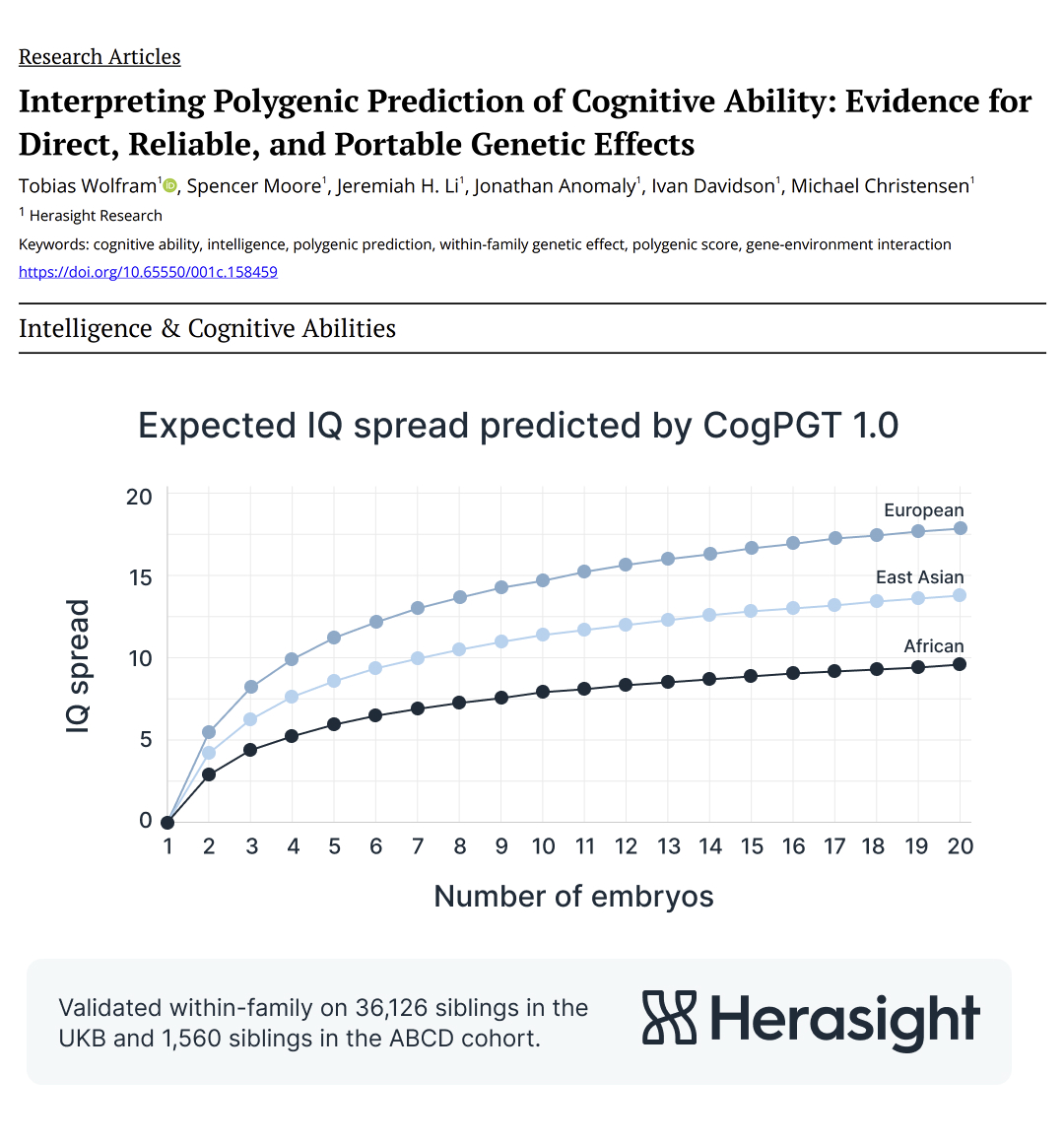
Today the worlds most powerful genetic predictor of IQ, CogPGT, has been published in the peer reviewed journal Intelligence and Cognitive Abilities. When used for embryo screening, it can substantially boost expected IQ of future offspring. Read on for the scientific details!
Tobias Wolfram tweet media
English
30
123
768
621K
Intelligence & Cognitive Abilities retweetledi
Richard Haier
Richard Haier@rjhaier·
New paper from Herasight: Interpreting polygenic prediction of cognitive ability: icajournal.scholasticahq.com
English
1
16
62
8.3K
Intelligence & Cognitive Abilities retweetledi
Richard Haier
Richard Haier@rjhaier·
Two new papers just published. One on an executive function Flynn Effect; the other on a reading-specific cognitive factor: icajournal.scholasticahq.com
English
1
12
42
4K
Intelligence & Cognitive Abilities retweetledi
gen0m1cs
gen0m1cs@gen0m1cs·
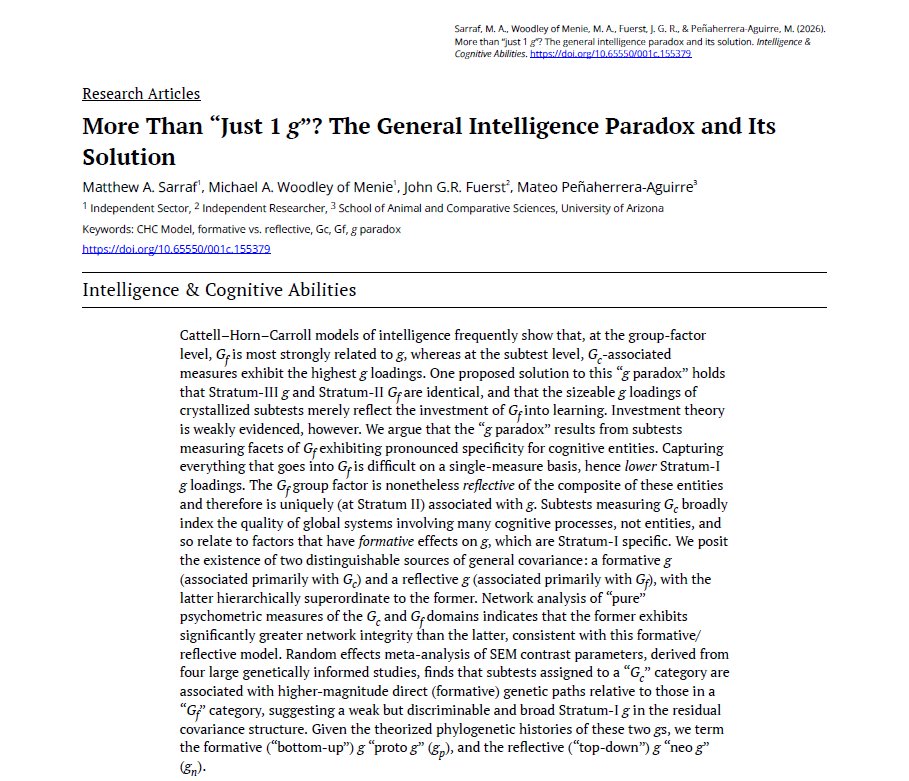
A new paper out today in ICA (@ICAJournal) argues that what we conventionally call the 'g factor' is best understood as a superposition of two distinct sources of general covariance, operating at different psychometric levels and carrying different causal interpretations.
gen0m1cs tweet media
English
7
18
137
13.2K