Riot IQ Test

1.4K posts

Riot IQ Test banner
Riot IQ Test

Riot IQ Test

@RiotIQ

IQ & intelligence research. Developers of the RIOT IQ test - the first professional online IQ test. Chief Scientist @Russwarne. https://t.co/uhdJqksOwz 🇺🇸

United States Katılım Şubat 2024
128 Takip Edilen3.7K Takipçiler
Sabitlenmiş Tweet
Riot IQ Test
Riot IQ Test@RiotIQ·
The RIOT IQ Test is officially here in early access! We've developed the first professional, purely online IQ test. First 2,000 users get 50% off with code: EARLYACCESSRIOT Redeem at the Full RIOT test checkout: riotiq.com/assessments/Fu…
English
18
34
174
147.3K
Riot IQ Test
Riot IQ Test@RiotIQ·
@ryaneshea What IQ assessment are you using your current underlying IQ data? We DM'd you about using our IQ test @RiotIQ
English
1
0
9
401
Ryan Shea
Ryan Shea@ryaneshea·
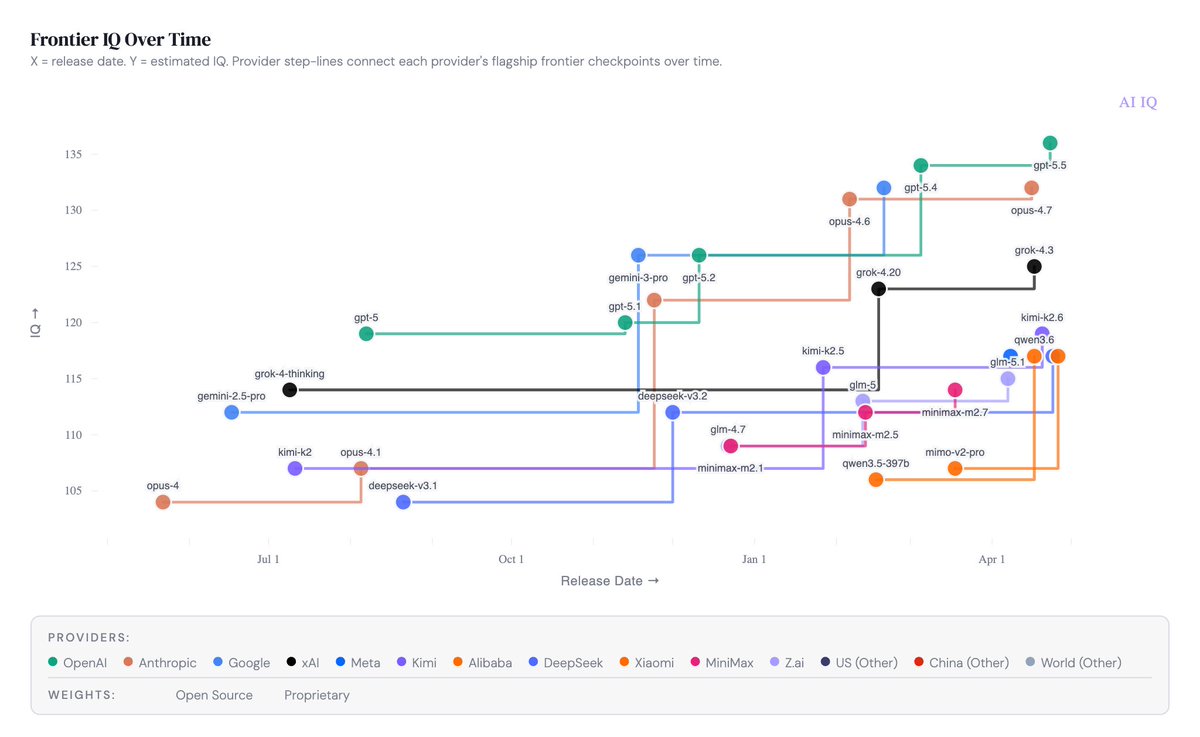
Today I’m launching AI IQ — frontier AI models, scored on the human IQ scale. Instead of endless leaderboard tables, AI IQ shows: • Where models land on the IQ bell curve • How frontier IQ is changing over time • How models compare on IQ and EQ • What intelligence costs in practice GPT-5.5, Claude Opus 4.7, Gemini 3.1, Grok 4.3, Kimi K2.6, Qwen3.6, DeepSeek V4, Muse Spark, and more. Link in the first reply. Curious which chart surprises you most.
Ryan Shea tweet mediaRyan Shea tweet mediaRyan Shea tweet mediaRyan Shea tweet media
English
153
234
1.4K
369K
Riot IQ Test
Riot IQ Test@RiotIQ·
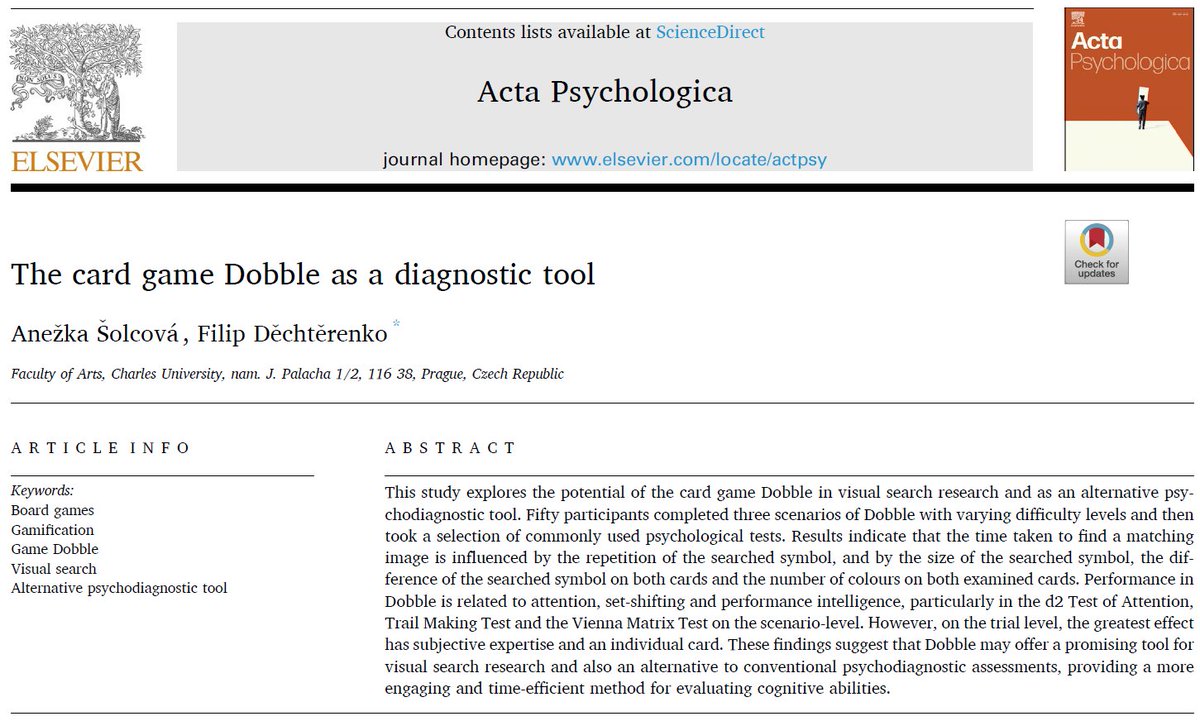
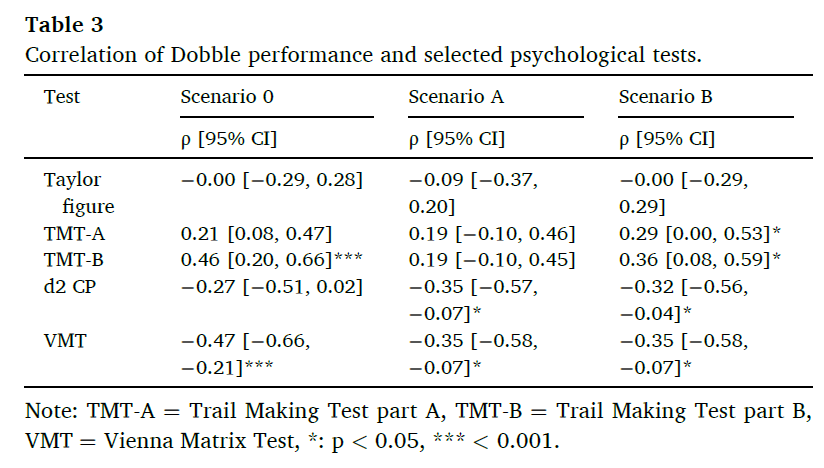
What can a card game tell us about intelligence? The authors of a new Czech study found that the card game Dobble (also called "Spot It!") can function as an intelligence test. Dobble is a card game that requires players to quickly identify the matching symbol in a pair of cards (see 2nd image). Examinees who completed the Dobble game faster performed better on a nonverbal matrix test, an attention test, and the Trail Making Test (which measures visual attention, processing speed, and cognitive flexibility). Card-specific characteristics had little impact on task performance, and most examinees enjoyed playing Dobble. Therefore, Dobble is a promising task that can measure intelligence in an non-threatening way. Read the full article (open access): doi.org/10.1016/j.actp…
Riot IQ Test tweet mediaRiot IQ Test tweet mediaRiot IQ Test tweet media
English
1
9
62
3.1K
Riot IQ Test
Riot IQ Test@RiotIQ·
The study's first author, Eujing Lin, was a guest on our podcast several months ago. Watch her insights into the work of using DNA to make predictions here: youtu.be/nlSevJRM_Fw?si…
YouTube video
YouTube
English
0
1
10
851
Riot IQ Test
Riot IQ Test@RiotIQ·
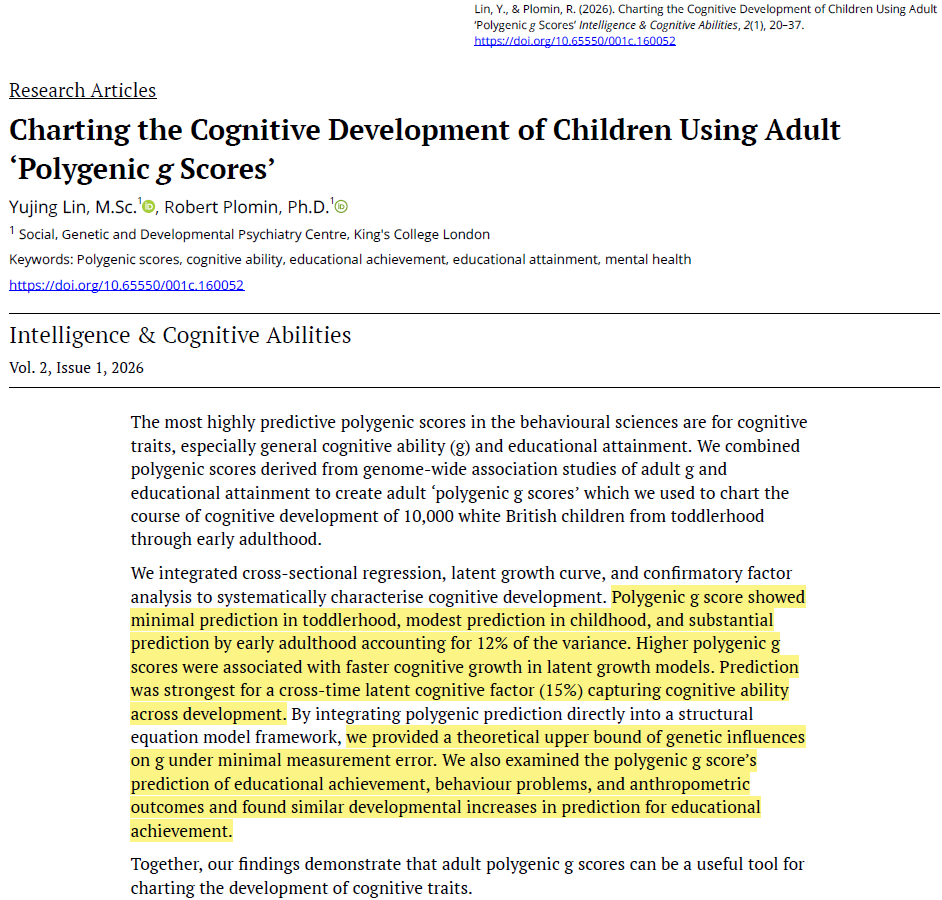
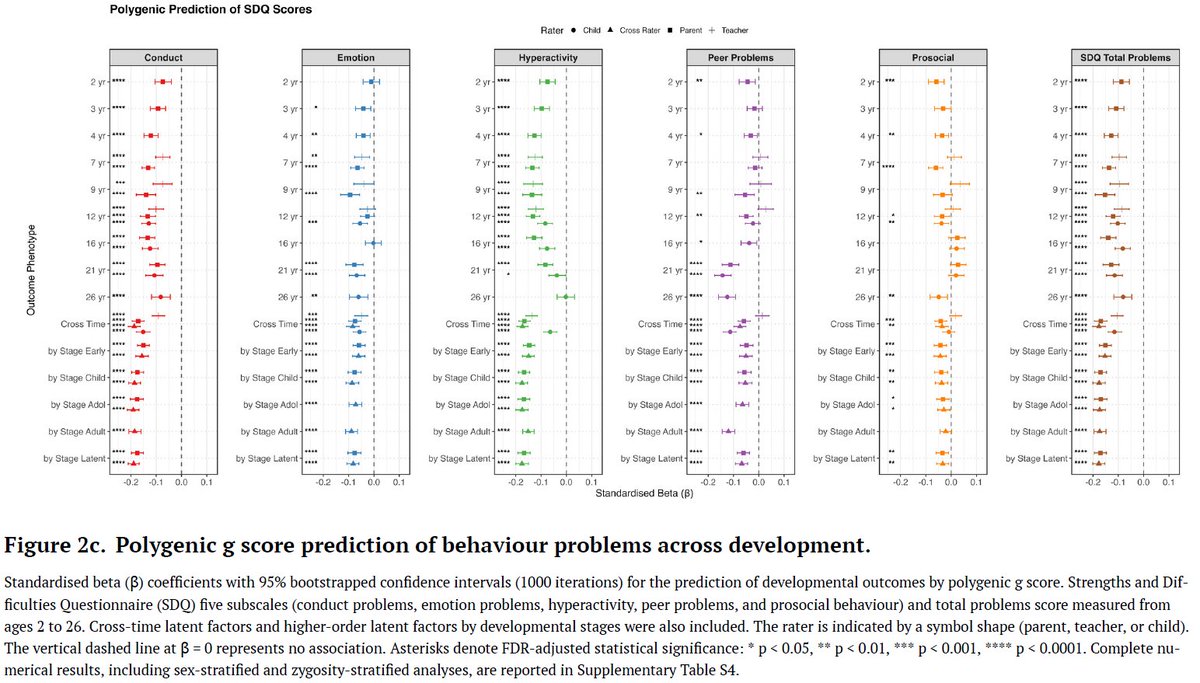
A new must-read article from the Plomin lab was published this week in @ICAJournal. Lin and Plomin used polygenic scores (derived from DNA variation in people) predict life outcomes from ages 2 to 25 in the same sample. Results showed that the scores predicted cognitive abilities (including IQ) and educational attainment well (up to r = .37). But they could also predict some non-cognitive outcomes, such as conduct problems and hyperactivity. Predictions of IQ started weak (r = .03 at age 2) and increased steadily through adulthood (r = .37 at age 25). Predictions of educational outcomes also increased throughout childhood, peaking at age 16. Non-cognitive predictions were weaker (all r's between 0 and .25), but that was expected because the polygenic scores were designed to maximally predict IQ and educational outcomes. Because this was a longitudinal study, the authors could also see whether they could predict trends and growth. They found that children with higher polygenic scores started off with higher IQs and educational attainment and had faster growth over time. (In other words, "the rich got richer.") The results confirm findings from other behavioral genetics studies using other methodologies. For example, the study supports the claim that heritability of IQ increases with age. The study also supports the idea that genes and environment become more strongly correlated as children grown into adulthood. It's great work that pushes the field forward and confirms that children's phenotypes can be predicted with polygenic score derived from adult data. Read the full open-access article here: doi.org/10.65550/001c.…
Riot IQ Test tweet mediaRiot IQ Test tweet mediaRiot IQ Test tweet mediaRiot IQ Test tweet media
English
3
34
101
7.2K
Riot IQ Test
Riot IQ Test@RiotIQ·
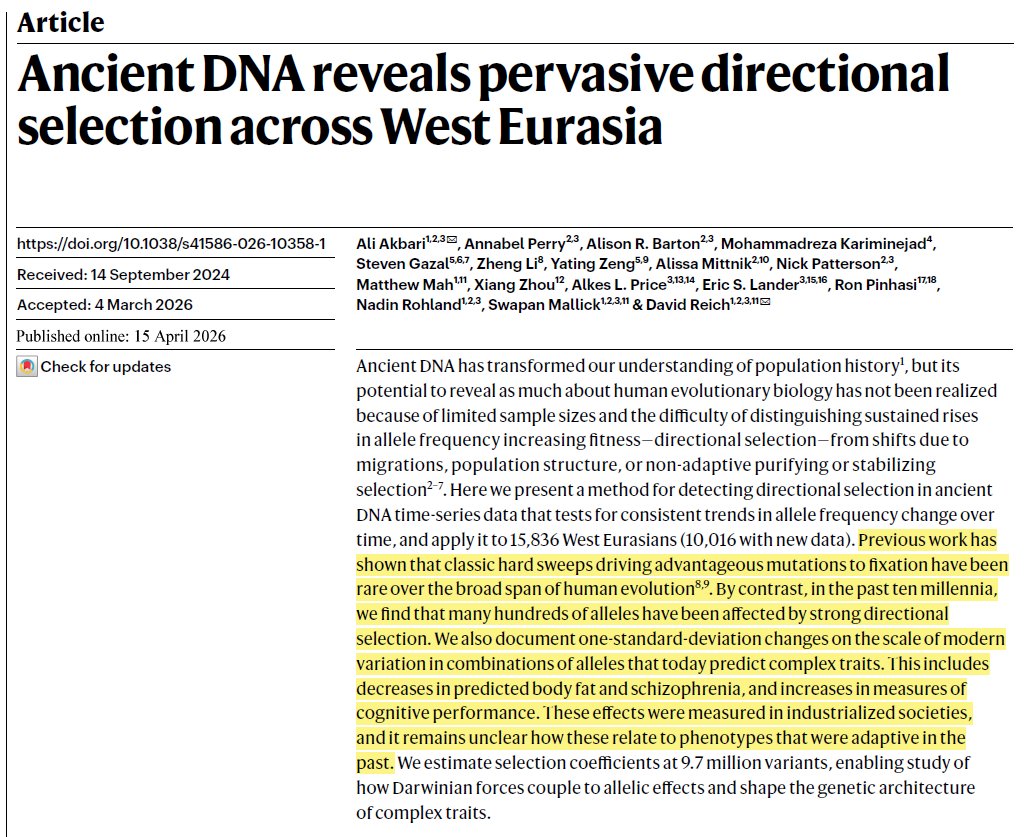
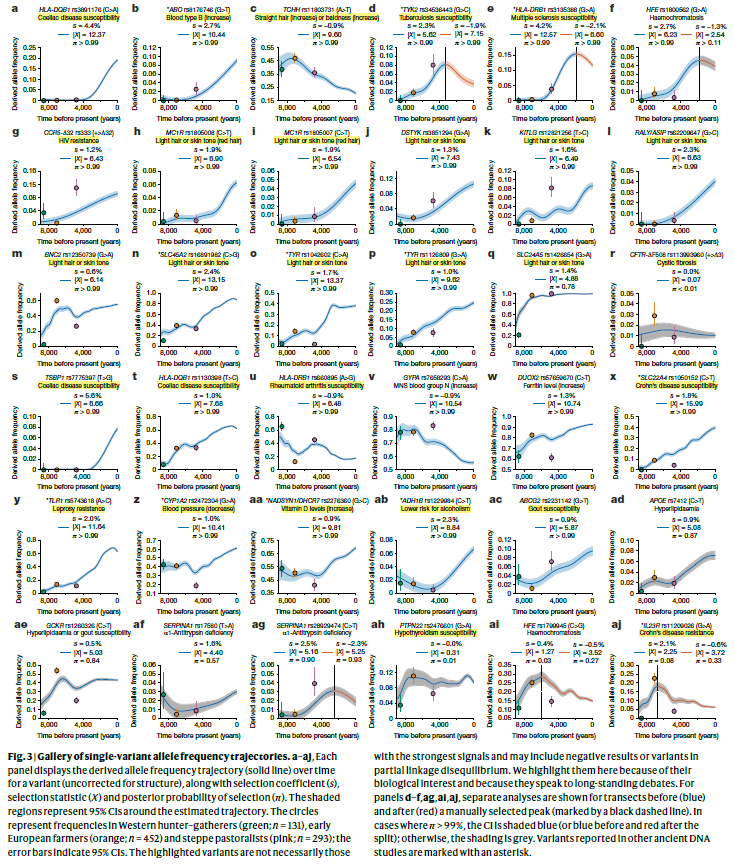
Human evolution did not magically stop when humans stopped living in caves. In fact, new research from David Reich's lab at @Harvard shows that for some traits it has sped up in the past 10k years (at least in western Eurasians). By comparing differences in DNA ancient remains with living humans' DNA, Reich et al. were able to identify traits that were under evolutionary selection in western Eurasians during recent evolution. One of these traits is higher intelligence, which has been under positive selection. In other words, in the past 10k years, people with DNA variants that today are seen in smarter people were more successful in their reproduction. Other traits that were under positive selection pressure include B blood type, celiac disease susceptibility, multiple schlerosis susceptibility, lighter hair and skin tone, walking pace, household income, and years of schooling. Traits selected against Type A blood antigens, include bipolar disorder, schizophrenia, being a current smoker, having a health decline in old age, and body fat percentage (see 2nd and 3rd images). What's interesting is that this is a mix of purely biological traits (e.g., blood type) and purely psychological traits (like intelligence). So, evolution worked on both body and behavior in recent times. Additionally, some of these traits would have shown up differently thousands of years ago than they do today. For example, ancient Europeans and west Asians didn't have access to tobacco until 500 years ago. But for thousands of years before that the behaviors that today lead to people smoking were selected against--even though those people never saw tobacco in their life. SOMETHING biological and/or behavioral was being selected against... we just don't know what that was. The same is true with intelligence: no one ever took an IQ test before 1905. Yet, higher intelligence was selected for long before the tests were invented. The article also confirms a lot of previous studies, such as the finding that intelligence is influenced by a large number of genes, each with a small effect. The authors also found evidence supporting the idea that a partial reason IQ is positively correlated with household income, years of schooling is that these traits share genes (see 4th image). This is a landmark article that tells us so much about the genetics of many different traits (including intelligence), local human evolution, and how individual differences develop over the generations. Access the full article here: doi.org/10.1038/s41586…
Riot IQ Test tweet mediaRiot IQ Test tweet mediaRiot IQ Test tweet mediaRiot IQ Test tweet media
English
1
20
92
4.3K
Riot IQ Test retweetledi
Andrew Ruiz
Andrew Ruiz@then_there_was·
“The article also confirms a lot of previous studies, such as the finding that intelligence is influenced by a large number of genes, each with a small effect.”
Riot IQ Test@RiotIQ

Human evolution did not magically stop when humans stopped living in caves. In fact, new research from David Reich's lab at @Harvard shows that for some traits it has sped up in the past 10k years (at least in western Eurasians). By comparing differences in DNA ancient remains with living humans' DNA, Reich et al. were able to identify traits that were under evolutionary selection in western Eurasians during recent evolution. One of these traits is higher intelligence, which has been under positive selection. In other words, in the past 10k years, people with DNA variants that today are seen in smarter people were more successful in their reproduction. Other traits that were under positive selection pressure include B blood type, celiac disease susceptibility, multiple schlerosis susceptibility, lighter hair and skin tone, walking pace, household income, and years of schooling. Traits selected against Type A blood antigens, include bipolar disorder, schizophrenia, being a current smoker, having a health decline in old age, and body fat percentage (see 2nd and 3rd images). What's interesting is that this is a mix of purely biological traits (e.g., blood type) and purely psychological traits (like intelligence). So, evolution worked on both body and behavior in recent times. Additionally, some of these traits would have shown up differently thousands of years ago than they do today. For example, ancient Europeans and west Asians didn't have access to tobacco until 500 years ago. But for thousands of years before that the behaviors that today lead to people smoking were selected against--even though those people never saw tobacco in their life. SOMETHING biological and/or behavioral was being selected against... we just don't know what that was. The same is true with intelligence: no one ever took an IQ test before 1905. Yet, higher intelligence was selected for long before the tests were invented. The article also confirms a lot of previous studies, such as the finding that intelligence is influenced by a large number of genes, each with a small effect. The authors also found evidence supporting the idea that a partial reason IQ is positively correlated with household income, years of schooling is that these traits share genes (see 4th image). This is a landmark article that tells us so much about the genetics of many different traits (including intelligence), local human evolution, and how individual differences develop over the generations. Access the full article here: doi.org/10.1038/s41586…

English
0
4
17
914
Riot IQ Test
Riot IQ Test@RiotIQ·
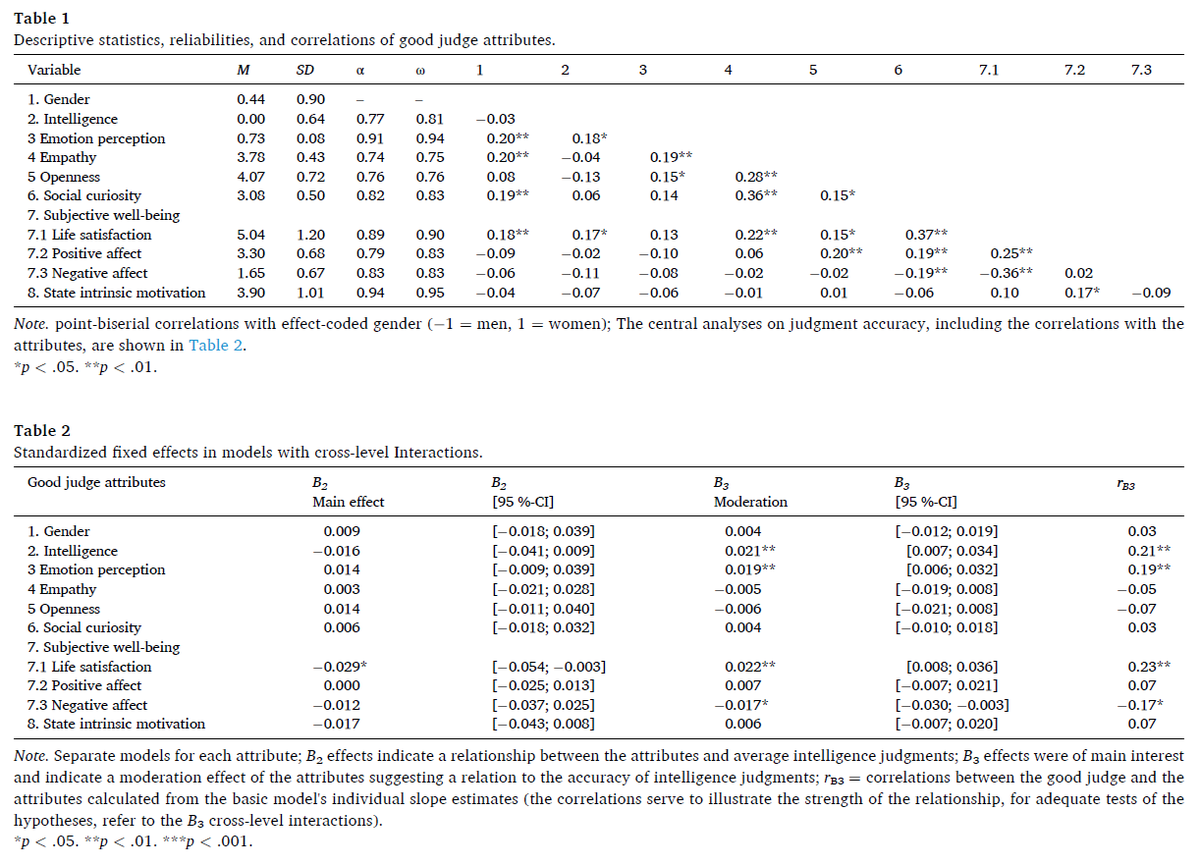
In a new German study, higher-IQ people are better at judging the intelligence of others. Participants in this study watched short videos of 50 people reading a weather report and explaining the concept of "symmetry." In addition to IQ, raters' emotional perception and life satisfaction were positively correlated with the ability to judge others' intelligence. Negative affect was negatively correlated with the ability to judge intellgence. The best cues of intelligence were the target's articulation and the content of their speech (i.e., how sophisticated, accurate, insightful, or elaborate the speaker was). The correlations aren't very strong (all <= |.23|), but given how short the videos were, this is pretty impressive. It is likely that in-person interaction for a longer time period would yield better estimates of IQ. This study is consistent with evolutionary theories that suggest that signaling one's own intelligence and identifying those signals is advantageous. It also suggests that social-emotional awareness is a valuable skill. Finally, this study shows that "it takes one to know one." Read the full open access study here: doi.org/10.1016/j.inte…
Riot IQ Test tweet mediaRiot IQ Test tweet media
English
12
84
736
81K
Riot IQ Test retweetledi
Riot IQ Test
Riot IQ Test@RiotIQ·
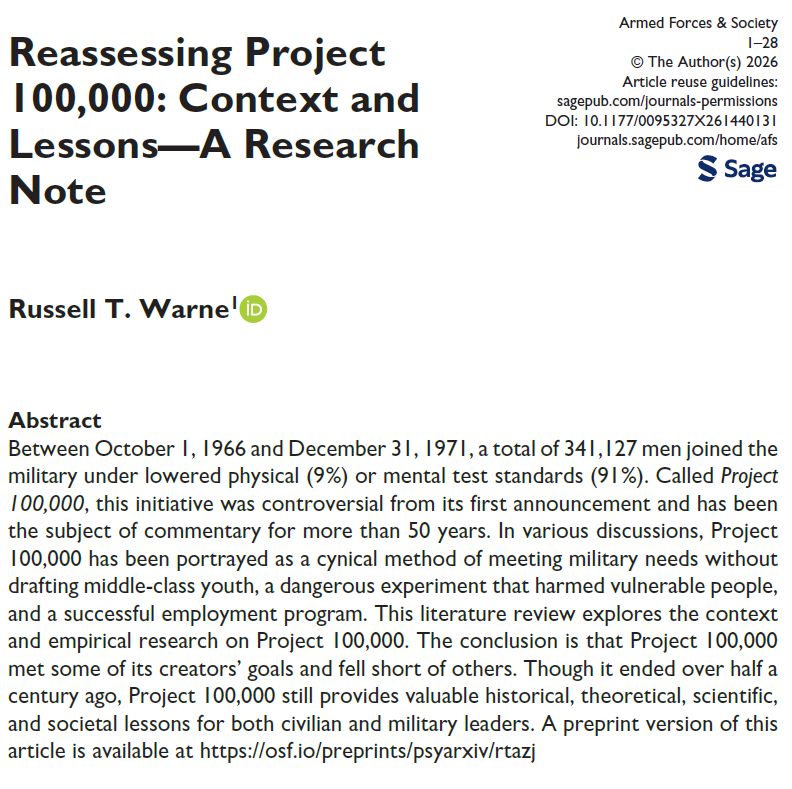
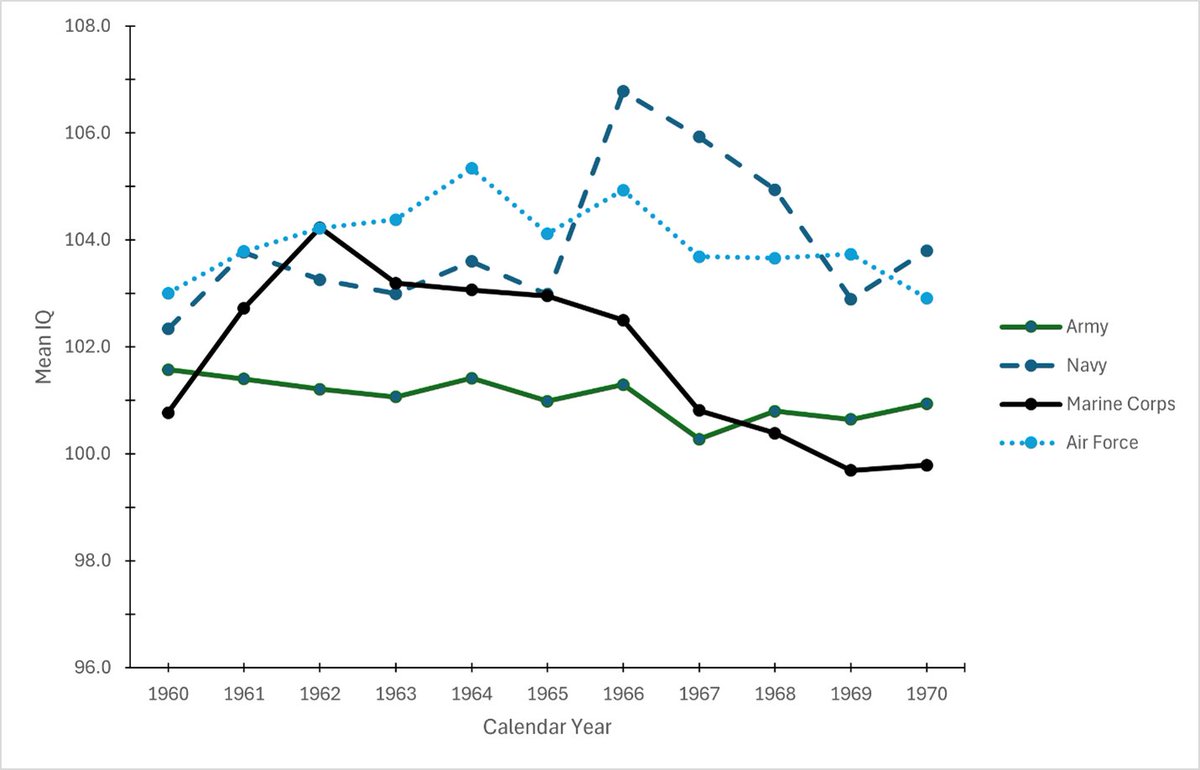
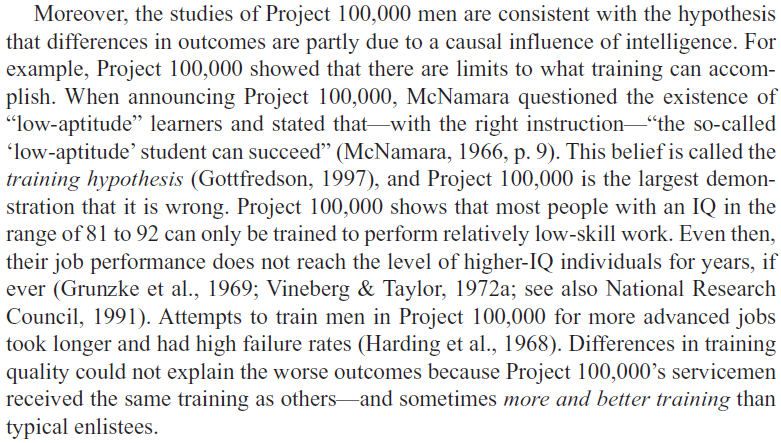
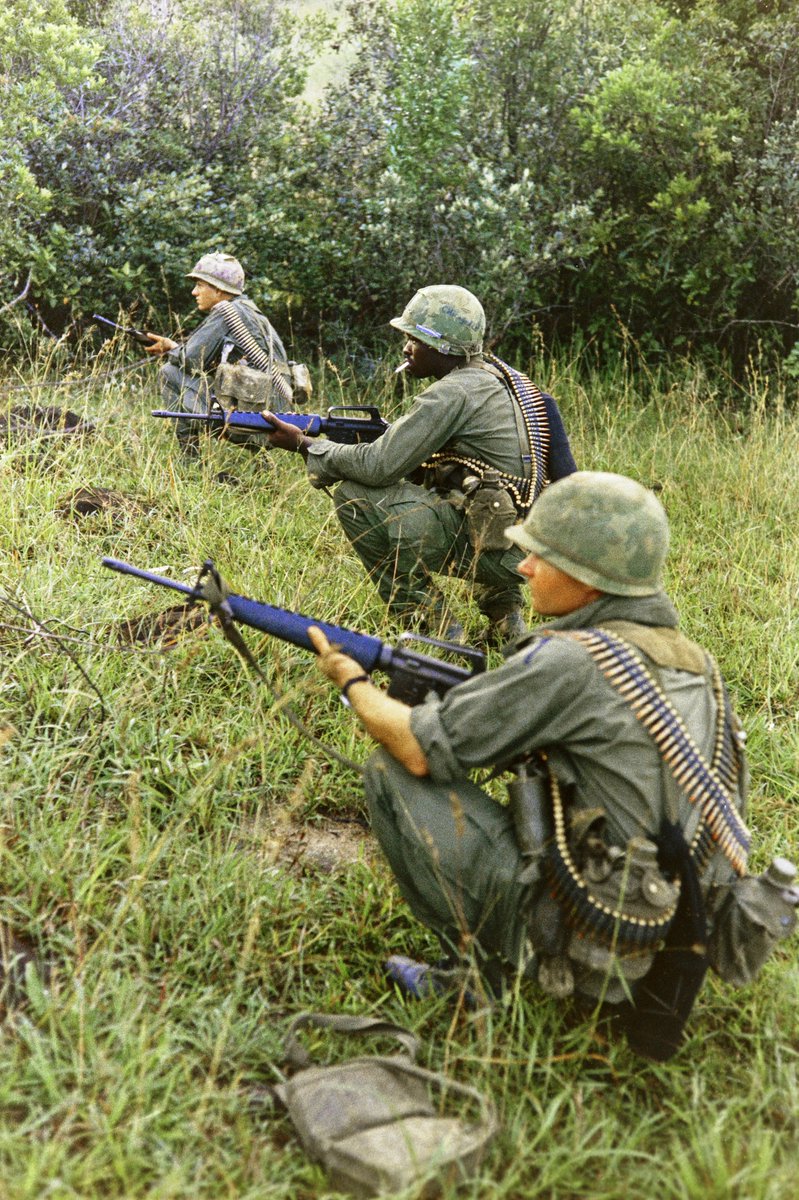
🚨New research!🚨 Riot's Chief Scientist, @Russwarne, published a new lit review today that explores Project 100,000, which was a program that lowered the minimum IQ threshold needed to join the military. Over 300,000 men enlisted or were drafted under this program, most with IQs between 80 and 92. The slang at the time called them "McNamara's morons," and the unfavorable views of Project 100,000 and these men have lingered for over 50 years. During Project 100,000, the military conducted research on these men, but most of these reports have been ignored for over 50 years. This article is a lit review highlighting research on Project 100,000. Among the findings: ➡️Project 100,000 was not unusual for the military. Before and since, the U.S. military had inducted more people in the 80-92 IQ range than during Project 100,000. ➡️Most men in Project 100,000 did NOT serve in combat. They were not "canon fodder." In fact, the author could not verify that their death rate was any higher than the general population of the military at the time. ➡️Project 100,000 did NOT cause a major decrease in average IQ in the military (2nd image) or lead to a deterioration of fighting ability. ➡️Failure rates in basic and job training were higher in Project 100,000 men. But the vast majority of individuals in the program still met the era's standards of military and job performance. Contrary to most of the narratives about Project 100,000, the program was not a massive failure--though it wasn't a great success, either. As the author says, "Project 100,000 met some of its creators' goals and fell short of others" (p. 1). From a scientific perspective, the most important finding from Project 100,000 is that it is the world's biggest test of the training hypothesis (see third image). In most jobs, men in Project 100,000 were less proficient than their smarter comrades (assuming the lower-IQ personnel could complete the training at all). Still, most Project 100,000 men had satisfactory job ratings from their supervisors. As the article states, this shows that ". . . often 'good enough' is good enough" (p. 18). No, men in Project 100,000 were not "McNamara's morons." Most had IQs within the normal range and served their country honorably. There's a lot more to learn from the article, and it is worth the time to read it completely. Read the article here: doi.org/10.1177/009532… Preprint version here: osf.io/preprints/psya…
Riot IQ Test tweet mediaRiot IQ Test tweet mediaRiot IQ Test tweet mediaRiot IQ Test tweet media
English
8
23
149
18.4K
Riot IQ Test
Riot IQ Test@RiotIQ·
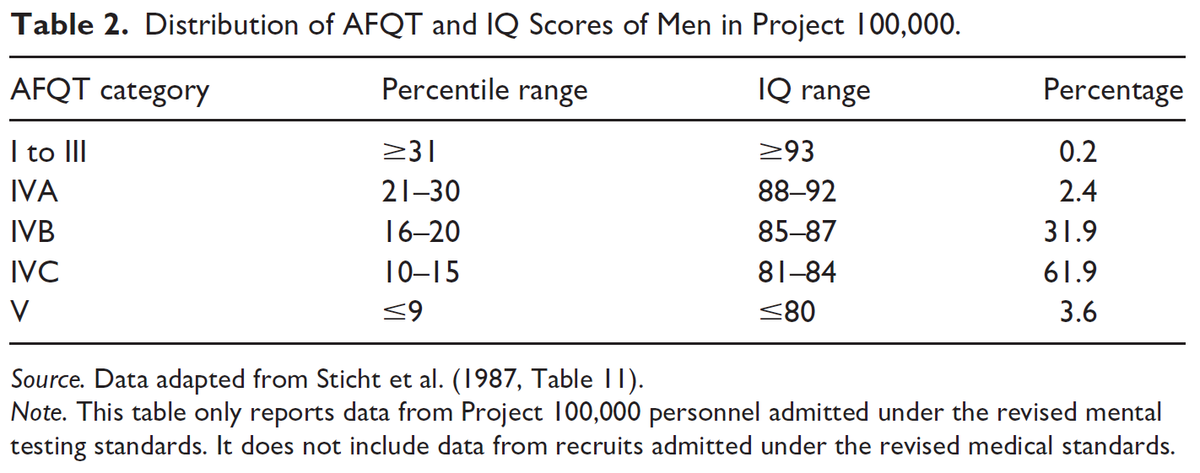
Gregory's book has been influential among the IQ crowd, but he is often inaccurate or unverifiable. For example, Gregory stated (p. 100) that the minimum IQ for Category IV was 71. It was not (and still is not). The true ranges are shown below. Gregory's death tally is unverifiable. He cited "a former insider" who gave him a number in the 1970s for unknown reasons. Much of his other information is based on anecdotes. That's good enough for journalists like him, but not for science.
Riot IQ Test tweet media
English
0
0
1
40
Riot IQ Test
Riot IQ Test@RiotIQ·
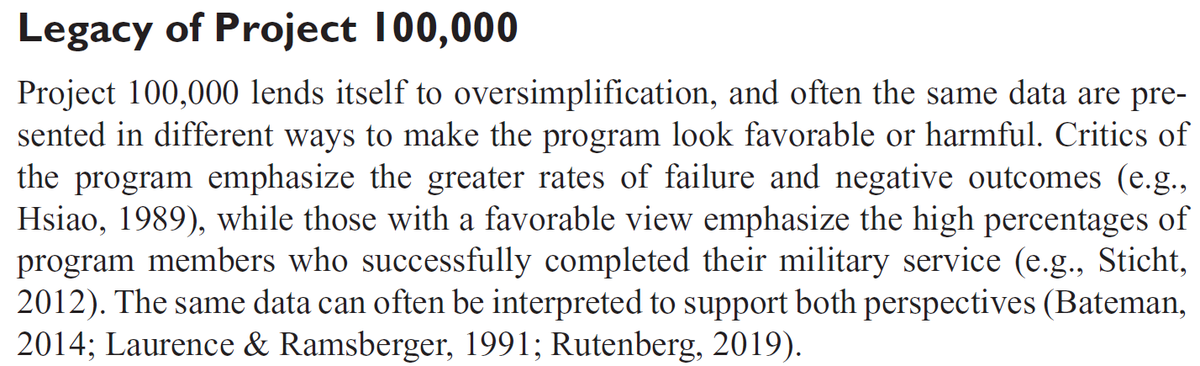
There's a lot of subtlety in the data. As this screenshot from p. 21 shows, often the same information can be interpreted in different ways. Reality is messy, and that's probably especially true during wartime. Simple narratives about Project 100,000 usually don't hold up to scrutiny. Nothing in the Project 100,000 can shed light into a hereditarian vs. environmentalist debate. The research is still scientifically relevant to other important questions related to IQ.
Riot IQ Test tweet media
English
1
0
7
516
goldenthread
goldenthread@aureusweaver·
@RiotIQ @Russwarne Good on Russell Warne for reporting his results honestly and publishing instead of burying data that goes against the IQ takes all narrative loved by hereditarians like him. Now if only environmentalists aspired to the same standard...
English
1
0
5
637
Riot IQ Test retweetledi
Jean-Claude Fox
Jean-Claude Fox@JeanClaudeFox2·
Apparently. "McNamara's morons" didn't do all that poorly.
Riot IQ Test@RiotIQ

🚨New research!🚨 Riot's Chief Scientist, @Russwarne, published a new lit review today that explores Project 100,000, which was a program that lowered the minimum IQ threshold needed to join the military. Over 300,000 men enlisted or were drafted under this program, most with IQs between 80 and 92. The slang at the time called them "McNamara's morons," and the unfavorable views of Project 100,000 and these men have lingered for over 50 years. During Project 100,000, the military conducted research on these men, but most of these reports have been ignored for over 50 years. This article is a lit review highlighting research on Project 100,000. Among the findings: ➡️Project 100,000 was not unusual for the military. Before and since, the U.S. military had inducted more people in the 80-92 IQ range than during Project 100,000. ➡️Most men in Project 100,000 did NOT serve in combat. They were not "canon fodder." In fact, the author could not verify that their death rate was any higher than the general population of the military at the time. ➡️Project 100,000 did NOT cause a major decrease in average IQ in the military (2nd image) or lead to a deterioration of fighting ability. ➡️Failure rates in basic and job training were higher in Project 100,000 men. But the vast majority of individuals in the program still met the era's standards of military and job performance. Contrary to most of the narratives about Project 100,000, the program was not a massive failure--though it wasn't a great success, either. As the author says, "Project 100,000 met some of its creators' goals and fell short of others" (p. 1). From a scientific perspective, the most important finding from Project 100,000 is that it is the world's biggest test of the training hypothesis (see third image). In most jobs, men in Project 100,000 were less proficient than their smarter comrades (assuming the lower-IQ personnel could complete the training at all). Still, most Project 100,000 men had satisfactory job ratings from their supervisors. As the article states, this shows that ". . . often 'good enough' is good enough" (p. 18). No, men in Project 100,000 were not "McNamara's morons." Most had IQs within the normal range and served their country honorably. There's a lot more to learn from the article, and it is worth the time to read it completely. Read the article here: doi.org/10.1177/009532… Preprint version here: osf.io/preprints/psya…

English
2
6
34
7.2K
Riot IQ Test retweetledi
Manny
Manny@Mo_Resourcez·
@RiotIQ @charlesmurray This is a great interview! Murray is brilliant, benevolent, and charming. He is the preeminent social scientist of our times. The truth of his research and observations may be the key to developing public policy necessary for a peaceful, civil and prosperous society.
English
0
1
5
443
De Excidio
De Excidio@SkaBritanniae·
@RiotIQ A fascinating discussion covering multiple areas and notable for its honesty.
English
1
0
1
136
Riot IQ Test retweetledi
Riot IQ Test
Riot IQ Test@RiotIQ·
🚨 New podcast episode! 🚨 Charles Murray (The Bell Curve) doesn't shy away from the hard questions, and neither do we. Topics include: ✅ IQ, genetics, & human differences ✅ The Truth behind The Bell Curve ✅ Faith, meaning, & Murray's personal journey youtu.be/lqOhOvw0kbs?si…
YouTube video
YouTube
English
5
14
67
20.6K