
Ilja
1.7K posts







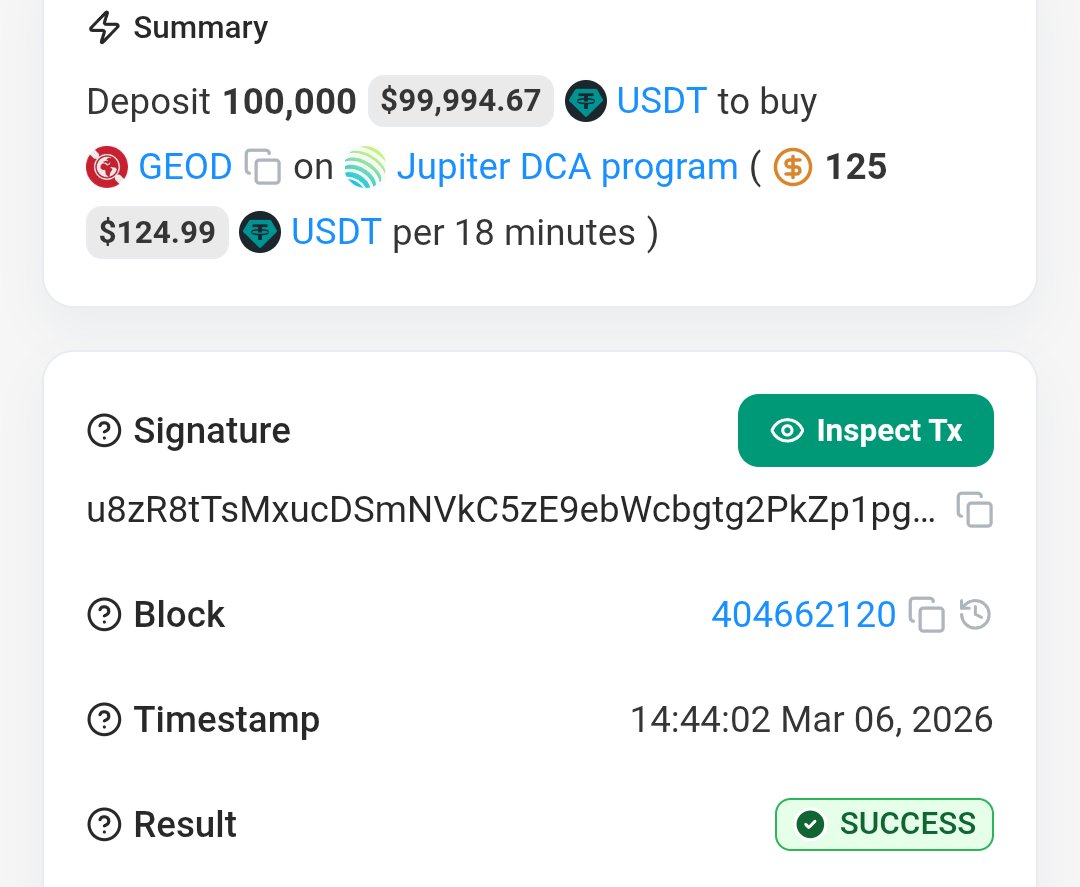
Geodnet saw its largest burn last week at $160k. About 82% of newly minted GEOD tokens were offset by the burn, also a new high.



@GEODNET quietly with no hype and no major exchange listings has become one of the top DePIN projects out there. 5.5 million in revenue 🔥


Top DePIN Projects by Annual Revenue in the Last 30 Days 📈 🔸@helium | $13.24M 🔸@chutes_ai| $6.1M 🔸@GEODNET | $5.57M 🔸@ionet | $5.54M 🔸@doublezero | $4.89M 🔸@Filecoin | $1.3M 🔸@rendernetwork | $1.1M 🔸@Livepeer | $813.8K 🔸@akashnet | $789.5K 🔸@BuildOnNodeOps | $233.4K
Read the full deep dive on @GEODNET here: chainofthought.xyz/p/gps-is-for-h…
Who owns the data that powers spatial AI? Today, much of the largest and most tightly controlled driving data is developed by a small number of major technology companies. • Waymo. • NVIDIA. • Others with significant capital. They rely on proprietary fleets, tightly calibrated sensor systems, and curated data releases. It delivers depth and consistency. But global coverage is a different challenge. @ROVR_Network takes a structurally different approach. Instead of relying on a vertically integrated fleet, ROVR operates a decentralized contributor network. Participants capture high precision 3D and spatiotemporal data using standardized hardware and receive token incentives. No single proprietary fleet. Coverage expands through distributed participation. The tradeoff is real. Centralized models prioritize calibration control and annotation rigor. Distributed networks prioritize geographic breadth and expansion into underrepresented regions. Both approaches have value. But if spatial AI is expected to function across diverse global environments, data collection cannot rely solely on centralized fleets. ROVR is building infrastructure designed for distributed global scale.

Introducing Lightspeed. Crypto's first investor relations platform, built with @Blockworks for professional allocators and the Solana ecosystem. Get access here: lightspeed.vip