Invivyd

878 posts

Invivyd banner
Invivyd

Invivyd

@Invivyd

Invivyd is improving lives with medicines for serious infectious diseases. Pro-human. Anti-virus. Opposed to COVID and spike protein "garbage" in all forms

New Haven, CT Katılım Temmuz 2020
645 Takip Edilen2.7K Takipçiler
Invivyd
Invivyd@Invivyd·
These processes are critical to understand
Harry Spoelstra@HarrySpoelstra

Endothelial dysfunction and metabolic biomarkers in post-COVID-19 syndrome 🚨A nightmare study for many! FOR EVERYBODY: 9 months after your COVID-19, your blood vessels are STILL damaged, with probably biomarkers to prove it! 1. Study design: German prospective cohort (n=262 adults) compared blood biomarkers ~37 weeks post-SARS-CoV-2 infection (PCS patients + recovered) versus uninfected controls. 2. Endothelial dysfunction: - Soluble thrombomodulin (sTM) and lactate dehydrogenase (LDH), two established markers of endothelial (blood-vessel) damage, were significantly elevated in the combined infected group (UOC PCS + LIFE Cov+) versus never-infected controls. - So, previously infected individuals had significantly higher soluble thrombomodulin (TM) and lactate dehydrogenase (LDH), independent of PCS diagnosis or fatigue severity. - Critically, there were no significant differences between the PCS group and the LIFE Cov+ group for these markers. 3. Metabolic disruption: - Clear alterations in arginine biosynthesis and taurine/hypotaurine pathways, indicating impaired nitric-oxide (NO) metabolism with reduced L-arginine and taurine levels. →In plain terms: the vascular damage signal was just as strong in the symptom-free recovered people as in those still suffering from fatigue and other PCS complaints. The same held for the metabolic disruptions (impaired arginine biosynthesis and taurine/hypotaurine pathways linked to nitric-oxide production). 4. Fatigue-specific signal: - High-fatigue PCS patients (top MFI-20 quartile) showed elevated linoleic acid (LA) plus monounsaturated fatty acids oleic (OA) and palmitoleic (PA). →The fatty-acid signature specific to high-fatigue PCS adds a potential severity marker. 5. Notes: - Changes persisted already up to 9 months after infection. - PCS remains symptom-based, but these markers offer objective, measurable signals of underlying vascular and metabolic damage! -The discussion and results treat the observed endothelial and metabolic changes as consequences of a single infection and do not speculate on additive damage from subsequent exposures. - Limitations well noted. ‼️So, COVID-19 leaves detectable, objective blood-vessel and metabolic damage in the bloodstream nearly a year later, even if you feel completely fine and never had Long COVID symptoms. Specific fatty-acid spikes flag severe post-COVID fatigue. The “it’s all in your head” narrative for many post-covid people is directly contradicted by these biomarkers! These findings, solidly backed by prior 2021–2025 evidence, prove that COVID-19 inflicts measurable, persistent endothelial and nitric-oxide metabolic damage up to nearly a year later, even in fully symptom-free survivors, thereby supporting the implementation of routine biomarker screening, but even more importantly: #AvoidSars2 #AvoidReinfections. YOU ARE NOW A CV RISK PATIENT! nature.com/articles/s4159…


English
0
1
13
1K
Invivyd
Invivyd@Invivyd·
@ChristosArgyrop Could this be the first time anyone has written “crixivan” on X?!
English
1
0
2
661
Christos Argyropoulos MD PhD 0kale/acc 🇺🇸
Old news - I saw this when I was in Japan back in March for a conference and my web and X feeds were full of Japanese news 😎. Ensiltrevir is a much better drug than paxlovid in *every* single aspect: higher antiviral activity, longer half life, fewer drug - drug interactions and better clinical data (remember #Paxlovid failed their prophylaxis trials). The American citizen should ask the FDA why they are delaying @ShionogiUS review/approval process. Not unlike to what the FDA did to #Lucira, @Novavax and @Invivyd , true innovation in diagnostics, prophylactic and therapeutics was/is unnecessarily delayed to keep the 1st generation product cash flows intact. If we did this during the 90s to HIV, we would still be stuck with Crixivan and Norvir.
nature@Nature

An antiviral pill has, for the first time, been shown to prevent COVID-19 in people exposed to the SARS-CoV-2 virus go.nature.com/4nAMi6g

English
19
213
752
24K
Invivyd
Invivyd@Invivyd·
We will host a conference call on Thursday, 5/14/26 at 8:30 a.m. ET to discuss our Q1 financial results and provide a corporate update. Visit link for details: investors.invivyd.com/news-releases/…
Invivyd tweet media
English
0
0
3
272
Invivyd
Invivyd@Invivyd·
Understanding your health and how the body works shouldn’t be confusing or intimidating – it should be empowering. This movement is about helping everyone understand the potential that any body has to enhance their immune system, including antibody protection. Learn more about antibodies at antibodiesforanybody.com. #antibodiesforanybody
English
1
1
5
314
Invivyd
Invivyd@Invivyd·
@DonEford @PutrinoLab @sanofi The world needs lots of options - and they all deserve to be taken seriously. This is health in the balance!
English
1
0
2
116
Invivyd
Invivyd@Invivyd·
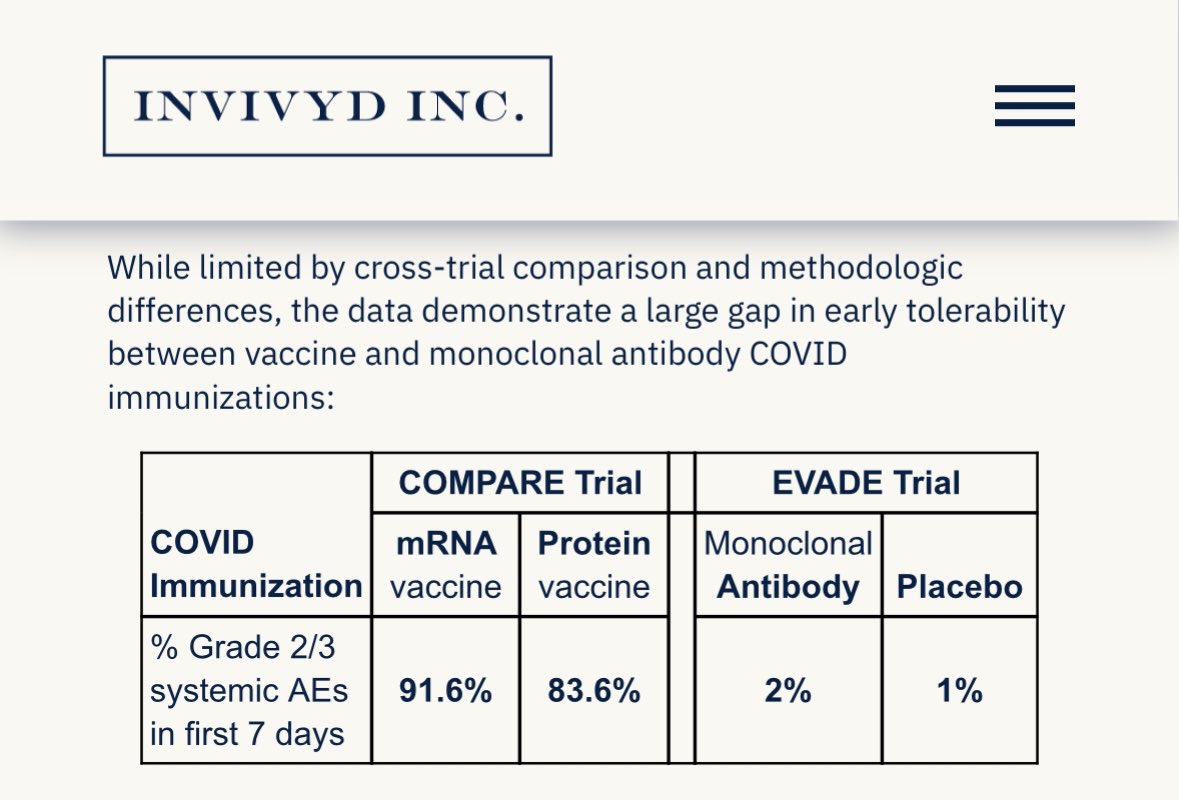
A new manuscript from Invivyd authors with @PutrinoLab gets at one of the key problems with C19 vaccines: if people don't use them they are of no value, and as @sanofi pointed out recently in their COMPARE study, early tolerability is critical in defining people's experience with vaccines and hence their likelihood of using them. Viewed this way, we see yet another opportunity to improve health via monoclonal antibody technology, and so we present herein the early tolerability of adintrevimab, an older investigational mAb from Invivyd that is similar to VYD2311, and studied our placebo-controlled Phase 2/3 RCT data through the same lens. We believe the results are provocative, and we're looking forward to our own controlled work in the upcoming LIBERTY study of VYD2311. The new manuscript: medrxiv.org/content/10.648… Sanofi PR on the COMPARE study: sanofi.com/en/media-room/…
English
2
11
41
10.3K
Biff #SARSisAirborne 🍉
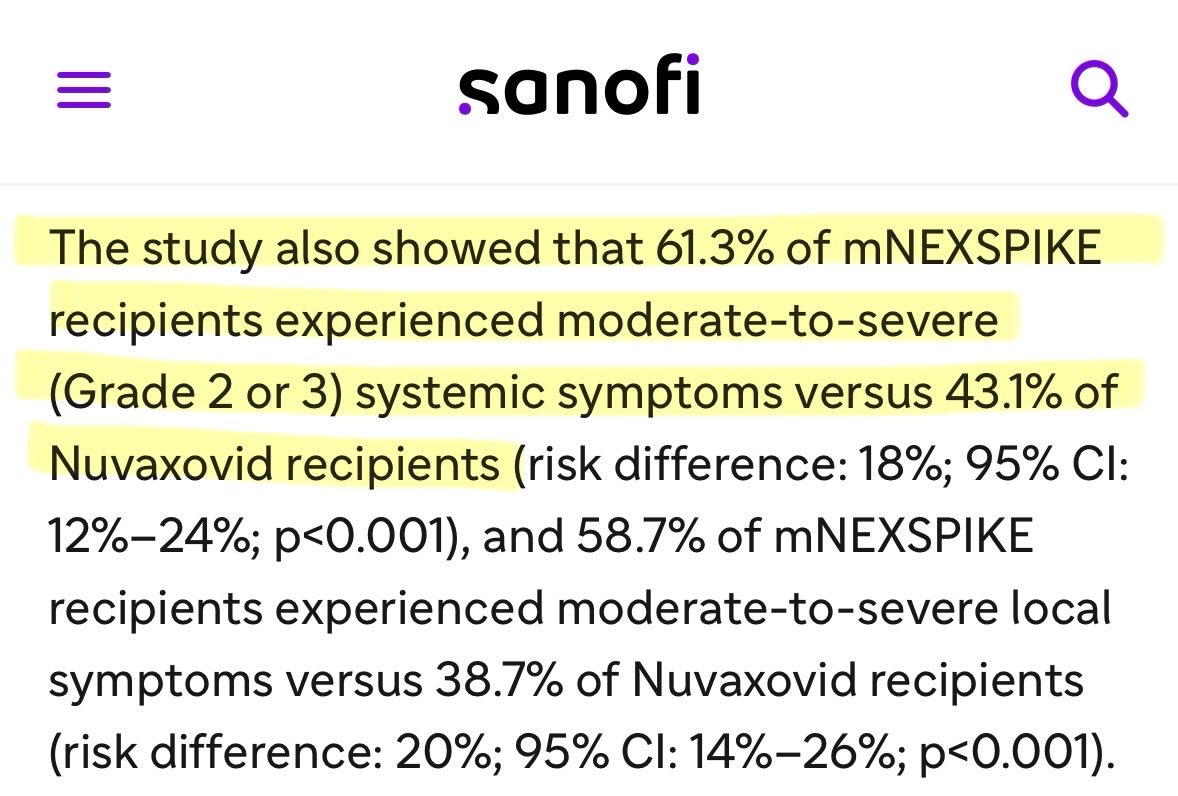
.@Invivyd @PutrinoLab @michaelmina_lab while I appreciate the work here, flagging a huge error in your PR / manuscript today: these are NOT the correct results from the @sanofi COMPARE trial. You state that the rate of grade 2/3 systemic AEs are 91.6% for mRNA vaccines and 83.6% for protein vaccines. In the Sanofi trial, these were actually the numbers given for ANY systemic AE, including grade 1. The correct rates for grade 2/3 systemic AEs are: 61.3% for mRNA and 43.1% for protein-based Nuvaxovid sanofi.com/en/media-room/…
Biff #SARSisAirborne 🍉 tweet mediaBiff #SARSisAirborne 🍉 tweet media
Invivyd@Invivyd

A new manuscript from Invivyd authors with @PutrinoLab gets at one of the key problems with C19 vaccines: if people don't use them they are of no value, and as @sanofi pointed out recently in their COMPARE study, early tolerability is critical in defining people's experience with vaccines and hence their likelihood of using them. Viewed this way, we see yet another opportunity to improve health via monoclonal antibody technology, and so we present herein the early tolerability of adintrevimab, an older investigational mAb from Invivyd that is similar to VYD2311, and studied our placebo-controlled Phase 2/3 RCT data through the same lens. We believe the results are provocative, and we're looking forward to our own controlled work in the upcoming LIBERTY study of VYD2311. The new manuscript: medrxiv.org/content/10.648… Sanofi PR on the COMPARE study: sanofi.com/en/media-room/…

English
1
1
12
1.2K
Don Ford - The People's Strategist -
@Invivyd @PutrinoLab @sanofi Hey, yall, you might have made a mistake. x.com/Biff234523/sta…
Biff #SARSisAirborne 🍉@Biff234523

.@Invivyd @PutrinoLab @michaelmina_lab while I appreciate the work here, flagging a huge error in your PR / manuscript today: these are NOT the correct results from the @sanofi COMPARE trial. You state that the rate of grade 2/3 systemic AEs are 91.6% for mRNA vaccines and 83.6% for protein vaccines. In the Sanofi trial, these were actually the numbers given for ANY systemic AE, including grade 1. The correct rates for grade 2/3 systemic AEs are: 61.3% for mRNA and 43.1% for protein-based Nuvaxovid sanofi.com/en/media-room/…

English
1
0
2
339
Invivyd
Invivyd@Invivyd·
@Biff234523 @PutrinoLab @sanofi @Novavax Interesting, ty, and perhaps not surprising. The vaccine will remain a gift to humanity, but that does not mean that we cannot move forward with enthusiasm and overall population health first in our minds!
English
0
0
2
231
Biff #SARSisAirborne 🍉
Very well said, thanks for sharing. In that same vein, @Novavax authors recently investigated that concept in this literature review, highlighting additional downstream effects of COVID-19 vaccine reactogenicity - that a parent/caregiver's prior personal experience of reactogenicity also results in hesitancy to vaccinate their children for a wide variety of illnesses. sciencedirect.com/science/articl…
English
1
1
13
507
Invivyd
Invivyd@Invivyd·
It’s in the manuscript! Novavax’ Nuvaxovid is protein based and it seems Sanofi (commercializing Novavax) would agree with your impression: over first 7 days, Grade 2/3 systemic reactions for protein vax stand at ~84% vs ~92% for mRNA. Less, for sure. 84% < 92%. The “much” part all depends on what you are comparing it to!
English
1
0
1
139
Andrew Green
Andrew Green@AndrewG76201347·
@PutrinoLab @Invivyd Very interesting, thank you as a patient intolerant to mRNA vaxes. Re the reactogenicity (in healthies) comparison to other vax types, the data I’ve seen published has Novavax much less reactogenic than Moderna, so how does the 40x better for mAbs apply to both vax types pls?
English
1
0
4
262
Putrino Lab
Putrino Lab@PutrinoLab·
Excited to work with @Invivyd to get this out. One of the most common questions I get from people in the #LongCOVID community are about vaccination alternatives. People still want to protect themselves from SARS-CoV-2 infection but many experience medrxiv.org/content/10.648… 1/
English
3
30
138
5.9K
Invivyd
Invivyd@Invivyd·
@girishkaitholil @PutrinoLab Pemivibart turned four years old in March - has been commercially available for over two years. “Chasing”? Eh :). After what we calculate to be many may quadrillions of variants it starts to look like a pretty long “bridge”
English
0
0
2
56
Girish Kumar, PhD
Girish Kumar, PhD@girishkaitholil·
@PutrinoLab @Invivyd variant-chase is the bigger constraint here. pemivibart works against current spike but JN.1-derivative variants will likely escape within 6-12 months of clinical use, so the 'vaccine alternative' framing collapses to bridge-prophylaxis.
English
1
0
1
120
Invivyd retweetledi
Harry Spoelstra
Harry Spoelstra@HarrySpoelstra·
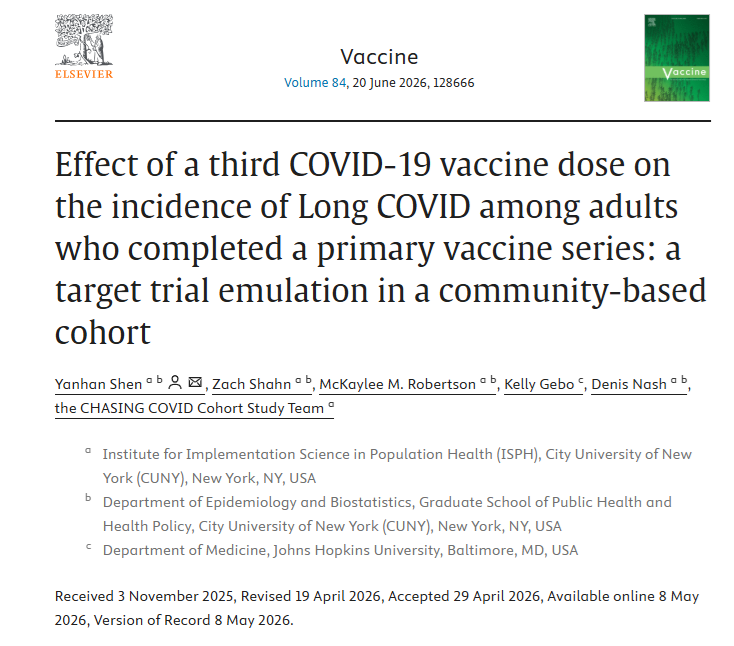
🚨This landmark target-trial emulation delivers a stark verdict: a third COVID-19 booster dose provides NO meaningful protection against Long COVID. It confirms earlier high-quality evidence and delivers a blunt verdict: once the primary series is done, further doses do not mitigate post-infection chronic illness(LC). ➡️Preventing infection itself is the only remaining effective lever against Long COVID. #Mitigation #AvoidSars2 #AvoidReinfections sciencedirect.com/science/articl…
Harry Spoelstra tweet media
English
41
204
706
32.7K
Invivyd retweetledi
Hiroshi Yasuda (保田浩志)
As you may already know well, "young patients who experienced a second confirmed SARS-CoV-2 infection during the omicron period were more than twice as likely to receive a clinician-documented diagnosis of post-acute sequelae of COVID-19 (PASC) as those in the same calendar period after a first infection.. [In this cohort study of >465,000 patients younger than 21 years,] the incidence of clinician-documented PASC was roughly 1,884 cases per million children after a second infection, compared with about 904 cases per million after a first infection.. Beyond formal PASC diagnoses, children and adolescents who experienced reinfection had an elevated risk of a wide range of symptoms and conditions previously associated with long COVID. These outcomes spanned multiple organ systems, including: - cardiovascular complications such as myocarditis, arrhythmias, heart disease and chest pain; - neurologic and cognitive effects such as headaches, cognitive impairment, postural orthostatic tachycardia syndrome (POTS) and other forms of dysautonomia; - kidney injury; - thrombotic events; and - more common symptom clusters including fatigue, abdominal pain and musculoskeletal pain. Myocarditis risk was more than three times higher after a second infection, and the risk of thrombotic events more than doubled.. These findings directly contradict the common assumption that because acute omicron illness is usually mild in children, and reinfection is clinically inconsequential.." SARS-CoV-2 is different. 'Reinfection raises Long COVID risk in children and adolescents' news.feinberg.northwestern.edu/2026/05/08/rei…
English
14
182
412
14.7K
Invivyd
Invivyd@Invivyd·
@RWMaloneMD @LibOrNormal Makes you wonder which hantavirus envelope glycoprotein all of us will be encouraged to produce endogenously for the next N years in a variety of tissues.
English
0
0
3
136
Robert W Malone, MD
Robert W Malone, MD@RWMaloneMD·
Like the WHO had "facts" that monkeypox had a CFR of 10%. Totally false. The CFR that they cite is based on people who actually show up in a clinical setting and get tested. Think about that. Now, which doc actually tests for Hantavirus - without someone being at death's door? Not many, that is for sure. So what is the CFR? I would venture to guess that we don't actually know... Prediction: this year - everyone will want a test when they get influenza or the common cold. Then when officials can show that more people than they thought may have had Hantavirus, at some point - they can push a vaccine! Oh, you know the drill - that mRNA moderna vaccine.
English
17
50
342
5.3K
Invivyd
Invivyd@Invivyd·
@ChristosArgyrop Sigh. We’ve been trying to clean up spike protein garbage since 2020.
English
0
1
5
285