Ivanous_Pengu #1758

1.7K posts

Ivanous_Pengu #1758 banner
Ivanous_Pengu #1758

Ivanous_Pengu #1758

@Ivanous1975

#bitcoin @PudgyPenguins @LilPudgys

Katılım Mart 2018
1.3K Takip Edilen335 Takipçiler
Ivanous_Pengu #1758 retweetledi
Arnaud Bertrand
Arnaud Bertrand@RnaudBertrand·
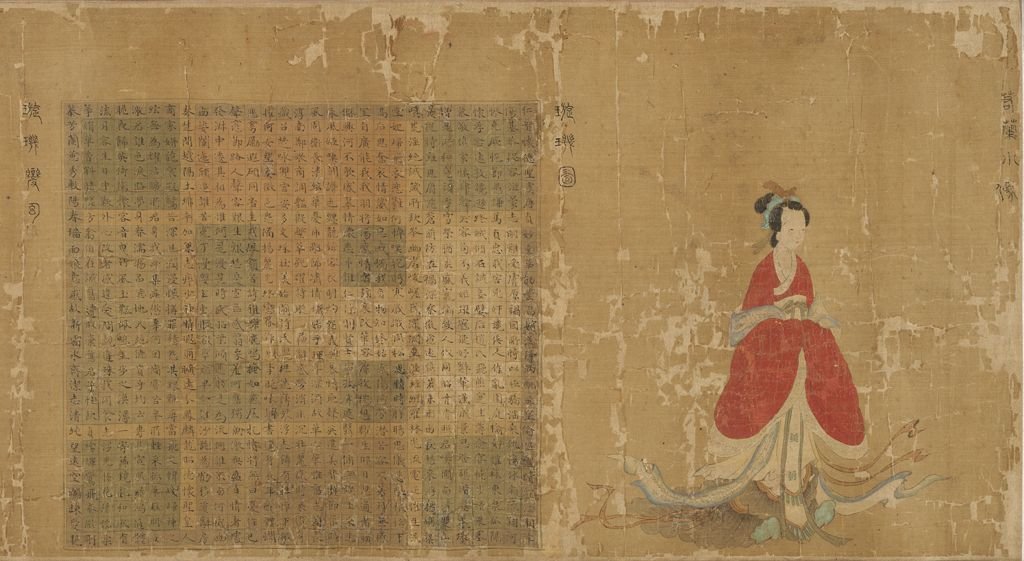
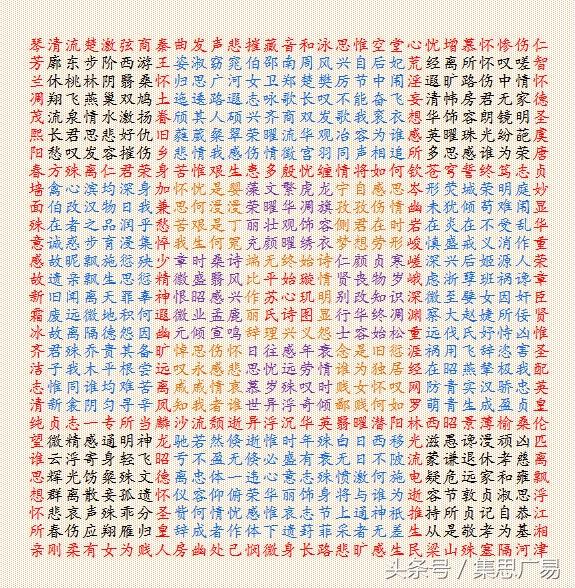
This strange square 👇 is undoubtedly the most extraordinary work of literature in human history. Yet, unfortunately, barely anyone in the West has ever heard of it. There was this woman poet in 4th century China called Su Hui (蘇蕙), a child genius who had reportedly mastered Chinese characters by age 3. At 21 years old, heartbroken by her husband who left her for another woman, she decided to encode her feelings in a structure so intricate, so beautiful, so intellectually staggering that it still baffles scholars to this day. Came to be known as the Xuanji Tu (璇璣圖) - the "Star Gauge" or "Map of the Armillary Sphere" - it's a 29 by 29 grid of 841 characters that can produce over 4,000 different poems. Read it forward. Read it backward. Read it horizontally, vertically, diagonally. Read it spiraling outward from the center. Read it in circles around the outer edge. Each path through the grid produces a different poem - all of them coherent, all of them beautiful, all of them rhyming, all of them expressing variations on the same themes of longing, betrayal, regret, and undying love. The outer ring of 112 characters forms a single circular poem - believed to be both the first and longest of its kind ever written. The interior grid produces 2,848 different four-line poems of seven characters each. In addition, there are hundreds of other smaller and longer poems, depending on the reading method. At the center a single character she left implied but unwritten: 心 (xin) - "heart." Later copyists would add it explicitly, but in Su Hui's original the meaning was even more beautiful: 4,000 poems, all orbiting the space where her heart used to be. Take for instance the outer red grid of the Star Gauge. Starting from the top right corner and reading down, you get this seven-character quatrain: 仁智懷德聖虞唐, 貞志篤終誓穹蒼, 欽所感想妄淫荒, 心憂增慕懷慘傷。 In pinyin, it is: Rén zhì huái dé shèng yú táng, zhēnzhì dǔ zhōng shì qióng cāng, qīn suǒ gǎnxiǎng wàng yín huāng, xīn yōu zēng mù huái cǎn shāng. Notice how it rhymes? táng / cāng / huāng / shāng The rough translation in English is: "The benevolent and wise cherish virtue, like the sage-kings Yao and Shun, With steadfast will I swear to the heavens above, What I revere and feel - how could it be wanton or dissolute? My heart's sorrow grows, longing brings only grief." Now read it from the bottom to the top and you get this entirely different seven-character quatrain: 傷慘懷慕增憂心, 荒淫妄想感所欽, 蒼穹誓終篤志貞, 唐虞聖德懷智仁。 The pinyin: Shāng cǎn huái mù zēng yōu xīn, huāngyín wàngxiǎng gǎn suǒ qīn, cāngqióng shì zhōng dǔzhì zhēn, táng yúshèngdé huái zhì rén. It rhymes too: xīn and qīn, zhēn and rén And the meaning is just as beautiful and coherent: "Grief and sorrow, longing fills my worried heart, Wanton and dissolute fantasies - is that what you revere? I swear to the heavens my constancy is true, May we embody the sage-kings' virtue, wisdom, and benevolence." That's just 2 poems out of the over 4,000 you can construct from the Xuanji Tu! At the very center of the grid, the 8 red characters wrapped around the central heart, she "signed" her poem with a hidden message: 詩圖璇玑,始平蘇氏。 "The poem-picture of the Armillary Sphere, by Su of Shiping." Or reversed: 蘇氏詩圖,璇玑始平。 "Su's poem-picture - the Armillary Sphere begins in peace." Many scholars, and even emperors, throughout Chinese history have been completely obsessed by Su Hui's puzzle. For instance, in the Ming dynasty, a scholar named Kang Wanmin (康萬民) devoted his entire life to the poems (kangshiw.com/contents/461/2…), ending up documenting twelve different reading methods - forward, backward, diagonal, radiating, corner-to-corner, spiraling - and extracting 4,206 poems. His book on the subject ("Reading Methods for the Xuanji Tu Poems", 璇璣圖詩讀法) runs to hundreds of pages. Empress Wu Zetian herself, the legendary woman emperor of the Tang dynasty, wrote a preface to the Xuanji Tu around 692 CE (baike.baidu.com/item/%E7%BB%87…). Incredibly, there's even far more complexity to the Xuanji Tu than just the poems: - The name 璇玑 (Xuanji) - Armillary Sphere - is astronomical in meaning and the way the poems can be read mirrors the way celestial bodies orbit around a fixed center. It's a model of the heavens. - Her original work, with the characters woven on silk brocade, was in five colors (red, black, blue/green, purple, and yellow) which correspond to the Five Elements (五行) - the foundational Chinese philosophical system that explains how the universe operates. So it's also a model of the entire cosmic order according to ancient Chinese philosophy. - It's also of course deeply mathematical with this 29 x 29 perfect square grid, with sub-squares, lines and rectangles, and a structure which allows for symmetrical reading patterns in all directions - Last but not least, the content of the poems themselves contain multiple registers. On top of expressing her personal grief and longing for her husband, it's also filled with accusations against the concubine (Zhao Yangtai) he left her for, reflections on politics (with many references to sage-kings) and philosophical reflections. So the Star Gauge is simultaneously: - A love letter (expressing personal longing) - A legal brief (arguing her case against her rival) - A cosmological model (structured like the heavens) - A Five Element diagram (encoding the fundamental structure of the world according to ancient Chinese philosophy) - A mathematical construction with perfect symmetry and precision And yet, for all this complexity, we should not forget this was all ultimately in service of the simplest human message imaginable: a 21-year-old woman asking the love of her life "come back to me". Her husband did, eventually. According to what empress Wu Zetian herself wrote in her preface to the Xuanji Tu, when he received Su's brocade he was so "moved by its supreme beauty" that he sent away his concubine and returned to his wife. As the story goes, they lived together until old age. The heart at the center was filled after all.
Arnaud Bertrand tweet mediaArnaud Bertrand tweet media
English
591
7.5K
37.6K
3.3M
Ivanous_Pengu #1758 retweetledi
Cobie
Cobie@cobie·
not sure if btc continues to provide diminishing returns but it is certainly possible (i choose to believe it wont for now) but alts (on average) will continue to get more difficult and dangerous to trade imo, irreversible trend. (1) massive competition amongst increasingly sophisticated buyers (who simultaneously believe less) (2) primarily traded on perps/with leverage. (3) huge dilution in coins with mkt valuing stuff high by default without justification (4) launch FDVs always capturing 100% of optimism for the asset without respecting price/valuarion (5) too much pre-market price discovery for (4) to be safe the average 2017 buyer buys spot and hodls weeks/months cos they believe, add on the way up, asset was trading at low val early so works out. average 2025 buyer is buying on perps without checking the valuation and sells whenever their PNL goes red or force sells in liquidation. however, it will remain the best place for returns for smart ppl. skill expression and asset selection is much more important. patience much more highly rewarded over being "early" on liquid markets last few years. and then outlier assets will continue to exist, maybe 1 every couple of years, and when they turn up you can turn brain off and 2017 it. imo anyways (hopefully)
English
178
360
3.7K
399.7K
Ivanous_Pengu #1758 retweetledi
941
941@level941·
Burry’s tweet is pure contempt. The system is rigged. He knows it. The man who shorted the world is staring at a market that refuses to bleed. Liquidity is fake. Repo lines exploding. Twenty billion pulled through the Standing Repo Facility. Highest on record. That means collateral stress. That means the banks are out of ammo. Fed steps in. Pretends it’s normal. Pumps synthetic liquidity into a corpse and calls it stability. That’s what he’s watching. The same guy who made billions shorting real collapse now sees the same signs but can’t touch it. Because every signal that should trigger the crash is sterilized by policy. Repo backstops. Treasury buybacks. QE in drag. There is no market left. Only a simulation of one. He saw 2008 and made billions. Now he sees 2025 and can’t even place the bet. Because the casino rewired the chips. That’s why he said it. Not to warn. He’s tired.
941 tweet media
English
615
2.3K
18.4K
2.2M
Ivanous_Pengu #1758
Ivanous_Pengu #1758@Ivanous1975·
@SalsaTekila The fact OGs like you and Cobie are still sticking around here brings some comfort from the crap we are seeing evolving. Coming from 2017 class you guys keep things grounded and real while we see worse scumbags coming outta this space after 2023.
English
0
0
1
511
Ivanous_Pengu #1758 retweetledi
Cobie
Cobie@cobie·
When ppl claim this I always wonder how they think it happens, or have unrealistic expectations on how much $1bn actually is. I joined crypto with $200. If I held my initial bitcoin since then and never traded, I would have ~$300k. If, instead, from that moment I sold the top and bought the bottom of every crypto cycle on Bitcoin, and never paid any taxes, I would have ~$6m USD. If I put my entire net worth into the Ethereum ICO and never touched it, today I would have ~$150m pre-tax. While it was definitely possible to have made >$1bn with the opportunities in the market, these versions of reality would also require me to make no mistakes, and have no need to spend $ in real life, or take excessive risk via leverage. In reality, I grew up in a working class family. I didn’t have a trust fund and I had to pay off my student loan myself. I had a job at Tescos while at high school. After university, I needed to pay rent and fund cost of living and eventually buy a place to live. I worked at startups for relatively little $ salary, and while a couple have done okay, they still are illiquid and worth nothing until some exit. Perhaps if I erase a couple of dumb mistakes and drawdowns, or if I had a lil more grind, then my answer would be different today. But it is easy to say this with perfect hindsight vision. It’s easy to see where you could have optimised better, and decisions you made look dumb when the past makes things so obvious. The truth is I have always optimised for enjoying my life and not going to 0. I never felt like I had a safety net, so it was never possible for me to do anything in any other way. I would probably have less money if I had tried to add more risk or chased $ harder, because being all-in with your entire livelihood is a mental battle and I feel I only win that battle when the stakes are lower. In writing this, maybe I do understand why CT folks believe this, because modern CT sees crypto as a late-stage lottery ticket farm, where the optimal strategy is to 5x leverage up your portfolio in a hope of catching a good 20% move and then leaving. Or, literally going all-in on the next coin they heard Ansem is buying. So perhaps to them, looking back at the charts, of course that’s what successful folks did. In reality, I use leverage close to never (and typically to reduce risk rather than add risk — have used it to add risk maybe 3 times in the last 5 years, and maybe 15 times ever). I never go all-in on anything, have only ever done that on BTC and ETH before in the last decade. When I buy other things, I limit risk to tiny amounts, because I treat it as a 0 until proven otherwise (so, always <1% liquid portfolio). Liquid portfolio is also a smaller % of overall portfolio to future-proof against my own fuckups. Obviously I made a lot of money, I have been here 12 years! CT doesn’t want to hear about “getting rich in a decade” though. I am happy with where I am and have never really cared or optimised for maximising $ earnings, but instead having a nice life that lets me enjoy the game we play together.
English
963
1.8K
15.6K
3.5M
Ivanous_Pengu #1758 retweetledi
cryptoScalpel (₿/🔪)
cryptoScalpel (₿/🔪)@satoshiruner·
#cents by @sovrnart stands apart — Not as a trophy or a flex, but as a necessary tribute to the lineage of art itself. my 2cents: @wqtqgwhpn/why-every-collector-of-digital-art-must-have-cents-by-rutherford-chang-bc900f2ad9b1" target="_blank" rel="nofollow noopener">medium.com/@wqtqgwhpn/why…
English
8
20
69
8.4K
ifxscript🧸▣
ifxscript🧸▣@ifxscript·
Yesterday was hectic, with so many traditions to follow (honestly, I don’t even vibe with most of them), but thank God my mom is finally resting now. We’ve cleared everything that needed to be cleared. I also want to thank everyone who minted A Piece of Me — you contributed to making this burial possible. I truly believe my mom is looking over me and my siblings right now. ❤️
ifxscript🧸▣ tweet media
English
39
3
65
3.1K
Ivanous_Pengu #1758 retweetledi
Tad Smith
Tad Smith@tadtweets·
Why Digital Art Is Far More Contentious than Traditional Art 👀👇 1. Time Horizon •Traditional art has had centuries to be canonized. Impressionism, once ridiculed, is now celebrated. The battles were fought, and consensus slowly formed. •Digital art is new (barely two decades in mainstream recognition, NFTs and Ordinals even younger). It hasn’t had time for consensus to emerge, so we’re in the “raw debate” phase. 2. Accessibility & Participation •Traditional art was filtered through museums, galleries, critics, and auction houses. That exclusivity limited who could argue and slowed the debate. •Digital art lives online, where anyone can participate, comment, speculate, or troll. Debate scales to millions instantly—Twitter/X becomes the cage match. 3. Blurred Categories •Traditional art mostly fit within known mediums—painting, sculpture, photography. The arguments were about style, message, and value. •Digital art blurs lines between code, meme, finance, gaming, and identity. Is a PFP like @doodles or @cryptopunks , a brand, or community token? Because categories are unsettled, arguments proliferate. 4. Financial Volatility •Traditional art markets move slowly, with value shifts playing out over years or decades. •Digital art markets can swing 50–90% in weeks. That volatility raises suspicion, makes headlines, and heightens debate. 5. Power Struggles •Traditional art debates are largely inside the system—collectors vs museums, critics vs artists. •Digital art pits new actors against old: crypto-native communities vs legacy auction houses, artists minting directly vs intermediaries, skeptics vs evangelists. And of course newly rich collectors and their influencers flexing on social media. The power struggle is fierce. 6. Cultural Stakes •Traditional art often reflected elite culture and politics. •Digital art is bound up with internet culture, decentralization, and even ideology ( $BTC , $ETH , “Web3?”). That makes debates about digital art also debates about the future of culture, property rights, and technology.🚀 Bottom line: the 🔥 burns brightly in the digital art world and the 🩸 boils because the stakes are so much higher right now (when the machines are encroaching on human turf). Would we want it any other way? What a time to be alive and appreciating the incredible artists!🚀🔥🫡
English
25
25
156
9.8K
Ivanous_Pengu #1758 retweetledi
Tad Smith
Tad Smith@tadtweets·
Ten Reasons I Am Bullish on Digital Art🔥👇 1. Disruption Comes from the Margins •Just as disruptive technologies emerge in overlooked corners, many influential digital art movements (crypto art, generative art, Ordinals) began outside mainstream galleries and institutions. Artists and collectors should not dismiss early communities just because they look small or niche. 2. Performance Metrics Can Mislead •Incumbent art markets (auction houses, blue-chip galleries) measure value by established reputations, physical provenance, and scarcity. But digital art often creates new metrics of value (on-chain provenance, community engagement, algorithmic uniqueness). Collectors must learn to evaluate art using new yardsticks. 3. What Seems Inferior Today May Lead Tomorrow •Early digital art and NFTs were mocked for crude aesthetics or speculative hype. Like early hard drives, the quality looked low compared to traditional art. Yet that “inferiority” can be the seed of entirely new categories. 4. The Market Shapes the Medium •Technologies succeed when they find new markets, not by competing head-on. Digital art thrives in online-native contexts: global collectors, 24/7 liquidity, programmable royalties. Artists who embrace these markets—not fight traditional ones—gain leverage. 5. Beware the Incumbent Trap •Established galleries and museums may be slow to support digital art because it threatens existing models. Collectors should recognize this as an opportunity, not a red flag, to back new artists and platforms before incumbents adapt. 6. Follow User Needs, Not Institutional Prestige •Disruptive innovations succeed by serving overlooked or underserved users. Digital art serves collectors who want accessibility, transparency, and participation. Artists who listen to these audiences may grow faster than those chasing traditional prestige. 7. Experimentation is a Strategic Advantage •Disruptive environments reward iterative experimentation. For digital artists, this means playing with AI, blockchain, interactive formats. For collectors, it means testing small acquisitions to learn the ecosystem rather than waiting until it’s “safe.” 8. New Distribution Creates New Power •Just as new channels (e.g., PCs) toppled mainframes, platforms like OpenSea, Foundation, or on-chain marketplaces shift control away from galleries. Collectors should track where attention and liquidity are moving, not just where it has been. 9. Timing is Critical •History shows how incumbents miss disruption by acting too late. Collectors who wait for consensus may miss generational opportunities. Conversely, artists who are too early must survive the “valley of skepticism.” Patience and conviction matter. 10. Legacy and Disruption Can Coexist •Ultimately, digital art doesn’t eliminate traditional art—it expands what art can be. Just as disk drives and minicomputers reshaped computing without erasing it, collectors should see digital art as a complementary layer of cultural value, not a threat to their Monets or Basquiats. 🔥 H/T The Innovator’s Dilemma
English
24
27
156
19.8K