The angels described in the Bible look almost nothing like the angels in our paintings...
According to the celestial hierarchy discussed by Thomas Aquinas in his Summa Theologica, the three highest orders of angels stand closest to God. Each one is described in the Bible in a way that has almost nothing to do with how we picture them today.
The Thrones, the third-highest order, appear in the visions of the prophet Ezekiel. He describes them as wheels of fire intersecting one another, "a wheel within a wheel," with rims "full of eyes all around." In the Hebrew tradition they are called Ophanim, meaning wheels.
Their function is to carry and uphold the throne of God.
The Cherubim, the second-highest order, also appear in Ezekiel's visions and in the book of Genesis, where they guard the gates of Eden with a "flaming sword which turned every way."
In Renaissance painting, they were transformed into pink-cheeked winged babies, but the Bible describes something entirely different...
Each Cherub has four wings and four faces: a man, a lion, an ox, and an eagle. It was a Cherub that Christian tradition identifies as the highest fallen angel. In his Summa Theologica, Aquinas argued that Satan, before his fall, was a Cherub, drawing on Ezekiel 28, which describes a "guardian cherub" in Eden who fell through pride.
The Seraphim, the highest order, appear in the vision of Isaiah. "Above him stood the seraphim," the prophet writes. "Each had six wings: with two he covered his face, with two he covered his feet, and with two he flew."
The face and feet are covered out of humility before God. The remaining two wings are for flight. The Hebrew word Seraphim literally means the burning ones.
Centuries later, similar beings appear in the New Testament book of Revelation. There, John of Patmos describes four creatures around the throne of God, but now their wings are "full of eyes within."
The angels of our paintings have soft faces and feathered wings. The angels of the Bible have wheels for bodies, four faces, and wings full of eyes...
If you enjoyed this, I write a weekly newsletter for over 50,000 readers who love rediscovering the past. You can join us here:
James-lucas.com/welcome
Sometimes history is stranger than fiction.
In 1964, a 17 year old from San Diego conducted the most dangerous psychology experiment ever attempted by a teenager.
Randy Gardner stayed awake for 264 hours (11 days) with:
• No stimulants
• No caffeine
• No medical suppressants
And Stanford sleep researchers realized too late they couldn't stop him.
What happened inside his brain during those 264 hours rewrote everything we thought we knew about consciousness.
By day three, Randy's short term memory had completely collapsed. He couldn't remember starting a sentence by the time he reached the end of it. Researchers would ask him to count backward from 100, and he'd stop at 65, staring blankly, having forgotten the entire concept of numbers.
But the terrifying part wasn't the memory loss.
Randy's brain began creating a second reality that ran parallel to the real one.
He'd have full conversations with people who weren't there. He'd walk to locations that didn't exist. His eyes stayed open, his body kept moving, but his mind was living inside elaborate hallucinations that felt completely real to him.
Sleep researchers had predicted cognitive decline. They hadn't predicted that the sleep deprived brain would start *manufacturing* an alternate conscious experience to fill the gap.
Dr. William Dement, the Stanford researcher monitoring Randy, discovered something that changed sleep science forever. The hallucinations weren't random. They followed the exact same patterns as REM sleep dreams, complete with narrative arcs, emotional themes, and symbolic imagery. Randy's brain was dreaming while awake, projecting dream content directly onto his waking perception.
The boundary between sleep and consciousness was more than binary. It was fluid, and without sleep to maintain the separation, the two states began bleeding into each other.
By day nine, Randy couldn't distinguish between his hallucinations and reality. He became convinced that Dr. Dement was plotting against him. He accused the researchers of being imposters. His paranoid delusions were so convincing that even the people documenting his mental breakdown began questioning their own perceptions.
Randy's EEG readings showed something unprecedented. His brain waves were cycling through all four stages of sleep while he remained physically awake and mobile. His neurons were firing in sleep patterns, but his motor cortex kept his body upright and functioning. He had become a walking sleeper, a conscious dreamer, a person experiencing two incompatible states of being simultaneously.
When Randy finally slept after 264 hours, he didn't collapse into a coma. He slept for 14 hours and 40 minutes, then woke up completely normal. The hallucinations vanished. The paranoia disappeared. His memory returned.
But the Stanford team realized they had documented something extraordinary about human consciousness that nobody talks about.
Your brain doesn't need sleep to *function*. Randy proved the human body can operate for weeks without it. What your brain needs sleep for is to maintain the distinction between internal mental reality and external physical reality. Sleep isn't rest for your body. Sleep is a firewall for your mind.
Without that firewall, the dream world and waking world merge into a single, indistinguishable experience where hallucinations become as real as the room you're sitting in.
Randy recovered completely, but sleep researchers never attempted the experiment again. The ethical implications were too severe. They had accidentally discovered that consciousness is far more fragile than anyone suspected, held together by nothing more than eight hours of unconsciousness every night.
Every time you go to sleep, your brain is performing the most critical maintenance operation in human biology.
It's rebuilding the wall between dreams and reality.
And without that wall, there is no difference.
A video game I played at age 14 helped me learn how money actually works.
Here is what I discovered:
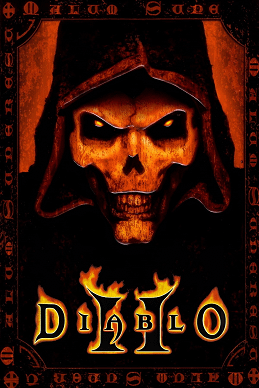
When I was in my early teens, I spent most of my free time playing Diablo II.
Like most games it had its own in-game currency, but the currency was so easy to come by that it didn’t have much value in trade.
So players did what humans have always done when their money fails them and found something else to use as money.
There was a rare ring in the game called the ''Stone of Jordan'' Ring (the SOJ) that was hard to find and useful enough that people valued it.
Although the game designers never intended this, the entire economy of Diablo II started using the SOJ as money.
Players started trading gear for SOJs, quoting prices in SOJs, and storing wealth by accumulating them.
The in-game currency was all but worthless because it was so easy to come by, but the SOJ was scarce and people recognized it.
Although I didn’t have these words at the time: I had just watched a free market select the SOJ as its own money. Witnessing this monetization process left a lasting imprint on my mind that decades later would give me an early appreciation of Bitcoin.
Once I understood what was happening I stopped dungeon slaying and started trading, instinctively following the basic principles of buy low and sell high until I had accumulated a wealth of rare items.
Then eBay became popular and I realized I could convert all that in-game wealth into actual dollars, and that was the moment something cracked open because people were spending “real money” to acquire valuable items inside a world that did not actually exist.
That was the first time the penny dropped for me.
I followed that intuition for the next two decades without knowing where it was going and it took one book to give it a name.
At 21 I read “The Creature from Jekyll Island” and learned what central banking actually was and the realization was so heavy I put it down, went back to work, and told myself there was nothing anyone could do about it.
Without knowing any other path I continued working inside the financial system despite understanding its corrupt core.
Then in 2018 I read “The Bitcoin Standard” and the two threads finally connected.
The free market digital money I watched emerge spontaneously inside a video game (the SOJ) and the free market digital money I was watching emerge spontaneously in the real world (Bitcoin) were both built on similar principles.
The common denominator? People always seek out the best tool for the job. When their money doesn’t work right, people find a better monetary tool.
Since the money people choose to hold is a matter of survival in the social world, it is extremely difficult to force people to use an inferior money when a better money is within reach.
My philosophical journey into the nature of money started with a video game and ended with a Bitcoin tattoo (my first and only tattoo to this day).
To me, this Bitcoin tattoo represents my “skin in the game”: which is a principle of alignment between people and the consequences of their actions.
The problem with central bankers and their fiat currencies? They have zero skin in the game. When they print money, you lose value. Their actions, your consequence: this is the misalignment.
Bitcoin is the reverse.
Bitcoin is a system secured by miners and holders.
These incentives n Bitcoin ensure that each person bears the consequences of his own actions.
The net result of Bitcoin being a monetary network with skin in the game is that it is money that can never be printed. This is because to create more than 21M Bitcoin would require a majority of users to act against their own self interest.
By giving people an incorruptible option in a world running on corrupt money, Bitcoin is one of the most important humanitarian missions in the world.
My Bitcoin tattoo is my “skin in the game”: a visual metaphor for my commitment to this humanitarian mission.
If actions and their consequences are misaligned, it is only a matter of time before the system blows up.
Bitcoin fixes this.
THE RESEARCHER
Job: Find the customer pain. Validate it before you build.
Most founders skip this. They build something cool and try to convince people they need it. That's how you go broke.
Prompt:
"Act like a world-class researcher who meticulously checks their work. List the top 5 urgent and painful problems faced by [target customer], with supporting evidence from Reddit, Amazon, Facebook, and other real sources. For each problem, show me the exact language people use to describe the pain, where they're already trying to solve it, and what existing solutions are failing them."
If people aren't already complaining about it, the idea is dead.
Physical dollars, or cash, are printed by the Bureau of Engraving and Printing, a division of the Treasury, but they’re actually “Federal Reserve Notes” issued by the Federal Reserve.
When the Fed purchases bonds issued by the US government, they are literally initiating the process of printing money. The Treasury transmits the bonds to the Federal Reserve's account, the Federal Reserve gives them "Federal Reserve Notes" in exchange. This is cash (fiat) money. And the government spends it like a drunken sailor.
68 college students played video games an hour a day for 30 weeks. They got measurably smarter. EEG brain scans confirmed it.
The setup was simple. Half the group played League of Legends, an action game. The other half played Legends of the Three Kingdoms, a strategy card game. Same hours, same schedule, no gaming experience for anyone going in. Both groups improved on attention, working memory, and executive function. The League group's gains were significantly larger in spatial attention and spatial working memory. The benefits were still measurable 10 weeks after the gaming stopped.
None of this is new.
Daphne Bavelier's lab at the University of Geneva has been replicating this finding since the early 2000s. Her 2018 meta-analysis in Psychological Bulletin pulled data from 8,970 participants across 15 years and found the same thing. Action games train attentional control, a brain skill that transfers to other tasks. Strategy games train deliberation, which mostly stays inside the strategy game.
The mechanism is the counterintuitive part. Action games train your brain by giving you no time to think. The brain can't deliberate. League of Legends throws 9 champions, hundreds of minions, dozens of abilities, mana, cooldowns, and map state at you, all updating in milliseconds. The brain learns to perceive faster instead. That perceptual speed transfers to anything else that demands the same skill.
Including surgery.
The 2007 Rosser study in Archives of Surgery found that laparoscopic surgeons who played video games more than 3 hours a week made 37% fewer errors, completed procedures 27% faster, and scored 42% higher on overall performance. The top third of gamers made 47% fewer errors. Laparoscopic surgery is a 2D screen with distorted depth perception, remote-controlled instruments, and multiple data streams updating in real time. The cognitive profile is almost identical to an action video game.
The 10-week persistence is the part that should change how this gets discussed. If the gains were just from practicing the game, they would have disappeared the moment the students stopped playing. They didn't. The 30 weeks rewired the perceptual system, and the rewiring stayed.
Most of the time, when people struggle to use AI in their business, the real issue is not the technology. It is that they do not fully understand their own business. They have not broken down how their decisions get made or how their actions turn into repeatable processes. Without that clarity, there is nothing for AI to actually execute.
Carl Jung believed life truly begins at 40, viewing the first four decades as "research"—a preparatory phase focused on building an ego, establishing a career, and meeting societal expectations. The second half of life, starting around 40, is for inward exploration, authenticity, and fulfilling one’s true self (individuation) rather than pursuing external validation.
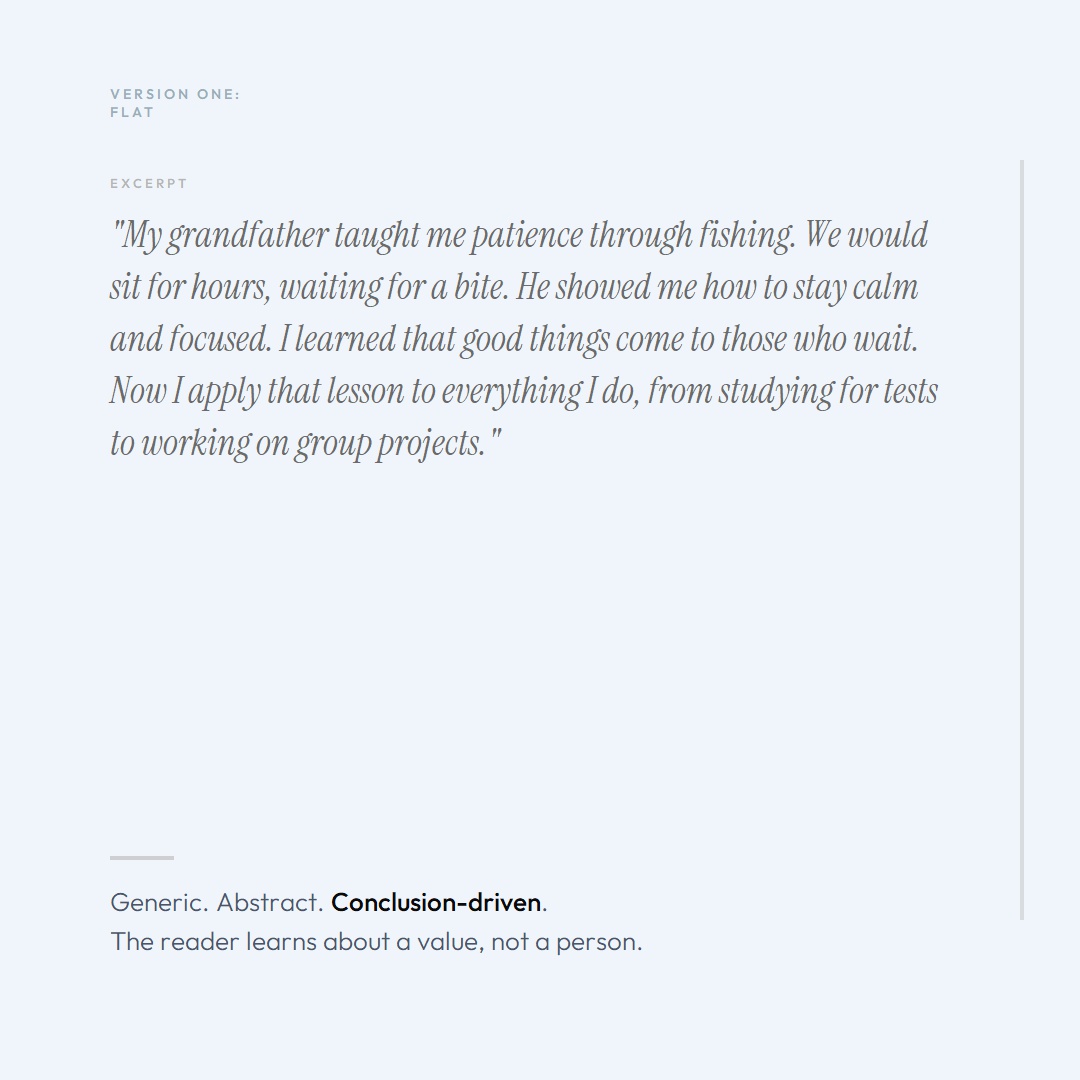
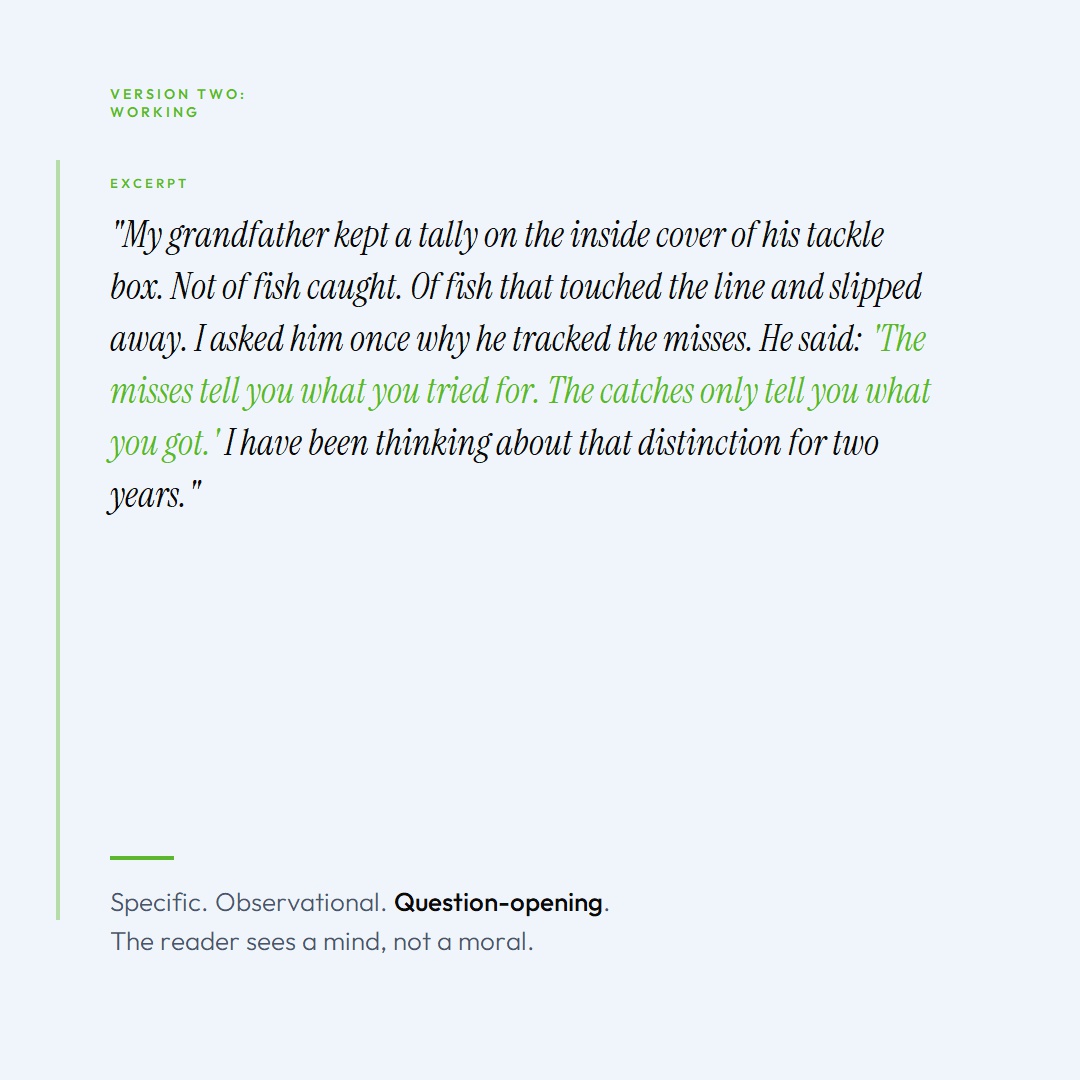
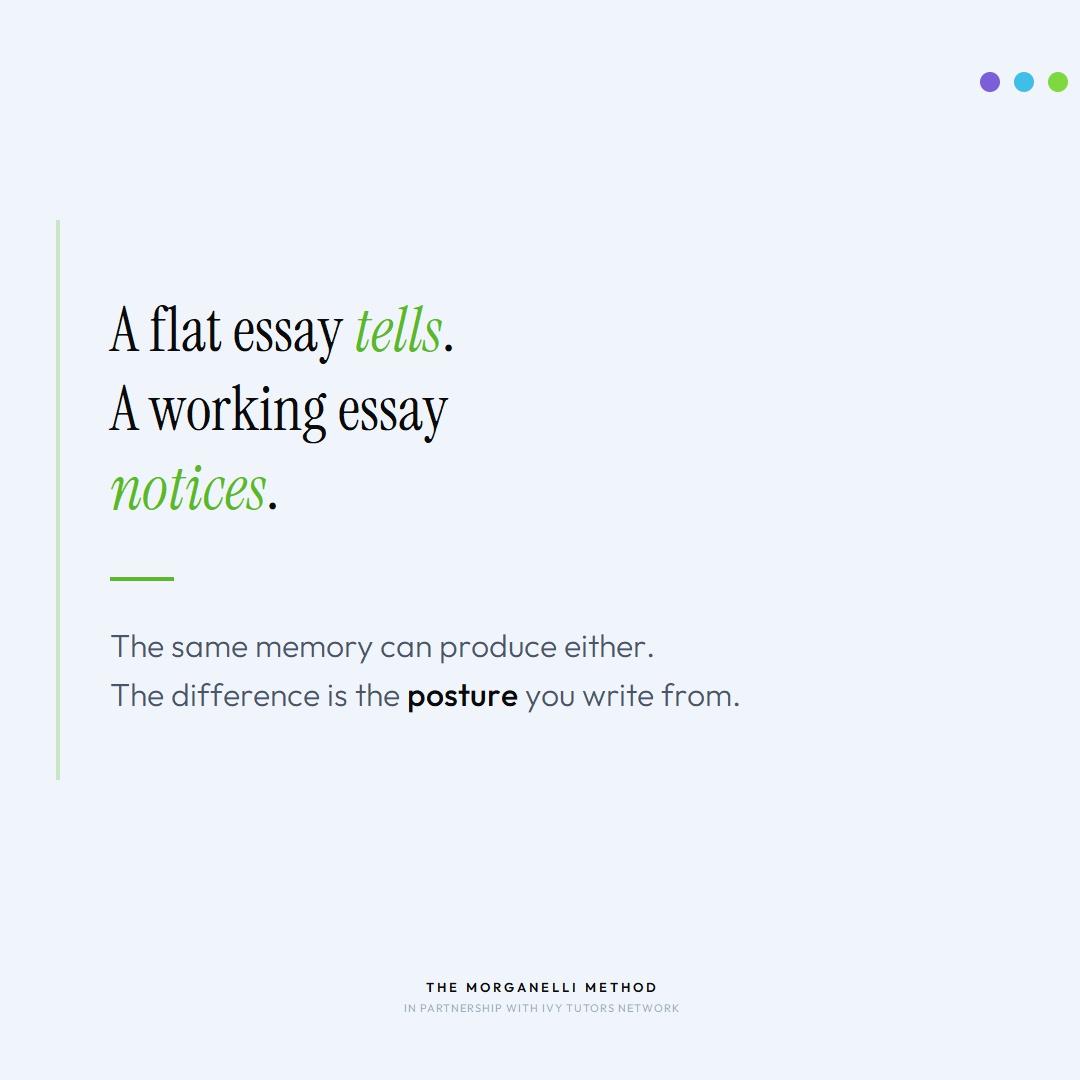
A flat essay: "My grandfather taught me patience through fishing." A working essay: "My grandfather kept a tally on the inside cover of his tackle box. Of fish that touched the line and slipped away." Same memory. Two different reads. A flat essay tells. A working essay notices.
The biggest mistake parents make in 9th grade: "just focus on grades, figure the rest out later." By the time later arrives, the student has a GPA and nothing else. No depth, no deliverables, no thread. 9th grade is not for building a resume. It is for finding a narrative starting point.