James retweetledi
James
8.8K posts

James
@JDCartography
Father, Husband, Writer, Cartographer, Superhero every second Tuesday. Proud Conservative. #rpg #ttrpg #fantasy #writing #cartography #maps
Katılım Mart 2022
1.7K Takip Edilen1.1K Takipçiler

@hustlerama Nothing to see here. Just PP trying to be like Trump.
English

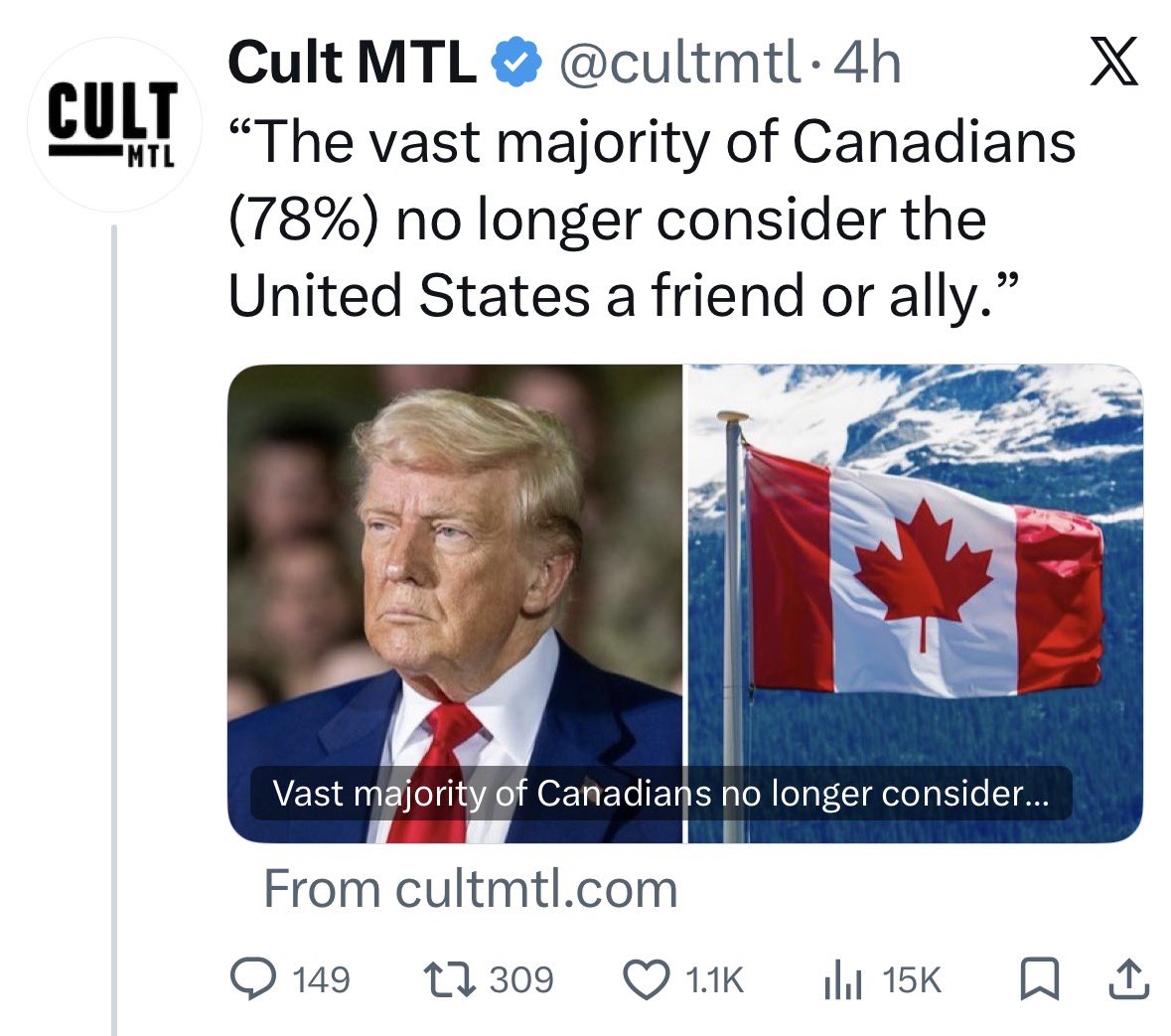
@KatKanada_TM Yep. It's not the "vast majority" unless you count people 55+ yrs of age, and liberal voters.
English

@MikhailaFuller Wishing your Dad a successful recovery. While he is certainly missed, it's better to take as much time as needed to get healthy.
English

We figured out that dad has a psych med induced neurological injury, and has been suffering from akathisia. It’s been 6 years since any psych medications. Last summer his symptoms started, after a flare up likely induced by mold (CIRS) and stress. It was complicated by pneumonia and associated sepsis a month later. It’s been horrible. Neurological injuries from psych meds are far more common than people know. I made this video to explain what they are and what akathisia is because they’re not talked about enough, they’re misdiagnosed, nearly impossible to treat, and hidden by the pharmaceutical industry. I don’t plan on making another update about my dad, it stresses my family out, and myself, and there’s nothing more to say about it until things get better. I will be jumping up and down about psych med injury awareness from now on as it’s impacted my health as well, and is devastating. Prayers are appreciated still.
English
James retweetledi

The Battle of Lochy, the end of Sigismund domination over the silver city
On August 13, 1403, the Battle of Lochy took place in the Kingdom of Bohemia near Kuttenberg.
This historical event and context, which could have been featured in KCD2, was the final battle for the fate of the city of Kuttenberg in the Margraves Moravian Wars.
After the Easter truce, the war resumed violently on July 3, 1403. The forces of Margrave Jobst of Moravia, allied with Bohemian loyalists, launched an offensive while Ladislaus of Naples landed at Zara to seize Hungary. Forced to leave for Hungary, King Sigismund held a council on July 18 in Kuttenberg and entrusted the defense of Bohemia to the League of Lords.
During his absence, the League struggled to contain the rebellion. Many cities rallied to Jobst of Moravia, a former supporter of Sigismund who had become leader of the loyalists of Wenceslaus IV after the capture of his brother Prokop. Kuttenberg, loyal to Wenceslaus since 1402, immediately opened its gates to Moravian and Bohemian reinforcements.
The League retreated to Čáslav, governed by Smil Flaška of Pardubice, a fervent supporter of Sigismund. Smil Flaška, who hated Kuttenberg for its loyalty to Wenceslaus, was tasked with preparing a punitive expedition to retake the city by force with troops from Čáslav, Prague, and other lords.
Kuttenberg, having been warned, went on high alert and refused to relive the humiliation of January 1403 after the siege by Sigismund. The burghers, loyalist troops, and Moravian reinforcements prepared to confront him.
On August 13, 1403, as the League army commanded by Smil Flaška was crossing the hamlet of Lochy in the forest between Kuttenberg and Čáslav, it fell into an ambush. The battle was extremely violent. Smil Flaška was killed in such brutal circumstances that no description of his death exists. His army, disorganized, retreated and abandoned any further operations against Kuttenberg.
On November 11, 1403, King Wenceslaus IV fled Vienna. On November 24, 1403, Wenceslaus arrived in Kuttenberg, greeted by his loyalist army: Margrave Jobst, Jan Sokol of Lamberg, Hynek of Kunštát "the Dry Devil", Zbyněk of Hazmburk, and Racek Kobyla.
This artwork was prepared for a month with my great friend artist @AleksandrG78133 for an artistic and historical project commission aimed at paying tribute to this forgotten battle which has no representation and no memorials. Lochy is now a small innocent village between the two cities that we wouldn't imagine that is here where one of the most important member of the League of Lords died (Smil Flashka was also a great writer whose works are still studied today.)
I discovered the existence of this battle two years ago in old czech books during my research on the KCD2 setting around Kuttenberg. I thought the battle would be included, especially since it's historical and represents the liberation of Kuttenberg.
This historical art project is not the last one and we already got an idea for the next one about KCD historical context !

English
James retweetledi

In the Scottish Highlands, chief amongst the forest spirits is the nocturnal Urisk, a half-human and half-goat being similar to a Faun
more in my: "Folklore of Scotland: Faerie Folk and Folk Horror"
folkloreofscotland.com
art: Tianhau Xu

English
James retweetledi
James retweetledi

@TheProjectUnity I just installed it last night but haven't yet had a chance to play. Going to this weekend!
English

@max_theta @NotFarLeftAtAll Yep. Some good music, but only on days when I truly did not want the party to end.
English

@JDCartography @NotFarLeftAtAll Sketchbags would live on the couches at CZ for like 3 days! 🤣
English

@WorldofWeirth Thanks. Up until a few days ago, I thought Substack was just a version of Reddit. Turns out that I was very wrong, lol
English

@JDCartography You should, it's a good way to build a list, people love "behind the scenes" process/design videos and blog posts.
English

A friend recently suggested I start a Substack to share my worldbuilding and mapmaking process as I work on my stories and novel. He said it's a great place for aspiring authors to engage with a community. Do any of my contact here know much about Substack, and does it sound like solid advice?
English
James retweetledi

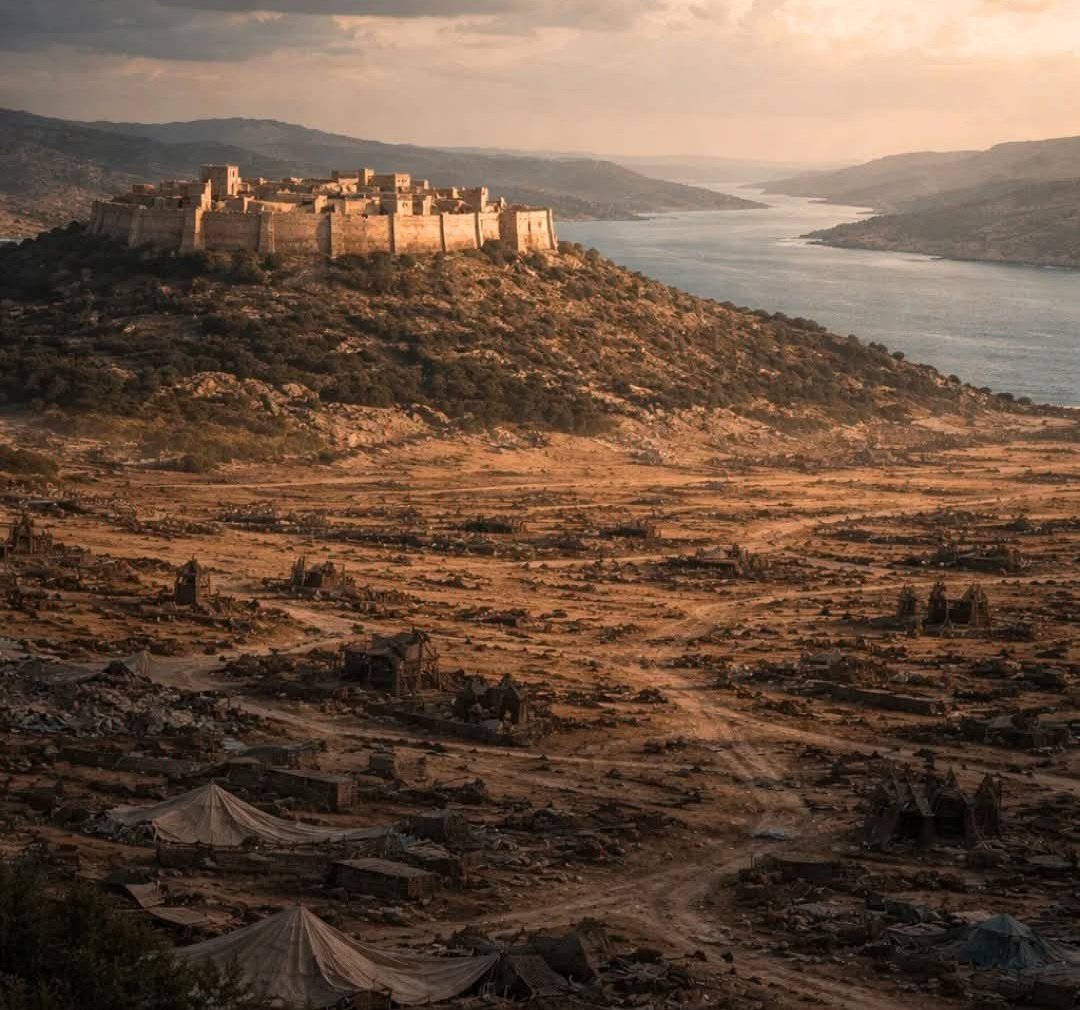
Sometime around 12th Century BC, a city burned on the northwestern coast of what is now Turkey, at a place the Greeks called Ilion and we call Troy.
We know this because Heinrich Schliemann dug it up in the 1870s, which is one of the more dramatic moments in the history of archaeology, a wealthy amateur with an obsession and a shovel proving that the most famous city in world literature was not simply a poet's invention.
The site at Hisarlik in modern Turkey contains not one Troy but at least nine, cities built on top of cities across thousands of years, and the layer that most archaeologists associate with the period of the Trojan War, the stratum known as Troy VIIa, shows clear evidence of violent destruction around 1180 BC. Burned timbers. Unburied bodies. Arrowheads and spear points in the ruins.
The physical residue of a city that ended badly.
What it does not show is Helen.
This is the central problem and the central fascination of the Trojan War as a historical question. The myth is so specific, so richly detailed, so internally consistent across multiple ancient sources that it feels like it must be remembering something real.
Homer's Iliad, composed perhaps in the eighth century BC but drawing on an oral tradition that reaches back centuries further, describes a Bronze Age world of chariot warfare, bronze weapons, palace economies, and a particular kind of heroic aristocracy that corresponds, in its broad outlines, to what archaeology has uncovered about the Mycenaean Greek civilization of the late second millennium BC.
The geography is accurate. The material culture is recognizable. The political structure of a coalition of Greek kings assembled under a paramount leader maps onto what we know about how Mycenaean power actually operated.
The Greeks who would have fought at Troy, if there was a Troy and if there was a war, were Mycenaeans, the civilization that built the great palace complexes at Mycenae, Tiryns, and Pylos, that Linear B tablets show was a sophisticated bureaucratic culture with extensive trade networks across the eastern Mediterranean.
These were not the classical Greeks of the fifth century BC who most people picture when they think of ancient Greece. They were something older and in some ways stranger, palace-based kingdoms whose economy depended on the redistribution of agricultural surplus, whose warrior aristocracy was defined by the kind of heroic personal honor that Homer describes, and whose reach extended east across the Aegean to the coast of Anatolia.
Troy sat at the entrance to the Hellespont, the narrow strait that connects the Aegean to the Black Sea. This is not an incidental geographical detail. It is possibly the most important fact about the city's historical significance.
Whoever controlled the Hellespont controlled access to the Black Sea trade routes, along which grain, timber, metals, and other essential commodities moved between the civilizations of the eastern Mediterranean and the resources of the Black Sea region.
A city at that location, in the late Bronze Age, would have been extraordinarily valuable to anyone whose economy depended on that trade, and Mycenaean Greece's economy did depend on it.
Hittite records, which have been discovered and translated over the past century, refer to a place called Wilusa in northwestern Anatolia that most scholars identify with Troy, and to a people called the Ahhiyawa who appear to correspond to the Greeks.
The Hittite texts describe political and military tensions in the region, references to a king of Wilusa and disputes involving the Ahhiyawa that suggest the Aegean coast of Anatolia was an area of contested influence between the Hittite empire and the Mycenaean world during precisely the period that the Trojan War mythology describes.
📷 : digital recreation
#drthehistories

English
James retweetledi