Jean-Marc Baketel Daecius

255 posts

Jean-Marc Baketel Daecius banner
Jean-Marc Baketel Daecius

Jean-Marc Baketel Daecius

@JMBDaecius

Chief of Staff @osvllc AI/SWE/ART/Writing/@imbiblia

Greenwich, CT Katılım Ağustos 2025
80 Takip Edilen205 Takipçiler
Jean-Marc Baketel Daecius retweetledi
Charlie D. Becker
Charlie D. Becker@charliedbecker·
I'm a second-generation bookseller. My family runs Houston's largest used & rare bookstore and I'm building an AI tool for used bookstores. We got hit by exactly these orders, including a single order for 70 obscure books that made us pause online sales entirely. So I dug in. I don't think this connects the way people want it to. Every ingredient of the viral story is true. ISBNdb really does advertise sourcing books for AI companies. Anthropic really did destructively scan millions of books though they were mostly acquired through things like library deaccessions, not bookstore inventory. And booksellers really are getting bizarre bulk orders. But "rare" here isn't what you're picturing. It's The Insider's Guide to Metro Denver (1995) and how-to-use-WordPerfect 1991 manuals. Obscure, but often not precious. When we combed through our orders, nearly every book bought from us was either unavailable on Amazon or listed there at 5, 10, 20x our price on the platform they were purchased on. And the shipments are going to FBA prep companies: which is what you do with a book you're about to resell, not one you're about to cut apart. There is more than circumstantial evidence that this is a well-funded company running algorithmic arbitrage, buying underpriced or out-of-stock books to relist on Amazon at markup. This evidence includes an official denial that they are selling to train AI but I don't want to mention them for several reasons. You can Google it. That's more mundane than the shredder story. The actual risk is worse, though, because it's quieter: books that don't sell via FBA eventually get liquidated. If we really hold the last copies of some of these (and comparing platforms, it looks like we might) we're feeding them into a portal they may not come back from. No AI company required. Everyone assumes the internet preserved everything. It didn't. Many of these books have almost no metadata anywhere, just a scattered listings across proprietary databases then nothing. That's what my project is for: building better bibliographic records for these books than exist anywhere else, so we at least have a map of what we stand to lose. So the Library of Alexandria is still burning, just more slowly, and kore from “who cares” than from some cinematic villain. (I am open to being corrected.) Full writeup: open.substack.com/pub/charliebec…
Hedgie@HedgieMarkets

🦔AI companies are bulk-buying rare books, scanning them through high-speed machines that cut the spines off, and shredding the originals. A service called ISBNdb facilitates orders of up to a million books and keeps buyers anonymous. Pre-2022 books are premium because they're free of AI-generated text. A federal judge ruled the practice is fair use because eliminating the original means only one copy exists at a time. Anthropic hired the former head of Google Books partnerships to obtain "all the books in the world." My Take This got to me. A bookseller told 404 Media that rare books with almost no surviving copies are being fed into this pipeline. Books that survived wars, fires, and centuries of handling are being shredded so an AI can learn to write a better marketing email. ISBNdb's website literally says "'AI company destroys two million books' is not a headline that generates sympathy," and they still built an entire business around making it happen quietly. They offer NDAs as a feature. They coach clients to call it "digital preservation." I've covered AI companies scraping the internet, torrenting libraries, and stealing music. This is worse because it's irreversible. You can re-upload a website. You can reprint a bestseller. You can't replace the last three copies of an 18th-century botanical text once someone shreds them for training data. And the judge said it's legal. So it's going to accelerate. "We shred rare books and offer NDAs so nobody finds out" is a legitimate business model in 2026. What a timeline. Hedgie🤗

English
479
5.8K
21.6K
1.2M
Jean-Marc Baketel Daecius retweetledi
Richard D. Bartlett
Richard D. Bartlett@RichDecibels·
the robot is building me a permaculture training course customised to my region. I asked it to visualise the water catchments in our local terrain. it found an official dataset and made this 🤯
English
19
8
213
32.6K
Jean-Marc Baketel Daecius retweetledi
Matt Zeigler
Matt Zeigler@CultishCreative·
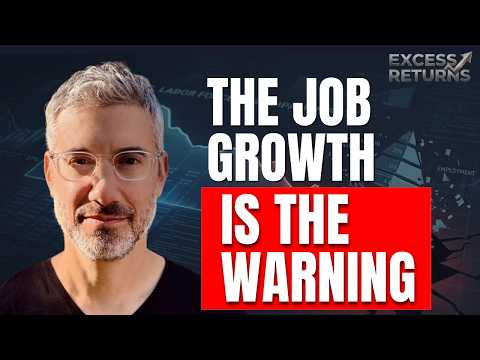
There is a recession that the employment data can't see. @EricPachman came with chart after chart unpacking how Data4thePeople is presenting the publicly available data in ALL NEW ways. Out now on @excessreturnpod: youtu.be/62OvNJfqvxY?si…
YouTube video
YouTube
English
0
3
6
2.7K
Bernt Bornich
Bernt Bornich@BerntBornich·
Introducing NEO’s 25 Degrees of Freedom, tendon-driven hands — nearing or surpassing human-level dexterity, strength, speed, and reliability. For seventy years, robotics worked around the hand problem. The humanoid bet is the reverse: it lives or dies at the fingertips.
English
1.2K
2.9K
23.9K
8.6M
Jean-Marc Baketel Daecius retweetledi
Infinite Films
Infinite Films@InfiniteF8lms·
Big news: Infinite Films is partnering with Scott Free Productions and Calliope Pictures on THE VESUVIUS CHALLENGE, a documentary narrated by Guy Pearce. For decades, Dr. Brent Seales chased what seemed impossible: reading scrolls carbonized by Mount Vesuvius in 79 A.D. Using AI and advanced imaging, his team unlocked ancient Rome's only surviving library. These are the kinds of stories we want to tell.
Deadline@DEADLINE

Scott Free Productions Teams With Calliope Pictures For Documentary Feature ‘The Vesuvius Challenge’ Narrated By Guy Pearce deadline.com/2026/07/scott-…
English
0
5
26
11.8K
Jean-Marc Baketel Daecius retweetledi
Data 4 The People
Data 4 The People@EricPachman·
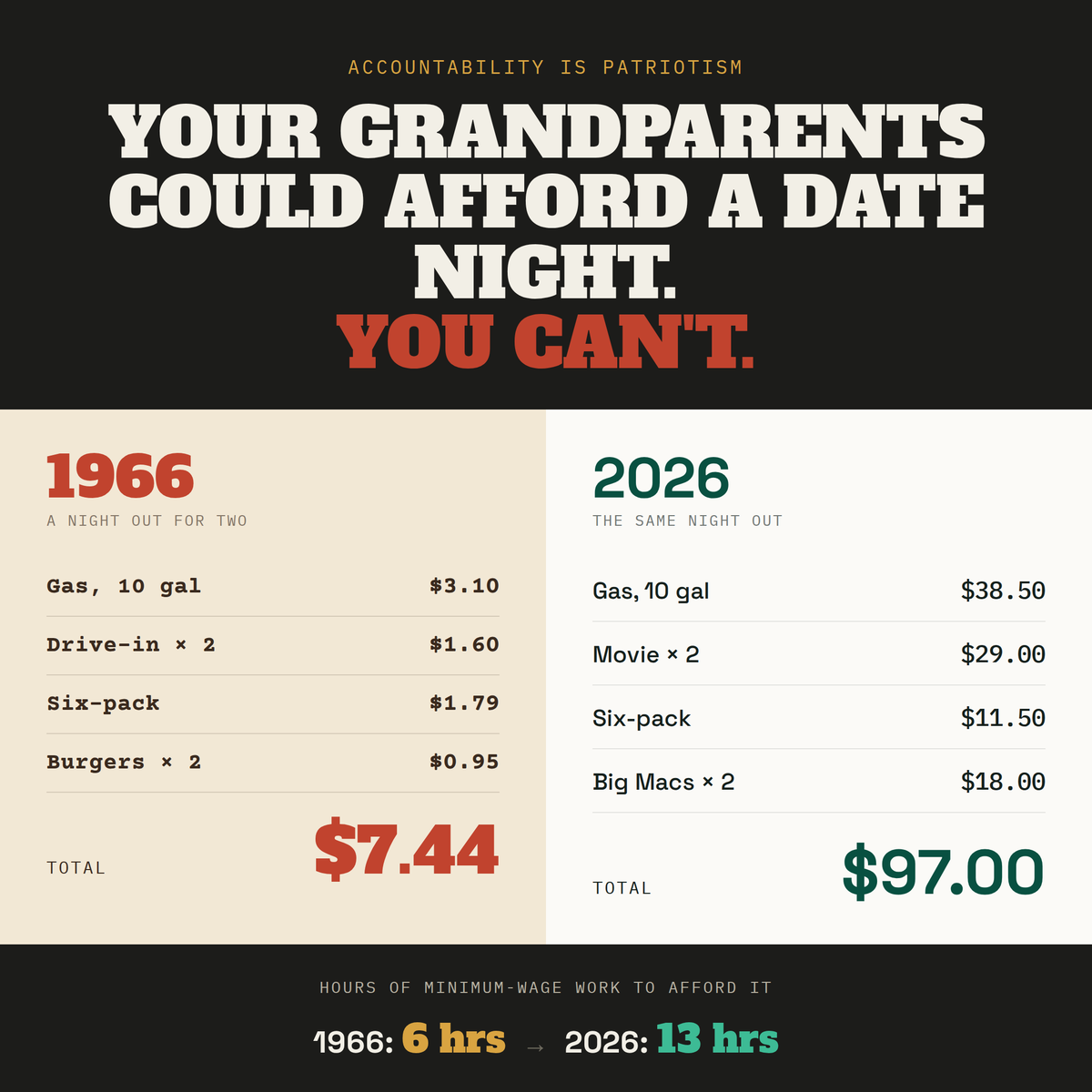
It's Friday... Date night! That's gonna set you back $97 though (13 hrs of min wage work). 60 years ago it was $7 (6 hrs min wage work).
Data 4 The People tweet media
English
2
1
3
307
Jean-Marc Baketel Daecius retweetledi
Jan Jedryszek
Jan Jedryszek@JedryszekJan·
Why we made @Bioticorg. I believe biology today stands roughly where construction and civil engineering stood 300 years ago. That needs to change. A Thread 🧵
English
1
3
18
9.9K
Jean-Marc Baketel Daecius retweetledi
Jan Jedryszek
Jan Jedryszek@JedryszekJan·
I did not get here alone, and Biotic would not exist like it does today without @jposhaughnessy and the @osvllc Fellowship. Jim gave me the freedom and the financial security to pause my PhD and commit myself fully to this idea, and a community that genuinely believes ambitious problems are worth pursuing. I am grateful to Jim, whose curiosity and optimism are infectious, and to @atmanpandya and @JMBDaecius and everyone at OSV who believed in this vision long before there was much to show for it. The support, the conversations, and the sheer generosity of the people in the OSV community, (now including my dear friends @alexsaraki and @Shiwei_MW and the incredible @TheMitoQueen) were instrumental in getting Biotic off the ground, and I love them for it.
English
1
1
5
155
Jean-Marc Baketel Daecius
Jean-Marc Baketel Daecius@JMBDaecius·
Is "love" less likely simply because the economic conditions for it have shifted and the shakespearean form of pair-bonding that we've had for the last bit of human history is... over?
English
0
0
0
21
Jean-Marc Baketel Daecius
Jean-Marc Baketel Daecius@JMBDaecius·
It's my opinion that love and happiness are fragile. They are like plants in a garden - flowers. It takes specific conditions for them to flourish, and it's easy to trample them out of existence.
English
1
0
0
28
Jean-Marc Baketel Daecius retweetledi
Niko McCarty.
Niko McCarty.@NikoMcCarty·
Out today: Researchers have made the first cell capable of “feeding, growth, replication, division and selection...entirely using components scientists put there.” In other words, a cell that self-replicates and was made entirely from the ground-up, molecule by molecule. The cell is called SpudCell. And although it is definitely a cell (in that it has a membrane with molecules inside) it is definitely not alive, because it cannot grow indefinitely, survive without human help, make its own ribosomes, or recycle waste. It "dies" after a few divisions. But it's a starting point! And these same researchers have raised $6-8M+ in philanthropic funding to scale their efforts with a new nonprofit for synthetic cell research, called Biotic.
English
43
157
859
123.2K
The Kobeissi Letter
The Kobeissi Letter@KobeissiLetter·
The US wealth divide has never been bigger: The top 20% of earners now account for ~58% of all personal spending in the US, the highest proportion on record. At the same time, the bottom 80% account for just ~42%, the lowest on record. This comes as personal outlays growth for the top 20% has averaged +8.3% per year since the 2020 pandemic, almost double the +4.5% seen for the bottom 80%. Over the last year, the gap has widened further, with the top 20% seeing a +6.5% increase in spending, compared to +2.6% for the bottom 80%. To put this into perspective, in the 1990s, both groups accounted for roughly equal proportions of total personal spending, at ~50% each. Asset owners are the only winners in this economy.
The Kobeissi Letter tweet media
English
129
337
1.5K
235.9K