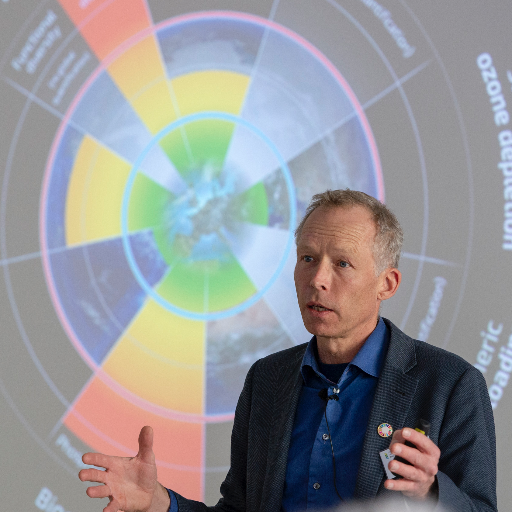
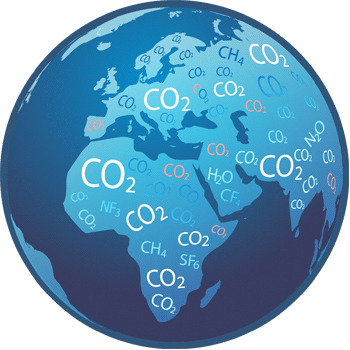
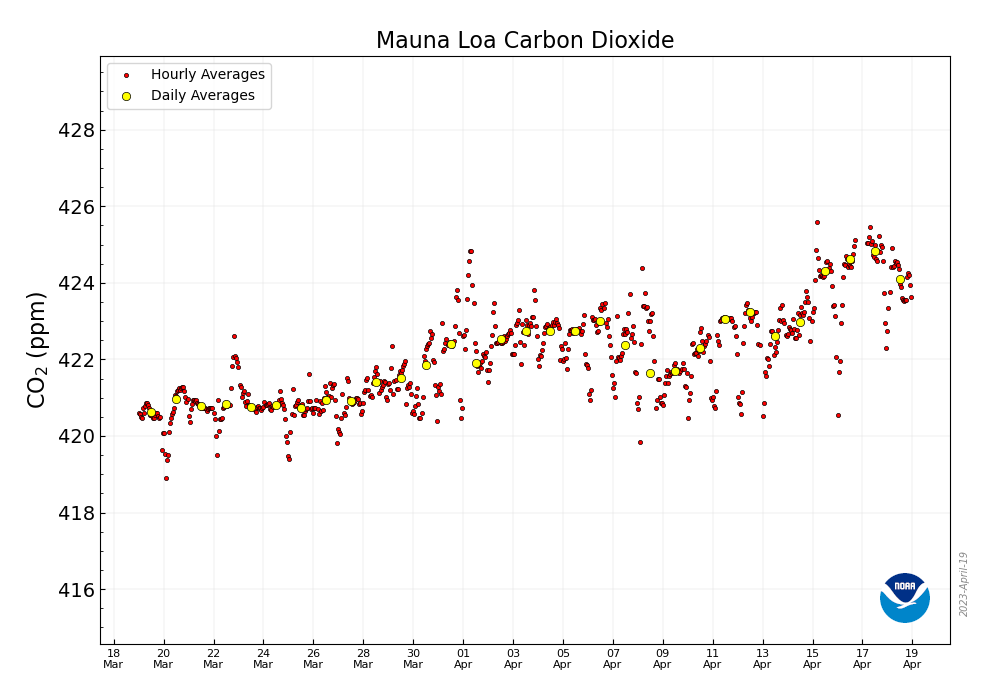
For the first time Patient Earth goes through a full Health Check. The verdict is clear - the patient is in critical condition. The 1st Planetary health check gives us the quantitative diagnosis required to guide the transformations for a safe landing pik-potsdam.de/en/institute/d…
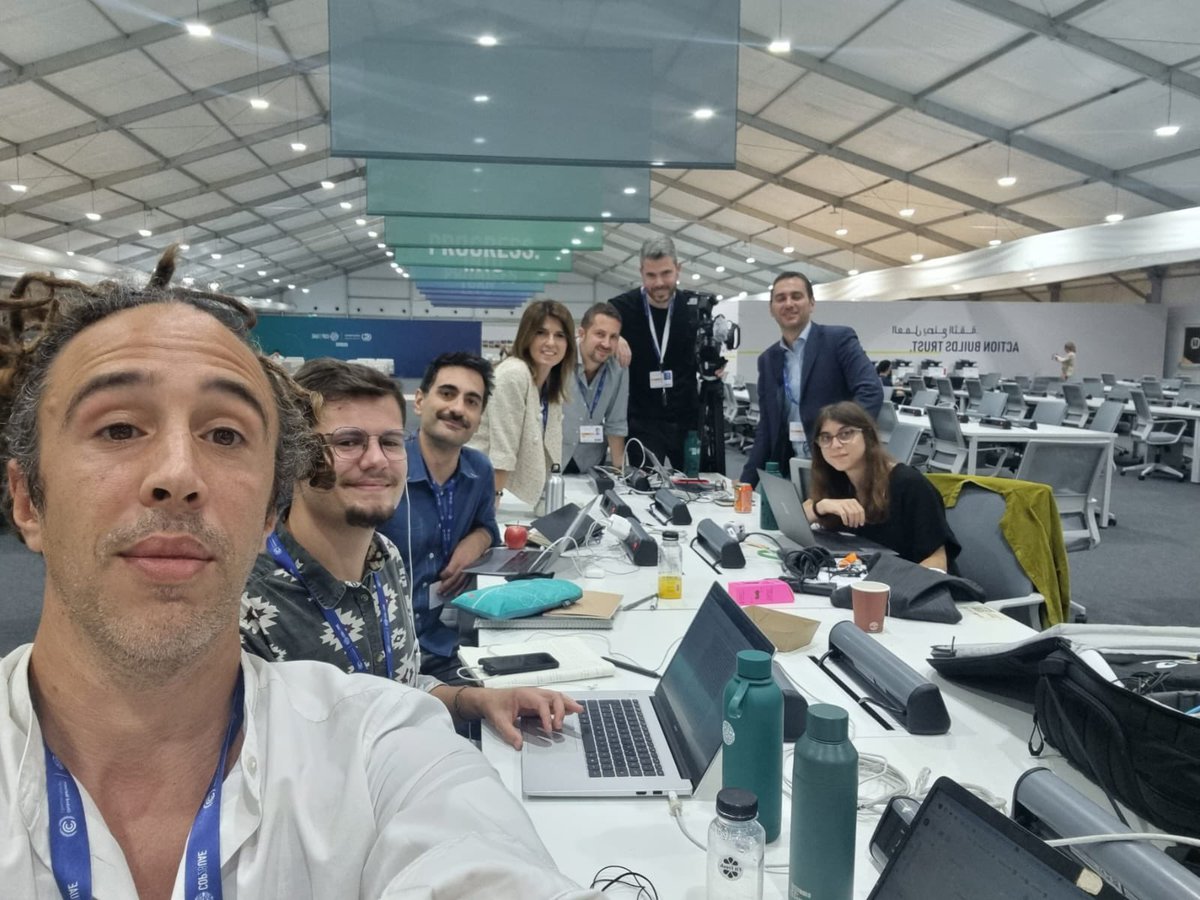
non so come andrà a finire con la decarbonizzazione. L’unica certezza è che ogni volta quando viene sera e la sala stampa si svuota rimaniamo solo noi italiani #Cop28Dubai#cop28
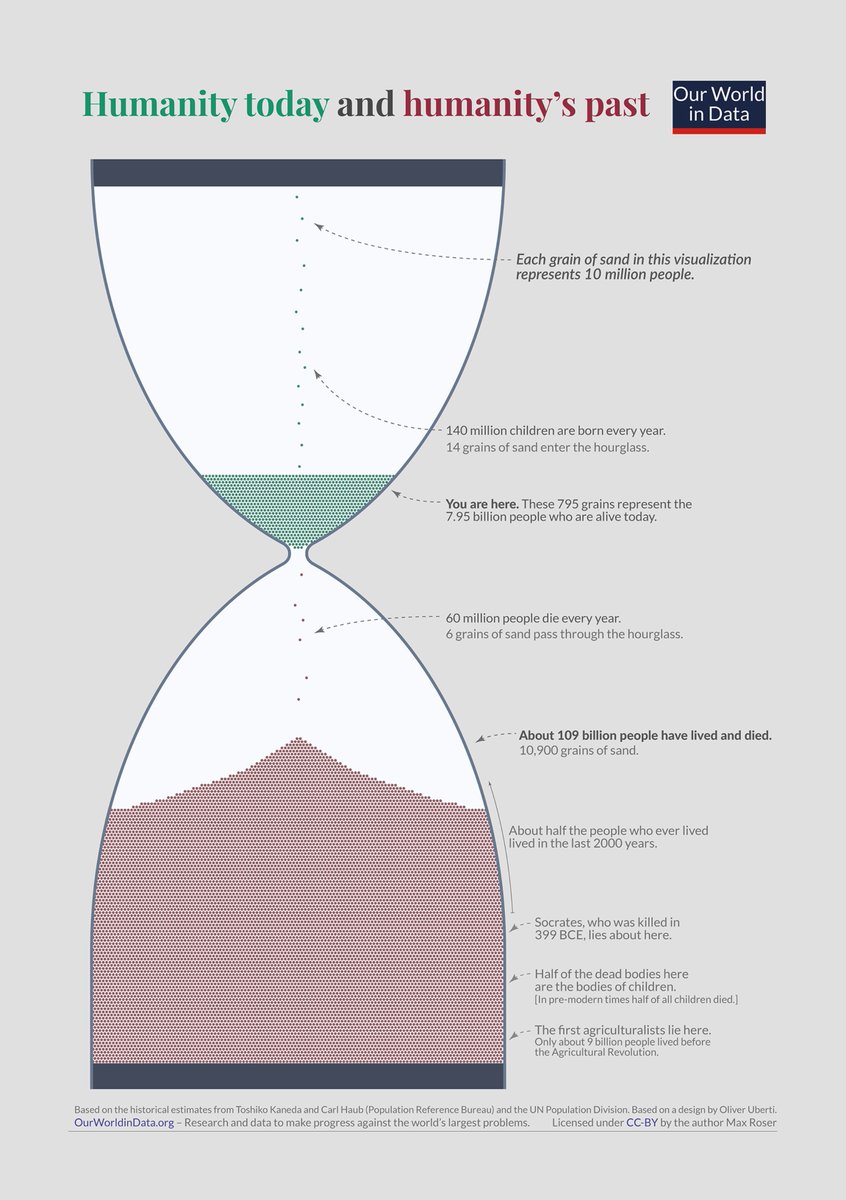
7% of the humans who have ever lived are alive right now.
And we are all directly linked to the 109 billion people who have come before us.
You know somebody who knew somebody else who knew another person who knew another, and so on, going back further and further in time, who once knew William Shakespeare (for example). In other words: we are all connected to every human who has ever lived by a chain of conversations, relationships, friendships, and every other form of social connection, going back to the beginning of human civilisation and beyond.
And the decisions those people made continue to influence the present in ways both major and minor.
A good example is language. There are certain words (including mother, fire, and what) which linguists believe to be at least 15,000 years old. They were part of a language spoken during the Ice Age which is the common ancestor of many modern languages. But these words didn't just appear — people, perhaps a single individual, came up with them. And, passed on from one person to another, we are still using them today. What words we create will be spoken 15,000 years from now?
The point here is that history has few hard lines. We usually think about the past in terms of dates and movements. The Battle of Hastings was in 1066, the Western Roman Empire fell in 475 AD, the Renaissance began in the 15th century etc. Thus we end up with a neat procession of ages: Classical Antiquity, the Middle Ages, the Renaissance, the Enlightenment, the Industrial Revolution, and so on.
But the truth is that generations, movements, cultures, ideas, events, and civilisations all melt imperceptibly into one another.
We are currently living in the Information Age (or the Digital Age), but when did it begin? Was it with the invention of the transistor in 1947, or of the World Wide Web in 1989? Maybe, but in the 1980s our capacity for storing data was less than 1% digital, and it didn't go beyond 50% until 2002.
You've got to draw lines somewhere, if only for simplicity and ease. But we've got to remember that the past, like the present, was ever-changing, complex, and imprecise. In the same way that our Digital Age didn't simply "begin", in the year 1475 people didn't suddenly wake up and decide they were in the Renaissance rather than the Middle Ages. Over the years Leonardo painted his pictures, Machiavelli wrote his books, and Bracciolini uncovered ancient manuscripts — the Renaissance emerged and people realised they were living through it.
History isn't movements and dates; history is people saying and doing things.
As Thomas Carlyle once wrote, the entirety of the past and the entirety of the future are contained in the present. This isn't just a memorable line — it is literally true. Every future human being will be the descendant of people alive today, just as we are all the descendants of people who came before. Everything that has ever happened has brought us here, and everything that could ever happen will be a product of today.
This is the terrifying detailed account of @mariam_ghy, a survivor of the Derna disaster. I interviewed her via WhatsApp.
Below is the transcript in English of that same interview.
It reads like the script of a natural disaster movie. But remember, this is real, and it just happened to 22-year-old Mariam.
The described events by Mariam took place between 2AM and 4AM on September 10, 2023:
“We were in our apartment on the first floor.
We started to hear outside police asking people to evacuate.
But the neighbourhood was already “sinking”, already there was a lot of water in the street.
At the same time, we never thought that water would reach our apartment on the 1st floor.
We thought it was just a normal situation – rain, storm etc.
After a while, our neighbour came, and she was crying.
She said we should go to the fifth floor; the water level is rising, and the water now is really getting inside apartments.
So, we all gathered on the fifth floor, and of course, nobody expected that the water would rise to the fifth floor.
Our building has eight floors. It is impossible that the water would get that high.
After fifteen minutes from arriving on the fifth floor, we hear screaming and shouting and crying. And voices are saying: The water has reached the fourth floor! We should go to the seventh or the last floor.
Here, we started to realize how dangerous it all is. We all gathered on the roof top, also the neighbours of the other buildings. We felt the earth shaking under us. It was a horrifying feeling. And some buildings (in our area) were collapsing. The dam had collapsed already. Until that moment, we did not realize it was the dam. I thought it was an earthquake.
I can tell you: There are no words to describe my feelings. We felt death.
Either we will perish in the water, or the building will collapse. We couldn’t do anything other than praying and saying Duaa. And we said say goodbye to our loved ones. I was holding the hands of my sisters and my youngest brother. I told them – keep on holding my hand. Stay together even if the building collapses. Even if we die, we die together.
It was an indescribable moment. I still haven’t slept, I can’t stop thinking of those horrible moments.
The whole thing lasted from 2.18 in the morning until about 0400 AM. At 0408 AM, we left the building.
We left the building because we saw cracks in the earth and suddenly the level of water started to decrease quickly.
Suddenly, the water was gone. Literally, the earth had cracked.
When we got down from our building (most of the water had gone), we had to jump over all those cracks.
Even a neighbour died when she tried to pass a crack and fell into it.
At that moment, we had no idea it was the dam which had burst.
When we went down (from our building), I wasn’t thinking of the cause of the disaster. I just looked around me and saw all the buildings around had collapsed. I was only focused on this: how to get out of here.
When we were walking, it was still raining. And the lightning was so strong, it was lighting the whole sky. I could see everything had been taken by the water, nothing was standing anymore, it all had become one level.
We live in the center of the city and normally there are all kind of buildings around us. But there was nothing anymore, it was all flat. It was so flat that I thought: where am I? I could not even recognize our own street.
There were dead bodies on the street and floating in the water. And some people who had tried to escape, they fell and died. It was dark. There were no cars to take us. When we were on the fifth floor, we saw already that police cars and vehicles from the red crescent were swallowed by the water and thrown towards the sea.
I am hearing now that there are many donations, but we haven’t received anything.
We stayed here in Derna until yesterday (Wednesday). We had nothing. We didn’t get anything.”
@akhbarx.com/akhbar/status/…
Il Ceo, il miliardario, l'esploratore: chi erano i passeggeri a bordo del sottomarino disperso mentre era in visita al relitto del Titanic
repubblica.it/esteri/2023/06…
Il miracolo dei bambini sopravvissuti nella giungla in Colombia, l'esperto: "Frutta, acqua pulita e l'attenzione ai ragni: solo degli indios potevano farcela". Leggi l'intervista
repubblica.it/esteri/2023/06…
Alluvione in Emilia Romagna, il meteorologo: "Mai così in un secolo, è l'evento più grave: questa è la crisi del clima" greenandblue.it/2023/05/17/new…
L'intervista - Beatriz Flamini e i suoi 509 giorni da sola in una grotta: "Ho sofferto di solitudine e allucinazioni, ma non ho mai avuto paura"
repubblica.it/esteri/2023/05…