


Roerich

2.3K posts

Roerich banner
Roerich

Roerich

@James78073

Katılım Şubat 2025
478 Takip Edilen47 Takipçiler
Roerich
Roerich@James78073·
@Rothmus Yeah this is why I drive a Chevy
English
0
0
0
5
Roerich
Roerich@James78073·
@Coopdog32777690 Boy oh boy now this is some sweet Yankee cope right here yes suh.
Roerich tweet media
English
0
0
1
12
Roerich
Roerich@James78073·
@Mumsfilibabba_ I genuinely think people who talk like this need to be sent to some sort of reeducation camp
English
0
0
0
15
Roerich
Roerich@James78073·
@_x_takes_ I think there are some disappearances in the Missing 411 cases that are pretty hard to explain, but a lot of the time Paulides gets too much of the facts wrong to try and make a case seem more strange than it is.
English
0
0
1
547
Roerich
Roerich@James78073·
@InspiringPhilos @AtheistPhoenix Well you see Micheal, one Roman source said that crucified criminals weren’t allowed to have a proper burial. So obviously it was like that throughout the entire empire and no exceptions were ever made. Don’t you seee?!
English
0
0
16
796
InspiringPhilosophy - Michael Jones
Wrong. “…the Jews used to take so much care of the burial of men, that they took down those that were condemned and crucified, and buried them before the going down of the sun” (Josephus, “Jewish Wars,” 4.317). “I have known instances before now of men who had been crucified when this festival and holiday was at hand, being taken down and given up to their relations, in order to receive the honours of sepulture, and to enjoy such observances as are due to the dead” (Philo, “Against Flaccus,” 83).
English
13
94
1.8K
18.5K
Roerich
Roerich@James78073·
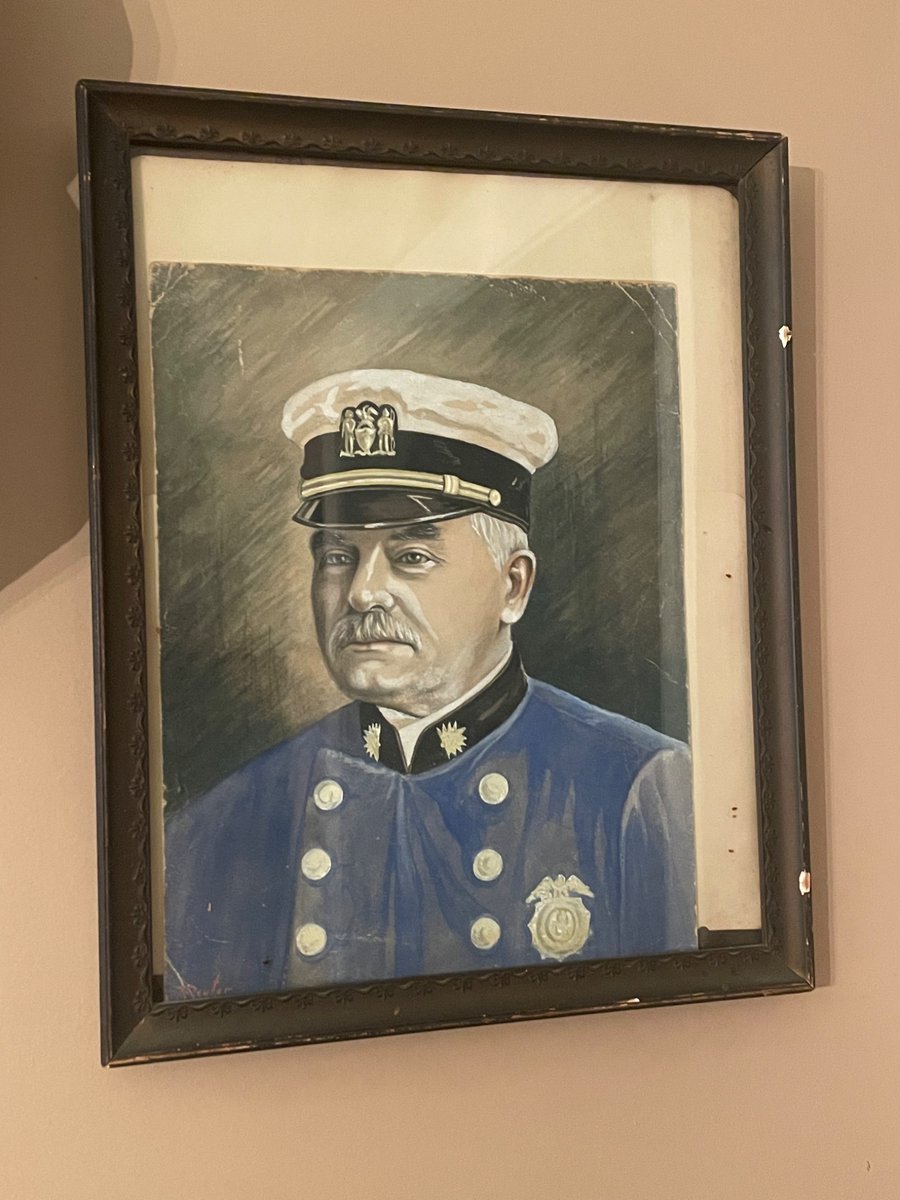
@frankidacre Unfortunately not but I would love to find some. I do have a drawing of him hanging in my dining room though (yeah I know the frame is too big)
Roerich tweet media
English
0
0
1
44
Franki V. D.
Franki V. D.@frankidacre·
@James78073 That’s amazing!! Do you have any letters/notes from TR that he wrote to your uncle?
English
1
0
1
147
Franki V. D.
Franki V. D.@frankidacre·
Tell me about YOUR favorite president!! (who is it? why do you like him? fun facts? anything!)
English
52
0
68
3.9K
Roerich
Roerich@James78073·
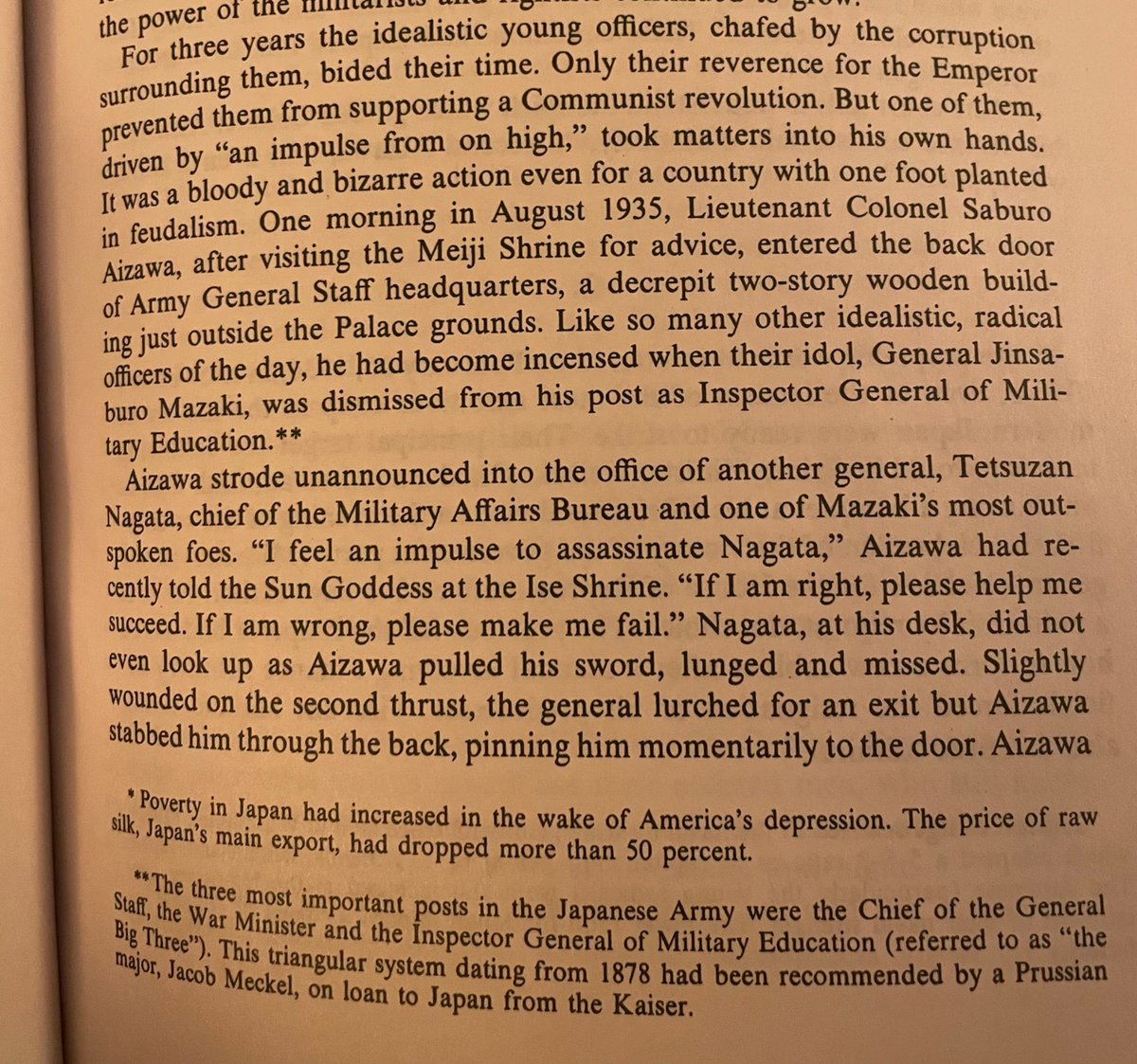
@JigokuCake I’ve been reading The Rising Sun by John Toland recently and it’s kinda funny reading about pre war nationalist groups doing these almost comical assassinations of government figures and getting off easy when they’re like “I uhh did it for the emperor guys” in court.
English
1
0
1
37
地獄ケーキ(Hokusaist)👹🐉🗡️🇺🇸
Continued from the previous post: This interplay between Buddhism and Shinto would remain prevalent until the Meiji era, when the two were formally split through official government policy. It would, however, still manifest here and there in interesting and sometimes unexpected ways... Nichirenism, a movement which was started by a man named Tanaka Chigaku in the very early 20th century, is most commonly associated these days with the “ultranationalism” of Japan in the immediate pre-war period. “Perhaps most characteristically one runs across references to Nichirenism in studies of Japanese fascism, militarism, rightwing terrorism, and imperialism,” writes Gerald Scott Iguchi in his work “Nichirenism as Modernism,” continuing: "Western scholars wrote such studies for the most part during the postwar decades, until the 1970s. Despite modernization theory's preference for studies of the premodern foundations of Japan’s postwar success, these studies were written during the heyday of Western historiography's depiction of Japan as the global 'model minority.' In the context of such writings Nichirenism was frequently something that needed to be explained away along with the rest of Japan's period within the 'dark valley' of the 1930s and early 1940s." Most may hear of such associations and immediately place Nichirenism into the bin of irrational failed belief systems, unfit for proper consideration in our forward-thinking modern times. Yet there are worthwhile elements to the movement and its philosophy that can easily be overlooked through such dismissal. It was, in truth, a multi-dimensional attempt at a philosophy which could encompass the realms of both the spiritual and the social; a theoretical unification of fields which were increasingly thought of as entirely separate. To simply place it incuriously into a box labeled “right wing militarism” would be a level of simplification bordering on the absurd. One aspect in particular that must be understood if one is to truly grasp the tenets of Tanaka’s philosophy is his tendency towards syncretism, interweaving Shinto-based thought and exegesis of the Nihon Shoki with the Nichiren Buddhism that Tanaka had studied while training to become a Nichiren-shu priest in his youth. This combinative framework is commonly described as an wholesale invention of Tanaka’s by modern scholars who write on the subject of Nichirenism; a perhaps sycophantic product of an era preoccupied with so-called “State Shinto” and elevation of the Emperor. Edwin B. Lee, for example, wrote in his essay “Nichiren and Nationalism” that “Tanaka's claim to originality as a thinker lay in his positive attempts at syncretism,” while the independent researcher Christopher Holte claimed on his website that “Chigaku creatively fused Tendai and Nichiren ceremonies with Shinto principles of Emperor worship.” While it is true that much of Nichirenism’s syncretic nature was formalized as a result of Tanaka’s proprietary theories, I have to wonder how idiosyncratic this aspect of his philosophy really was. After all, when Tanaka was alive, syncretism between Buddhism and what we now know as “Shinto” had been the norm rather than the exception until quite recently. Even Nichiren himself had, perhaps taking cues from Honji Suijaku theory, characterized domestic deities like Hachiman as emanations of the eternal Shakyamuni Buddha of the Lotus Sutra. If one’s worldview is thoroughly colored by this lens, would it then be odd to view the teachings and deeds of deities like Amaterasu Okami (called “Tensho Daijin” by Nichiren) and men close to the gods like Jimmu, Japan’s first Emperor, as potentially compatible with the Buddha-dharma? Academics seem, at least in my opinion, to have internalized the notion of Buddhism and Shintoism as entirely separate frameworks, which they had not been for over a millennium (and even still, in some respects, are not). Instead, Tanaka had drawn from a long history of intermingled mythologies, philosophies, and spiritual beliefs, culminating in what he and his followers saw as the next major leap in the Buddhist dialectical process; the first Japan had seen since the days of Nichiren. Whether or not it actually was such a thing is a matter that is, of course, up for debate (it is at least certain that it didn’t survive in the aftermath of the war). There is also the question of whether or not Tanaka had stayed true to the teachings of Nichiren; one to which I’m sure at least some present-day Nichiren Buddhists and scholars would answer in the negative. Regardless, Nichirenism is a crucial topic in the realm of the “Buddhist dialectic” and must be examined well past the surface level. But first, we must cover Tanaka Chigaku himself... To be continued...
地獄ケーキ(Hokusaist)👹🐉🗡️🇺🇸 tweet media
地獄ケーキ(Hokusaist)👹🐉🗡️🇺🇸@JigokuCake

The introduction to my upcoming essay on Nichiren-shugi, or “Nichirenism”: The tale of Izanami no Mikoto and Izanagi no Mikoto is one of the most widely known in ancient Japanese mythology. As the story goes, the pair of deities created the Japanese archipelago with a jeweled spear before birthing many more gods. Izanami no Mikoto was burned while giving birth to the god of wildfire, Hi no Kagutsuchi, and fell into the land of Yomi, the underworld. When her brother descended to search for her, he found her still-animated corpse giving birth to foul demons and storm gods. He fled, only to be pursued by his sibling and a horde of her demon daughters, and the two quarreled upon reaching the exit to the underworld. The Nihon Shoki recounts these events as follows: "While the Ugly Females of Yomi were preparing to cross this river, Izanagi no Mikoto had already reached the Even Pass of Yomi. So he took a thousand-men-pull-rock, and having blocked up the path with it, stood face to face with Izanami no Mikoto, and at last pronounced the formula of divorce. Upon this, Izanami no Mikoto said: 'My dear Lord and husband, if thou sayest so, I will strangle to death the people of the country which thou dost govern, a thousand in one day.' Then Izanagi no Mikoto replied, saying, 'My beloved younger sister, if thou sayest so, I will in one day cause to be born fifteen hundred.' Then he said, 'Come no further'..." However, the Nihon Shoki records several variations of such stories. A lesser known one records their conversation at the Pass of Yomi, which in this alternate version is less scornful and more contemplative, as happening through an intermediary. It states: "… when he came to contend with his younger sister at the Even Pass of Yomi, Izanagi no Mikoto said, 'It was weak of me at first to sorrow and mourn on account of a relation.' Then said the Road-wardens of Yomi, 'We have a message for thee, as follows: "I and thou have produced countries. Why should we seek to produce more? I shall stay in this land, and will not depart along with thee"'..." While the above passage seems to indicate a bitter resignation to the cruel winds of fate, and thus a severing of the relationship between the two deities, it is followed by this mysterious line: “At this time Kukuri-hime no Kami said something which Izanagi no Mikoto heard and approved, and she then vanished away.” This is often interpreted as this suddenly-appearing deity, Kukurihime no Kami, at least partially reconciling the relationship between Izanagi no Mikoto and Izanami no Mikoto; though the golden words through which she accomplished this feat have been lost to the sands of time. Kukurihime no Kami is one of the deities worshipped at Hakusan Shrines throughout Japan, which trace their origin back to the local beliefs around Hakusan (Mt. Haku), a set of three mountains located in current-day Ishikawa Prefecture. “Local farmers believed that Hakusan was a mountain inhabited by ‘water kami’ (suijin), dragon kami (ryujin), and the spirits of the dead,” writes Kokugakuin University regarding the nascent form of Hakusan faith. “Fishermen of the Japan Sea worshipped Hakusan as a kami of fishing and seafaring.” After the introduction of esoteric Buddhism in the Heian period, Hakusan faith became intertwined with it via Shugendo, a form of syncretic mountain worship. This influence can be observed in documents like the “Shirayama no ki,” which recorded details of the Hakusan belief system. Kokugakuin University continues: "The Shirayama no ki… states that the indigenous 'land master kami' (jinushigami) gave his land to Hakusan Gongen, and moved to Mount Bessan. This story is thought to reflect the expanded power of people who worshipped the newly Buddhist-styled Hakusan Gongen… The Shirayama no ki was copied 1439 but the original manuscript is believed to date back to the Heian Period. According to this text, Mount Gozenpō, where Kukurihime no kami is enshrined, was referred to by the name Zenjō (meditation), the kami was called Hakusan Myōri Daibosatsu, the 'original Buddhist deity' (honjibutu) of Kukurihime no kami was the Eleven-faced Kannon (Ekadasamukha Avalokitesvara)..." An interesting detail here is Kukurihime’s “original Buddhist deity,” named as Eleven-faced Kannon. This is a prominent example of the “Honji Suijaku” framework, which worked to recontextualize domestic Japanese deities as enlightened Buddhist beings, granting them a Buddha or bodhisattva as a “honji,” or “original ground,” from which they could be considered an emanation (or “suijaku,” meaning “trace”). The term “gongen” in the passage above is used for a mountain deity who acts as a local manifestation of an enlightened being; a Kami who is also a Buddha. In this case, the “gongen” is made up of three different emanations (a recurring theme in Shugendo-related beliefs), the primary one being Kukurihime no Kami, who is here called “Hakusan Myori Daibosatsu,” which can be roughly translated to “The Hakusan Great Auspicious Bodhisattva.” But her “original” form, as indicated above, would be the bodhisattva Avalokitesvara. Frameworks like Honji Suijaku illustrate how the “play of Buddhas” described in earlier essays was not limited to the realm of man. Instead, the enlightened Buddhas and bodhisattvas had been working to guide both man and kami alike since the age of the gods, thus the worship of figures like Kukurihime no Kami became intimately connected with Japanese Buddhist tradition. Through such a lens, it was not just Kukurihime no Kami the mountain goddess who reconciled Izanagi no Mikoto and Izanami no Mikoto, but an enlightened emanation of Avalokitesvara. To be continued…
English
2
5
29
1.3K
Roerich
Roerich@James78073·
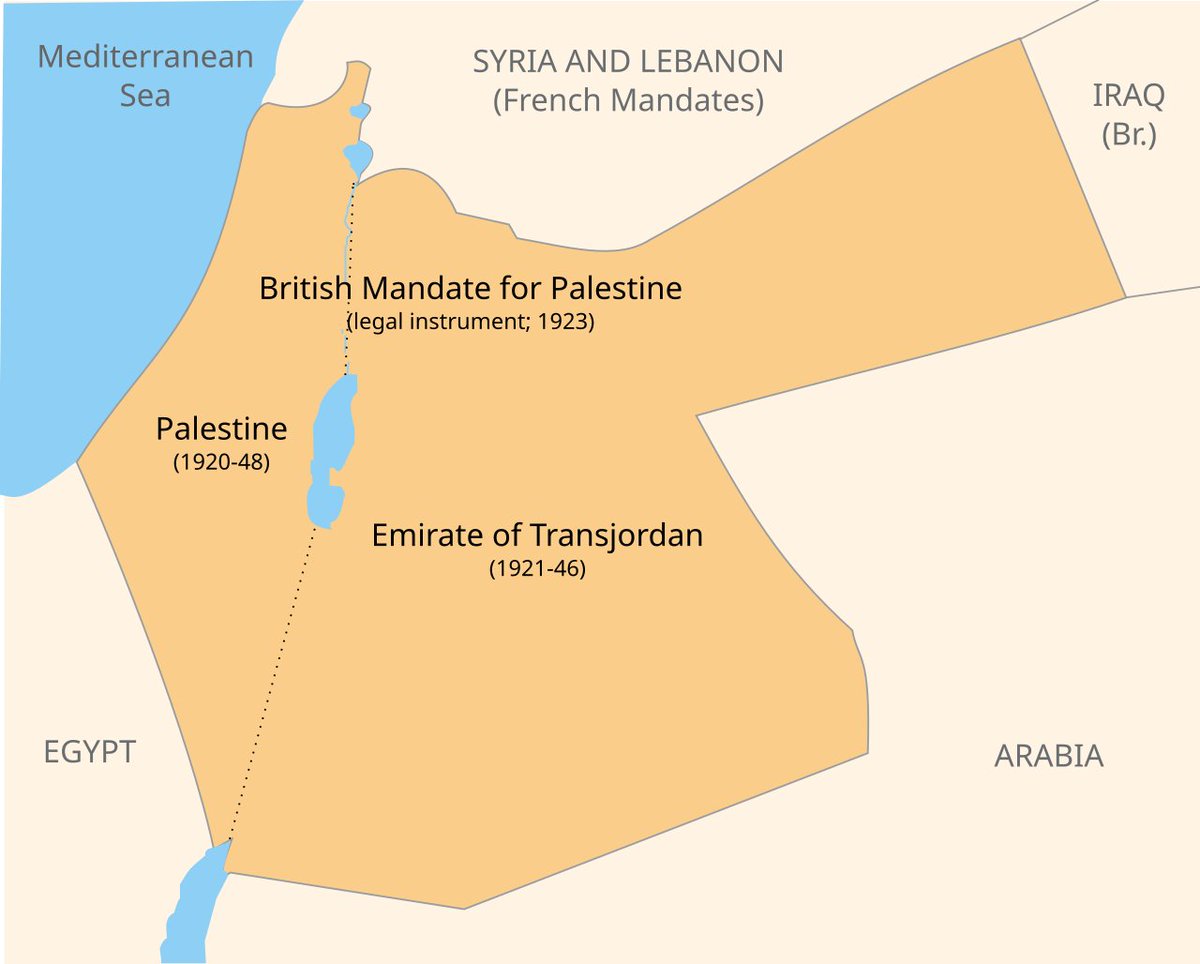
@nonregemesse Well the British Empire controlled Palestine from 1920 to 1948, so technically st. George *was* British! Checkmate!
Roerich tweet media
English
1
0
17
423
Roerich
Roerich@James78073·
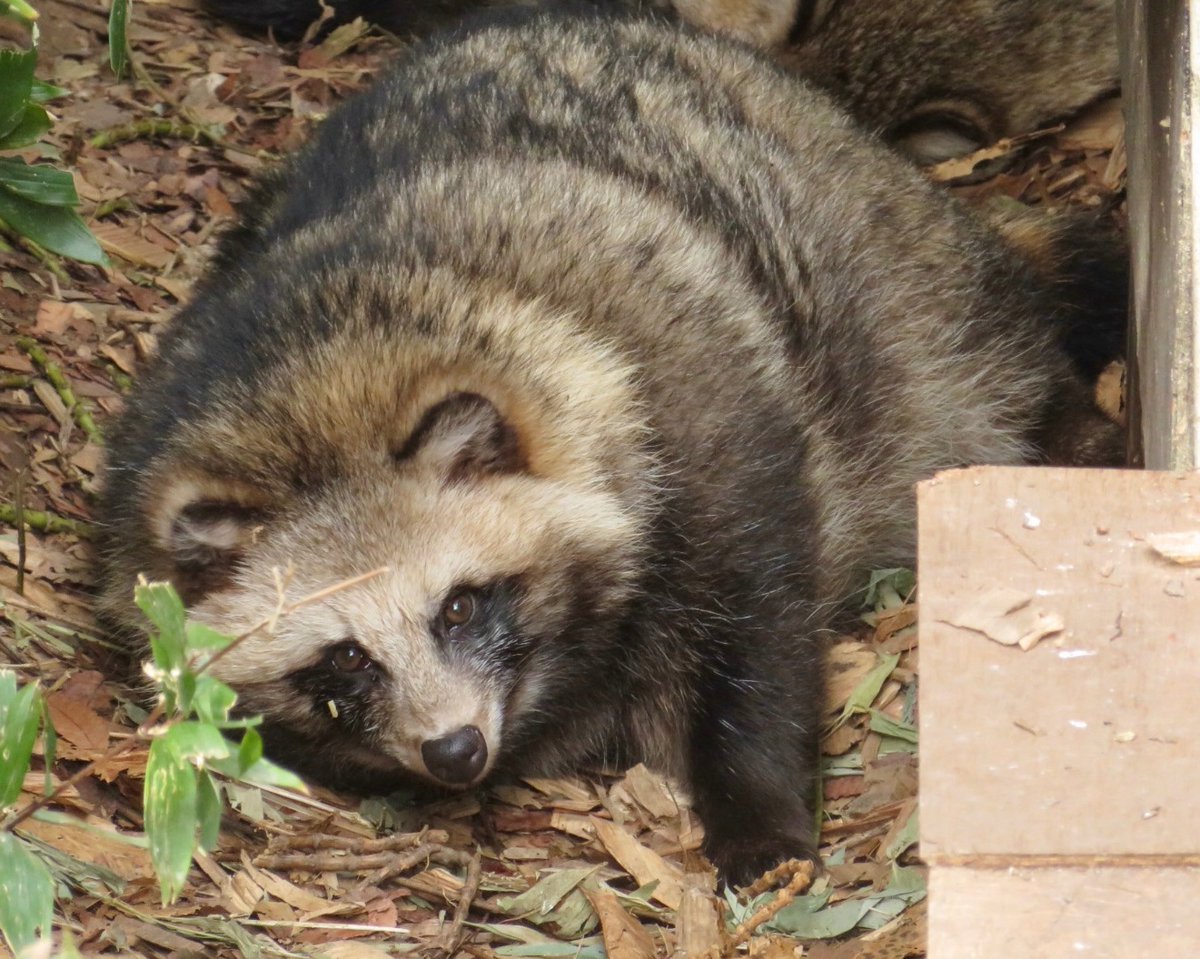
@sagyouatama I’ve watched too much Pom Poko, so now I have to follow this account.
English
0
0
2
147
たちだコロネ
たちだコロネ@sagyouatama·
このアカウントをフォローするとタヌキ・タヌキ・タヌキがひたすら流れてくることになります。
たちだコロネ tweet mediaたちだコロネ tweet mediaたちだコロネ tweet media
日本語
21
1.1K
8.7K
185.1K
Roerich
Roerich@James78073·
@ChristianHeiens For context, Paine wrote a book critiquing Christianity and the Church after the war and praised the atheistic French Revolution. Unsurprisingly, people in the newly formed United States weren’t huge fans of this and he was lambasted by the press and religious groups.
English
0
0
1
125
Roerich
Roerich@James78073·
@hiroerei Don’t worry. Chuck didn’t really die, he just allowed the Earth to keep on going without him.
English
0
0
2
498
広江礼威
広江礼威@hiroerei·
うおーノリス!無敵のテキサススワット!ご冥福を!
Variety@Variety

Chuck Norris, the martial arts champion who became an iconic action star and led the hit series “Walker, Texas Ranger,” has died. He was 86. Norris was hospitalized in Hawaii on Thursday, and his family posted a statement saying he had died Friday morning: It is with heavy hearts that our family shares the sudden passing of our beloved Chuck Norris yesterday morning. While we would like to keep the circumstances private, please know that he was surrounded by his family and was at peace. To the world, he was a martial artist, actor, and a symbol of strength. To us, he was a devoted husband, a loving father and grandfather, an incredible brother, and the heart of our family. He lived his life with faith, purpose, and an unwavering commitment to the people he loved. Through his work, discipline, and kindness, he inspired millions around the world and left a lasting impact on so many lives. While our hearts are broken, we are deeply grateful for the life he lived and for the unforgettable moments we were blessed to share with him. The love and support he received from fans around the world meant so much to him, and our family is truly thankful for it. To him, you were not just fans, you were his friends. We know many of you had heard about his recent hospitalization, and we are truly grateful for the prayers and support you sent his way. As we grieve this loss, we kindly ask for privacy for our family during this time. Thank you for loving him with us. variety.com/2026/film/news…

日本語
34
396
3.1K
95.6K
ShitpostGateway
ShitpostGateway@ShitpostGate·
Everyone should start posting classic Chuck Norris memes in remembrance
ShitpostGateway tweet media
English
328
3.9K
35.9K
621K