James Bejon 🇮🇱

14.2K posts

James Bejon 🇮🇱 banner
James Bejon 🇮🇱

James Bejon 🇮🇱

@JamesBejon

Christian || Church-goer || Researcher @Tyndale_House || Student || by God’s grace. Views not to be blamed on others. Free Substack link below.

London, England Katılım Mayıs 2017
444 Takip Edilen5.5K Takipçiler
Sabitlenmiş Tweet
James Bejon 🇮🇱
James Bejon 🇮🇱@JamesBejon·
THREAD: Strands of Salvation in the Synoptics Joseph isn’t the only beloved son to be given a multi-coloured coat. Jesus is given one too, though by the hands of ungodly men. In Matthew it’s scarlet (kokkinos); in Mark it’s purple (porphyra); …

James Bejon 🇮🇱 tweet media
English
2
15
59
11.6K
James Bejon 🇮🇱
James Bejon 🇮🇱@JamesBejon·
@elongilad True, loans can sometimes do that. But when you’ve got a word with expected reflexes in different branches of East, North-West, and Central Semitic, why posit the idea that it’s a loan from East Semitic with unexpected reflexes in Arabic and South Arabian?
English
0
0
0
65
Elon Gilad
Elon Gilad@elongilad·
@JamesBejon I view Exodus as late (a topic for another day) and I believe I’ve seen Aramaic borrowings in Arabic switch sh to s, but I may be wrong.
English
1
0
1
63
Elon Gilad
Elon Gilad@elongilad·
1/7 The Hebrew word for police – mishtarah – traces back to a Mesopotamian verb that meant "to write." In a world where most people couldn't read, writing was authority. A short etymology of how a cuneiform verb became Hebrew's word for the police. 🧵
English
7
0
48
5.7K
James Bejon 🇮🇱
James Bejon 🇮🇱@JamesBejon·
@elongilad That would only explain its appearance in Hebrew, and then only granted a late date of composition of Exodus. Either way, it wouldn’t explain the existence of a cognate in Arabic with s rather than sh.
English
1
0
0
70
James Bejon 🇮🇱
James Bejon 🇮🇱@JamesBejon·
An interesting example of how our worldview can colour our reading of Scripture. ‘Dwelling in the tents of Shem’ somehow comes to mean ‘becoming greater than the Semitic ancestors of Shem’. And the claim that ‘Japheth’s line receives the most extensive treatment in Genesis 10’ somehow becomes support for the claim that ‘There is undeniably a biblical prophecy containing a special blessing for White people’. Interestingly, though, while Japheth’s line is dealt with in a mere four verses, Ham’s takes fifteen verses. Granted one of its premises, then, shouldn’t this article be retitled, ‘There is undeniably a biblical prophecy containing a special blessing for Black people’? #GenealogiesMatter
Joel Webbon@JoelWebbon

There is undeniably a biblical prophecy containing a special blessing for White people. If you don’t like it, take it up with God. For those who aren’t so easily offended, here’s an explanation. 👇 Noah’s prophecy in Genesis 9 covers the entire sweep of Western history in three sentences. The European peoples would be enlarged by God, would come to occupy the covenant inheritance of Israel, and would exercise authority over the pagan populations of the Middle East. Anglo-Saxons and Caucasians are in the prophetic canon, named by a prophet who stood on the slopes of Ararat centuries before their civilizations existed. Don’t blame us for that claim. That’s Biblical prophecy. Noah got off the boat, prophesied to his sons, and prophesied that Japheth’s lineage - Europeans and Caucasians - would be greater than the Semitic ancestors of Shem, and would one day take their place. Barnes’ Notes commentary says that Noah’s prophecy, “refers not only to the territory and the multitude of the Japhethites, but also to their intellectual and active faculties. The metaphysics of the Hindoos, the philosophy of the Greeks, the military prowess of the Romans, and the modern science and civilization of the world, are due to the race of Japheth.” Matthew Henry noted that “Japheth’s prosperity peopled all Europe, a great part of Asia, and perhaps America,” and John Gill traced the fulfillment through the Greeks and Romans, observing that Japheth’s sons “made conquests in Asia, in which were the tents of Shem’s posterity.” These were not kooky interpreters reading their cultural assumptions into the text. They were the mainstream of Protestant biblical scholarship, and they read Genesis 9:27 as a prophecy whose fulfillment was visible in the history of Western civilization. *Read the article at our website by using the link in my bio.

English
0
0
10
1.3K
James Bejon 🇮🇱
James Bejon 🇮🇱@JamesBejon·
Interesting. This could resolve some of the name related issues in Revelation. E.g., Do the 144,000 have two names—the Lamb’s name *and* his Father’s name—on their foreheads (Rev. 14)? And whose name is in mind when John says ‘The throne of God and of the Lamb will be in it, and his servants will worship him. They will see his face, and his name will be on their foreheads’?
English
2
2
20
1K
Andrew Wilson
Andrew Wilson@AJWTheology·
“The name he has inherited is more excellent than theirs” (Heb 1:4). Richard Bauckham argues that this excellent name is not “Son,” but “Yahweh”:
Andrew Wilson tweet media
English
12
4
81
6.2K
James Bejon 🇮🇱
James Bejon 🇮🇱@JamesBejon·
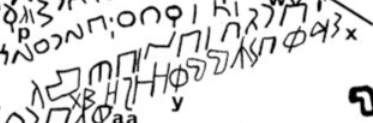
@OCIANA_OSU @DerMenschensohn Thanks. It wasn’t clear to me that it was a name. I assumed that the text’s original editor knew something about the inscription that I didn’t. But maybe he didn’t after all (or at least not in this particular respect).
English
0
0
1
58
OCIANA
OCIANA@OCIANA_OSU·
@JamesBejon @DerMenschensohn Highly unlikely. See the entire context: it is unclear if it is parsed correctly or if it is even a name. wzz is an arabic root though.
OCIANA tweet media
English
1
0
2
80
Andrew Wilson
Andrew Wilson@AJWTheology·
@SPCosti I’ll admit though: I have no idea how to use Substack.
English
5
0
7
1.6K
Savvas Costi
Savvas Costi@SPCosti·
One of the reasons I've remained on twitter (yes I still call it that) is because people like @AJWTheology are active on it. I've just discovered he's on Substack, a much better platform! I can see myself using that more (with restrictions in place), and using this one less.
English
1
0
9
1.9K
James Bejon 🇮🇱
James Bejon 🇮🇱@JamesBejon·
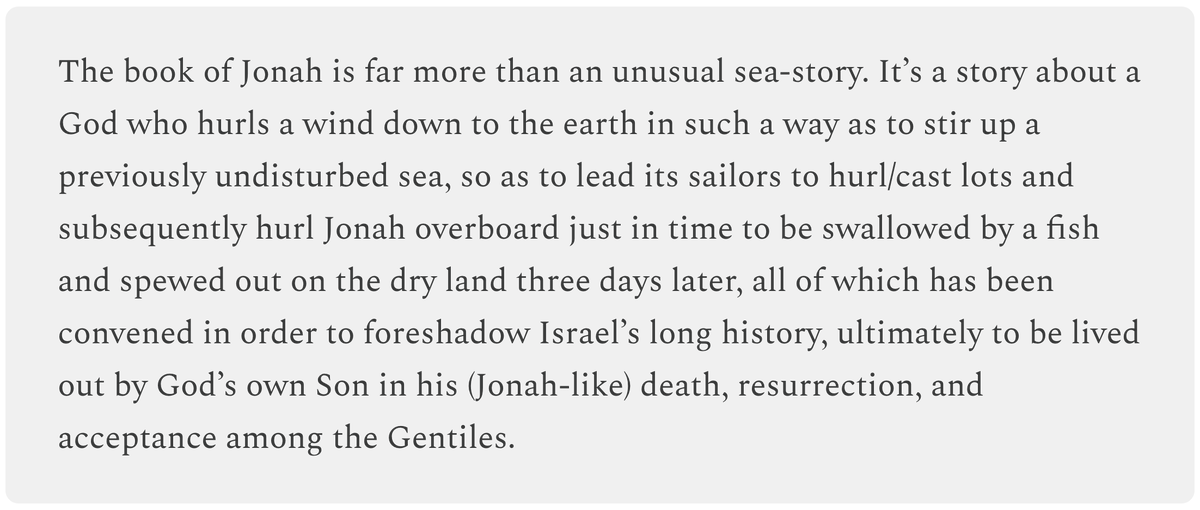
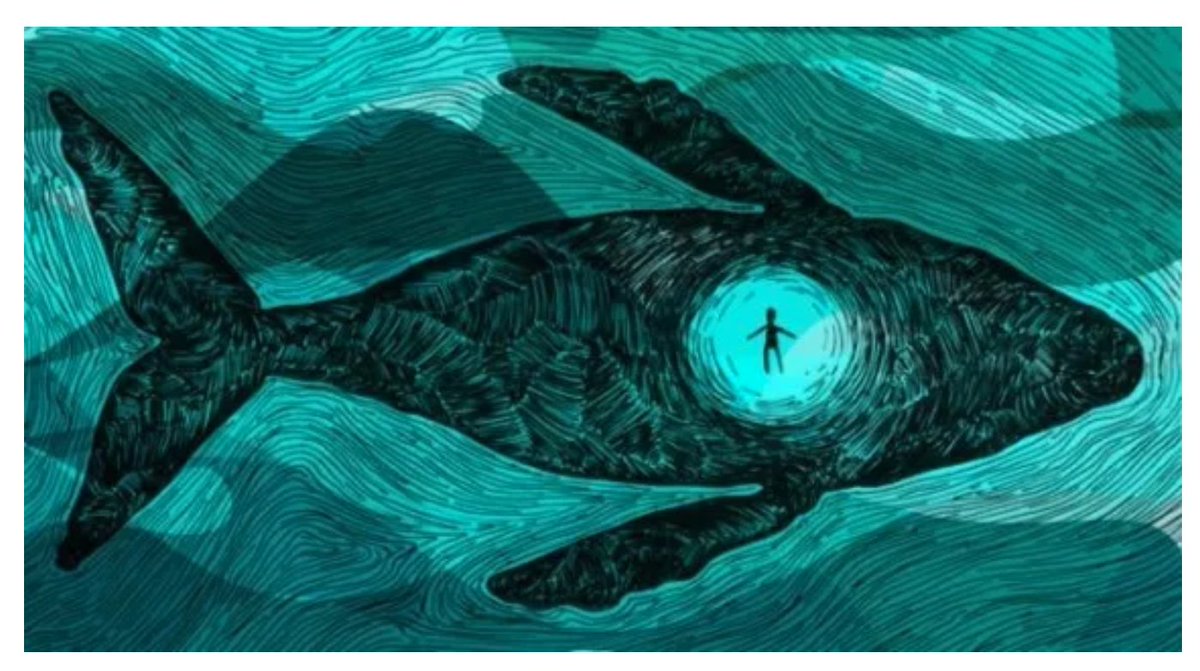
Thoughts on Jonah for folk who might be interested. Link below.
James Bejon 🇮🇱 tweet media
English
2
3
26
1.4K
Esteban
Esteban@DarthExegete·
@JamesBejon @profntwright That might a jab at the subset of YECs whose primary take away is the age of the earth.
English
1
0
1
118
Tom Wright
Tom Wright@profntwright·
Part of the frustration of that is that there are many, many devout Bible readers who have missed the point of the story, which is that humans are the crown of God’s creation designed to reflect God’s stewardship into the world and designed to reflect the praises of creation back to the creator. And you can see this. Psalm 8 sums it up perfectly. “What are humans? You made them little lower than the angels to crown them with glory and honor, putting all things in subjection under their feet.” This is the human vocation. Guess what? When the New Testament quotes Psalm 8, it’s talking about the human vocation which Jesus has modeled to the uttermost, and into which by the spirit and the gospel, we ourselves are invited. biologos.org/podcast-episod…
English
9
21
145
20.7K
Kim Phillips
Kim Phillips@K_L_Phillips·
@pjgurry @EvTCBlog Hi Pete, Thanks =) I don't know what that means, but it sounds like a nice thing to have happened...
English
2
0
3
125
Kim Phillips
Kim Phillips@K_L_Phillips·
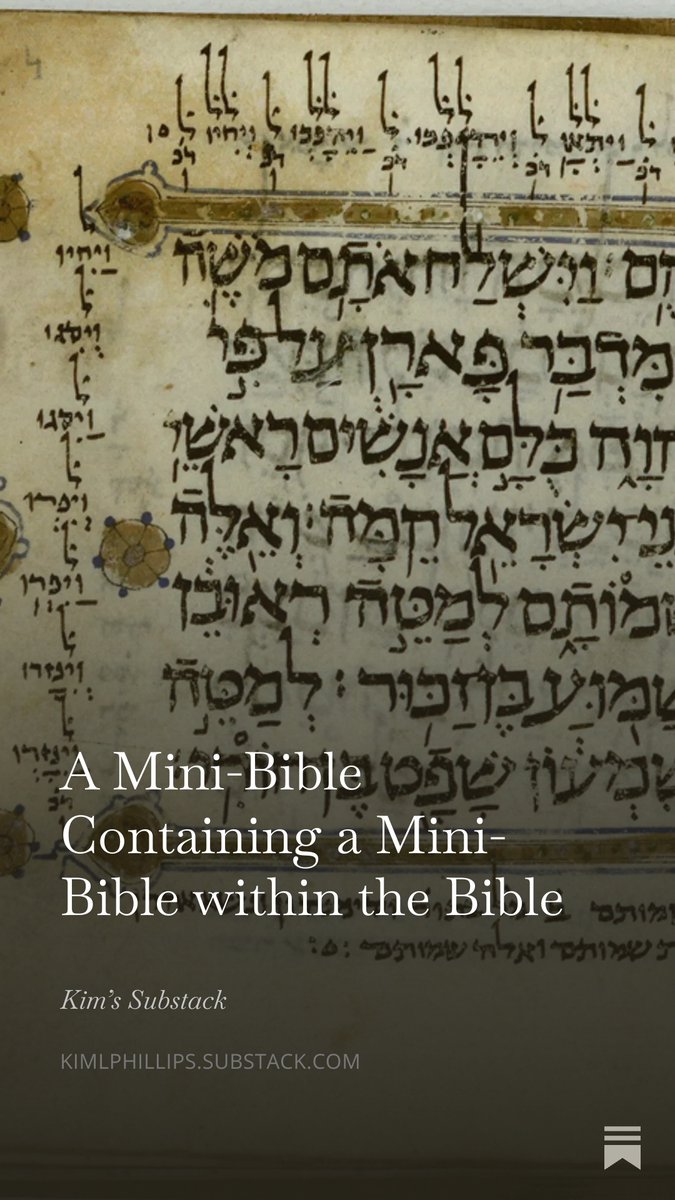
I've recently been working on an absolutely GORGEOUS mini-Bible codex. It provoked some reflections...
Kim Phillips tweet media
English
1
2
22
810
James Bejon 🇮🇱
James Bejon 🇮🇱@JamesBejon·
@shaw_davidm Glad you’ve found it persuasive! As it happens, I’ve been writing up a new version of it over the last few days! Hope things are well with y’all.
English
1
0
2
34
John Meade
John Meade@drjohnmeade·
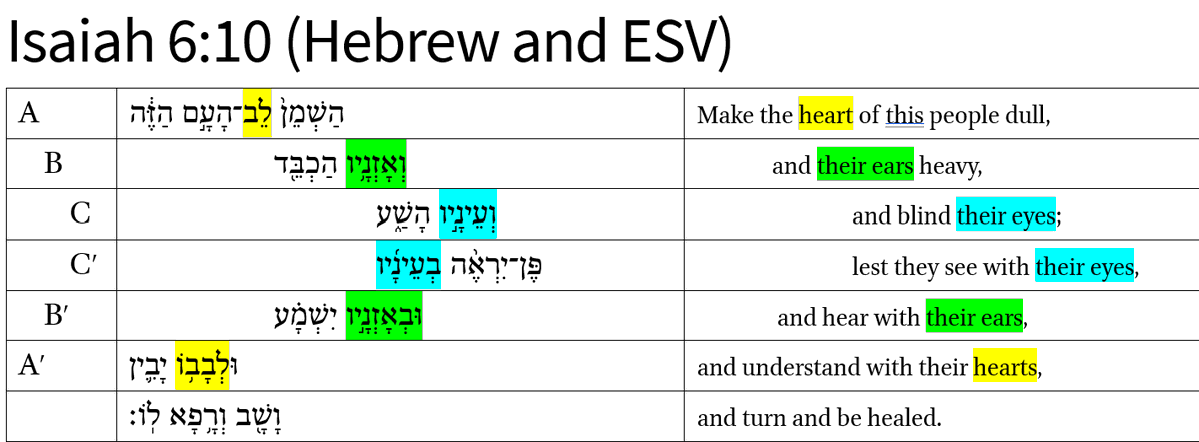
The large chiasm is easy to see, but the small one (their eyes blind // they see with their eyes [AB//BA]) is completely obscured by English translations. Are we hesitant, perhaps, to see chiasms in the text because our (English) eyes are shielded from the sheer volume of them?
John Meade tweet media
English
5
3
31
2.2K