

James Dalgarno 𐤊
1.6K posts
James Dalgarno 𐤊
@James_Dalgarno
Thirty something English guy who has nothing else better to do than expand on his own meandering experience of this thing we call life.
Rochford Katılım Mart 2009
1.3K Takip Edilen266 Takipçiler

James Dalgarno 𐤊 retweetledi

James Dalgarno 𐤊 retweetledi
A whistleblower has revealed this month that civil servants across multiple Whitehall departments have been gaming the flexitime system to award themselves up to fifty extra days of paid holiday a year
That's about 2.5 months of full-time work lifted off the public payroll without record, on top of the CS-norm 26 days of annual leave, the eight public holidays, the contractual sick days, and of course the parental allowances that are already part of the standard package.
The methods and techniques by which this fraud has been accomplished are worth dwelling on, because the detail tells you something about the institution.
The first technique is the laptop-open-on-the-kitchen-table move. Here, the civil servant clocks off for all intents and purposes at 5pm but leaves a work laptop on, accumulating "active hours" from a home Wi-Fi connection, registering the evening as labour without performing any of it.
The second trick is the commuting-time-as-paid-hours wheeze, in which the round trip from Surbiton to Whitehall - coffee-and-podcast - is logged as part of the working day.
The third con, which the whistleblower reported as the most brazen of them all, is the straightforward falsification of office attendance against the three-days-a-week-on-site rule that this government, having promised the public a return of civil servants to civil-service buildings, has manifestly failed to enforce. The falsifications, in some cases, have been running for years.
Sit, for a moment, with the kind of person who does this and the kind of institution that permits it.
The person doing it is, in the main, a desk-bound senior official on between £55,000-130,000 a year, with access to a clocking system that runs on trust, who has decided, with the active connivance of his line manager and the silent assent of his department, that the appropriate response to that public trust is to defraud it.
And it's not even ambitious or spectacular. At least with a major fraud, you have a level of vision and nerve you have to admire even as you despise the motivating corruption. No, here, it's done through a series of small, deniable engineered manoeuvres that together transfer large sums of public money into undeserving pockets.
No honour among thieves, but some thieves are even less honourable than others.
The institution that permits it is the British Civil Service, an organisation whose senior cadre has spent the last decade in a state of escalating public-facing self-pity about its working conditions while the country it is paid to run has visibly fallen apart underneath it.
These are the same people who inherited the mandate of Brexit and, because the idea ran against the Metropolitan class bromides by which they orient their lives, hashed it up on purpose to punish the electorate whom they are duty-bound to serve.
And it's the same civil service that could not, in the end, manage a single COVID procurement contract without losing about £30 billion out of the back of the warehouse.
In light of this general disposition, a flexitime fraud is its small, daily, individual expression.
And the cost is not abstract. The Civil Service pay bill runs to roughly £15 billion a year. Headcount has grown by approximately a hundred and fifty thousand since 2016, with the deepest expansion in the policy and "leadership non-teacher" desk grades, the exact cohort the whistleblower says is gaming hardest.
Every 50-day phantom holiday, on a senior salary, is around £20k of public money paid for nothing. The country has been told for years, under successive governments, that there is no fiscal room for the things the country actually wants, like policing, prosecutions, courts that sit, borders, doctors, dentists, because the public finances are too tight.
Bollocks are they. You've got a whole parallel economy of piss-artist leave-taking running in Whitehall, and there'll be plenty more cash coming in to keep its subsidy even given this whistleblower's report. I don't for a second believe that no one senior saw it or knew about it, just as I don't believe that the rampant inequities in our police departments go unnoticed by whole legions of bystanders.
But the bystanders are not arsed.
That's why I say "Hooray for the whistleblower." Their life is going to be hell. They will be hugely unpopular. They will be described as bitter, disloyal, mentally ill, motivated by personal grievance, and unrepresentative of the dedicated public servants who go above and beyond.
That is what these institutions always say when one of their own breaks ranks. It is what they said to Maggie Oliver about Rotherham, to Alan Bates about Horizon, to the survivors of the Letby ward, the Cumberlege report, and the Sussex maternity unit. The smothering of internal dissent is now part of what the British civil service does for a living. The actual public service is something it has subcontracted to itself, badly, in stolen office hours, from the kitchen table.
I was the Civil Service comprehensively remade in this country, the only way such things are ever made, which is by changing the people and all the incentives under which they operate.
These people have been on the public payroll for fifteen years and have produced nothing for which the public can be grateful.
It's time to find out where the hours went, and dispense with those who are wasting them, along with our money.

English
James Dalgarno 𐤊 retweetledi

Our team is indeed shipping! Thank you @qollabxyz and @IonQ_Inc 🤝
Qollab@qollabxyz
Spring Quantum Challenge has kicked off 🚀 Eight weeks of building on real @IonQ_Inc hardware, and we're excited about what's been pitched. Browser games racing quantum computers, music sequencers as the instrument, Visualizers of fault-tolerant compilation... Read more 👇 qollab.xyz/news/spring-20…
English
James Dalgarno 𐤊 retweetledi
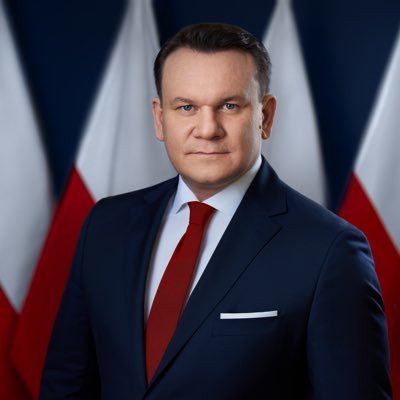
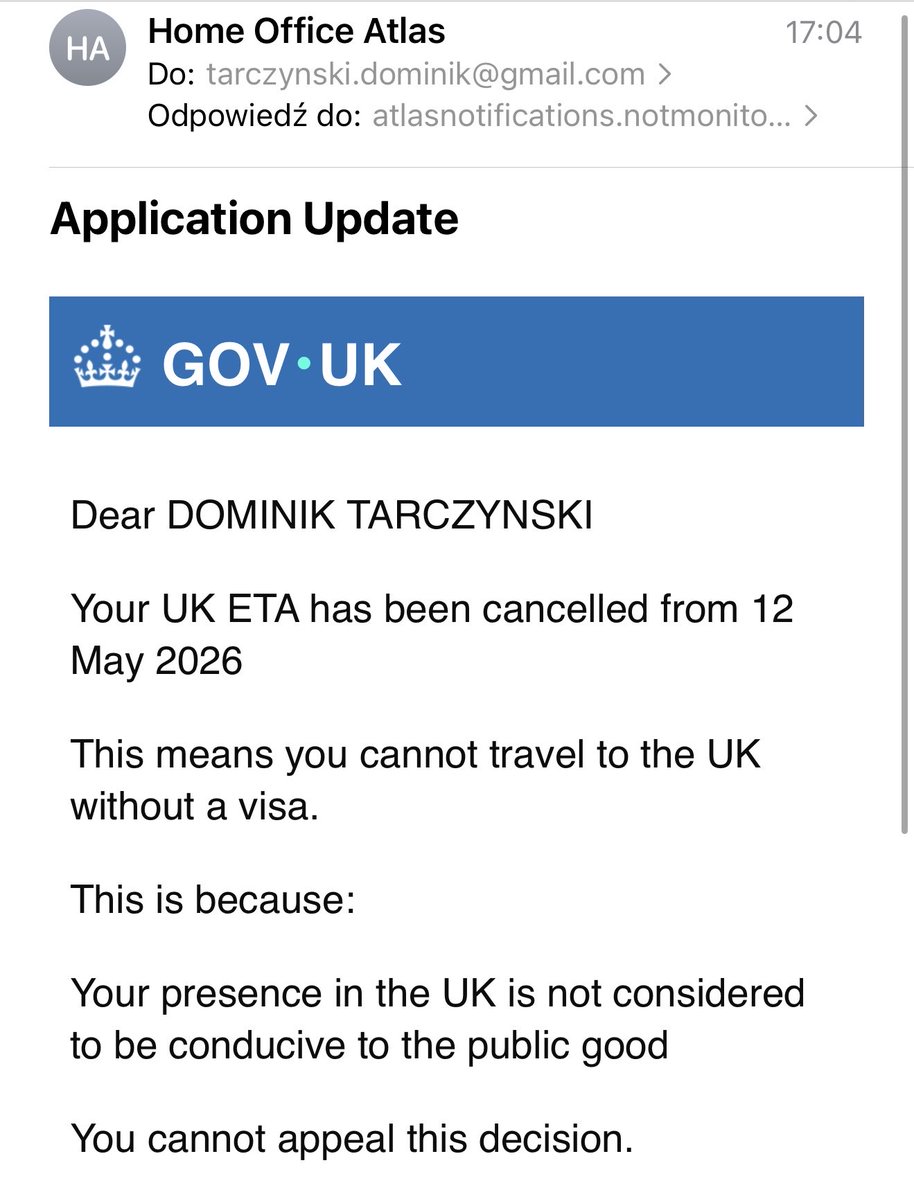
This is what communism looks like in the 21st century. I have just been denied entry to the UK in order to speak at the largest patriotic event in Europe.
Starmer will be sued by me. Not the government, not the Home Office but Starmer personally. Once you lose the next election, communist, we’ll meet in court!
Tommy @TRobinsonNewEra , this communist cannot silence millions, nor can he take away their right to vote!
UNITE THE KINGDOM!
English
James Dalgarno 𐤊 retweetledi

Today, the few that can be bothered will wander to the ballot box to choose which set of mediocre administrators will preside over managed decline.
Most will vote for a colour, an ideology, while the councils themselves drift deeper into debt, services decay and the lives of ordinary people remain unchanged.
The illusion of choice survives long after the competence required to govern has disappeared.
English
James Dalgarno 𐤊 retweetledi

💷Taxpayer-funded taxis/transport in London; some examples:
'Wheel Get You There Limited' was paid £220k by Hounslow and £65k
by Ealing.
Its registered office is shown below.
According to Companies House, there are 18 other active companies registered there.🧵1/5


English
James Dalgarno 𐤊 retweetledi

KASPA HITS MAJOR MILESTONES IN 2026 AS TOCCATA HARD FORK NEARS AND SUPPLY EMISSION WINDS DOWN
Kaspa has stacked a series of milestones over the past year as the network transitions from a payments-focused proof-of-work chain to a programmable Layer 1.
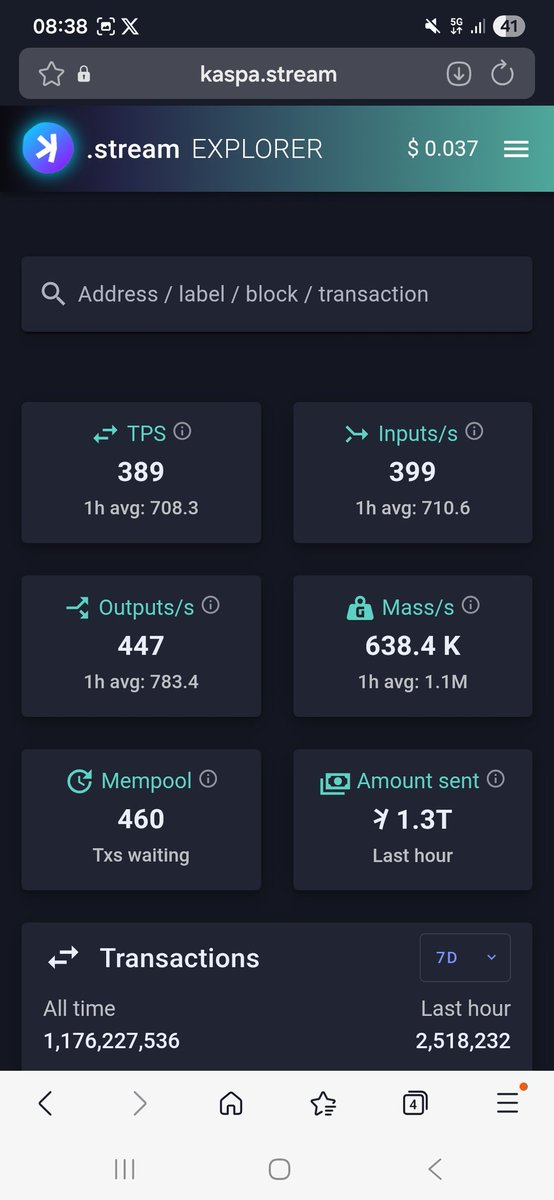
The Crescendo hard fork pushed the network to 10 blocks per second, with peak loads exceeding 10,000 TPS. While cumulative on-chain transactions are approaching 2 billion.
Founder Yonatan Sompolinsky (@hashdag) took the Kaspa pitch to the Oxford Union in March, a notable mainstream-academic crossover for a fair-launched community project.
The Toccata hard fork hit code freeze on April 15 with mainnet activation targeted between June 5 and June 20. Toccata brings native L1 covenant programming via the SilverScript compiler, ZK verification opcodes, KIP-21 partitioned sequencing, and KRC-20 tokens as a base-layer feature.
The supply story compounds the upgrade story. Roughly 95.4% of $KAS is already in circulation, with new emission approaching zero by the end of 2026. $KAS trades near $0.0325 with a market cap of around $888 million, with a near-fully distributed supply heading into its biggest programmability upgrade.
English
James Dalgarno 𐤊 retweetledi

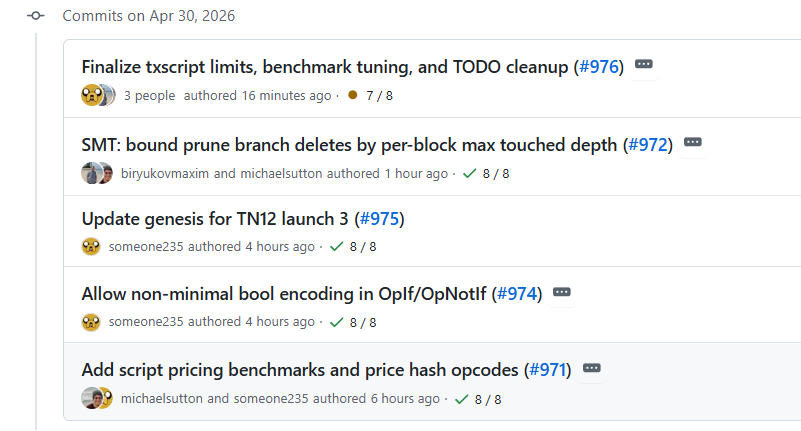
Toccata consensus feature freeze is finally here after a heroic last-mile push by kas core devs.
Aiming to reset TN12 tonight, or tomorrow at the latest.
Genesis update:
+ 0x6b617370612d746573746e6574 // kaspa-testnet
- 12, 2 // TN12, Launch 2
+ 0x544f4343415441 // TOCCATA
+ 12, 3 // TN12, Launch 3
English
James Dalgarno 𐤊 retweetledi

The Toccata Hard Fork will be Kaspa’s "ICO Moment."
With the launch of SilverScript and Native KRC20, for the first time in history, users will have to buy and lock up KAS to launch tokens and interact with DeFi on a 10 BPS PoW chain.
This transitions KAS from a "store of value" to "essential infrastructure."
$KAS
English
James Dalgarno 𐤊 retweetledi

WTAF ARE WE DOING
*UK TO RAISE WINDFALL TAX ON ELECTRICITY GENERATORS TO 55%
English
James Dalgarno 𐤊 retweetledi

Every weekend on earth started here. 🇬🇧
In the factory towns of Victorian England. 🏴
In the early 1800s there was no weekend.
Six days a week. From first light to last. Sunday the only day off and even that wasn't guaranteed.
So British workers invented their own.
They called it Saint Monday.
If you'd worked hard enough by Saturday night, you simply didn't come in on Monday. Music halls opened Monday afternoons to catch them. Factory owners could not stop it.
In 1842 a campaign group called the Early Closing Association made a deal.
Give us Saturday afternoons. We'll give up Monday.
It took fifty years. But slowly, across the manufacturing towns of England, Saturday afternoons began to free up.
Then football arrived. The Football Craze of the 1890s needed a time to play. Saturday afternoon was right there. ⚽
But it was still only half a day.
In 1933, during the Great Depression, a man named John Boot opened a new factory - so efficient it produced far more than he could sell.
He had two choices. Lay workers off. Or give them Saturdays.
He gave them Saturdays. Full pay. No deductions.
It worked. Other factories followed.
The two-day weekend spread to America. To Europe. To Japan. To every country on earth that adopted the modern working week.
Every lie-in on a Saturday morning. Every Sunday afternoon. Every thank-God-it's-Friday.
Your ancestors fought for their right to own their time.🇬🇧
Make yours count. 👇
Your support pays for the research, production and hours it takes to get it right. Stories like theirs don't find themselves.
Be part of us. 👉 proudofus.co.uk/support 🙏
Be Proud Of Us.🇬🇧
English
James Dalgarno 𐤊 retweetledi

Worldwide quantum computers is/are getting more attention.
Every big company like @nvdia @Microsoft got it on their termsheets for next years.
It’s inviteable the only question is: Are you prepared?
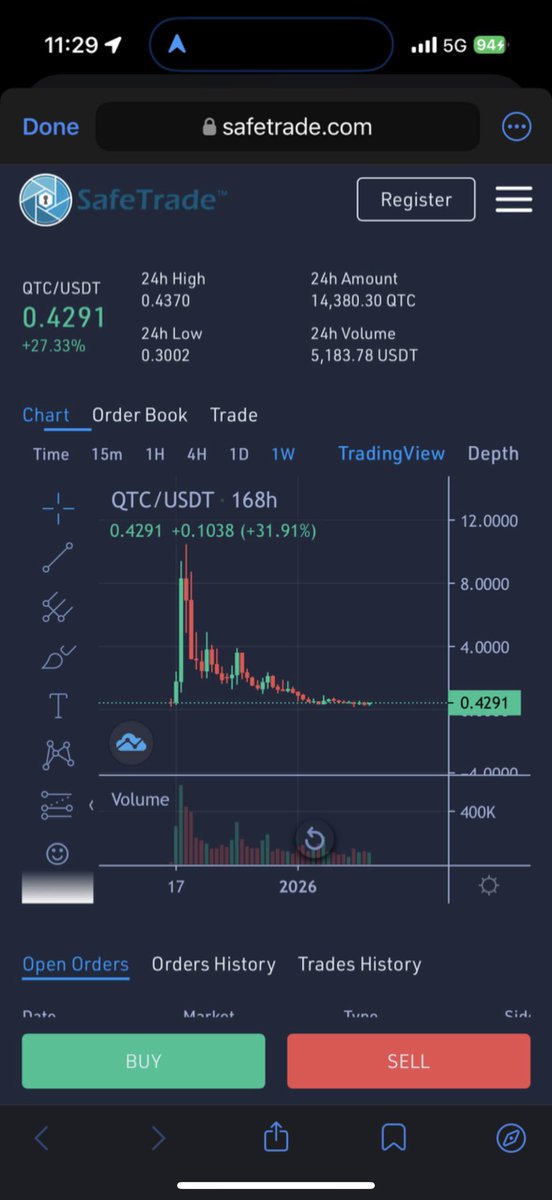
The best crypto project that moves in this field is @qubitcoinx. With the best scientists in the field like @MYShalaginov.
Qubitcoin (Quantum proof of work) advised by Duvrovsky former Kaspa daglabs advisor.
Currently around 1 million market cap validations. Insanely undervalued if you ask me.
Bottomed out and ready to start a new leg.
safetrade.com/exchange/QTC-U…
Watcher.Guru@WatcherGuru
JUST IN: NVIDIA launches "Ising," the world's first open-source AI models built to accelerate useful quantum computers.
English
James Dalgarno 𐤊 retweetledi

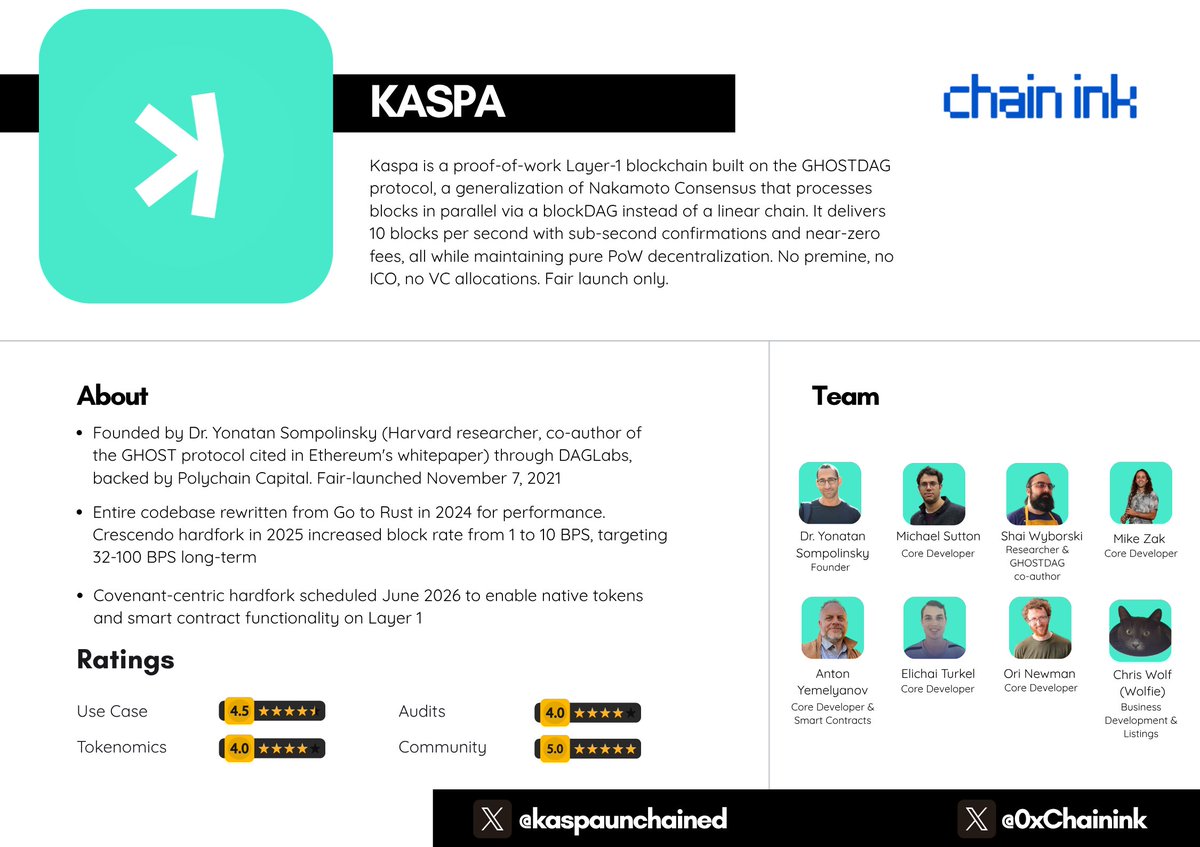
$KAS : Review 📜
What if you could take Bitcoin's security model, make it 600x faster, and then add ZK-powered smart contracts without sacrificing a single atom of decentralization?
Meet Kaspa - a fair-launched, proof-of-work Layer-1 blockchain that replaces the traditional single-chain structure with a blockDAG, processing 10 blocks per second with sub-second confirmations, designed by the Harvard researcher whose GHOST protocol is cited in Ethereum's whitepaper. And with the Toccata hard fork weeks away, it's about to become programmable.
Let's explore how Kaspa is rewriting the rules of proof-of-work. 👇
⚪ Kaspa at a Glance
Kaspa is a decentralized, scalable Layer-1 cryptocurrency built on proof-of-work and powered by the GHOSTDAG protocol, a novel consensus mechanism that extends Nakamoto's original design.
Unlike traditional blockchains that discard competing blocks, GHOSTDAG allows parallel blocks to coexist and orders them within a Directed Acyclic Graph (blockDAG).
The $KAS token is the native currency, distributed entirely through mining with no premine, presale, or founder allocations. The name "Kaspa" means "silver" or "money" in Aramaic.
As of April 2026, $KAS trades around $0.03 with a market cap of approximately $800M. The max supply is ~28.7 billion KAS, with over 95% already emitted through mining. The network currently processes 10 blocks per second following the Crescendo upgrade.
Marketplace Insight: The Toccata hard fork (June 5-20, 2026) is about to transform Kaspa from the fastest PoW payment network into a fully programmable platform with native tokens, covenants, ZK verification, and based ZK apps. Proving costs scale with app activity rather than the entire network, unlocking canonical bridging, stateful multi-contract flows, and DeFi on pure proof-of-work.
⚪ Mission
Kaspa's mission is to create a PoW that operates with internet speed, combining the reliability of proof-of-work with the responsiveness demanded by modern applications.
The project aims to realize Satoshi Nakamoto's original peer-to-peer electronic cash vision but with the throughput, speed, and now programmability that Bitcoin's single-chain design structurally cannot achieve.
🟢 A Brief History
DAGLabs was founded by Dr. Yonatan Sompolinsky with the purpose of implementing the GHOSTDAG protocol, invented by Yonatan with his then PhD advisor Professor Aviv Zohar.
Sompolinsky gained recognition in the blockchain academic world in 2013 when he and Zohar conceived the GHOST protocol, famously cited in Ethereum's whitepaper as a design goal.
Together with a small team including Michael Sutton, Shai Wyborski, and others, Sompolinsky founded Kaspa under DAGLabs, with backing from Polychain Capital. Kaspa's November 7, 2021 launch had no premine, no ICO, and no early allocations. Anyone could start mining from day one.
DAGLabs was dissolved around the time of Kaspa's fair launch, transitioning the project to a decentralized, community-led model. Since then, Kaspa has been developed by a global group of open-source contributors with no central governance or business model.
In 2024, the team completed a full rewrite of the codebase from Go to Rust, dramatically improving performance. The Crescendo hardfork in 2025 increased the block rate to 10 BPS while maintaining network stability.
Now, the Toccata hard fork (originally scheduled May 5, moved to June 5-20, 2026 to finalize the sequencing architecture) is set to introduce extended covenant opcodes, ZK proof verification via Groth16 and RISC Zero, native token issuance, SilverScript programming language, and the Computational DAG (CDAG) for resource management. Feature freeze hit April 15, followed by testnet validation and mainnet node upgrades.
Yonatan currently holds a post-doctoral position at Harvard researching transaction ordering protocols and MEV, while continuing to lead Kaspa's research direction.
🟢 Ecosystem Narrative
Kaspa's ecosystem is built on a simple but powerful premise: you can have proof-of-work security at proof-of-stake speeds if you change the underlying data structure from a chain to a DAG. With Toccata, you can now add programmability without compromising any of it.
Key dynamics include:
➛ BlockDAG architecture allows multiple blocks to be created and confirmed in parallel, eliminating the bottleneck that forces traditional blockchains to be slow. Blocks reference multiple predecessors, forming a graph instead of a single linked list.
➛ GHOSTDAG consensus orders parallel blocks using a greedy algorithm that favors well-connected, honest blocks. The upcoming DAGKnight protocol will further improve ordering with adaptive, parameterless consensus.
➛ Toccata hard fork (June 2026) adds powerful covenants via extended opcodes, enabling native L1 programmability. Introduces a Computational DAG (CDAG) to manage resource usage and sets the stage for sovereign programs (vProgs).
➛ ZK verification at Layer 1 with support for Groth16 and RISC Zero verifiers, enabling based ZK apps where proving costs scale directly with app activity instead of the entire network. This unlocks canonical bridging, stateful multi-contract flows, and privacy-preserving applications.
➛ Partitioned sequencing allows L1 to serve all three roles for based ZK rollups: sequencing, data availability, and settlement. No external dependencies.
➛ SilverScript is a new high-level programming language built specifically for Kaspa covenants, lowering the barrier for developers to build programmable transaction logic, smart wallets, vaults, and DeFi applications.
➛ Native token issuance (KRC-20) directly on Layer 1, with atomic transfers built into the Kaspa transaction model. No external smart contract systems needed.
➛ Kaspa Industrial Initiative (KII) is testing the network in enterprise environments including supply chain tracking, industrial automation, smart grid coordination, and settlement infrastructure.
⚪ Token Utilities
$KAS is a pure proof-of-work currency evolving into a programmable asset:
➛ Peer-to-Peer Payments - Fast, feeless transactions with sub-second first confirmations and ~10 second probabilistic finality. Designed for everyday digital cash use.
➛ Mining Rewards - All KAS enters circulation through PoW mining using the kHeavyHash algorithm. No premine, no allocations, no insider supply.
➛ Transaction Fees - Minimal fees for on-chain transactions, designed to remain low even at high throughput levels.
➛ Smart Contract Fuel (Post-Toccata) - $KAS will power covenant execution, native token operations, ZK verification, and vProg settlement on Layer 1.
➛ Governance via KIPs - Kaspa Improvement Proposals allow the community to propose and adopt protocol changes based on technical merit and consensus.
⚪ Key Features
➛ BlockDAG + GHOSTDAG - Processes blocks in parallel via a Directed Acyclic Graph, ordering them through a greedy consensus algorithm. The core innovation that makes high-speed PoW possible.
➛ 10 BPS (Targeting 100) - Currently processes 10 blocks per second following the Crescendo hardfork, with a roadmap to 32, then 100 blocks per second. Sub-second first confirmations.
➛ Toccata Hard Fork (June 2026) - Adds extended covenant opcodes, ZK proof verification (Groth16, RISC Zero), native tokens (KRC-20), CDAG for resource management, partitioned sequencing for based ZK apps, and SilverScript programming language. The single biggest upgrade in Kaspa's history.
➛ Fair Launch - No premine, no ICO, no presale, no VC allocations, no founder tokens. 100% of supply distributed through open mining since day one.
➛ Rust Rewrite - Entire codebase migrated from Go to Rust in 2024, achieving significant performance improvements and enabling the 10x block rate increase.
➛ DAGKnight (Upcoming) - Adaptive, parameterless consensus protocol that will replace GHOSTDAG, providing optimal confirmation times without manual parameter tuning.
➛ Full Node on Standard PC - Efficient pruning and multithreaded CPU use mean anyone can run a full node on modest hardware, preserving true decentralization.
🟢 Meet the Kaspa Team
Kaspa is built by academic researchers, applied cryptographers, and open-source contributors with no corporate structure, no central entity, and no executive hierarchy. Development is funded entirely by voluntary community donations via a multi-sig wallet.
▶️ Core Members:
➛ Dr. Yonatan Sompolinsky - Founder & Lead Researcher | Co-inventor of the GHOST and GHOSTDAG protocols. PhD under Professor Aviv Zohar at Hebrew University. Currently holds a post-doctoral position at Harvard researching transaction ordering and MEV. His GHOST protocol is cited in Ethereum's whitepaper.
➛ Michael Sutton (msutton) - Core Developer | Distributed Systems Researcher with an M.Sc from Hebrew University, where he researched parallel algorithms. Led the Rust rewrite and Crescendo implementation. Serves as one of four community-elected treasurers managing the dev fund.
➛ Shai Wyborski (deshe) - Researcher | Co-author of the GHOSTDAG paper. PhD candidate at Hebrew University and Ben-Gurion University researching classical and quantum cryptography.
➛ Mike Zak (svarog) - Core Developer | Cryptocurrency and Distributed Systems Developer contributing to core protocol implementation and network stability.
➛ Elichai Turkel (elichai2) - Core Developer | Applied Cryptographer and High-Performance Developer. Bitcoin Core contributor bringing deep cryptographic expertise to Kaspa's architecture.
➛ Ori Newman (someone235) - Core Developer | Cryptocurrency and Distributed Systems Developer. Key contributor to SilverScript development.
➛ Anton Yemelyanov (aspect76) - Core Developer, Advisor & Smart Contracts | 30 years systems engineering, 12+ years in cryptocurrency. Co-founder of the Scaling Bitcoin academic conference. Leading smart contract development efforts.
➛ Chris Wolf (Wolfie) - Business Development & Listings | Driving exchange listings, partnerships, and ecosystem business development.
➛ Chad Ballantyne (Rhubarbarian) - Marketing, Branding, PR, Web Development & Creative Content.
➛ Community-Governed - No CEO, no board, no foundation with allocated tokens. Dev fund is a multi-sig wallet managed by 4 community-elected treasurers requiring 2/4 signatures. All spending is publicly documented.
🟢 Ratings
➛ Use Case: ★★★★✦ (4.5/5) - Kaspa solves a problem that every other PoW chain has accepted as unsolvable: high throughput without centralization. The blockDAG architecture is a structural rethinking of how proof-of-work operates. 10 BPS with sub-second confirmations is already remarkable; 100 BPS would be historic.
The Toccata hard fork transforms the equation entirely: covenants, native tokens, ZK verification with Groth16 and RISC Zero, SilverScript, and based ZK apps with partitioned sequencing. This isn't an incremental update, it's Kaspa evolving from digital cash into a programmable settlement platform while keeping PoW security.
The 0.5 deduction is because Toccata hasn't shipped yet and the developer ecosystem around smart contracts is still pre-launch.
➛ Tokenomics: ★★★★ (4/5) - This is what fair-launch tokenomics should look like. Zero premine, zero VC allocation, zero founder tokens. Every single KAS in existence was mined.
The max supply of ~28.7 billion is fixed and predictable. By design, ~87% of the supply was mined in the first 3.5 years, meaning inflation is now rapidly declining toward Bitcoin-like low levels. By July 2026, over 95% will be emitted.
The emission follows a smooth chromatic curve (not halving steps), creating predictable monetary policy. Post-Toccata, smart contract execution will introduce burn mechanics through covenant commissions, adding deflationary pressure.
➛ Audits: ★★★★ (4/5) - Kaspa holds a 4.2 star rating on CertiK via CoinMarketCap, validating the project's security posture. The GHOSTDAG protocol has been peer-reviewed and published in academic literature. The codebase is fully open-source with 188 commits in the trailing 12 months versus an industry average of ~65, nearly 3x the activity.
The network has never been exploited or suffered a consensus failure. The pure PoW model and academic foundations provide inherent security strength. The 1-point deduction is because smart contracts aren't live yet, and as Toccata ships and programmability launches, deeper protocol-level auditing will become increasingly critical.
➛ Community: ★★★★★ (5/5) - Kaspa has one of the most genuine, grassroots communities in all of crypto. Built entirely through mining and organic discovery, with no airdrop, no marketing budget, and no influencer campaigns. The fair launch created a community of true believers who chose to mine and hold from day one. Developer activity is nearly 3x the industry average with dozens of independent contributors.
The KEF (Kaspa Ecosystem Fund) is funded entirely by voluntary community mining donations, not corporate treasury. Kaspa ambassadors are active globally, from Dubai energy summits to Oxford Union speaking events. The dev fund is a multi-sig wallet managed by 4 community-elected treasurers with all spending publicly documented. This is Bitcoin-era community energy applied to next-gen technology.
🟢 Conclusion
Kaspa is what happens when a world-class academic researcher takes the best parts of Bitcoin's philosophy and asks "what if we made this actually fast, and then actually programmable?" The blockDAG architecture isn't a marketing gimmick.
It's a peer-reviewed, mathematically rigorous generalization of Nakamoto Consensus that allows proof-of-work to operate at speeds previously reserved for proof-of-stake chains.
The Toccata hard fork changes everything about Kaspa's positioning. Covenants, native tokens, ZK verification with Groth16 and RISC Zero, SilverScript, partitioned sequencing for based ZK apps, proving costs that scale with app activity instead of the entire network.
This is Kaspa's Ethereum-moment: the transition from "fast digital cash" to "programmable settlement layer." And it's doing it without touching the PoW security model.
The fair launch ethos remains unmatched. No premine, no VC, no founder allocations, no corporate entity. Just open-source code, academic rigor, and a community that funds development through voluntary mining donations.
The risks are clear: Toccata hasn't shipped yet (moved to June 5-20 from the original May 5 date), the developer ecosystem around smart contracts is pre-launch, and the price sits well below previous highs. But the trajectory speaks for itself.
A full Rust rewrite, a successful 10x block rate increase, ZK verification coming to Layer 1, and a community that builds in the open with zero corporate backing. If Toccata delivers, Kaspa won't just be the fastest proof-of-work chain. It'll be one of the most important L1s in crypto, period.
English
James Dalgarno 𐤊 retweetledi

MEXICO JUST KILLED CASH
Mexican Cartel President Sheinbaum just announced, “NO MORE CASH” at gas stations or toll booths.
Digital payments are MANDATORY by end of 2026.
This is a digital prison test run.
The World Economic Forum’s Great Reset is here. x.com/MmisterNobody/…
English
James Dalgarno 𐤊 retweetledi

James Dalgarno 𐤊 retweetledi
Every pane of glass around you. 🪟
Every window. Every phone screen. Every car windscreen. Every skyscraper.🇬🇧
All made the same way. All using the same process.
Invented in a kitchen sink in Lancashire.
His name was Sir Alastair Pilkington. He wasn't even related to the glass company. He just happened to share the name and married into the family.
In 1952 he was doing the washing up at home. He watched the grease float on the water. Perfectly flat. Undisturbed.
And thought: what if molten glass could do that?
Before this moment, flat glass had been made the same way for three hundred years. 😰
You melted sand. You poured it into sheets. Then you ground it. And polished it. By hand. For hours.
A third of every sheet was wasted in the process. The work was brutal. The results were inconsistent.
Nobody questioned it. That was just how glass was made.
Pilkington went to his bosses at Pilkington Brothers in St Helens with his idea. They backed him.
It took seven years. It cost £7 million. An enormous sum in the 1950s. There were years where nothing worked. The company nearly went bankrupt.
His idea: pour molten glass at 1,100°C onto a bath of molten tin. Glass is less dense than tin. It floats. It spreads. Both surfaces fire-polished perfectly flat by the heat. No grinding. No polishing. No waste. 🔥
In January 1959, it worked.
The float glass process was licensed to manufacturers across the world. Over 40 companies. Over 30 countries.
Today it accounts for over 90% of all flat glass production on Earth.
Every window you have ever looked through in your entire life was almost certainly made using this single British process.
Sir Alastair Pilkington was knighted in 1970. Elected Fellow of the Royal Society in 1969. Made a life peer in 1995. Baron Pilkington of St Helens.
He died the same year. Before he could take his seat in the House of Lords.
A British man with an idea who changed every building on Earth. 🇬🇧
Be part of us - proudofus.co.uk
Be proud of us. 🙏🇬🇧
English
James Dalgarno 𐤊 retweetledi

These are the 304 MPs who voted to end the right to jury trials.
All of them are Labour. Today is the day that justice died in Britain.
Name and shame them.
Never forget their betrayal.
Jack Abbott (Labour)
Zubir Ahmed (Labour)
Luke Akehurst (Labour)
Sadik Al-Hassan (Labour)
Bayo Alaba (Labour)
Dan Aldridge (Labour)
Heidi Alexander (Labour)
Douglas Alexander (Labour)
Rushanara Ali (Labour)
Callum Anderson (Labour)
Scott Arthur (Labour)
James Asser (Labour)
Jas Athwal (Labour)
Catherine Atkinson (Labour)
Lewis Atkinson (Labour)
Calvin Bailey (Labour)
Olivia Bailey (Labour)
Alex Baker (Labour)
Alex Ballinger (Labour)
Antonia Bance (Labour)
Lee Barron (Labour)
Alex Barros-Curtis (Labour)
Johanna Baxter (Labour)
Danny Beales (Labour)
Torsten Bell (Labour)
Hilary Benn (Labour)
Polly Billington (Labour)
Matt Bishop (Labour)
Olivia Blake (Labour)
Rachel Blake (Labour)
Elsie Blundell (Labour)
Kevin Bonavia (Labour)
Jade Botterill (Labour)
Sureena Brackenridge (Labour)
Phil Brickell (Labour)
Chris Bryant (Labour)
Julia Buckley (Labour)
David Burton-Sampson (Labour)
Ruth Cadbury (Labour)
Nesil Caliskan (Labour)
Markus Campbell-Savours (Labour)
Irene Campbell (Labour)
Juliet Campbell (Labour)
Sam Carling (Labour)
Al Carns (Labour)
Bambos Charalambous (Labour)
Luke Charters (Labour)
Feryal Clark (Labour)
Jacob Collier (Labour)
Lizzi Collinge (Labour)
Tom Collins (Labour)
Liam Conlon (Labour)
Sarah Coombes (Labour)
Andrew Cooper (Labour)
Deirdre Costigan (Labour)
Pam Cox (Labour)
Jen Craft (Labour)
Mary Creagh (Labour)
Torcuil Crichton (Labour)
Chris Curtis (Labour)
Janet Daby (Labour)
Ashley Dalton (Labour)
Emily Darlington (Labour)
Jonathan Davies (Labour)
Paul Davies (Labour)
Shaun Davies (Labour)
Josh Dean (Labour)
Kate Dearden (Labour)
Tanmanjeet Singh Dhesi (Labour)
Jim Dickson (Labour)
Anna Dixon (Labour)
Samantha Dixon (Labour)
Anneliese Dodds (Labour)
Helena Dollimore (Labour)
Stephen Doughty (Labour)
Graeme Downie (Labour)
Angela Eagle (Labour)
Maria Eagle (Labour)
Lauren Edwards (Labour)
Sarah Edwards (Labour)
Damien Egan (Labour)
Maya Ellis (Labour)
Kirith Entwistle (Labour)
Chris Evans (Labour)
Miatta Fahnbulleh (Labour)
Hamish Falconer (Labour)
Linsey Farnsworth (Labour)
Josh Fenton-Glynn (Labour)
Mark Ferguson (Labour)
Natalie Fleet (Labour)
Emma Foody (Labour)
Catherine Fookes (Labour)
Paul Foster (Labour)
Vicky Foxcroft (Labour)
Daniel Francis (Labour)
James Frith (Labour)
Allison Gardner (Labour)
Anna Gelderd (Labour)
Alan Gemmell (Labour)
Gill German (Labour)
Tracy Gilbert (Labour)
Preet Kaur Gill (Labour)
Becky Gittins (Labour)
Mary Glindon (Labour)
Ben Goldsborough (Labour)
Jodie Gosling (Labour)
John Grady (Labour)
Lilian Greenwood (Labour)
Nia Griffith (Labour)
Amanda Hack (Labour)
Louise Haigh (Labour)
Fabian Hamilton (Labour)
Paulette Hamilton (Labour)
Carolyn Harris (Labour)
Lloyd Hatton (Labour)
Tom Hayes (Labour)
Claire Hazelgrove (Labour)
Meg Hillier (Labour)
Jonathan Hinder (Labour)
Sharon Hodgson (Labour)
Rachel Hopkins (Labour)
Claire Hughes (Labour)
Alison Hume (Labour)
Rupa Huq (Labour)
Natasha Irons (Labour)
Sally Jameson (Labour)
Dan Jarvis (Labour)
Terry Jermy (Labour)
Adam Jogee (Labour)
Diana Johnson (Labour)
Darren Jones (Labour)
Gerald Jones (Labour)
Ruth Jones (Labour)
Sarah Jones (Labour)
Gurinder Singh Josan (Labour)
Sojan Joseph (Labour)
Warinder Juss (Labour)
Chris Kane (Labour)
Mike Kane (Labour)
Satvir Kaur (Labour)
Liz Kendall (Labour)
Afzal Khan (Labour)
Naushabah Khan (Labour)
Stephen Kinnock (Labour)
Jayne Kirkham (Labour)
Gen Kitchen (Labour)
Sonia Kumar (Labour)
Peter Kyle (Labour)
Laura Kyrke-Smith (Labour)
Peter Lamb (Labour)
David Lammy (Labour)
Noah Law (Labour)
Kim Leadbeater (Labour)
Andrew Lewin (Labour)
Simon Lightwood (Labour)
Josh MacAlister (Labour)
Alice Macdonald (Labour)
Justin Madders (Labour)
Shabana Mahmood (Labour)
Seema Malhotra (Labour)
Amanda Martin (Labour)
Keir Mather (Labour)
Alex Mayer (Labour)
Douglas McAllister (Labour)
English
James Dalgarno 𐤊 retweetledi

America's first large-scale indoor vertical farm for strawberries in Richmond, Virginia. Using 30-foot towers, it produces over 4 million pounds of strawberries annually on less than an acre of land. This innovative method reduces water use by 90%, land use by 97%, and eliminates the need for pesticides.
We have so many solutions. Implement them. #ActOnClimate
#climate #energy

English
James Dalgarno 𐤊 retweetledi
