jan homolak

1.3K posts

jan homolak banner
jan homolak

jan homolak

@JanHomolak

MD, PhD (@Salkovic_lab), postdoc in @lab_maier @uni_tue @CoE_CMFI, exploring the crosstalk between gut bugs and CNS drugs. @janhomolak.bsky.social

Zagreb, Croatia Katılım Mayıs 2015
1.9K Takip Edilen623 Takipçiler
Sabitlenmiş Tweet
jan homolak
jan homolak@JanHomolak·
Hey, my feed here is feeling less relevant lately, so I’m planning to head where the sky is bluer. Let’s stay connected! @janhomolak.bsky.social
English
0
0
2
201
jan homolak retweetledi
Jason Locasale
Jason Locasale@LocasaleLab·
This article is the embodiment of a broken academy drained of meaning. One item in the queue is an article discussing what woke science is. This piece is a great exhibit. Academia is recast as just a job, the passion is pathologized, and the vocation is treated as a psychological hazard rather than the reason the enterprise ever worked at all. There is no point in enduring low pay and years of delayed life if the work is not a calling. Once that premise was abandoned - once working hard at something you love was framed as toxic, and excellence itself became suspect - the rot was inevitable. What replaced it was a culture of mediocrity: lowered expectations, therapeutic language standing in for standards, and institutions more concerned with emotional perceptions than truth.
Science News@SciencNews

Academia isn't a calling—it's a job. Stop glorifying burnout. Clock in, do great work, clock out. Your worth isn't measured in unpaid overtime

English
56
121
738
103.2K
jan homolak retweetledi
Arjun Raj
Arjun Raj@arjunrajlab·
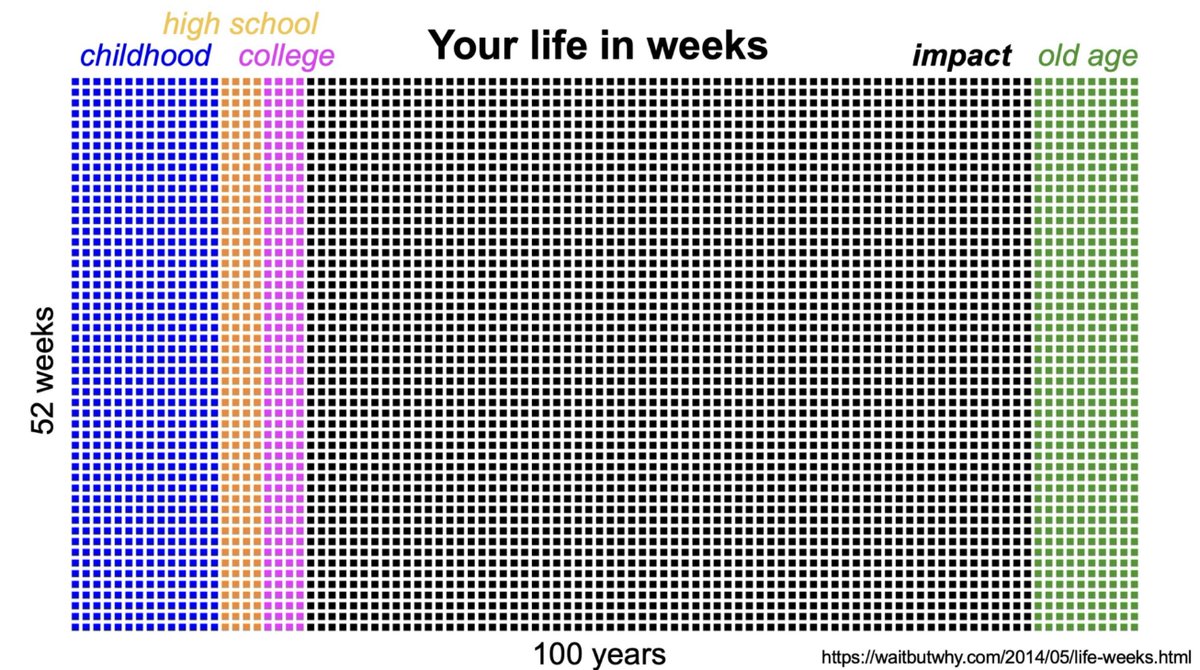
Blog post: Just quit Quitting projects in science is hard, but we should be doing a lot more of it. We spend a lot of time as scientists thinking about how to choose a project—and that is, of course, critically important to success. But… no matter how carefully you try to pick out the most groundbreaking, innovative project imaginable, the simple truth is that not every project is going to be awesome. Consequently, just as important as the skill of choosing a project is the skill of knowing when to quit a project. In my view, we should quit far more often than we do, for the simple reason that time is so very precious. Here is possibly the scariest diagram of all time (from Wait but why): That is not a lot of weeks. Each scientific project can take up 2-4 ENTIRE COLUMNS. As mentioned, the success of a project is way more probabilistic than we care to admit. So you have to sample, and that means rejecting many samples. Do not let this precious time go to waste. Sometimes, you just have to quit. Why is it so hard to quit in science? Here are a few top reasons, all of which are based on fear: Fear of the unknown. It’s in many ways easier to keep going with the devil you know. Sunk cost fallacy. Don’t finish bad projects. A project typically takes 2-10x as long to finish as you think (and that’s even when you’ve already factored in the 2-10x). Do you really want to “just tie up a few loose ends” on a crummy project for the additional years required? Falsely estimating the value of future and past time. People often worry about how long a new project will take. Let me tell you, finishing a project you don’t like will usually take way longer than one you do like. Also, time as you become more trained is worth much more than untrained time, especially for graduate students, so don’t waste precious time in the future on ill-spent time in the past. Bad advice. Beware: other people typically value your time far less than you do. That’s not necessarily bad mentoring or anything sinister, just a very human reality. “Sure, do that extra control to kill the project”—sounds reasonable, and maybe it is, but it’s a lot easier to say when it costs very little to whoever says it. Feeling like a quitter. We have been socialized in science to have a certain “stick-to-it-iveness” that I think is often counterproductive. What can you do to make quitting easier? Frame quitting by time, not results. It is practically a mantra in scientific management to say “I don’t care about time, I care about results”, and we pride ourselves on making decisions based on data. The problem is that there’s always “one more experiment” to do to see whether something will (or most likely, will not) work. Why spend time trying to do the experiment to kill a project you hate when you can just… stop working on it? Set a time, perhaps a week or a month or six months in the future, evaluate then based on whether you’re really getting where you imagined, and move on. Do the control you’re scared of. Often, you know the go/no-go experiment you should do, but you put it off because you’re scared of the result. You know what I’m talking about. Just have to do it. Don’t chase wishy-washy results down the rabbit hole. When things work, they work. When they seem to maybe work, they usually don’t actually work. Get some honest external feedback. Find someone that you really trust to give you honest feedback and ask them whether the project is worth pursuing. Sometimes, getting that negative signal from the outside is far more convincing than from your advisor/trainee. Imagine the future of the project. Envision the title/abstract of the paper you imagine writing. Is that something you really want to spend potentially years writing the rest of? Often, people begin with a starter project in the lab, which can have a habit of turning into way more than a starter. If you’re just not that into it, quit. And finally, just listen to that voice in your head. You probably already know you should quit, so just do it. I have quit projects many times in my career—grad school, postdoc, professor—and while the alternative is unknowable, with hindsight, it certainly feels like those were almost invariably the right decisions to make.
Arjun Raj tweet media
English
10
89
626
69.7K
jan homolak retweetledi
Mackenzie Weygandt Mathis, PhD
Mackenzie Weygandt Mathis, PhD@TrackingActions·
Job alert 🚨: I’m looking for a creative, ambitious, and dedicated postdoc to join me on this quest; so many exciting questions about how cortex and sub cortical structures (including spinal cord) drive adaptive motor control. Large scale 2P (limited labs 🌎 have this tech), plus we have large scale Neuropixels tech (8 probes anyone?)… plus my lab has excellent computational students/postdocs and we work as a team 💪🚀 Please email me (CV & cover letter including why the line of work the paper outlines is a good fit with you profile).
Mackenzie Weygandt Mathis, PhD@TrackingActions

How does sensorimotor (S1/M1) cortex support adaptive motor control?  Come find out in our latest preprint, which spans the development of a full adult forelimb model + physics simulations, neural-modeling for control, complex 🐭behavior 🕹️, large-scale imaging, and of course @DeepLabCut and @CEBRA!  We hypothesized that S1 supports motor learning by computing prediction errors. To tackle this, we needed to understand what is being represented, and no studies have reported what forelimb S1 represents during learning in mice🧠🐭. Moreover, this requires modeling the body🦾: kinematics, torques, force, muscle activations, & proprioception (muscle spindles & GTOs).  After our 7 year journey, we have an answer: S1 & M1 represent muscle-level features. During learning, computational motifs map to functional types (like muscle-encoding), and neural dynamics in S1 change & encode sensorimotor prediction errors!  biorxiv.org/content/10.110… 🧵👇
English
0
70
169
30.5K
jan homolak retweetledi
Dr. Bärbel Stecher
Dr. Bärbel Stecher@baerboletta·
I’m thrilled to share that I’ll be setting sail into new waters! I've recently been appointed Chair of Intestinal Microbiome at @TU_Muenchen and will be soon transitioning to #TUMSchoolofLifeSciences in Freising. #PhD and #Postdoc positions available- please share!
Dr. Bärbel Stecher tweet mediaDr. Bärbel Stecher tweet mediaDr. Bärbel Stecher tweet mediaDr. Bärbel Stecher tweet media
English
21
28
177
16K
jan homolak retweetledi
Razvan Borza
Razvan Borza@rborza_·
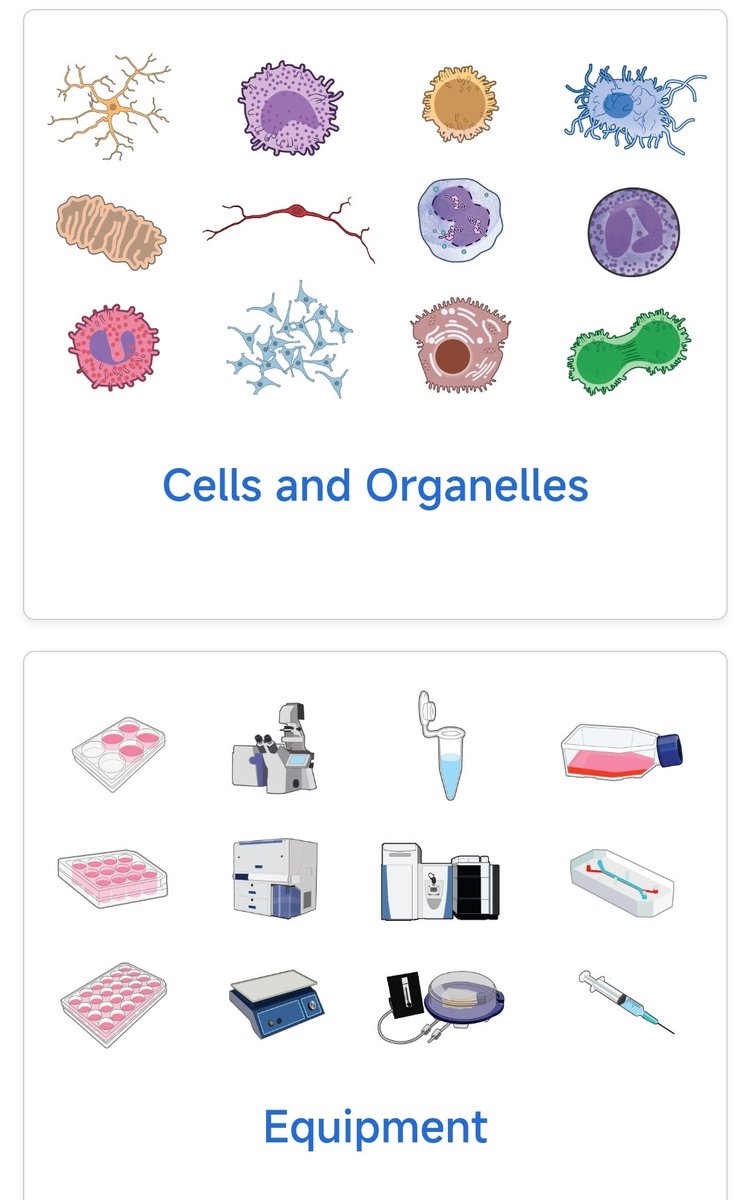
🚨 Great alternatives to BioRender are now available!! 📢 @NIAIDNews offers a collection of public figures and icons for everyone to use. Check it out at bioart.niaid.nih.gov
Razvan Borza tweet media
English
12
635
2.2K
190.3K
jan homolak retweetledi
Bruno Blumenschein
Bruno Blumenschein@Brunoblumen·
Must watch: Sinkovic brothers’ win along with a British TV audio commentary 😁😁😁 🤩🤩🤩🤩💯 320 meters to go: “The Croatians are sprinting and coming to silver, but there is NO WAY…” Finish line: “Brits are going to lose! Nooooo!!!” This is sooo Wembley 3-2 🇭🇷🤝💪
English
123
423
3.3K
232.8K
jan homolak
jan homolak@JanHomolak·
Ha? Public not private funding btw🧐
jan homolak tweet media
English
1
0
1
170
jan homolak
jan homolak@JanHomolak·
@cshperspectives Not sure this battle can be won. We need to reset the system so that people again do research in order to better understand the truth and not to keep/get the position, earn money, etc. I bet understanding the world wouldn't even make the top 10 reasons why prople do "science"
Tübingen, Deutschland 🇩🇪 English
0
0
2
65
jan homolak
jan homolak@JanHomolak·
@SsJankauskas @Proteintech Elution (e.g. low pH SDS glycine) also works unexpectedly well in some cases but adequate controls have to be done to be sure (-:
English
0
0
1
54
S
S@SsJankauskas·
Maybe not a very beautiful IHF pic. But what I like about it is that you see staining of two🐰🐰rabbit Ab. Yes, you don’t need to have Ab produced in different species if you use the FlexAble Ab labeling kit from @Proteintech. I’m super happy to discover it because I was death sick of searching for Ab made in different species 🐰+🐭. Especially when you want to look at rarely studied proteins for which it is hard to find at least one Ab that would work well. When I wanted to see three different proteins in one sample (🐰🐭🐐), the task was becoming almost impossible. And 4 different proteins (🐰🐭🐐🐓) - literally impossible. 🟢 is a marker for the mitochondrial outer membrane, 🔴 is a marker for medial- and trans-Golgi. These two compartments do not interact with each other, and you clearly see no colocalization proving no cross-reaction between labeling compounds. Pancreatic beta-cells from formalin-fixed paraffin-embedded pancreas tissue. 🔬Leica Stellaris. @LeicaMicro
S tweet media
English
1
7
40
5K
jan homolak
jan homolak@JanHomolak·
@mozemoHR @ikodvanj Attendant Coffee Roasters u Londonu u bivsem javnom wc-u. Jel Mozemo! to u Zg umjesto onog rugla pokraj Krasa?
jan homolak tweet media
London, England 🇬🇧
0
0
0
35
jan homolak
jan homolak@JanHomolak·
@jamesheathers The fact that expression of concern and reanalysis can be published as an original article rather than being relegated to an editor's spam folder or offered publication as an invisible letter is an important step forward
English
0
0
7
1.5K
jan homolak
jan homolak@JanHomolak·
@svpino The biggest problem is that you never go back to normal ones. Everything feels like a toy (-:
English
0
0
0
42
Santiago
Santiago@svpino·
Best of the best and it’s not even close.
Santiago tweet media
English
477
238
6.3K
1.2M
jan homolak retweetledi
Katie MacGillivray
Katie MacGillivray@KAMacGillivray·
You wouldn’t last an hour in the asylum where they raised me
Katie MacGillivray tweet media
English
7
157
1.2K
65.9K