Jeff Keicher

824 posts

Jeff Keicher banner
Jeff Keicher

Jeff Keicher

@JeffKeicher

Illinois legislator & business owner. Writing about AI, energy & the future of Midwest work at The Confluence Foundry. Husband. Father.

Sycamore, IL Katılım Mayıs 2011
1.7K Takip Edilen931 Takipçiler
Jeff Keicher
Jeff Keicher@JeffKeicher·
This is one of the critical understandings of the nuclear supply chain steps involved.
DA Sails@da_sails

US NUCLEAR FUEL SUPPLY CHAIN: THE FULL PICTURE McKinsey just laid out what domestic nuclear fuel security actually costs. Here are the key numbers: CURRENT STATE · US operates ~97 GW of nuclear capacity, generating ~20% of electricity · An additional 100–300 GW may be needed by 2050, driven in part by data centers and AI load growth THE DEPENDENCY PROBLEM · 1985: US held 64% of global enrichment capacity · 2023: 27% of enrichment services imported from Russia · <1% of uranium sourced from domestic mines CONVERSION BOTTLENECK · One US facility: ConverDyn Metropolis Works (Illinois) · Idled 2017–2023, restarted 2024 at ~7 kilotons/year vs 15 kt nameplate · Meets only ~50% of current US demand ENRICHMENT BUILDOUT · DOE awarded $2.7B in Jan 2026 Centrus (Piketon, OH): HALEU + LEU by 2029 Orano Federal Services (Oak Ridge, TN): 4 MSWU LEU by 2031 General Matter (Paducah, KY): HALEU by 2034 · Still falls short of projected demand FUEL FABRICATION · Advanced fuels (TRISO, metallic, molten salt) not yet at commercial scale · X-energy TRISO facility licensed Feb 2026 (Oak Ridge) · TerraPower Natrium metallic fuel currently reliant on INL supply THE PRICE TAG (McKinsey) · $105B to $170B total for a 300 GW buildout Mining and milling: $15B to $20B Conversion: $30B to $45B Enrichment: $30B to $40B Fabrication: $10B to $20B Reprocessing: $20B to $45B REPROCESSING WILDCARD · US uses an open fuel cycle · ~90,000 metric tons of spent fuel in dry cask storage · Reprocessing estimate: $20B to $45B · No active regulatory framework after NRC halted rulemaking in 2021 The US went from global enrichment leader to structurally import dependent in ~40 years Reversing it requires capital at a scale that likely demands coordinated public private deployment $URNM $CCJ $LEU $NXE $UUUU

English
0
0
1
35
Jeff Keicher retweetledi
Brivael Le Pogam
Brivael Le Pogam@brivael·
Elon Musk avait dit un truc qui m'avait marqué sur l'allocation de ressources. En substance : passé un certain niveau de richesse, l'argent n'est plus de la consommation, c'est de l'allocation de capital. Cette phrase change tout. L'économie, dans le fond, c'est juste un problème d'allocation. Tu as des ressources finies et des usages infinis. Qui décide où va quoi ? Imagine une cour de récré. 100 enfants, des paquets de cartes Pokémon distribués au hasard. Tu laisses faire. Très vite, un ordre émerge. Les bons joueurs accumulent les cartes rares, les collectionneurs trient, les négociateurs trouvent des deals. Personne n'a planifié. Et pourtant chaque carte finit dans les mains de celui qui en tire le plus de valeur. Le système maximise le bonheur total de la cour. C'est ça, la main invisible. Maintenant fais entrer la maîtresse. Elle trouve ça injuste. Léo a 50 cartes, Tom en a 3. Elle confisque, redistribue, impose l'égalité. Trois effets immédiats. Les bons joueurs arrêtent de jouer, à quoi bon. Les mauvais n'ont plus de raison de progresser, ils auront leur part. Les échanges s'effondrent. La cour est égale, et morte. Elle a maximisé l'égalité, elle a détruit le bonheur. Le problème de la maîtresse, c'est qu'elle ne peut pas avoir l'information que la cour avait collectivement. C'est le problème du calcul économique de Mises, formulé en 1920. L'URSS a essayé de le résoudre pendant 70 ans avec le Gosplan. Résultat : pénuries, queues, effondrement. Pas parce que les Soviétiques étaient bêtes, parce que le problème est mathématiquement insoluble en mode centralisé. Quand Musk a 200 milliards, il ne les consomme pas, il les alloue. SpaceX, Starlink, Neuralink, xAI. Chaque dollar est un pari sur le futur. Et lui a un track record. PayPal, Tesla, SpaceX. Il a démontré qu'il sait identifier des problèmes immenses et y allouer des ressources avec un rendement spectaculaire. L'État aussi a un track record. Hôpitaux qui s'effondrent, éducation qui décline, dette qui explose, services publics qui se dégradent malgré des budgets en hausse constante. Le marché identifie les bons allocateurs, la politique identifie les bons communicants. Le profit n'est pas une finalité, c'est un signal. Il dit : tu as alloué des ressources rares vers un usage que les gens valorisent suffisamment pour payer. Plus le profit est gros, plus la création de valeur est grande. Quand Starlink est rentable, ça veut dire que des millions de gens dans des zones rurales ont enfin internet. Quand un ministère est en déficit, ça veut dire qu'il consomme plus qu'il ne produit. L'un crée, l'autre détruit, et on appelle ça redistribution. Dans nos sociétés il y a deux catégories d'acteurs. Les entrepreneurs et les bureaucrates. L'entrepreneur prend un risque personnel pour identifier un problème, mobiliser des ressources, créer une solution. S'il se trompe il perd. S'il a raison, ses clients gagnent, ses employés gagnent, ses fournisseurs gagnent, l'État collecte des impôts. Il est la cellule de base du progrès humain. Le bureaucrate ne prend aucun risque personnel. Son salaire est garanti. Au mieux il maintient une rente existante. Au pire il la détruit par excès de réglementation, mauvaise allocation forcée, incitations perverses qui découragent ceux qui produisent. Mais dans aucun cas il ne crée. Regarde les 50 dernières années. iPhone, internet civil, SpaceX, Tesla, Google, Amazon, Stripe, mRNA, ChatGPT. Toutes des inventions privées, portées par des entrepreneurs, financées par du capital risque. Pas un seul ministère n'a inventé quoi que ce soit qui ait changé ta vie au quotidien. La France est devenue le laboratoire mondial de la dérive bureaucratique. 57% du PIB en dépenses publiques, record absolu. Une administration tentaculaire, une fiscalité qui pénalise la création de richesse. Résultat : décrochage face aux États-Unis, à l'Allemagne, à la Suisse. Fuite des cerveaux. Désindustrialisation. Dette qui explose. Et le pire c'est que la mauvaise allocation s'auto-renforce. Plus l'État prélève, moins les entrepreneurs créent. Moins ils créent, moins il y a de base fiscale. Plus l'État s'endette et taxe. Boucle de rétroaction négative parfaite. La maîtresse pense qu'elle aide, et chaque année la cour produit moins. Dans nos sociétés, ce sont les entrepreneurs, toujours, qui font avancer la civilisation. Les bureaucrates au mieux maintiennent une rente, au pire la détruisent. Aucune société n'a jamais progressé en taxant ses créateurs pour subventionner ses gestionnaires. La question n'est jamais qui a combien. C'est qui alloue le mieux la prochaine unité de ressource pour maximiser le futur de l'humanité. La réponse depuis 200 ans n'a jamais changé. Ce ne sont pas les fonctionnaires.
Français
3.3K
16.4K
61.5K
81M
Jeff Keicher retweetledi
Mark Denzler
Mark Denzler@IllinoisMfgAssc·
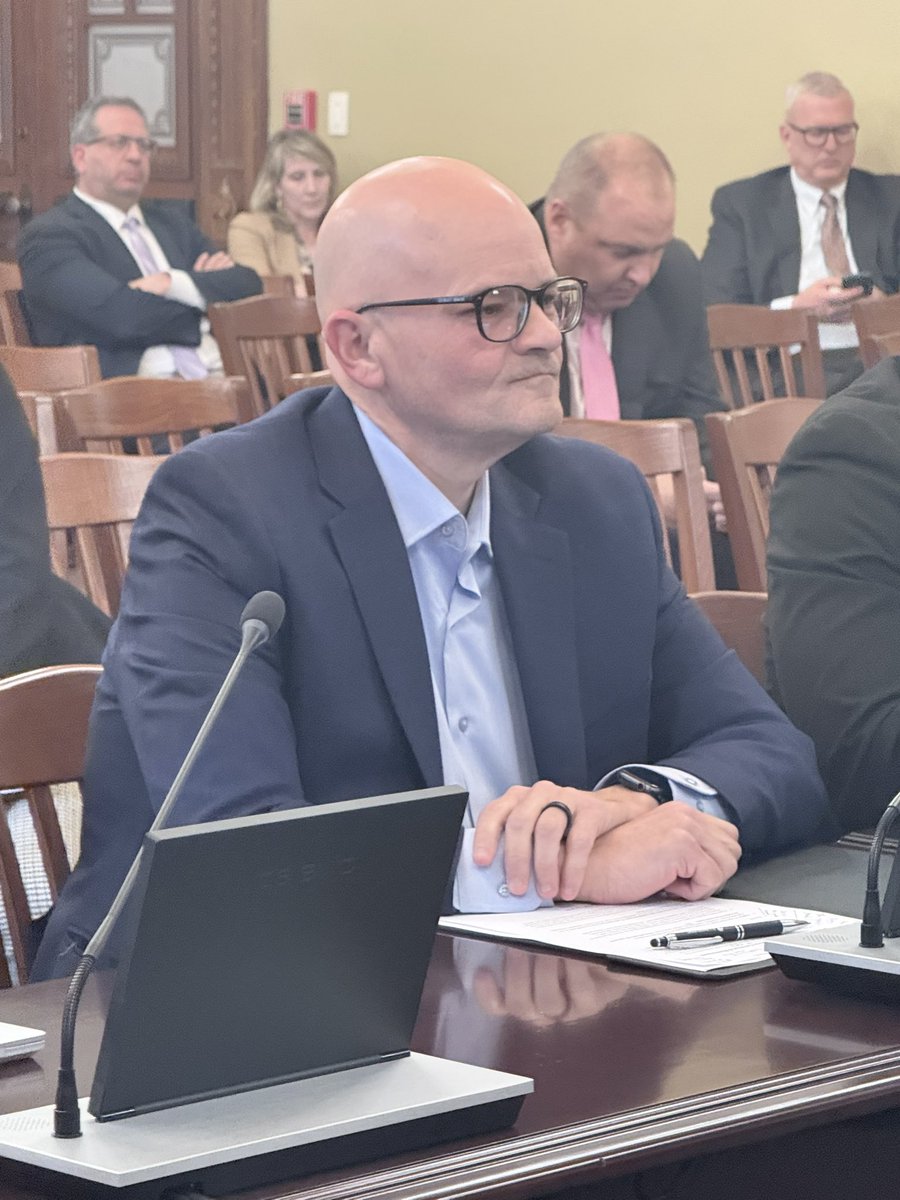
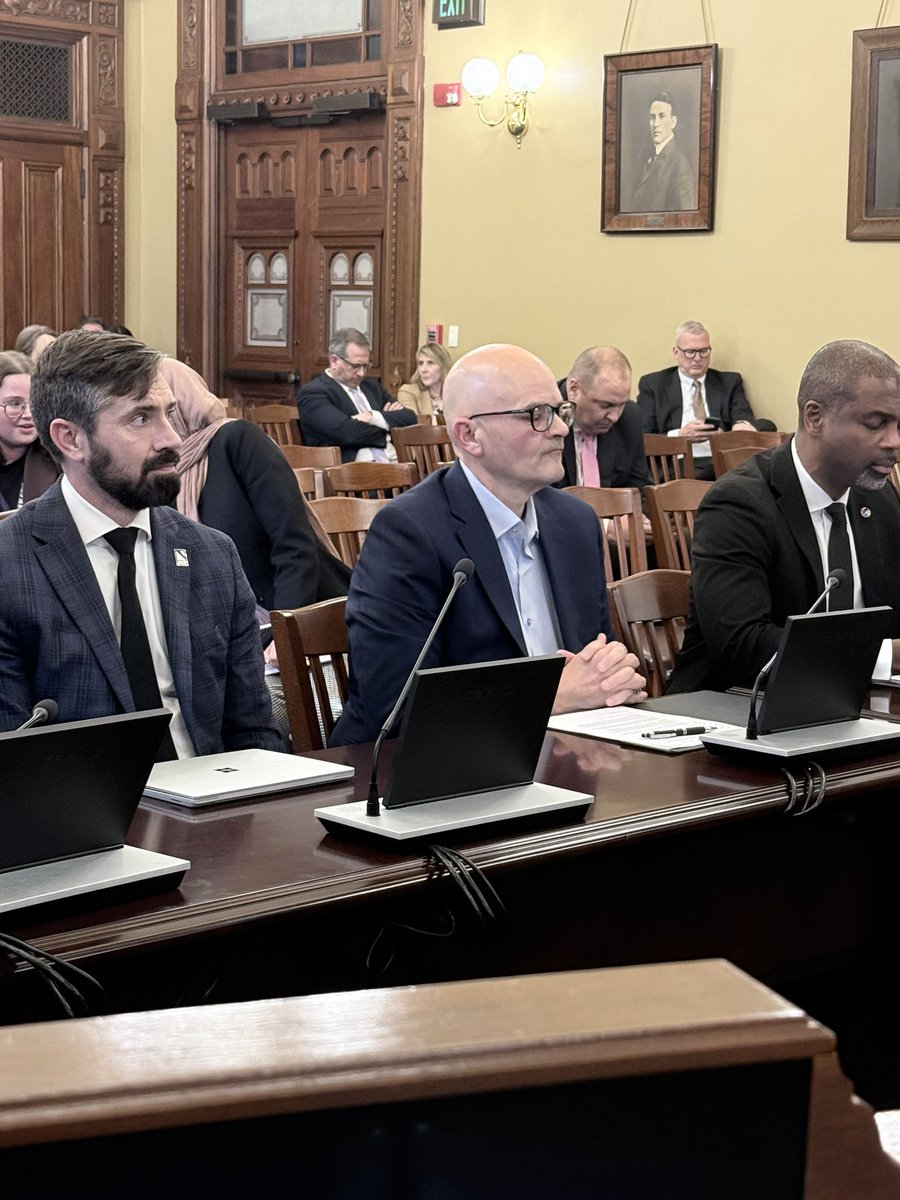
The @IMA_Today testified in opposition this afternoon on a proposal from State Rep. LaShawn Ford that would impose a new 3 percent “income tax surcharge” on individuals and small businesses earning more than $1 million. The proposal calls for the $3 billion in new tax revenue to be spent on education and property tax relief. While laudable to help fund schools and provided much-needed property tax relief, this proposed Constitutional Amendment has numerous flaws. 1. It would raise taxes on 22,000 small and mid-sized businesses that pay taxes under the individual rate (Subchapter S Corps, LLCs, etc.). Many of these companies use that money to reinvest in the companies and don’t put it in their pocket. 2. While businesses will pay higher income taxes, the sponsor indicated that the property tax relief will be used exclusively for residential property owners. No relief for employers who pay the highest property taxes in the United States. 3. Illinois’ Constitution has an 8:5 ratio between corporate and individual income tax rates. If enacted, the individual rate would jump from 4.95 percent to 7.95 percent (61 percent increase). Lawmakers could then change state law and bump the current corporate tax rate to 12.7 percent based on the ratio. 4. There is no “lockbox” meaning that while the $3 billion would be used for education and property tax relief, there is no guarantee that it won’t have a “bait and switch” with elected leaders using the same amount of money for other spending purposes. Illinois voters defeated a graduated income tax several years ago. We encourage lawmakers to vote No. ❌
Mark Denzler tweet mediaMark Denzler tweet mediaMark Denzler tweet mediaMark Denzler tweet media
English
4
9
27
6.7K
Jeff Keicher retweetledi
Constellation
Constellation@ConstellationEG·
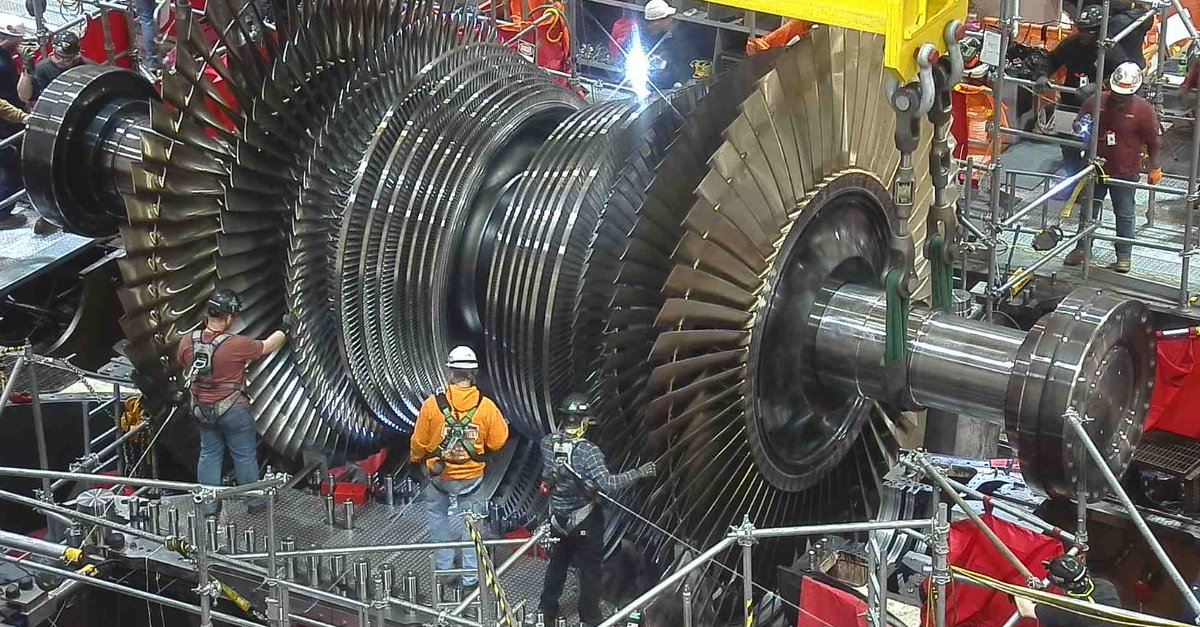
Behind-the-scenes look at the turbine replacement work during Byron Clean Energy Center’s recent refueling and maintenance outage. Part of the $800M investment at our Byron and Braidwood sites in Illinois to add approximately 158 MW of reliable, emissions-free power to the grid.
Constellation tweet mediaConstellation tweet mediaConstellation tweet media
English
4
16
108
14.9K
Jeff Keicher retweetledi
賴清德Lai Ching-te
賴清德Lai Ching-te@ChingteLai·
China’s coercive actions undermine the status quo, once again exposing the risks authoritarian regimes pose to the international order. Ahead of my visit to Eswatini, several countries along our flight route abruptly revoked overflight clearance under pressure from China. 1/2
English
1.8K
969
5.2K
1.3M
Jeff Keicher
Jeff Keicher@JeffKeicher·
I got off FB, Instagram in January 2025 for a couple weeks on “pause”. Then someone posted a comment I “had to see”…I went to look and literally felt my BP raise and tension returning in my shoulders. Deleted my personal accounts within 24 hours. Best MH decision ever!
David Daines@daviddorg

Stanford paid 35,000 people to quit Facebook and Instagram for 6 weeks Depression dropped. Anxiety dropped. Happiness went up. Women under 25 on Instagram saw the biggest gains That was 6 weeks. I'm going a full year.

English
0
0
3
102
Jeff Keicher
Jeff Keicher@JeffKeicher·
Well I think I have an appointment to try this place…
English
0
0
0
73
Jeff Keicher
Jeff Keicher@JeffKeicher·
In 2019 I sat down with DeKalb's city manager and DeKALB County EDC director and discussed a simple question: what would it mean for this community to land a $1B data center? What followed in the years since changed how I see AI, energy, nuclear, and the future of Midwest work — all at once. That conversation is why I built The Confluence Foundry. First issue is live. #Nuclear @DCEDCdekalbIL #DataCenters theconfluencefoundry.substack.com/p/the-confluen…
English
0
0
1
59
Jeff Keicher
Jeff Keicher@JeffKeicher·
The Confluence Foundry — Issue #1 Why I Started This. And Why You Should Read It: I'm going to tell you a story about a data center, a tax bill, and a moment that changed how I see everything. In 2019, I was a freshman legislator in the Illinois House of Representatives. Still figuring out the rhythms of Springfield. And then conversations started happening in DeKalb — my backyard. I found myself frequently sitting down with Bill Nicklas, DeKalb's City Manager, and Paul Borek, Executive Director of the DeKalb County Economic Development Corporation, talking through what it would mean for that community if they could land a major technology investment. The numbers were staggering. The opportunity was real. But it would take the right policy environment to make it happen. The mechanism was a data center tax incentive tucked into a $45 billion capital construction budget. It wasn't glamorous legislation. It didn't make front pages. But it was smart policy — a sweeping incentives bill providing a host of tax exemptions and credits to qualified owners and operators of data centers, with a 20% tax credit for construction workers on projects in underserved locations. We passed it with bipartisan support. And then we watched what happened. On June 30, 2020, in the early strange days of a global pandemic, Facebook announced that its newest worldwide data center would be built in DeKalb, Illinois — an investment of more than $800 million, among the most advanced, energy- and water-efficient data center facilities in the world, supporting an estimated 100 operational jobs and hundreds of construction jobs. That facility has since grown into something much larger. The campus cost the company over $1 billion to complete, required 1,200 skilled trade workers, and now provides more than 200 operational jobs. But here is the part of the DeKalb story that doesn't get told often enough — and it's the part I'm most proud of. The City of DeKalb and DeKalb County made a deliberate choice in how they structured the deal. Rather than using a Tax Increment Financing district — a TIF — which would have isolated the new tax revenue and kept it from flowing to schools, park districts, and other local taxing bodies, they used an Enterprise Zone with a tax abatement structure. That single decision meant every taxing body in the county could participate in the benefit, cooperate in the process, and share in the long-term property tax relief for residents. It's a model worth studying. It's local government working the way it's supposed to work. Illinois has seen tremendous success since establishing data center incentives in 2019 and is now the second largest market in the country — and that success is now rippling across the Midwest. Just this past February, Meta broke ground on a 1-gigawatt campus in Lebanon, Indiana — an investment of over $10 billion in data center infrastructure, one of the company's largest infrastructure investments to date. The scale of what is being built in this region is genuinely historic. And it is just beginning. The Confluence I Keep Seeing: Since that vote in 2019, I haven't been able to stop noticing how many of these threads are weaving together — and how few people are connecting the dots in a way that's useful to employers and civic leaders who actually need to act on what's coming. I voted for the preservation of Illinois's nuclear fleet — seeing what was coming in terms of clean, reliable baseload power demand — long before most people connected data centers to energy policy. I was a cosponsor on the original nuclear construction moratorium repeal with Democratic Representative Lance Yednock, which passed the legislature before being vetoed by Governor Pritzker. I then cosponsored the version that opened the door to small modular reactor construction in Illinois. And I cosponsored the final, full repeal of the moratorium on new nuclear construction in Illinois. That's not a record I highlight to score political points. I highlight it because it reflects something I genuinely believed years ago and believe more strongly today: nuclear energy is not a legacy technology. It is a future technology. It is the only carbon-free, always-on baseload power source that can scale fast enough to meet what's coming. And what's coming is enormous. After roughly fifteen years of flat energy demand in the United States, consumption is now spiking — driven by AI, data centers, electrification, and manufacturing reshoring. The grid was not built for this. The conflict in Iran has added volatility to an already complicated global energy picture. And the answers being pursued reflect the urgency of the moment: just this past March, the Department of Energy announced a public-private partnership with SoftBank and AEP Ohio to build 10 gigawatts of new power generation — including at least 9.2 gigawatts of natural gas — to power 10 gigawatts of data center development at a former uranium enrichment site in Pike County, Ohio. The $33.3 billion project would be constructed on revitalized federal land where the Portsmouth Gaseous Diffusion Plant once stood. That is not a small thing. That is the largest natural gas generation project in the world, being built in our backyard, to power the AI infrastructure of the next decade. And it raises a direct question for Midwest leaders: are we thinking about energy and technology development together, or still treating them as separate policy lanes? I've also been active on the workforce and manufacturing side — working with the Illinois Manufacturing Association, the Illinois Works Pre-Apprenticeship Program, and on incentives designed to bring advanced manufacturing and electric vehicle production to Illinois. I attended AI workshops at Northwestern University, sat in the audience at Consumer Electronics Show keynote addresses in 2026, walked the floor at SEMA in 2025. I've been a user and advocate for artificial intelligence for long enough to have a perspective that goes beyond the hype cycle. All of that — the policy work, the economic development work, the technology immersion — has given me a front-row seat to a confluence that most people are still seeing as separate stories. On AI Specifically — And Why I'm Not Afraid of It: I want to say something direct about artificial intelligence, because a lot of the conversation around it is either breathless hype or low-grade panic. I have little patience for either. Here is how I think about AI, and how I encourage everyone in my world to think about it: treat it like a highly educated new employee. Someone with broad knowledge, extraordinary capacity for work, and a genuine need for direction from someone who understands the operation. Your job — as the employer, the owner, the person on top — is to figure out which tasks to hand them, how to manage the output, and how to make your whole operation better as a result. I've read research suggesting AI can make certain roles five to sixteen times more productive. Let me ask you a simple question: if someone offered you a five-times increase in output from your operation, would you take it? Of course you would. So the question isn't whether AI is coming — it is, it's here, and it is not going to stop — the question is whether you figure out how to use it before someone else in your market figures it out first. I've said it to peers, to friends, to anyone willing to listen: failure to engage with AI is a choice. And it's a choice that belongs to the person, not the technology. I'm not naive about the disruption. The workforce displacement question is real and serious, and I intend to address it honestly in these pages. But the answer to disruption is engagement, preparation, and honest leadership — not avoidance. The Midwest has reinvented itself before. It can do it again. What This Is. And Who It's For: The Confluence Foundry is a newsletter for Midwest employers, civic leaders, and job creators who are trying to make sense of the technologies reshaping how we work, where investment flows, and which communities come out ahead. I cover five areas: AI infrastructure, nuclear energy, data center development, quantum computing, and workforce displacement. Not because they're trending topics — though they are — but because they are genuinely converging into something that will define the next twenty years of Midwest economic life. Every issue is grounded in data and primary sources. I cite my work. I link to primary documents. I believe in giving you the tools to go deeper when you need to, not just taking my word for it. I'll borrow a phrase I use more often than I probably should: I am so sure about what I know that I know I'm not sure about how much I know.That's not false modesty. It's the operating posture of someone who has watched enough policy play out to understand that certainty is expensive and humility is cheap. I'm going to get things wrong sometimes. When I do, I'll tell you. What I won't do is hide behind vagueness to avoid accountability. What I will do is show up, do the work, and give you my honest read on what's happening at the place where AI, energy, and the future of Midwest work converge. Welcome to The Confluence Foundry. — Jeff Keicher, Sycamore, Illinois Go Deeper: Illinois Data Center Investment Program — Official program details, eligibility requirements, and 2024 Annual Report: dceo.illinois.gov Facebook/Meta DeKalb announcement — June 30, 2020 — Original Illinois DCEO press release: dceo.illinois.gov How Illinois Built a Dream Home for Data Centers — Site Selection Magazine on the 2019 incentive legislation and its impact: siteselection.com Meta's $10 Billion Indiana Data Center Campus — Meta's official announcement on the Lebanon, Indiana groundbreaking: about.fb.com Ohio PORTS Technology Campus — DOE Fact Sheet — Department of Energy on the SoftBank/AEP Ohio 10GW data center and power generation project: energy.gov Illinois Data Center Tax Incentives Bring $4 Billion in New Development — Data Center Frontier on downstream economic impact: datacenterfrontier.com
English
0
0
1
81
Jeff Keicher
Jeff Keicher@JeffKeicher·
"The President brought the companies to the White House and got them to agree to build, bring, or buy their own power to build these data centers." "The American people need to have confidence that when these data centers come to town they will not be the ones who are gonna be bearing the cost of that electricity."
The Hill & Valley Forum@HillValleyForum

As AI infrastructure scales, how do American's benefit? @coatuemgmt 's Thomas Laffont: "The token is the atomic unit of AI. If you produce tokens you can produce AI. We're seeing now these factories from power to chips to data centers get put together so you can produce tokens. How did you think about making sure that the benefits were widely shared?" @mkratsios47 : "The greatest and most powerful well-capitalized companies in the world are the ones that are most interested in building these data centers." "The President brought the companies to the White House and got them to agree to build, bring, or buy their own power to build these data centers." "The American people need to have confidence that when these data centers come to town they will not be the ones who are gonna be bearing the cost of that electricity." The Hill & Valley Forum 2026 @HillValleyForum @coatuemgmt @WHOSTP47

English
0
0
0
78