Dr. Jennifer Milne

805 posts

Dr. Jennifer Milne banner
Dr. Jennifer Milne

Dr. Jennifer Milne

@JenniferMilne5

Education Lecturer @dundeeuniversity Reading Researcher, passionate about improving teacher knowledge & literacy instruction in Scotland 💛 tweets my own

Dundee University Katılım Aralık 2012
432 Takip Edilen372 Takipçiler
Dr. Jennifer Milne retweetledi
Ihtesham Ali
Ihtesham Ali@ihteshamali·
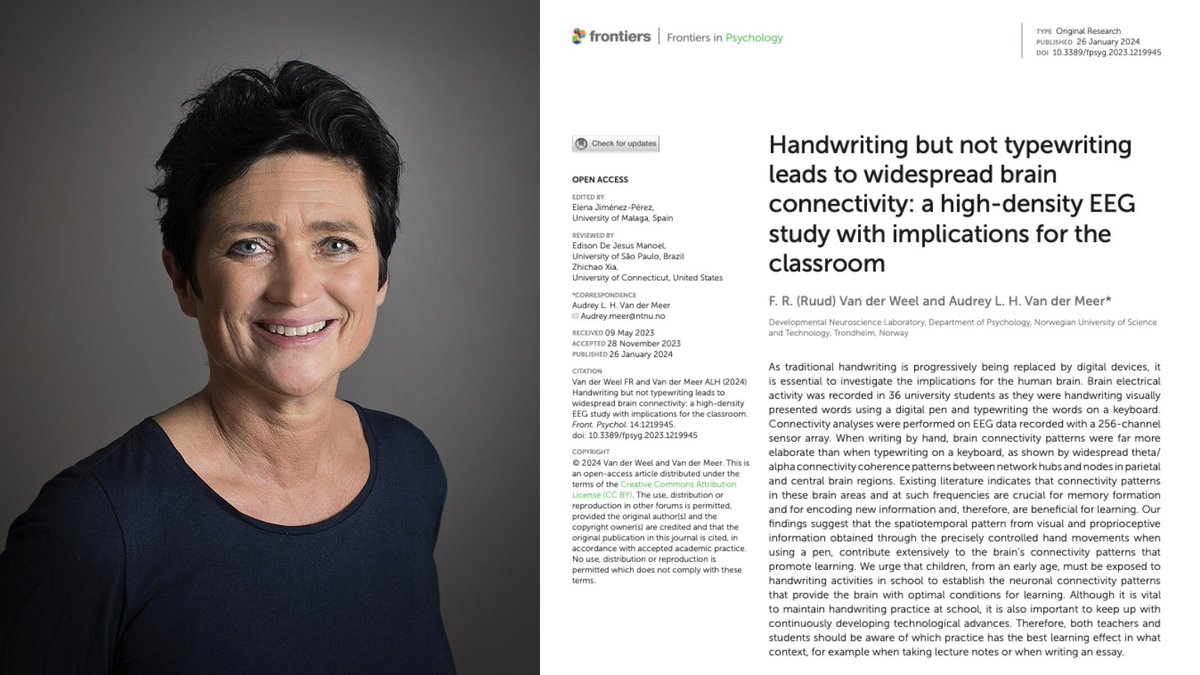
A Norwegian neuroscientist spent 20 years proving that the act of writing by hand changes the human brain in ways typing physically cannot, and almost nobody outside her field has read the paper. Her name is Audrey van der Meer. She runs a brain research lab in Trondheim, and the paper that closed the argument was published in 2024 in a journal called Frontiers in Psychology. The finding is brutal enough that it should have changed every classroom on Earth. The experiment was simple. She recruited 36 university students and put each one in a cap with 256 sensors pressed against their scalp to record brain activity. Words flashed on a screen one at a time. Sometimes the students wrote the word by hand on a touchscreen using a digital pen, and sometimes they typed the same word on a keyboard. Every neural response was recorded for the full five seconds the word stayed on screen. Then her team looked at the part of the data most researchers had ignored for years, which is how different parts of the brain were communicating with each other during the task. When the students wrote by hand, the brain lit up everywhere at once. The regions responsible for memory, sensory integration, and the encoding of new information were all firing together in a coordinated pattern that spread across the entire cortex. The whole network was awake and connected. When the same students typed the same word, that pattern collapsed almost completely. Most of the brain went quiet, and the connections between regions that had been alive seconds earlier were nowhere to be found on the EEG. Same word, same brain, same person, and two completely different neurological events. The reason turned out to be something nobody had really paid attention to before her work. Writing by hand is not one motion but a sequence of thousands of tiny micro-movements coordinated with your eyes in real time, where each letter is a different shape that requires the brain to solve a slightly different spatial problem. Your fingers, wrist, vision, and the parts of your brain that track position in space are all working together to produce one letter, then the next, then the next. Typing throws all of that away. Every key on a keyboard requires the exact same finger motion regardless of which letter you are pressing, which means the brain has almost nothing to integrate and almost no problem to solve. Van der Meer said it plainly in her interviews. Pressing the same key with the same finger over and over does not stimulate the brain in any meaningful way, and she pointed out something that should scare every parent who handed their kid an iPad. Children who learn to read and write on tablets often cannot tell letters like b and d apart, because they have never physically felt with their bodies what it takes to actually produce those letters on a page. A decade before her, two researchers at Princeton ran the same fight using a completely different method and ended up at the same answer. Pam Mueller and Daniel Oppenheimer tested 327 students across three experiments, where half took notes on laptops with the internet disabled and half took notes by hand, before testing everyone on what they actually understood from the lectures they had watched. The handwriting group won by a wide margin on every question that required real understanding rather than surface recall. The reason was hiding in the transcripts of what the two groups had actually written down. The laptop students typed almost word for word, capturing more total content but processing almost none of it as they went, while the handwriting students physically could not write fast enough to transcribe a lecture in real time, which forced them to listen carefully, decide what actually mattered, and put it in their own words on the page. That single act of choosing what to keep was the learning itself, and the keyboard had quietly skipped the choosing and skipped the learning along with it. Two studies. Two countries. Same answer. Handwriting makes the brain work. Typing lets it coast. Every note you have ever typed instead of written went into your brain through a thinner pipe. Every meeting, every book highlight, every idea you captured on your phone instead of on paper was processed at half depth. You did not forget those things because your memory is bad. You forgot them because typing never woke the part of the brain that would have made them stick. The fix is the thing your grandmother already knew. Pick up a pen. Write the thing down. The slower road is the faster one.
Ihtesham Ali tweet media
English
2.5K
44.2K
120.1K
10.5M
Dr. Jennifer Milne
Dr. Jennifer Milne@JenniferMilne5·
@AVisserFuray What writing barriers do they have? What gave you used to assess them and what does their writing assessment data look like? x
English
0
0
0
37
Alice Visser-Furay
Alice Visser-Furay@AVisserFuray·
Does anyone have experience with writing interventions suitable for Year 7/8 students who have signficant writing barriers? One possibility is SRSD (from the US) but I don't have any experience with that intervention. On first perusal, it may be too complex, but not sure.
English
3
0
8
2K
Dr. Jennifer Milne retweetledi
Iowa Reading Research Center
Looking for resources to support implementing explicit morphology instruction? Our new Morpheme Lab includes a range of free resources, including an app, an eLearning module, morpheme cards and lists, and fidelity checklists. Check it out now: irrc.education.uiowa.edu/morpheme-lab
English
1
13
38
2.2K
Dr. Jennifer Milne retweetledi
Iowa Reading Research Center
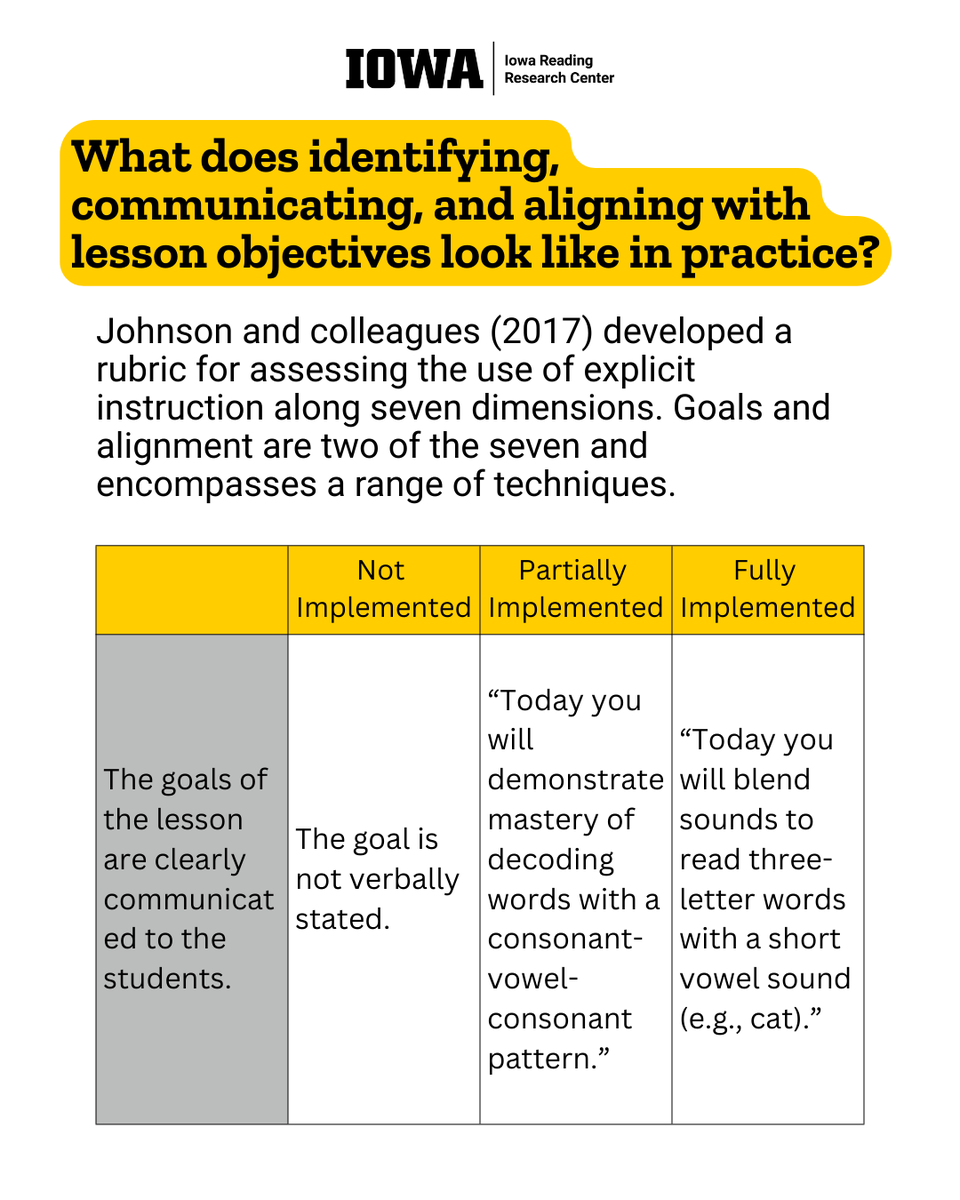
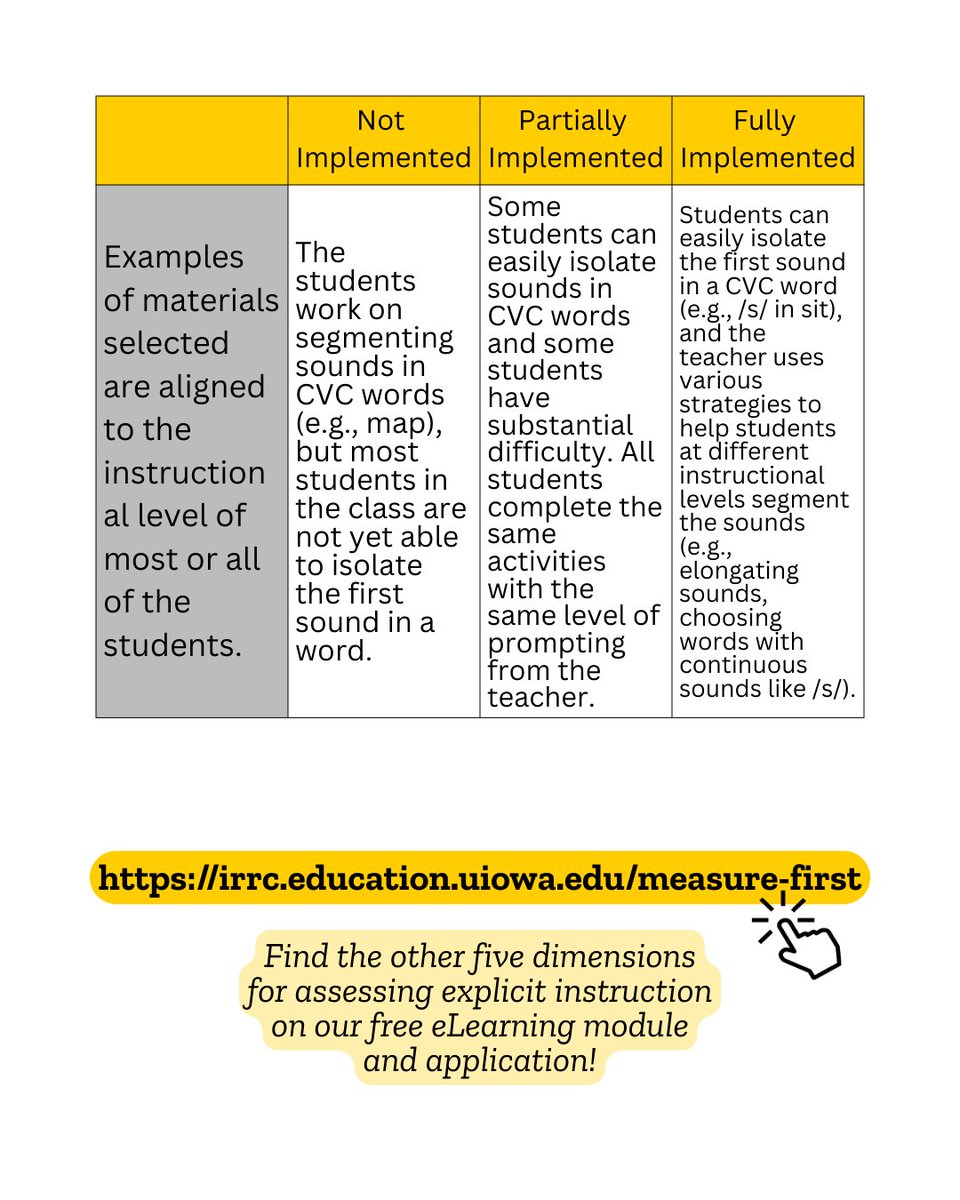
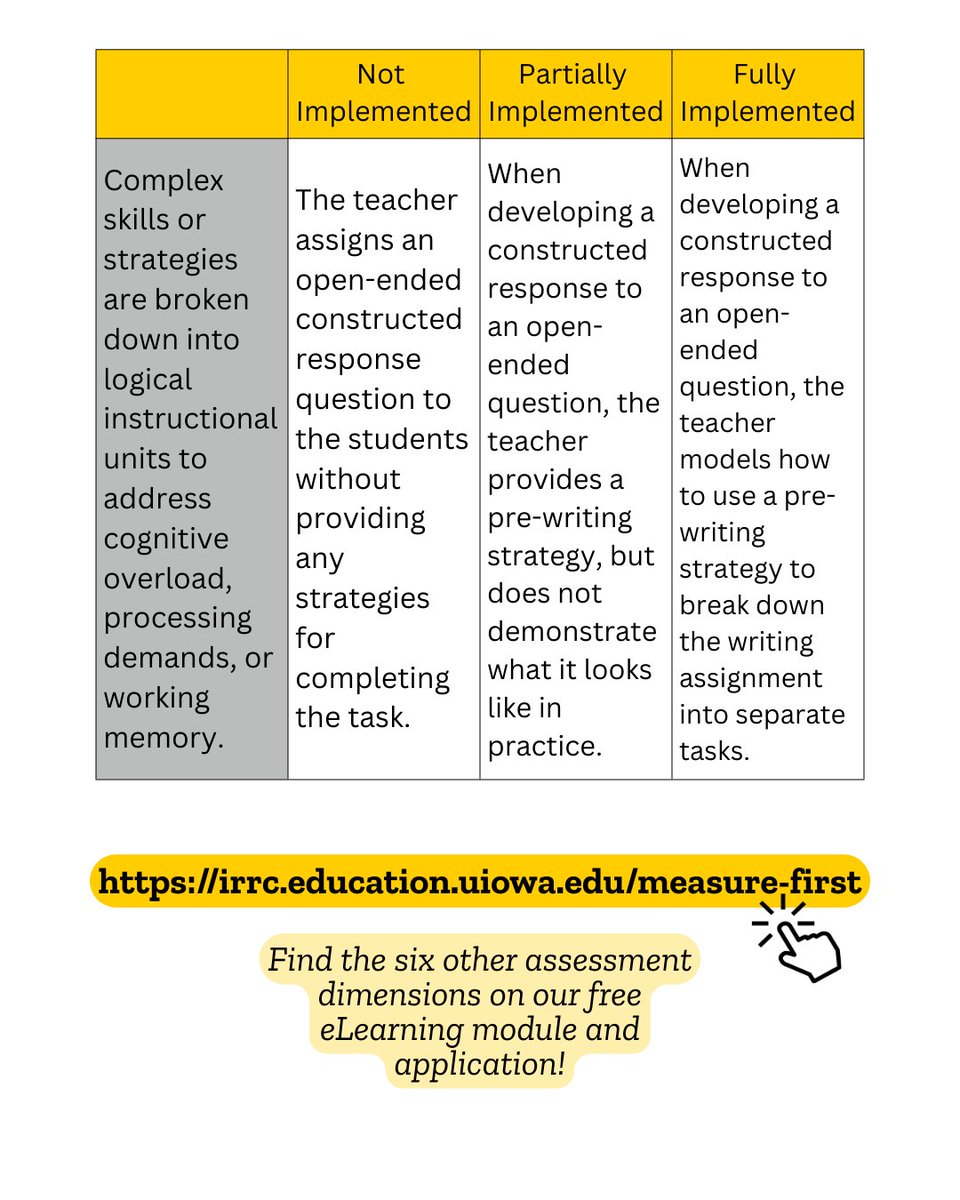
What explicit instruction practices should you look for when observing for fidelity of implementation? Our new eLearning module supports instructional coaches and admins observing explicit instruction, with classroom demonstration videos and an observation rubric. irrc.education.uiowa.edu/resources/apps…
Iowa Reading Research Center tweet mediaIowa Reading Research Center tweet mediaIowa Reading Research Center tweet mediaIowa Reading Research Center tweet media
English
1
11
37
3.3K
kerry
kerry@kerryleicester·
@adamboxer1 Can I ask if anyone else is being asked by their school to print work on different colour paper for certain students? As far as I am aware Irlen Syndrome is not proven and there is no evidence that children benefit from a particular colour of paper.
English
7
2
6
2.1K
Adam Boxer
Adam Boxer@adamboxer1·
I'm embarrassed that there are teachers who believe in learning styles. I'm embarrassed that there are schools that display nonsense posters. I'm embarrassed that there are teacher training providers that still communicate unevidenced and harmful ideas and pedagogies. But these problems are ours to own. It's our profession. It's our job and our responsibility to challenge. Mocking, pouring scorn, and patting each other on the back because we are enlightened isn't going to help anybody. We need to write, we need to speak, we need to get out there. It's our profession, it's our responsibility.
English
50
39
377
38K
Chris
Chris@ChrisCotF·
@JenniferMilne5 Congrats Jennifer. Carrying the torch for Scottish contributions to the science of reading. 🏴󠁧󠁢󠁳󠁣󠁴󠁿 👩‍💻
English
1
0
1
43
Dr. Jennifer Milne
Dr. Jennifer Milne@JenniferMilne5·
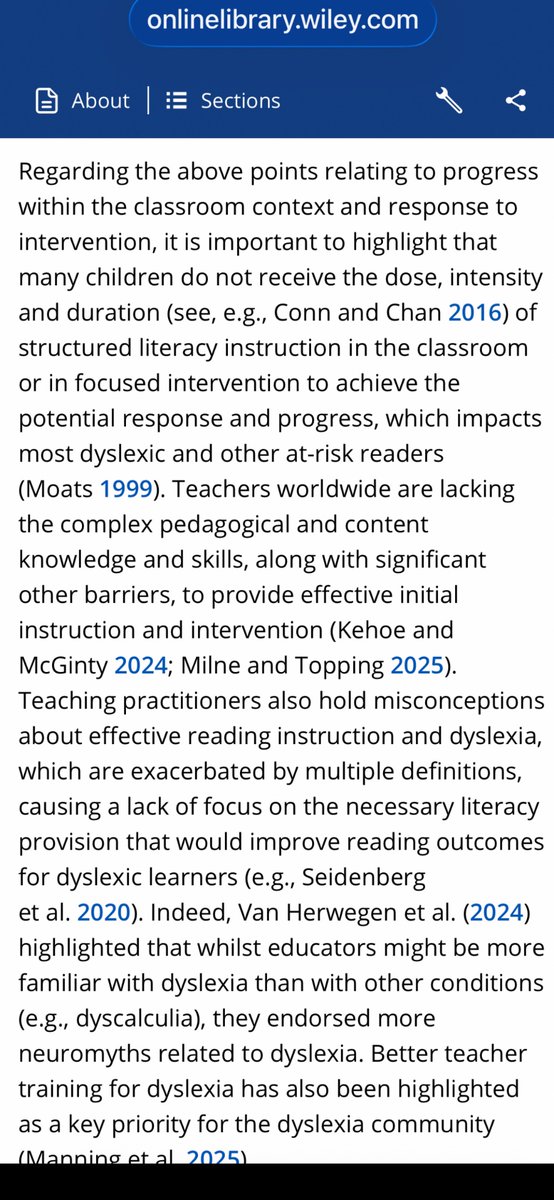
Sharing our paper: happy to contribute as coauthor -commenting on the new Delphi definition of dyslexia- highlighting the urgent need to focus on improving literacy instruction and intervention. discovery.dundee.ac.uk/ws/portalfiles…
Dr. Jennifer Milne tweet mediaDr. Jennifer Milne tweet media
English
2
0
2
80
Anna Stokke
Anna Stokke@rastokke·
@VinceBoley That's fantastic! Thank you for letting me know. I forgot about that - I should post the link.
English
2
0
2
308
Anna Stokke
Anna Stokke@rastokke·
I’m a mathematician. I teach math. It’s all math, all the time. I met John Mighton 15 years ago, and I’ve been advocating for better math education ever since. Chalk & Talk is the latest. John says he’s more optimistic now than he was then. I’m skeptical about Canada, but encouraged by progress in Australia & Sweden. And by the many people fighting for better education. I’m glad to have found them. E.g., @BarryGarelick @nsachdeva2019 @MrZachG @sjhill1 @JessWorden @brian_poncy @PamelaSnow2 @ToddTruitt76508 @JRED530
English
13
20
113
8.9K
Carl Hendrick
Carl Hendrick@C_Hendrick·
Joy to the world ❤️
Carl Hendrick tweet media
English
3
0
115
3.9K
Dr. Jennifer Milne retweetledi
Pam Kastner
Pam Kastner@liv2learn·
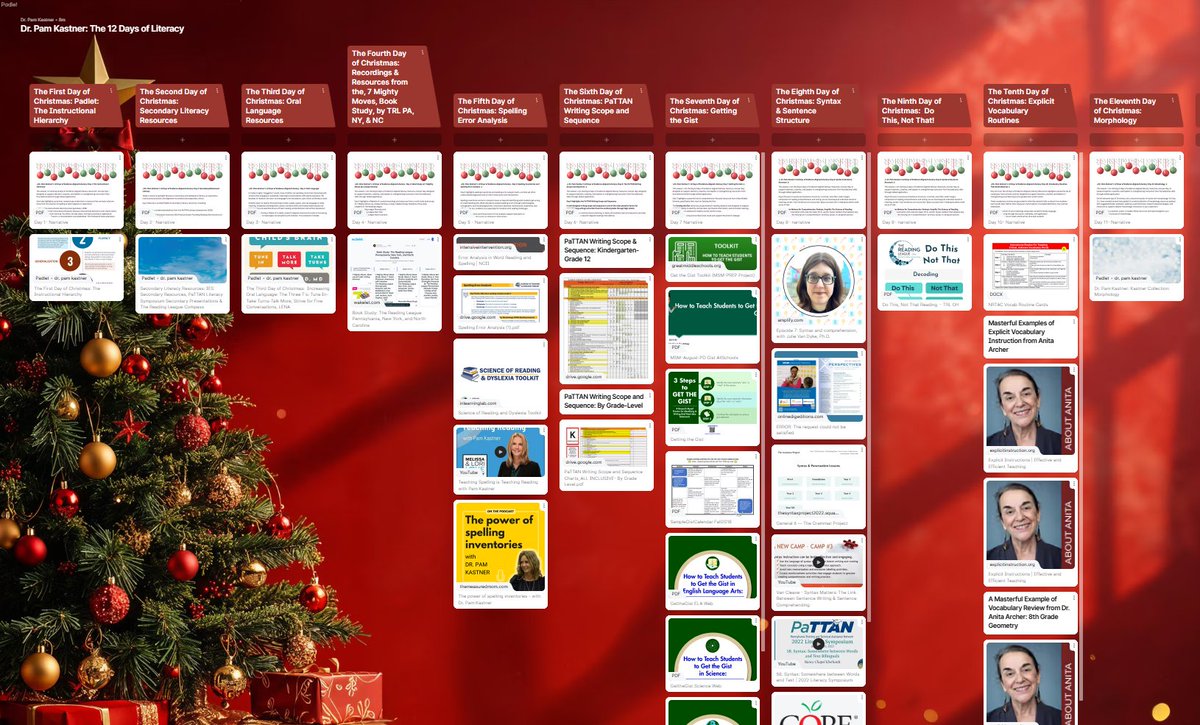
🎄 12 Days of Evidence-Aligned Literacy : Day 11: Morphology🎄 This season, I am sharing 12 days of evidence-aligned literacy resources, one per day, to support teachers, coaches, and leaders in strengthening instruction from foundational skills through skilled application. On the eleventh day of Christmas, let's unlock the power of words with morphology! For Day 11, I have created a brand new padlet! A curated collection of morphology resources packed with suggested books, podcasts, webinars, practical tools, research-based strategies, and resources to support explicit morphology instruction in your classroom. Whether you're a teacher, coach, or leader, these resources will help strengthen your knowledge AND practice of morphology. Just one more day!!! 📌 Explore Day 11 resources and every day after, here: bit.ly/Kastner12DaysO…
Pam Kastner tweet media
English
0
8
44
2.9K
Dr. Jennifer Milne retweetledi
Iowa Reading Research Center
What explicit instruction practices should you look for when observing for fidelity of implementation? Our new eLearning module supports instructional coaches and admins observing explicit instruction, with classroom demonstration videos and an observation rubric. irrc.education.uiowa.edu/measure-first
Iowa Reading Research Center tweet mediaIowa Reading Research Center tweet mediaIowa Reading Research Center tweet mediaIowa Reading Research Center tweet media
English
0
15
42
3.4K
Dr. Jennifer Milne retweetledi
Pam Kastner
Pam Kastner@liv2learn·
🎄 12 Days of Evidence-Aligned Literacy : Day 10: Vocabulary Routines That Build Meaning 🎄 Day 10 of our 12 Days of Evidence-Aligned Literacy Resources highlights a powerful set of vocabulary instructional routines designed to support teachers, coaches, and leaders in strengthening word learning across grades and content areas. These vocabulary routines are grounded in what the research tells us about how students learn words best. Rather than relying on memorization or isolated definitions, the routines emphasize: • Explicit instruction of word meanings using clear, student-friendly language • Active processing through discussion, examples, and application • Multiple exposures to target words across time and contexts • Intentional connections between vocabulary, comprehension, and oral and written language • Consistent instructional structures that can be embedded into daily Tier 1 instruction and intensified as needed The routines provide teachers with clear, repeatable instructional moves that help students develop deep, flexible word knowledge, supporting both comprehension and expression. Strong vocabulary instruction is not an “extra.” It is a core component of skilled reading and learning across all content areas. Day 10 reminds us: If we want students to understand complex text, we must intentionally teach the words that carry the meaning. 📌 Explore Day 10 resources and every day after, here: bit.ly/Kastner12DaysO…
Pam Kastner tweet media
English
0
8
33
2.4K
Dr. Jennifer Milne retweetledi
Pam Kastner
Pam Kastner@liv2learn·
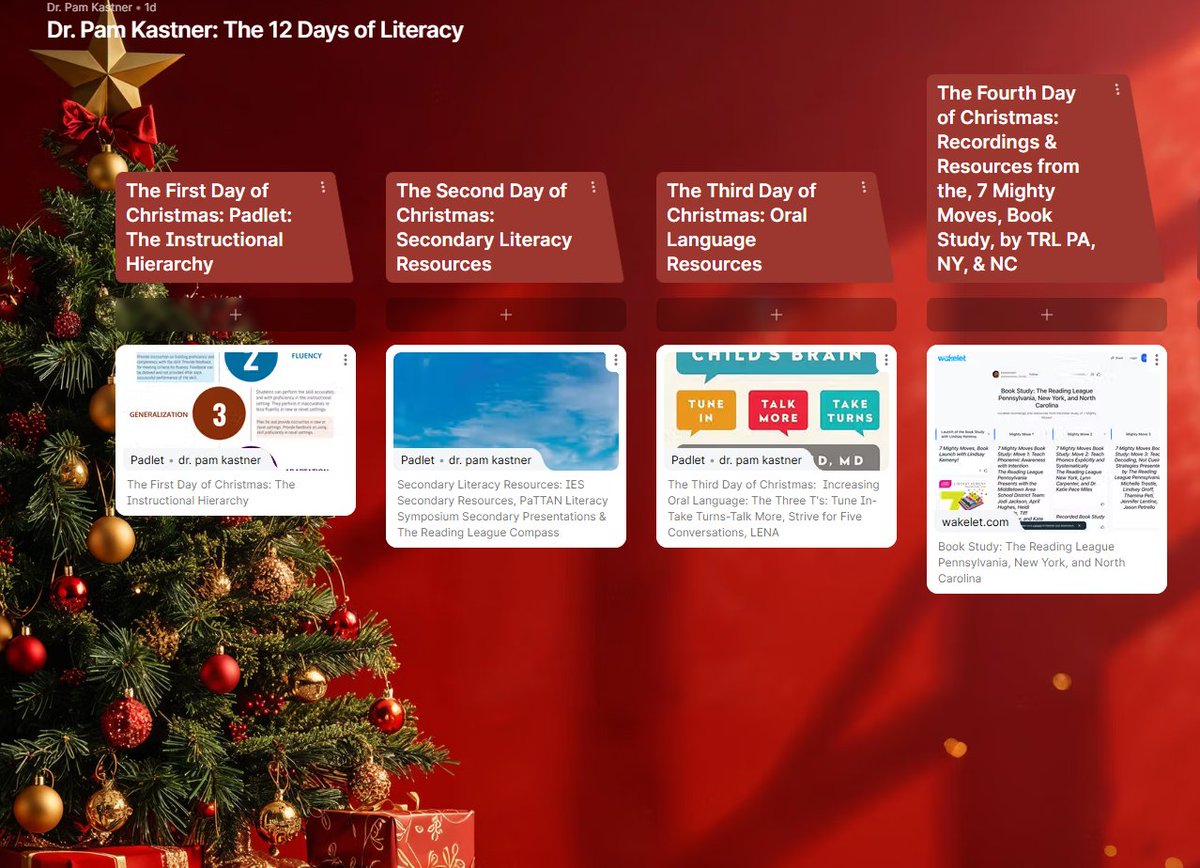
🎄 12 Days of Christmas: Building Better Literacy Instruction 🎄 Over the next 12 days, I’ll be sharing curated, evidence-aligned literacy resources designed to help educators move from research to instructional precision. Each resource is selected to support teachers, coaches, and leaders in making informed, effective decisions about instruction, practice, and intervention. 🔹 Day 1: A Padlet of resources related to The Instructional Hierarchy (Haring & Eaton, 1978), Types of Practice, and Cognitive Load Theory I started here intentionally. The Instructional Hierarchy provides a critical decision-making framework that helps educators determine: - What type of instruction students need - When practice is appropriate—and when it is not- - How fluency, generalization, and maintenance fit within MTSS - Why mismatched instruction leads to stalled progress When we ignore where students are in the learning process, even strong materials and good intentions fall short. This resource supports implementation fidelity and instructional alignment. 🔗 The Day 1 resource and all others to follow can be found at this link: bit.ly/Kastner12DaysO… Follow along for the next 12 days as together we unpack practical tools that strengthen literacy systems and classroom practice.
Pam Kastner tweet media
English
3
22
73
4.3K
Dr. Jennifer Milne retweetledi
Pam Kastner
Pam Kastner@liv2learn·
In today’s highly “plugged-in” world, many children are spending more time interacting with screens than engaging in sustained, meaningful conversations with adults and peers. Yet decades of research are clear: oral language is the foundation upon which all literacy is built. Children learn to read by first learning to listen, speak, reason, and use language to make meaning. Vocabulary development, syntax, narrative skills, and verbal reasoning are not “extras”, they are essential drivers of later reading comprehension and written expression. For Day 3, I’m sharing a Padlet of curated, research-aligned resources focused on increasing oral language and meaningful conversations with children. This collection includes: • Evidence-based strategies to promote rich talk in classrooms and homes, The Three T’s from Dr. Dana Suskind: Tune in, Take Turns, Talk More, although respectfully I have added a 4thT, Turn it Off! To Tune in, Take Turns, Talk More, we must Turn Off our electronics. Dr. Suskind’s books: Thirty Million Words: Building A Child’s Brain and Parent Nation, are must-read, powerful books. I have added links for the books on this padlet, but please note, they are not affiliate links, purchase books where it best suits you. • Sonia Cabell and Tricia Zucker’s book, Strive-for-Five Conversations, is a rich resource that supports vocabulary, sentence structure, and discourse in an accessible format that contains audio and video clips, along with classroom anecdotes and model conversations. • LENA is and has been a rich source for language development with practical tools and resources for creating intentional opportunities for conversation, storytelling, and language play. This is a new padlet I created, and will be adding to, so be sure to check it out again. 😊 Strong literacy outcomes begin with strong language. Let’s make intentional talk a priority, especially in a world where it’s increasingly at risk. 📌 Explore Day 3 and every day after, here: bit.ly/Kastner12DaysO…
Pam Kastner tweet media
English
0
6
28
1.3K
Dr. Jennifer Milne retweetledi
Pam Kastner
Pam Kastner@liv2learn·
🎄 12 Days of Evidence-Aligned Literacy: Day 4 🎄 This season, I am sharing 12 days of evidence-aligned literacy resource, one per day, designed to support teachers, coaches, and leaders in strengthening instruction from foundational skills through skilled application. Day 4 highlights a Wakelet of curated recordings and resources from a multi-state book study of, 7 Mighty Moves, by Lindsay Kemeny, a study collaboratively hosted by three state chapters of The Reading League: 📘 The Reading League Pennsylvania 📘 The Reading League New York 📘 The Reading League North Carolina 7 Mighty Moves is a powerful example of what happens when research, instructional clarity, and classroom realities intersect. Lindsay Kemeny’s work is especially impactful because it reflects the voice of a practicing classroom teacher, someone actively navigating the complexities of instruction while remaining grounded in evidence. Her work reminds us how essential it is to learn with and from practicing educators as we translate the science of reading into effective instruction. If we want research-aligned practices to take root, we must continue to elevate and learn from educators who are doing this important work every day. 📌 Explore Day 4 and every day after, here: bit.ly/Kastner12DaysO… @LindsayKemeny
Pam Kastner tweet media
English
0
11
29
1.3K
Dr. Jennifer Milne retweetledi
Pam Kastner
Pam Kastner@liv2learn·
🎄 12 Days of Evidence-Aligned Literacy – Day 5 🎄 Day 5 highlights spelling inventories and spelling error analysis tools, a critical yet often underutilized diagnostic tool to inform instruction and intervention. Spelling inventories and error analysis moves us beyond identifying what students get wrong to understanding why. When educators analyze spelling errors through a phonological, orthographic, and morphological lens, instruction becomes more precise, responsive, and effective, for ALL students, but especially for students with reading challenges. Spelling Inventories and the process of error analysis support educators in: • Interpreting student errors as diagnostic information • Identifying underlying linguistic gaps • Designing targeted, evidence-aligned instruction For Day 5, I am sharing: - Two specific spelling error analysis tools, one from the National Center on Intensive Intervention and one from the Indiana Department of Education - A Science of Reading & Dyslexia Toolkit where I accessed one of the spelling error analysis tools from the Indiana Department of Education. The Science of Reading & Dyslexia Toolkit site is a rich and robust science of reading site, and this is just one of the numerous resources that are not-to-be-missed! - I have been a bit obsessed with spelling for a while now😊 and was honored to join The Measured Mom and Melissa and Lori podcasts to talk about spelling and specifically spelling error analysis. I have included those two podcasts in hopes of enticing you too, into this spelling obsession of mine. 📌 Explore Day 5 and every day after, here: bit.ly/Kastner12DaysO…
Pam Kastner tweet media
English
1
10
25
1.5K
Dr. Jennifer Milne retweetledi
Pam Kastner
Pam Kastner@liv2learn·
🎄 12 Days of Evidence-Aligned Literacy – Day 6 🎄 This season, I am sharing 12 days of evidence-aligned literacy resource, one per day, designed to support teachers, coaches, and leaders in strengthening instruction from foundational skills through skilled application. Day 6 highlights the PaTTAN Writing Scope and Sequence A well-designed writing scope and sequence is one of the most powerful levers for strengthening writing instruction from the earliest grades through high school. Unlike ad-hoc or reactive lesson planning, a clearly articulated scope and sequence provides educators with a research-aligned roadmap that defines: • What skills students should learn (the scope), • When and in what order those skills should be introduced and reinforced (the sequence), and • How writing instruction can build systematically year over year to support student growth. The PaTTAN Writing Scope and Sequence does exactly this. Developed by PaTTAN’s MTSS & Literacy Writing Committee alongside national writing experts, this framework articulates the progression of writing knowledge, from foundational transcription (spelling and handwriting) and grammar to advanced composition and genre work across grades K-12. It shows the skills and content students are expected to master and the developmental progression in which they should be taught. On the padlet you will find the PaTTAN Writing Scope and Sequence, Kindergarten to Grade 12, and the PaTTAN Writing Scope and Sequence as individual grade-level documents, again Kindergarten through Grade 12. 📌 Explore Day 6 and every day after, here: bit.ly/Kastner12DaysO…
Pam Kastner tweet media
English
1
8
25
1.6K