Jon Regino

1.1K posts

Jon Regino banner
Jon Regino

Jon Regino

@JRED530

Math Curriculum Designer

Katılım Nisan 2013
951 Takip Edilen705 Takipçiler
Jon Regino retweetledi
tomfitzgerald
tomfitzgerald@tomfitzgerald·
Yeah, call me a Luddite if you want, but this is crazy: Some Lower Merion parents want to ‘opt out’ of Chromebooks in classrooms. District says they can’t. inquirer.com/education/lowe… via the great @maddiehanna
English
3
13
34
20.2K
Jon Regino retweetledi
Greg Ashman
Greg Ashman@greg_ashman·
‘Differentiation’ does not work. It does not work as a term to describe something because it means so many different things, some of which are opposite to each other. For example, a writing scaffold can be described as ‘differentiation’ and allowing a child to record audio instead of writing can be called ‘differentiation’. The scaffold addresses a need but the audio recording accommodates it. These are opposites. We can go to a department meeting, talk about ‘differentiation’ and mean completely different things. Unlike inquiry learning or explicit teaching, there’s no superior version of differentiation that advocates stress that is competing with a weakened version caricatured by critics. Passionate advocates call for forms of differentiation that simply lack evidence. Yes, we all differentiate to some extent. But the word isn’t helpful. And it causes us to focus on difference, whereas the most powerful strategies often focus on commonality.
Greg Ashman tweet media
English
12
17
99
5.9K
Jon Regino retweetledi
Kristopher Boulton
Kristopher Boulton@Kris_Boulton·
Sitting down to speak with @rastokke recently, I think I found the simplest way to explain the distinction between a small steps approach, and an atomisation approach. Small steps is a great idea, I’m all in favour it. It helps students master mathematical processes. Atomisation both helps students master mathematical processes and also mathematical concepts. It builds the connections between mathematical ideas, reduces what students must learn by linking everything together, and ultimately develops more flexible knowledge that can be applied in more novel, non-standard situations. So in this post we look at two concrete examples of how a first set of exercises for students would look different if they were governed by small steps versus atomisation. The atomisation approach helps students to generalise much faster while still building that same procedural automaticity. Importantly, one does not preclude the other. It’s not so much that atomisation is ‘better than’ small steps, it’s that it reveals additional options. Small steps is essentially focusing on a narrow subset of what atomisation makes available to us. link below 👇
English
1
3
11
1.1K
Jon Regino retweetledi
Karen Vaites
Karen Vaites@karenvaites·
<cough cough> iReady "isn't personalized by question type. That is the funny thing. It is personalized by score. If you get a score of say 458 on numbers and operations or vocabulary, you are placed at the same lesson as all the other kids with 458."
Sarah BBeverly@SarahBBeverly

@karenvaites @smorrisey There are some if you look but I think part of it is that it’s hard to create data around iReady because teachers can’t see the questions or answers for specific students. The “training” for teachers obfuscates the way the algorithm functions. They make it look “personalized.”

English
5
7
138
12.2K
Jon Regino retweetledi
Karen Vaites
Karen Vaites@karenvaites·
Paging educators 🚩🚩🚩 This is the second time in 2 weeks that @JonHaidt has called to get Ed Tech out of classrooms by September: "I hope that many elementary schools will remove devices by Sept., or create an analog path for parents who want that. Let's see if kids do better with books and paper" Haidt drove the cell phone ban legislation. What are the odds his words carry in a similar fashion? Are we doing enough to signal this shift to districts? 1/2
Jonathan Haidt@JonHaidt

Still more evidence that EdTech harmed American education: Across states, the year that the state imposed mandates requiring computers/tablets, that's the year that test scores stopped rising and in most cases started falling. From Jared Cooney Horvath thedigitaldelusion.substack.com/p/when-correla…

English
40
119
696
144K
Jon Regino retweetledi
Aida Baradari
Aida Baradari@aidaxbaradari·
Today, we're introducing Spectre I, the first smart device to stop unwanted audio recordings. We live in a world of always-on listening devices. Smart devices and AI dominate our world in business and private conversations. With Deveillance, you will @be_inaudible.
English
1.1K
5K
42.4K
4.5M
James Clary
James Clary@VirginiaJim·
@Doug_Lemov Does anyone have a recommendation for a math curriculum that follows those principles? When I have had full control, I have chosen Saxon, but the fully spiraled nature and the integrated geometry doesn't work well in a large department.
English
3
0
0
897
Doug Lemov
Doug Lemov@Doug_Lemov·
The number of math curricula that are not aligned to cognitive science—that presume discovery learning as a design principle—is a quiet scandal in the US. Talking to a great district last week. They take the science seriously. They can barely find a math program that doesn’t design daily lessons around novice learners guessing inefficiently at solutions.
Claire Honeycutt | ClarifiED 🕊️❤️@HippyMomPhD

You won't like to hear this, but Saxon was the first math program that helped my struggling math student. It's not flashy, it's not colorful. It is slow, practice-heavy, procedural program. And it works.


English
37
49
350
43.7K
Jon Regino retweetledi
Karen Vaites
Karen Vaites@karenvaites·
The anti-Ed Tech and pro-book movements are gaining momentum, especially for elementary grades. Let's get the memo to the nation's curriculum selection committees, pronto. They're making curriculum choices right now that schools will live with for the next 5-7 years. My latest for @CurriculumIP: Feat. @JonHaidt @natwexler @mark_bauerlein @KelseyTuoc
Karen Vaites tweet media
English
4
23
96
5.3K
Jon Regino retweetledi
Anna Stokke
Anna Stokke@rastokke·
🎯 Why teaching multiple strategies during acquisition does not work by @amandavande1 "Logically...presenting a task using totally different problem formats or set-ups & then teaching the student 2-4 ways to solve a problem at the same time..is likely to produce confusion" springmath.org/202602-multipl…
Anna Stokke tweet media
English
7
20
89
4K
Jon Regino retweetledi
Tom Bennett OBE
Tom Bennett OBE@tombennett71·
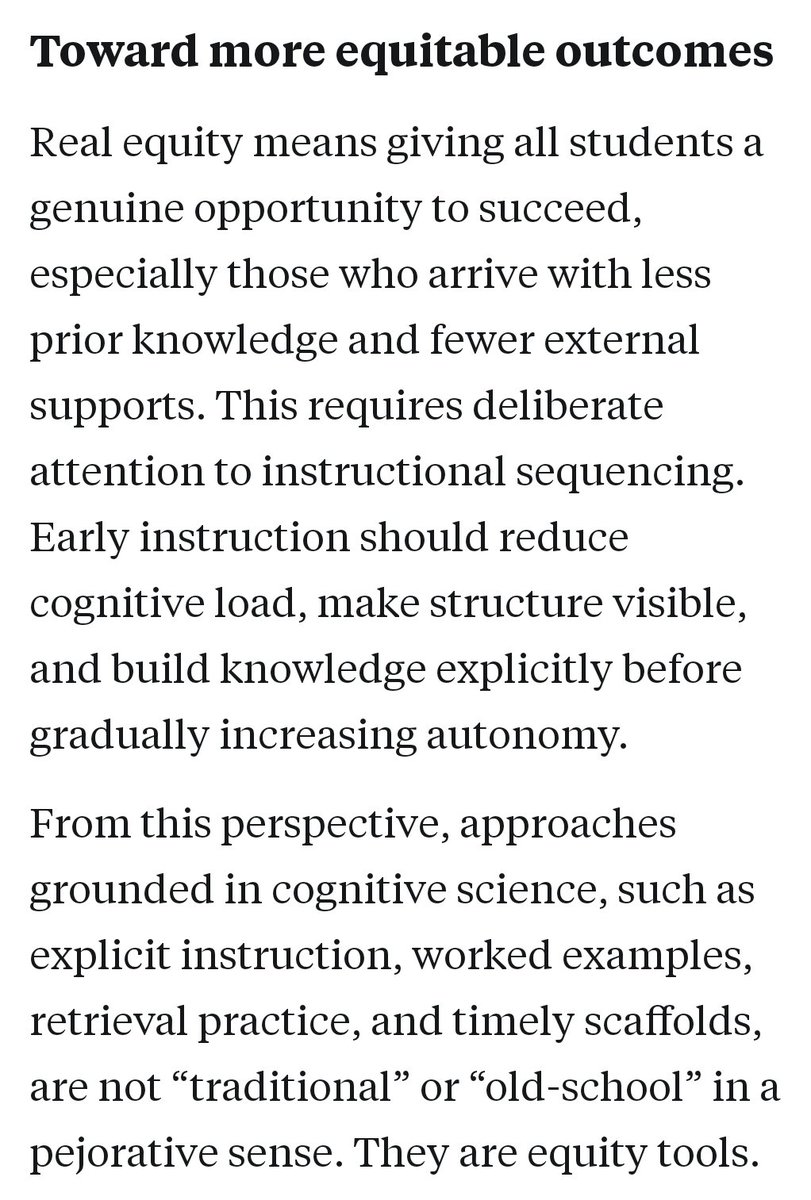
And this is why education is stuck in such a rut, and constantly regresses back whenever we make an inch of improvement: because the progressive tropes are so intuitively attractive, easy, and simple, and the reality of learning is much more complex and difficult. You don't learn very well by watching an amusing or entertaining video; you retain the information in it like a river running through you. You're aware of it temporarily until it is replaced by the next packet of facts, but you don't retain it well or in a way you can retrieve easily later. You might remember novel, surprising, amusing, or shocking parts well enough, but miss the details that weren't obvious, or the links between them. Knowledge and skills are acquired through scaffolded explanations/ demonstrations followed by the student processing it, using it, thinking about it. The teacher then checks their understanding and offers high quality feedback, reinforces, corrects, redirects or reconstructs. Then the next lesson connects meaningfully with the last one in a similar way, infused with retrieval and revision of prior concepts to ensure deep learning. Videos can be part of that, but they are not that. We actually do know a lot now about how we learn, and how we teach, and collectively they tend to be called the Learning Sciences, or Evidence-Informed Education. It's urgently required across the world as an antidote to both the winner-takes-all grindhouse of poorly led-lecturing, or more commonly, the inane performative pantomime of progressive flim-flam. Mr B's references here demonstrate the old Keynesian adage of how so-called practical men who believe themselves free from bias, are usually in the grip of some long dead economist or philosopher. He trots out the most pedestrian and reactionary dogma about learning while believing himself to be a common-sense revolutionary. It's not his fault. I don't know anything about being a social media megastar. But tech, no matter how shiny, cannot replace the architecture of the human brain. There is a 1300g bag of neural porridge inside every one of us that isn't going anywhere fast, so we better get busy using it to understand how to replicate and build on how we already actually learn, rather than what we wish it was like- or what sells content.
Jack@Jackkk

MrBeast explains why the education system is completely broken “Why are students today being taught the same way their parents were? Look at how much everything else has advanced. When I was in school the teacher would just stand there, read out of a book and write on a whiteboard” "Now look at Mark Rober’s videos. You can learn complex topics in 20 minutes in a way that’s engaging, fun and you retain it. Just because our parents were taught one way doesn’t mean we need to keep teaching that same way. It makes no sense to me, I think education should be reformed dramatically” “Students spend so much time in school. If we had real courses made through videos, made learning more hands on and optimised everything with modern technology, kids could probably learn more in 5 hours than they currently do in 8 hours"
English
26
119
574
74.2K
Jon Regino retweetledi
Karen Vaites
Karen Vaites@karenvaites·
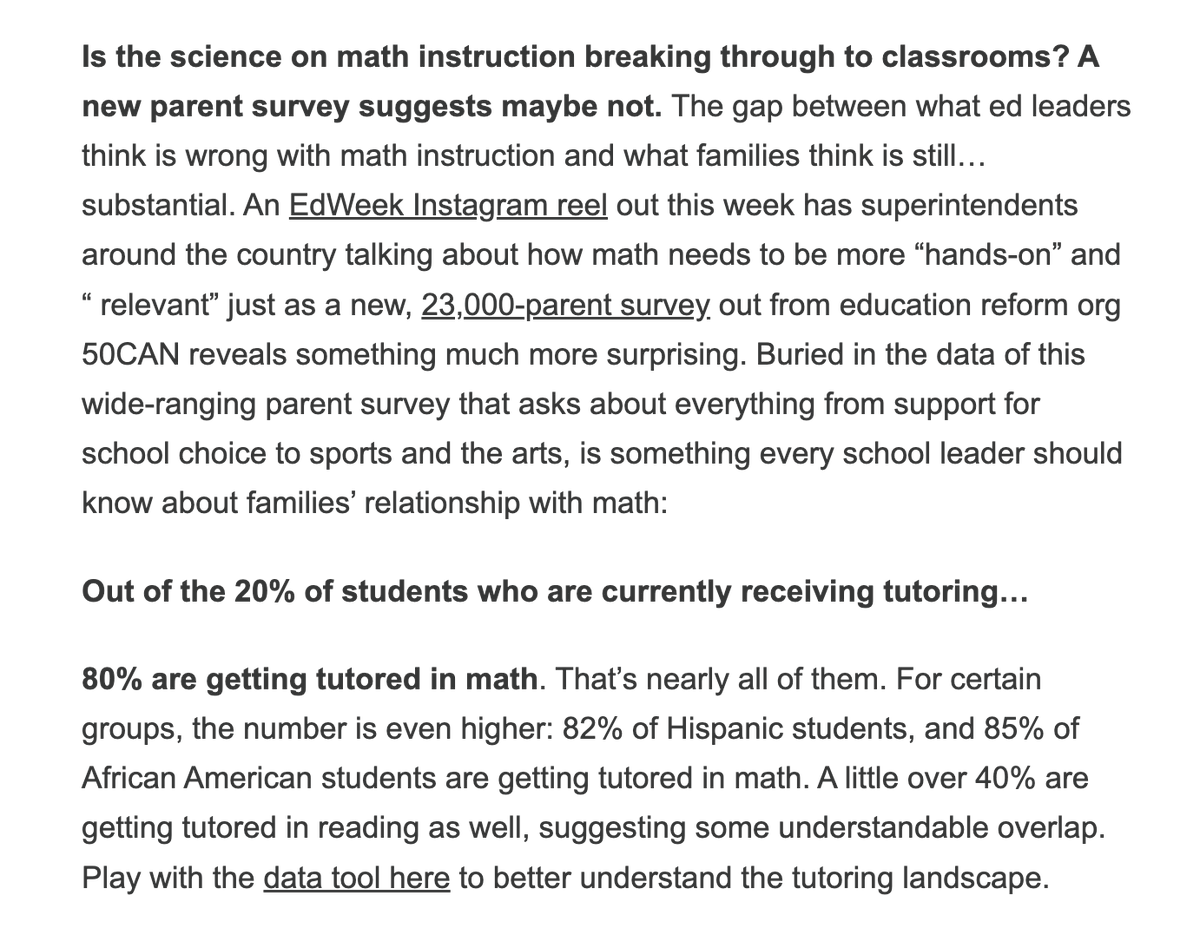
Holy moley, this disconnect. We badly need a national discussion about math. Every educator I know believes schools need to focus more on structured math foundations (all kids knowing math facts, practice in early math to ensure fact fluency). Superintendents haven't received the memo. "The gap between what ed leaders think is wrong with math instruction and what families think is still…substantial. An EdWeek Instagram reel out this week has superintendents around the country talking about how math needs to be more “hands-on” and “ relevant” just as a new, 23,000-parent survey out from education reform org 50CAN reveals something much more surprising. Buried in the data of this wide-ranging parent survey that asks about everything from support for school choice to sports and the arts, is something every school leader should know about families’ relationship with math: Out of the 20% of students who are currently receiving tutoring… 80% are getting tutored in math. That’s nearly all of them." From @HKorbey's latest: HT @FiftyCAN @marcportermagee @NedStanley @lizcohen12
Karen Vaites tweet media
English
16
20
99
7K
Jon Regino retweetledi
Karen Vaites
Karen Vaites@karenvaites·
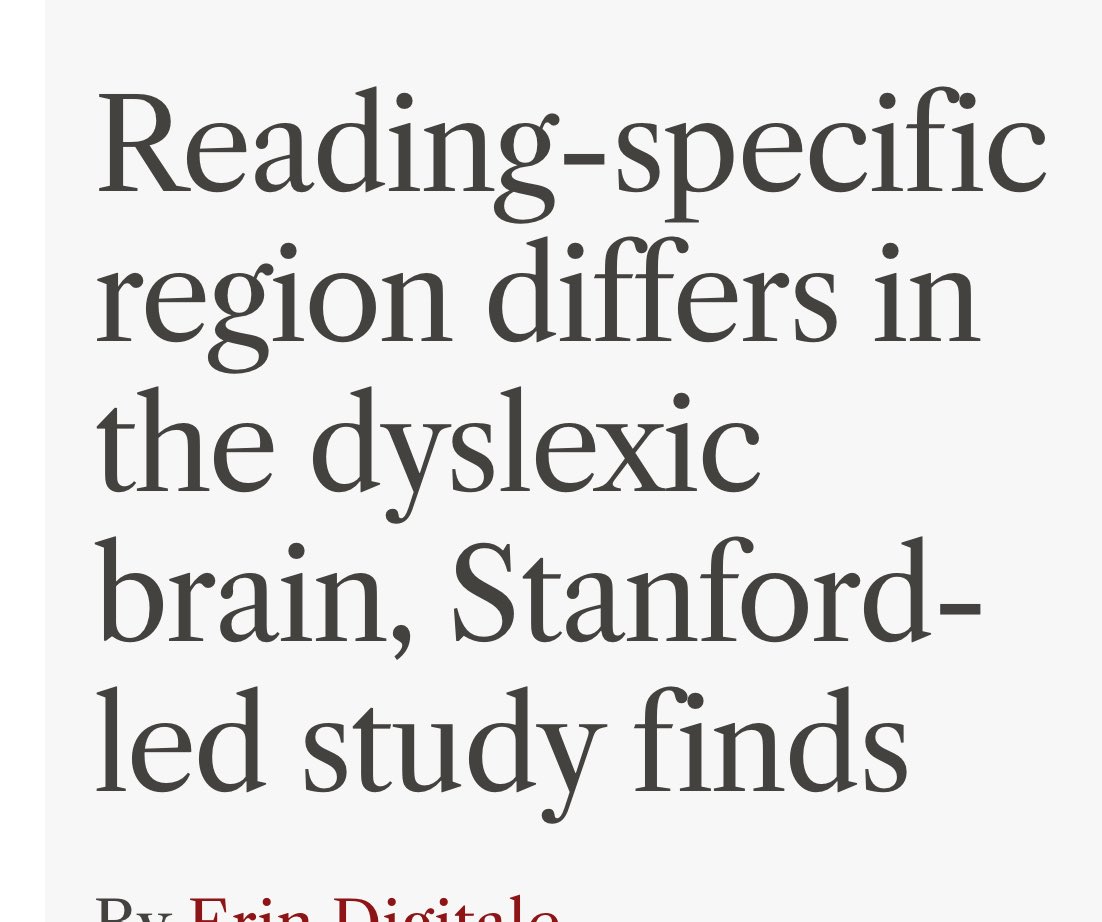
Study: A brain region specialized for recognizing text is smaller or absent in kids with dyslexia. Tutoring that improves their reading partly closes the gap. ‘“In kids with persistent reading struggles, we see that this key part of the brain involved in rapid word recognition is either missing or much smaller.” Among kids who had a detectable VWFA, the region was smaller on average in children with dyslexia than in typical readers. The size of each child’s VWFA was linked to his or her reading ability: Kids with a smaller VWFA had weaker reading skills. The neural response to seeing words — how strongly the region “lit up” during reading — was also weaker in kids with dyslexia than in typical readers. After the initial brain scans, some children with dyslexia received the reading intervention, an intensive program that enabled them to improve their reading levels by about one grade level over eight weeks. This group’s reading scores improve significantly, while over the same period, kids with and without dyslexia who did not receive tutoring showed no change in reading ability. After the reading intervention, the researchers could detect the VWFA in more children with dyslexia, while the chance of detecting this area in kids who had dyslexia but had not gone through the reading program was unchanged. “It’s as if evidence-based intervention builds this region in the dyslexic brain,” Yeatman said. The VWFA also grew larger in children who had completed the reading intervention; it did not grow larger in the control group.’
Karen Vaites tweet media
English
9
18
70
5.1K
Jon Regino retweetledi
Doug Lemov
Doug Lemov@Doug_Lemov·
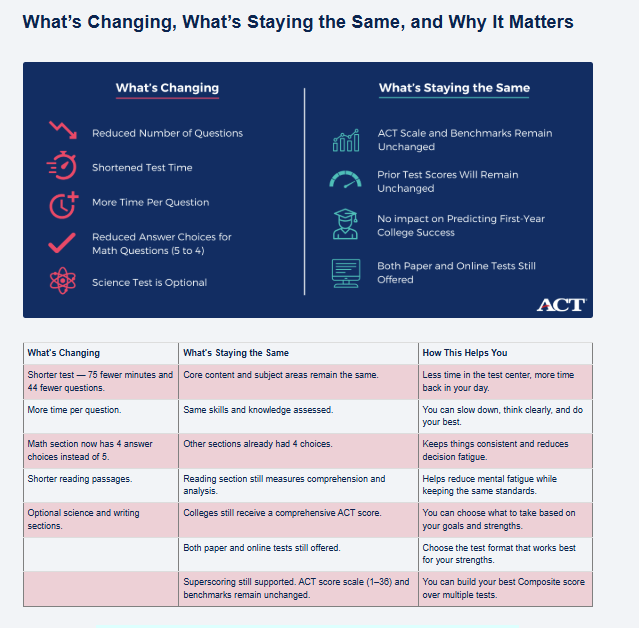
So disappointing. At exactly the moment we need ACT & SAT to embrace their role as objective arbiters of high standards they have abandoned the field. In England a national board sets standards for GCSEs (de facto college entrance exams). In the US individual states should do the same. Low standards & lack of meritocracy are issues of national security & long term economic viability.
Daniel Buck, “Youngest Old Man in Ed Reform”@MrDanielBuck

What in the Sam Hill?! The ACT just quietly nuked their standards, and no one seems to have noticed Fewer questions, more time per question, fewer choices, shorter & fewer reading passages

English
14
51
196
30.1K
Jon Regino retweetledi
Daniel Buck, “Youngest Old Man in Ed Reform”
What in the Sam Hill?! The ACT just quietly nuked their standards, and no one seems to have noticed Fewer questions, more time per question, fewer choices, shorter & fewer reading passages

Daniel Buck, “Youngest Old Man in Ed Reform” tweet media
English
107
234
1.1K
156.1K
Jon Regino retweetledi
Zach Groshell
Zach Groshell@MrZachG·
Things that are medium effective are more effective than things that are ineffective. But medium effective things are not better than highly effective things. This concept needs to be understood when looking at popular programs that are not great, but simply better than nothing.
English
5
2
27
1.7K
Jon Regino retweetledi
Anna Stokke
Anna Stokke@rastokke·
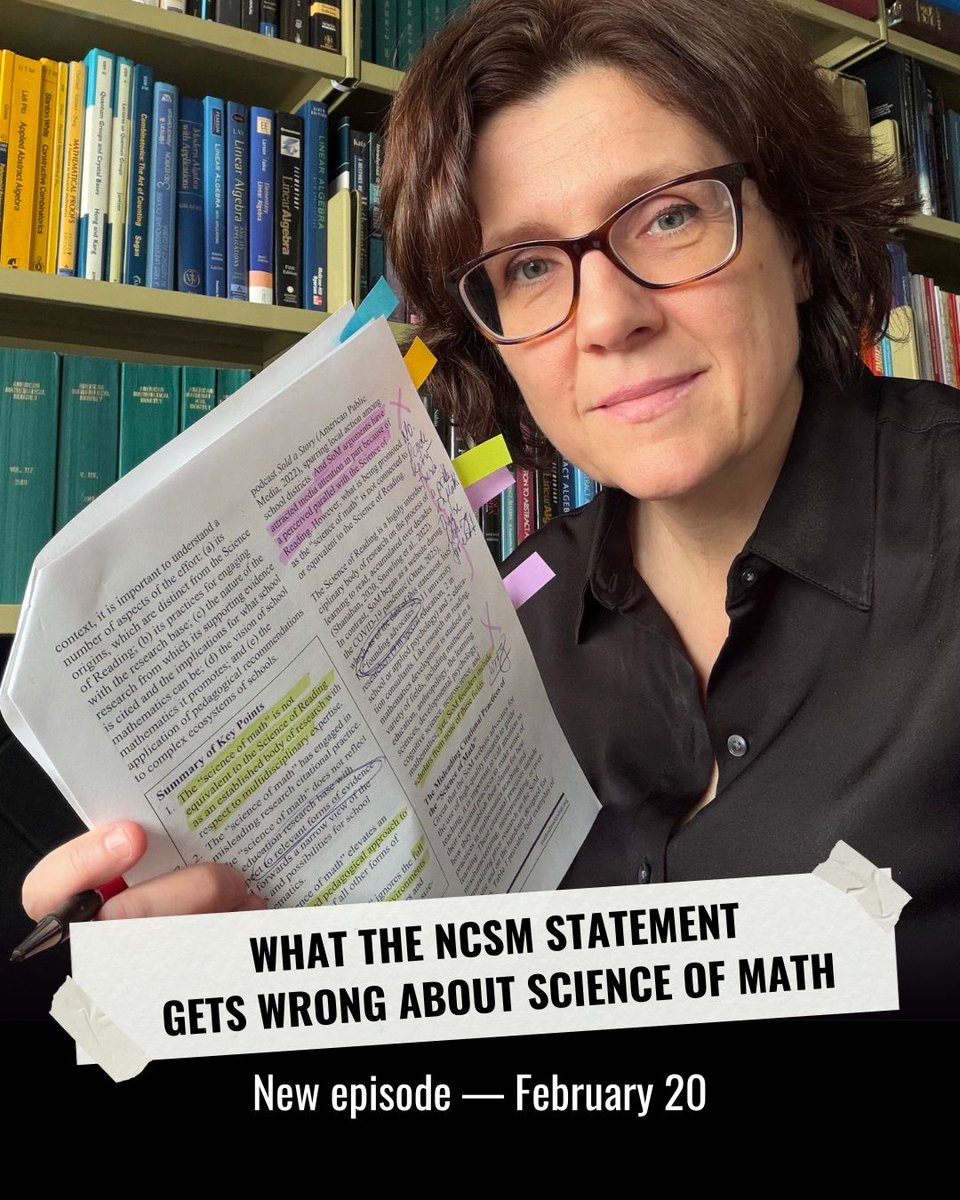
🚀Dropping this Friday: A look at what the NCSM statement gets wrong about the Science of Math with guest Sarah Powell. An episode about evidence, misconceptions, effective instruction, and why this matters for students.
Anna Stokke tweet media
English
3
9
45
5.9K