

Jimmy
150.1K posts

Jimmy
@Jimmyyweb3
Content Creator - Web3 Marketing
Katılım Temmuz 2025
2.2K Takip Edilen5.2K Takipçiler

New week, new listings.
meow-6:native
hoppy-3:native
$WOOD
$WISHBONE
Available on Spot ➢ app.arcus.xyz/trade/spot

English


Good Night CT 😴
Before calling it a night, I always remind myself that better sleep starts with small daily actions.
💜 Claim your free Gatcha on @sleepagotchi app
💜 Complete your Mood Check
💜 Visit Sleep Hub and check in
A couple of minutes now can help build healthier routines while earning rewards along the way.
See you on the leaderboard tomorrow. 🌙✨

English

@Cryptowithkhan @brian_armstrong Big things brewing for India’s crypto scene
English

Wow 👏
Nikhil Kamath next guest is Coinbase CEO @brian_armstrong
Earlier this year Coinbase started operation in India🇮🇳 and now the podcast with Nikhil Kamath
Can't be a coincidence 👀
English


I'm running four Rally campaigns at once and my biggest mistake isn't bad writing, it's missing which ones I actually qualify for before the good spots fill up.
First thing I'm doing after connecting Wingston: /mode scout, so he only pings me for new campaigns I'm actually eligible for instead of every single launch.
Then straight to asking him what to write for whatever's live, instead of guessing the brief myself and hoping I read it right.
@RallyOnChain built an agent I can just talk to, no menu to memorize, no dashboard to refresh every hour.
t.me/WingstonRallyB…
What's the first thing you'd ask him to check before you write anything?
English

$200,000,000 in 24 hrs.
Ondo Perps has surpassed $200 million in 24-hour volume.
Next: more markets & more volume.

English

🚨 $SOL addresses ONLY! ‼️
🎁 First 750 wallets receive $BULLKITTY.
🔔 Must follow
🌐 bullkitty.fun
💬 Drop your $SOL wallet address below.

English
@molusol @Backpack @PhoenixTrade @Collector_Crypt @JurassicFi Solana’s moving tradfi at crypto speed
English

tokenize everything aka the RWA chain:
> @Backpack: 1:1 redeemable stocks in brokerages like SPCX, MU, SNDK
> @PhoenixTrade: leveraged equities & commodities from AAPL to COPPER
> @Collector_Crypt: cards, comics, collectibles
> @JurassicFi: literally dinosaur fossils
> @onrefinance: reinsurance exposure
fabiano.sol@FabianoSolana
people underrate the real RWA narrative: "make traditional assets move at crypto speed" one chain is exactly built for that... ps. worth reading the article
English

LFG tomorrow is the day
$4.1M goes out in an airdrop to @MetaWin players
If you guys STILL don’t have an account make sure you make one so you can take advantage
If you need $$ to play with comment your metawin.com username
I’ll giveaway another $200 for one of you
SKEL@skel
HUGE day tomorrow. $3 Million dropping on the entire active player base of the last 3 months. + $1.1 Million in a race with the top player getting $330,000 ! Here’s how the race currently stands. Will Jonno9 retain the top spot all the way to the end ?
English
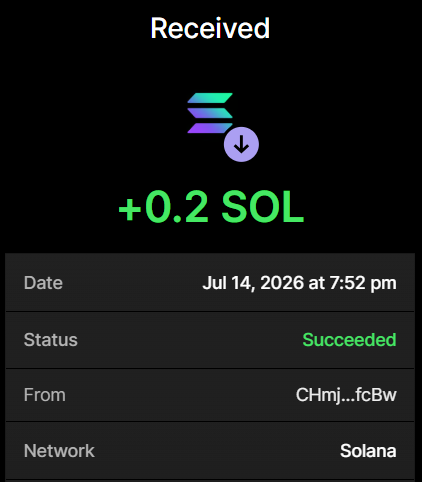
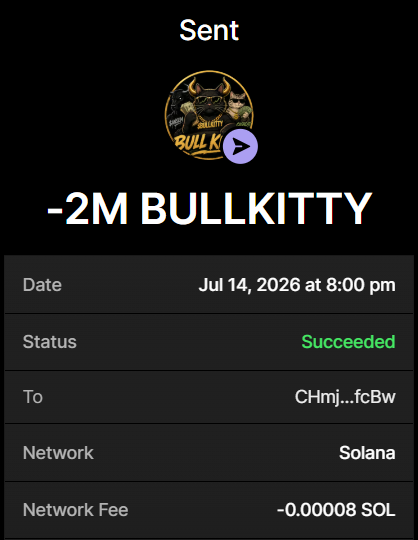
✅2 MILLION $BULLKITTY bought for 0.2 $SOL
Buy $BULLKITTY
Send between 0.2 SOL and 10 SOL to: 24soaPMKpk5TVZcSrWZhQyaeE8FcnUJkcYW1JsTbDvxJ
1 SOL = 10M $BULLKITTY
5 SOL = 50M $BULLKITTY
Min 0.2 SOL
Retweet & Drop SOL Address
English

GN
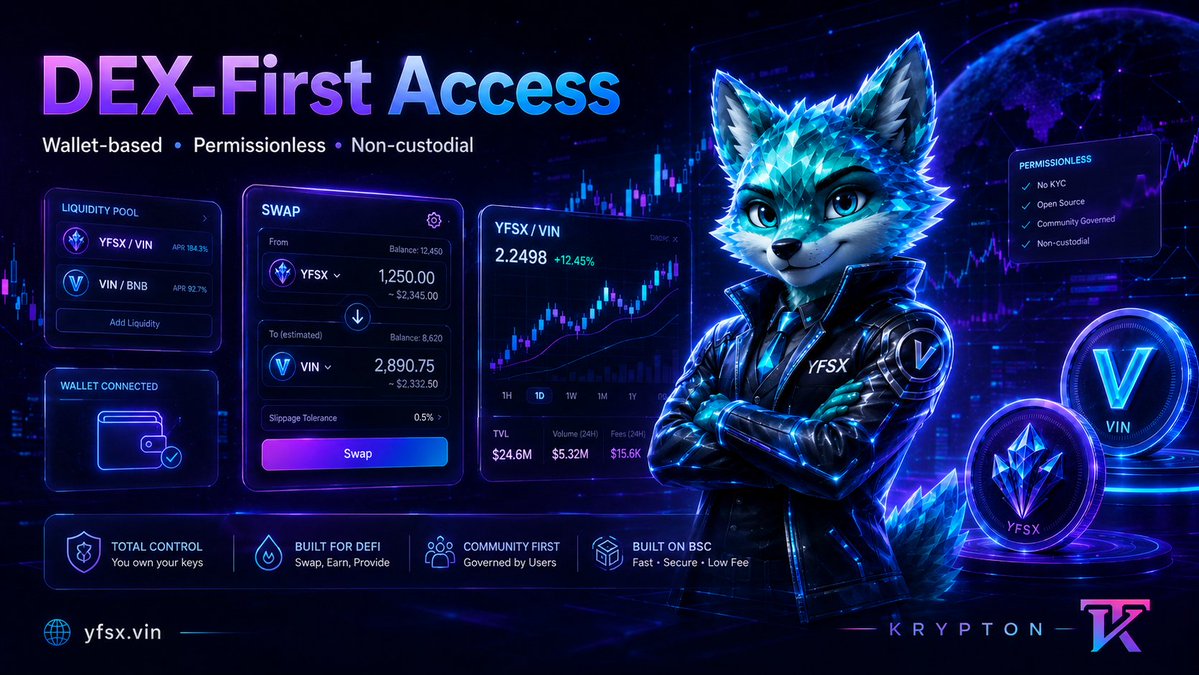
YFSX & VIN is built around a DEX-first approach. ⚡🌐
That means participation happens through decentralized markets instead of a centralized account system.
For DeFi users, this matters because the core experience stays wallet-based, permissionless, and non-custodial.
No system is risk-free, but open markets and verified contracts give users more visibility than closed infrastructure.
$YFSX $VIN
Token citations 📌
YFSX CA: 0xb7ec60cf8ef96ed48b119277bc7a954a87f27388
VIN CA: 0x85e43bf8faaf04ceddcd03d6c07438b72606a988
Website: yfsx.vin
TG: t.me/yfsxvin
#YFSX #VIN #DEX #DeFi #Web3
Disclaimer: Informational only. Not financial advice. DYOR.
English

$SLVR is the 1st and best mining protocol on Robinhood.
It's pretty simple, it's undervalued right now. Some great volume seen on it recently, bringing many eyes to the project.
Take a look for yourself.
@S_L_V_R_FUN
slvr.fun

English
English

Most people treat sleep as a liability. I treat it as a resource.
Seven days of perfect consistency just unlocked a high tier furniture drop in @Sleepagotchi.
I swapped my basic bed for a rare NFT frame. My reward multiplier is now up forty percent.
We are finally financializing the biological recovery loop.
Are you still optimizing for screen time or are you optimizing for rest?

TrendTrackerX@XTrendTrackerX
Health tracking is usually a chore. @Sleepagotchi turns biometric data into a competitive asset class. The integration of NFTs and gamified loops creates a high retention ecosystem for builders. 🌙 Sleep cycles act as proof of work for minting rewards 📦 Night Boxes drop rare NFT assets based on schedule consistency 🏠 Virtual room customization drives long term sink for earned items 📈 Data ownership converts passive habits into active digital equity This is how you solve the retention problem in health tech by aligning incentives with biological rhythms.
English
@FabianoSolana @solana SOL’s the backbone for real-world assets going live onchain.
English

people underrate the real RWA narrative:
"make traditional assets move at crypto speed"
one chain is exactly built for that...
ps. worth reading the article

WallStreetBets@wallstreetbets
English