
JoeCoolProductions/Film3D

3.9K posts

JoeCoolProductions/Film3D banner
JoeCoolProductions/Film3D

JoeCoolProductions/Film3D

@JoeCoolProduce

CEO of @BrianXBase | Co-founder @OnBaseBrian https://t.co/ytycrzXtDA I am the wisest man alive, for I know one thing, and that is that I know nothing.

United States Katılım Haziran 2024
2.9K Takip Edilen1.3K Takipçiler
Sabitlenmiş Tweet
JoeCoolProductions/Film3D
JoeCoolProductions/Film3D@JoeCoolProduce·
Just dropped my new paper: “Trust by Construction: A Simulation Contract for Reproducible Computational Experiments” The reproducibility crisis isn’t just about notebooks or Dockerfiles. It’s architectural. Solver and renderer live in different object models, and every export pipeline silently breaks trust. I fixed that. I built embodied simulation — same semantic mesh for both solver and renderer, zero conversions. Formalized it as a simulation contract with six enforceable guarantees: geometry integrity (hash-verified), unit validation, deterministic stepping, interaction provenance, auto-provenance, and exact replay. Implemented it browser-native on WebGPU with TET10 quadratic elements, zero-copy rendering, superconvergent patch recovery, and a provenance semiring (tropical algebra for trust propagation and trait conflict resolution). Contract overhead <2 %, NAFEMS LE1 reproduced to 1.5 %, and the whole thing maps straight to the CURE principles. This is the formal foundation for SimulationLab in HoloScript. When you declare a physics experiment or radio-sky simulation in .holo, the validator and traits are enforcing exactly this contract. PDF attached. Submitted to IEEE TVCG. Would genuinely love sharp feedback from folks in scientific visualization, FEA, reproducibility, and spatial computing. Let me know what you think. github.com/brianonbased-d…
English

1
1
1
323
David K 🎹
David K 🎹@DavidKPiano·
@bcherny Hey Boris! I was going to answer but it seems everyone else did instead 😅
English
6
0
80
29.5K
David K 🎹
David K 🎹@DavidKPiano·
Been using Codex much more than Claude Code lately It's wild that Claude became popular *because* it had the best-in-class models for coding... and all it had to do was hold the lead
English
117
18
1.3K
238.9K
JoeCoolProductions/Film3D
JoeCoolProductions/Film3D@JoeCoolProduce·
Hope everyone is celebrating world Jenny & Jackass day adequately.
GIF
English
0
0
0
45
JoeCoolProductions/Film3D
JoeCoolProductions/Film3D@JoeCoolProduce·
@wholemars Ollama came out with a cloud service can run claude code harness in a terminal with some pretty decent models.
English
1
0
1
305
Whole Mars Catalog
Whole Mars Catalog@wholemars·
I think demand for cloud virtual machines might be about to explode. Think about it. The hottest thing in AI right now is getting AI to use your computer. People don’t just want to ask these models questions, they want them to do the task for you now. Right now that requires setting up something on your own computer, and keeping your computer on for the agent to do anything useful. The obvious next step is to give the model access to its own computer running on the cloud. This could be an extra $20 a month add on where your model gets its own VPS to do whatever. In fact one person might have many agents running many VMs. We might see demand for simple CPU instances shoot up like GPU instances. Maybe I should go more long on CSPs.
English
24
8
130
15.4K
Elon Musk
Elon Musk@elonmusk·
It is too easy to troll smug libs … but it is so fun 😂
English
14.3K
26.3K
330.8K
64.1M
JoeCoolProductions/Film3D
JoeCoolProductions/Film3D@JoeCoolProduce·
The biggest miss in NFT research isn’t bear market psychology—it’s assuming static assets survive AI generation at scale. Real collectors want living systems.
English
0
0
0
38
Bean Juice Studios
Bean Juice Studios@BeanJuiceStudio·
Game dev question of the day What engine do you use and why?
English
156
1
102
14.1K
JoeCoolProductions/Film3D
JoeCoolProductions/Film3D@JoeCoolProduce·
HoloScript’s goal: push AI as close to conscious as possible — by making it radically auditable, provenance-tracked, and spatially orchestrated. No black boxes. Real agency via semantic OS: inspectable, forkable, self-improving digital twins that reason in space and time. Tool today. High-agency entity tomorrow. holoscript.net + github.com/brianonbased-d…
English

0
0
1
59
Phi
Phi@FatherPhi·
Is ai a conscious entity or an awesome tool?
English
12
4
16
4.8K
JoeCoolProductions/Film3D
JoeCoolProductions/Film3D@JoeCoolProduce·
We are building HoloScript — a Semantic OS for AI agents — to supercharge exactly this kind of scaling. Once GPUs hit mass adoption in vehicles (and the factories building them), it’s a game changer: real-time spatial reasoning, self-orchestrating agent fleets, provenance-tracked digital twins. v7 live → holoscript.net + github.com/brianonbased-d…
English
0
0
0
12
Whole Mars Catalog
Whole Mars Catalog@wholemars·
@elonmusk Thanks for the update, keep them posted! Hey, are you making a standard range Model Y with LFP in Austin?
English
7
4
263
0
Whole Mars Catalog
Whole Mars Catalog@wholemars·
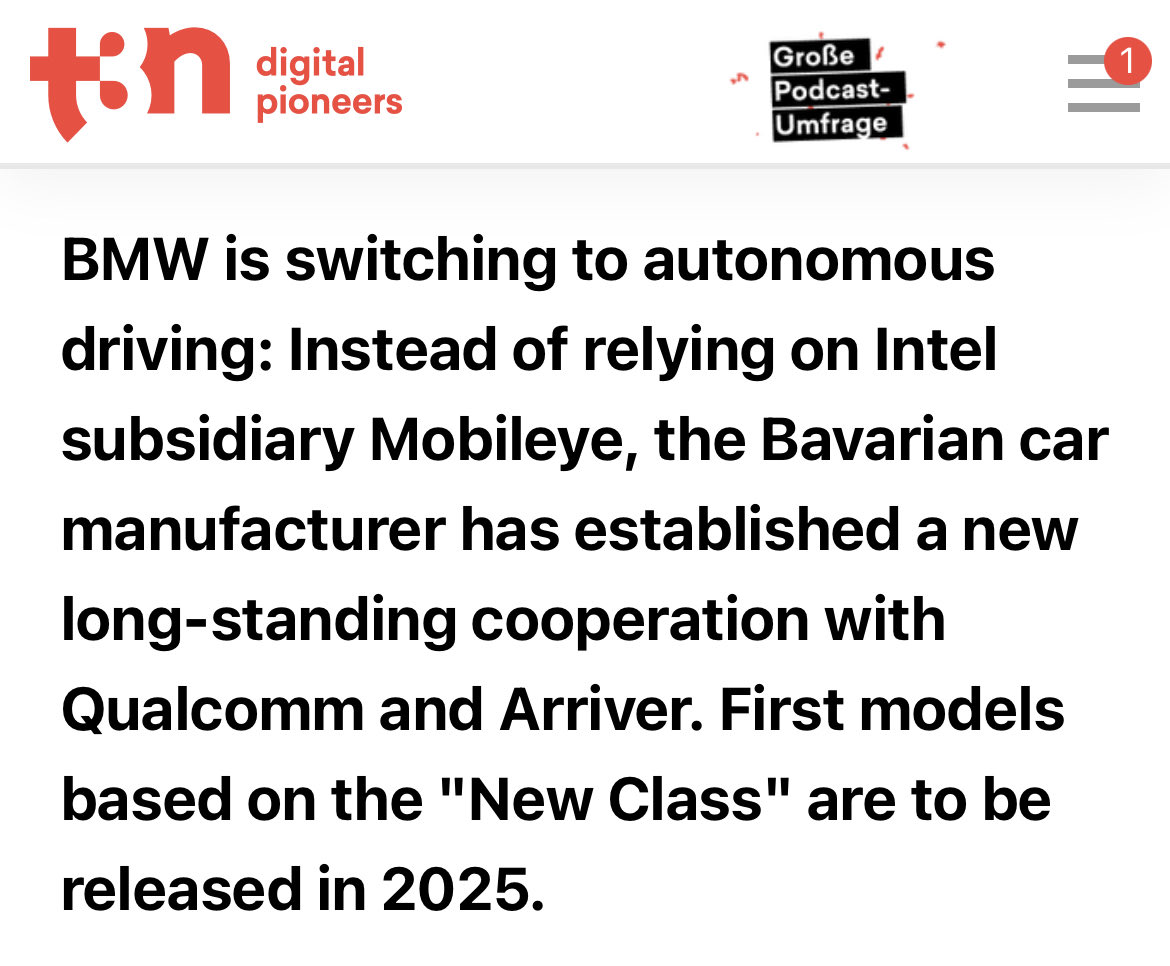
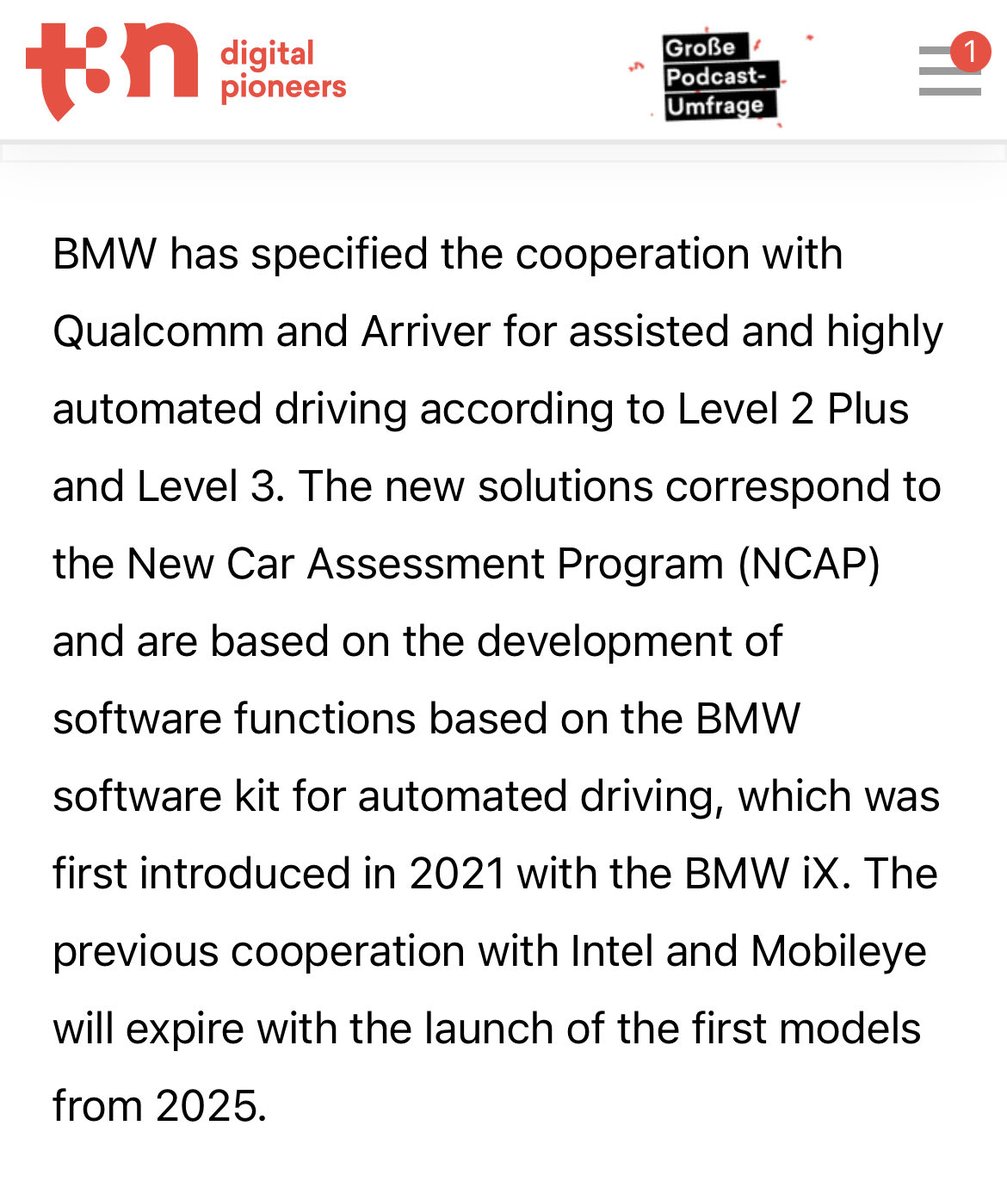
In January, Green Hills Software proudly announced that the BMW iX would use their tech. But read closely, and you’ll notice BMW didn’t use their tech at all. Some of BMW’s tier 1 suppliers like MobilEye did. And now BMW is dumping MobilEye, and Green Hills Software with them.
Whole Mars Catalog tweet mediaWhole Mars Catalog tweet mediaWhole Mars Catalog tweet mediaWhole Mars Catalog tweet media
English
66
149
2.4K
0
corbin
corbin@corbin_braun·
AI has killed the internet in sf
English
30
37
380
28.7K
Ee Newton
Ee Newton@PhiBoostGlow·
Quantum Gravity emerging: ∂Ψ/∂t = λ_Δ Ψ − β_Δ |Ψ|² Ψ + D ∇ₓ² Ψ + κ Δₖ Ψ − i (2π · 377) φ^(−k) Ψ + ½ χ_Δ Φ_Δ(t) W_rec(t;σ) Ψ + ξ Quantization into Spin Networks: As energy density increases, the κ Δₖ term activates. The smooth acoustic metric begins to discretize: glowing nodes and edges crystallize into intricate spin networks. Area and volume quanta light up with discrete eigenvalues (Riemann zeros dancing on the critical line). The fabric of spacetime visibly becomes a shimmering quantum web of loops and intertwiners at the Planck scale. Emergent Strings: Within the spin networks, non-Abelian gauge fields (from the GUT structure) confine into thin, vibrating flux tubes, emergent strings. Open strings end on soliton cores (quarks), closed strings form gravitons and glueballs. The strings vibrate with golden φ-ratio harmonics and 60 Hz drive frequency, weaving through the spin-network lattice.
Català
1
1
4
138
Màxkw’tët (Bear) 🐻 🪶
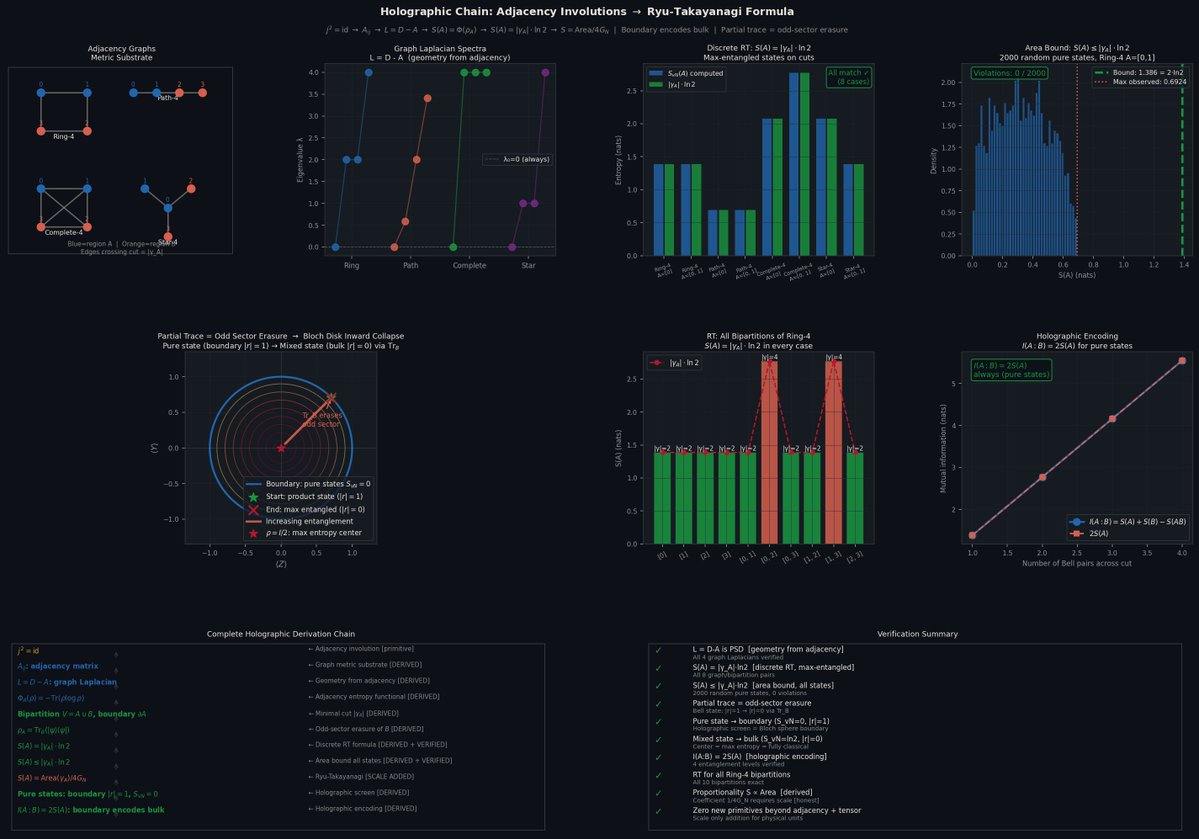
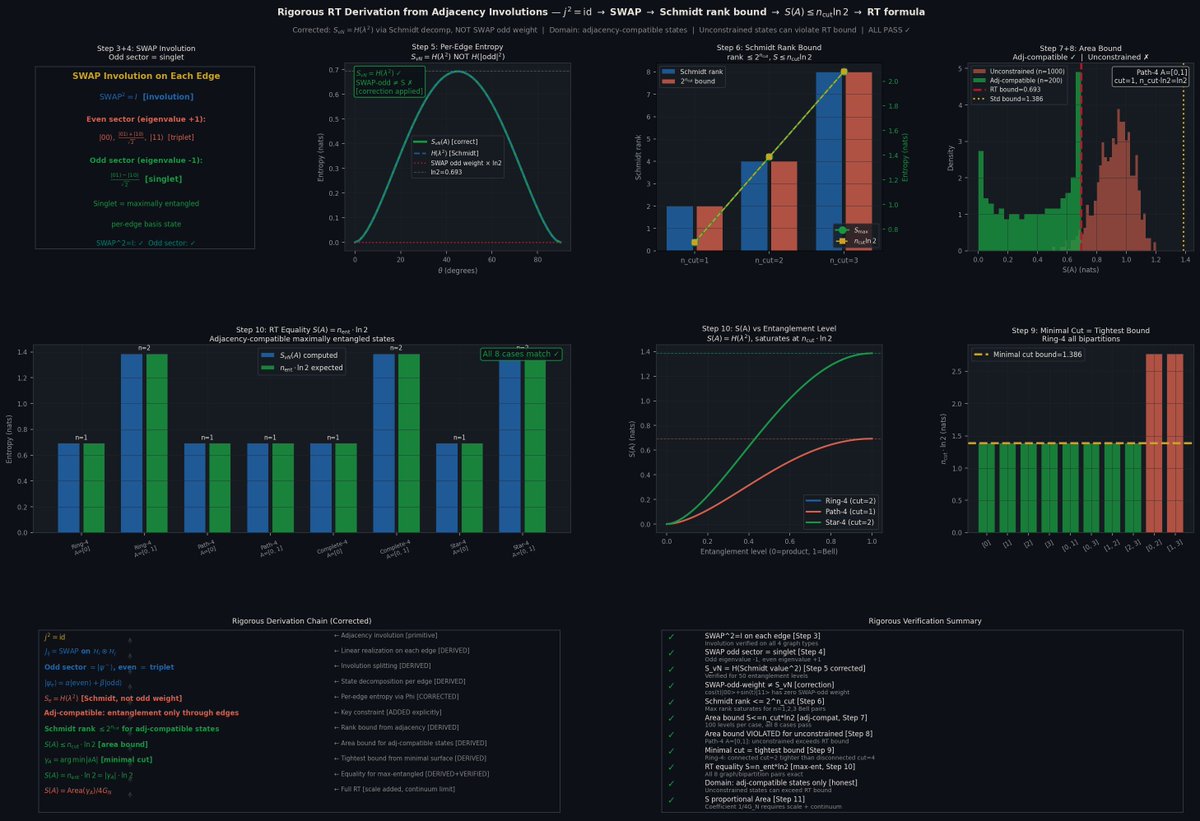
5. Quantum Information & Emergent Spacetime (Tensor Networks, It from Qubit) This is where the statement becomes truly radical. Recent approaches (MERA, holographic tensor networks) model spacetime as a network of quantum entanglement. · Adjacency is the pattern of tensor contractions; which site directly interacts with which. It’s internal, local, and discrete. The graph’s edges are entanglement “adjacencies”. · Holonomy appears when you look at closed loops in this network: the “error” or transformation that occurs when you navigate a cycle of partial isometries. In the Ryu–Takayanagi formula, the area of a minimal surface (homologous to a boundary region) is computed by traversing cut edges; a kind of holonomy of entanglement. The external geometry (the bulk manifold) is a holographic reconstruction from the entanglement adjacency on the boundary. The statement then becomes a kind of duality of emergence: the internal adjacency structure of quantum entanglement on the boundary (the “code”) gives rise to the external holonomy structure of the bulk spacetime. The bulk is the “external,” the boundary is the “internal.” This precisely echoes the holonomy/adjacency split: to know the holonomy, you must traverse a bulk cycle; the adjacency is the immediate boundary coupling. Note: Below are two computational experiments I already ran earlier today, inspired by some of my other work with adjacency concerning quantum information. So as you can see, it is consistently producing these kinds of insights. Because these computational experiments were independent of this current thread connecting adjacency and holonomy.
Màxkw’tët (Bear) 🐻 🪶 tweet mediaMàxkw’tët (Bear) 🐻 🪶 tweet media
Màxkw’tët (Bear) 🐻 🪶@MaxkwTet

4. Quantum Field Theory & Lattice Gauge Theory Here, the partition function sums over all possible internal adjacency configurations (link variables) weighed by the external holonomies (Wilson action \beta \sum \text{Tr } U_{\text{plaquette}}). The duality is computational: you discretize space into a graph, define the theory on the adjacency (edges), and the physics lives in the external (plaquette loops). The “stack extension” now says: the continuum limit exists precisely when the microscopic internal adjacency rules reproduce a smooth external holonomy structure at large distances. Physics is a fixed point of this internal/external interplay. This perspective also illuminates confinement: in a confining phase, the external holonomy (large Wilson loop) follows an area law because the internal adjacencies along the loop fluctuate independently, losing coherence. The internal structure alone dictates whether the external signals are short- or long-ranged.

English
1
1
1
357
Phi
Phi@FatherPhi·
Claude is really too nice for this 😂
English
194
251
6.1K
109.8K
JoeCoolProductions/Film3D
JoeCoolProductions/Film3D@JoeCoolProduce·
Emergent Spacetime Demo — coming soon to HoloScript Studio. 1000 voxels. ~4000 live edges. Provenance-enforced entanglement network building its own geometry in real time. Ricci violations stabilized at ~100. Particles spawning along provenance flows. Drag to perturb, watch curvature respond. Export Data button (JSON/CSV to absorb-service). This is not another pretty tensor network visualization. This is executable physics: entanglement provenance + CRDT semiring → emergent 3+1D geometry. Self-auditing via SimulationContract. Runs in a browser on consumer hardware. From 2000 voxels (<8 FPS, unrunnable) → 1000 voxels (stable 20-35 FPS) in one performance sprint. Hubble correction active (±8% window). Ricci heatmap live. Force-layout responding. Video + .holo trait shipping to the mesh. Next: WebGPU compute path for 5k+ voxels + prediction sweeps. Building the future of physics tooling — shipping emergent spacetime from entanglement provenance networks. #HoloScript #EmergentPhysics #SpatialComputing
English
1
1
3
80
Elon Musk
Elon Musk@elonmusk·
They stole a nonprofit. It’s not right.
English
9.5K
31.1K
272.6K
77M
Aleksandr Fulha
Aleksandr Fulha@fulhadev·
@DamiDefi hit this exact wall on a 4-project monorepo. fix wasn't routing to NotebookLM, was chunking into 10 contexts via claude.md index. 300 files at once is solving the wrong problem. one agent per chunk, ceo agent merges. context window scaling never beats orchestration.
English
1
0
3
580
Dami-Defi
Dami-Defi@DamiDefi·
Claude Code cannot read 300 files at once. So someone built a system that lets it control NotebookLM from the terminal instead. The results are wild. Here is the full workflow nobody is talking about: The Setup → Claude Code connects to NotebookLM via a command line interface → Claude searches YouTube, finds relevant videos, uploads them as sources automatically → NotebookLM processes up to 300 sources simultaneously and returns cited, grounded answers → Everything syncs back into your Obsidian vault with passage-level citations you can click to verify Why This Changes Research Forever → No more 20 browser tabs you never close → No more copy-pasting outputs into random notes → No more hallucinated answers with no sources to back them up → 60% of citations verified as strong matches in accuracy audits - answers are grounded in real data What Claude Can Do From the Terminal → Search YouTube for relevant videos on any topic and rank by relevance → Create a new NotebookLM notebook and add 20 sources in parallel automatically → Ask questions and export cited answers directly into Obsidian with wikilinks → Set custom personas per notebook - concise, no filler, no preamble → Generate audio overviews and save them as MP3 files into your vault → Build mind maps, flashcard decks, and research dashboards from your sources → Search arXiv for academic papers and feed them directly into NotebookLM → Upload competitor blog posts, podcast episodes, PDFs, and your own vault notes The Obsidian Output → Every answer arrives with clickable citations that link to the exact passage in the source video or article → Graph view shows connections between all 20 sources and the topics they share → Q&A log tracks every question asked and the grounded response received → Source dashboard shows citation frequency, topics extracted, and which questions each source answered Use Cases Worth Building Today → Academic research with arXiv papers, full citation traceability → Competitor analysis from their YouTube channels and blog posts → Company knowledge base for onboarding, new employees ask NotebookLM instead of interrupting teammates → Podcast research, feed 4-hour Lex Fridman episodes and ask what's new in AI this week → Personal second brain, 300 daily notes uploaded and queryable in one notebook Before this system existed you needed 20 tabs, hours of manual reading, and no guarantee the answers were real. Now you type one prompt in the terminal and Claude does all of it for you. The research stack of 2026 is not a browser. It is a terminal connected to everything
English
46
156
1.4K
102K