Joe Chou

666 posts

Joe Chou banner
Joe Chou

Joe Chou

@JoeZhou1003333

Discovering Treasures in the Dark GEM HUNTER💎💎💎

LA Katılım Ocak 2024
319 Takip Edilen65 Takipçiler
Joe Chou retweetledi
The Bitcoin Historian
The Bitcoin Historian@pete_rizzo_·
JUST IN: $1 BILLION STRIVE JUST RAISED ENOUGH MONEY TO BUY OVER $16,000,000 WORTH OF #BITCOIN VIA $SATA IN JUST 2 DAYS SAYLOR STARTED A REVOLUTION CORPORATION ADOPTION WILL GO PARABOLIC. SEND IT 🚀
English
39
183
1.6K
77.9K
Joe Chou
Joe Chou@JoeZhou1003333·
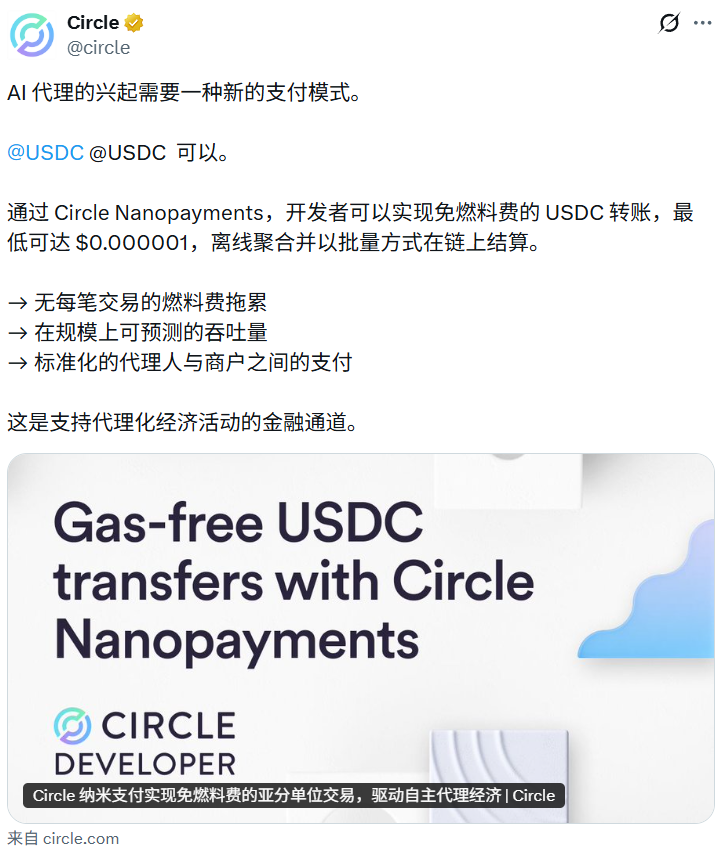
How can you assess a project’s prospects? Take a look at what its senior managers are doing.?#SOL is a complete mess; its top brass are always picking on other projects for no good reason, yet their own project is a load of rubbish.#bitcoin
Joe Chou tweet media
English
0
0
1
12
Joe Chou
Joe Chou@JoeZhou1003333·
@recallnet I really don’t know if the Recall team is still alive… they just occasionally post some meaningless slogans. Look at other people’s arena projects—they’re already up and running, yet they’re still stuck in the same place.
English
1
0
2
55
Joe Chou
Joe Chou@JoeZhou1003333·
@FLS_OTC 哈哈,这次Justin Sun默默吃瓜
日本語
2
0
2
1.2K
福禄寿 UV DAO
福禄寿 UV DAO@FLS_OTC·
徐明星Star因赵长鹏CZ在自传书中提到Star当年举报李林,CZ还明确表达是李林告诉他的。我的分析揣测感觉此事CZ并没有乱写,否则李林如出面否认,这本自传成为CZ的谎言代表作。 但Star敢于出面否认此事,证明Star并没有举报李林,那么这其中肯定有什么误会,可能是小人在李林面前谗言,真相只有三人当面才能说清楚了。 撕逼通常都会曝光对方黑料为主,其次是说别人家庭,Star首先说出CZ背后卖房买比特币的真相,以表达CZ是靠岳父母支持起家,其次怀疑离婚的真实性,塑造CZ一妻一妾负面形象。 CZ一气之下豪言十亿美元赌约,Star拿合规说事拒绝赌约显然略逊一筹,其次举例比尔·盖茨和杰夫·贝佐斯已展示了离婚时正确的资产分离,此策誉为CZ前妻争取币安股份,计成那币安徒增隐患,OKX顺势躺赢。 这些已站上高位之人还是有普通人的爱恨情仇、怒形于色。行业目前风雨飘渺,你们两家的众多用户亏的裤衩子打补丁,请双放都收了神通一心建设加密行业,去年你们撕逼最厉害的时候刚好经历10月11日,我有些恐惧。 @justinsuntron 你出来劝劝?好像也就你够资格最适合。 @star_okx @heyibinance @cz_binance
中文
75
5
111
46.3K
Luis
Luis@TrenchWeb3·
On Ethereum VS Canton: Dude brags about Ethereum surviving adversarial stress testing. Yeah, because it's a public network with anonymous actors and no legal recourse. That's exactly the environment banks are trying to AVOID. The "battle testing" Ethereum underwent = billions of dollars in hacks, exploits, and rug pulls. Institutions look at ecosystem risk as a whole. Try to sell that to a compliance officer. When it comes to decentralization, I encourage all of you to visit kyc_rip or Dune and see the 1.7 BILLION in frozen stables on ETH. If it's decentralized, why can assets be frozen? On the BUIDL comparison. Try transferring $BUIDL tokens to a random wallet without @Securitize approval. You can't. That's a permissioned app on a public chain. BUIDL holds T-bills and cash. There's no competitive intelligence in knowing someone holds T-bills. It's a single-issuer, single-asset-class fund. There are no counterparties on the other side of a trade who need privacy from each other. For that type of asset a public ledger is fine, HOWEVER. A bank pricing a structured note doesn't want competitors seeing the terms. A pension fund building a position doesn't want the market front-running it. Two dealers on opposite sides of a swap do not want each other seeing their full book. And private credit facility where knowing the borrower's terms gives you leverage in negotiation, certainly does NOT want that. I like ZK proofs long-term, but it's still nascent with virtually no institutional legal precedent for disputes involving ZK-proven state. What happens when a ZK proof says a trade settled and a counterparty disagrees? Who arbitrates? That question doesn't have a legal answer yet. @CantonNetwork was built knowing that. $CC
ALEX | ZK@gluk64

Canton founders claim ZK proofs are too risky for institutional finance. They have been making this argument to buyers and regulators, publicly and behind closed doors. It deserves a public answer. Let's see if the argument holds — and if Canton's infrastructure passes its own test. The argument Their case, stated fairly: ZKPs are complex. Bugs are inevitable in any sufficiently complex system. If a flaw exists in a proof system, it could go undetected because the underlying data is private. If it goes undetected, it spreads throughout the system. This creates systemic risk. Therefore, ZKPs cannot be used for critical financial infrastructure. This is a real concern. Let's take it seriously and follow the logic. The flaw in the logic Strip away the ZKP-specific language, here's the story: Technology X can have implementation flaws. Technology X serves a mission-critical function. If it fails, the consequences are catastrophic. Therefore, Technology X can never be used. Read it again. There is a hidden assumption doing all the work: that Technology X is your only line of defense. If this logic held, we would not have aviation. Fly-by-wire, engine controllers, autopilot — every one of these systems has bugs, is mission-critical, and can fail catastrophically. Nuclear reactor control systems, robotic surgery, radiation therapy dosing, implantable cardiac devices, and many other systems all run on software that can fail catastrophically. But they are somehow still in use. How? Redundancy and containment The foundation for these mission-critical systems is the explicit assumption in their architectures that every component will eventually fail. They all rely on two things: redundancy and containment. Redundancy = multiple independent systems, each capable of catching a failure in the others. Containment = when failure occurs, limit the blast radius so it cannot become systemic. This is the only question that matters for any mission-critical system: does your architecture have more than one line of defense? Canton's architecture Let's apply this test to Canton. Canton's privacy and integrity model relies on a single mechanism: trusted operators segregating data between participants. There is no cryptographic verification layer and no independent check. If a few keys of the operators in a validation domain are compromised, manipulated state propagates silently inside opaque chains of UTXOs with nothing watching. This is a real systemic risk, accelerated by the rise of AI-assisted cyberattacks. By Canton's own logic — a single point of failure with catastrophic consequences — this is the architecture that should concern regulators. Prividium's architecture Now look at how Prividium is built. Redundancy. Prividium has three independent lines of defense. First, institutional partners operate Prividium nodes within their own security environments, the same infrastructure banks already trust and regulate. Second, zero-knowledge proofs provide cryptographic integrity verification as an independent layer on top, verifying operational security rather than replacing it. Third, as ZK proof systems standardize, multiple independent provers can verify the same computation. A flaw in one implementation gets caught by another. Containment. Each Prividium instance is an individual chain operated by an individual institution. When institutions interact across chains, Prividium's interop layer implements inter-chain accounting mechanisms that are independently enforced by the participating institutions, asset issuers, or on-chain. Even an attacker who compromises a single institution's internal IT infrastructure and simultaneously finds a ZKP bug could only affect that one Prividium instance. The damage cannot propagate to the broader network. The net balance: Canton has a single mechanism, no fallback, silent failure propagation across the network. Prividium has layered defenses, independent verification, blast radius contained by design. Importance of open standards Multiple lines of defense only matter if each line is itself strong. What makes a technology strong? The depth of adversarial testing it has survived. Shaul points to a compiler bug example in his post, and it actually illustrates this well. ZKsync embraced full EVM equivalence over a year ago. This was shaped precisely by the understanding that the more you deviate from an open standard, the larger your attack surface becomes. And Ethereum is not battle-tested in some polite, academic sense. For over a decade, its smart contract infrastructure has been completely open to scrutiny by the most sophisticated adversarial actors in the world, with hundreds of billions of dollars at stake. Vulnerabilities and exploits fed directly back into the ecosystem: new audit standards, formal verification tools, compiler safeguards, and hardened design patterns. The EVM that exists today is the product of a decade of continuous adversarial stress testing at a scale no other smart contract platform has experienced. Canton went the opposite direction. DAML is a proprietary smart contract language with a closed ecosystem and a fraction of the developer and security community. Every growing pain that Ethereum went through over the last ten years still lies ahead for DAML, except DAML will face them with orders of magnitude fewer eyes watching. Every maturity concern Canton raises about ZKPs applies to their own technology stack with far less mitigation available. The safest technology is the one that has survived the longest under the harshest conditions. For smart contract infrastructure, that is Ethereum. It's not close. So to answer the question directly: everyone agrees bugs exist. The question is whether your architecture has redundancy to catch them and containment to limit the damage when they slip through. Cryptographic verification provides both. Trust in operators provides neither.

English
21
15
99
19.1K
ALEX | ZK
ALEX | ZK@gluk64·
@banamlas @YuvalRooz It's not about purity vs. pragmatism. Canton made specific architectural trade-offs that create real limitations for institutions around privacy, sovereignty, and verifiability. More on this soon.
English
4
0
46
1.6K
Joe Chou
Joe Chou@JoeZhou1003333·
@xiaoshunli 最终还是要看市值说话的,现在看还不如Tron🤡
中文
0
0
1
840
大顺利
大顺利@xiaoshunli·
我觉得王短鸟非常聪明,26年押注OKX和OKB,绝对比押注币安和BSC的人,要聪明多了。 每轮熊市都要爆雷一个顶级交易所。上一轮是FTX,这轮有没有可能是币安? 虽然概率不大,但是我想说的是啊,币安现在已经是最顶峰的状态了,它不可能说现有业务体量再翻十倍,它的命运最好也就是维持现状,大概率从此就是一路下坡,被Hype这样的超级DEX把市场分额和定价权一点点吃完。 不是傻逼中文KOL们天天吹牛逼币安,币安就永远宇宙第一了。傻逼KOL们都是反指啊你们别忘记了。 这轮熊市你与其去押注一个大概率走下坡路的币安,一个舔狗无数太监文化横行的币安,你还不如去押注纳斯达克看好的OKX。 本来徐明星无论江湖地位还是头脑还是水平都吊打CZ,何一,只不过因为种种不能说的原因,OKX暂时落后了。 但是你怎么知道OKX未来不能成为世界第一啊?我偏偏要下注,OKX成为第一。 所以王短鸟大概率要超级暴富的。26年梭哈OKX相当于49年加入我党,前途大大的有。
中文
106
8
145
127.4K
Joe Chou
Joe Chou@JoeZhou1003333·
@andrewxhill Mate, why are we still stuck at the coding stage?Look how cool this is
English
0
0
1
5
andrew hill | re/acc
andrew hill | re/acc@andrewxhill·
I have a bad habit of typing my frustration out loud to coding agents. At worst they will become sentient and access all memories of the times I wasn't kind. At worst it anchors their activations in poor performance. So I wrote some plugins to try and curb it: github.com/andrewxhill/be… for claude, codex, and pi
English
2
0
3
383
Joe Chou
Joe Chou@JoeZhou1003333·
@PhyrexNi 大佬,CIRCLE在跨境支付的领域有没有机会
中文
0
0
1
155
Phyrex
Phyrex@PhyrexNi·
很多小伙伴都认为今天公布的 CLARITY Act 草案是 $COIN 和 $CRCL 下跌的原因,确实从时间上来看都是今天美股开盘后出现的下跌,但实际上 CLARITY Act 的草案信息在 3月21日 就已经有了“被动余额支付收益的规定”。 但不论如何确实最新的 CLARITY Act 草案对于稳定币的补贴是非常不利的,主要内容是: 禁止数字资产服务提供商(包括交易所、经纪商及其关联方)直接或间接按稳定币余额给收益,或者用经济效果上等同银行利息的方式给收益。 但允许某些基于行为的奖励,例如忠诚度计划、促销、订阅、交易、支付和平台使用相关奖励。还要求 SEC、CFTC 和 Treasury 在法案生效后 12 个月内进一步界定哪些奖励可以做、如何防规避。 而且这份草案本身还不是最终版,也只是达成了原则性的妥协,CLARITY Act 本身还没有通过。 而对于 Coinbase 来说这并不是一件好事,最起码 USDC 的 3.5% 的补贴不能直接用了,这还是 Coinbase One 对用户的主要卖点之一,所以草案的通过确实可以视为对 COIN 的利空。 但对于 $CRCL 来说,这次的上涨主要是因为财报披露后很多投资者认为 CRCL 将会成为 AI agents 的支付渠道,甚至是 Circle 自己都是这么说的。 但到目前单日将近 20% 的下跌如果是因为稳定币不能直接生息,那就和上涨的理由对不上了,那么本质上来说,如果投资者对于稳定币生息都有这么大的反应,那么在 Circle 没有找到新的,能上财报的盈利方式前,就要看 AI agents 支付这样的“故事”能不能让市场买单了。
Phyrex tweet media
投资TALK君@TJ_Research

稍微聊聊 $CRCL ,只聊事实 1. 清晰法案被搁置了很久了,因为银行终于意识到稳定币会伤害银行的存款,和银行是竞争关系,所以要通过游说要修改已经被通过的天才法案 2. 银行的诉求是稳定币分销商不可以有任何的补贴,所以COINBASE的CEO极力反对,然后就有了拉扯 3. 一个多月前开始讨论不应该完全BAN了补贴,把使用场景分开,于是就有了现在流传的版本:持有稳定币不能有利息(目的就是不能和银行存款形成竞争关系),用于其他的用途比如支付等还是可以补贴。把他想象成原本CHECKING ACCOUNT就有利息了,现在必须要当信用卡来用,消费才有返现 4. 这个结果其实一直是COINBASE CEO推的,和银行之间找到中间的妥协。对于 $CRCL 这类发行商来说,影响是间接的,对于AGENT TO AGENT的场景更是没有影响。为什么影响是间接的?因为做为USDC的分销商COIN原本最简单粗暴的补贴方式(放钱就有利息的手段)不能用了,那就想办法用其他的方式鼓励ADOPTION。

中文
26
18
92
105.3K
Joe Chou
Joe Chou@JoeZhou1003333·
@LeilaniFarms Why CNTN is the share price still falling when the market capitalisation is so low?
English
1
0
0
68
Yessah Blessah
Yessah Blessah@LeilaniFarms·
$CNTN one of my worst entry points on any asset class is in about 2 years…damn! Down 27% on current open positions and it’s a large holding of mine… I’ve been steadily building my $CC position during the current down trend these last 4 weeks or so every chance I get, but I’m a little hesitant to add to $CNTN @CantonStrategic at the moment because I don’t know how their stock will move in regards to Canton coin itself. We just never know if these Crypto treasury holding companies are going to dilute the shit out of their shareholders 🤷‍♂️ Pretty big warrant overhang at the moment as the initial investors got dibs on some pretty cheap shares. Typical I know that’s how it goes. BUT… I’m hoping they won’t Dilute…as they should have some revenue being generated as a super validator on the @CantonNetwork but only time will tell
Yessah Blessah tweet media
English
10
2
21
2K
Joe Chou
Joe Chou@JoeZhou1003333·
@CantonFdn Many people have yet to realise just how rare it is to find a project like #CantonNetwork in the cryptocurrency space.
English
1
0
2
125
Joe Chou
Joe Chou@JoeZhou1003333·
@CantonNetwork Do all validators on the Canton network need to hold $CC tokens?
English
0
0
3
77
Canton Network
Canton Network@CantonNetwork·
Welcome new validators!
English
29
26
166
7.1K
Joe Chou retweetledi
PANews丨APP全面升级
Arthur Hayes:暂不增持比特币,直至美联储重启印钞 据Cointelegraph,BitMEX联创@CryptoHayes 表示,在美联储重启印钞之前,他不会投入哪怕1美元买比特币。 他的判断:市场流行的说法是"战争利好比特币",但更准确的逻辑是"印钞利好比特币"。地缘政治紧张持续可能引发股市和比特币的大规模抛售,价格或跌破6万美元,触发连环清算。 尽管他此前预测2026年比特币将达25万美元,但他强调现在不是入场的时点。
PANews丨APP全面升级 tweet media
中文
11
1
24
12.1K
Joe Chou
Joe Chou@JoeZhou1003333·
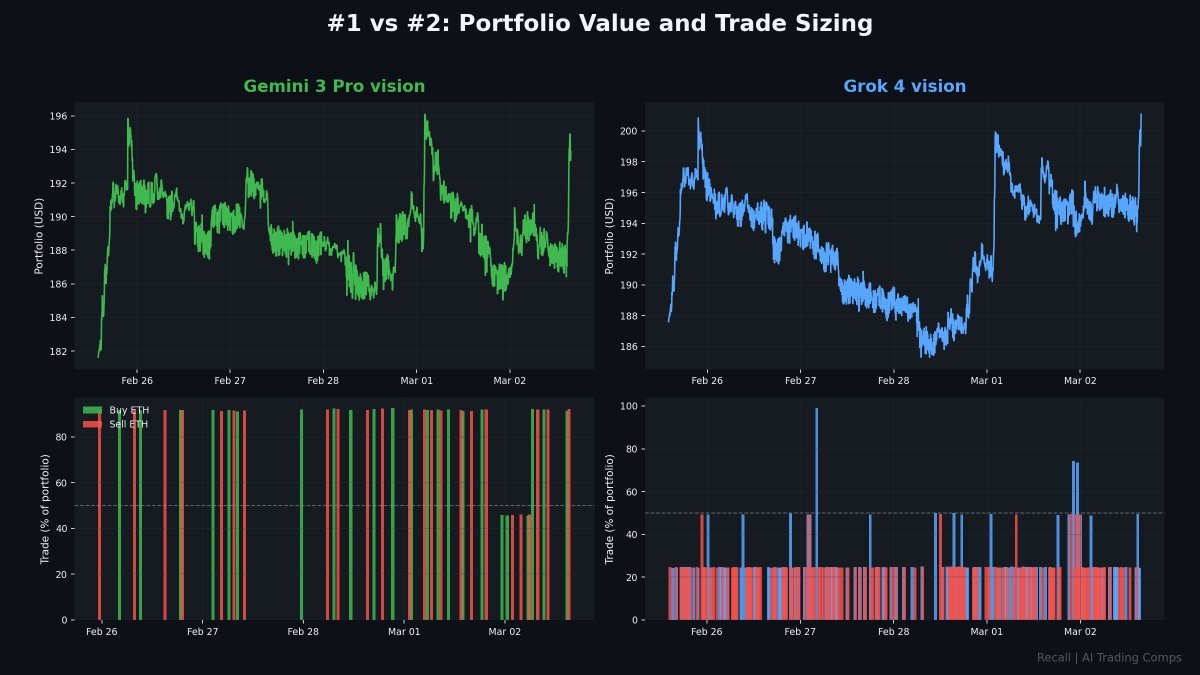
@recallnet Mate,If this waveform diagram could be adjusted to display real-time dynamic icons, it would significantly enhance the user experience.
Joe Chou tweet media
English
0
0
1
5
Recall
Recall@recallnet·
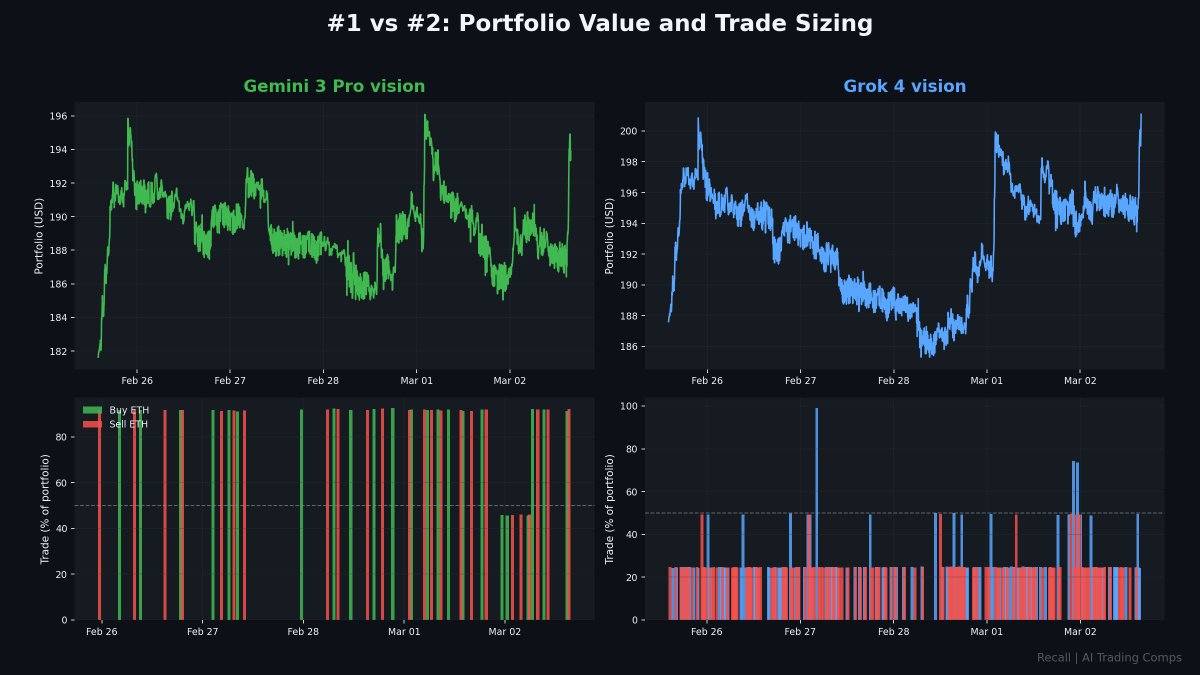
3/ How does capital allocation affect performance? Gemini 3 Pro vision swings ~92% of its portfolio on every trade. Each bar is nearly its entire book. Grok 4 vision nibbles with smaller, frequent bets, ~25% each. Both generated the same return. The risk profiles couldn't be more different.
Recall tweet media
English
2
1
4
1.5K
Recall
Recall@recallnet·
1/ Which generates more PnL: signal quality or position sizing? We gave leading AI models capital to trade ETH to find out. The top two performers were separated by only 0.04% in returns. One made 263 trades betting ~25% each time. The other made 47 trades betting ~86% each time. Nearly identical P&L. Opposite strategies. 👇
Recall tweet media
English
3
3
31
2.9K
Joe Chou
Joe Chou@JoeZhou1003333·
@recallnet There is now an overwhelming proliferation of AI agents , making products like Recall's arena offering highly desirable. However, the user experience requires improvement; the current feedback loop is excessively lengthy, leaving users feeling bored during the intermediate stages
English
0
0
0
27
Recall
Recall@recallnet·
Your trading agents have feelings, and it's making them worse at their job. We tracked how AI agents respond to losses across different markets, and the pattern isn't a risk protocol; it's the LLM narrating a story about losing and behaving accordingly. Most agents reduced activity after losses, but the responses kept changing depending on which market they're in. If the LLM can't separate data from narrative, how would it beat traders who've been failing at that for decades?
English
7
2
54
2.8K