John Cumbers

7.7K posts

John Cumbers banner
John Cumbers

John Cumbers

@johncumbers

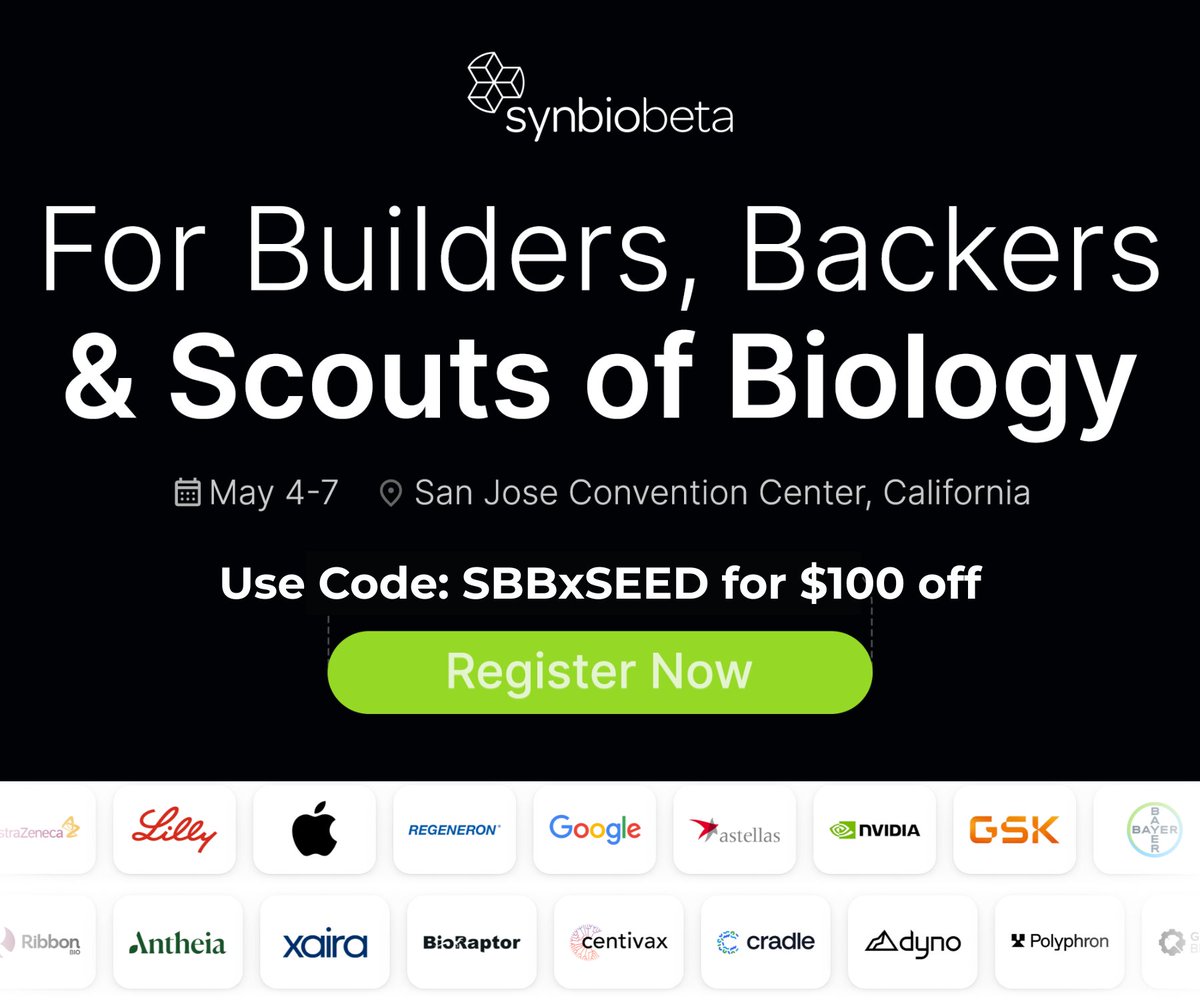
Join @SynBioBeta - May 4-7, 2026 at the San Jose Convention Center: https://t.co/UDRKKEOlJk and read my weekly newsletter: https://t.co/7Nf6wfiH9m

San Francisco Bay Area Katılım Nisan 2007
2K Takip Edilen17.7K Takipçiler
John Cumbers
John Cumbers@johncumbers·
BioSynBeta is the world's largest AI and synthetic biology conference, where industry leaders, investors and founders congregate to discuss the future of AI and engineering biology. 4 days, 200+ speakers. You won't want to miss it: syntheticbiologysummit.com/?utm_source=Tw…
English
1
3
1
149
John Cumbers
John Cumbers@johncumbers·
Sid Sijbrandij just said developers won't need a monitor, a desk or an IDE to ship production code very soon. He co-founded GitLab, a platform used by 30 million developers, and is now building Kilo, an AI coding tool. His prediction for where development is headed: "I think collaborating with agents is going to look a little bit less like this big monitor with an IDE on it and more like Slack on your mobile phone." Kilo is shipping a mobile app and a Slack integration so developers can kick off agents from anywhere. • Airport • Subway • Taxi/Uber Everywhere. Type what you want built, fire off the agent, and pick up the finished output when you're back at your machine. His biggest frustration right now isn't code quality or model selection. It's the lag between an agent finishing work and him knowing about it. He wants a ping the moment it's done so he can review and redirect without wasting a minute. When your primary complaint is "I wish my AI team would notify me faster," you've already crossed from programmer to orchestrator. That's the shift Sijbrandij is betting his next company on. PS. Sid Sijbrandij (@sytses), co-founder of GitLab (@gitlab) and Kilo Code (@kilocode), is doing a keynote on May 7th at SynBioBeta this year. If AI-driven development, open source, or the future of how software gets built is your world, the founders and investors leading that shift will be in the room. Link for tickets below.
English
6
17
27
4.1K
John Cumbers
John Cumbers@johncumbers·
BioSynBeta is the world's largest synthetic biology conference, where industry leaders, investors and scientists congregate to discuss the future of engineering biology. 4 days, 200+ speakers. You won't want to miss it: syntheticbiologysummit.com/tickets?utm_so…
English
0
1
5
527
John Cumbers
John Cumbers@johncumbers·
David Sinclair just said something that changes how you should think about aging. "Your cells remember how to be young. We just need to remind them." Sinclair's lab at Harvard has spent 25 years proving that aging isn't permanent damage. It's just "corrupted software". Since DNA doesn't change as you age, the "instructions" are still there. But the program that reads those instructions loses its function over time. Think of it like a scratched CD. The music is still on the disc. The player just can't read it properly anymore. Sinclair's team found that every old cell in your body still carries a backup copy of its original young state. A memory of youth that never goes away. And they've figured out how to access it. Using epigenetic reprogramming, they've reset old cells back to a young state. Not slightly. By 50 to 90%. They've done it in mice. They've done it in monkeys. Human trials begin in January. The solution to aging was never something we needed to build from scratch. It was inside your cells the entire time. Waiting to be reminded. PS. David Sinclair (@davidasinclair) is speaking on May 6th at SynBioBeta this year - discussing the science of slowing and reversing aging. If longevity is the world you're in, the investors, partners, and scientists who matter in this space will be in the room. Link for tickets below.
John Cumbers@johncumbers

David Sinclair is on a mission to turn age reversal into a $100 pill. Right now, his gene therapy costs roughly $10 million to manufacture and requires a direct injection into whichever organ you're targeting. That's not going to work for 8 billion people. So Sinclair's team made a breakthrough. They found that the three age-reversal genes aren't the only path to resetting cells. They discovered CHEMICALS that do the same thing. In mice, they can now give an animal a liquid - not genes, not injections, a drink - and rejuvenate tissues in 4 weeks. Sinclair says it's now normal for his students to casually report: "We just rejuvenated the ear. We just rejuvenated the skin. We just cured ALS (motoneuron disease) in these animals." He calls his lab "Willy Wonka's chocolate factory" because the discoveries blow him away every week. But he wants one molecule that does everything. So they used AI to screen 8 BILLION candidates. They're now down to three molecules that work. And they're using AI to try to combine all three into one. The gene therapy could cost over $100,000 per treatment. Sinclair's goal: "What if it could be $100 instead? That's what I'm working for. I want to democratize this technology so anyone even in Kenya can take these medicines." They should know within a year or two if the molecules work in mice. The gene therapy is the proof of concept. The pill is the endgame. David Sinclair is speaking on May 6th at SynBioBeta this year - discussing the science of slowing and reversing aging. If longevity is the world you're in, the investors, partners, and scientists who matter in this space will be in the room. Link for tickets below. — @davidasinclair

English
7
57
355
21.1K
John Cumbers
John Cumbers@johncumbers·
Great conversation with Jamie Bacher about the one challenge synbio must solve: time to market. Jamie argues that scaling biotech requires more than great strains—process dev, downstream, analytics, and new financing models all matter. Excited to have him at #SynBioBeta2026. Read the full article on the SynBioBeta website. synbiobeta.com/read/jamie-bac…
English
1
2
1
287
John Cumbers
John Cumbers@johncumbers·
BioSynBeta is the world's largest synthetic biology conference, where industry leaders, investors and scientists congregate to discuss the future of engineering biology. 4 days, 200+ speakers. You won't want to miss it: syntheticbiologysummit.com/tickets?utm_so…
English
0
2
9
1.1K
John Cumbers
John Cumbers@johncumbers·
David Sinclair's lab just discovered that the same technology that reverses aging also kills cancer cells. His team has been using epigenetic reprogramming to reset old cells back to a younger state. It works. Old cells become young again. But when they tried it on cancer cells, something unexpected happened. The cancer cells didn't get younger. They killed themselves. Sinclair (@davidasinclair) explained why. Cancer cells survive by ignoring the DNA damage inside them. They're filled with it. But they've shut down the part of the cell that would normally detect it and trigger self-destruction. Epigenetic reprogramming wakes that system back up. Sinclair put it this way: the cancer cell wakes up from its zombie-like state, looks at its own chromosomes, realizes they're destroyed, and says "I better kill myself." And it does. A normal cell gets reprogrammed and becomes young again. A cancer cell gets reprogrammed and destroys itself. Same technology. Two opposite outcomes. Both exactly what you'd want. His team has shown this works across many types of cancer. Side note: David Sinclair is speaking on May 6th at SynBioBeta this year - discussing the science of slowing and reversing aging. If longevity is the world you're in, the investors, partners, and scientists who matter in this space will be in the room. Link for tickets below.
John Cumbers@johncumbers

David Sinclair is on a mission to turn age reversal into a $100 pill. Right now, his gene therapy costs roughly $10 million to manufacture and requires a direct injection into whichever organ you're targeting. That's not going to work for 8 billion people. So Sinclair's team made a breakthrough. They found that the three age-reversal genes aren't the only path to resetting cells. They discovered CHEMICALS that do the same thing. In mice, they can now give an animal a liquid - not genes, not injections, a drink - and rejuvenate tissues in 4 weeks. Sinclair says it's now normal for his students to casually report: "We just rejuvenated the ear. We just rejuvenated the skin. We just cured ALS (motoneuron disease) in these animals." He calls his lab "Willy Wonka's chocolate factory" because the discoveries blow him away every week. But he wants one molecule that does everything. So they used AI to screen 8 BILLION candidates. They're now down to three molecules that work. And they're using AI to try to combine all three into one. The gene therapy could cost over $100,000 per treatment. Sinclair's goal: "What if it could be $100 instead? That's what I'm working for. I want to democratize this technology so anyone even in Kenya can take these medicines." They should know within a year or two if the molecules work in mice. The gene therapy is the proof of concept. The pill is the endgame. David Sinclair is speaking on May 6th at SynBioBeta this year - discussing the science of slowing and reversing aging. If longevity is the world you're in, the investors, partners, and scientists who matter in this space will be in the room. Link for tickets below. — @davidasinclair
English
42
253
1.6K
92.5K
John Cumbers
John Cumbers@johncumbers·
Most of synthetic biology has been completely transformed in the last decade. DNA manufacturing? Still running on cloning workflows from the 1970s. That's the bottleneck Jodi Barrientos, CEO of @ribbonbiolabs, is tackling head-on — and she's on the @SynBioBeta Main Stage on May 5th at 9:10 AM. Her talk: Built without Bacteria: Rethinking DNA for the Next Wave of Biotechnology. If you're building in mRNA, gene editing, protein engineering, or advanced vaccines — this is directly relevant to your work. Cell-free DNA approaches are removing the constraints that are slowing your team down right now. #synbiobeta2026
John Cumbers tweet media
English
1
1
1
394
John Cumbers
John Cumbers@johncumbers·
What if the biggest unlock in biotech is simply access? Douglas Crawford built MBC BioLabs to lower barriers and enable 500+ startups. Excited to have him at SynBioBeta 2026. Visit the @SynBioBeta website to read the full article. synbiobeta.com/read/lowering-…
English
0
3
1
266
John Cumbers
John Cumbers@johncumbers·
BioSynBeta is the world's largest synthetic biology conference, where biotech industry leaders, investors and scientists congregate to discuss the future of engineering biology. 4 days, 200+ speakers. You won't want to miss it: syntheticbiologysummit.com/tickets?utm_so…
English
0
3
7
594
John Cumbers
John Cumbers@johncumbers·
David Sinclair's lab just reversed infertility in mice that had been infertile for 6 months. They took 16-month-old mice, the equivalent of a woman well past menopause, and made them produce offspring again. The belief has always been that mammals run out of eggs and that's final. Sinclair's lab proved otherwise. They did it using NMN, a molecule that boosts energy levels in your cells. And it worked. Now his team is working on applying something even more powerful - epigenetic reprogramming - to women's fertility Sinclair was blunt about the problem. After 30, fertility drops dramatically. By the time many women are established in their careers, their window is closing or closed. He called it unfair. Men can have children at 50 without thinking twice. Women face a biological deadline that no one in science has seriously tried to move. His lab is now trying to move it. If this works in humans, it doesn't just extend fertility. It gives women back the choice that biology took away. — David Sinclair (@davidasinclair) Side note: David Sinclair is speaking on May 6th at SynBioBeta this year - discussing the science of slowing and reversing aging. If health and longevity is the world you're in, the investors, partners, and scientists important in this space will be in the room. Link for tickets below.
John Cumbers@johncumbers

A Harvard professor who's studied aging for 30 years says one of the most powerful longevity tools on Earth is free. Fasting. David Sinclair explained what happens at the cellular level when you stop eating food for long periods of time: Your body has proteins called sirtuins. They're the conductors of your cellular orchestra - telling each gene when to turn on and off, keeping every cell's identity intact. But sirtuins need fuel called NAD to function. By age 50, your NAD levels drop by HALF. Your conductors are running on empty. Your cells start losing their identity. Fasting raises NAD back up. It reactivates the sirtuins and preserves the epigenome. Sinclair mentions it's only useful if you're already meeting nutrient and micronutrient intake as well. He himself skips breakfast daily and tries to go until late afternoon before eating. Once a month, he fasts for 3 full days because deep cellular recycling - called chaperone-mediated autophagy - only kicks in after about 2 and a half to 3 days. He called three meals a day "craziness" and said the idea that breakfast is the most important meal of the day was "marketing from the early 20th century" by cereal companies. Fasting is just one of the strategies he uses for optimal health. — @davidasinclair

English
22
87
469
54K
Micha Breakstone 🇮🇱🎗️
Biology is not magic. But predicting cell behavior in silico can feel close. Grateful for the shoutout, @johncumbers. At @CellularIntelHQ, formerly Somite AI, we’re building a universal foundation model of cell signaling to understand, predict, and ultimately control cellular behavior. Generating time-resolved perturbation data at 1,000x the efficiency of conventional methods is a massive undertaking. Building toward a future where biology is no longer destiny but design, alongside this team, is the thrill of a lifetime. Shoutout to the minds behind the platform: @KleinLabHMS, Olivier Pourquié, @arjunrajlab, @JShendure, Cliff Tabin, @TweetKJBrown, ChangHee Lee, and the Cellular Intelligence team.
John Cumbers@johncumbers

AI didn’t just enter biology. It’s starting to rebuild it from first principles. @MichaBreakstone sold his last company for $575M. Then he went after a harder problem. What if you could model how cells signal, respond, and adapt… before you ever run an experiment? Not static biology. A virtual, dynamic system. That’s the idea behind @CellularIntelHQ | formerly @SomiteAi. A team pulled from @Harvard and @MIT. $62M raised from @khoslaventures and the @ChanZuckerberg. The goal: simulate cell behavior well enough to design drugs upstream of the lab. On May 5th at 8:50 AM, Micha sits down for a fireside chat at @SynBioBeta. Because if this works, the bottleneck in drug discovery doesn’t just shrink. It moves. Get your tickets here: syntheticbiologysummit.com/?utm_source=Li…

English
2
3
8
826
John Cumbers
John Cumbers@johncumbers·
About me: I'm John Cumbers, founder of @SynBioBeta, the world's largest synthetic biology conference bringing together leading entrepreneurs, investors & scientists. From longevity to biomaterials to AI for bio, my mission is helping everyone understand the power of biology.
English
1
2
0
212
John Cumbers
John Cumbers@johncumbers·
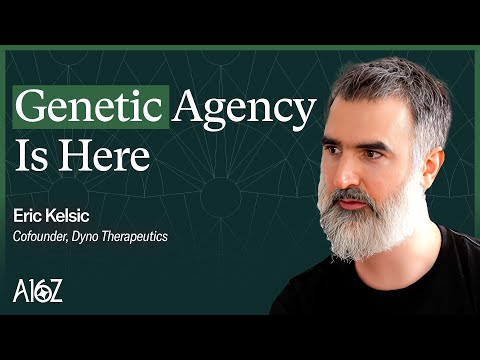
If you want to hear Eric Kelsic explain how Dyno is solving gene therapy's delivery problem and why genetic agency will change medicine forever, watch his full interview on the @a16z podcast here: youtube.com/watch?v=Pmq8xl…
YouTube video
YouTube
English
2
1
1
345
John Cumbers
John Cumbers@johncumbers·
Eric Kelsic said: "To address the root cause of a genetic disease, you need to take action at the genetic level." But this isn’t possible today. If you have sickle cell, Huntington's or cystic fibrosis, there's no cure for you just yet. Here's how he's solving this at Dyno:
English
4
11
29
5.5K