John Neeleman

7.6K posts

John Neeleman banner
John Neeleman

John Neeleman

@JohnRNeeleman

Lawyer; volunteer, ABA Death Penalty pro bono representation project; novelist, author of “Logos”

Seattle Katılım Haziran 2013
602 Takip Edilen383 Takipçiler
Sabitlenmiş Tweet
John Neeleman
John Neeleman@JohnRNeeleman·
John Neeleman tweet media
John Neeleman@JohnRNeeleman

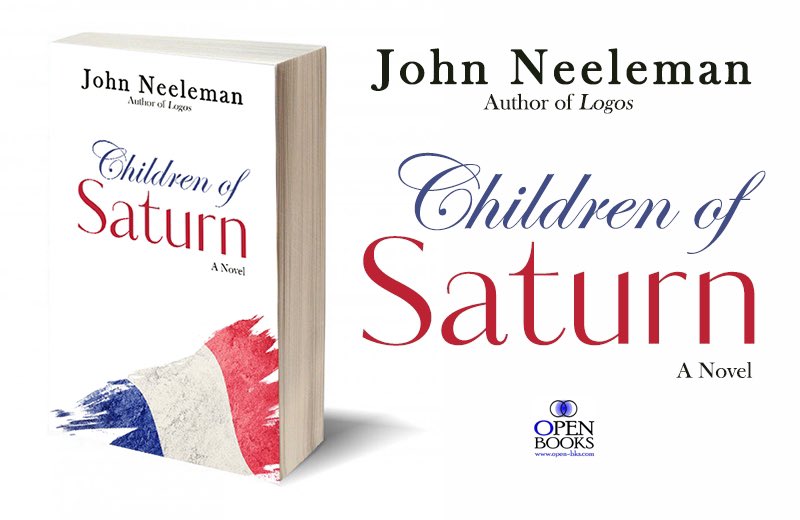
I'm delighted to announce the release of my second novel, CHILDREN OF SATURN, a tale of the French Revolution published by Open Books, a stellar literary press. I feel honored and fortunate to join the ranks of Open Books' outstanding authors of distinction. Although a work of fiction, CHILDREN OF SATURN is rooted in the stranger-than-fiction truth of the French Revolution. The novel's background springs from the written historical record; everything actually happened or is plausible. The characters—women and men prominent in the French Revolution, including the English/American radical Thomas Paine—actually lived. The politically charged trials, the monumental scope of organized crime, the dystopian horror, and the rampant social injustice, all intermixed with romance and the highest humanist aspirations, speak to the important issues that challenge us today. I am proud of my work and eagerly anticipate your journey into CHILDREN OF SATURN's world of political and personal tumult. I hope you join me on this complex and rewarding exploration of the French Revolution. Visit my publisher's website for more information and updates. open-bks.com/library/modern… I would be grateful if you would pre-order CHILDREN OF SATURN. Thank you, John Neeleman, author of LOGOS - 2016 Utah State Book Award, Fiction Book of The Year - 2016 Gold Medal Winner, Independent Publisher Book Awards (for Religious Fiction) - 2016 Foreword Review of Books Gold Medal Finalist for Book of the Year (for Religious, War, and Military Fiction)

ZXX
1
2
22
5.7K
John Neeleman retweetledi
Math Files
Math Files@Math_files·
In order to be born, you needed: 2 parents 4 grandparents 8 great-grandparents 16 second great-grandparents 32 third great-grandparents 64 fourth great-grandparents 128 fifth great-grandparents 256 sixth great-grandparents 512 seventh great-grandparents 1,024 eighth great grandparents 2,048 ninth great-grandparents For you to be born today from 12 previous generations, you needed a total of 4,094 ancestors over the last 400 years. Think for a moment: How many struggles? How many battles? How many difficulties? How much sadness? How much happiness? How many love stories? How many expressions of hope for the future? – did your ancestors have to undergo for you to exist in this present moment...
English
1.1K
6.8K
40.1K
6.2M
John Neeleman
John Neeleman@JohnRNeeleman·
So much professional jealousy swirling around Attia now that the guy is down. These frustrated would be influencers on social media are pathetic. If they reject the model, what are they doing here? I bet the jackals now circling him would love his reach and influence and to be able to charge 100k a year. The best thing about Attia has offered for a long time been the credentials of his guests, who are mostly real scientists. And since when did 3-6 hours af cardio and 90 minutes of resistance a week, and humans should consume protein as well as fruits and vegetables, become controversial?
English
0
0
0
13
Eric Topol
Eric Topol@EricTopol·
"We should be skeptical of any people who sell themselves as singularly capable of giving health advice on the internet and should always follow the money and connections where they lead." gift link nytimes.com/2026/02/07/opi…
English
81
229
1.2K
126.4K
John Neeleman
John Neeleman@JohnRNeeleman·
My second novel, “Children of Saturn,” wrapped its award season with a strong showing:   IPPY Bronze – Audiobook: Mystery/Thriller Hoffer Grand Prize Shortlist Hoffer Montaigne Medal Shortlist   These are juried, competitive independent publisher awards. Like most major prizes—including the Pulitzer, NBA, and Booker—they require submission.   Past IPPY winners include Ferrante, Atwood, Eggers, McSweeney’s, Graywolf, and university presses like Stanford and Princeton. This year’s Montaigne winner came from University of Chicago Press; the Hoffer Grand Prize went to Rose Metal Press.   Bridesmaid, but in a very competitive wedding. The IPPYs have only three audiobook slots and no “historical” or “literary fiction” categories.   “Children of Saturn” didn’t win the Utah Book Award, as my debut “Logos” did, but Utah Humanities changed the rules to require in-state residency so we couldn’t enter it.   One twist: “Children of Saturn” made the Hoffer Grand Prize shortlist while the Montaigne Medal winners did not.   Grateful to Charles Leggett for voicing the audiobook with such depth and power.   The novel is set during the French Revolution and told through Thomas Paine, Camille Desmoulins, and Joseph Fouché—a story of idealism, betrayal, and how revolutions devour their children.
English
1
2
92
127.4K
John Neeleman
John Neeleman@JohnRNeeleman·
John Neeleman@JohnRNeeleman

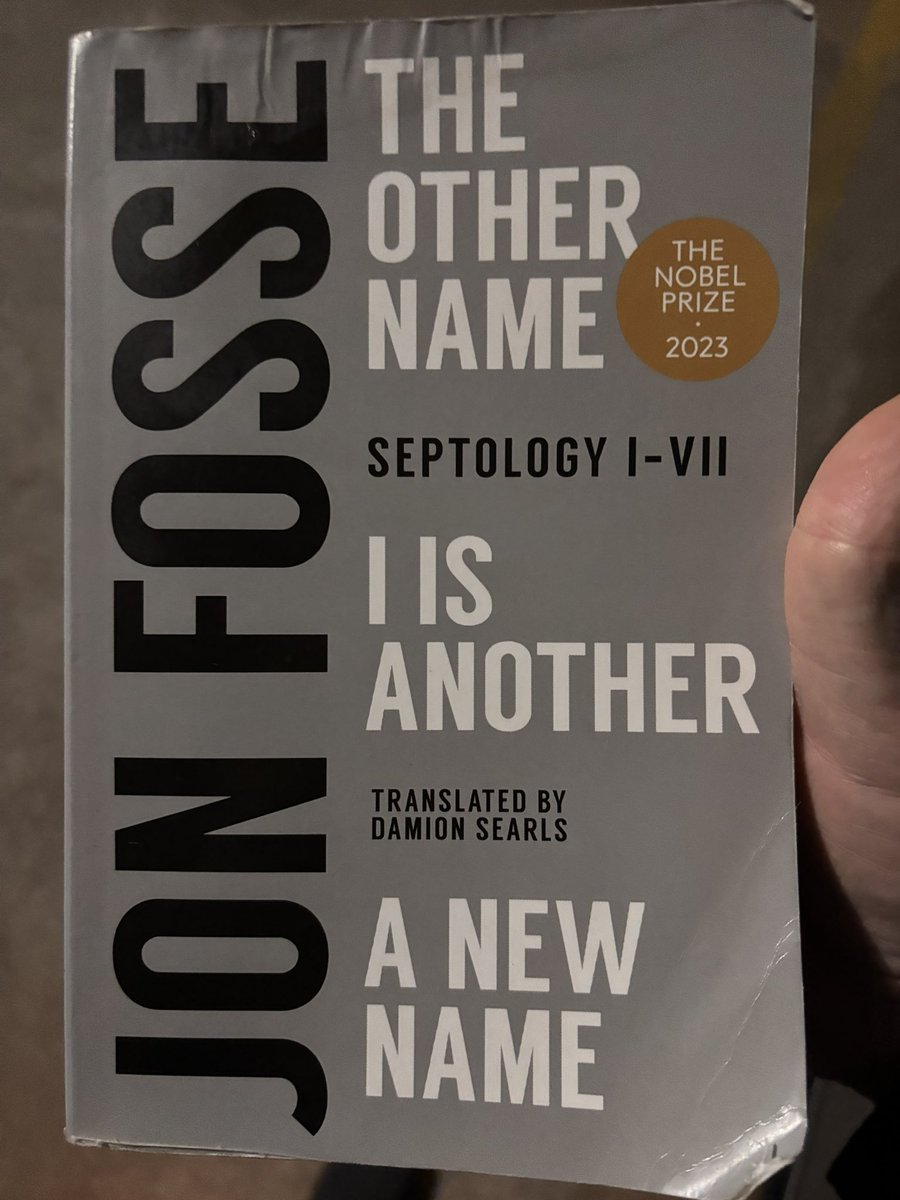
#Fosse24 #Septology My exegesis of Septology (caution, spoilers): Asle is a good enough painter that he is able to make a living from his artistic works. He remembers a childhood mostly disconnected from his parents and marked by the tragic deaths of two other children, his sister who died suddenly and inexplicably in her sleep and a neighbor boy who drowned. As a youth he found his extraordinary talent for painting which liberated him from the banality of his parents' home. Alcoholism plagued much of Asle's life, including two marriages that failed, though they produced two children (one from each marriage) now alienated from him. He was unfaithful to his first wife with the woman who would be his second wife. A fourth woman, an illicit lover with medium blonde hair, was a chronic presence, possibly even during his third marriage, to his beloved Ales, who saved and transformed his life. Finally, and unexpectedly, he met the love of his life, Ales. She would become his third wife. She converted him to Catholicidm and got him to stop drinking. This was the most productive time of his life as a painter. Unfortunately, Ales died of a ravaging disease (cancer?) while they were both fairly young, cutting off their near perfect marriage. All the subsequent years Asle has been alone, still supporting himself with his painting and with only one friend, a neighbor. He does not return to the illicit lover as he is committed to being faithful to Ales even in her death. Another important figure in his life is the owner of the gallery that shows and sells his paintings. But they only transact business. Now he is apparently in a hospital, in and out of consciousness, where he spends his final days. The narrator found a friend bearing his same name as his collapsed in the snow, and took him to the hospital, but the fried is Asle, the narrator himself. Asle shows plenty of facility at regarding himself from another's point of view. Indeed, frequently he imagines his younger self times observing his current old self as he drives by his house in a white van or spies on his younger self in a park with Ales (I have called this uber postmodernism). As Asle spends his final days in the hospital he relives his life in a stream of consciousness. He has much to regret. He was not always the monkish ascetic we meet in the novel. His dreamscape is fractured and populated by absurdities as dreams often are. His subconscious deals with the regrettable parts of his life by transmuting that life into that of another, his "namesake's." He says repeatedly that he doesn't know how to contact his friend Asle's children to tell them their father is dying because he doesn't know where they are. He is talking about himself. As the novel progresses, the wildly divergent lives of our narrator Asle and his uncannily similar "namesake," who is apparently comatose in the hospital, begin to converge. Septology becomes suspenseful. Yes, somewhat like a thriller. Where is our narrator?! Is he in a frozen stupor staring at the sea, too exhausted to light a fire (from heart disease? Depression? Dementia?) or is he comatose in a hospital bed--in either case reliving his own life and others' lives as a fragmented, jumbled, implausible dreamscape? Timelines do not cohere. Implausibly, disparate characters come and go wearing identical masks--e.g., narrator and his namesake, a former lover of one Asle or the other with mid-length blond hair and the neighbor's sister--and he is present in his namesake's life, possessing the POV--the namesake's two failed marriages, unhappy alienated children, alcoholism and infidelities in contrast to narrator's near perfect yet childless (third) marriage--as though he were him. ... (continued in the reply below)


QME
0
0
0
18
Phil Klay
Phil Klay@PhilKlay·
Well, this was one of the most extraordinary reading experiences of my life.
Phil Klay tweet media
English
35
43
881
54.4K
John Neeleman
John Neeleman@JohnRNeeleman·
@AmericanGwyn If a character said or thought it, so what. Ironically we see from Oates' awesome work that she understands that great novels are about flawed characters.
English
0
0
1
1.6K
John Neeleman retweetledi
Deep Vellum
Deep Vellum@DeepVellum·
LOS ANGELES there’s still a few hours to get your brainfluid down to Stories in Echo Park to catch the hometown stop on @maxdaniellawton’s Schattenfroh tour
Deep Vellum tweet media
English
1
5
21
2.5K
John Neeleman
John Neeleman@JohnRNeeleman·
Blood Meridian (in a class by itself; lives alongside Moby Dick, the great American novel PERIOD) The Crossing and Suttree (tie; also great in the rarified meaning of the word; closer to no. 1 than the challengers are to these two) All the Pretty Horses (has his only compelling female characters except Stella Maris) Stella Maris The Road (besides Suttree his most hopeful novel, believe it or not; my favorite science fiction novel all-time) Cities of the Plain (his tragedy--John Grady: honor is more important than life itself) No Country for Old Men (McCarthy lite; compared to the foregoing novels, an entertainment; still, as such, among the all time great crime movies, and with postmodernism; blending genres like David Mitchell) The Pasenger (great set pieces, and sets up the even greater work, Stella Maris)
English
0
1
1
189
Aaron Gwyn
Aaron Gwyn@AmericanGwyn·
This morning, I ranked Cormac McCarthy’s best novels (my ranking changes from year to year).
Aaron Gwyn tweet media
English
45
10
233
16.4K
Science girl
Science girl@sciencegirl·
What piece of advice from your parents turned out to be 100% true
English
598
51
857
347.1K
John Neeleman
John Neeleman@JohnRNeeleman·
@AmericanGwyn I think it's by far the best of the century (do they even make them like this anymore?), and a tale for our times. 2666: the horror is endless, but so is the stubborn glimmer of meaning.
English
0
0
0
288
Aaron Gwyn
Aaron Gwyn@AmericanGwyn·
2666 might be the darkest novel I’ve ever read (and my favorite novel is Blood Meridian). Far as I can tell, it’s Bolaño’s masterpiece. And one of the ten most important books published in this century.
John F. Duffy@SmashedEars

Feels good.

English
60
144
3K
199.2K
John Neeleman
John Neeleman@JohnRNeeleman·
#TheBorderTrilogy The epilogue of Cities of the Plain is more uplifting than I recall. After the horrifying end before it, the comedy of Billy Parham and the other vagabond beneath the freeway overpass discussing the other man’s fantastic dreams is a relief—as is the realization that Billy has lived 78 years and had a life that he values. It’s striking that the trauma of his past that is most indelible is the death of his brother, Boyd, and he no longer thinks about John Grady. Boyd was his brother and is the one Billy could not protect. The she-wolf he could not save. John Grady, in a way, was both — brother and creature of light — and his death, though cruel, was chosen. So, Cities of the Plain has in many ways McCarthy’s happiest ending. What do these last lines mean (I’m sure the speculation has been endless)? "Well, Mr Parham, I know who you are. And I do know why. You go to sleep now. I’ll see you in the morning. Yes mam."
English
0
0
3
81
John Neeleman
John Neeleman@JohnRNeeleman·
#TheBorderTrilogy Rereading The Crossing after a dozen years I wondered if it would meet expectations. My memory and regard for the novel could not have been higher, so I had set a high bar. And, naturally, after about twelve years I had changed and read a lot of books I loved. This time, The Crossing did not disappoint. On the contrary. I got even more out of it. McCarthy’s mature philosophical vision is displayed in the Crossing through nature, the cruelty of men punctuated by the kindness of women and sometimes men, and the myriad philosophers at every turn among the poor rural people.  The vaqueros, the gypsies, the long suffering women, the ex-Mormon, the blind man, the sepulturero, and others.  Some call Suttree an autobiographical novel. I think there is also much of McCarthy in The Crossing.  Seems to me that the two novels form the arc of his philosophical development. Suttree, like McCarthy, walks away from a comfortable, upper-middle-class background. He lives on the fringes of Knoxville and sojourns in the Smoky Mountains, surviving among drunks, thieves, the dying — deliberately choosing the margins. But Suttree is wry, self-effacing, ironic, surrounded by grotesques, sort of a comic hell. In the Crossing, Billy Parham bears witness, endures, grieves, and keeps moving. Avoids explaining himself; he is quiet, grave, and solitary, moved by moral instinct, not ideology, drawn to the mystery of the world, its harshness, beauty, and inscrutability. Here we see the fruition of McCarthy’s obsessions: The silence of God, the structure of the universe, the failure of reason to grasp first principles, the hollowness of most forms of belief, yet the dignity of enduring anyway. McCarthy’s mature philosophical vision doesn’t arrive through system or doctrine, but through encounter — through the land, through suffering, through story, and especially through the voices of the humble and dispossessed. Blood Meridian, Suttree, The Crossing—the Holy Trinity of McCarthy’s works.
English
1
0
6
110
John Neeleman
John Neeleman@JohnRNeeleman·
#TheBorderTrilogy The Crossing: ‘The corrido is the poor man’s history. It does not owe its allegiance to the truths of history but to the truths of men. It tells the tale of that solitary man who is all men.’ “The desolation of that place was a thing exquisite. . . . The little desert foxes barking. The old gods of that country tracing his progress over the darkened ground. Perhaps logging his name into their ancient daybook of vanities.”
English
0
0
5
90
John Neeleman
John Neeleman@JohnRNeeleman·
#TheBorderTrilogy The Crossing's Blind Man's answer to the problem of evil: “Lo que debemos entender,” said the blind man, “es que ultimamente todo es polvo. Todo lo que podemos tocar. Todo lo que podemos ver. En esto tenemos la evidencia más profunda de la justicia, de la misericordia. En esto vemos la bendición más grande de Dios.” Translation: “What we must understand,” said the blind man, “is that ultimately everything is dust. Everything we can touch. Everything we can see. In this we have the deepest evidence of justice, of mercy. In this we see the greatest blessing of God.” The problem of evil is the price for life itself? Or, the blind man’s words echo Ecclesiastes — “All is vanity”. But That all passes away is a form of mercy: even suffering, even injustice, even grief — all are finite.
Español
0
0
2
53
John Neeleman
John Neeleman@JohnRNeeleman·
#TheBorderTrilogy Prophetic. "That the suck and whiff at his ear had been the bullet passing and that he had seen it for one frozen moment before his eyes with the sun on the side of the small revolving core of metal, the lead wiped bright by the rifling of the bore."
English
1
0
2
85
John Neeleman
John Neeleman@JohnRNeeleman·
#TheBorderTrilogy I love this. An island of charity and kindness on a sea of cruelty, the contrast helping to make the moment sublime. Field hands appear out of nowhere in the bed of an old truck and save Billy Parham's brother from would be killers. "Blood was a condition of their lives and none asked what had befallen him or why. They called him él güerito and passed him up into the truck and wiped the blood from their hands on the front of their shirts. A lookout was standing with one hand on top of the cab watching the riders out on the plain."
English
0
0
2
73
John Neeleman
John Neeleman@JohnRNeeleman·
#TheBorderTrilogy In the Crossing the country is filled with philosophers. "The old man said that the ox was an animal close to God as all the world knew and that perhaps the silence and the rumination of the ox was something like the shadow of a greater silence, a deeper thought. He looked up. He smiled. He said that in any case the ox knew enough to work so as to keep from being killed and eaten and that was a useful thing to know."
English
1
0
2
86